
A natural monopoly exists when
a. a monopolist produces a product, the main component of which is a natural resource.
b. economies of scale are so large that only one firm can survive and achieve low unit
costs.
c. a firm is the exclusive owner of a key resource necessary to produce the firm€s
product.
d. there are no close substitutes for a firm’s product.
Individuals who spend resources to influence public policy in a way that will
redistribute income to themselves are
a. stabilizing the economy.
b. rent seeking.
c. engaging in collusion.
d. minimizing explicit costs.
Treasury bonds are so safe (risk-free) that they often pay relatively low returns.
a. True
b. False
Compared to the perfectly competitive firm, the monopolist faces a demand curve that
is ___________________ elastic because there are ______________ substitutes for the
product produced by the monopolist.
a. less; fewer
b. less; more
c. more; fewer
d. more; more
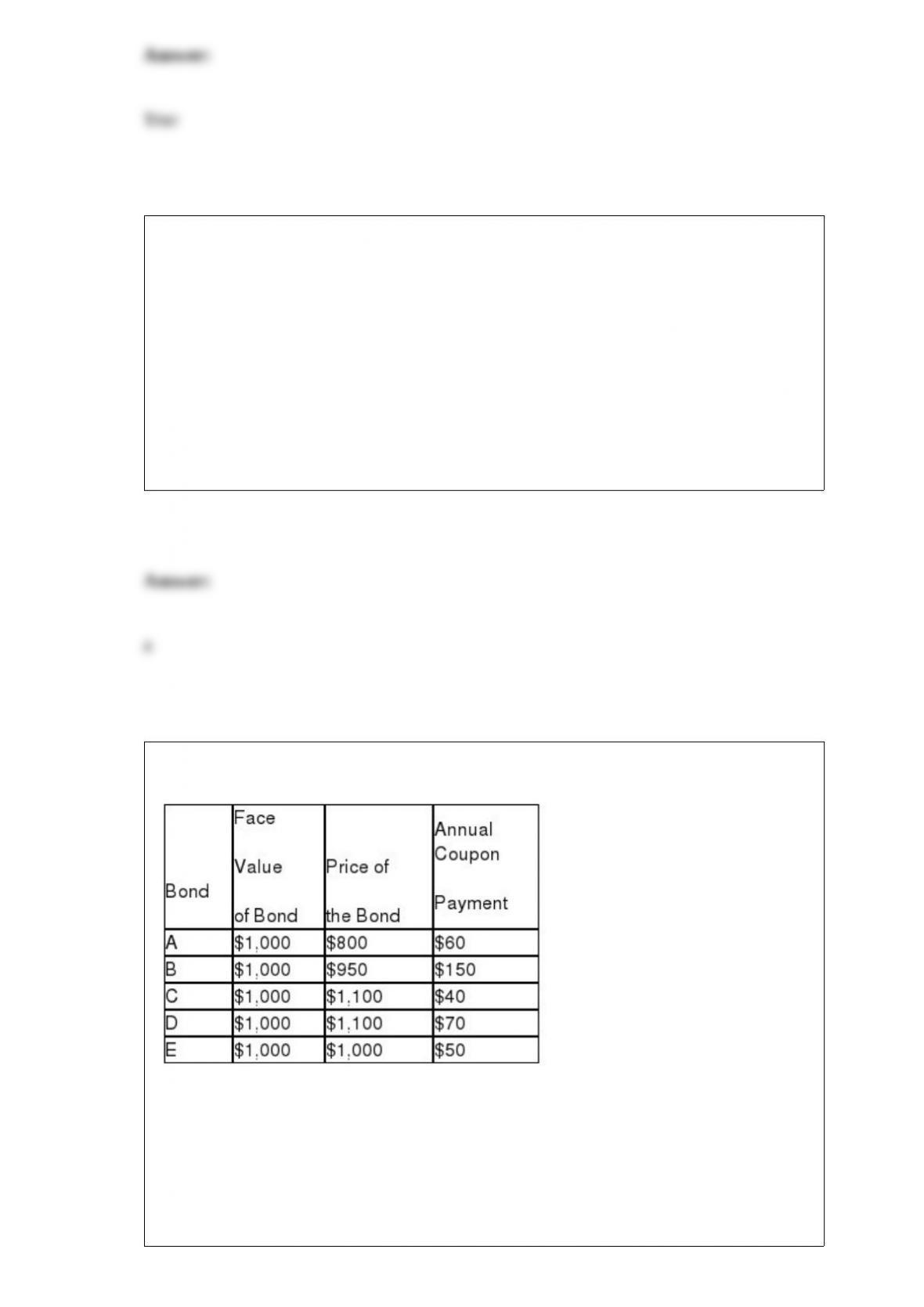
Exhibit 38-1
The coupon rate for bond D is
a. 11 percent.
b. 6.4 percent.

c. 3 percent.
d. 0.07 percent.
Oil producers expect that oil prices next year will be lower than oil prices this year. As a
result, oil producers are most likely to
a. place more oil on the market this year, thus shifting the present supply curve of oil
rightward.
b. hold some oil off the market this year, thus shifting the present supply curve of oil
leftward.
c. place more oil on the market this year, thus increasing the quantity supplied of oil at
lower but not higher prices.
d. hold some oil off the market this year, thus decreasing the quantity supplied of oil at
lower but not higher prices.
You turn to the bond market page of a newspaper and look under the column headed
“Close” and see that it says, “49 1/2” this indicates that
a. the closing price for the bond on this particular day is $495.
b. the closing price for the bond on this particular day is $49.50.
c. the closing price for the bond was $49.50 higher than on the previous trading day.
d. the bond will mature on June 30, 2049.
Unions typically argue that state right-to-work laws
a. are unfair.
b. constrain unions’ abilities to control the supply of labor in a market.
c. are inconsistent with the Taft-Hartley Act.
d. legalize union shops.
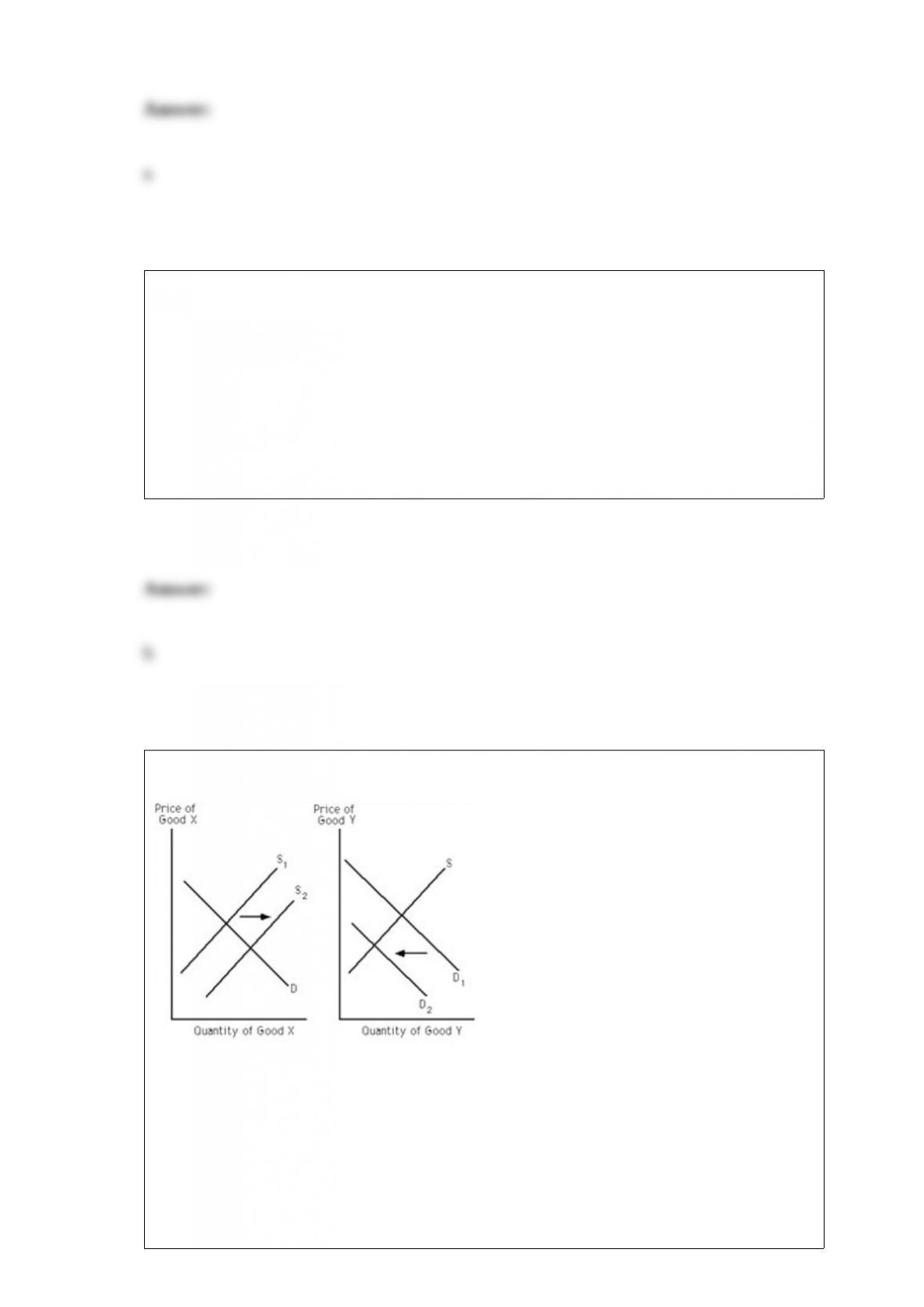
Exhibit 20-4
As a consequence of the depicted change in
the supply of X, the demand curve for Y shifted from D1 to D2. Which of the following
pairs of goods are most likely represented by X and Y?
a. cars and gasoline
b. brand A peanut butter and brand B peanut butter
c. water and diamonds

d. milk and cereal
e. a and d
An increasing-cost industry is characterized by
a. an upward-sloping long-run supply curve.
b. a downward-sloping long-run supply curve.
c. a perfectly elastic long-run supply curve.
d. perfectly elastic short-run and long-run supply curves.
e. a perfectly elastic short-run supply curve and an upward-sloping long-run supply
curve.
The current nominal interest rate is 9 percent. If the expected inflation rate changes
from 2 to 3 percent (ceteris paribus), it follows that the demand for loanable funds will
a. rise by more than the supply of loanable funds will rise.
b. will rise by less than the supply of loanable funds will fall.
c. will fall by more than the supply of loanable funds will rise.
d. rise by the same amount that the supply of loanable funds will rise.
e. none of the above
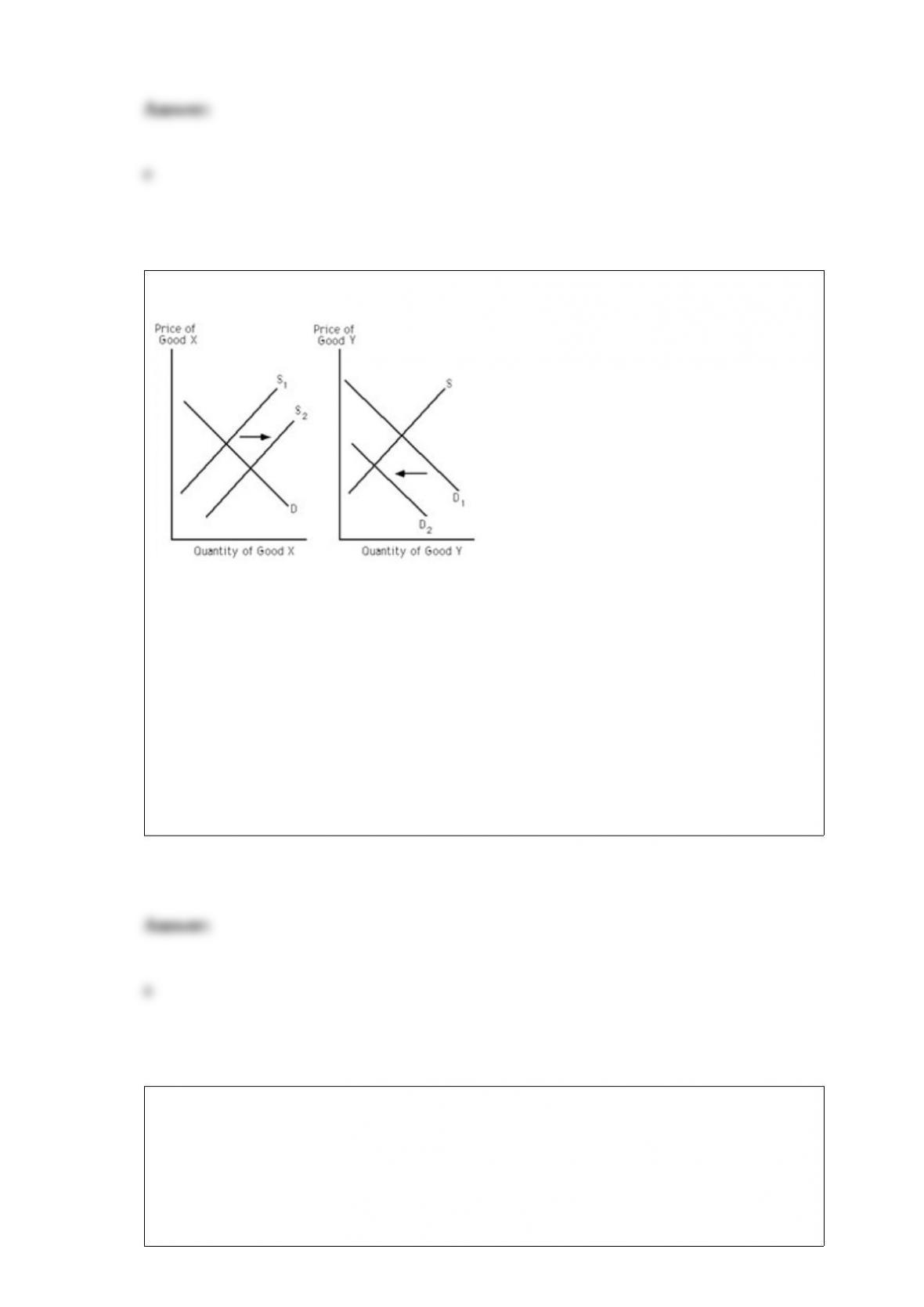
Exhibit 20-4
As a consequence of the depicted change in
supply of X, the demand curve for Y shifted from D1 to D2. What is true of the cross
elasticity of demand for Y?
a. Ec > 0
b. Ec < 0
c. Ec = 0
d. It cannot be determined from the information provided.
Which of the following is not a necessary condition for the contestable market theory?
a. There are no barriers to entry.
b. Exit from an industry is costless.
c. All firms in an industry have the same costs of production.
d. All of the above are necessary conditions.
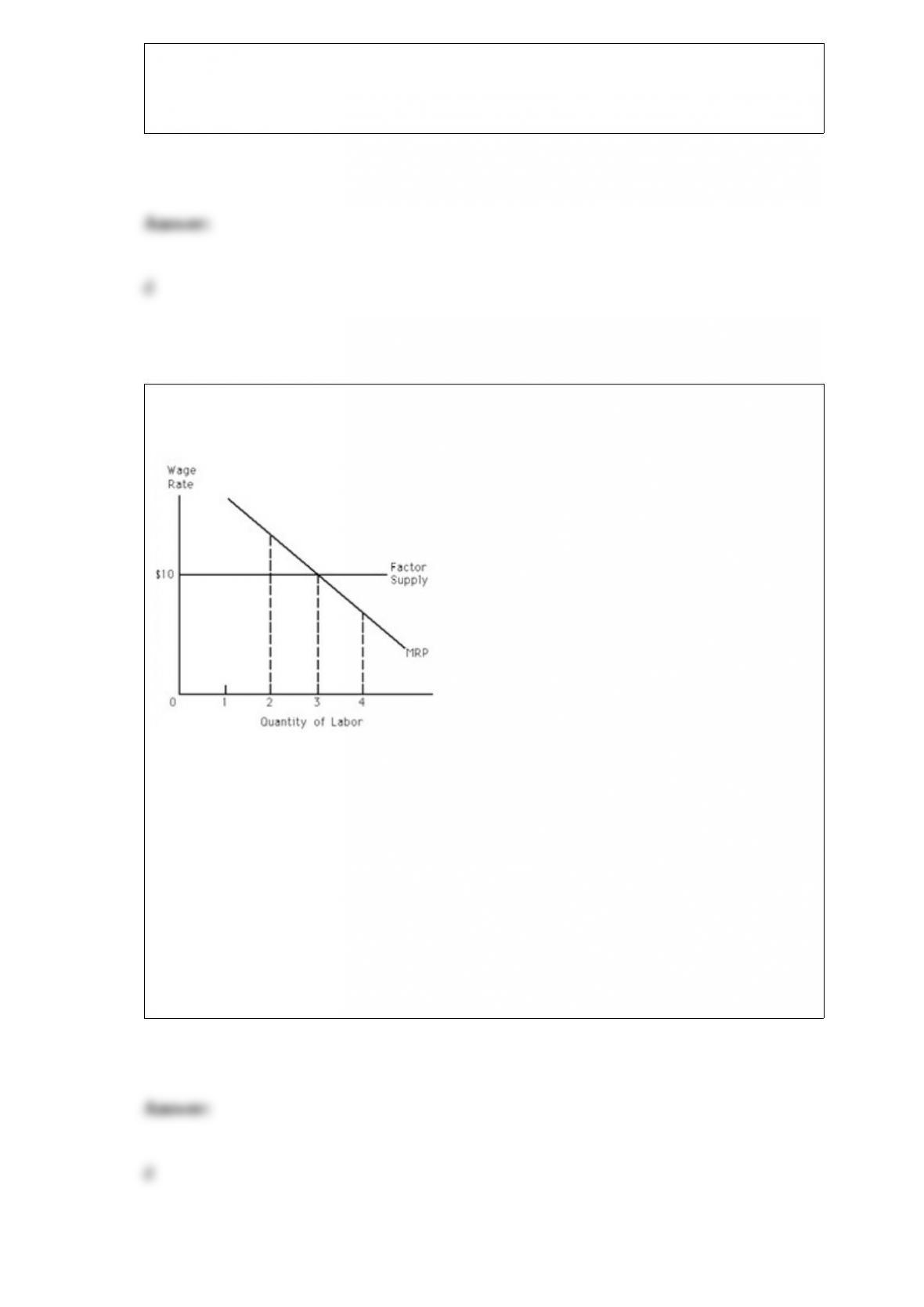
Exhibit 27-4
The marginal factor cost of labor
a. is $14.
b. is $7.
c. is $3.
d. is $10.
e. depends on the amount of labor employed.

Indifference curves are generally downward sloping and concave to the origin.
a. True
b. False
The results of the “ultimatum game” reveal that people
a. always behave irrationally.
b. tend to be more concerned with their relative income position in a group than with
their absolute position in the group.
c. tend to be more concerned with their absolute position in a group than with their
relative position in the group.
d. always behave rationally.
e. a and c
The merger of a brewery with an aluminum can producer is an example of a
__________ merger.
a. horizontal
b. vertical

c. conglomerate
d. parallel