
1) suppose that the tariff on imported steel is 40 percent, the tariff on imported iron ore
is 20 percent, and 30 percent of the cost of producing a ton of steel consists of the iron
ore it contains. the effective rate of protection of steel is approximately 49 percent.
a.true
b.false
2) dynamic comparative advantage refers to the creation of comparative advantage
through the mobilization of skilled labor, technology, and capital.
a.true
b.false
3) those who argue in favor of import protection generally give the impression that such
restricted trade will:
a.decrease the level of national security
b.provide benefits to some particular industry
c.provide benefits to the entire nation
d.not yield welfare losses for the nation
4) assume 1990 to be the base year. if by the end of 2004 a country’s export price index
rose from 100 to 140 while its import price index rose from 100 to 160, its terms of
trade would equal 120.
a.true
b.false
5) during the past four decades:
a.nontariff barriers (ntbs) and tariffs have increased in importance

b.ntbs and tariffs have decreased in importance
c.ntbs have increased and tariffs have decreased in importance
d.ntbs have decreased and tariffs have increased in importance
6) assume that labor productivity growth is slower in the united states than in its trading
partners. given a system of floating exchange rates, the impact of this growth
differential for the united states will be:
a.increased exports and an appreciation of the dollar
b.increased exports and a depreciation of the dollar
c.increased imports and an appreciation of the dollar
d.increased imports and a depreciation of the dollar
7) increased tariffs on u.s. steel imports cause the dollar to ____ in the ____.
a.appreciate, long run
b.depreciate, long run
c.appreciate, short run
d.depreciate, short run
8) figure 11.1 illustrates the supply and demand schedules for the swiss franc. assume
that exchange rates are flexible.
figure 11.1. supply and demand schedules of francs
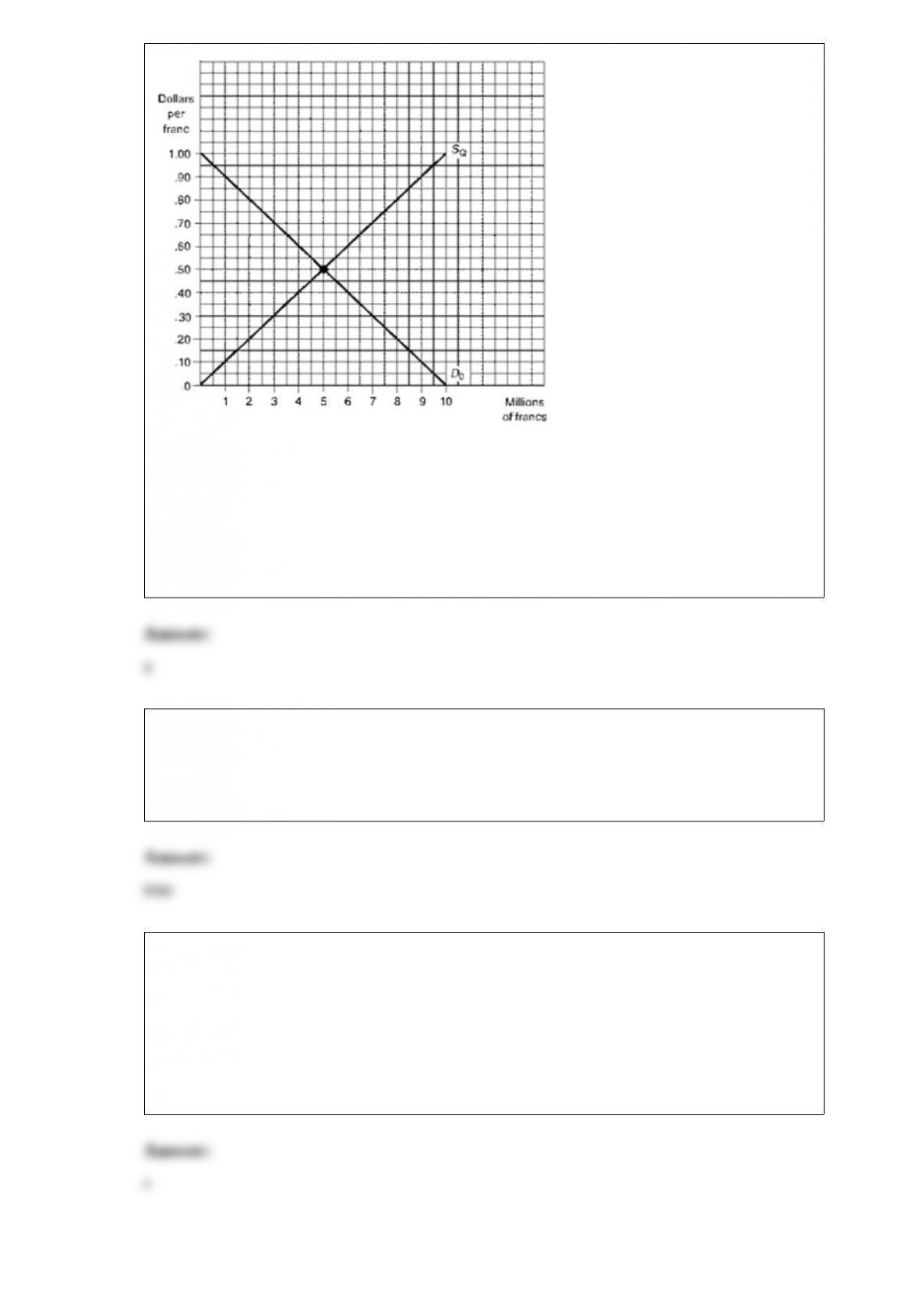
refer to figure 11.1. suppose the exchange rate is $.30 per franc. free-market forces
would lead to a (an) ____ of the dollar against the franc and a (an) ____ in u.s.
international competitiveness:
a.depreciation, improvement
b.depreciation, worsening
c.appreciation, improvement
d.appreciation, worsening
9) to the extent that adjustments in prices, interest rates, and income levels promote
balance-of-payments equilibrium, the demand for international reserves decreases.
a.true
b.false
10) a corporation dealing in foreign exchange may desire to obtain an exchange quote
between the pound and franc, whose values are both expressed relative to the dollar.
____ are used to determine such a relationship.
a.spot exchange rates
b.forward exchange rates
c.cross exchange rates
d.option exchange rates
11) under a floating exchange-rate system, if the u.s. dollar depreciates against the swiss
franc:
a.american exports to switzerland will be cheaper in francs
b.american exports to switzerland will be more expensive in francs
c.american imports from switzerland will be cheaper in dollars
d.none of the above
12) the uruguay round of multilateral trade negotiations succeeded in establishing the
world trade organization.
a.true
b.false
13) most analysts feel that the financial difficulties in east asia were triggered by
a.misallocation of investment
b.unavailability of cheap foreign labor
c.lack of alignment of the exchange rate with the dollar
d.surpluses in the trade accounts of the asian countries
14) concerning the restrictive impact of an import quota, assume there occurs an
increase in the domestic demand for the import product. as long as the quota falls short
of what would be imported under free market conditions, the economy’s adjustment to
the increase in demand would take the form of:
a.a decrease in domestic production of the import good
b.an increase in the amount of the good being imported
c.an increase in the domestic price of the import good
d.a decrease in domestic consumption of the import good
15) for the united states, which organization makes loans to foreign buyers of u.s.
manufactured goods?
a.export-import bank
b.domestic international sales corporation

c.organization for economic cooperation and development
d.commodity credit corporation
16) trade theory suggests that the united states would gain from a subsidy provided by
japan to its calculator producers if the gains to american consumers of calculators more
than offset the losses to american calculator producers. this occurs as long as the united
states:
a.is a net importer of calculators
b.is a net exporter of calculators
c.has an absolute advantage in calculator production
d.has a comparative advantage in calculator production