
1) What happens to the price and quantity sold of a drug when its patent runs out?
(i)The price will fall.
(ii)The quantity sold will fall.
(iii)The marginal cost of producing the drug will rise.
a.(i) only
b.(i) and (ii) only
c.(ii) and (iii) only
d.(i), (ii), and (iii)
2) Suppose the income elasticity of demand is -0.5 for good X. This implies that a 5%
decrease in income will cause the quantity demanded of good X to
a.increase by 2.5%, and X is an inferior good.
b.decrease by 2.5% and X is a normal good.
c.increase by 10% and X is an inferior good.
d.decrease by 10% and X is a normal good.
3) The income elasticity of demand is defined as the percentage change in quantity
demanded divided by the percentage change in income.
a.True
b.False
4) If an economy is producing efficiently, then
a.there is no way to produce more of one good without producing less of another good.
b.it is possible to produce more of both goods without increasing the quantities of
inputs that are being used.
c.it is possible to produce more of one good without producing less of another good.
d.it is not possible to produce more of any good at any cost.
5) A difference in wages that reflects differences in the nonpay features of two jobs is
called
a.a compensating differential.
b.a wage adjustment.
c.an efficiency wage.
d.a minimum wage.
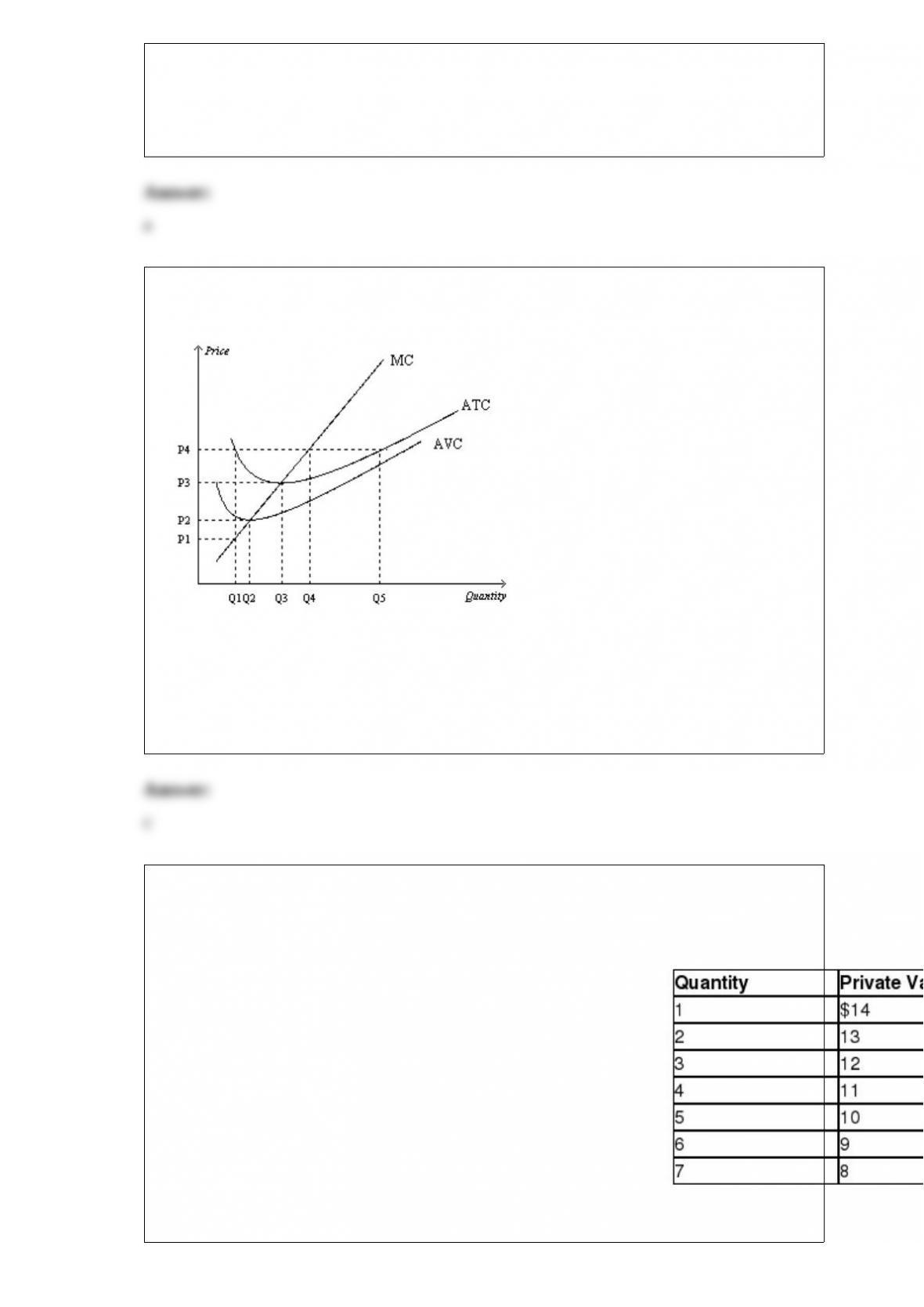
6) Figure 14-4
Suppose a firm operating in a competitive market has the following cost curves:
When price rises from P2 to P3, the firm finds that
a.marginal cost exceeds marginal revenue at a production level of Q2.
b.if it produces at output level Q3 it will earn a positive profit.
c.expanding output to Q4 would leave the firm with losses.
d.it could increase profits by lowering output from Q3 to Q2.
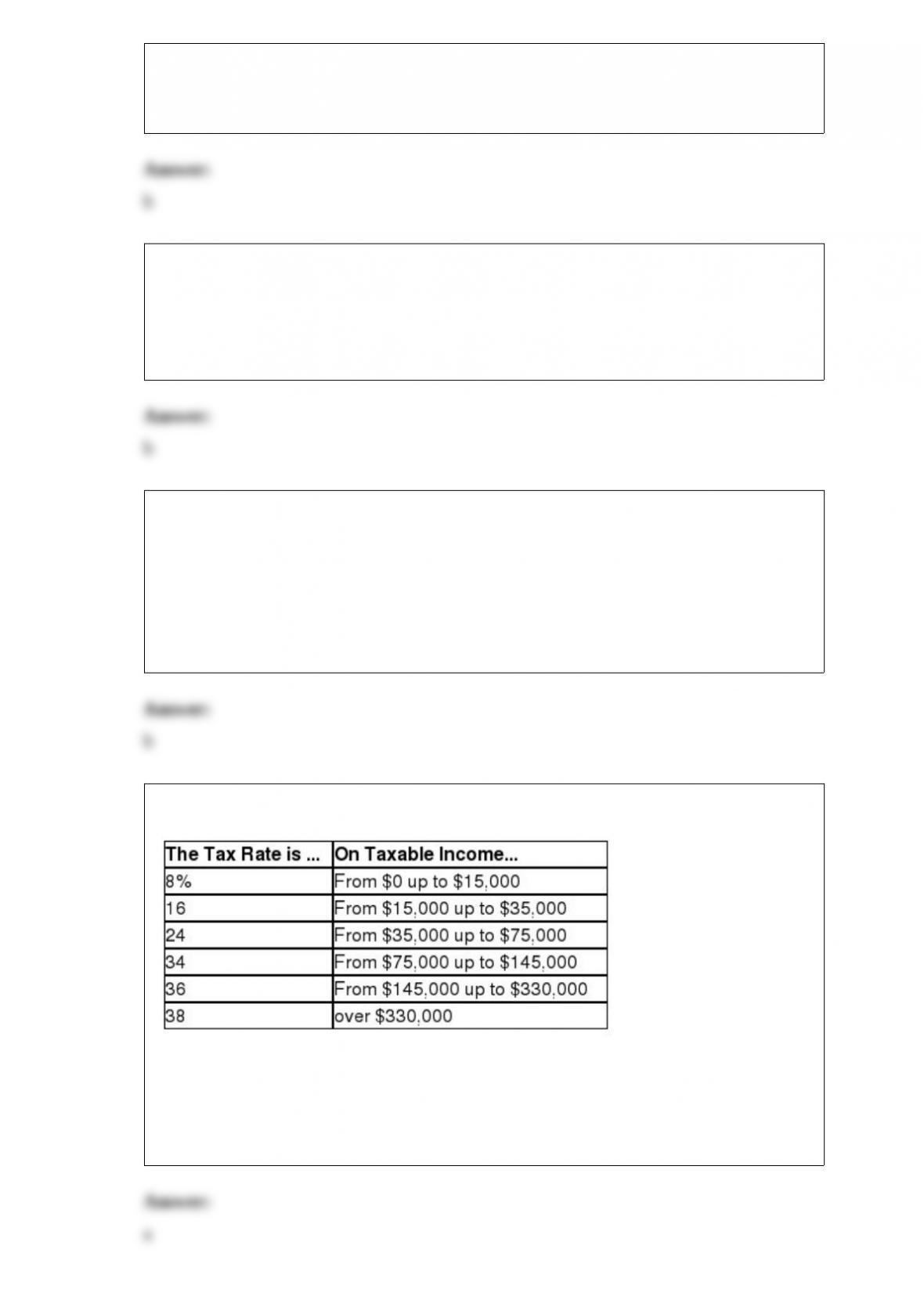
7) Table 10-1
The following table shows the private value, private cost, and external cost for various
quantities of output in a market.
What is the equilibrium quantity of output in the market?
a.2 units
b.3 units
c.4 units
d.5 units
8) The Tragedy of the Commons describes
a.government regulation that is necessary to combat externalities.
b.overuse of a common resource relative to its economically efficient use.
c.the nonrivalry feature of a common resource.
d.an effective cost-benefit analysis.
9) If the profitmaximizing quantity of production for a competitive firm occurs at a
point where the firm‘s average
total cost of production is falling as production increases, then the firm
a.will be earning positive economic profit at the profit-maximizing quantity.
b.will have economic profit less than zero at the profit-maximizing quantity.
c.will have zero economic profit at the profit-maximizing quantity.
d.should increase the quantity of production to increase profit.
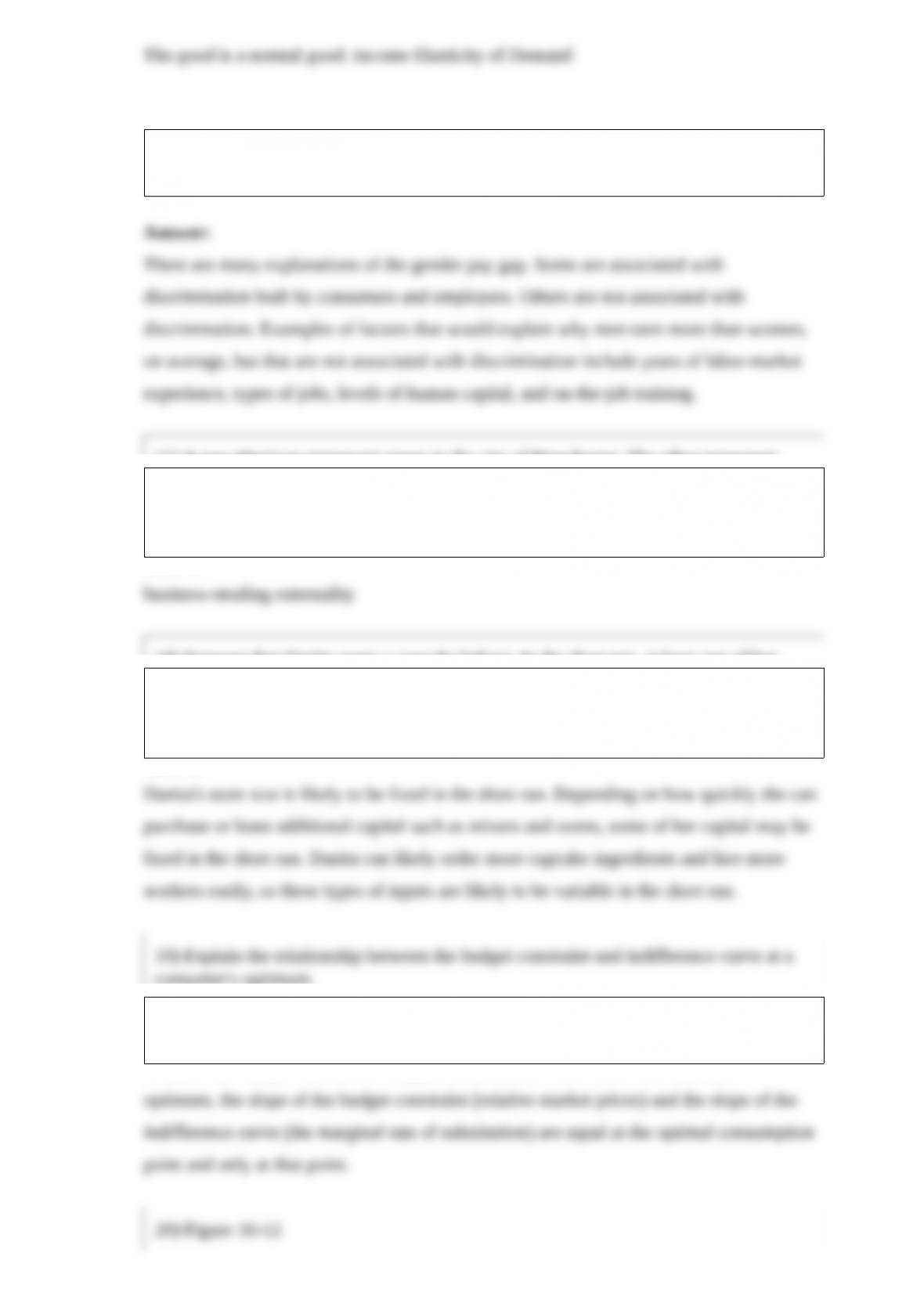
10) Table 12-11
If Peggy has taxable income of $43,000, her average tax rate is
a. 14.7%.
b. 16.3%.
c. 20.8%.
d. 24.0%.

11) People who provide you with goods and services
a.are acting out of generosity.
b.do so because they get something in return.
c.have chosen not to become interdependent.
d.are required to do so by the government.
12) Goals of efficiency and equity in tax policy are
a.complementary in most countries.
b.necessary for application of the ability-to-pay principle.
c.often in conflict with each other.
d.easier to achieve when tax codes are complex.
13) Which of the following factors affects the marginal productivity of a worker?
a.human capital
b.the worker’s disposable income
c.compensating wage differentials
d.discrimination based on age, race, or gender
14) To fully understand how taxes affect economic well-being, we must compare the
a.consumer surplus to the producer surplus.
b.price paid by buyers to the price received by sellers.
c.reduced welfare of buyers and sellers to the revenue raised by the government.
d.consumer surplus to the deadweight loss.
15) If the income elasticity of demand for a good is 0.56, is the good a normal or
inferior good?
16) Evaluate the following statement: “The gender pay gap provides evidence of
widespread, severe, ongoing discrimination by employers and fellow workers.”
17) A new Mexican restaurant opens in the city of Manchester. The other restaurant
owners are not happy about this new restaurant because they are experiencing what
externality?
18) Suppose that Danita owns a cupcake bakery. In the short run, at least one of her
inputs is fixed. Provide one or two examples of the types of inputs that could be fixed in
the short run.
19) Explain the relationship between the budget constraint and indifference curve at a
consumer’s optimum.
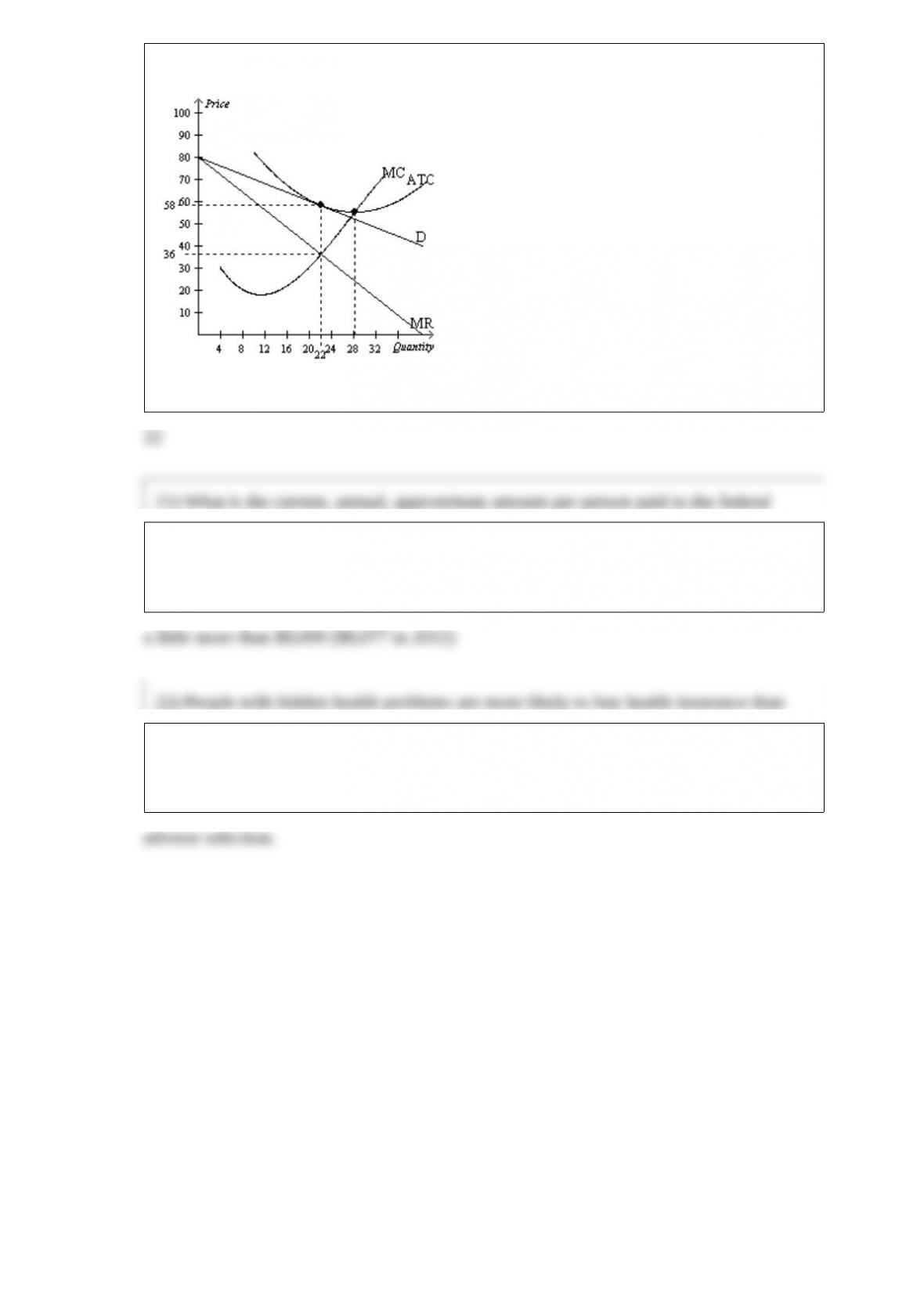
20) Figure 16-12
If this firm profit-maximizes, how much output will it produce?
21) What is the current, annual, approximate amount per person paid to the federal
government in individual income taxes, social insurance taxes, corporate income taxes,
and other taxes?
22) People with hidden health problems are more likely to buy health insurance than
other people. As a result, people in average health may observe the high prices of
insurance and decide not to buy it. This is an example of