
If real GDP per capita in Ireland is estimated to be $7,400 in 2014, what will real GDP
per capita be in 2019 if real GDP per capita grows at an annual rate of 2.8%?
A) $7,607
B) $8,496
C) $9,472
D) $20,720
Long-run equilibrium in a monopolistically competitive market is similar to long-run
equilibrium in a perfectly competitive market in that in both markets, firms
A) produce at the minimum point of their average total cost curves.
B) produce where price equals marginal cost.
C) break even.
D) produce where price equals marginal revenue.
The willingness of consumers to buy a product at Different prices is shown on a
A) demand curve.
B) supply curve.
C) production possibilities frontier.

D) marginal cost curve.
Tanesha sells homemade candles over the Internet. Her annual revenue is $64,000 per
year, the explicit costs of her business are $17,000, and the opportunity costs of her
business are $22,000. What is her economic profit?
A) $17,000
B) $25,000
C) $42,000
D) $47,000
Total revenue is equal to
A) the amount of funds earned by a firm minus its costs of production.
B) the total quantity sold of a product over a given period of time.
C) the price of a product multiplied by the number of units of the product sold.
D) the monetary value of the capital (for example, plant and equipment) a firm owns.

Fiscal policy is defined as changes in federal ________ and ________ to achieve
macroeconomic objectives such as price stability, high rates of economic growth, and
high employment.
A) taxes; interest rates
B) taxes; the money supply
C) interest rates; money supply
D) taxes; expenditures
The rapid growth of the Chinese economy should
A) benefit U.S. consumers as they have access to less expensive consumer goods.
B) make it more difficult for citizens of the United States to find a job.
C) not affect the mix of jobs available to citizens of the United States.
D) A and B
The price elasticity of supply of hot dog buns is estimated to be 1.5. Holding everything
else constant, this means that a 10 percent decrease in the price of hot dog buns will
cause the quantity of hot dog buns supplied to decrease by
A) 1.5 percent.
B) 15 percent.
C) approximately 25 percent.
D) approximately 5 percent.
Briefly describe the 6 main provisions of the Patient Protection and Affordable Care Act
(ACA).

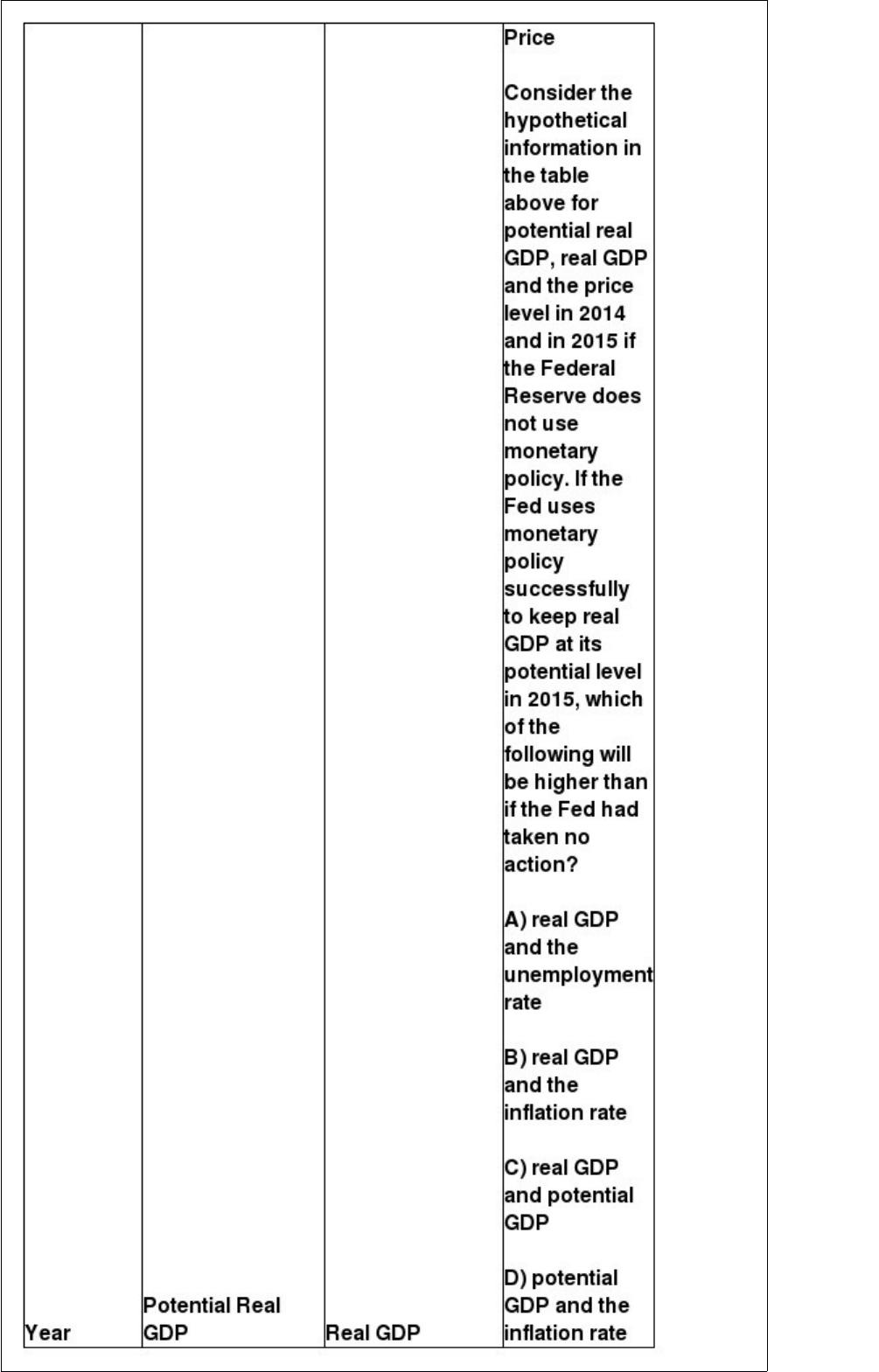
Table 26-2
During the twentieth century, the largest budget deficits as a percentage of GDP
occurred
A) during the 1990s.
B) during the 1980s.
C) during the Vietnam war.
D) during World Wars I and II.
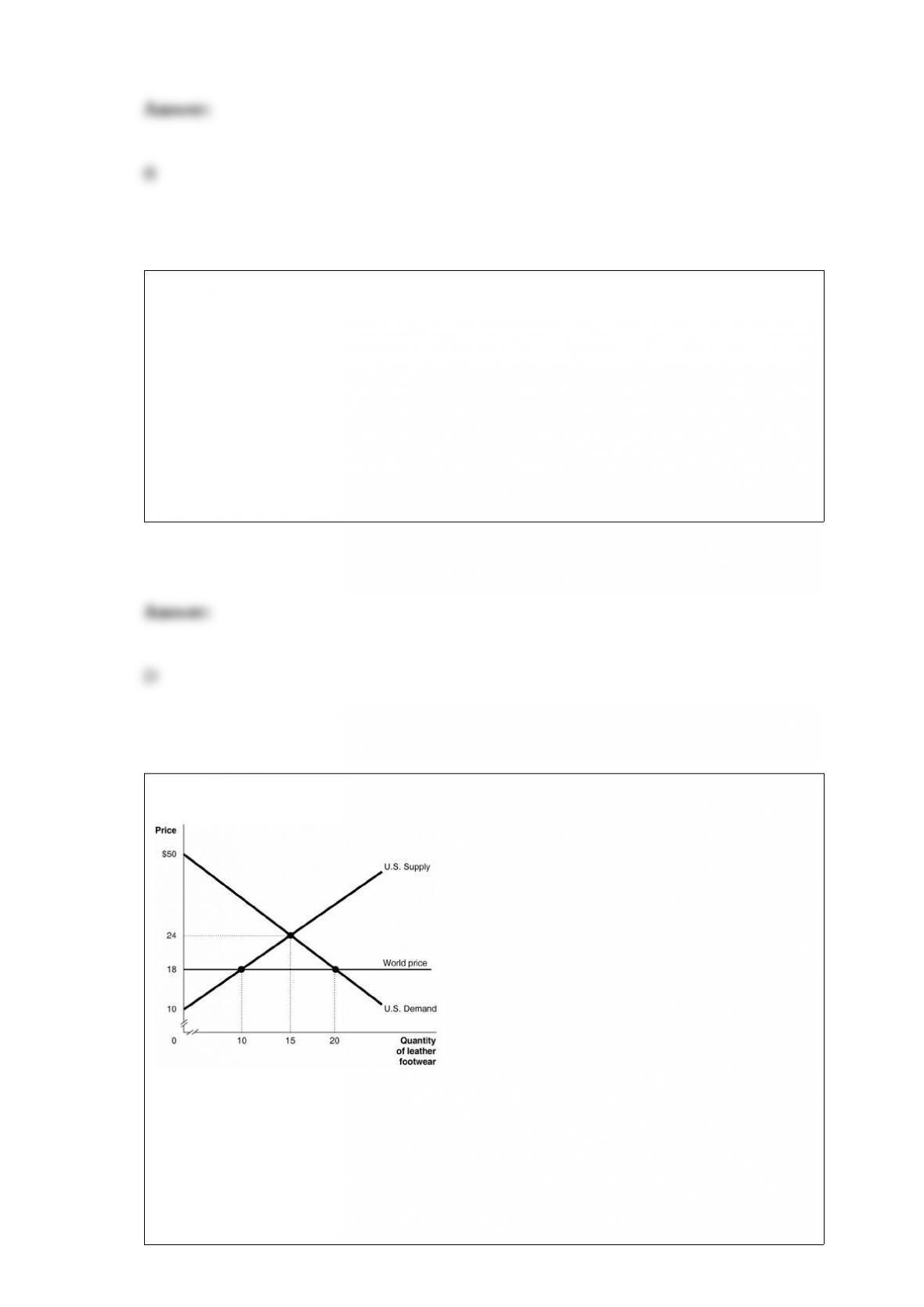
Figure 9-1
Figure 9-1 shows the U.S. demand and supply for
leather footwear. Suppose the government allows imports of leather footwear into the
United States. What will the market price be?
A) $10
B) $18

C) $24
D) >$24
If official poverty statistics for the United States included transfer payments individuals
receive from the government, such as Social Security payments and other non-cash
benefits such as food stamps,
A) the poverty rate would be lower.
B) poverty would be eliminated.
C) income inequality would be greater.
D) the poverty rate would be overstated.
All of the following are reasons why China is unlikely to maintain high enough rates of
productivity growth to catch-up with the standard of living in the United States except
A) the United States invests more in research and development. than does China.
B) much of China’s growth is likely due to the transition from a centrally-planned
economy to a market economy.
C) because of the low birth rate in China, the labor force will soon decline.
D) the Chinese migration of rural workers to more productive urban jobs.

An increase in the government budget surplus will shift the ________ curve for
loanable funds to the ________ and the equilibrium real interest rate will ________.
A) supply; right; fall
B) supply; left; rise
C) demand; right; rise
D) demand; left; fall
Dumping refers to
A) selling inferior products to unsuspecting consumers.
B) selling a product for a price below its cost of production.
C) exporting products that do not meet domestic safety standards.
D) illegally avoiding tariffs by selling products on the black market.
The restriction that a consumer’s total expenditure on goods and services purchased

cannot exceed the income available is referred to as
A) maximizing behavior.
B) economizing behavior.
C) the price constraint.
D) the budget constraint.
All of the following are disadvantages of cost-plus pricing except
A) It ignores the price elasticity of demand: for example, it may be possible to increase
profits by raising or lowering price.
B) If the industry comprises identical firms (with identical costs), markups could be
consistent among firms leading to no one firm having a competitive edge in terms of
price.
C) Allocating and apportioning business overheads to individual products could be
somewhat arbitrary.
D) The business has less incentive to cut or control costs: if costs increase, then selling
prices increase. Consequently, this might further erode a firm’s competitiveness.