What is the dominant strategy in a second-price auction?
A) bidding below one’s true value
B) bidding above one’s true value
C) bidding one’s true value
D) There is no dominant strategy.
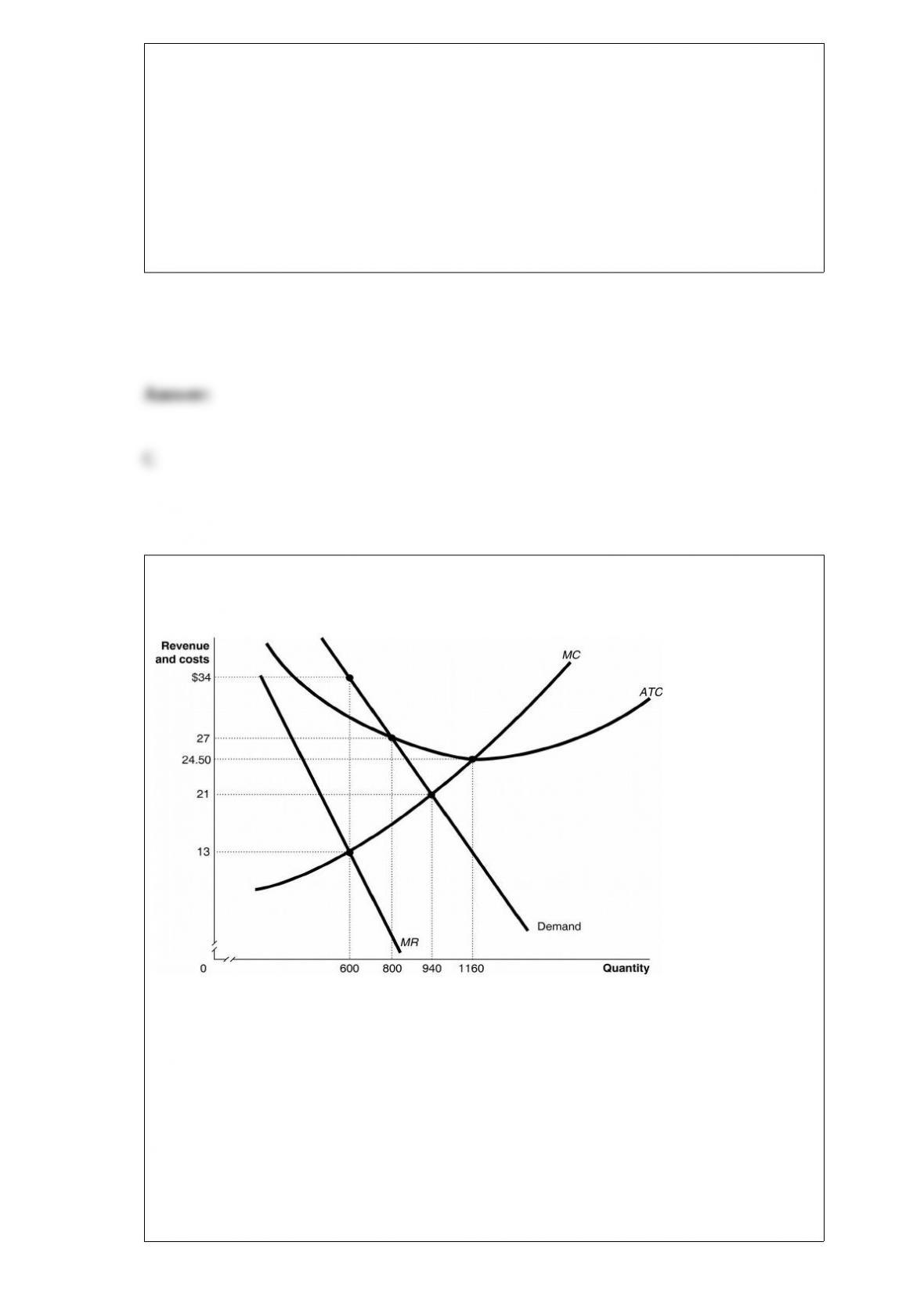
Figure 15-9
Figure 15-9 shows the demand and cost curves for a monopolist.
Refer to Figure 15-9. What is the difference between the monopoly’s price and
perfectly competitive industry’s price?
A) The monopoly’s price is higher by $9.50.
B) The monopoly’s price is higher by $13.
C) The monopoly’s price is higher by $3.50.
D) The monopoly’s price is higher by $21.
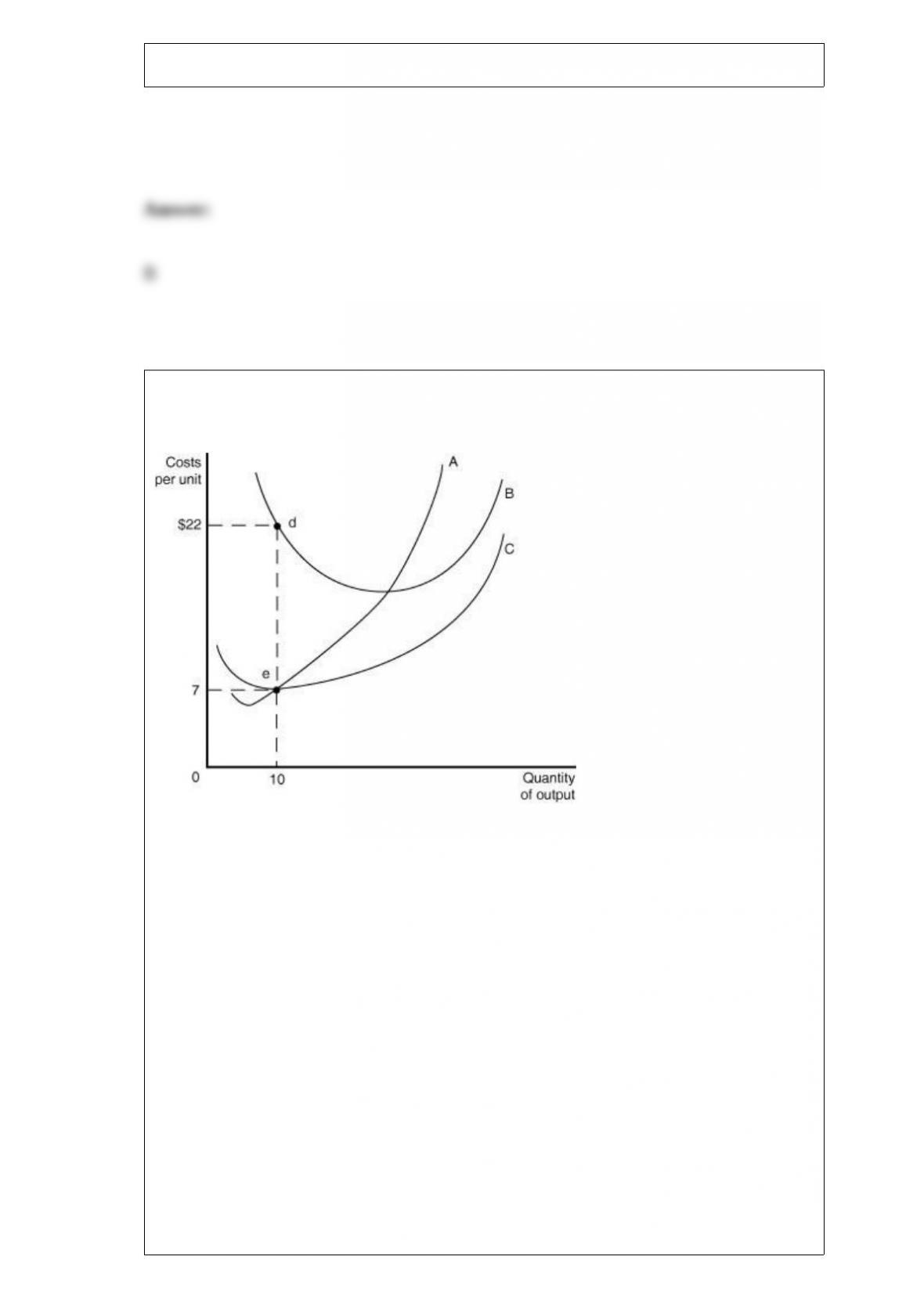
Figure 11-8
Refer to Figure 11-8 above to answer the following questions.
a. Identify the curves in the diagram.
A ________
B ________
C ________
b. What is the numerical value of fixed cost when the quantity of output=10?
c. What is the numerical value of variable cost when the quantity of output=10?
d. What is the numerical value of total cost when the quantity of output =10?
e. What is the numerical value of average fixed cost when the quantity of output =10?
f. What is the numerical value of average total cost when the quantity of output =10?
g. On the graph identify the area that represents the total variable cost of production
when the quantity of output =10.
h. On the graph identify the area that represents the fixed cost of production when the
quantity of output =10.
Which of the following is operating income?
A) explicit plus implicit costs
B) stockholders’ equity
C) revenue minus operating expenses
D) net profit
Many people sell goods through eBay at prices that are higher than the prices they paid
for these goods. Economists consider these transactions as
A) examples of zero sum games, since the value of the goods sold is exactly equal to
the prices paid for them.
B) unproductive since the goods sold have been produced in the past.
C) examples of exploitation of buyers of the goods by the sellers.
D) examples of arbitrage.
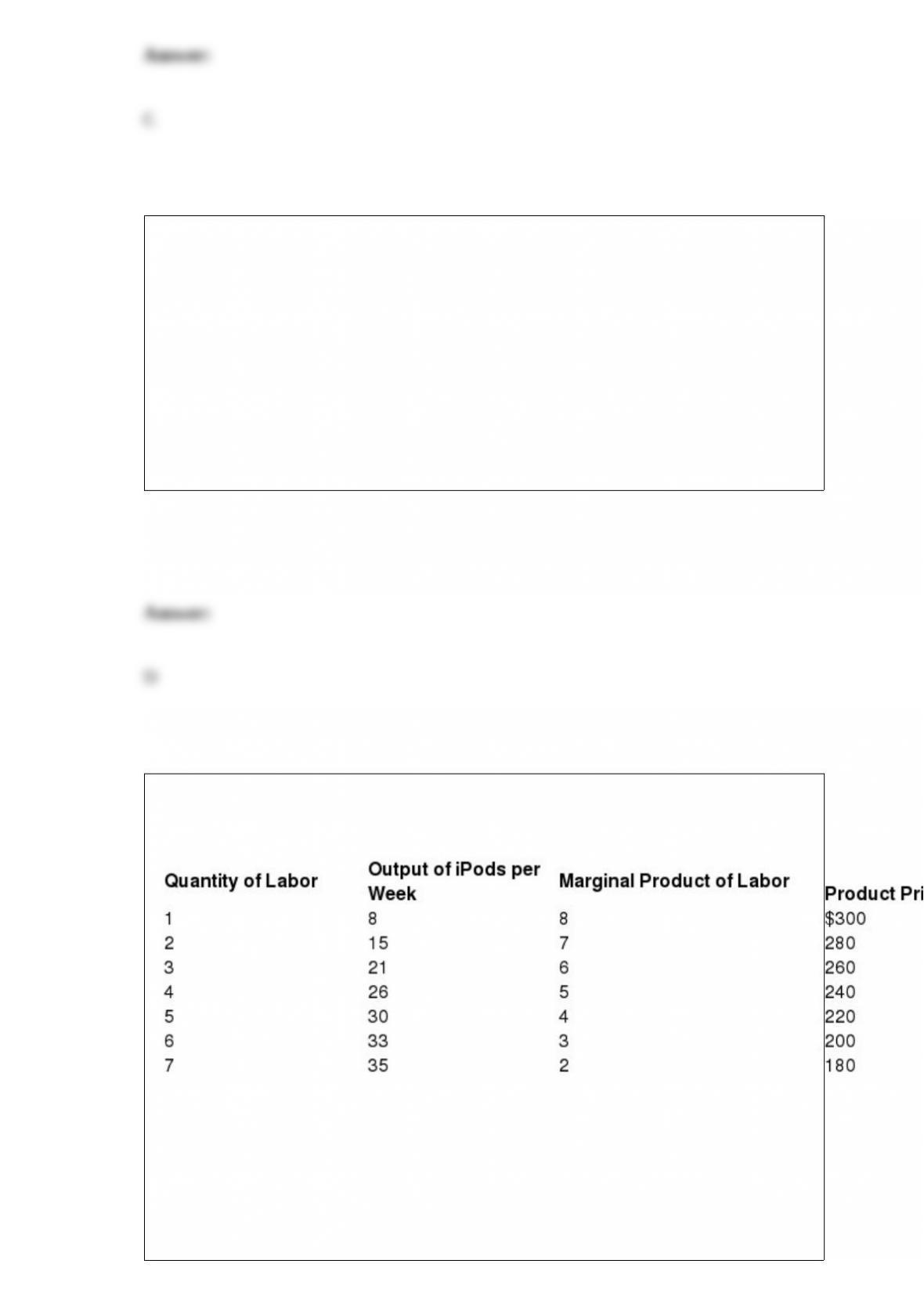
Table 17-2
Refer to Table 17-2. The firm represented in the diagram
A) has market power in the factor market.
B) has market power in the output market.
C) has market power in both the factor and product market.

D) has no market power in the factor or product market.
Marginal utility is the
A) total satisfaction received from consuming a given number of units of a product.
B) average satisfaction received from consuming a product.
C) extra satisfaction received from consuming one more unit of a product.
D) satisfaction achieved when a consumer has had enough of a product.
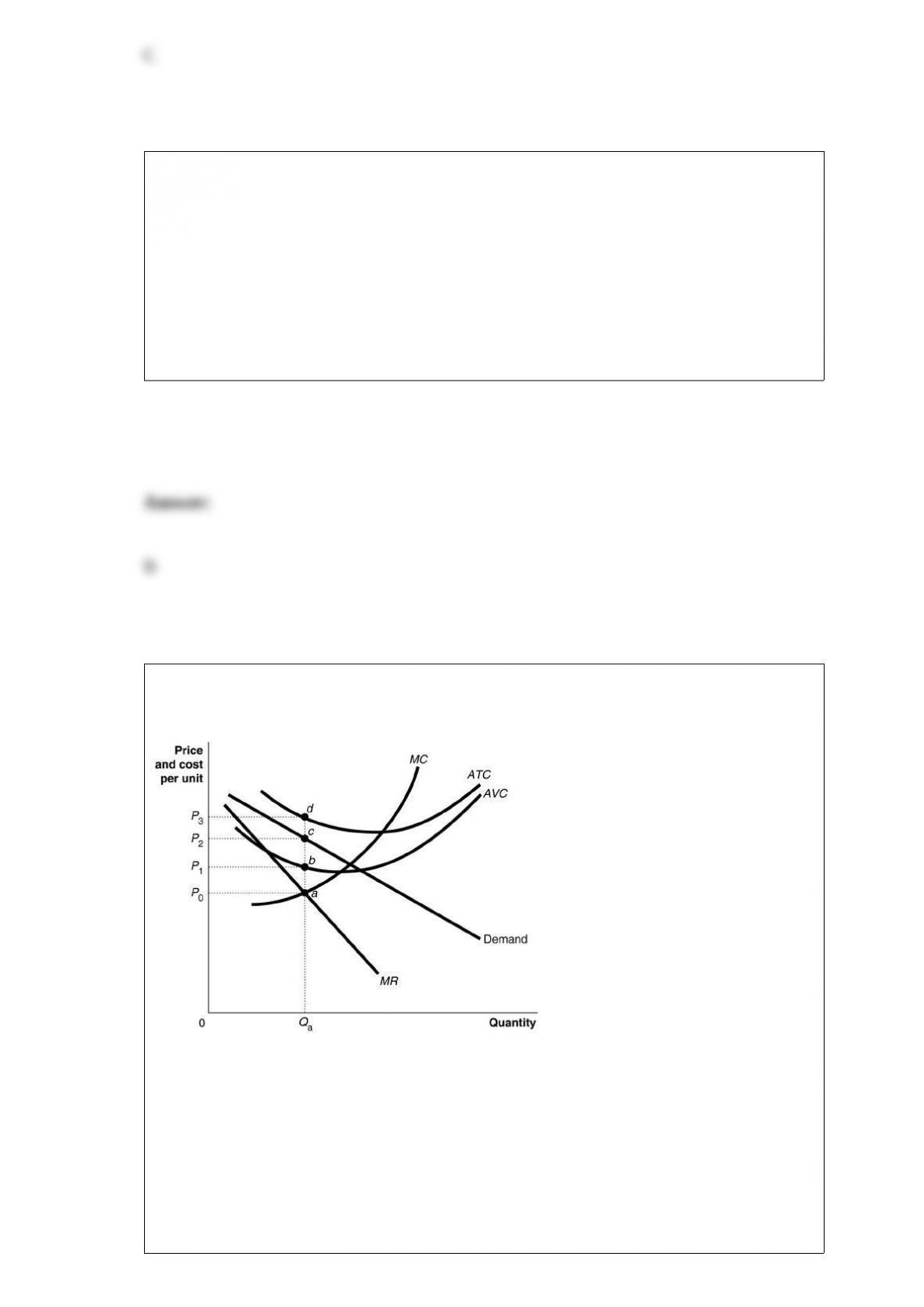
Figure 13-4
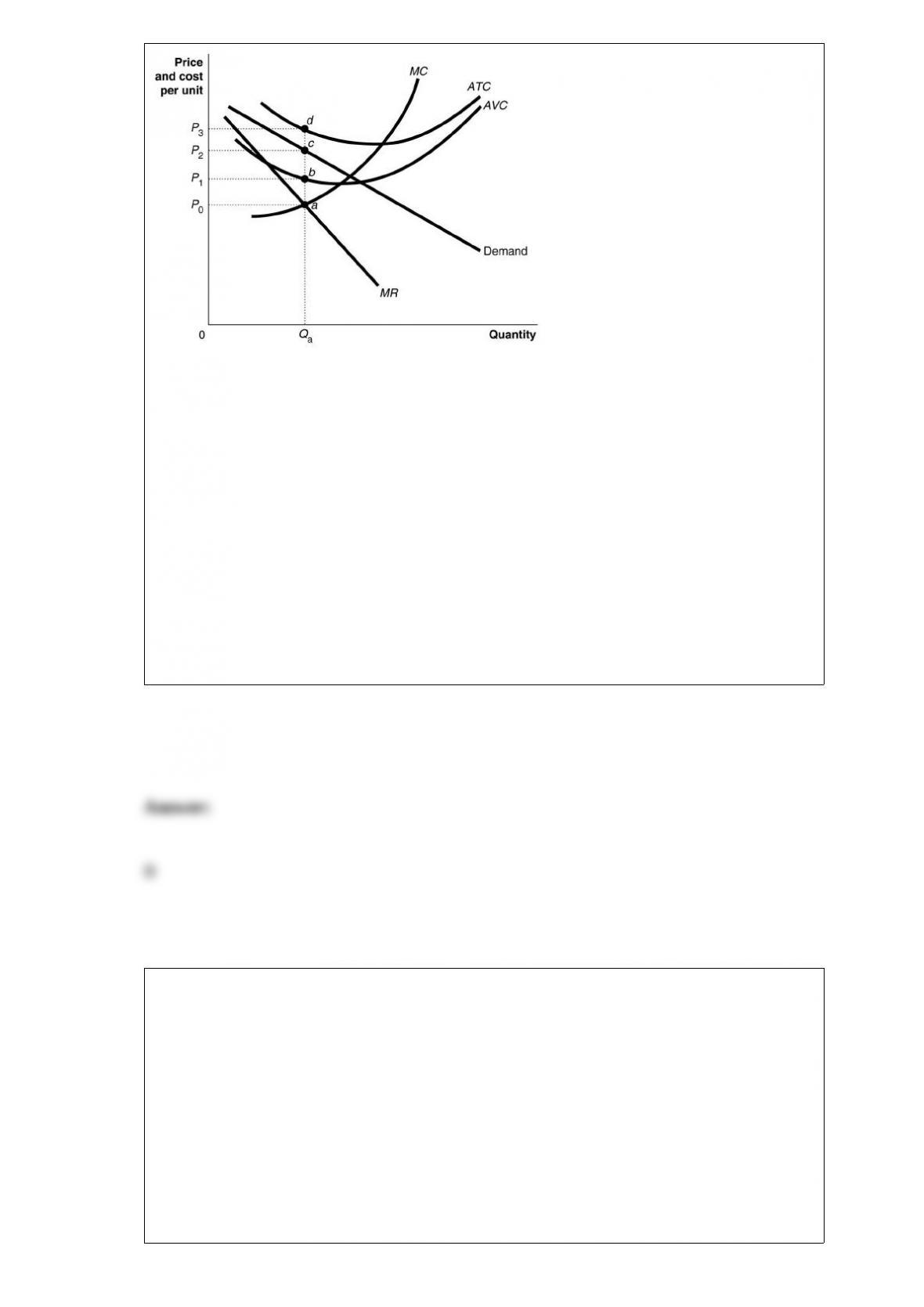
Figure 13-4 shows short-run cost and demand curves for a monopolistically competitive
firm in the market for designer watches.
Refer to Figure 13-4.What is the area that represents the total variable cost of
production?
A) 0P0aQa
B) 0P1bQa
C) P0abP1
D) P1bdP3
Suppose the following two events occur in the domestic market for radiologists:
a. Some hospitals are outsourcing some radiology services such as reading x-rays.
b. Some medical schools have closed down their radiology departments as fewer
students enroll in this field.
What is likely to happen to the equilibrium wage and quantity of radiologists following
these two events?
A) The equilibrium wage and the equilibrium quantity of radiologists rise.

B) The equilibrium wage and the equilibrium quantity of radiologists fall.
C) The equilibrium quantity falls and the effect on the equilibrium wage of radiologists
is indeterminate.
D) The equilibrium wage falls and the effect on equilibrium quantity of radiologists is
indeterminate.
Which of the following is evidence of a surplus of bananas?
A) Firms raise the price of bananas.
B) The price of bananas is lowered in order to increase sales.
C) The equilibrium price of bananas rises due to an increase in demand.
D) The quantity demanded of bananas is greater than the quantity supplied.
Table 2-2
Production choices for Billie’s Bedroom Shop
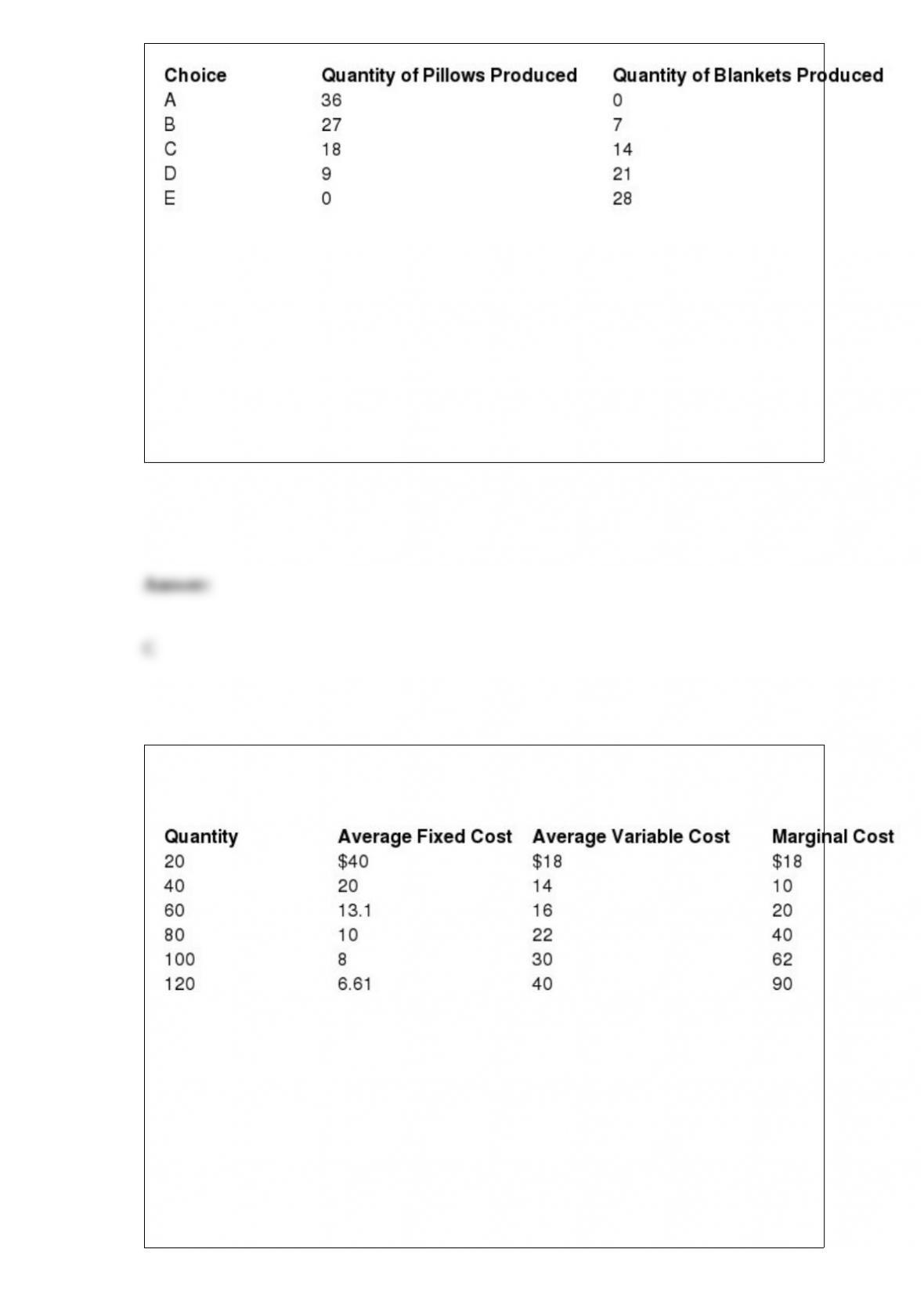
Refer to Table 2-2. Assume Billie’s Bedroom Shop only produces pillows and blankets.
A combination of 9 pillows and 14 blankets would appear
A) along Billie’s production possibilities frontier.
B) inside Billie’s production possibilities frontier.
C) outside Billie’s production possibilities frontier.
D) at the vertical intercept of Billie’s production possibilities frontier.
Table 12-4
Table 12-4 shows the short-run cost data of a perfectly competitive firm. Assume that
output can only be increased in batches of 20 units.
Refer to Table 12-4. If the market price is $45 the firm will produce
A) 60 units.
B) 80 units.
C) 100 units
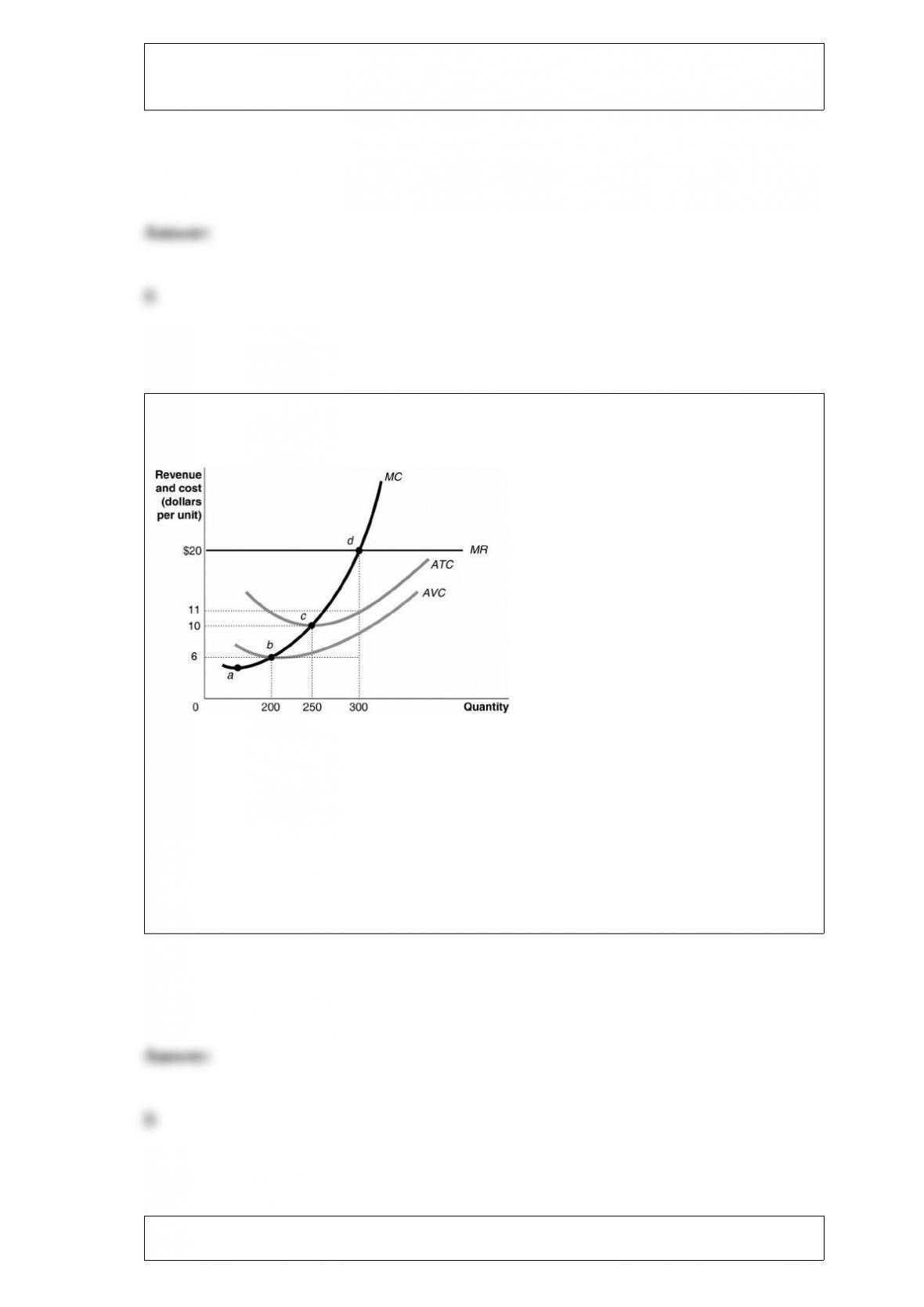
D) 120 units
Figure 12-10
Refer to Figure 12-10. The total cost at the profit-maximizing output level equals
A) $4,800.
B) $3,300.
C) $2,500.
D) $1,800.
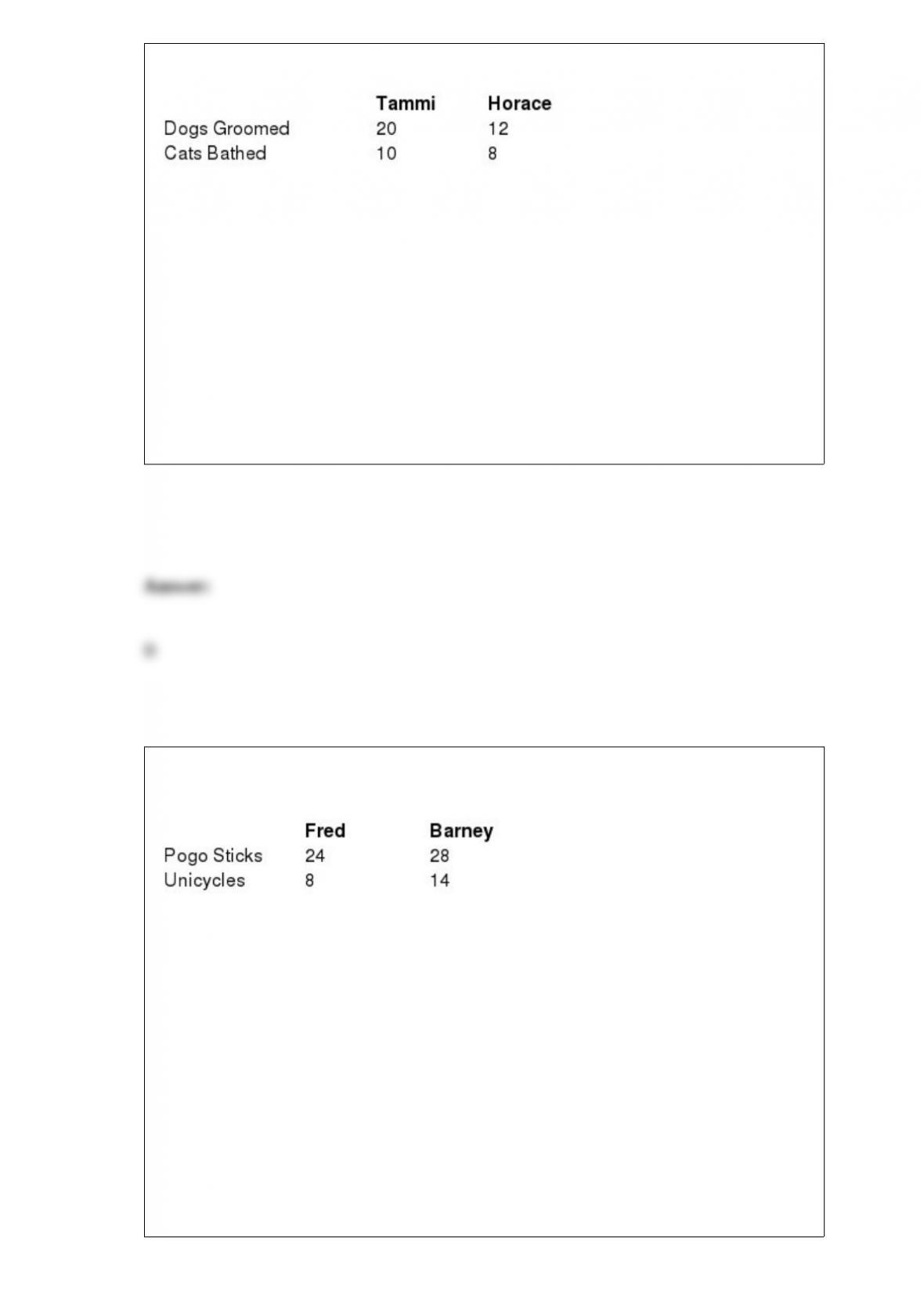
Table 2-10
Table 2-10 shows the output per day of two pet groomers, Tammi and Horace. They can
either devote their time to grooming dogs or bathing cats.
Refer to Table 2-10. What is tammi’s opportunity cost of bathing a cat?
A) half a groomed dog
B) two groomed dogs
C) two-thirds of a groomed dog
D) one and a half groomed dogs
Table 2-7
Table 2-7 shows the output per month of two people, Fred and Barney. They can either
devote their time to making pogo sticks or making unicycles.
Refer to Table 2-7. Which of the following statements istrue?
A) Fred has an absolute advantage in making both products.
B) Barney has an absolute advantage in making both products.
C) Barney has an absolute advantage in making pogo sticks and Fred in making
unicycles.
D) Barney has an absolute advantage in making unicycles and Fred in making pogo
sticks.

Until the early 1980s, The Walt Disney Company used a pricing strategy in which
visitors to its theme parks paid a low admission fee and also paid for rides. This pricing
strategy is an example of
A) perfect price discrimination.
B) cost-plus pricing.
C) a two-part tariff.
D) monopoly pricing.
Suppose a competitive firm is paying a wage of $12 an hour and sells its product at $3
per unit. Assume that labor is the only input. If hiring another worker would increase
output by three units per hour, then to maximize profits the firm should
A) not change the number of workers it currently hires.
B) not hire an additional worker.
C) hire another worker.
D) There is not enough information to answer the question.

Suppose when Nablom’s Bakery raised the price of its breads by 10 percent, the
quantity demanded fell by 15 percent. What was the effect on sales revenue?
A) Sales revenue increased.
B) Sales revenue remained unchanged.
C) Sales revenue decreased.
D) It cannot be determined without information on prices.
If the best surgeon in town is also the best at cleaning swimming pools, then according
to economic reasoning, this person should
A) pursue the activity he enjoys more.
B) specialize in cleaning swimming pools because it is more labor-intensive.
C) split his time evenly between being a surgeon and cleaning swimming pools.
D) specialize in being a surgeon because its opportunity cost is lower.

In a subgame perfect equilibrium
A) the first mover has an advantage over other players.
B) the last mover has an advantage over other players.
C) each player’s strategy constitutes a Nash equilibrium at every subgame of the
original game.
D) each player has the same response as the others at every subgame of the tree.
If a perfectly competitive firm achieves productive efficiency then
A) it will raise its price in order to earn an economic profit.
B) the price of the good it sells is equal to the benefit consumers receive from
consuming the last unit of the good sold.
C) it is producing at minimum efficient scale.
D) it is producing the good it sells at the lowest possible cost.
Figure 11-2
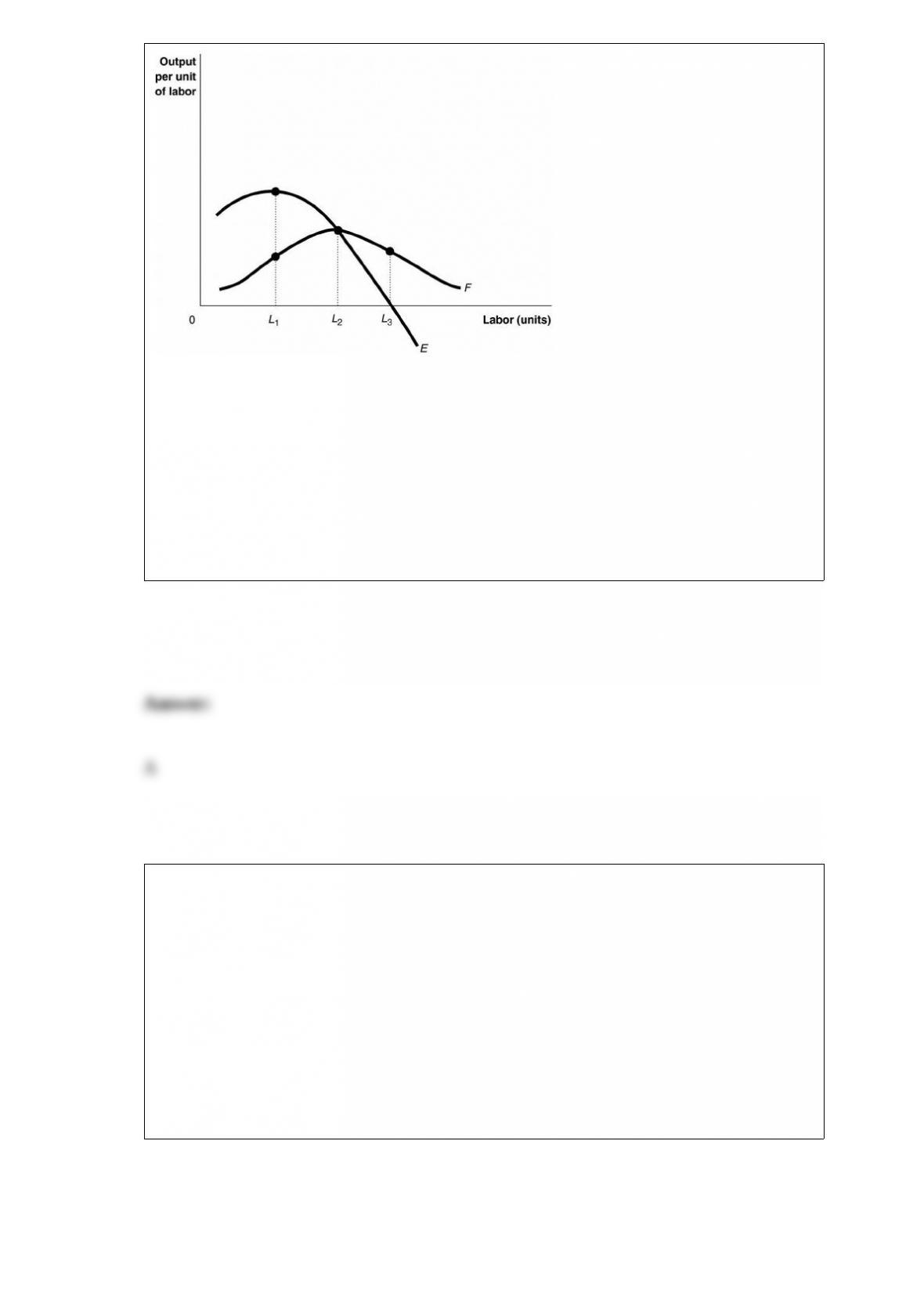
Refer to Figure 11-2. The average product of labor declines after L2 because
A) the marginal product of labor is below the average product of labor.
B) the marginal product of labor is falling.
C) the marginal product of labor is negative.
D) the marginal product of labor is positive.
The popularity of digital cameras has enticed large discount stores like Wal-Mart and
Costco to offer digital photo printing services. How does this affect the digital photo
printing market?
A) The demand curve for digital photo printing services shifts to the right.
B) The demand curve for digital photo printing services shifts to the left.
C) The supply curve for digital photo printing services shifts to the right.
D) The supply curve for digital photo printing services shifts to the left.

If a restaurant was a natural monopoly, its
A) marginal cost curve would still be declining when it crossed the demand curve.
B) average total cost curve would still be declining when it crossed the demand curve.
C) marginal revenue curve wold be the same as its demand curve.
D) marginal revenue curve would be horizontal.
Zach Greinke’s marginal product as a baseball player would be about the same as a Los
Angeles Dodger and a Kansas City Royal. Why were the Dodgers willing to pay
Greinke a higher salary than he was paid as a Royal?
A) The Dodgers play needed a superstar to attract fans to their games. The Royals had
no need to attract fans to their games.
B) The Dodgers play more home games than the Royals. As a result, the Dodgers earn
more revenue from ticket sales that they can use to pay player salaries.
C) Greinke’s marginal revenue product is higher as a Dodger than it was as a Royal.
D) The owner of the Dodgers was under more pressure from the fans and the Los
Angeles media to pay Greinke a higher salary than the Royals were willing to pay.
The absolute value of the slope of an isocost line equals the ratio of
A) the marginal productivities of the two inputs.
B) the prices of the two inputs.
C) the marginal utilities of the two inputs.
D) the quantities of the two inputs.
Figure 13-4
Figure 13-4 shows short-run cost and demand curves for a monopolistically competitive
firm in the market for designer watches.
Refer to Figure 13-4. Should the firm represented in the diagram continue to stay in
business despite its losses?
A) No, it should shut down.
B) Yes, its total revenue covers its variable cost.

C) No, it is not able to cover its fixed cost.
D) Yes, it should increase its revenue by raising its price.
If a worker can produce 20 units of output which can be sold for $4 per unit, what is the
maximum wage that firm should pay to hire this worker?
A) $80
B) $80 minus the firm’s profit markup
C) It depends on what the going wage rate is in the labor market.
D) There is insufficient information to answer the question.
Alan Krueger conducted a survey of fans at the 2001 Super Bowl who purchased tickets
to the game for $325 or $400. Krueger found that (a) 94 percent of those surveyed
would not have paid $3,000 for their tickets, and (b) 92 percent of those surveyed
would not have sold their tickets for $3,000. These results are an example of
A) rational consumer behavior.
B) the endowment effect.
C) the fallacy of composition.
D) the failure to ignore sunk costs.
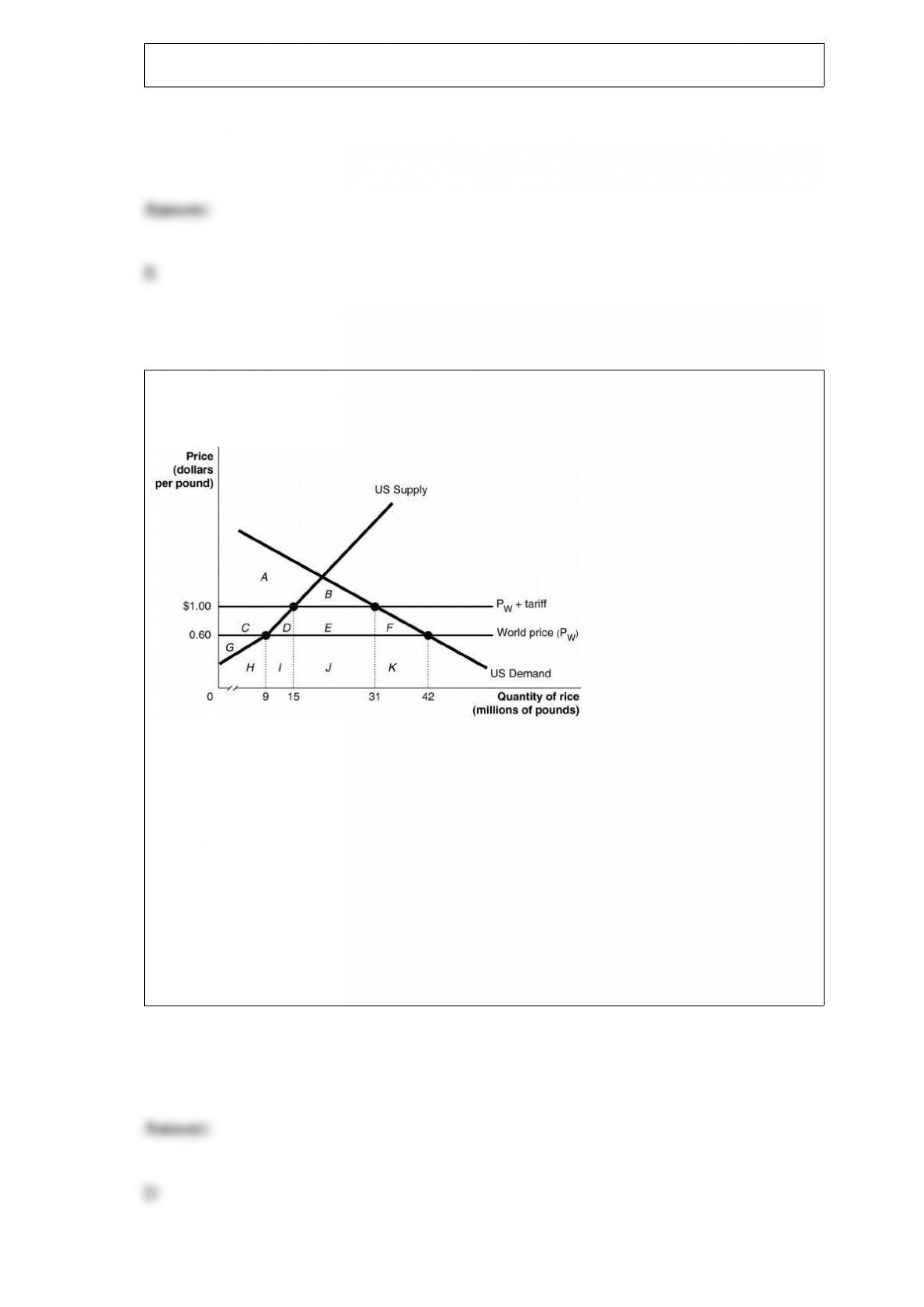
Figure 9-2
Suppose the U.S. government imposes a $0.40 per pound tariff on rice imports. Figure
9-2 shows the impact of this tariff.
Refer to Figure 9-2. Without the tariff in place, the United States consumes
A) 9 million pounds of rice.
B) 15 million pounds of rice.
C) 31 million pounds of rice.
D) 42 million pounds of rice.