Figure 16-6
In the dynamic model of AD–AS in the figure above, if the economy is at point A in year
1 and is expected to go to point B in year 2, Congress and the president would most
likely pursue
A) expansionary fiscal policy.
B) contractionary fiscal policy.
C) expansionary monetary policy.
D) contractionary monetary policy.
E) expansionary automatic stabilizers.
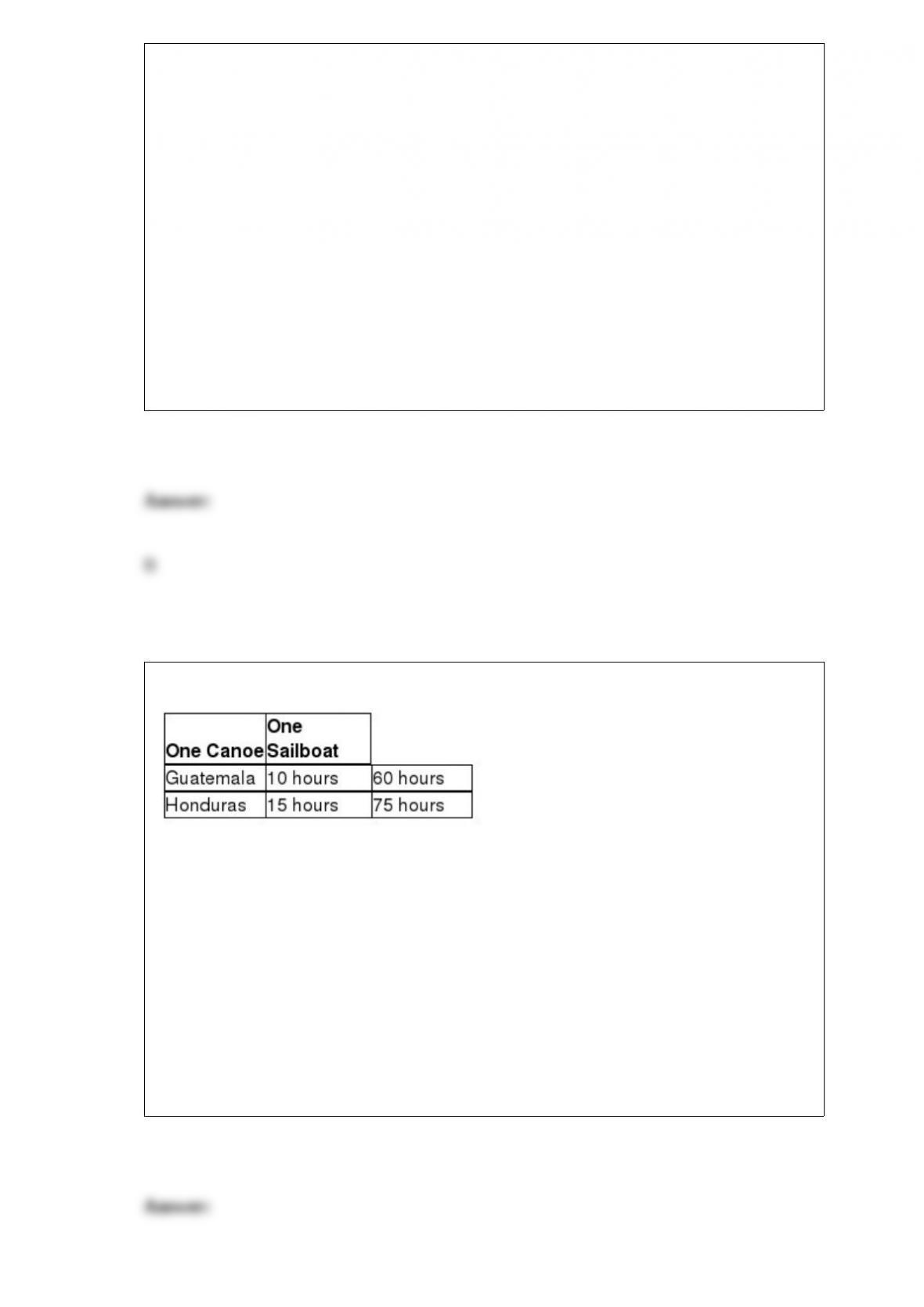
Table 2-12
Table 2-12 shows the number of labor hours required to produce a canoe and a sailboat
in Guatemala and Honduras.
What is Honduras’s opportunity cost of producing one sailboat?
A) 1/5 of a canoe
B) 1.5 canoes
C) 4 canoes
D) 5 canoes
Suppose the labor force stays constant, and the working-age population stays constant,
but a greater number of persons who were unemployed become employed. The labor
force participation rate will
A) increase.
B) decrease.
C) remain constant.
D) not change in a way that can be predicted.
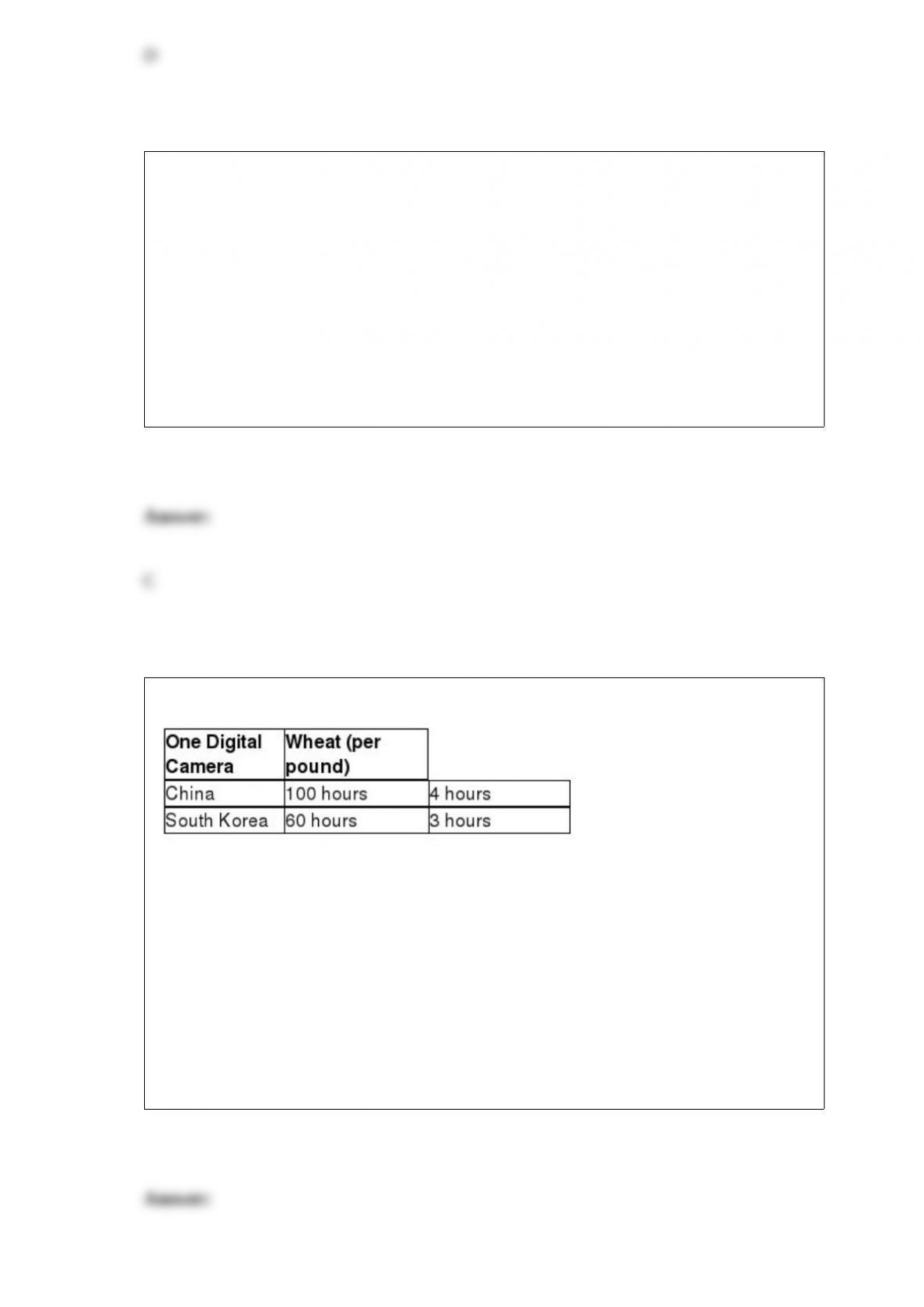
Table 2-8
Table 2-8 shows the number of labor hours required to produce a digital camera and a
pound of wheat in China and South Korea. What is South Korea’s opportunity cost of
producing one digital camera?
A) 0.05 pounds of wheat
B) 20 pounds of wheat
C) 25 pounds of wheat
D) 60 pounds of wheat

Federal government expenditures, as a percentage of GDP,
A) have risen since the early 1950s to the present.
B) have fallen since the early 1950s to the present.
C) rose from 1950 to 1991, fell from 1992 to 2001, and have risen from 2001 to the
present.
D) rose from 1950 to 2001 and then fell from 2001 to the present.
E) rose from 1950 to 1980, fell from 1981 to 2001, and have risen from 2001 to the
present.
What is the difference between labor’s marginal product and marginal revenue product?
A) The marginal product of labor is the increase in output as a result of hiring an
additional worker while the marginal revenue product of labor is the increase in profit
as a result of hiring an additional worker.
B) The marginal revenue product of labor is the dollar value of hiring an additional
worker while the marginal product of labor is the increase in the firm’s physical output
as a result of hiring an additional worker.
C) The marginal product of labor is the additional labor’s contribution to the firm’s total
output while the marginal revenue product is the additional labor’s contribution to the
firm’s total sales revenue.
D) Labor’s marginal product is a measure of labor’s productivity while labor’s marginal
revenue product is a measure of labor’s ability to sell the firm’s products.

if government spending and the price level increase, then
A) the interest rate increases, consumption declines, and investment spending declines.
B) the interest rate decreases, consumption declines, and investment spending declines.
C) the interest rate increases, consumption increases, and investment spending
increases.
D) the interest rate decreases, consumption increases, and investment spending
increases.
If Japanese workers are more productive than French workers, then trade between Japan
and France
A) can take place only if France has an absolute advantage in producing a good or
service Japanese buyers want.
B) cannot take place because Japanese goods and services will be less expensive than
French goods and services.
C) cannot take place until French workers become more productive.
D) will take place so long as each country has a comparative advantage in a good or
service that buyers in the other country want.

In the 1980s, Japan agreed to limit the quantity of automobiles it would export to the
United States. Why did the Japanese government agree to this trade restriction?
A) Japanese automobile producers lobbied for the restrictions in order to increase the
price of their exports to the United States.
B) The Japanese government wanted to limit sales to the United States in order to make
more automobiles available for Japanese consumers.
C) The Japanese government feared that the alternative would be a tariff or quota on
imports of Japanese automobiles imposed by the U.S. government.
D) The Japanese government wanted more automobiles to be available for export to
countries other than the United States.
Research by Daniel Kahneman, Jack Knetch, and Richard Thaler has shown that
companies like airlines were explicitly able to include a fuel surcharge in their prices
because
A) consumers had no choice but to pay the price of the surcharges due to the lack of
competition in the industry.
B) a government-imposed price ceiling on airline ticket prices left the airlines not other
way to cover the increase in costs.
C) adding a separate fuel surcharge to the price of airline tickets did not actually
increase the price of the tickets.
D) consumers see it as fair for firms to raise prices after an increase in costs.
Members of the European Union decided to adopt a single currency by what year?
A) 2008
B) 2005
C) 1999
D) 1992
For which of the following firms is patent protection of vital importance?
A) furniture producers
B) software firms
C) pharmaceutical firms
D) auto makers
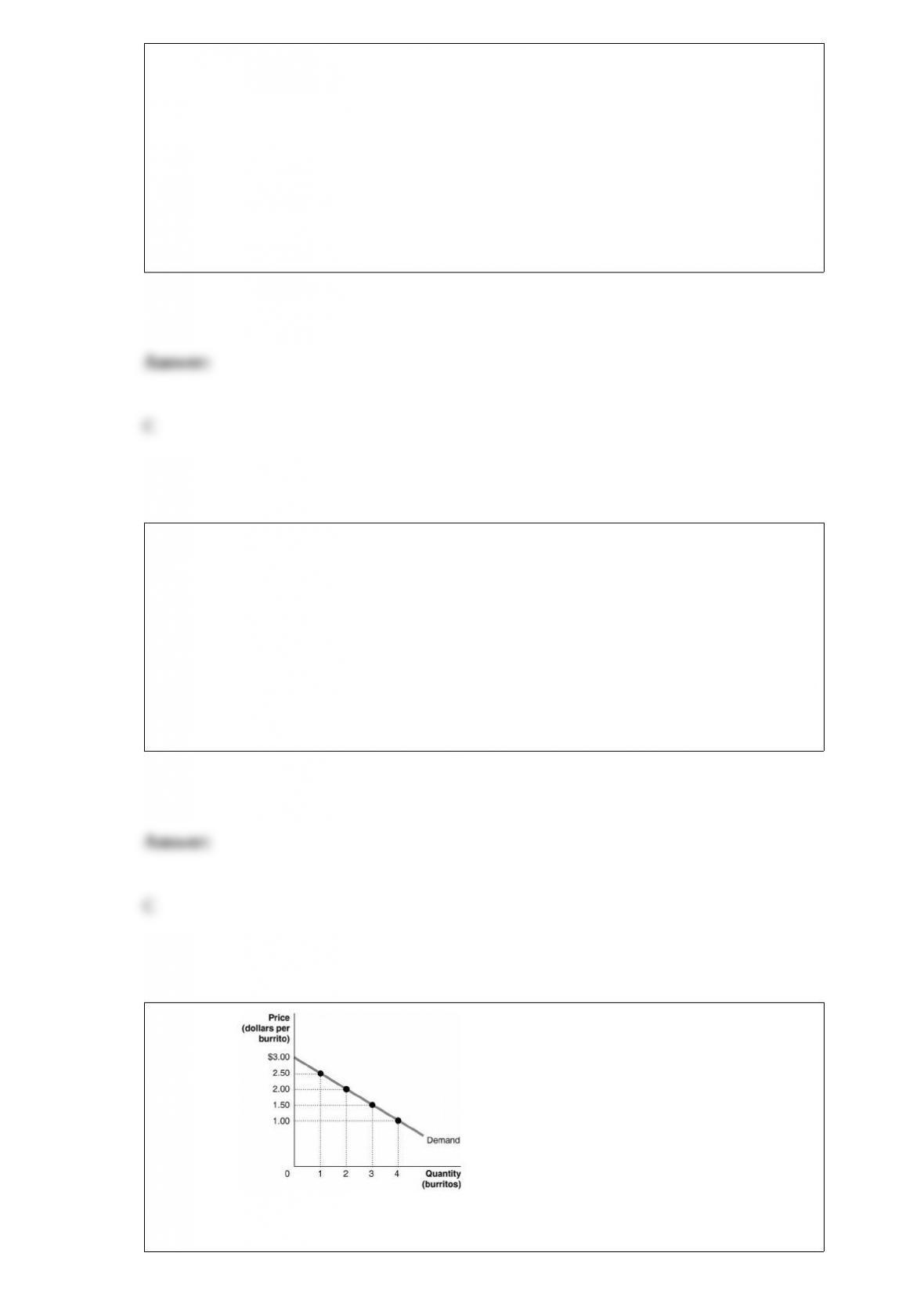
Figure 4-1 Figure 4-1 shows Arnold’s demand curve for
burritos.

If the market price is $1.50, what is the consumer surplus on the first burrito?
A) $0.50
B) $1.00
C) $1.50
D) $7.50
Following the tariff imposed on Chinese tires, some businesspeople correctly argued
that the U.S. tariff would result in
A) China retaliating by raising tariffs on some U.S. exports.
B) China halting the sale of all products in the United States.
C) U.S. firms never being able to meet the demand for U.S.-produced tires.
D) the government demanding price cuts from U.S. tire manufacturers.
________ is called an implicit cost, while ________ is called an explicit cost.
A) An accounting cost; an economic cost
B) A nonmonetary opportunity cost; a cost that involves spending money
C) A production cost; a sales cost
D) An actual cost; a hypothetical cost

If net exports are equal to net foreign investment,
A) the balance of payments is zero.
B) the current account balance is equal to the negative of the financial account balance.
C) net capital inflows are equal to imports minus exports.
D) All of the above are true when net exports are equal to net foreign investment.
The automatic budget surpluses and budget deficits that occur in the federal budget over
the business cycle
A) destabilize the economy.
B) stabilize the economy.
C) decrease potential GDP.
D) increase potential GDP.
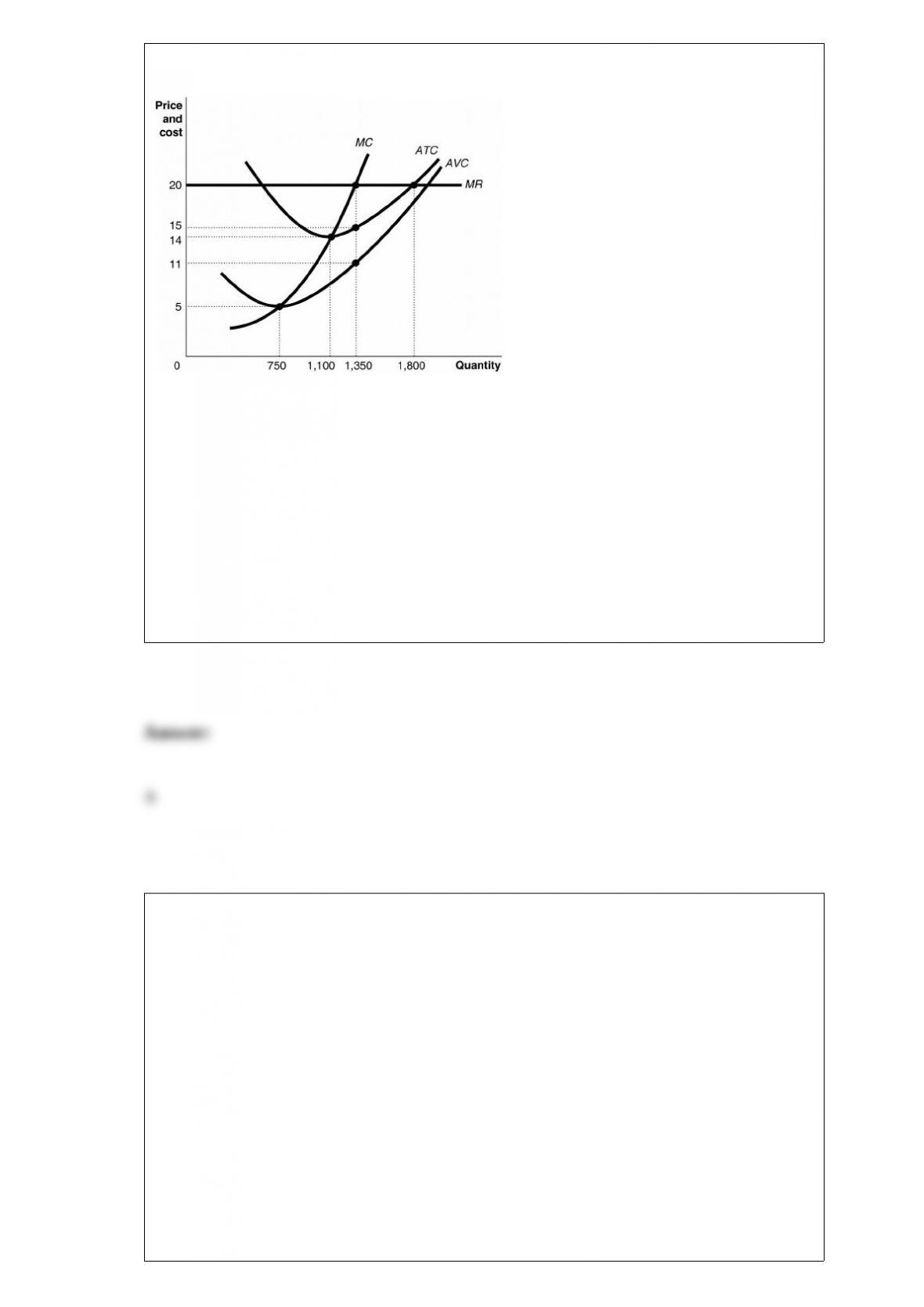
Figure 12-5
Figure 12-5 shows cost and demand
curves facing a typical firm in a constant-cost, perfectly competitive industry. The firm’s
manager suggests that the firm’s goal should be to maximize average profit. If the firm
does this, what is the amount of profit that it will earn?
A) $6,600
B) $6,750
C) $12,150
D) $36,000
Prices of microbrewery beer (assume that this is a normal good) have risen steadily in
recent years. Over this same period, prices for fermenting vats used in beer making
have also risen and consumer incomes have fallen. Which of the following best explains
the rising prices of microbrewery beer?
A) The supply curve for microbrewery beer has shifted to the left while the demand
curve for microbrewery beer has shifted to the right.
B) The demand curve for microbrewery beer has shifted to the left more than the supply
curve has shifted to the left.
C) The demand curve and the supply curve for microbrewery beer have both shifted to
the right.
D) The supply curve for microbrewery beer has shifted to the left more than the demand
curve has shifted to the left.
For purposes of monetary policy, the Federal Reserve has targeted the interest rate
known as the
A) federal funds rate.
B) Treasury bill rate.
C) discount rate.
D) prime rate.