
Use the table below to calculate the CPI in 2007. Assume the base year is 2007 and the
cost of the market basket in the base year is $275.50.
The CPI in 2007 is
a. 100
b. 126
c. 115
d. 230
e. 200
Gross Domestic Product (GDP) per capita is
a. GDP in current dollars
b. GDP adjusted for inflation
c. GDP per person
d. GDP per dollar spent
e. GDP per day
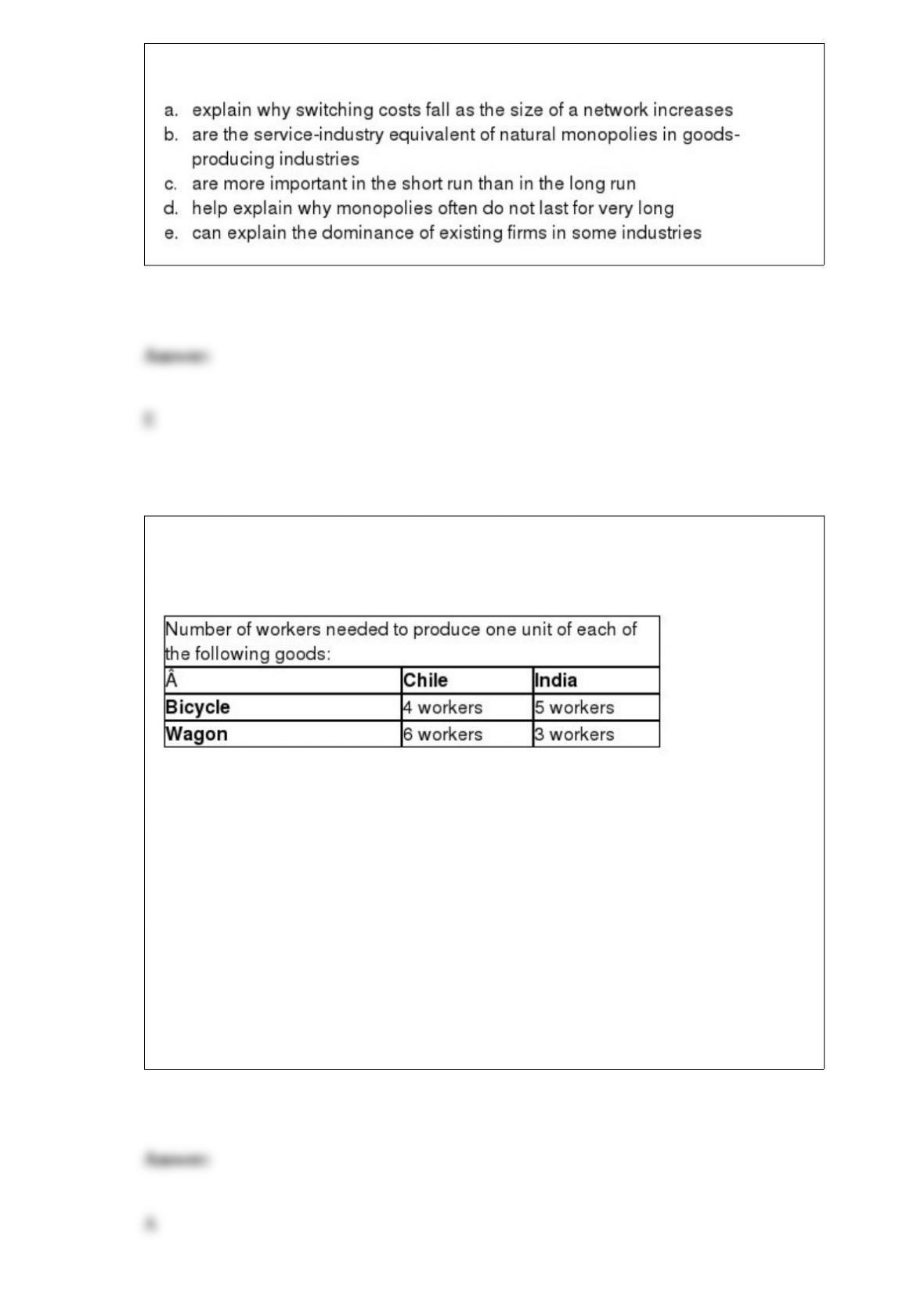
Network externalities
According to Figure 16-6, which of the following statements is correct?
Figure 16-6
a. Chile has the both the absolute and comparative advantage in the production of
bicycles.
b. India has both the absolute and comparative advantage in the production of bicycles.
c. Chile has the absolute advantage in the production of wagons but India has the
comparative advantage.
d. India has the absolute advantage in the production of bicycles but Chile has the
comparative advantage.
e. India has the absolute advantage in the production of wagons but Chile has the
comparative advantage.

Which of the following government policies might increase labor supply?
a. Increasing transfer payments to the needy.
b. Decreasing income tax rates.
c. Increasing income tax rates.
d. Increasing the availability of government training programs.
e. Increase payroll taxes.
Under what condition can the U.S. government continue to pay interest on a rising debt
without eventually needing to increase the average tax rate?
a. If the national debt grows at the same rate as nominal GDP
b. If the nominal interest on the national debt grows faster than nominal GDP
c. If the total interest payments on the national debt grow faster than nominal GDP
d. If the national debt grows faster than nominal GDP
e. If the real interest on the national debt grows faster than real GDP
Recessions typically last longer than expansions.
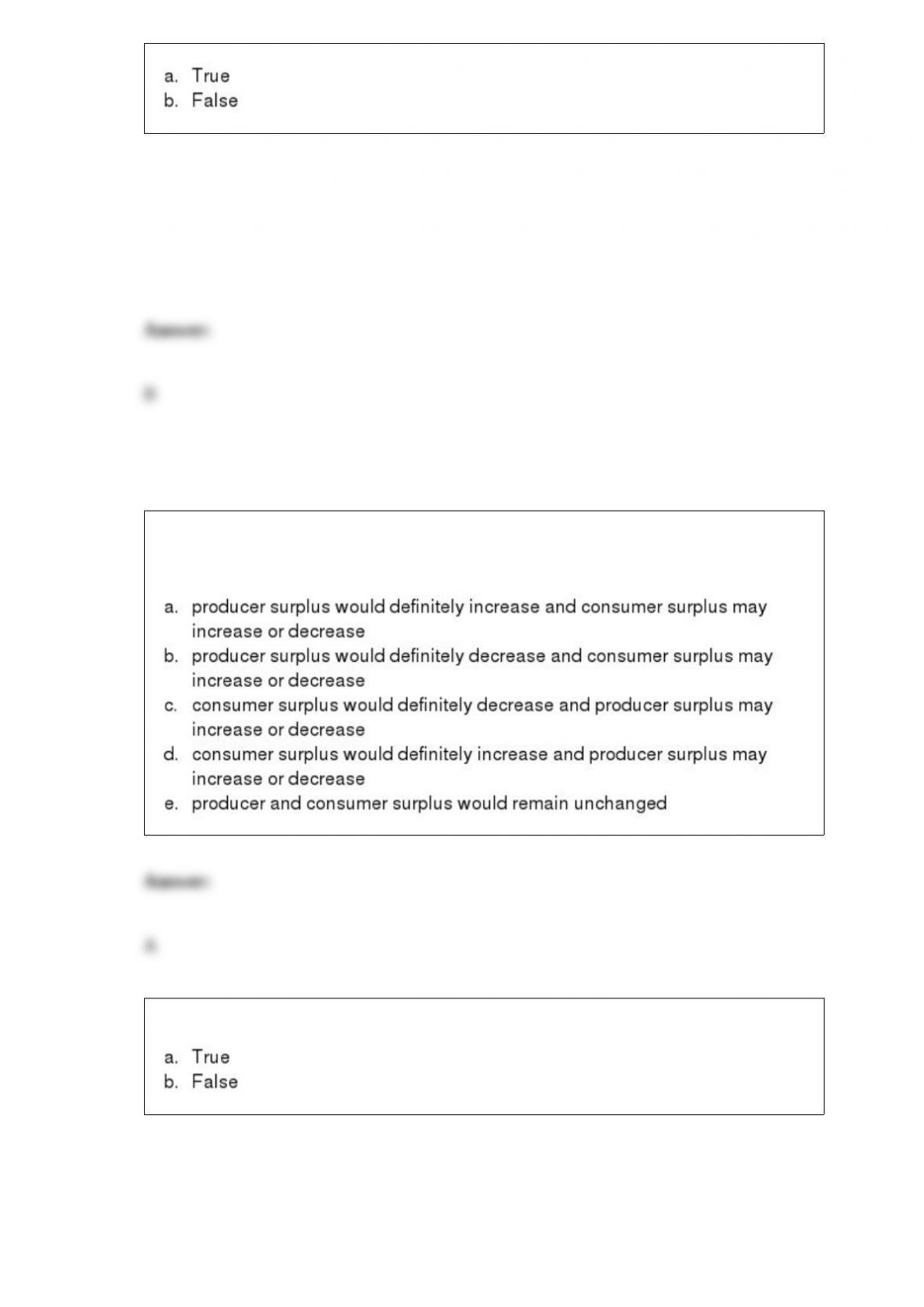
If a perfectly competitive market is in equilibrium and then market demand increases,
which of the following would happen?
The aggregate demand curve tells us equilibrium real GDP at any level of income.
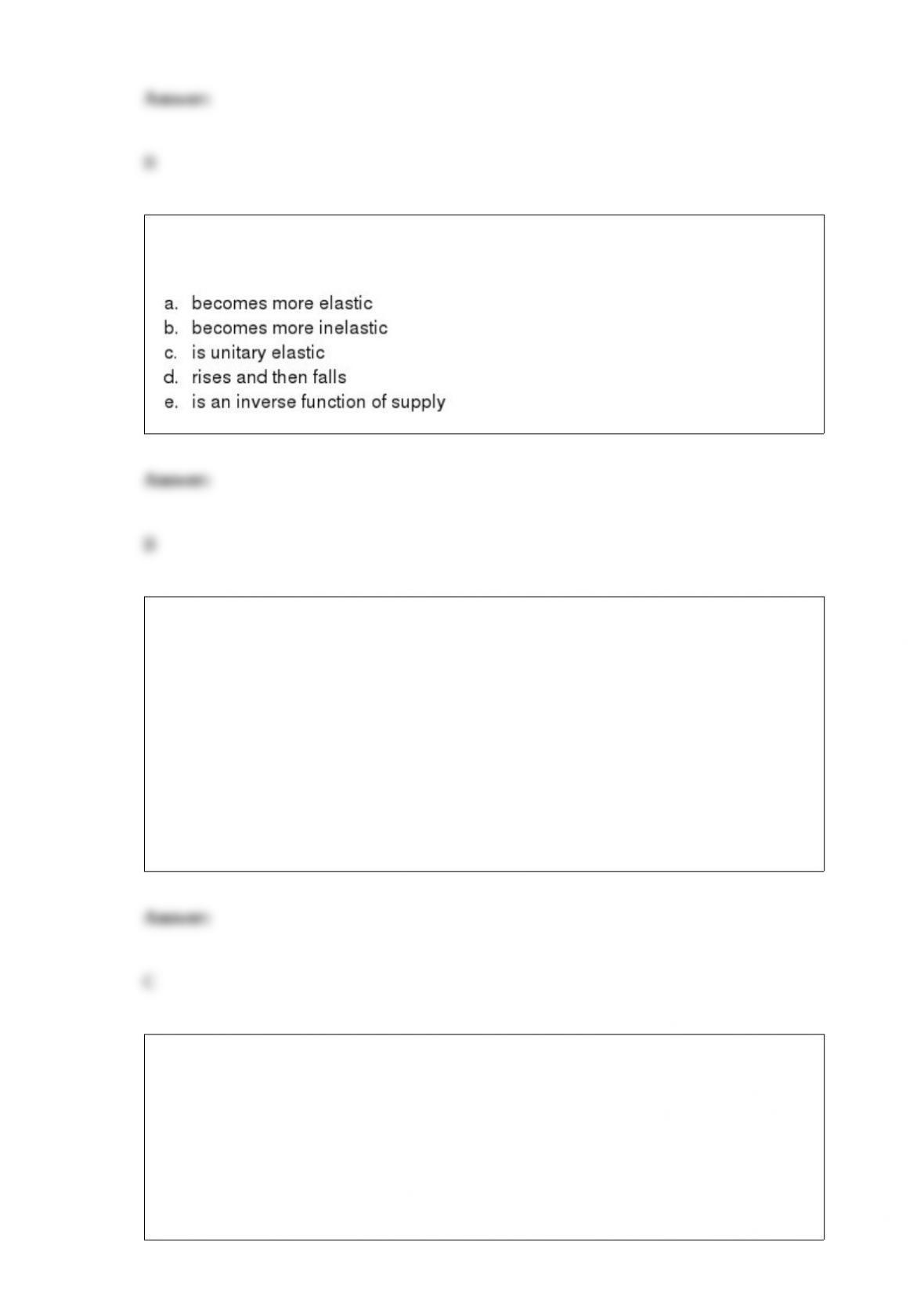
If the demand curve is a straight line and has the normal negative slope, then as quantity
demanded increases, demand
Where can equilibrium GDP be found on a graph?
a. Where the consumption function crosses the 45-degree line
b. Where the 45-degree line crosses the investment function
c. Where the aggregate expenditure function crosses the 45-degree line
d. Where total output is equal to the unplanned inventory change
e. Where the next exports function crosses the 45-degree line
What is the full-employment output level?
a. The output level that results when the loanable funds market clears
b. The output level that results when the returns to labor are zero
c. The output level that results when factories are completely full
d. The output level that results when the labor market clears
e. The output level that would occur if the output level was positive.
The Fed can surely reduce the rightward shift of the AD curve, but
a. stock and bond prices may fall dramatically
b. inflation may rise sharply
c. inflation would change in an unpredictable fashion
d. recession may result
e. unemployment may fall to below the natural rate
For a normal good, quantity demanded
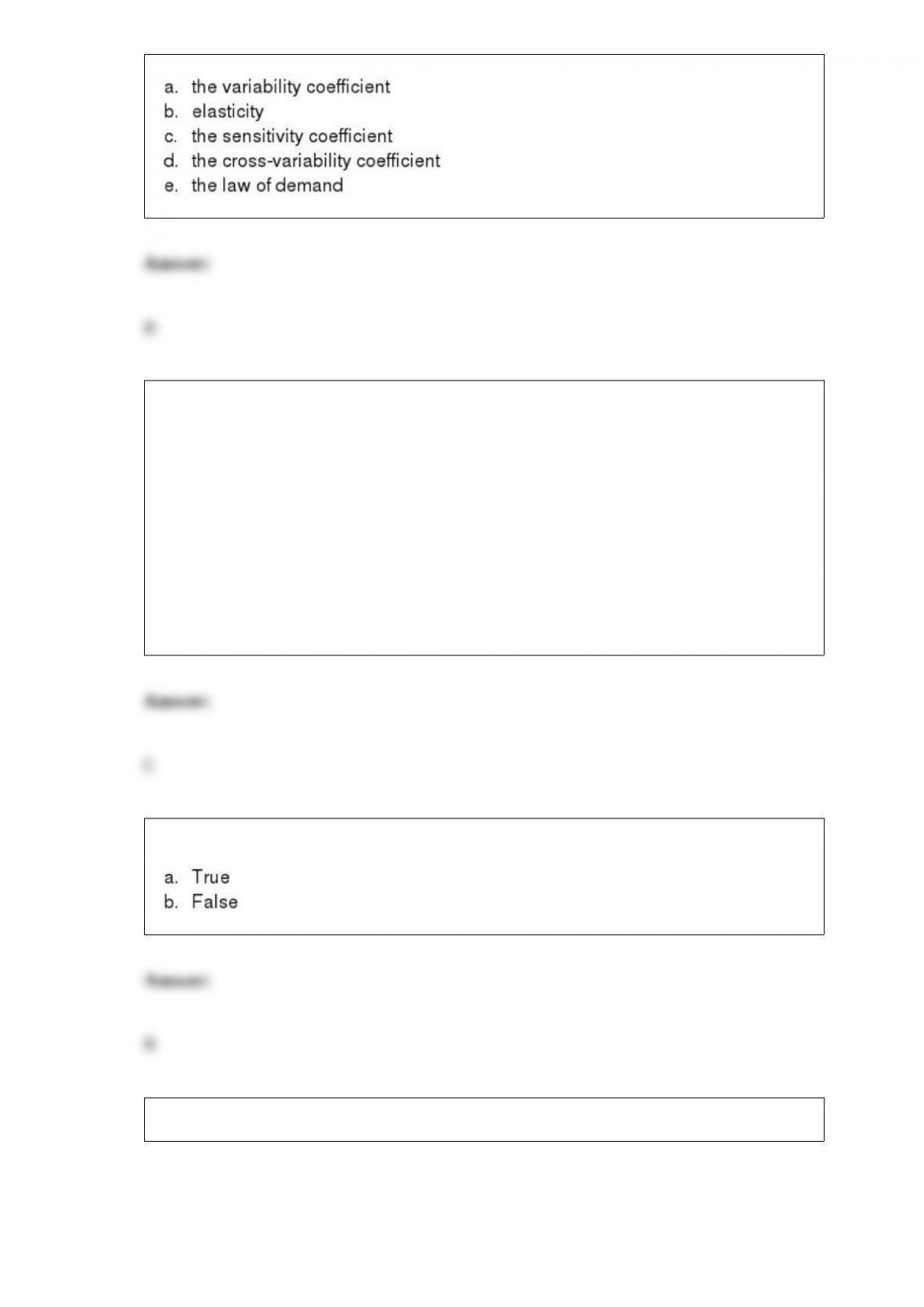
The sensitivity of one economic variable to changes in another variable is known as
A real variable is one that is
a. not adjusted for the dollar’s changing value
b. measured in current dollars
c. adjusted for the dollar’s changing value
d. not measured in terms of goods and services
e. not adjusted for changes in the price level
An increase in the wage rate will cause the labor supply curve to shift to the right.
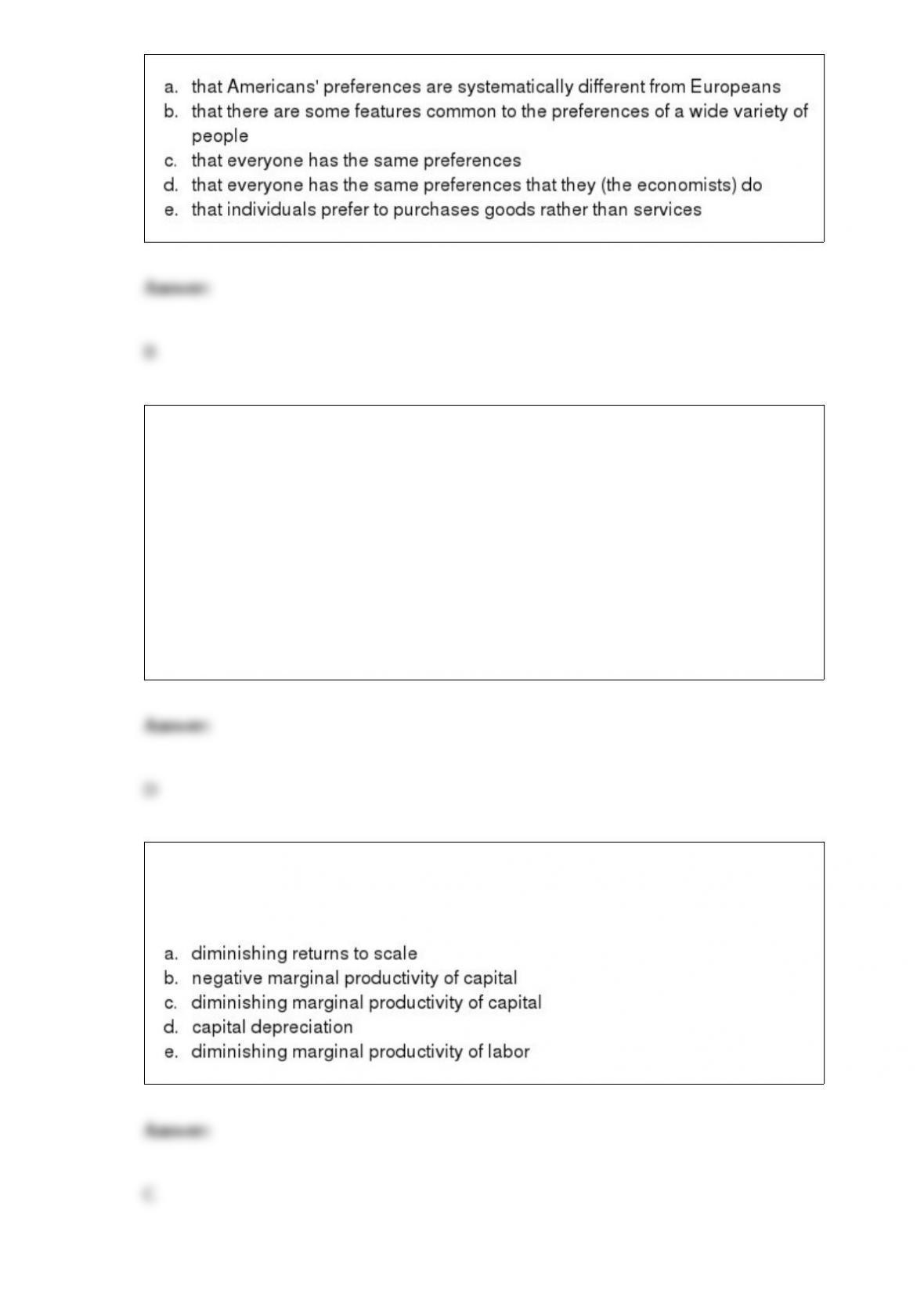
Economists usually assume
All else equal, technological change will be more rapid if
a. the government enhances patent protection
b. interest rates are lower
c. the government increases research funding
d. all of the above
e. interest rates are higher
If each additional unit of capital increases a firm’s yearly output by a smaller amount
than the previous unit of capital, and other inputs are held constant, then the firm is
experiencing