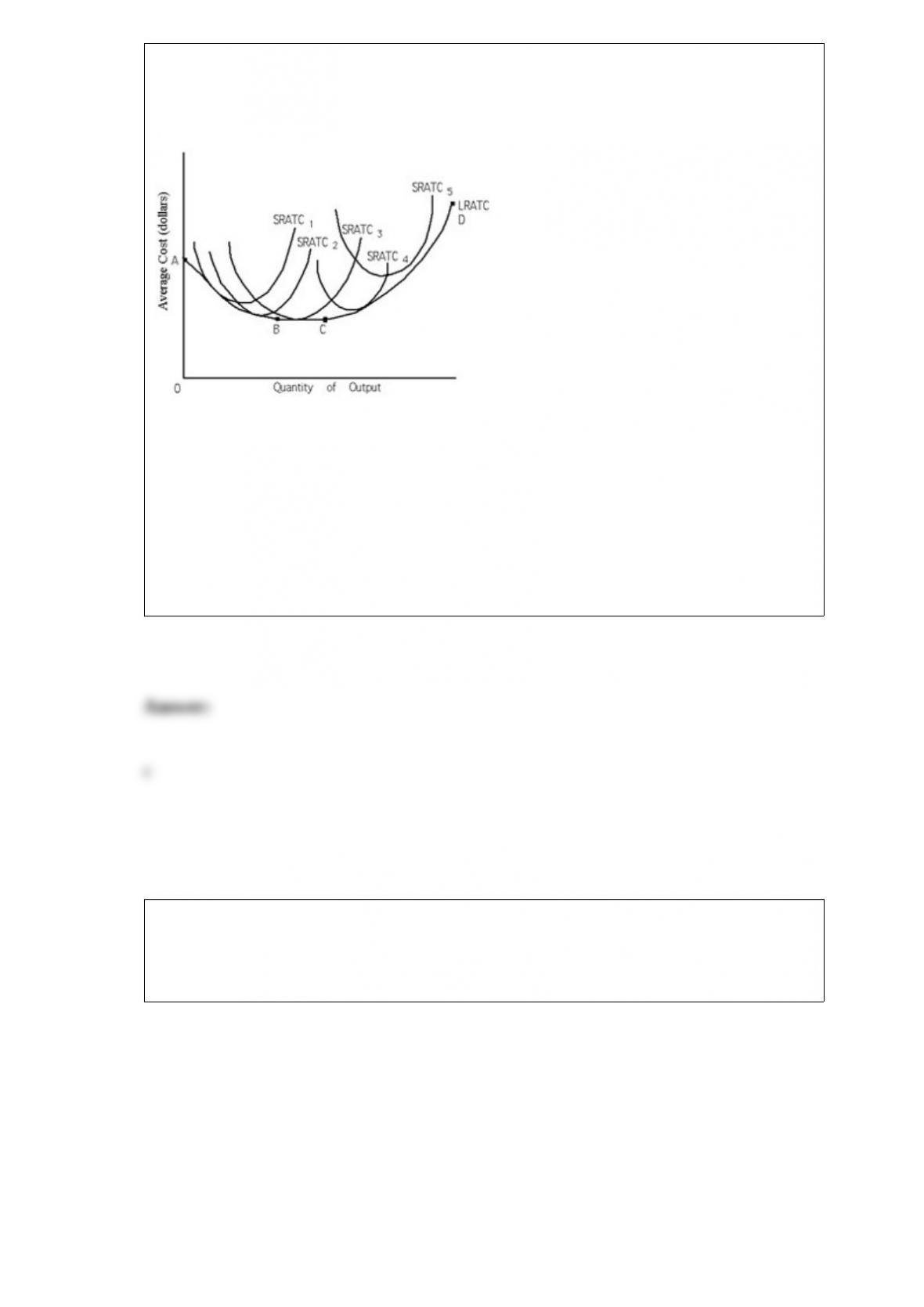
Refer to Exhibit 22-5. Constant returns to scale are present between
Exhibit 22-5
a. points A and B.
b. points A and C.
c. points B and C.
d. points B and D.
e. points C and D.
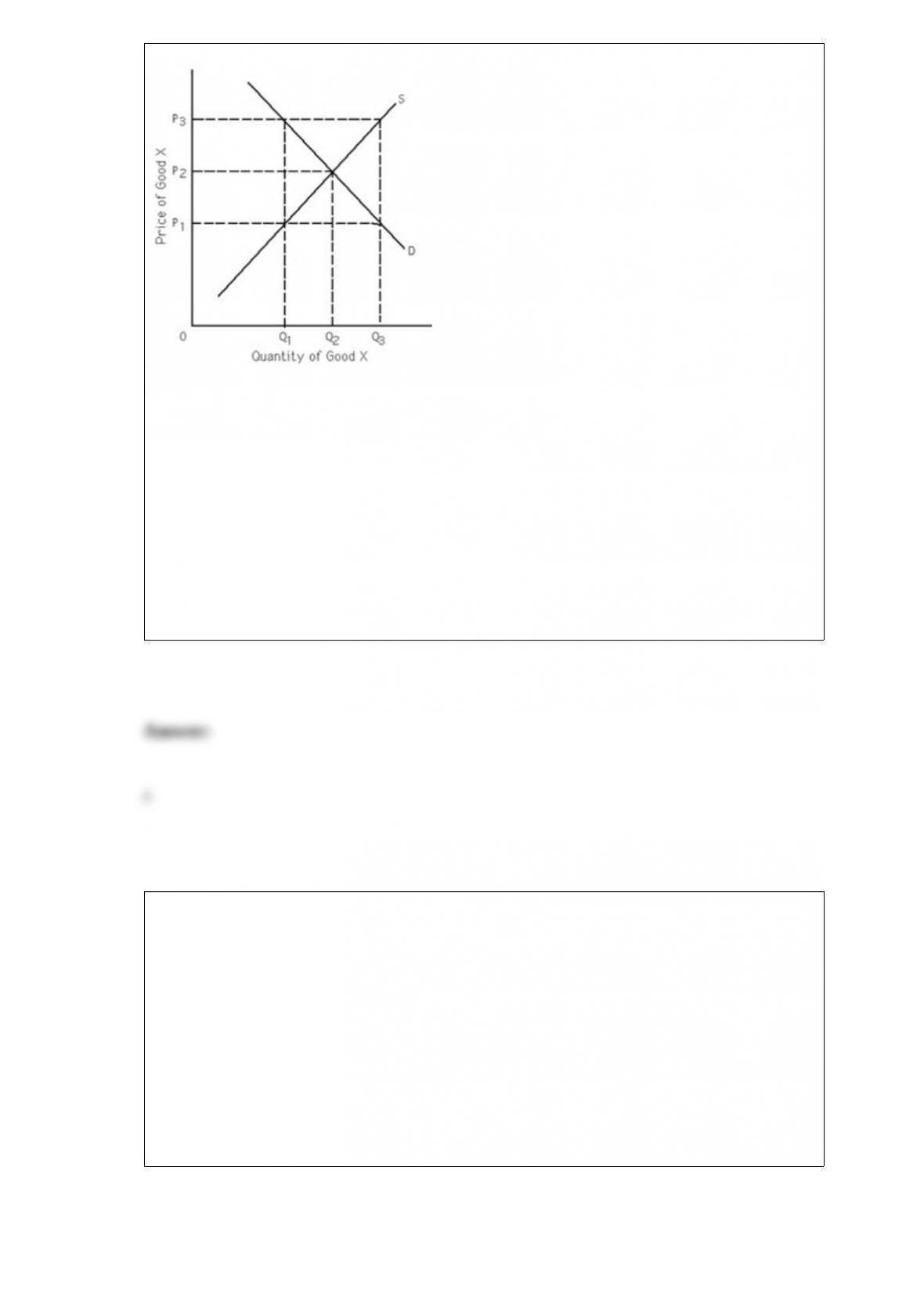
Refer to Exhibit 4-3. If P1 is a price ceiling, the maximum (per-unit) amount buyers are
willing to pay to purchase Q1 units is
Exhibit 4-3
a. P1.
b. P2.
c. P3.
d. P1 + P2.
e. P3 – P1.
“Exclusive dealing” is
a. a situation in which sellers provide only high-quality, name-brand goods.
b. selling to a retailer on the condition that the retailer not resell the product to another
business.
c. selling to a retailer on the condition that the retailer not carry any rival products.
d. when a union’s leadership deals only with the firm’s managers and vice versa, so that
individual workers cannot “cut their own deal.”
The MU/P ratio for good X is greater than the MU/P ratio for good Y as a result of a fall
in the price of good X. To achieve consumer equilibrium, the consumer reallocates
dollars from the purchase of good Y to the purchase of good X. In the process, she
a. puts downward pressure on prices.
b. maximizes total utility.
c. acts according to the law of demand.
d. b and c
e. none of the above
Refer to Situation 4-1. Because price controls were in effect at the time the embargo
occurred, an economist would have most likely predicted that
Situation 4-1
During the winter of 1973-74, a general system of wage and price controls (including a
price ceiling on gasoline) was in force in the United States. At the beginning of 1974,
some oil-producing countries imposed an oil embargo (a legal prohibition on
commerce) on the West. In the spring of 1974, price controls were abolished.
a. the number of dollars one would need to pay at the pump (legally) for a full tank of
gasoline would increase sharply.
b. the number of dollars one would need to pay at the pump (legally) for a full tank of
gasoline would decline sharply.
c. long waiting lines and black markets would appear.
d. a surplus of gasoline would result.
If the nominal interest rate is 4 percent and expected inflation rate is 5 percent, the real
interest rate
a. is 1 percent.
b. is -1 percent.
c. is 9 percent.
d. cannot be calculated.
e. none of the above
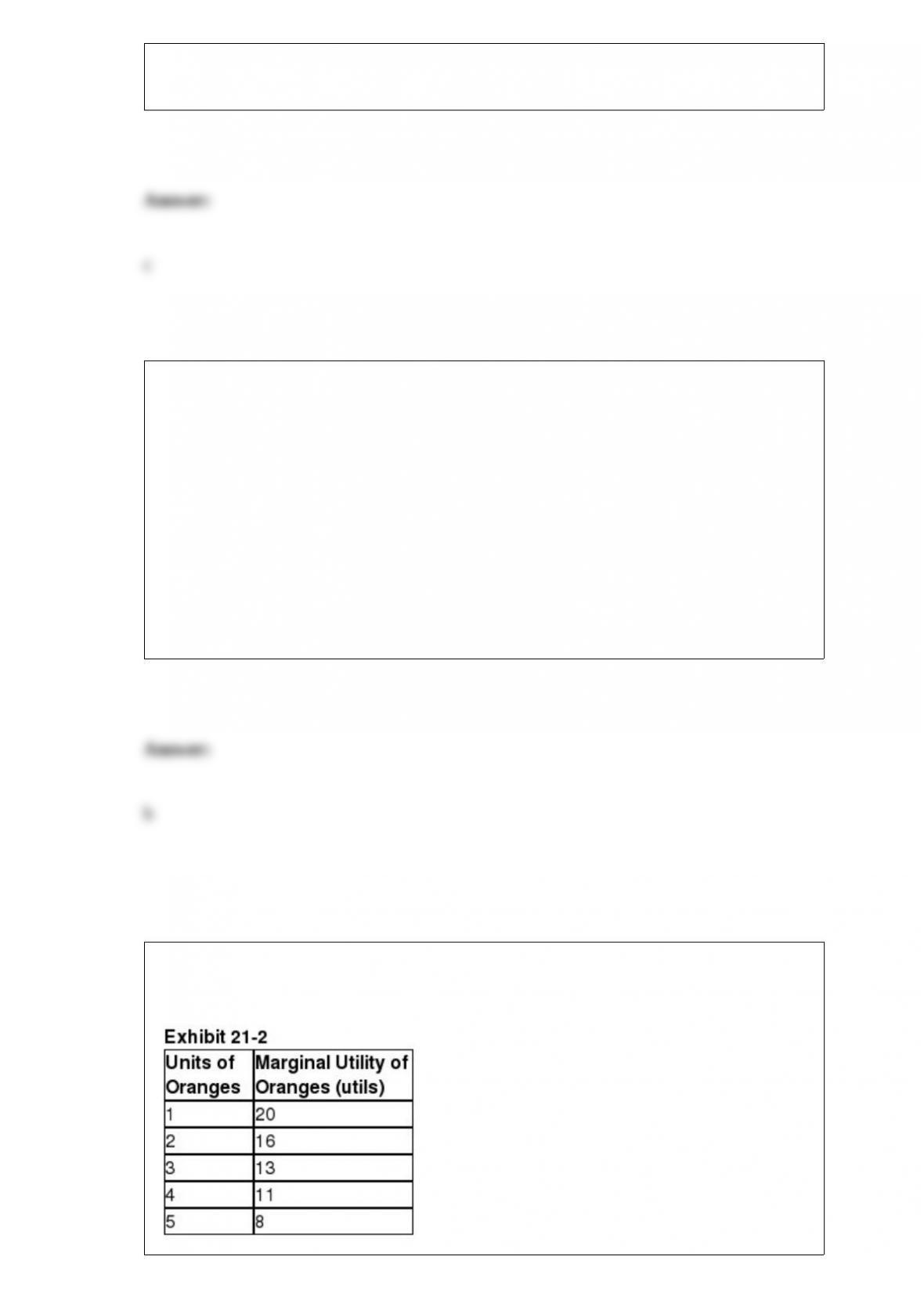
Refer to Exhibit 21-2. Total utility for the first two oranges is
a. 36 utils.
b. 20 utils.
c. 40 utils.
d. 36 utils.
e. cannot be determined
Price elasticity of supply is perfectly inelastic if the coefficient of price elasticity of
supply is
a. infinity.
b. 1.
c. 0.
d. -1.
The owner of a firm signs a binding one-year lease on a factory for $10,000 rent a
month and pays the first month’s rent. The $10,000 rent is
a. a fixed cost but not a sunk cost.
b. a sunk cost but not a fixed cost.
c. both a fixed cost and a sunk cost.
d. neither a fixed cost nor a sunk cost.
e. none of the above
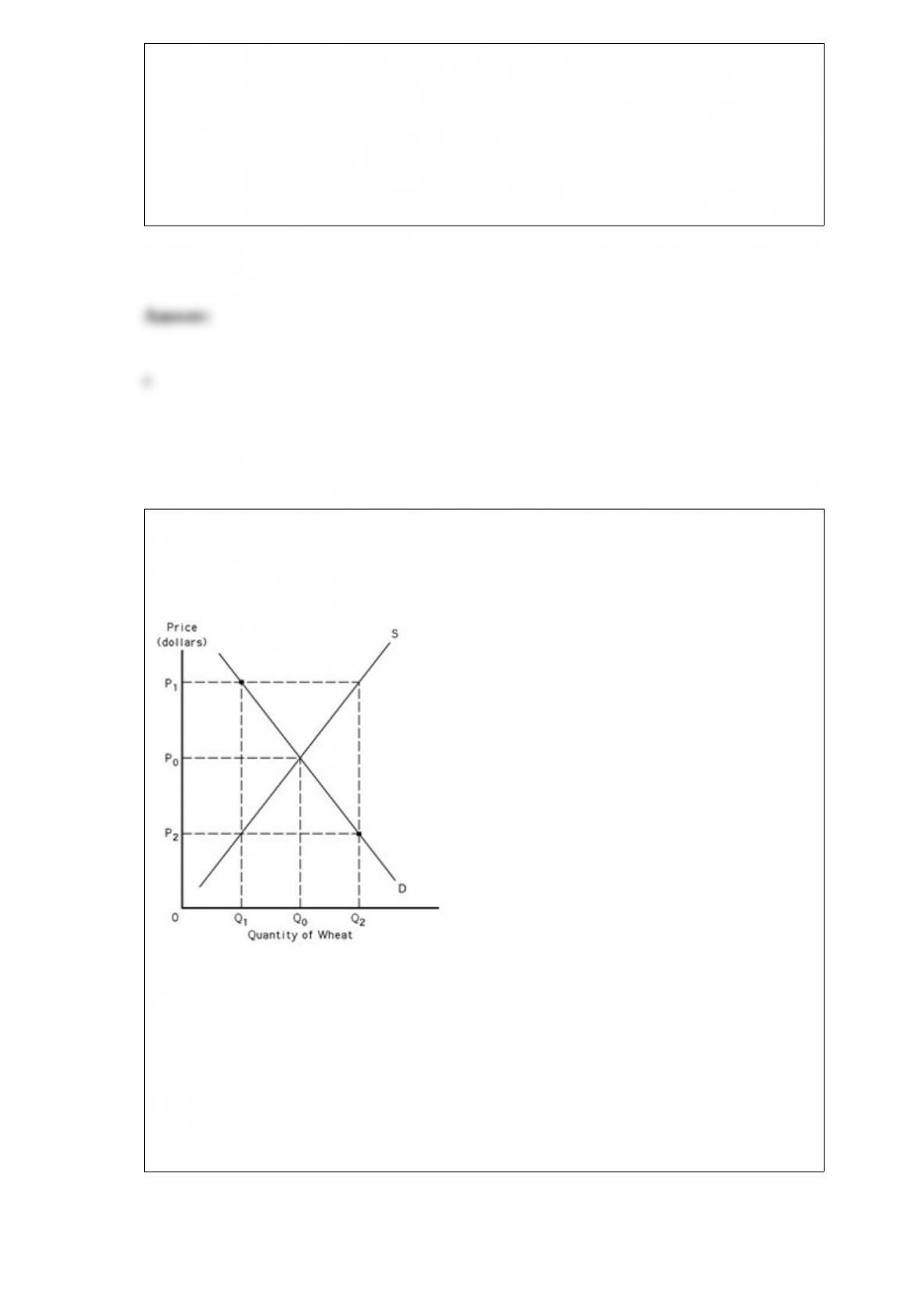
Refer to Exhibit 39-2. Given a target price of P1, what is the total deficiency payment
made by the government?
Exhibit 39-2
a. (P1 – P2) x Q2
b. (P1 – P0) x Q2
c. P1 x Q1
d. P0 x Q0
House A has an ocean view and House B does not.In all other respects, the two houses
are the same.The market price of house A is $2,800,000; the market price of house B is
$2,600,000.The ocean view is therefore valued at
a. $200,000.
b. $1,950,000.
c. -$700,000.
d. $2,700,000.
The term “positive rate of time preference” suggests that
a. people prefer more time to do something than less time.
b. people prefer goods to be available at an earlier time period than at a later time
period.
c. some people are irrational because they would rather have something now than wait
to consume it later when they can enjoy it more.
d. interest rates tend to increase over time.
e. businesses know that if they invest in capital goods, they will earn profits.
Which of the following statements is true?
a. Some degree of income inequality is due to the fact that individuals are innately
different and make different choices.
b. No income inequality is due to good or bad luck.
c. People who agree on the factors that cause income inequality may not agree on the
importance of the different factors.
d. a and c
e. a, b, and c
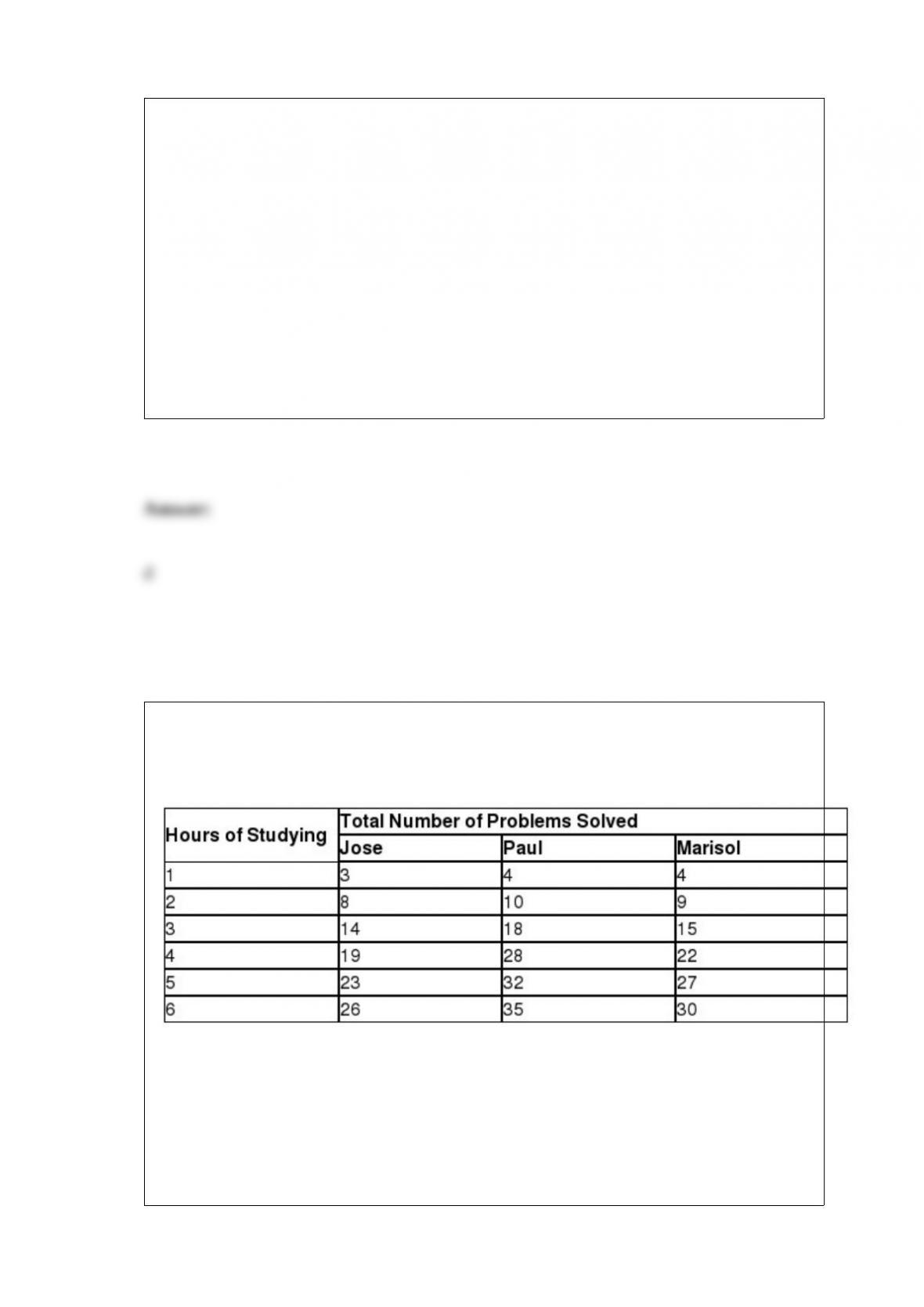
Refer to Exhibit 22-10. Which of the students has the highest marginal productivity for
the fifth hour of studying?
Exhibit 22-10
a. Jose
b. Paul
c. Marisol
d. both Paul and Marisol
Under profit regulation, a natural monopolist has an incentive to be very careful about
minimizing costs.
a. True
b. False
You go on vacation to Mexico and take $1,000 with you. During your time in Mexico,
the peso appreciates in value relative to the dollar. It follows that
a. you will be able to buy more goods and services in Mexico after the peso appreciates.
b. you will be able to buy fewer goods and services in Mexico after the peso
appreciates.
c. the purchasing power parity theory is incorrect.
d. Mexican workers, paid in pesos, will be able to buy fewer goods and services in
Mexico after the peso appreciates.

An “increase in demand” means that
a. the demand curve has shifted to the left.
b. price has declined and consumers want to purchase more of the good.
c. the demand curve has shifted to the right.
d. the price of the good can be expected to decline, assuming supply stays constant.
Rent-seeking is said to be socially wasteful because
a. the rent seekers compete too fiercely with each other.
b. resources that are used to seek rents don’t end up helping anyone in society.
c. the rent seekers usually end up spending too much to get what they want.
d. resources that are used to seek rents can’t be used to produce goods and services.
e. none of the above
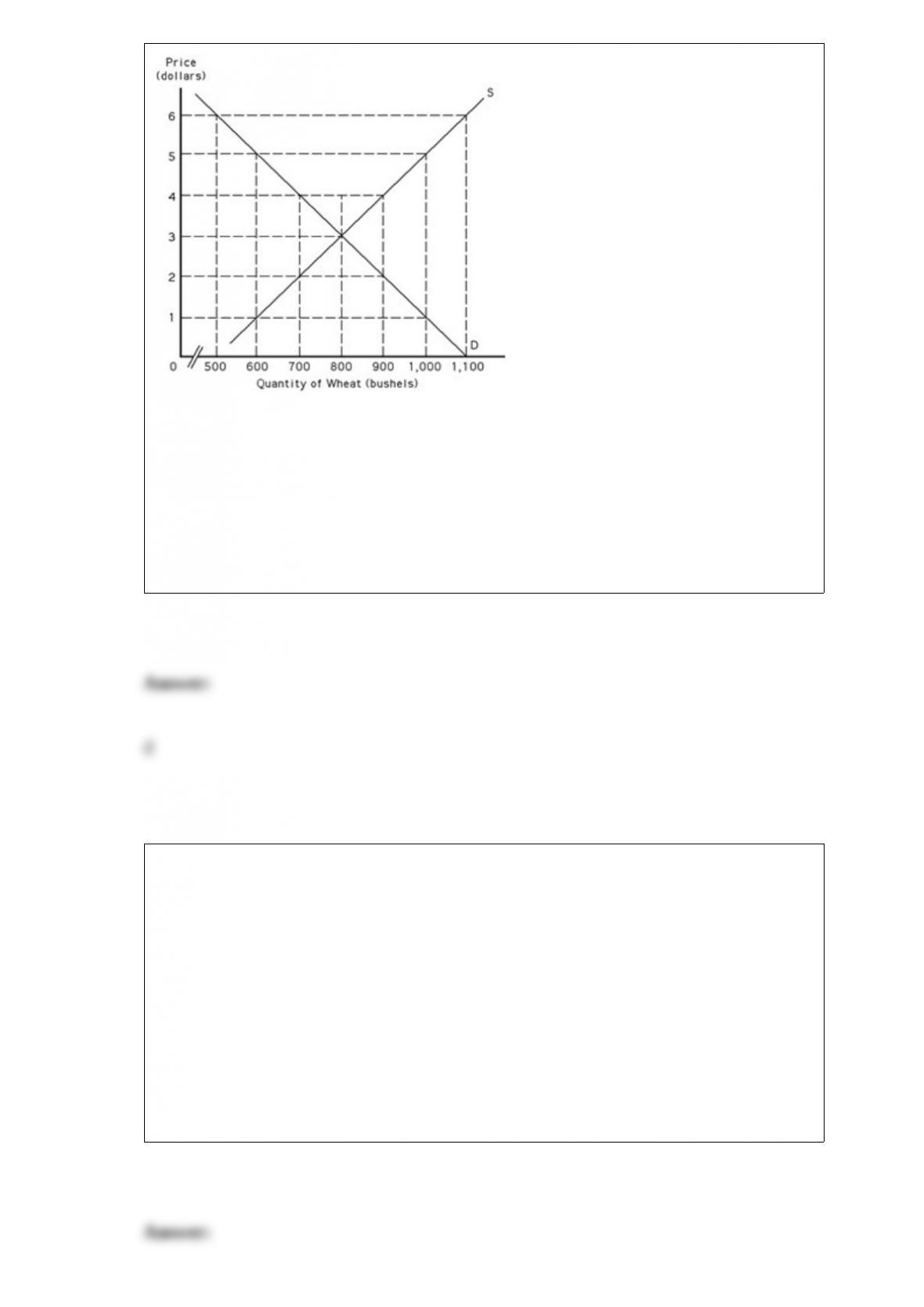
Refer to Exhibit 39-4. At a target price of $4 per bushel, what price does the consumer
pay?
Exhibit 39-4
a. $5
b. $4
c. $3
d. $2
The monopolistic competitor is a price
a. taker, because of the many buyers and sellers in the market.
b. searcher, because of product differentiation.
c. taker, because of identical products.
d. searcher, because of the few buyers and sellers in the market.
e. searcher, because of the few buyers and sellers in the market and product
differentiation.
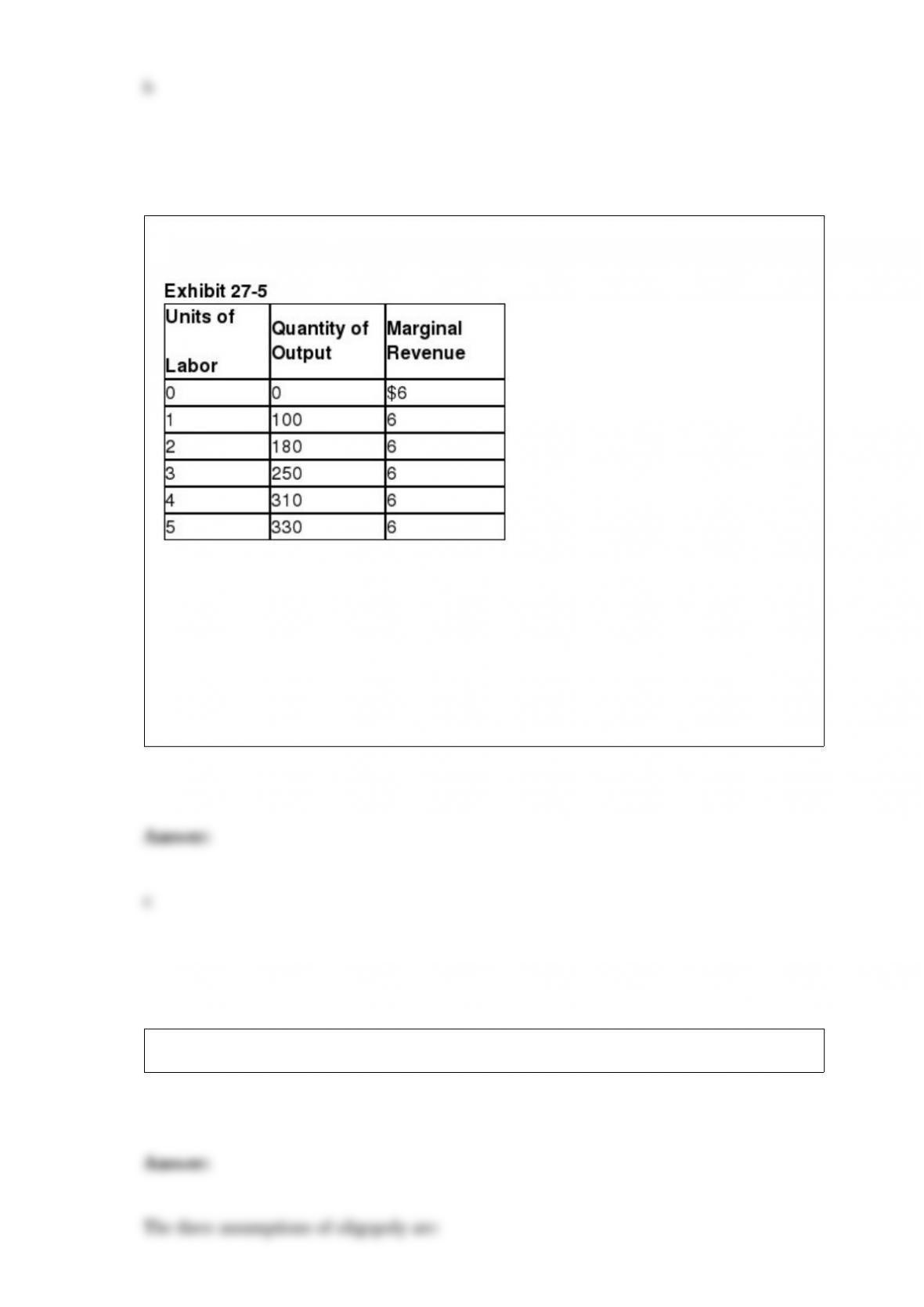
Refer to Exhibit 27-5. The marginal revenue product of the fourth unit of labor is
a. $60.
b. $180.
c. $360.
d. $6.
List and describe the three assumptions upon which oligopoly behavior are based.
Define the term lock-in effect and explain how this effect might make a network
monopoly that benefits from it less likely to innovate.