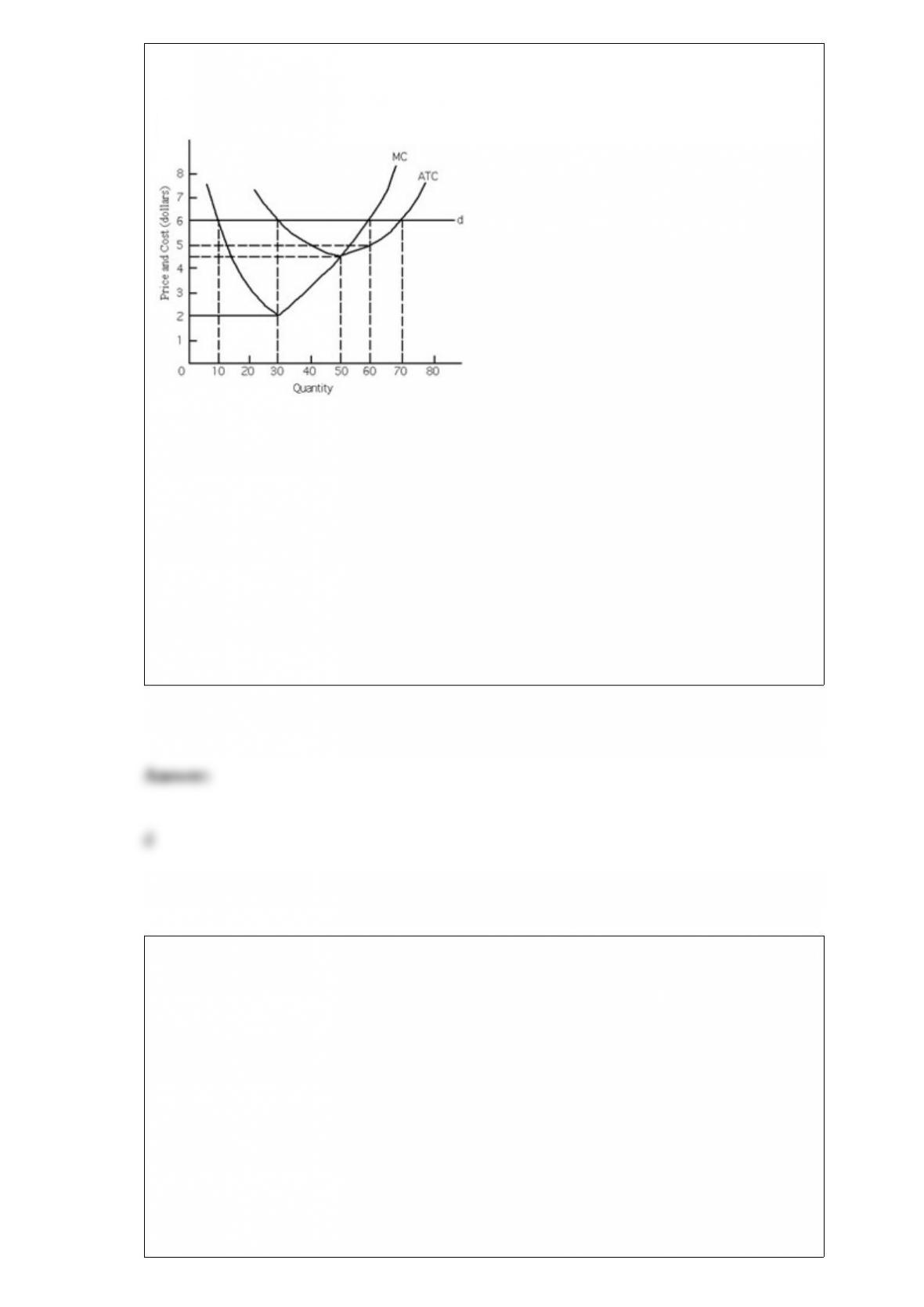
Exhibit 23-7
At the profit-maximizing level of output, marginal cost is
a. $60.00.
b. $4.50.
c. $5.00.
d. $6.00.
e. This cannot be determined based on the information provided.
Approximately how much money would you need to place in a savings account today
to accumulate $5,000 five years from now if the savings account pays an interest rate of
6.5 percent per year?
a. $3,649
b. $4,740
c. $3,077
d. $3,411
e. $3,887
If the income of U.S. citizens falls relative to the income of Japanese citizens, the dollar
will __________ in terms of the yen, and the yen will __________ in terms of the
dollar.
a. appreciate; depreciate
b. appreciate; remain unaffected
c. depreciate; appreciate
d. depreciate; remain unaffected
e. remain unaffected; appreciate
Exhibit 5-1
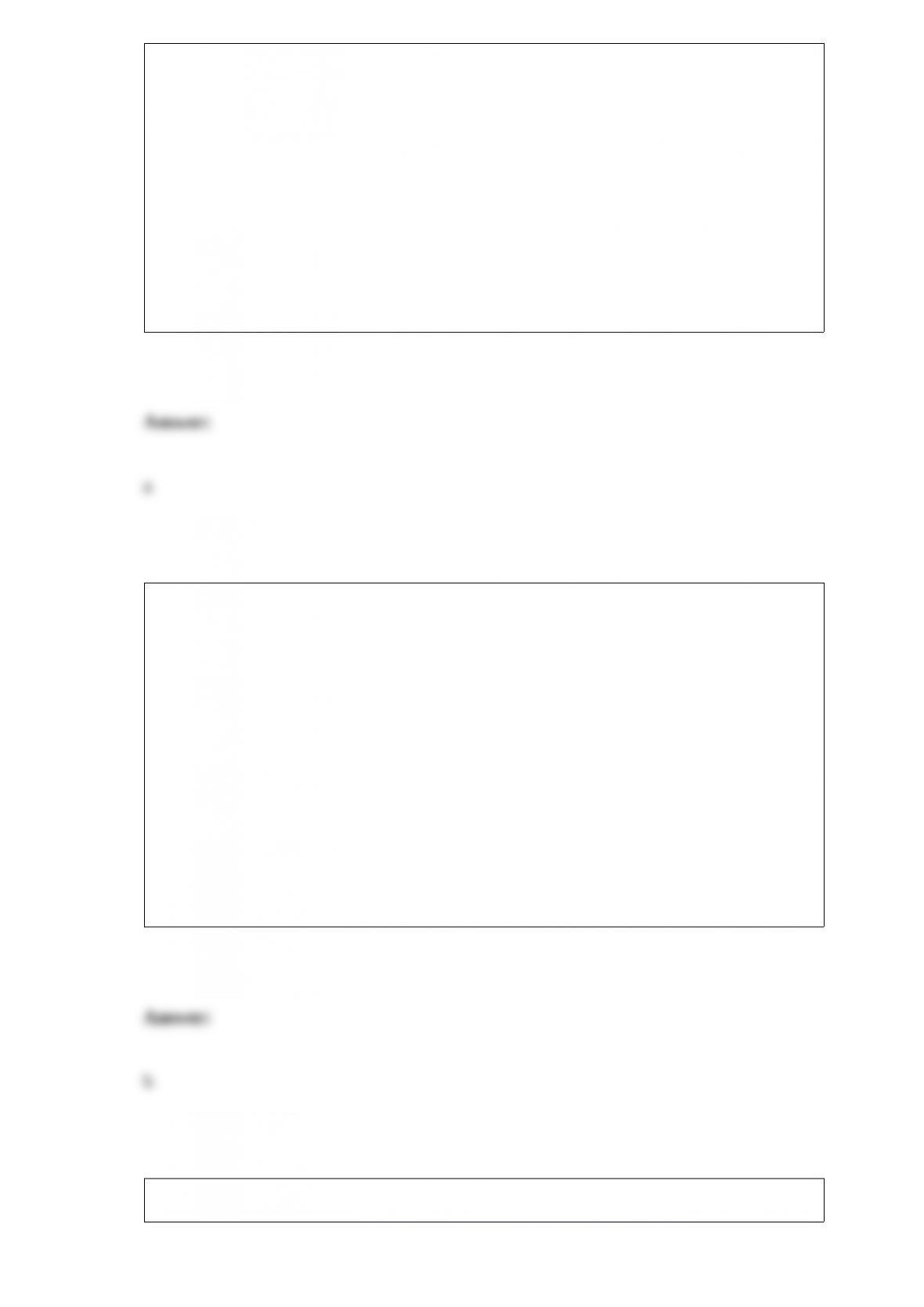
which shows supply and demand for freeway space at both 8 a.m. and 11 p.m. Which
toll creates equilibrium at 8 a.m.?
a. P2
b. P1
c. 0
d. It is not constant.
The diamond-water paradox is the observation that
a. those things that have the greatest price often have little value in exchange and those
things that have the lowest price often have the greatest value in exchange.
b. those things that have the greatest value in use often have little value in exchange and
those things that have little value in use often have the greatest value in exchange.
c. those things that have the least value in use often have little value in exchange and
those things that have the greatest value in use often have the greatest value in
exchange.
d. those things that have the least price often have little value in exchange and those
things that have the greatest price often have the greatest value in exchange.
Exhibit 24-10
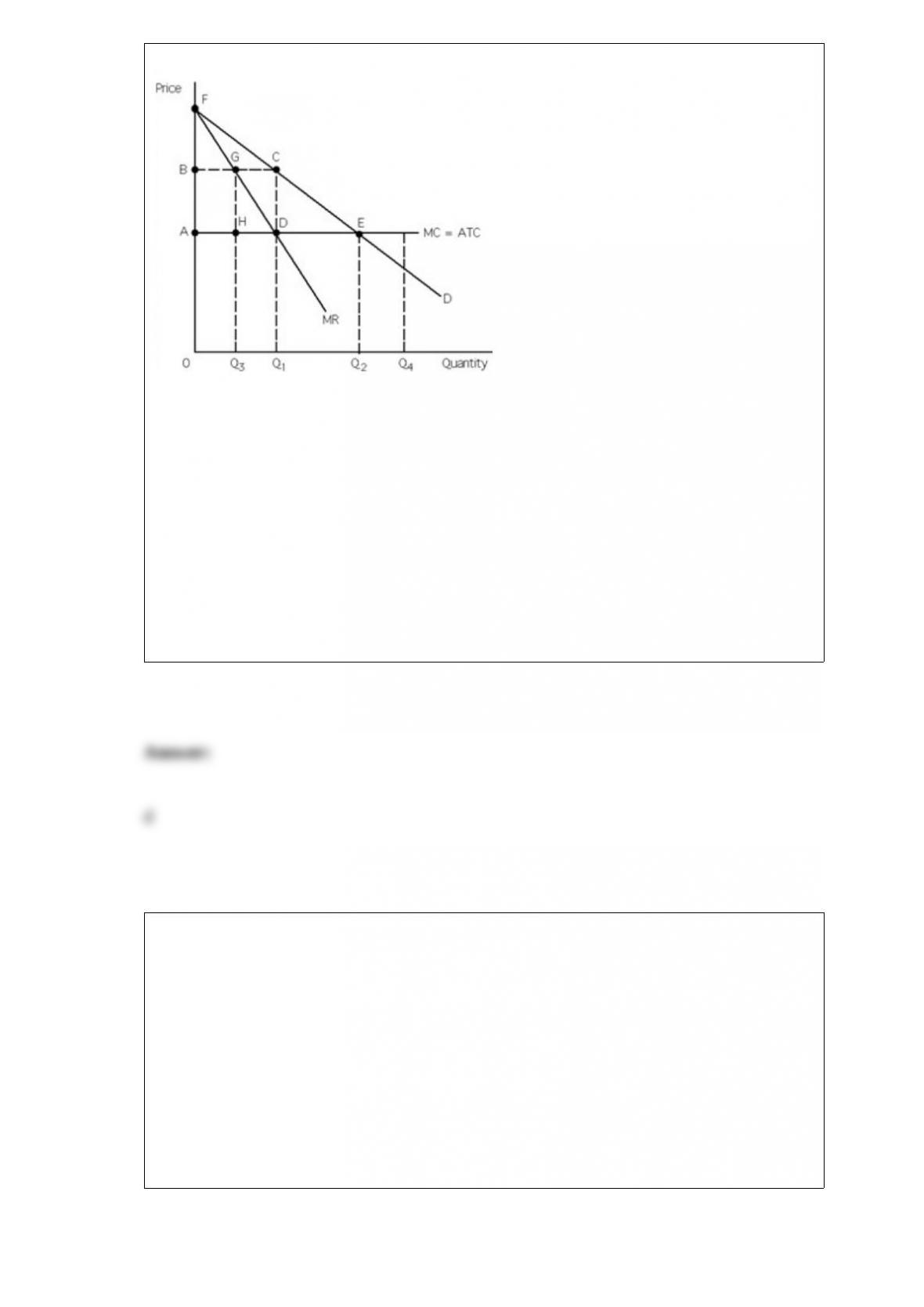
The area that is subject to socially wasteful rent seeking is
a. ABGH
b. HGCD
c. DCE
d. ABCD
e. AFD
Generally, the monopolistic competitor is in long run equilibrium when
a. MR = MC and P = ATC.
b. P = MC = ATC.
c. P = MC and P > ATC.
d. MR = MC = ATC.
e. b and d
The single-price monopolist produces where price is ___________ than marginal cost
because for it price is __________ than marginal revenue and its demand curve lies
__________ its marginal revenue curve.
a. less; less; below
b. greater; greater; above
c. greater; greater; below
d. less; less; above
e. greater; less; below
Productive efficiency implies that
a. all consumers’ wants are satisfied.
b. no advance in technology will occur in the future.
c. the attainable region is greater than the unattainable region.
d. gains are impossible in one area without losses in another.
e. all of the above
Which of the following pairs of goods would be most likely to be substitutes?
a. pasta and pasta sauce
b. olive oil and vegetable oil
c. chips and salsa
d. tires and automobiles
e. all of the above
If a firm is a price taker, its demand curve is
a. downward sloping.
b. upward sloping.
c. perfectly inelastic.
d. perfectly elastic.