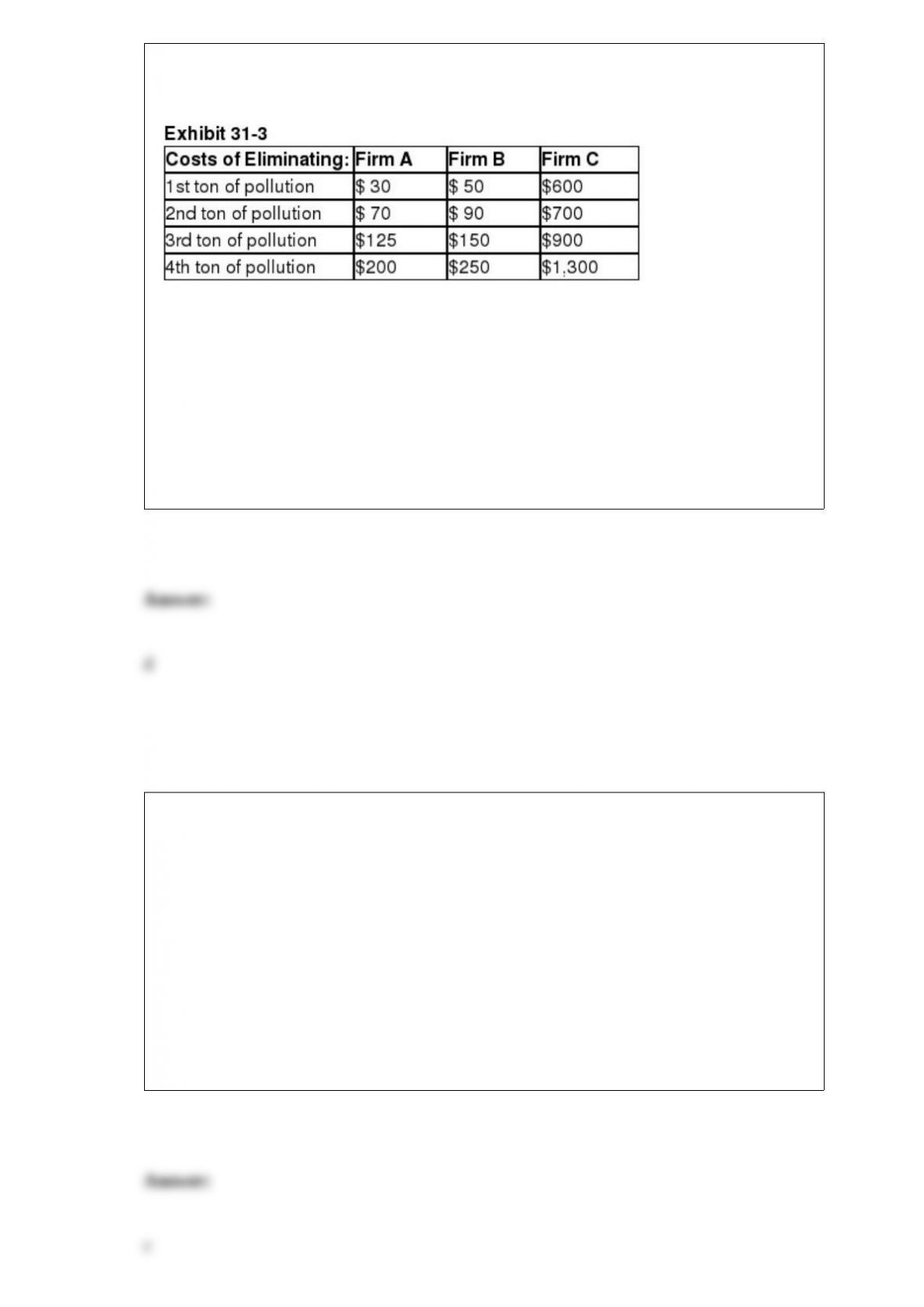
Refer to Exhibit 31-3. What is the cost to Firm B of eliminating 2 tons of pollution?
a. $350
b. $250
c. $300
d. $140
e. $540
Rational (political) ignorance refers to
a. some voters choosing not to vote in elections.
b. the fact that some voters are not smart enough to be informed on political issues.
c. the state of not acquiring information about politics and government because the
costs of acquiring the information are greater than the benefits.
d. political candidates deliberately saying “dumb” things during their campaign.
e. none of the above
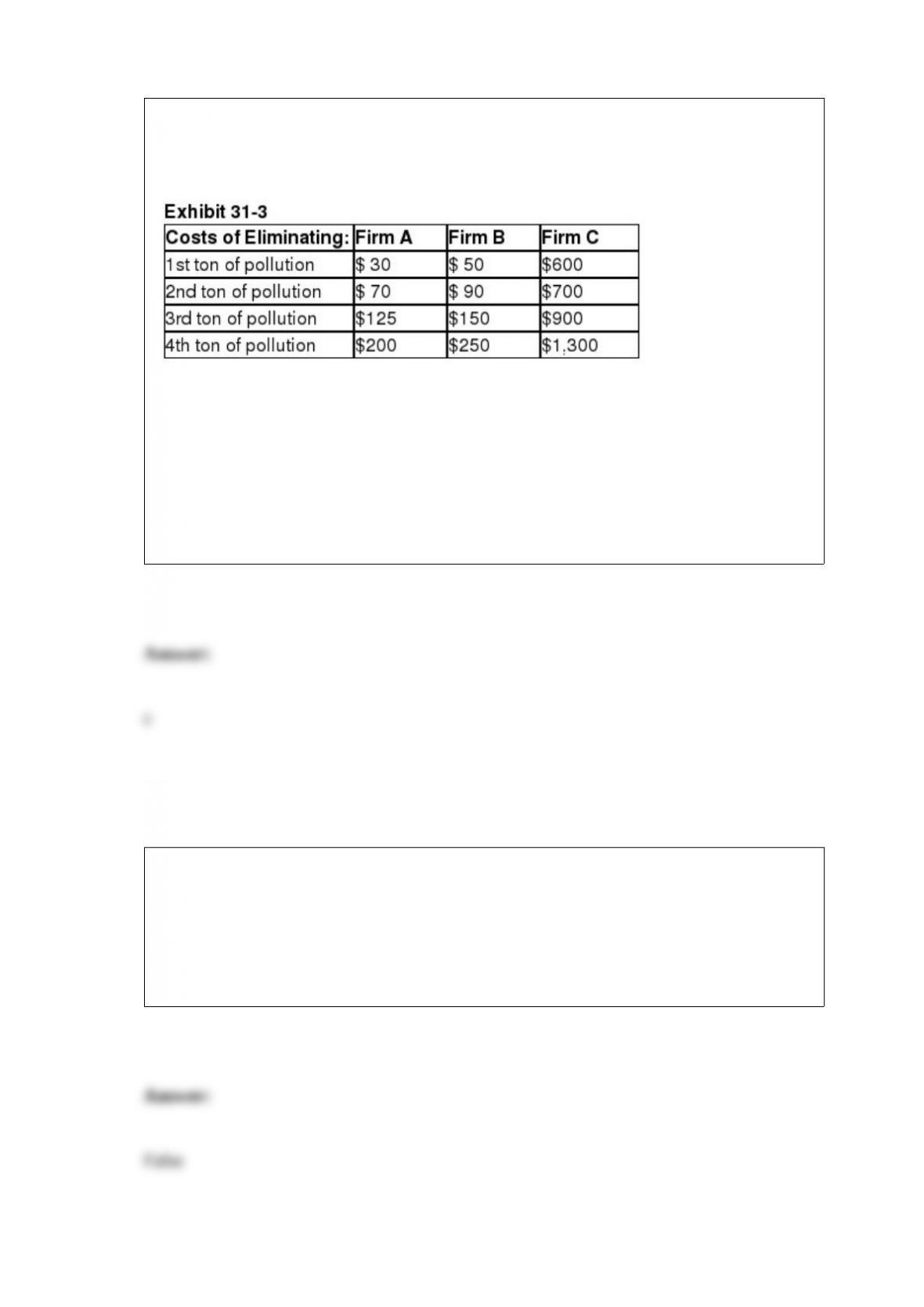
Refer to Exhibit 31-3. The government issues two pollution permits to each firm. Firm
C will pay up to __________ to buy a permit from Firm A or B.
a. $2,200
b. $1,000
c. $600
d. $500
If a good is perfectly inelastic in a given price range, it will be perfectly inelastic at all
prices.
a. True
b. False

A subsidy may be used as a corrective device in the case of a positive externality
because it will __________ marginal private benefits and __________ demand.
a. increase; decrease
b. increase; increase
c. decrease; decrease
d. decrease; increase
In order for a price ceiling to have an impact on a market it must be set above the
equilibrium price.
a. True
b. False
Refer to Exhibit 2-2. If PPF2 is the relevant production possibilities frontier, a
significant loss of resources will
Exhibit 2-2
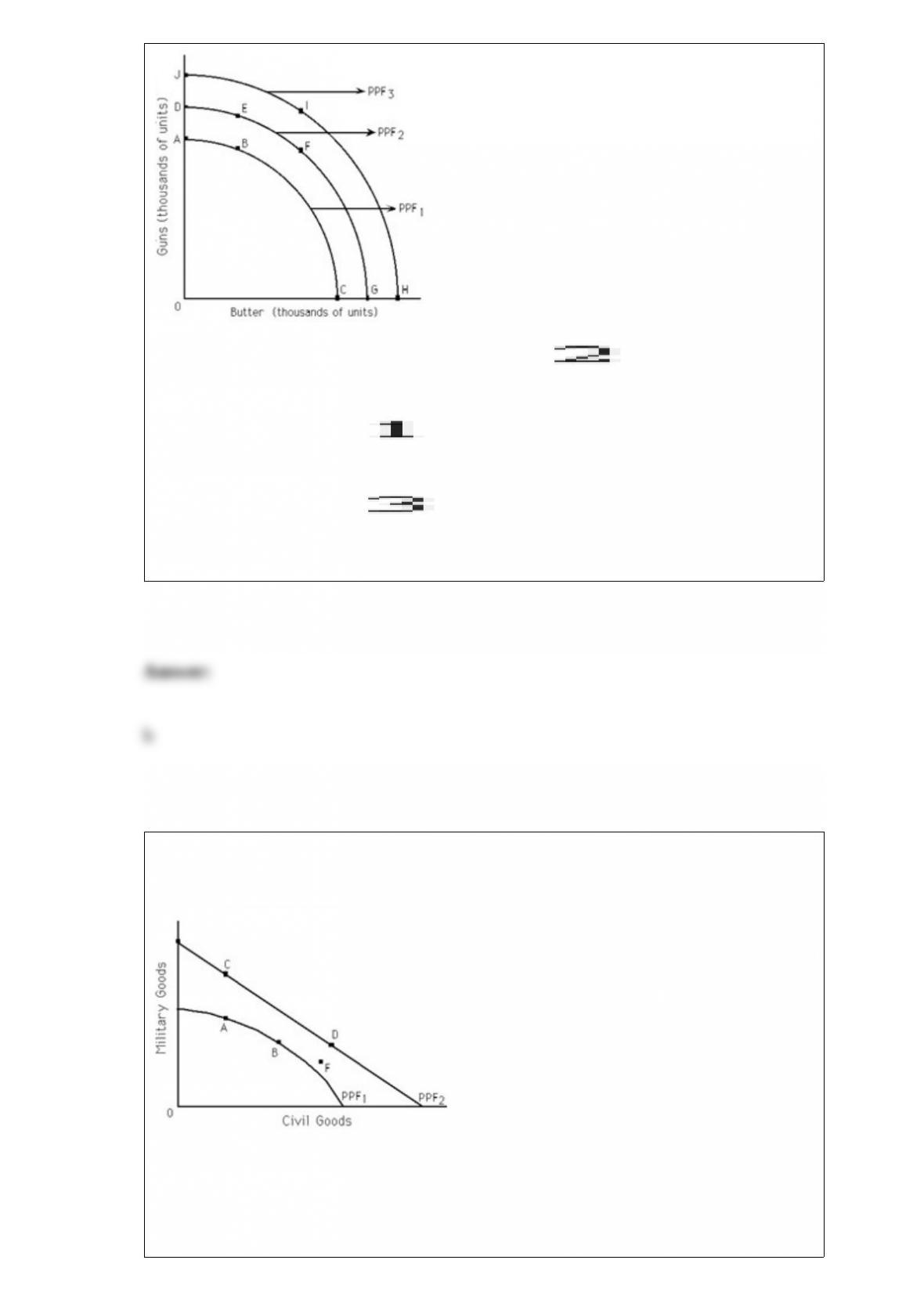
a. move this society from point D to point G on PPF .
b. move this society to PPF .
c. move this society to PPF .
d. not affect this society.
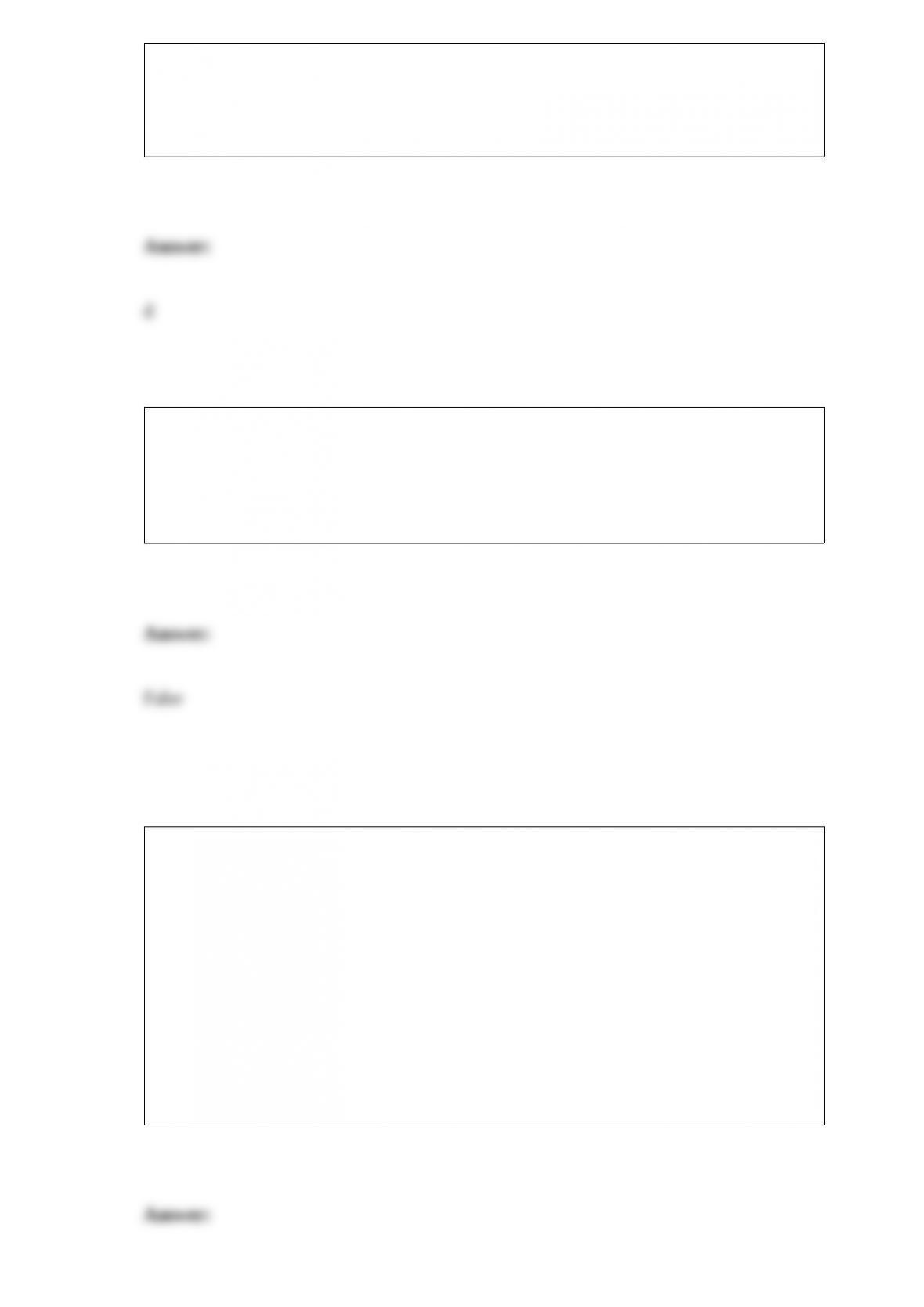
Refer to Exhibit 2-7. Point F is
Exhibit 2-7
a. unattainable if the economy’s PPF is PPF1.
b. inefficient if the economy’s PPF is PPF2.
c. attainable if the economy’s PPF is PPF2.
d. all of the above
e. none of the above
By definition, monopolists sell a product for which there are absolutely no substitutes.
a. True
b. False
Marginal revenue product (MRP) is the
a. additional output generated by employing an additional factor unit.
b. additional profit generated by employing an additional factor unit.
c. additional revenue generated by employing an additional factor unit minus the
additional cost.
d. additional revenue generated by employing an additional factor unit.
e. total revenue from the sale of a product divided by the total output of the product.

Americans buying Japanese cars create a
a. demand for U.S. dollars and supply of Japanese yen.
b. demand for both U.S. dollars and Japanese yen.
c. supply of U.S. dollars and demand for Japanese yen.
d. supply of both U.S. dollars and Japanese yen.
If the equilibrium exchange rate between U.S. dollars and Japanese yen is $0.01 = 1 yen
but currently the exchange rate is $0.0089 = 1 yen, then a __________ exists.
a. shortage of dollars
b. surplus of dollars
c. surplus of yen
d. shortage of yen
e. b and d
Which of the following can issue bonds?
a. the government
b. corporations
c. government agencies
d. all of the above
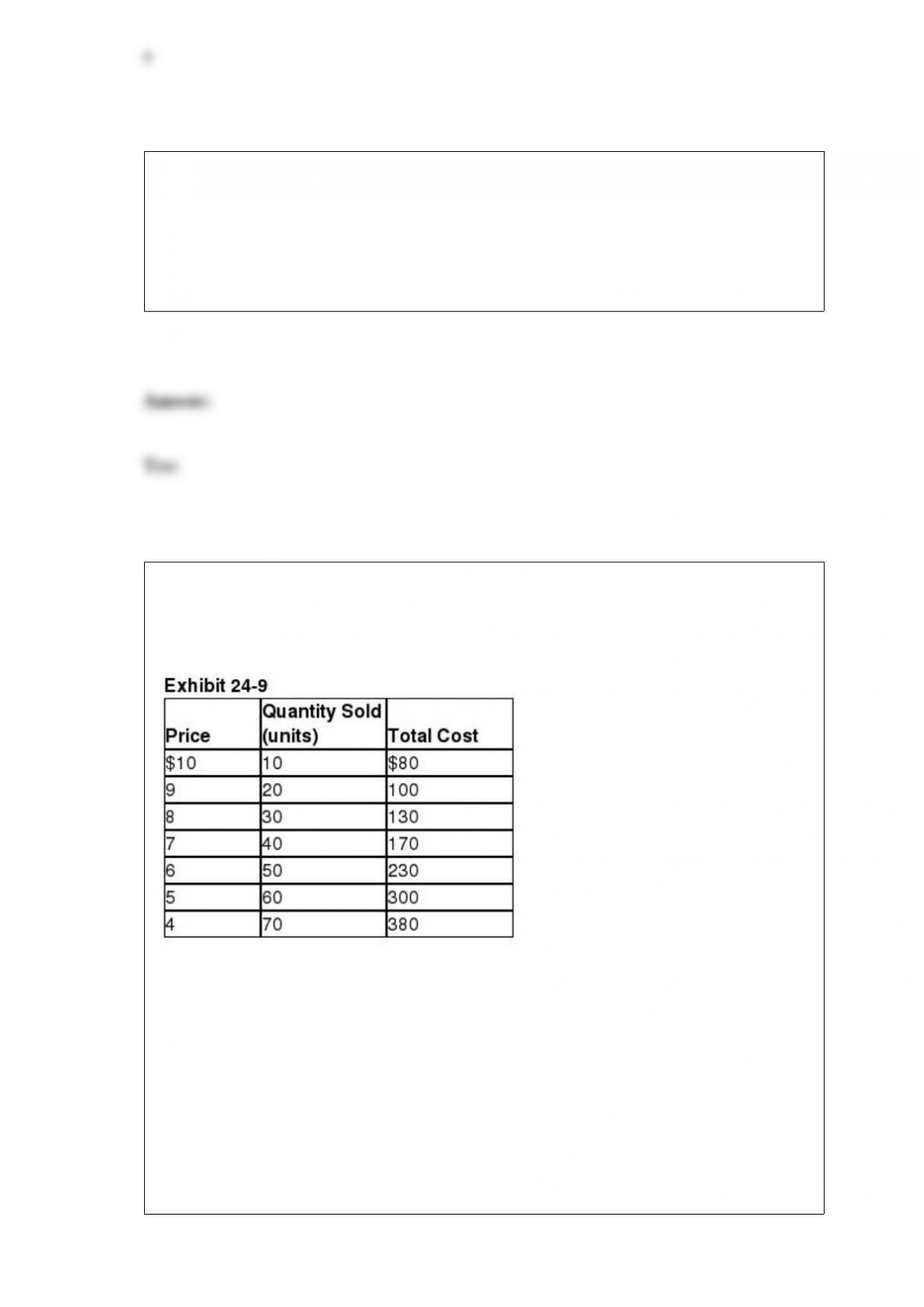
Refer to Exhibit 2-1. The PPF illustrates
Exhibit 2-1
a. constant opportunity costs between guns and butter.
b. that guns are more important than butter.
c. increasing opportunity costs between guns and butter.
d. the opportunity cost of one unit of guns is four units of butter.
e. none of the above
The price of a given good is likely to be less variable with speculators than it would be
without speculators.
a. True
b. False
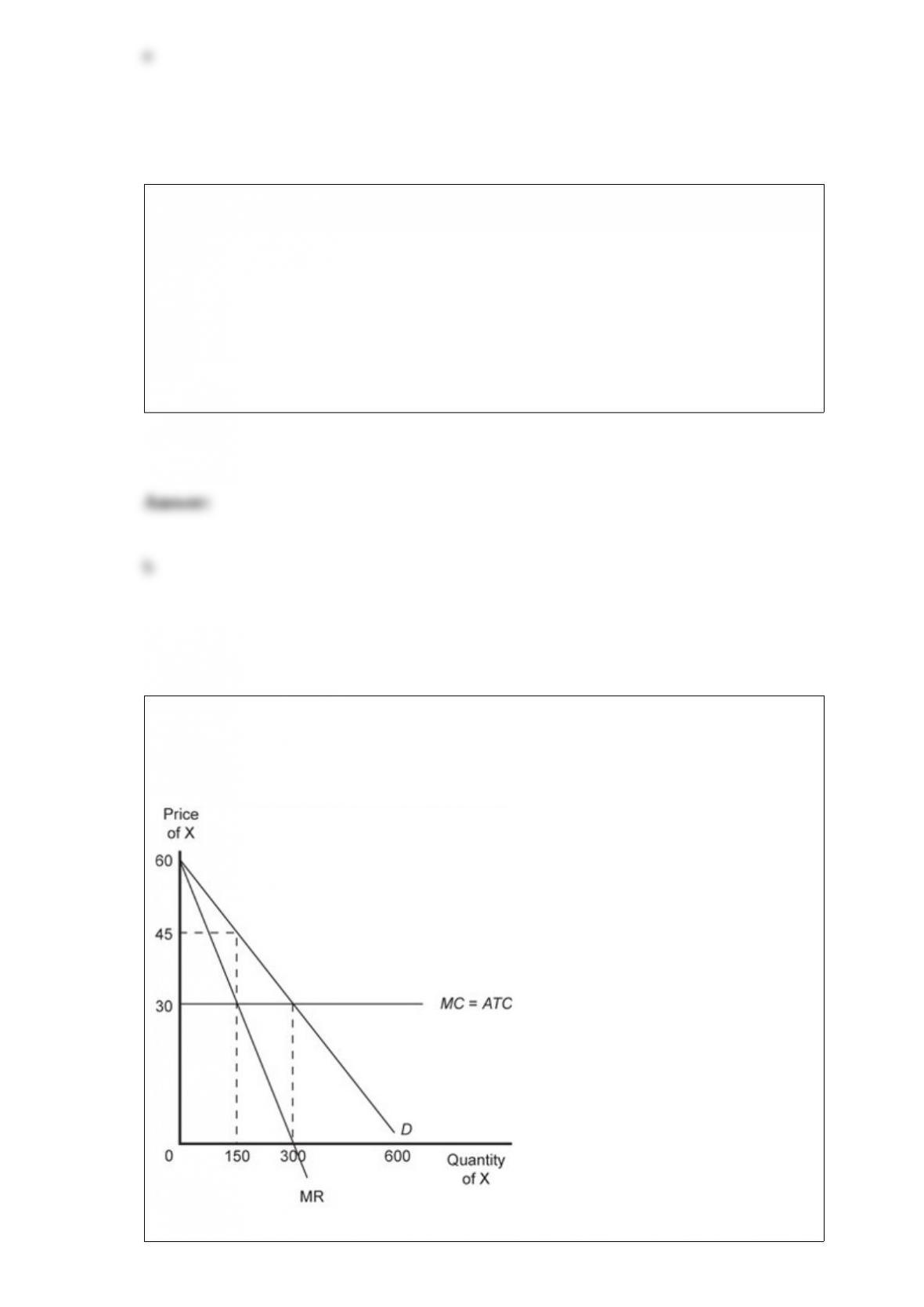
Refer to Exhibit 24-9. A single-price monopolist that seeks to maximize profits will sell
__________ units and charge a per-unit price of __________.
a. 20; $9
b. 40; $7
c. 50; $6
d. 10; $10
e. 7; $40

Elasticity of demand for labor measures the percentage change in quantity demanded of
labor that is brought about by a percentage change in the
a. demand for the product produced by labor.
b. price of the product.
c. quantity supplied of labor.
d. wage rate.
e. price of substitute factors.
Pure economic rent is
a. the payment to factors owned by entrepreneurs.
b. economic profits.
c. the payment to factors whose supply is perfectly elastic.
d. a payment made to land.
e. the payment to factors whose supply is perfectly inelastic.
Insurance deductibles __________ the __________ problem of insurance coverage.
a. are meant to reduce; adverse selection
b. are meant to reduce; moral hazard
c. unintentionally worsen; adverse selection
d. unintentionally worsen; moral hazard
Refer to Exhibit 24-7. The maximum profits earned by a single-price monopolist
producing good X are
Exhibit 24-7
a. $9,000.
b. $4,500.
c. $2,250.
d. $1,125.
Scientists prefer to advance irrefutable theories, rather than refutable theories.
a. True
b. False
Which of the following is true?
a. It is possible for total utility to rise as marginal utility falls.
b. Marginal utility is the same as total utility.
c. As marginal utility falls, total utility always falls.
d. a and c

The Sherman Act of 1890
a. made conspiracy in the restraint of trade illegal.
b. made price discrimination, exclusive dealing, tying contracts, and the acquisition of
competing companies’ stock illegal when they ‘substantially lessen competition or tend
to create a monopoly.”
c. declared “unfair methods of competition in commerce” illegal.
d. attempted to decrease the failure rate of small businesses by protecting them from the
competition of large and growing chain stores.
e. banned anticompetitive mergers that occurred as a result of one company acquiring
the physical assets of another company.