1) Assume that the commercial banking system has checkable deposits of $10 billion
and excess reserves of $1 billion at a time when the reserve requirement is 20 percent.
If the reserve requirement is now raised to 30 percent, the banking system then has:
A.excess reserves of $2 billion.
B.neither an excess nor a deficiency of reserves.
C.a deficiency of reserves of $.5 billion.
D.excess reserves of only $.5 billion.
2) if a regulatory commission wants to provide a natural monopoly with a fair return, it
should establish a price that is equal to:
a.minimum average fixed cost.
b.average total cost.
c.marginal cost.
d.marginal revenue.
3) Critics of social regulation argue that it:
A.causes deflation.
B.violates the due process clause of the U.S. constitution.
C.is a relatively greater burden for small firms than for large firms.
D.improves allocative efficiency.
4) An employer is prejudiced, prefers to hire white rather than African-American
workers, and is willing to pay higher wages to obtain white workers. This illustrates:
A.reverse discrimination.
B.the crowding model.
C.the taste-for-discrimination model.
D.statistical discrimination.
5) The size of the multiplier associated with an initial increase in spending will be:
A.the same whether or not inflation occurs.
B.diminished if inflation occurs.
C.zero if any increase in the price level occurs.
D.enhanced if inflation occurs.
6)
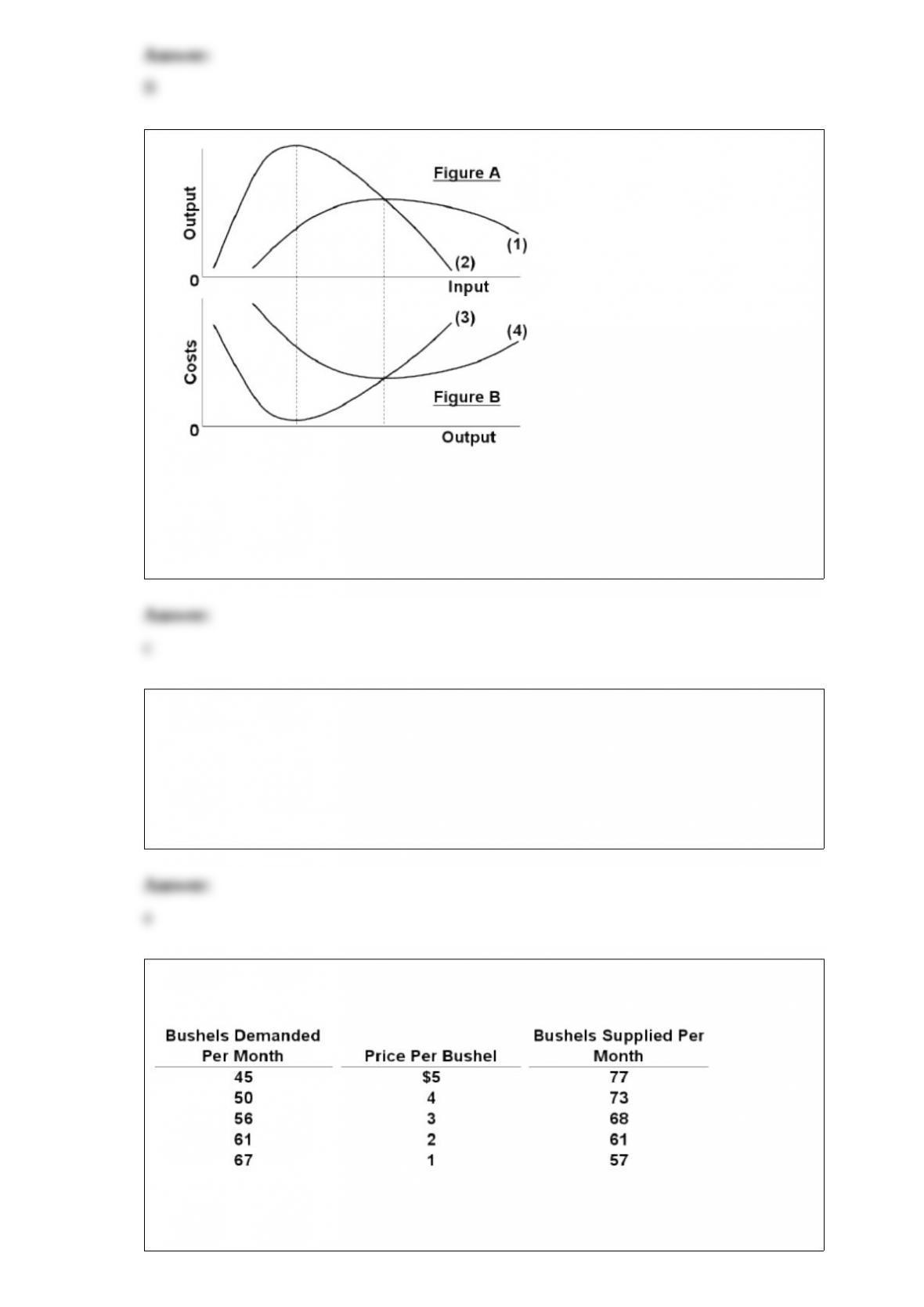
refer to the above short-run production and cost data. in figure a curve (1) is:
a.total product and curve (2) is average product.
b.total product and curve (2) is marginal product.
c.average product and curve (2) is marginal product.
d.marginal product and curve (2) is average product.
7) suppose that a pure monopolist can sell 10 units of output at $5 per unit and 11 units
at $4.90 per unit. the marginal revenue of the eleventh unit is:
a.$3.90.
b.$.10.
c.$53.90.
d.$4.90.
8) the given supply and demand data for wheat:
refer to the above data. if price was initially $4 and free to fluctuate, we would expect:
a.quantity supplied to continue to exceed quantity demanded.
b.the quantity of wheat supplied to decline as a result of the subsequent price change.
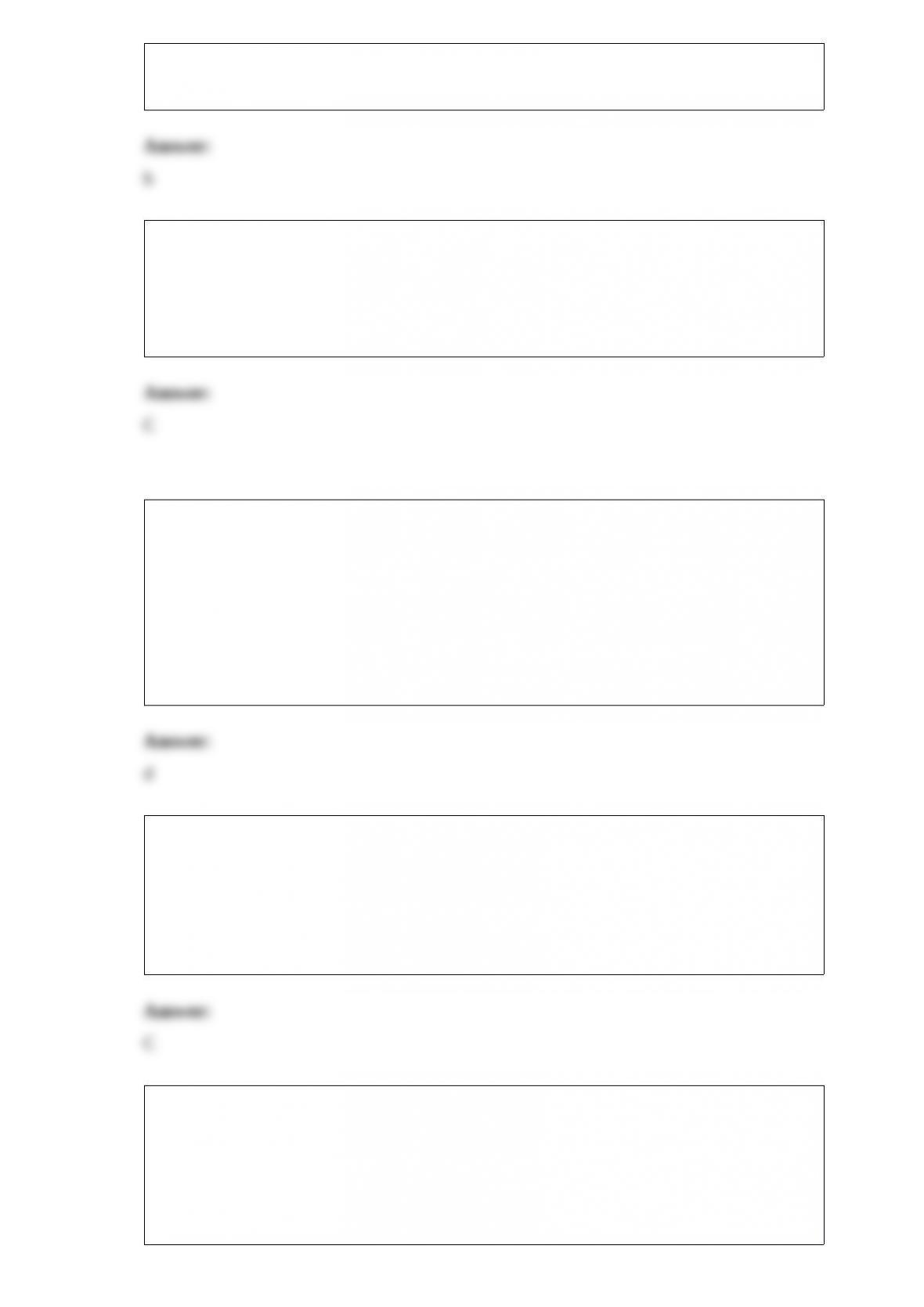
c.the quantity of wheat demanded to fall as a result of the subsequent price change.
d.the price of wheat to rise.
9) According to the textbook, trade wars and trade boycotts are much like:
A.”killing two birds with the same stone.”
B.”closing the barn door after the horses have left.”
C.’shooting yourself in the foot.”
D.”making a mountain out of a molehill.”
10) which of the following is correct?
a.real and nominal incomes always move in the same direction.
b.inflation increases the purchasing power of the dollar and necessarily reduces one’s
nominal income.
c.inflation reduces the purchasing power of the dollar and necessarily reduces one’s real
income.
d.inflation reduces the purchasing power of the dollar, but does not necessarily reduce
one’s real income.
11) What will be the effect of an excess of planned investment over saving in a private
closed economy with unemployed resources?
A.a decline in the rate of interest
B.an unintended accumulation of inventories by businesses
C.a rise in the real GDP
D.the Federal budget will automatically move toward a deficit
12) (Last Word) Which of the following is not an item in the list of leading economic
indicators?
A.the rate of inflation
B.the length of the average work week
C.the money supply
D.the value of the index of consumer expectations