1) under the gold standard, a deficit nation facing a gold outflow and a decrease in its
money supply would also experience a:
a.rise in its interest rate and a short-term financial inflow
b.rise in its interest rate and a short-term financial outflow
c.fall in its interest rate and a short-term financial inflow
d.fall in its interest rate and a short-term financial outflow
2) by the early 1970s, gold had been phased out of the international monetary system.
a.true
b.false
3) the ____ effect suggests that following a currency depreciation a country’s trade
balance worsens for a period before it improves.
a.marshall-lerner
b.j-curve
c.absorption
d.pass-through
4) under a fixed exchange-rate system and high capital mobility, a contraction in the
domestic money supply leads to a:
a.trade-account deficit and a capital-account surplus
b.trade-account deficit and a capital-account deficit
c.trade-account surplus and a capital-account surplus
d.trade-account surplus and a capital-account deficit
5) a closed economy is one in which:
a.imports exactly equal exports, so that trade is balanced
b.domestic firms invest in industries overseas
c.the home economy is isolated from foreign trade
d.saving exactly equals investment at full employment

6) under floating exchange rates, relatively low domestic interest rates tend to promote
depreciation of a currency’s exchange value while relatively high domestic interest rates
lead to currency appreciation.
a.true
b.false
7) assume that interest rates in the united states and britain are the same. if a u.s.
resident anticipates that the exchange value of the dollar is going to appreciate against
the pound, she should:
a.borrow needed funds from british banks rather than u.s. banks
b.borrow needed funds from u.s. banks rather than british banks
c.convert u.s. dollars into british pounds
d.any of the above
8) to protect its farmers from imports of agricultural goods, the european union has
implemented tariff rates that vary directly with world prices.
a.true
b.false
9) if a production possibilities curve is bowed out (i.e., concave) in appearance,
production occurs under conditions of:
a.constant opportunity costs
b.increasing opportunity costs
c.decreasing opportunity costs
d.zero opportunity costs
10) a global import quota permits a specified number of goods to be imported each
year, but does not specify where the product is shipped from and who is permitted to
import.
a.true
b.false
11) stabilizing commodity prices around long-term trends tends to benefit importers at
the expense of exporters in markets characterized by:
a.demand-side disturbances
b.supply-side disturbances
c.demand-side and supply-side disturbances
d.none of the above
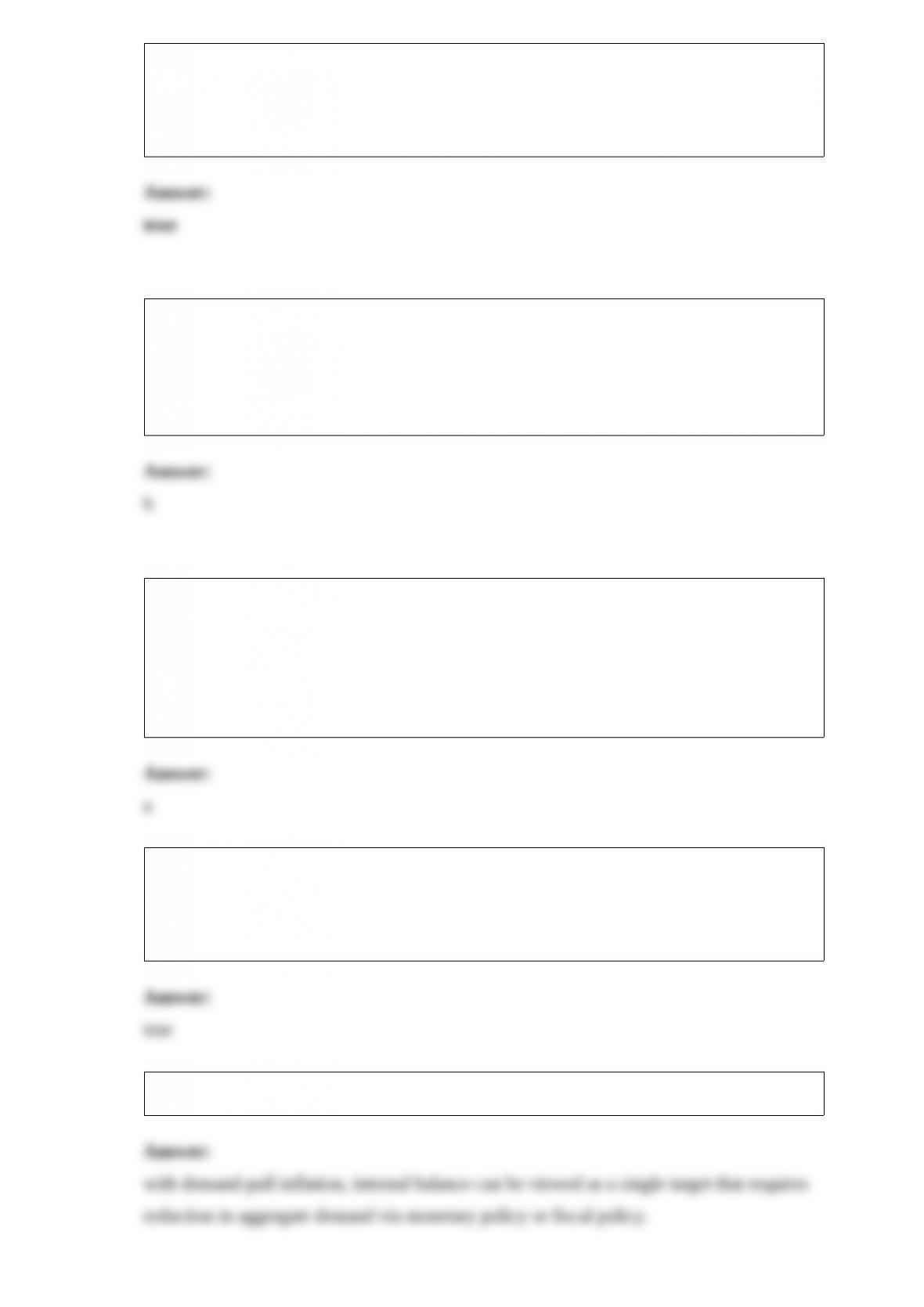
12) figure 14.1us market for imported toyotas
in figure 14.1, d represents the us demand curve for toyotas and mc0 represents the
marginal cost of producing toyotas.assume that toyota behaves like a monopolist in the
us market.a shift in the marginal cost curve from mc0 to mc1 leads to
a.a complete pass-through ot the depreciation of the dollar
b.a complete pass-through of the appreciation of the dollar
c.a partial pass-through of the depreciation of the dollar
d.a partial pass-through of the appreciation of the dollar
13) opening the economy to international trade tends to lessen inflationary pressures at
home.
a.true
b.false
14) with globalization and import competition, u.s. prices have generally:
a.increased
b.decreased
c.remained stable
d.all of these at various times
15) suppose a central bank prevents a depreciation of its currency by intervening in the
foreign exchange market and buying its currency with foreign currency. this causes the
a.domestic money supply to decrease and a decline in aggregate demand
b.domestic money supply to increase and a decline in aggregate demand
c.domestic money supply to decrease and a rise in aggregate demand
d.domestic money supply to increase and a rise in aggregate demand
16) today, fixed exchange rates are used primarily by small, developing countries that
tie their currencies to a key currency such as the u.s. dollar.
a.true
b.false
17) what policy instrument should be used when demand-pull inflation exists?
18) does factor price equalization occur in the real world?
19) how do movements in exchange rates affect domestic costs, in the presence of
foreign sourcing?
20) is a tariff-rate quota a two-tier tariff? why?
21) what foreign exchange transactions do banks typically engage in?