
Unless two people who are producing two goods have exactly the same opportunity
costs, then one person will have a comparative advantage in one good, and the other
person will have a comparative advantage in the other good.
a. True
b. False
Workland has a population of 10,000, of whom 7,000 work 8 hours a day to produce a
total of 224,000 final goods. Laborland has a population of 5,000, of whom 3,000 work
7 hours a day to produce a total of 105,000 final goods.
a. Workland has higher productivity and higher real GDP per person than Laborland.
b. Workland has higher productivity but lower real GDP per person than Laborland.
c. Workland has lower productivity but higher real GDP per person than Laborland.
d. Workland has lower productivity and lower real GDP per person than Laborland.
By diversifying, the risk of holding stock
a. can be eliminated. On average over the past two centuries stocks paid a higher
average real return than bonds.
b. can be eliminated. On average over the past two centuries stocks paid a lower
average real return than bonds.

c. can be reduced but not eliminated. On average over the past two centuries stocks paid
a higher average real return than bonds.
d. can be reduced but not eliminated. On average over the past two centuries stocks paid
a lower average real return than bonds.
Table 24-2
The table below pertains to Pieway, an economy in which the typical consumer’s basket
consists of 15 bushels of peaches and 10 bushels of pecans.
RefertoTable24-2. If 2012 is the base year, then the inflation rate in 2013 was
a. 23.5 percent.
b. 1.04 percent.
c. 10 percent.
d. 4.4 percent.

Economists have found that union workers earn what percent more than similar
nonunion workers?
a. 0 to 5
b. 5 to 10
c. 10 to 20
d. 20 to 30
If the price level falls, the real value of a dollar
a. rises, so people will want to buy more.
b. rises, so people will want to buy less.
c. falls, so people will want to buy more.
d. falls, so people will want to buy less.
The introduction of a union into an industry
a. raises wages and employment in that industry.
b. lowers wages and employment in that industry.

c. lowers wages and raises employment in that industry.
d. raises wages and lowers employment in that industry.
Other things the same, the higher the rate of saving and investment in a country, the
higher will be the standard of living in the future.
a. True
b. False
Which of the following claims concerning the importance of effects that explain the
slope of the U.S. aggregate- demand curve is correct?
a. The exchange-rate effect is relatively small because exports and imports are a small
part of real GDP.
b. The interest-rate effect is relatively small because investment spending is not very
responsive to interest rate changes.
c. The wealth effect is relatively large because money holdings are a significant portion
of most households’ wealth.
d. None of the above is correct.

When a variable that is not named on either axis of a graph changes, we read the change
as a movement along the curve.
a. True
b. False
Other things the same, if reserve requirements are increased, the reserve ratio
a. increases, the money multiplier increases, and the money supply increases.
b. increases, the money multiplier decreases, and the money supply decreases.
c. decreases, the money multiplier increases, and the money supply increases.
d. decreases, the money multiplier decreases, and the money supply increases.
The aggregate quantity of goods and services demanded changes as the price level rises

because
a. real wealth falls, interest rates rise, and the dollar appreciates.
b. real wealth falls, interest rates rise, and the dollar depreciates.
c. real wealth rises, interest rates fall, and the dollar appreciates.
d. real wealth rises, interest rates fall, and the dollar depreciates.
Incomes of U.S. households in the 1970s and 1980s
a. grew rapidly, due to the widespread success of labor unions in pushing up wages
during those decades.
b. grew rapidly, due to several increases in the minimum wage during those decades.
c. grew rapidly, due to government policies that discouraged the importation of foreign
products during those decades.
d. grew slowly, due to slow growth of the output of goods and services per hour of U.S.
workers’ time during those decades.
Jake can complete an oil change in 45 minutes and he can write a poem in 90 minutes.
Ming-la can complete an oil change in 30 minutes and she can write a poem in 90
minutes. Jake’s opportunity cost of writing a poem is lower than Ming-la’s opportunity
cost of writing a poem.

a. True
b. False
If a central bank were required to target inflation at zero, then when there was an
unanticipated decrease in aggregate demand the central bank
a. would have to increase the money supply. This would move unemployment closer to
the natural rate.
b. would have to increase the money supply. This would move unemployment further
from the natural rate.
c. would have to decrease the money supply. This would move unemployment closer to
the natural rate.
d. would have to decrease the money supply. This would move unemployment further
from the natural rate.
Arlo is offered a job in Des Moines, where the CPI is 60, and a job in New York, where
the CPI is 125. Arlo’s job offer in Des Moines is for $48,000. How much does the New
York job have to pay in order for the two salaries to represent the same purchasing
power?
a. $23,040
b. $52,000

c. $79,200
d. $100,000
Samuelson and Solow argued that
a. high unemployment puts upward pressures on wages and prices.
b. given the historical evidence, a combination of low inflation and low unemployment
was not possible.
c. Both A and B are correct.
d. None of the above are correct.
In a perfectly competitive market, at the market price, buyers
a. cannot buy all they want, and sellers cannot sell all they want.
b. cannot buy all they want, but sellers can sell all they want.
c. can buy all they want, but sellers cannot sell all they want.
d. can buy all they want, and sellers can sell all they want.

If Spain has a trade deficit, then
a. foreign countries purchase more Spanish assets than Spain purchases from them. This
makes Spanish saving greater than Spanish domestic investment.
b. foreign countries purchase more Spanish assets than Spain purchases from them. This
makes Spanish saving smaller then Spanish domestic investment.
c. foreign countries purchase fewer Spanish assets than Spain purchases from them.
This makes Spanish saving greater than Spanish domestic investment.
d. foreign countries purchase fewer Spanish assets than Spain purchases from them.
This makes Spanish saving greater than Spanish domestic investment.
Critics of stabilization policy argue that
a. “animal spirits” must be offset by active monetary policy.
b. active monetary policy is necessary for steady economic growth.
c. the lag problem ends up being a cause of economic fluctuations.
d. active fiscal policy is required for steady economic growth.
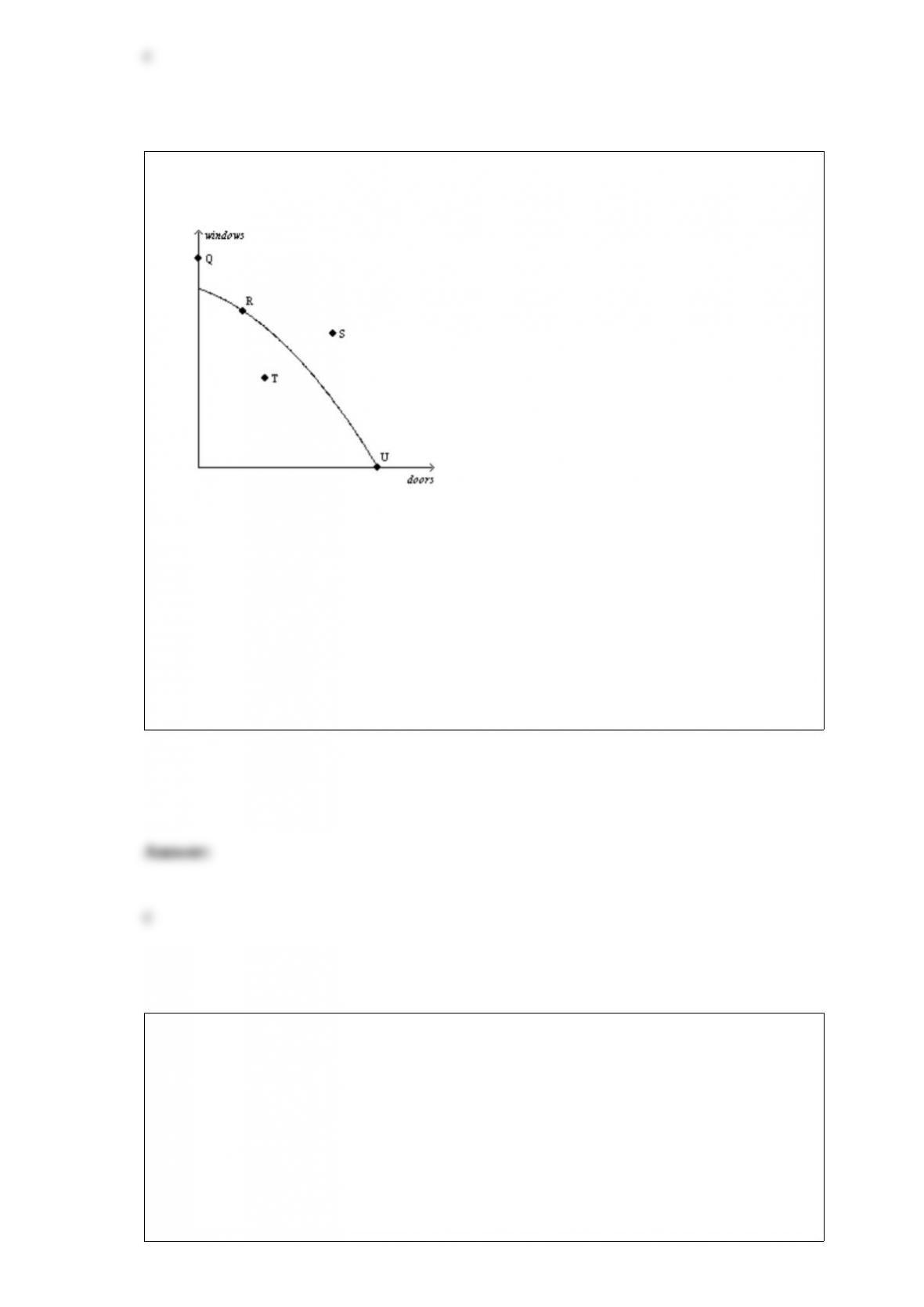
Figure 2-4
Refer toFigure2-4. Efficient production is represented by which point(s)?
a. Q, R, U
b. R, T, U
c. R, U
d. S, T
When we say that trade is roundabout we mean that
a. people sometimes trade goods for goods.
b. trades require a double coincidence of wants.
c. currency is accepted primarily to make further trades.
d. people must spend time searching for the products they wish to purchase.
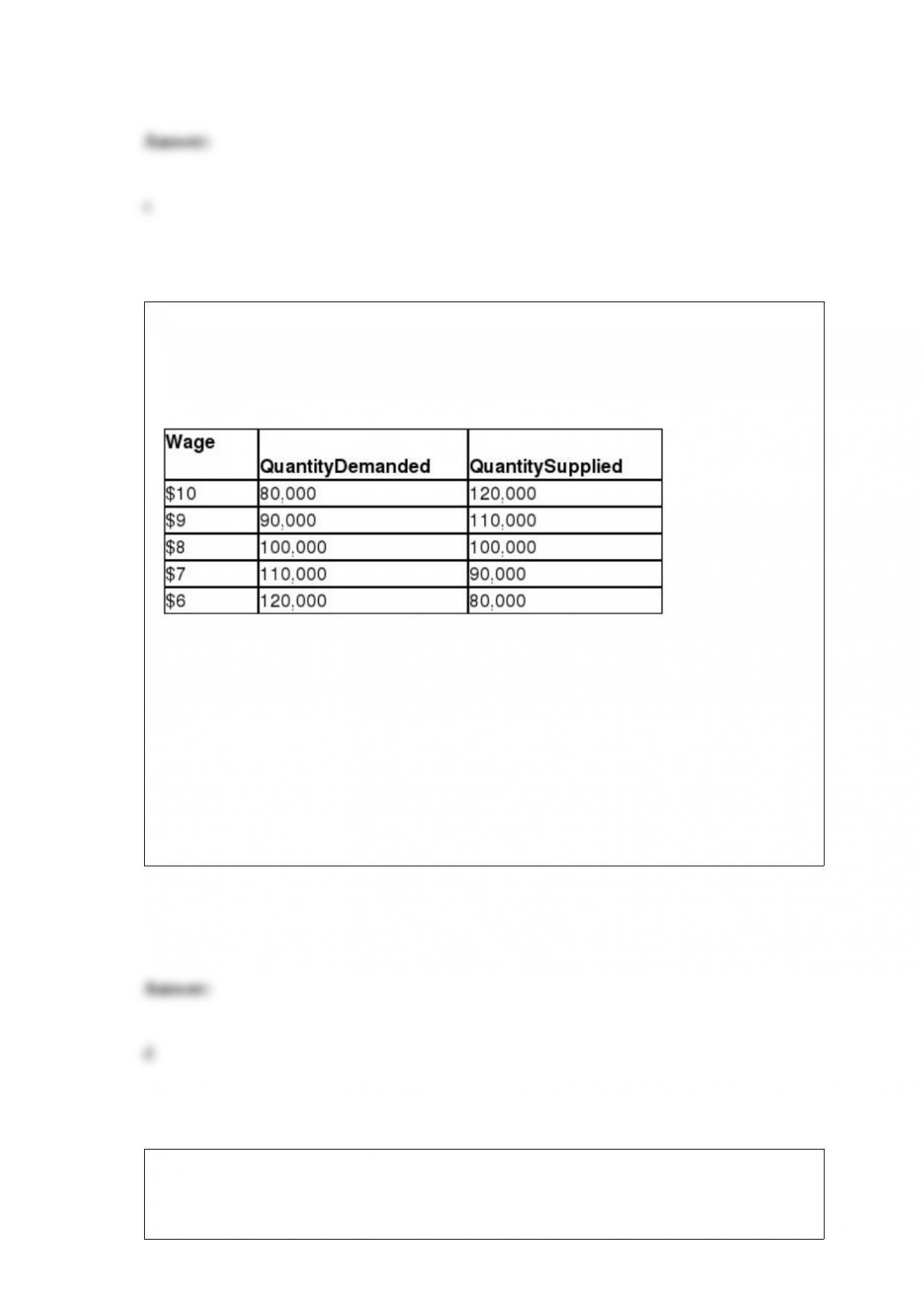
Table 28-8
Below is data about the labor market in the state of Northwoods.
RefetoTable28-8.If the state government imposed a minimum wage of $10, how many
people would be unemployed?
a. 0
b. 10,000
c. 20,000
d. 40,000
Which of the following does nothelp reduce frictional unemployment?
a. government-run employment agencies

b. public training programs
c. unemployment insurance
d. All of the above help reduce frictional unemployment.
The open-economy macroeconomic model examines the determination of
a. the output growth rate and the real interest rate.
b. unemployment and the exchange rate.
c. the output growth rate and the inflation rate.
d. the trade balance and the exchange rate.
In the markets for goods and services in the circular-flow diagram,
a. households provide firms with savings for investment.
b. households provide firms with labor, land, and capital.
c. firms provide households with output.
d. firms provide households with profit.

In an open economy, the supply of loanable funds comes from national saving.
a. True
b. False
Kroger’s grocery chain wants to finance the purchase of a new warehouse. It decides to
sell bonds.
a. Kroger’s plans to use equity financing and its action is part of the demand for
loanable funds.
b. Kroger’s plans to use equity financing and its action is part of the supply of loanable
funds.
c. Kroger’s plans to use debt financing and its action is part of the demand for loanable
funds.
d. Kroger’s plans to use debt financing and its action is part of the supply of loanable
funds.
The consumer price index was 225 in 2008 and 232.2 in 2009. The nominal interest rate
during this period was 6.5 percent. What was the real interest rate during this period?
a. 1.6 percent
b. 3.3 percent
c. 5.1 percent
d. 7.4 percent
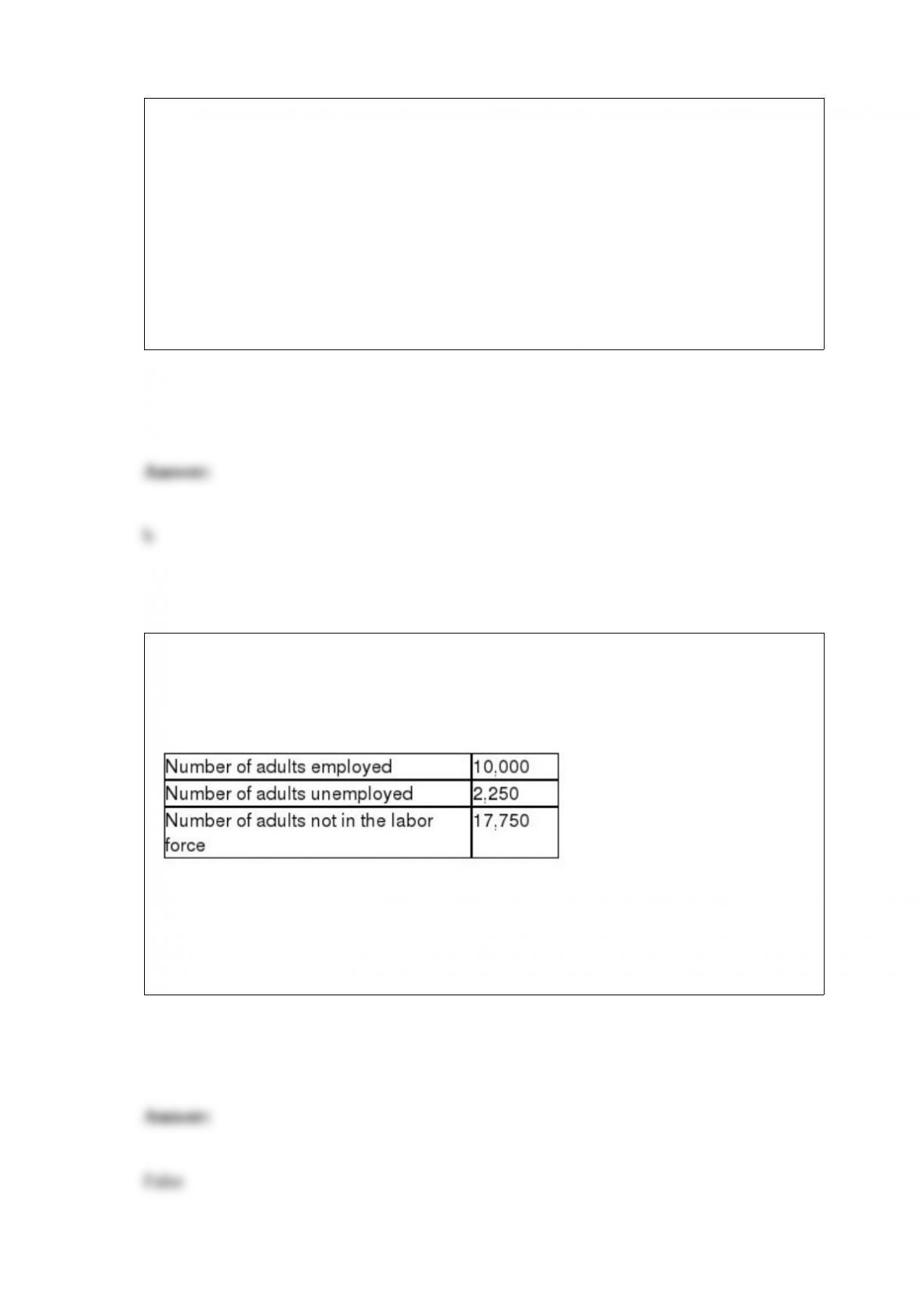
Table 28-11
2010 Labor Data for Tajnia
RefetoTable28-11.The labor force of Tajnia in 2010 is 10,000.
a. True
b. False

Spells of unemployment end about
a. 1/5 of the time with the person leaving the labor force.
b. 1/4 of the time with the person leaving the labor force.
c. 1/3 of the time with the person leaving the labor force.
d. 1/2 of the time with the person leaving the labor force.
All of the following are arguments against stabilization policy except
a. Economic forecasting is highly imprecise.
b. Long lags may cause stabilization policies to in fact destabilize the economy.
c. Monetary policy affects aggregate demand by changing interest rates.
d. Fiscal policy must go through a long political process.
Holding all other things constant, a higher price for ski lift tickets would
a. increase the number of skiers.
b. increase the price of skis.
c. decrease the number of skis sold.
d. decrease the demand for other winter recreational activities.
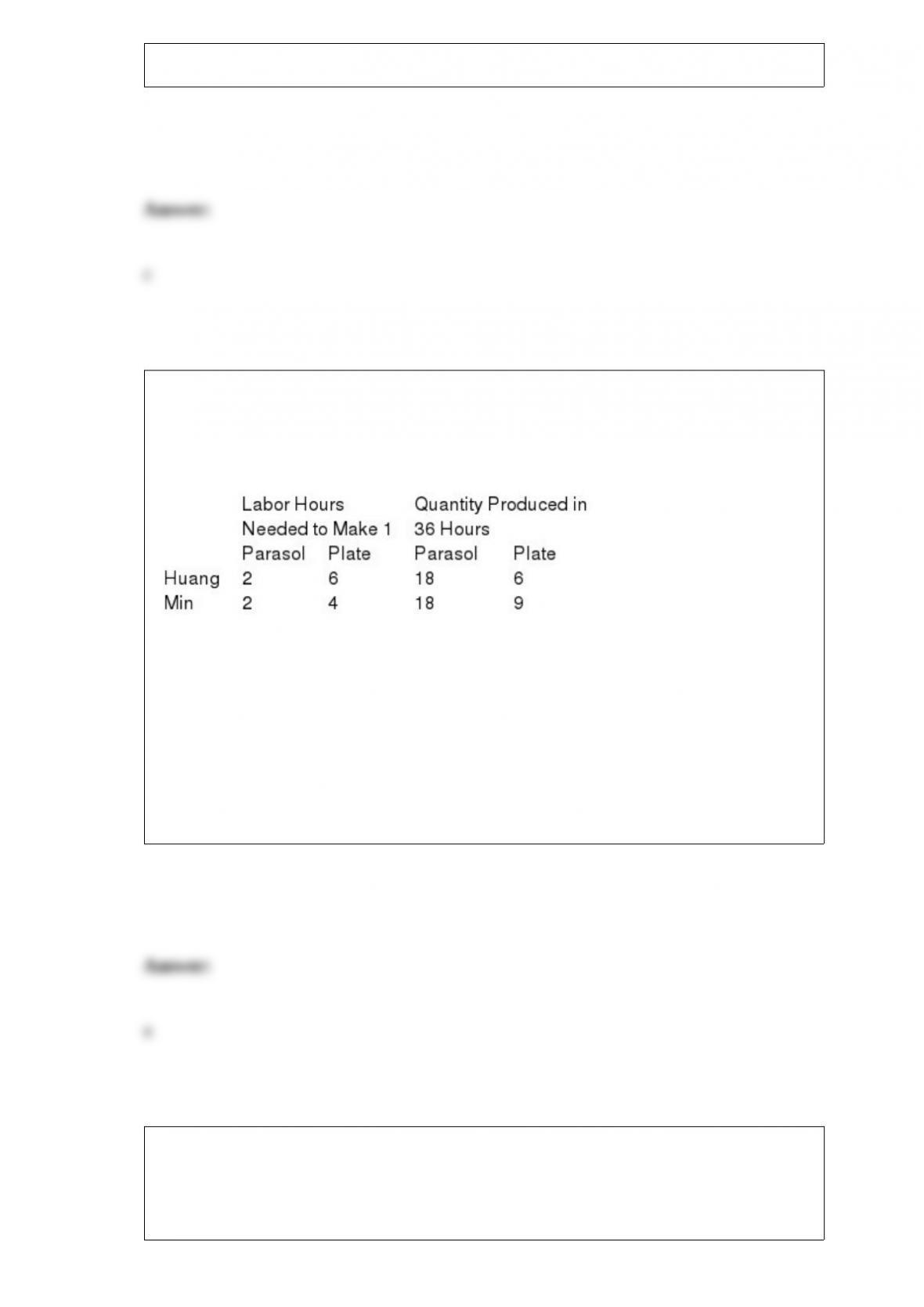
Table 3-27
Assume that Huang and Min can switch between producing parasols and producing
porcelain plates at a constant rate.
RefertoTable3-27. The opportunity cost of 1 parasol for Huang is
a. 1/3 plate.
b. 1/2 plate.
c. 3 plates.
d. 6 plates.
Scenario 28-1
Suppose that the Bureau of Labor Statistics reports that the entire adult population of
Mankiwland can be categorized as follows: 25 million people employed, 3 million

people unemployed, 1 million discouraged workers, and 1 million people who are either
students, homemakers, retirees, or other people not seeking employment.
RefetoScenario28-1.How many people are unemployed?
a. 1 million
b. 3 million
c. 4 million
d. 5 million