1) At the optimal quantity of a public good:
A.marginal benefit exceeds marginal cost by the greatest amount.
B.total benefit equals total cost.
C.marginal benefit equals marginal cost.
D.marginal benefit is zero.
2)
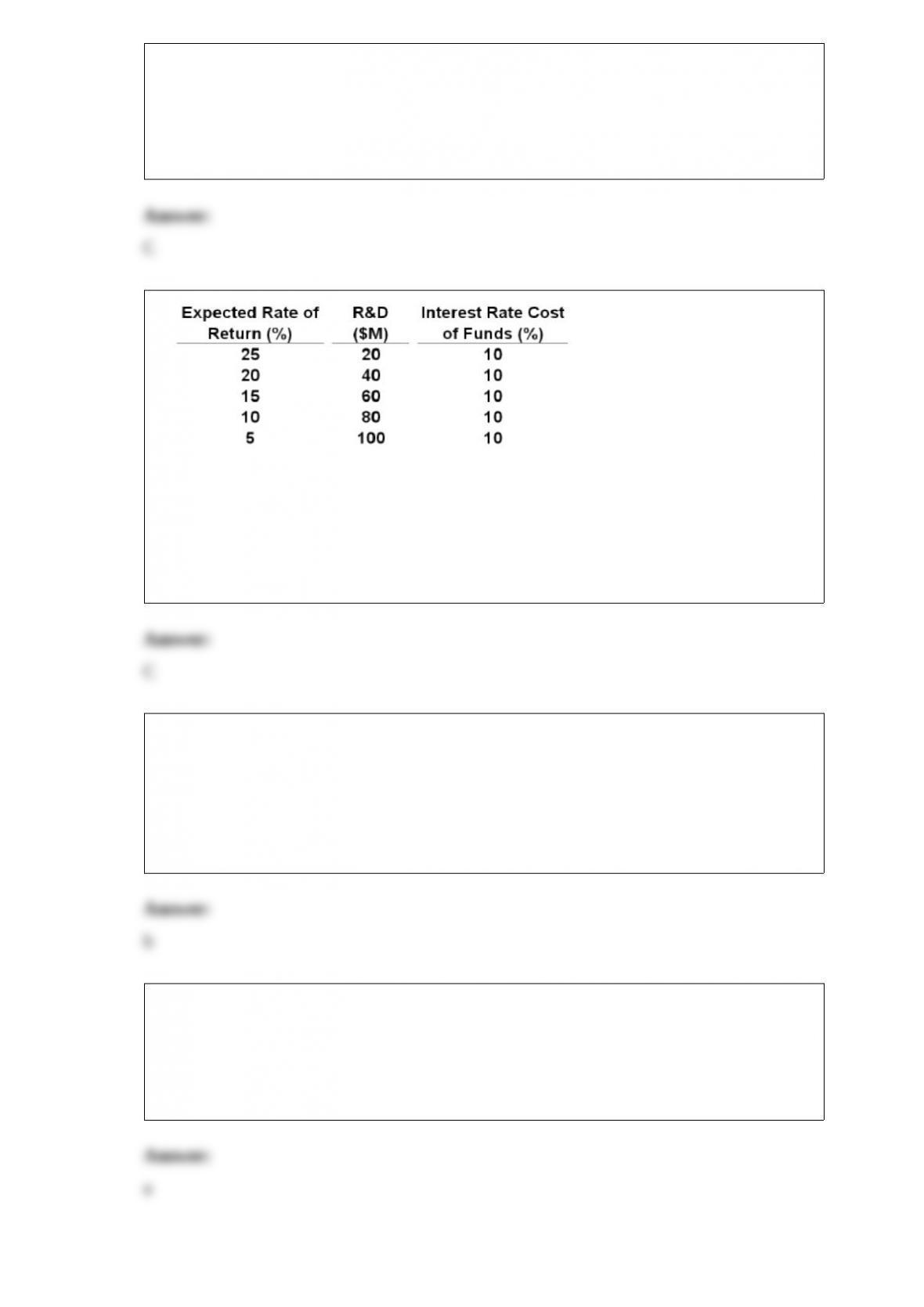
If we plotted the above data on a graph with R&D expenditures on the horizontal axis,
the:
A.interest-rate-cost-of-funds-curve would be a vertical line.
B.interest-rate-cost-of-funds-curve would slope downward.
C.expected-rate-of-return-curve would slope downward.
D.expected-rate-of-return-curve would be a horizontal line.
3) which of the above diagrams illustrate(s) the effect of a decline in the price of
irrigation equipment on the market for corn?
a.b only.
b.c only.
c.b and c
d.d only.
4) an important outcome of the uruguay round of gatt negotiations was:
a.a worldwide reduction of agricultural export subsidies.
b.establishment of the european union.
c.the elimination of all tariffs and quotas worldwide.
d.establishment of the world bank.
5) In considering yen and dollars, when the dollar rate of exchange for the yen rises:
A.the yen rate of exchange for the dollar will fall.
B.the yen rate of exchange for the dollar will also rise.
C.the yen rate of exchange for the dollar may either fall or rise.
D.U.S. net exports to Japan will fall.
6)
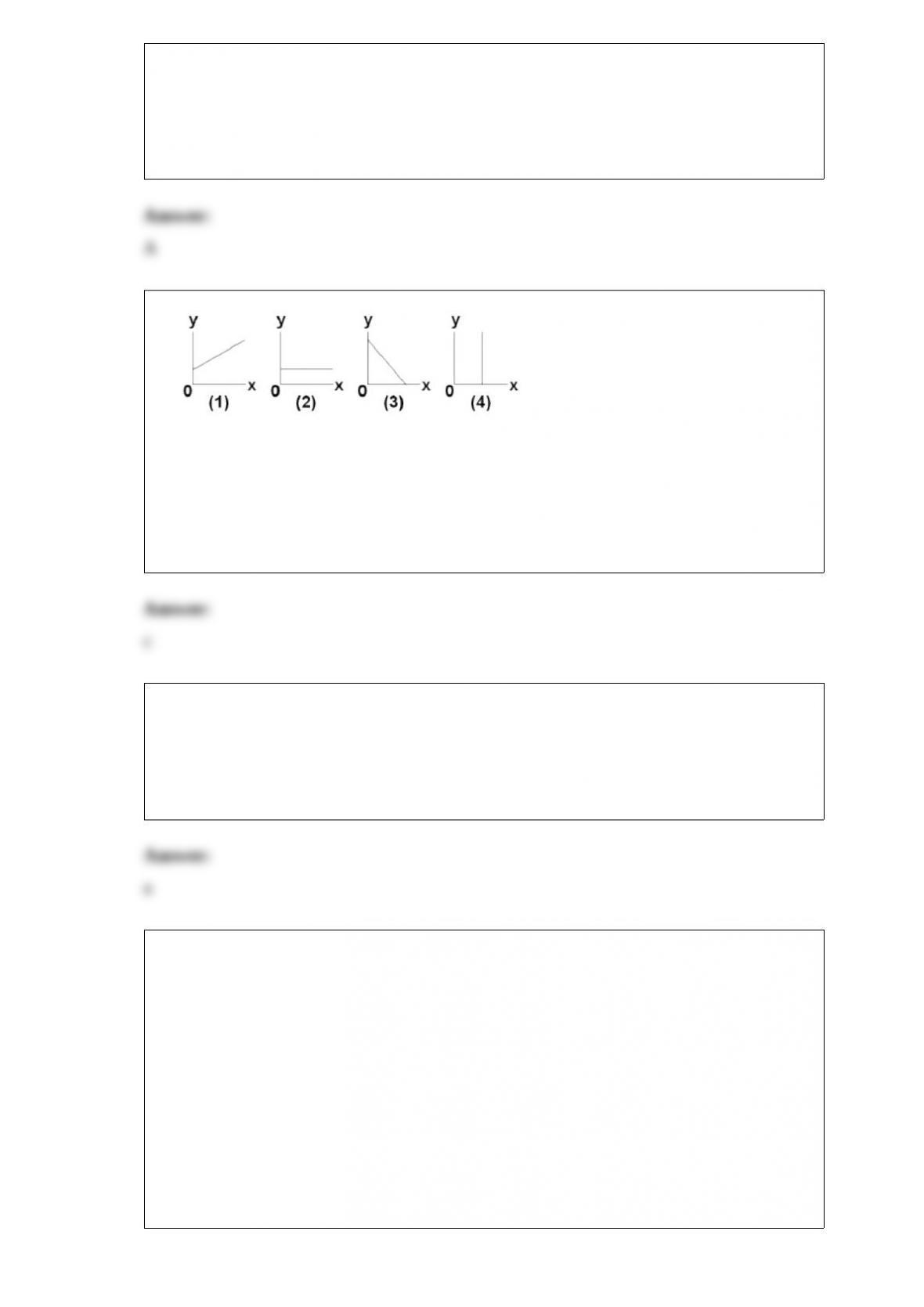
answer on the basis of the relationships shown in the above four figures. the amount of
y is unrelated to the amount of x in:
a.both 2 and 4
b.3 only.
c.2 only.
d.1
7) which of the following statements is correct? unanticipated inflation:
a.arbitrarily “taxes” fixed-income groups.
b.increases the real value of savings.
c.increases the purchasing power of the dollar.
d.benefits creditors at the expense of debtors.
8) The table below shows the marginal utility schedules for a soft drink (MUs) and an
energy drink (MUe). The price of the soft drink is $2 and the price of the energy drink
is $4. The consumers income is $10.
(a)If the consumer can only buy the soft drink, how much will the consumer buy and
what will be the total utility?
(b)If the consumer buys both the soft drink and the energy drink, how much will the
consumer buy to maximize utility? How much will total utility change?
Suppose another company decides to enter the energy drink market and the marginal
utility schedule for that firm is listed below. Their energy drink is price at $3.
(c)With the introduction of the new energy drink, what bundle will the consumer
choose to maximize utility? What will be the total level of utility?
(d)How do the results in (d) demonstrate possible benefits of diffusion for consumers?
9) suppose product x is an input in the production of product y. product y in turn is a
substitute for product z. an increase in the price of x can be expected to:
a.decrease the demand for z.
b.increase the demand for z.
c.have no effect on the demand for z.
d.decrease the supply of z.
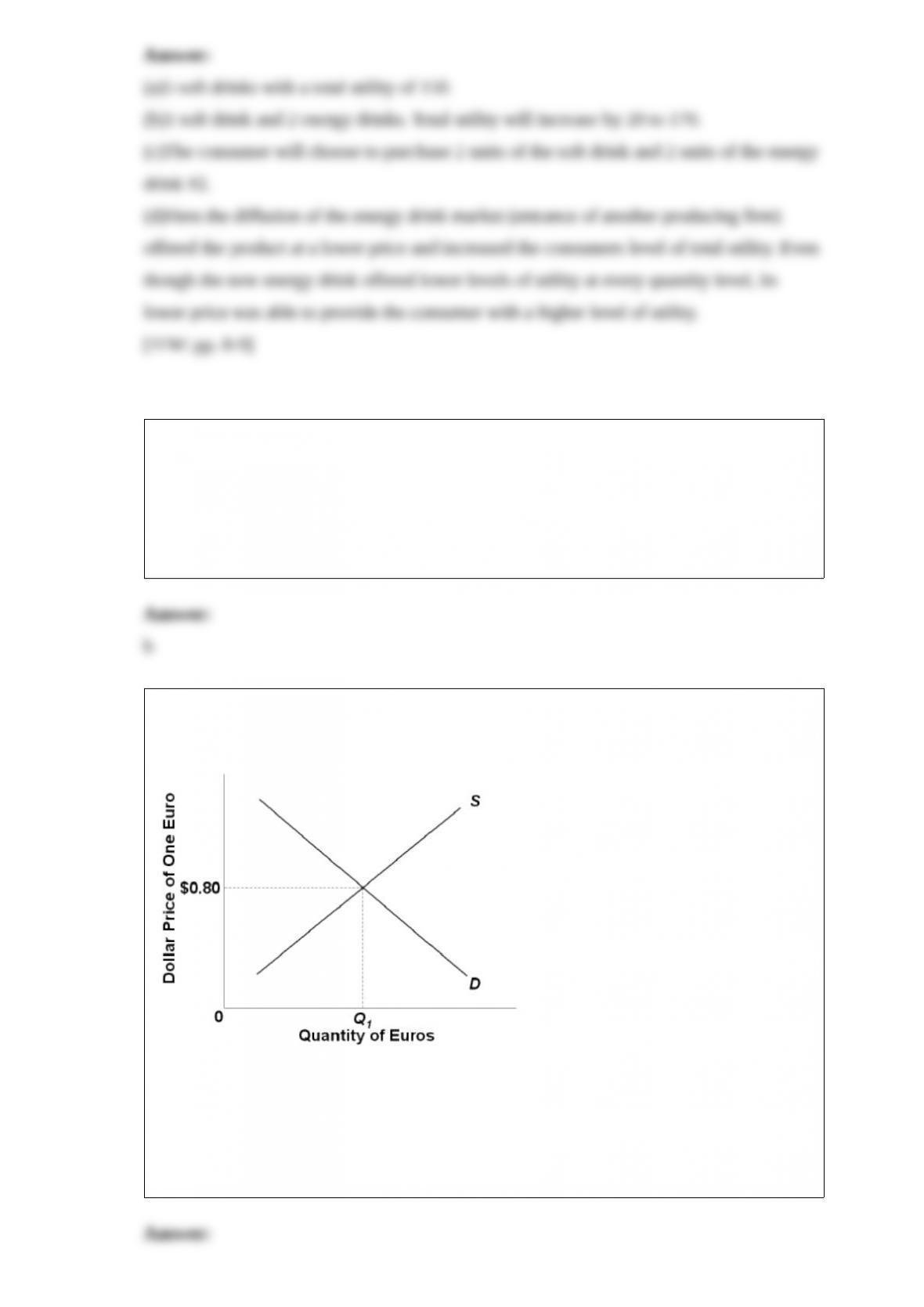
10) The following diagram is a flexible exchange market for foreign currency:
Refer to the above diagram. Other things equal, a rightward shift of the supply curve
would:
A.appreciate the euro.
B.cause a surplus of euros.
C.decrease the equilibrium quantity of euros.
D.appreciate the dollar.
11)
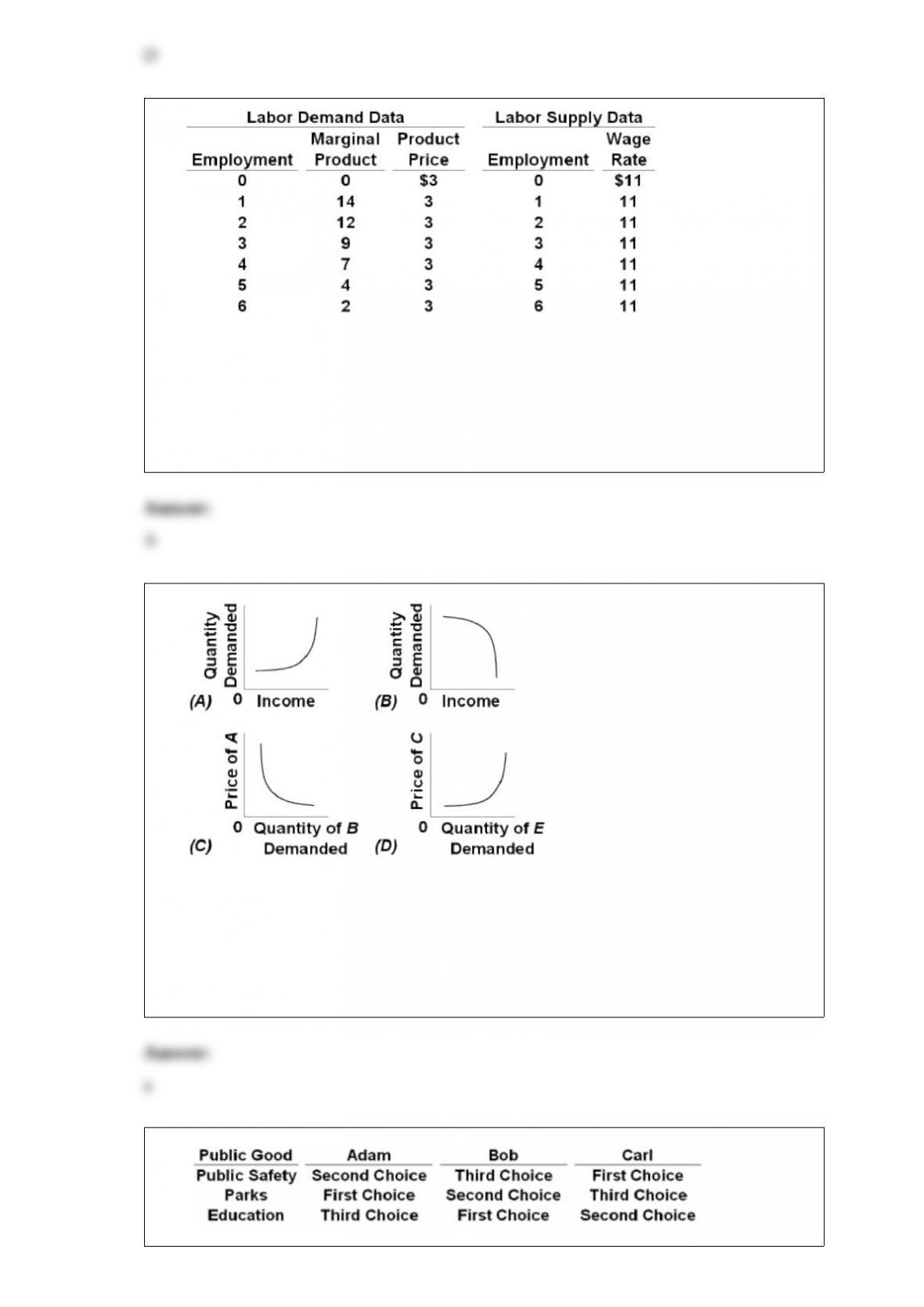
Refer to the above data. The firm will maximize profits (or minimize losses) by
employing:
A.5 workers.
B.4 workers.
C.3 workers.
D.2 workers.
12)
refer to the above diagrams. in which case would the coefficient of income elasticity be
positive?
a.a
b.b
c.c
d.d
13)
Refer to the above table. In a choice between education and public safety:
A.a majority of voters would favor education.
B.no voter decision is possible.
C.a majority of voters would favor public safety.
D.the outcome would depend on which item was listed first on the ballot.
14) The real-business-cycle theory holds that business fluctuations are caused by:
A.factors affecting aggregate demand.
B.incorrectly anticipated government stabilization policies.
C.significant changes in technology and resource availability.
D.’stop-and-go” monetary policies.
15)
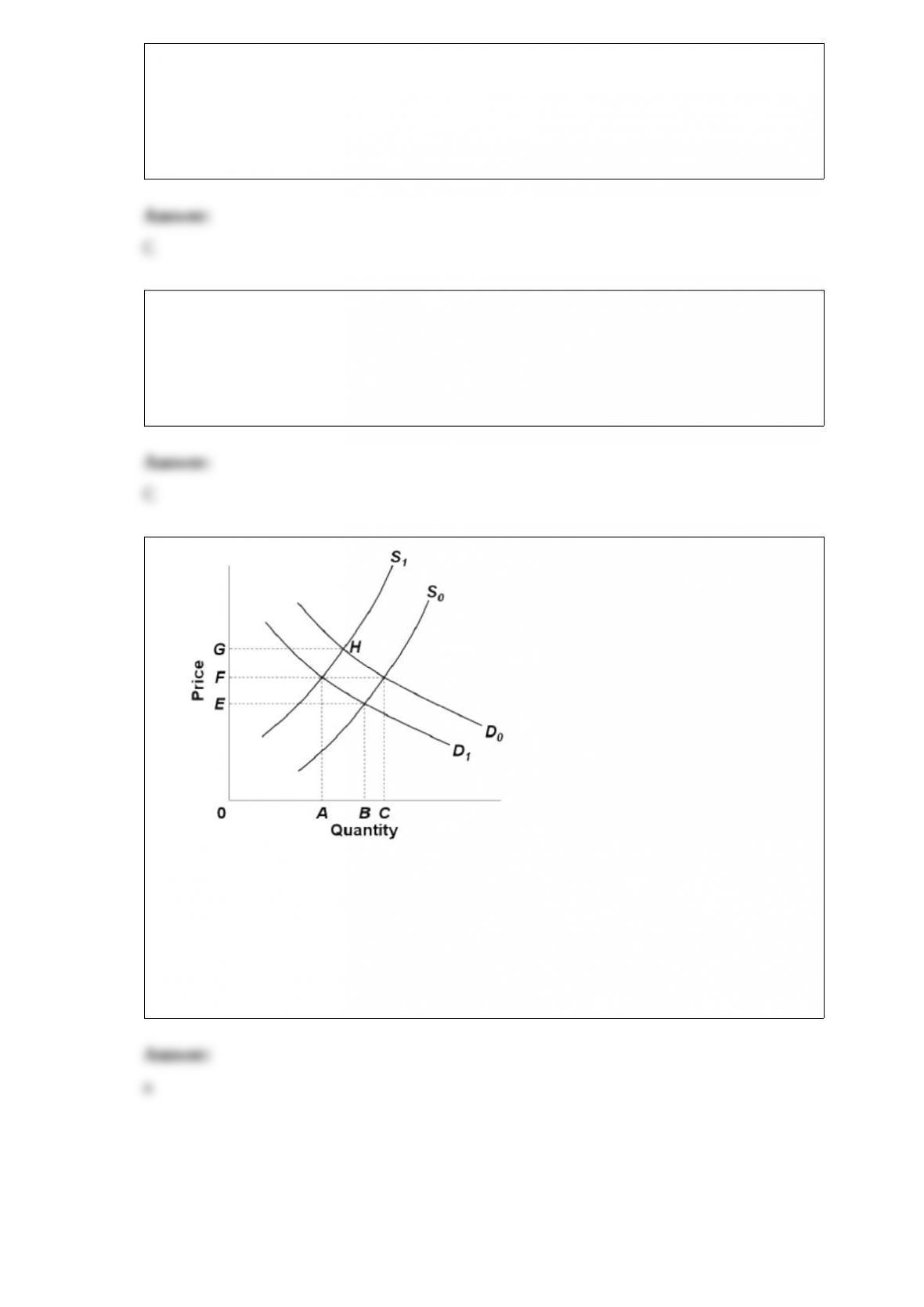
refer to the above diagram, which shows demand and supply conditions in the
competitive market for product x. other things equal, a shift of the supply curve from s0
to s1 might be caused by a(n):
a.increase in the wage rates paid to laborers employed in the production of x.
b.government subsidy per unit of output paid to firms producing x.
c.decline in the price of the basic raw material used in producing x.
d.increase in the number of firms producing x.
16)
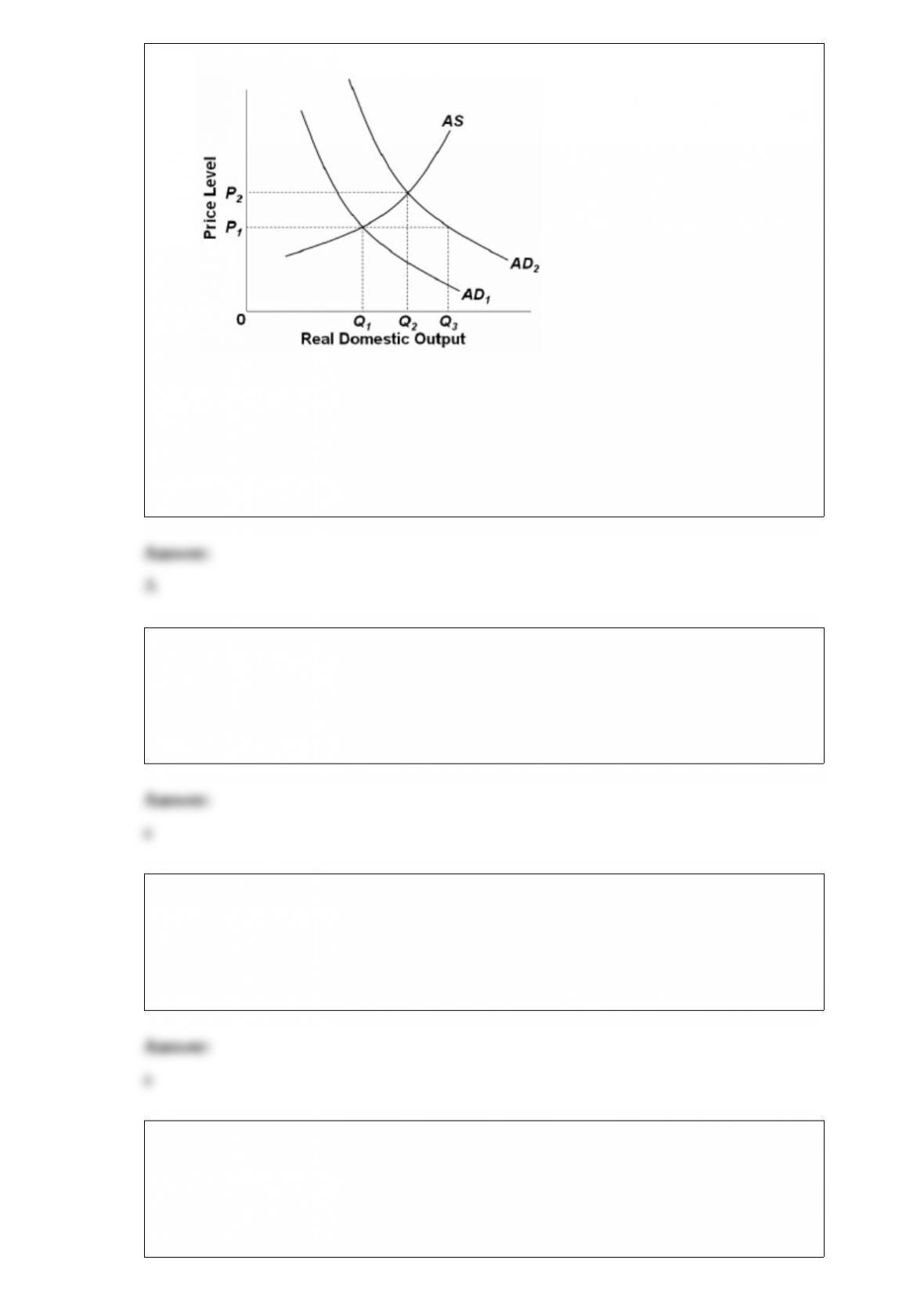
Refer to the above diagram. Suppose that aggregate demand increased from AD1 to
AD2. For the price level to stay constant:
A.the aggregate supply curve would have to shift rightward.
B.the aggregate supply curve would have to shift leftward.
C.real domestic output would have to remain constant.
D.the aggregate supply curve would have to be vertical.
17) at an annual growth rate of 4 percent, real gdp will double in about:
a.17 years.
b.20 years.
c.13 years.
d.15 years.
18) specialization in production is important primarily because it:
a.results in greater total output.
b.allows society to avoid the coincidence-of-wants problem.
c.allows society to trade by barter.
d.allows society to have fewer capital goods.
19) Answer the next question(s) on the basis of the following information: An economy
is employing 2 units of capital, 5 units of raw materials, and 8 units of labor to produce
its total output of 640 units. Each unit of capital costs $10, each unit of raw materials,
$4, and each unit of labor, $3.
Refer to the above information. If the per unit price of raw materials rises from $4 to $8
and all else remains constant, the per-unit cost of production will rise by about:
A.100 percent.
B.50 percent.
C.40 percent.
D.30 percent.
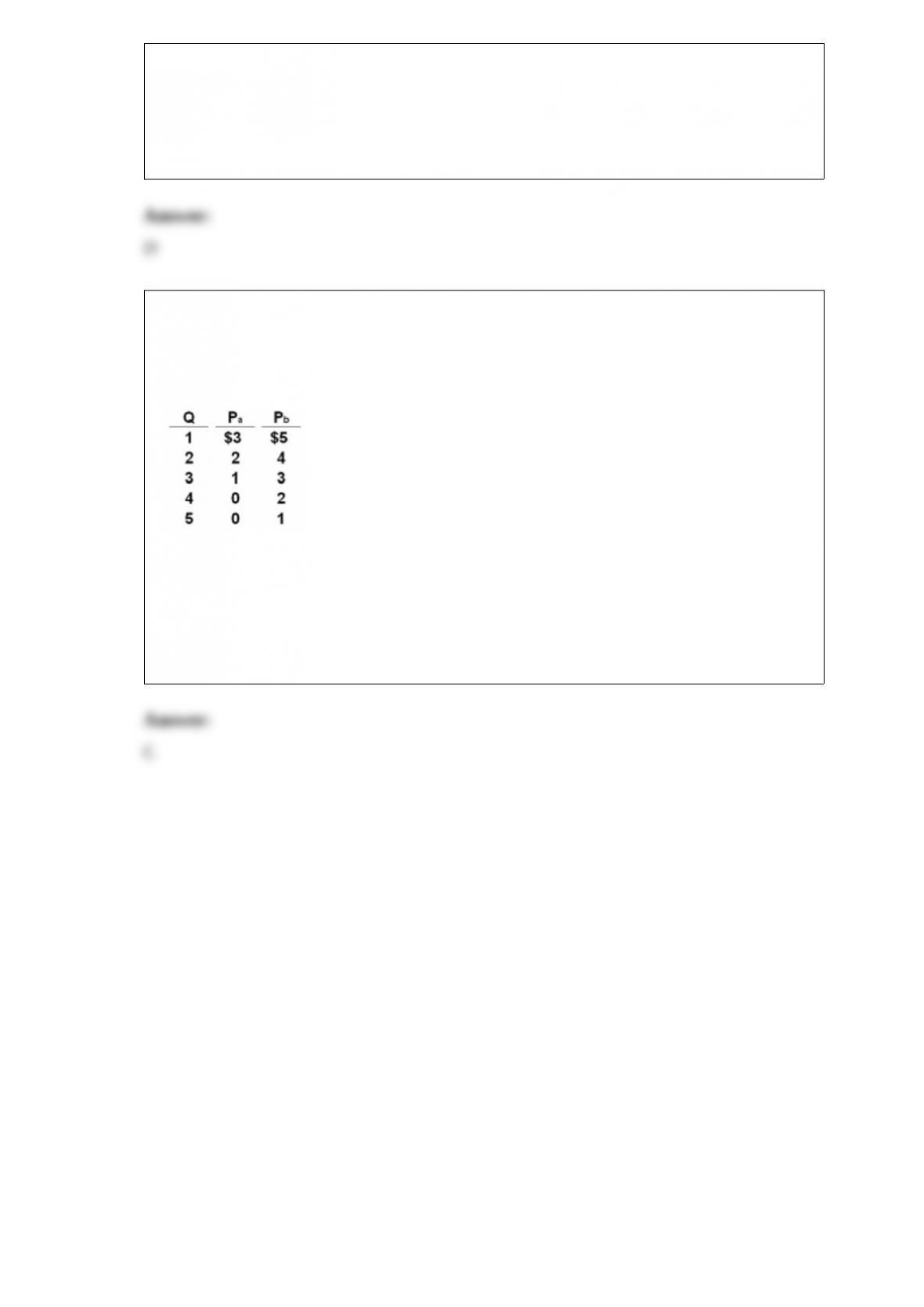
20) Pa and Pb are the prices that individuals A and B are willing to pay for the last unit
of a public good, rather than do without it. These people are the only two members of
society.
Refer to the above data. If the marginal cost of this good at the optimal quantity is $4,
the optimal quantity must be:
A.1 unit.
B.2 units.
C.3 units.
D.4 units.