
If bananas were used as money, which of the following functions of money would be
the hardest for bananas to satisfy?
A) unit of account
B) store of value
C) divisibility
D) medium of exchange
Targeting the federal funds rate allows the Fed some ability to control bank reserves and
thus the money supply. Explain how each of the following tools allows the Fed to
fine-tune its control of bank reserves.
a. Conducting open market operations
b. Changing the discount rate
c. The ability to pay interest on reserves
d. The Term Deposit Facility
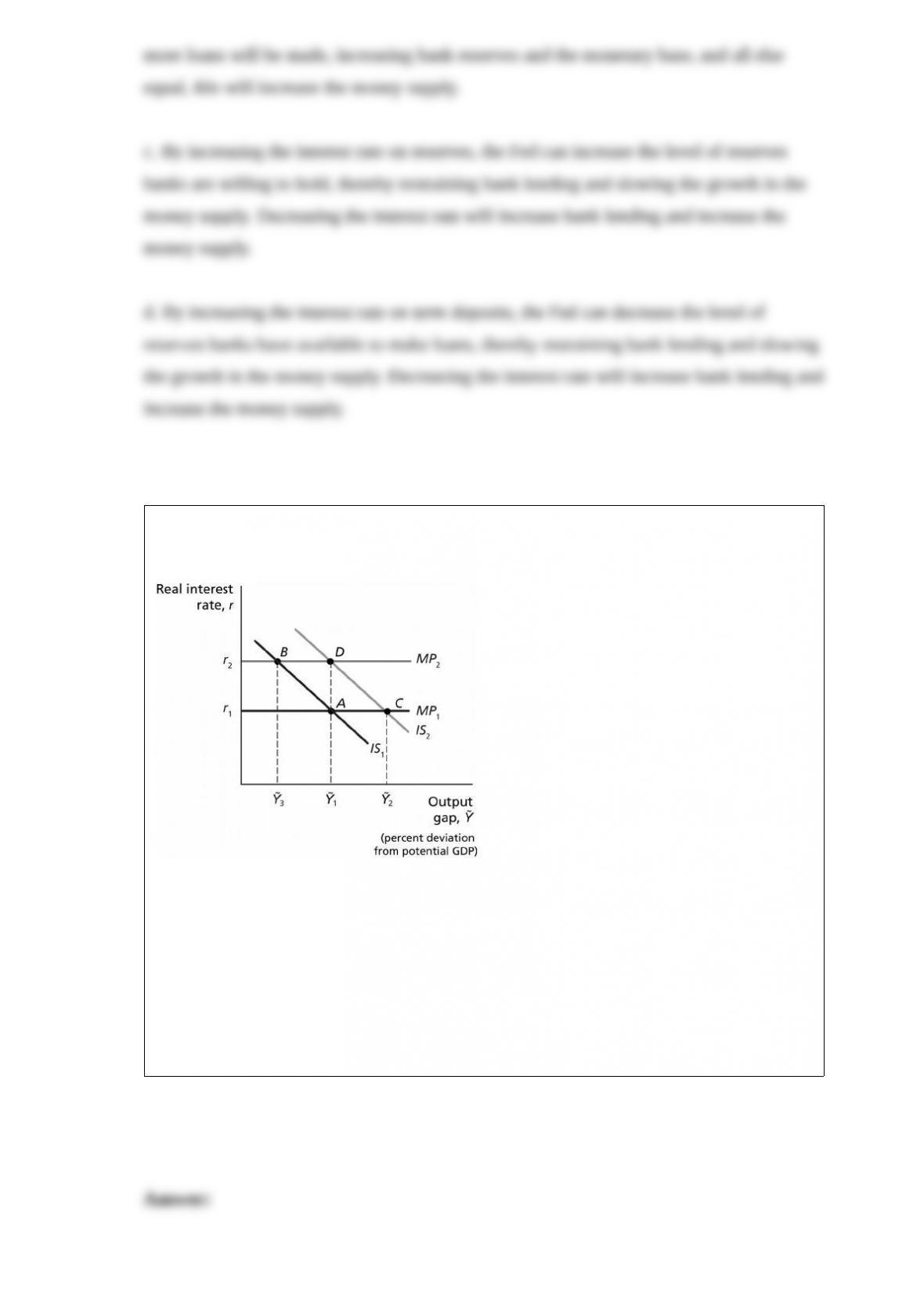
Figure 10.7
Refer to Figure 10.7. A movement from point C to point A could be caused by
A) a negative demand shock.
B) a decrease in the term premium investors expect in the future.
C) a decrease in the default-risk premium.
D) a decrease in the expected rate of inflation.
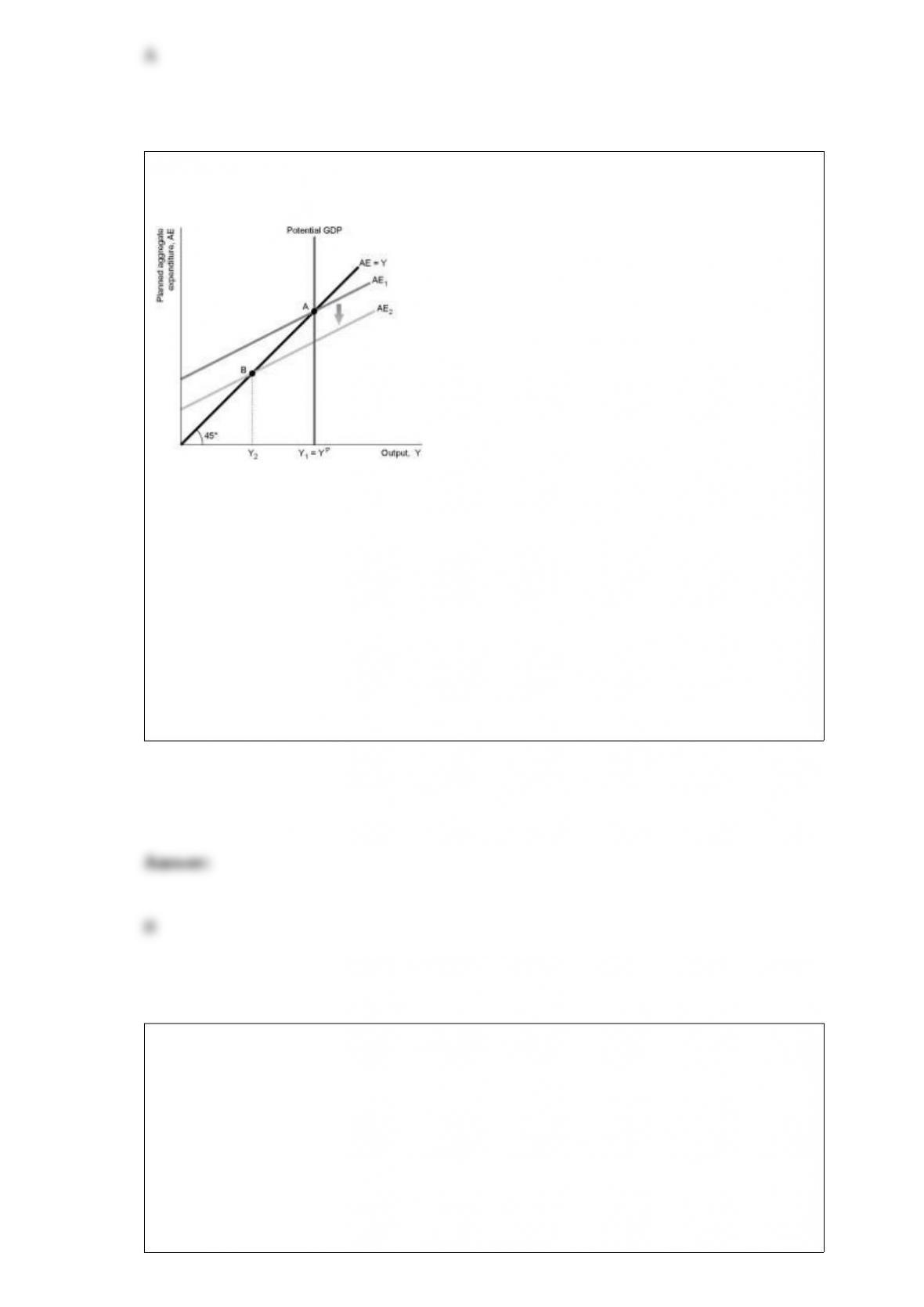
Figure 10.2
Refer to Figure 10.2. Assume the economy is initially at equilibrium at potential GDP
of $500 billion. If the MPC = 80 , and real GDP falls to Y2 = $400 billion, the vertical
distance between AE1 and AE2 must be
A) $8 billion.
B) $20 billion.
C) $80 billion.
D) $100 billion.
In the aggregate production function, the symbol “A ” represents an index of how
efficiently the economy transforms capital and labor into real GDP. “A” measures the
influence
A) of any factor that determines real GDP.
B) of the quantities of capital and labor that determine real GDP.
C) of any factor that determines real GDP other than the quantities of capital and labor.

D) of the quantities of capital and labor that determine real GDP, holding other factors
constant.
Holding everything else constant, if total factor productivity increases, the debt-to-GDP
ratio will ________, and if the labor force growth rate increases, the debt-to-GDP ratio
will ________.
A) increase; increase
B) increase; decrease
C) decrease; increase
D) decrease; decrease
If the average duration of unemployment is increasing, real GDP is most likely
A) beginning to rise.
B) remaining stable.
C) getting ready to decrease.
D) already decreasing.
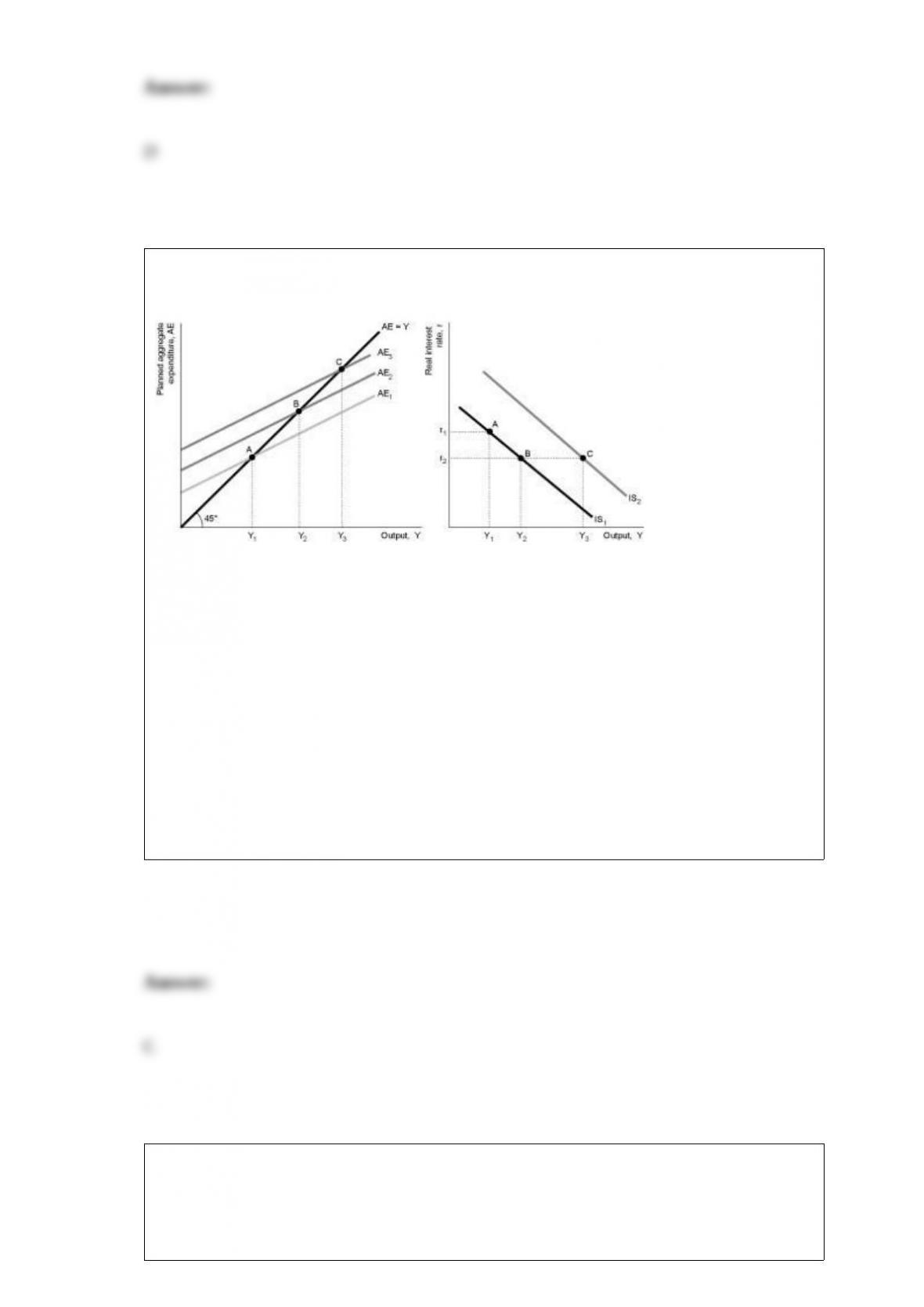
Figure 10.3
Panel (a) Panel (b)
Refer to Figure 10.3. A decrease in the real interest rate, with no other changes that
affect aggregate expenditure, is best represented by ________ in panel (a) and
________ in panel (b).
A) a shift from AE3 to AE2; a shift from IS2 to IS1
B) a shift from AE2 to AE3; a shift from IS1 to IS2
C) a shift from AE1 to AE2; a movement from point A to point B
D) a shift from AE1 to AE3; a movement from point A to point C
Suppose that the production function for the economy is Y = AK0.2L0.8. If the capital
stock = 40,000, the quantity of labor = 10,000, and the efficiency index = 1, real GDP is
A) $13,195.08.

B) $16,000.00.
C) $16,946.34.
D) $28,000.00.
A currency’s spot exchange rate against every other individual currency is known as a
________ exchange rate, and the exchange rate which shows how a currency is
changing relative to a group of other countries’ currencies is known as a ________
exchange rate.
A) nominal; real
B) unilateral; bilateral
C) nominal; parity
D) bilateral; multilateral
Suppose the federal budget deficit for the year was $500 billion and the economy was
in a recession. If the economy had been at potential GDP, it is estimated that tax
revenue would have been $350 billion higher and government spending on transfer
payments would have been $200 billion lower. Using these estimates, the cyclically
adjusted budget
A) deficit was $1,050 billion.

B) deficit was $650 billion.
C) surplus was $50 billion.
D) surplus was $650 billion.
Lenders in the shadow banking system
A) are protected from loss by the FDIC.
B) lack insurance to protect them from loss if the borrower becomes insolvent.
C) are not subject to the bank runs or panics that can affect commercial banks.
D) are protected by the Federal Reserve and the U.S. Treasury Department should they
suffer losses due to bad investment decisions.
In the fall of 2012, more than three years after the end of the recession, the
unemployment rate remained just below 8% and nearly half of the unemployed had
been out of work for at least six months. Unemployment had been so high for so long,
that many economists had begun speaking of the “new normal”, in which
unemployment rates might be stuck at higher levels for many years. If this “new
normal” does materialize, these higher unemployment rates would most likely be the
result of ________ unemployment.
A) frictional

B) cyclical
C) structural
D) seasonal
If there is no change in the quantity of currency, the purchase of $100 million of
Treasury securities by the Federal Reserve will cause reserves at banks to
A) decrease by $100 million.
B) increase by $100 million.
C) decrease by less than $100 million.
D) increase by less than $100 million.

If the long-term real interest rate is 5.1%, the term structure effect is 2.0%, the
default-risk premium is 1.7%, and the expected rate of inflation is 3.3%, the short-term
nominal interest rate will be
A) -1.9%.
B) 4.7%.
C) 5.5%.
D) 12.1%.
All else equal, if individuals save less because inflation lowers returns on savings, this
should ________ the supply of loanable funds and ________ the capital stock.
A) increase; raise
B) increase; reduce
C) decrease; raise
D) decrease; reduce
Over the past 20 years, foreign financial investment in the United States has
A) increased significantly.

B) decreased significantly.
C) remained fairly consistent.
D) become negative.
Which of the following is an example of securitization?
A) a bank bundles a group of mortgage loans and sells the bundle to investors
B) an investor sells his shares of stock and uses the proceeds to purchase Treasury
bonds
C) a household deposits cash in a savings account that is insured by the FDIC
D) a government chooses to only purchase Treasury securities from other governments
that are financially sound
Which of the following is an example of foreign direct investment in the United
Kingdom?
A) British Airways purchases a small, New York-based helicopter transport company.
B) The Bank of England purchases U.S. Treasury securities.
C) Verizon purchases stock in British Telecom.

D) U.S.-based Amazon.com purchases a distribution warehouse in London.
Fiscal policy refers to changes in
A) the money supply and interest rates that are intended to achieve macroeconomic
policy objectives.
B) federal taxes, purchases, and transfer payments that are intended to achieve
macroeconomic policy objectives.
C) federal taxes, purchases, and transfer payments that are intended to achieve
environmental and national defense policy objectives.
D) state and local taxes and purchases that are intended to achieve state and local policy
objectives.
Figure 4.4
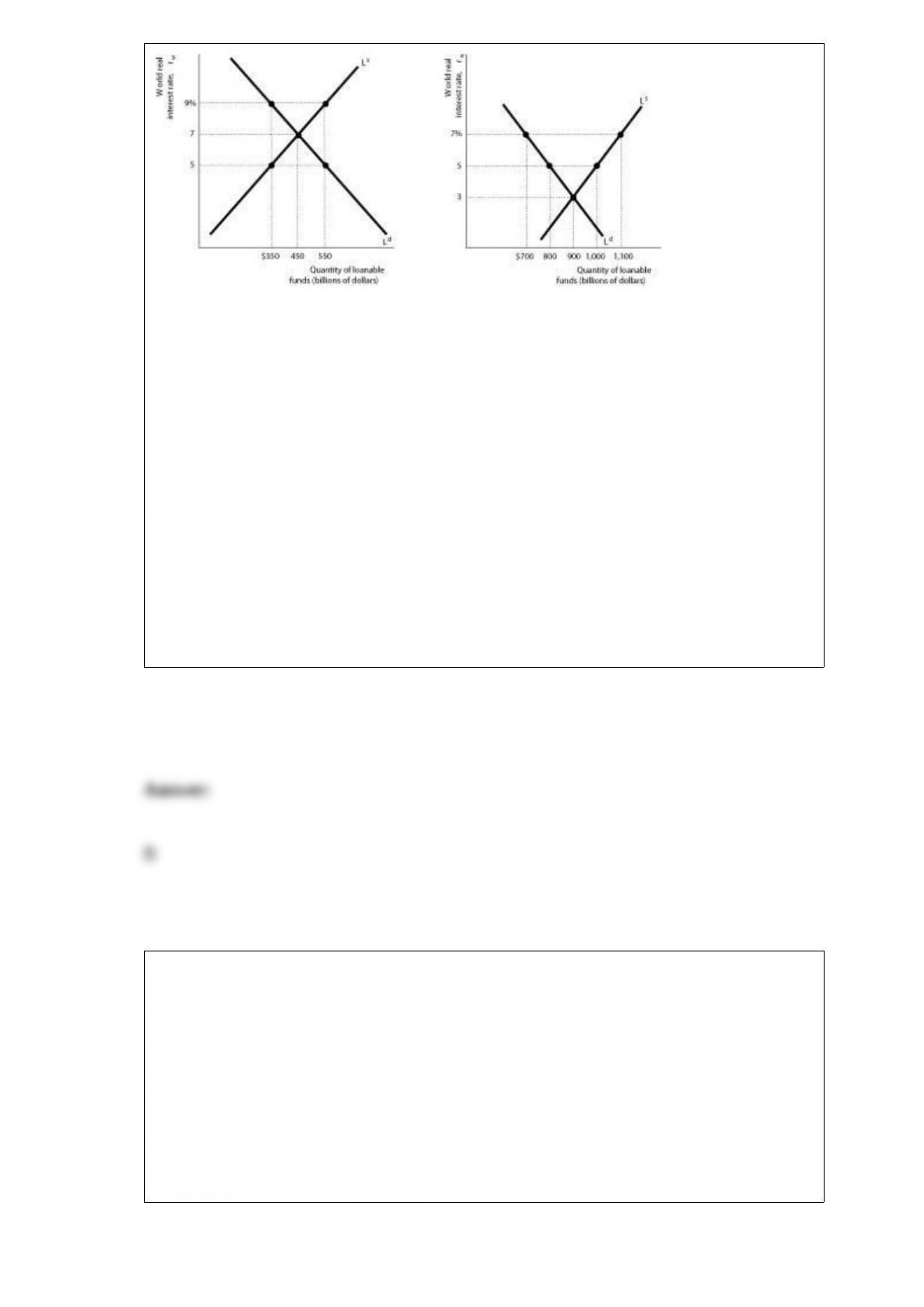
Suppose the world consists of two large open economies, the United States and the
rest of the world. The figures above represent loanable funds graphs for these two
economies.
Refer to Figure 4.4. At an interest rate of 7%,
A) Foreign borrowers have an incentive to offer lenders in the United States an interest
rate greater than 7%.
B) Foreign lenders have an incentive to offer borrowers in the United States an interest
rate less than 7%.
C) U.S. lenders have an incentive to offer borrowers in the rest of the world an interest
rate of 7%.
D) U.S. borrowers have an incentive to offer U.S. lenders an interest rate greater than
7%.
The profits from a U.S.-owned Burger King in France are included in the U.S.
________ and the French ________.
A) GDP; GNP
B) GDP; GDP
C) GNP; GDP
D) GNP; GNP
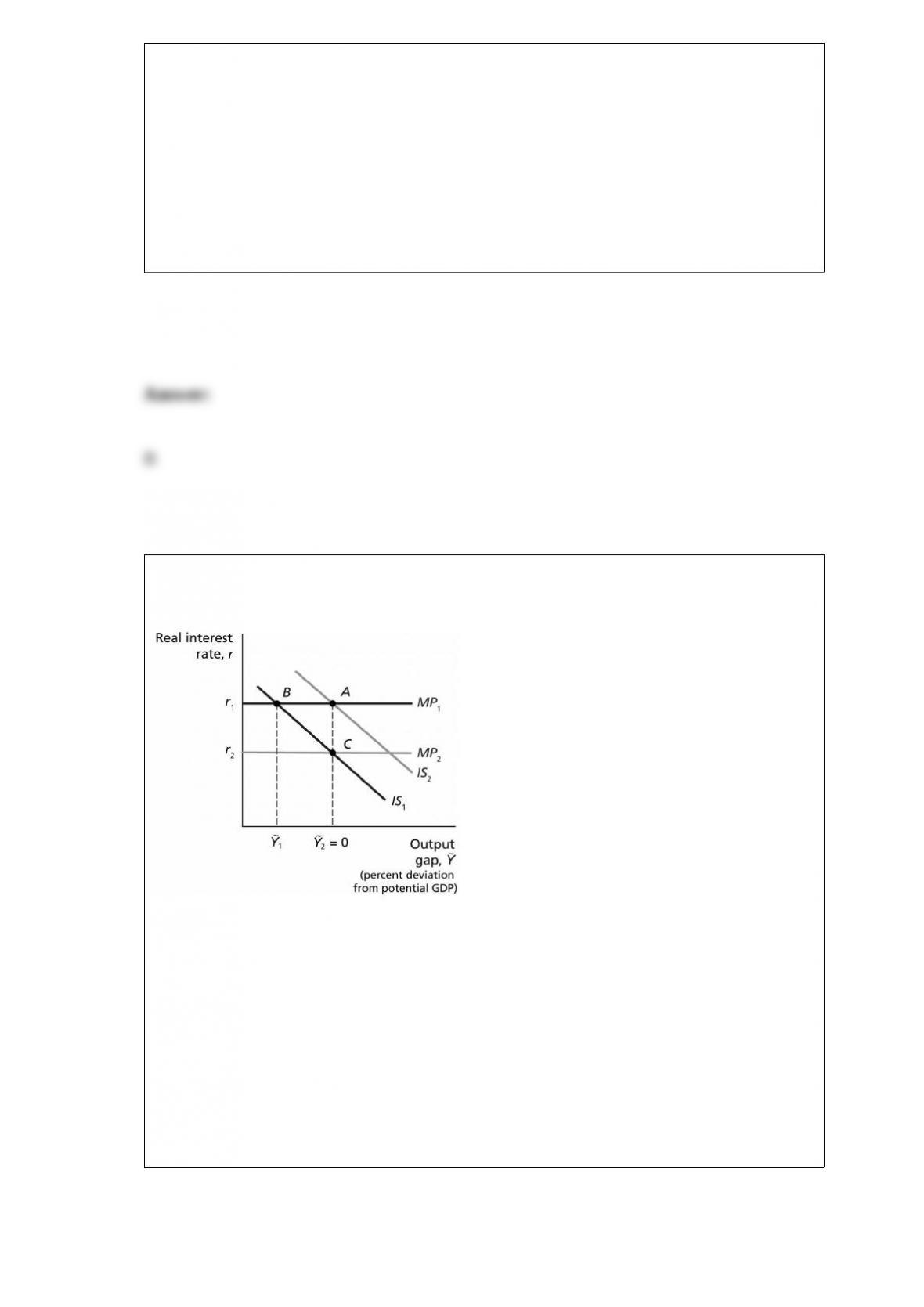
What happens to the output gap, the real interest rate, and net capital flows with the
occurrence of each of the following events? Assume that exchange rates are flexible.
a. The Federal Reserve increases the money supply.
b. U.S. net exports decrease due to a decrease in incomes in Canada.
c. Consumers decide to save more and spend less.
d. Expected profits from newly-built factories in the United States decrease.
If income taxes are incorporated into the discussion of the expenditure multiplier, the
expenditure multiplier becomes
A) larger.
B) smaller.
C) zero.
D) negative.
Figure 12.1
Refer to Figure 12.1. Suppose the economy is initially at full employment with real
GDP equal to potential GDP, and the expected inflation rate equal to the actual inflation
rate. If an economic shock causes the IS curve to shift from IS1 to IS2, this will
A) push the economy down the Phillips curve, raising the inflation rate.
B) push the economy up the Phillips curve, raising the inflation rate.
C) push the economy down the Phillips curve, lowering the inflation rate.
D) push the economy up the Phillips curve, lowering the inflation rate.

Expenditure and tax multipliers are likely to be large
A) when the inflation rate is close to zero.
B) if the central bank keeps real interest rates constant.
C) when the only unemployment in the economy is due to the natural rate of
unemployment.
D) when real GDP exceeds potential GDP.
Changes in government taxes and purchases that are intended to achieve
macroeconomic policy XOAXOAs refer to
A) fiscal policy.
B) monetary policy.
C) quantitative analysis.
D) Federal Reserve transparency.

Gross federal debt is ________ gross federal debt held by the public.
A) greater than
B) less than
C) the same as
D) the negative equivalent of
Negative supply shocks can have a tendency to ________ costs of production and
________ the inflation rate.
A) increase; increase
B) increase; decrease
C) decrease; increase
D) decrease; decrease
The Bureau of Economic Analysis refers to the difference between the values for GDP
and GDI as
A) gross national product.

B) net factor payments.
C) transfer payments.
D) the statistical discrepancy.
Assume the economy is initially in equilibrium where potential GDP equals real GDP.
If the economy experiences a ________ demand shock and the Fed does not change its
target short-term nominal interest rate, the IS curve shifts to the left and real GDP will
be ________ potential GDP.
A) positive; greater than
B) positive; less than
C) negative; greater than
D) negative; less than
What does the inflation rate measure, and what is deflation?
Suppose the required reserve ratio is 100%. Explain if the Federal Reserve could still
change the money supply with open market operations?
Describe the differences between the growth rates of real personal consumption and real
gross private investment in the United States.
Suppose the money supply grows at an annual rate of 10%, real GDP grows at 4%, the
growth rate of velocity is 0%, and the expected real interest rate on Aaa corporate bonds
averages 5.5%. Use the Fisher equation to determine the nominal interest rate on Aaa
bonds. What will happen to the nominal interest rate in the long run if the growth rate of
the money supply decreases to 7%?
What real world complications keep purchasing power parity from being a complete
explanation of exchange rate fluctuations in the long run. Explain.
What is the difference between the Current Population Survey and the establishment
survey? What are the major drawbacks for each of these measures of unemployment?
Explain the differences between a federal budget deficit, a federal budget surplus, and
the federal government debt.
Real interest rates have, at times, been negative. Why would anyone lending money
agree to a negative real interest rate?
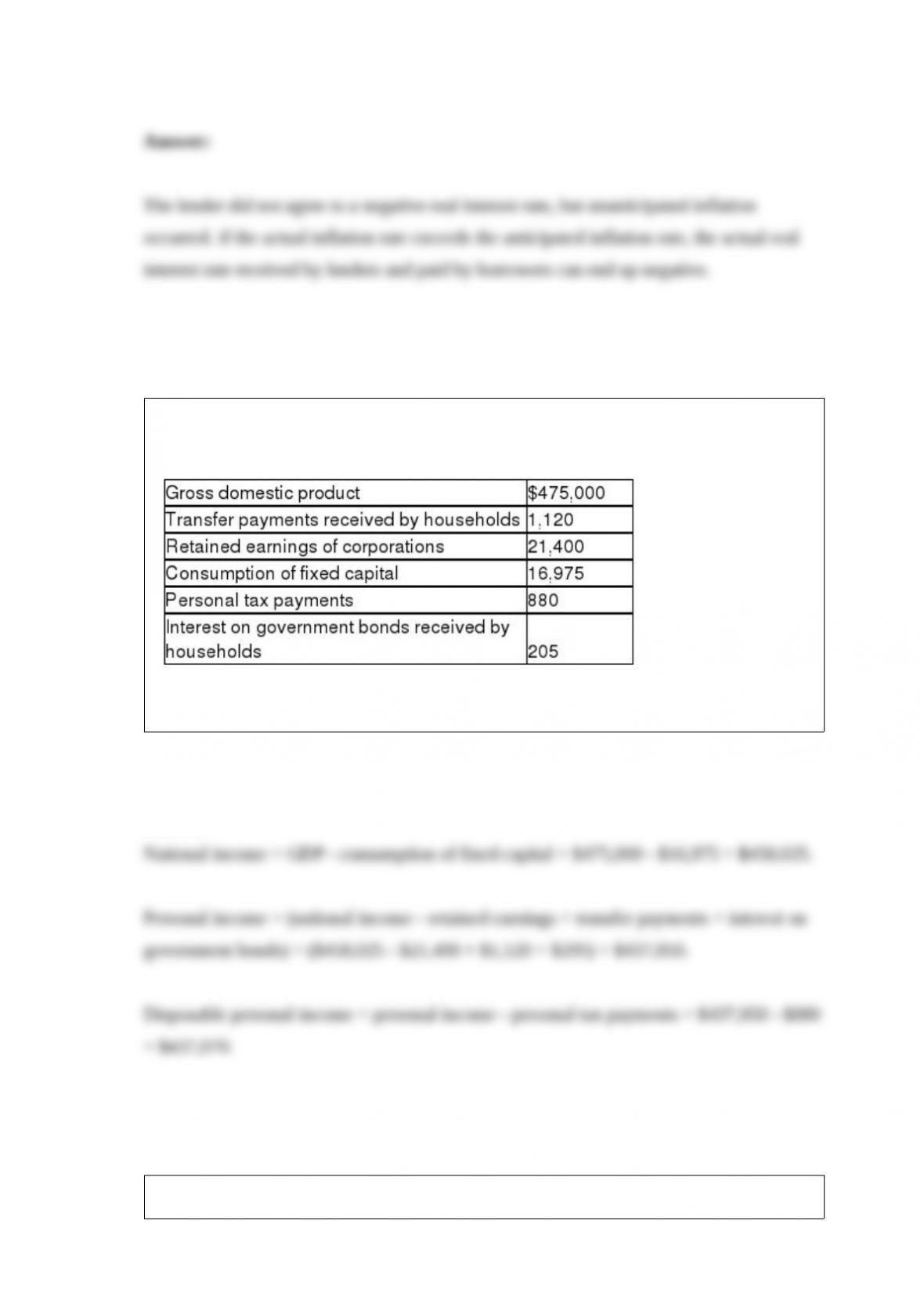
Table 2.7
Refer to Table 2.7. Use the information in the table to calculate the values for national
income, personal income, and disposable personal income.
List and briefly explain the primary goals of the Fed.
Suppose the nation of Atlantica is experiencing a decline in population growth, while
the nation of Pacifica is experiencing an increase in population growth. These changes
in population growth rates are having a direct impact on changes in the growth rate of
the labor force in each nation. What effect will these changes have on the capital-labor
ratio and the standard of living in each nation? Use a graph to show how these changes
influence the Solow growth model.
Briefly describe the following types of financial intermediaries:
Commercial bank
Investment bank
Mutual fund
Hedge fund
Pension fund
Insurance company
The U.S. National Commission on Fiscal Policy and Reform has recommended changes
to government expenditures and taxes which they claim would reduce the increase in
the national debt between 2012 and 2020 to $4 trillion rather than $8 trillion. What are
the commission’s 5 recommendations?

What are the primary arguments in favor of a rules approach, and what are the primary
arguments in favor of a discretion approach?
Table 2.2
2012 2013
Quantity Price Quantity Price
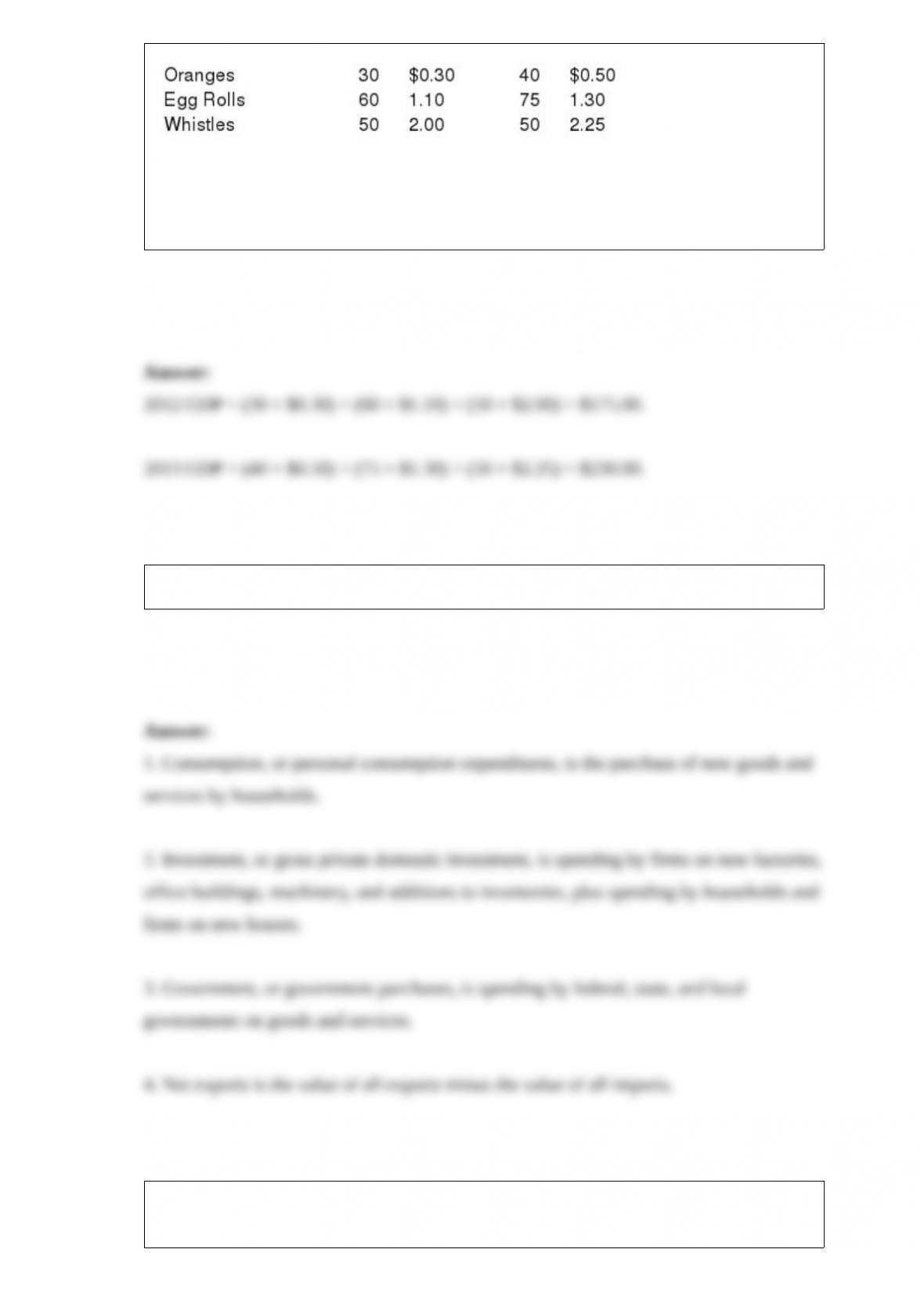
Table 2 gives quantities and prices for each good produced in a simple economy in
2012 and 2013.
Refer to Table 2.2. Calculate GDP in 2012 and 2013.
List and briefly describe the 4 categories of expenditures included in GDP.
What is the difference between a bank run and a bank panic? How might a bank run and
asymmetric information lead to a bank panic?