
The long-run adjustment to a negative supply shock results in
A) the short-run aggregate supply curve shifting to the right.
B) the price level rising.
C) unemployment rising.
D) workers being willing to accept higher wages.
The ________ effect of a price change refers to the impact of a change in the price of a
good on a consumer’s purchasing power.
A) income
B) substitution
C) demographics
D) ceteris paribus
Figure 15-11
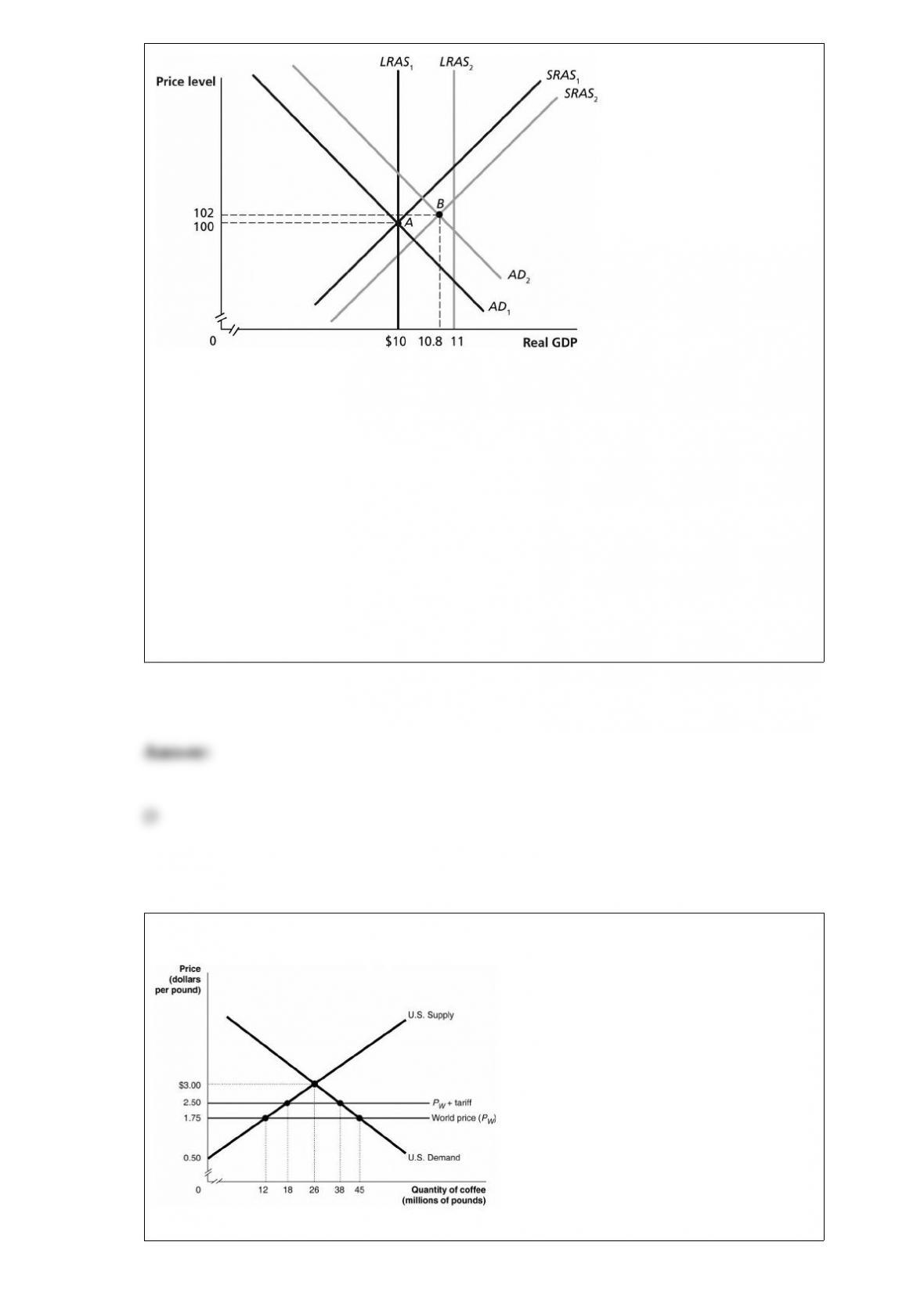
Refer to Figure 15-11. In the dynamic model of AD–AS in the figure above, if the
economy is at point A in year 1 and is expected to go to point B in year 2, and the
Federal Reserve pursues no policy, then at point B
A) there is pressure on wages and prices to rise.
B) the unemployment rate is very, very low.
C) firms are operating above their normal capacity.
D) the economy is below full employment.
E) incomes and profits are rising.
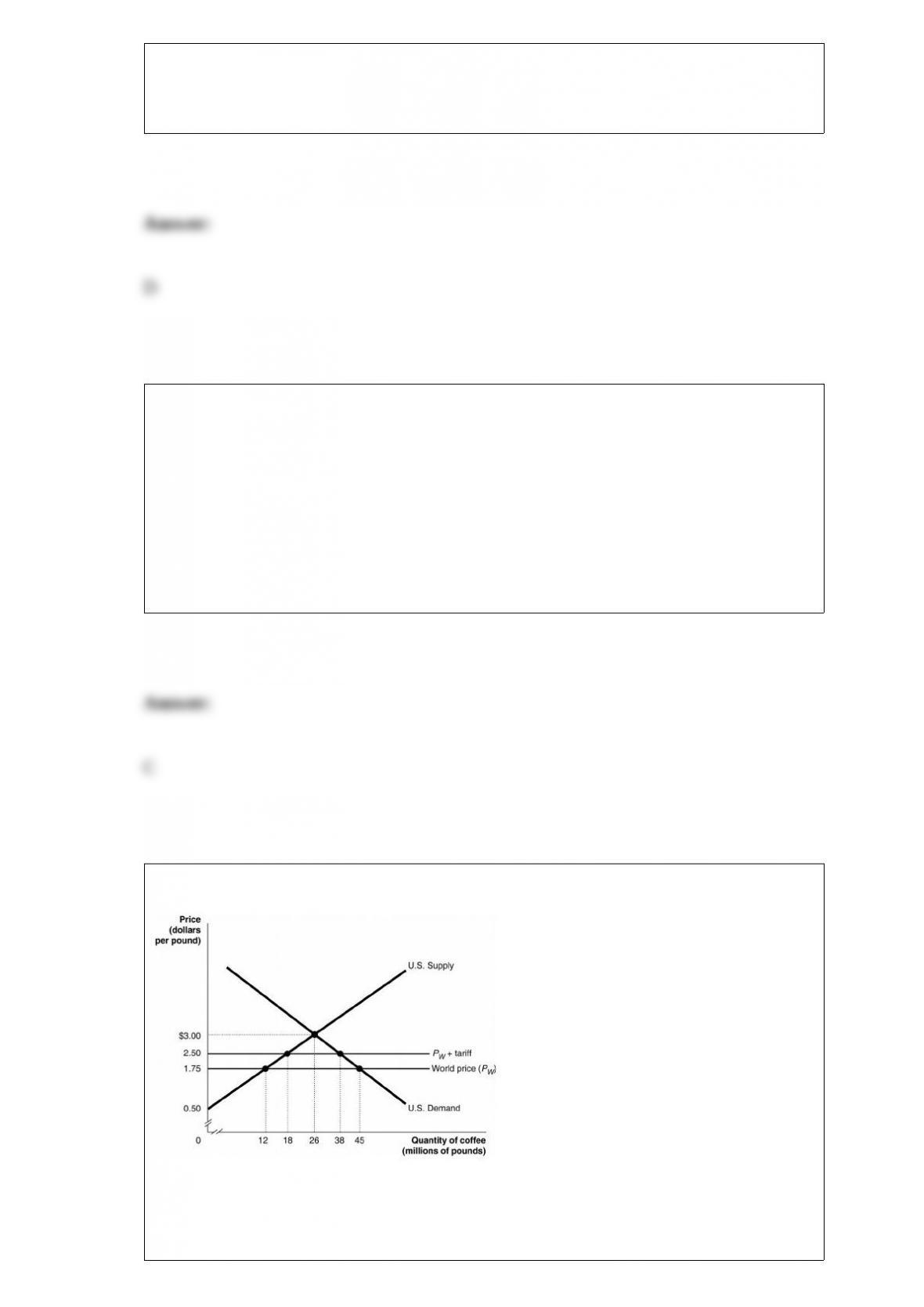
Figure 7-2

Suppose the U.S. government imposes a $0.75 per pound tariff on coffee imports.
Figure 7-2 shows the impact of this tariff.
Refer to Figure 7-2. The tariff revenue collected by the government equals
A) $10 million.
B) $15 million.
C) $19.875 million.
D) $35 million.
A decrease in aggregate demand results in a(n) ________ in the ________.
A) recession; long run
B) expansion; long run
C) expansion; short run
D) recession; short run
A persistent surplus of pounds at a given fixed exchange rate (in dollars per pound) is
evidence that the pound is ________ versus the dollar. This surplus can be reduced or
eliminated through a ________ of the pound.
A) undervalued; devaluation
B) undervalued; revaluation
C) overvalued; revaluation
D) overvalued; devaluation
Which of the following increases labor productivity?
A) an increase in the aggregate hours of work
B) decreases in the availability of computers and factory buildings
C) inventions of new machinery, equipment, or software
D) a decline in the health of the population
Figure 7-2
Suppose the U.S. government imposes a $0.75 per pound tariff on coffee imports.
Figure 7-2 shows the impact of this tariff.
Refer to Figure 7-2. With the tariff in place, the United States produces
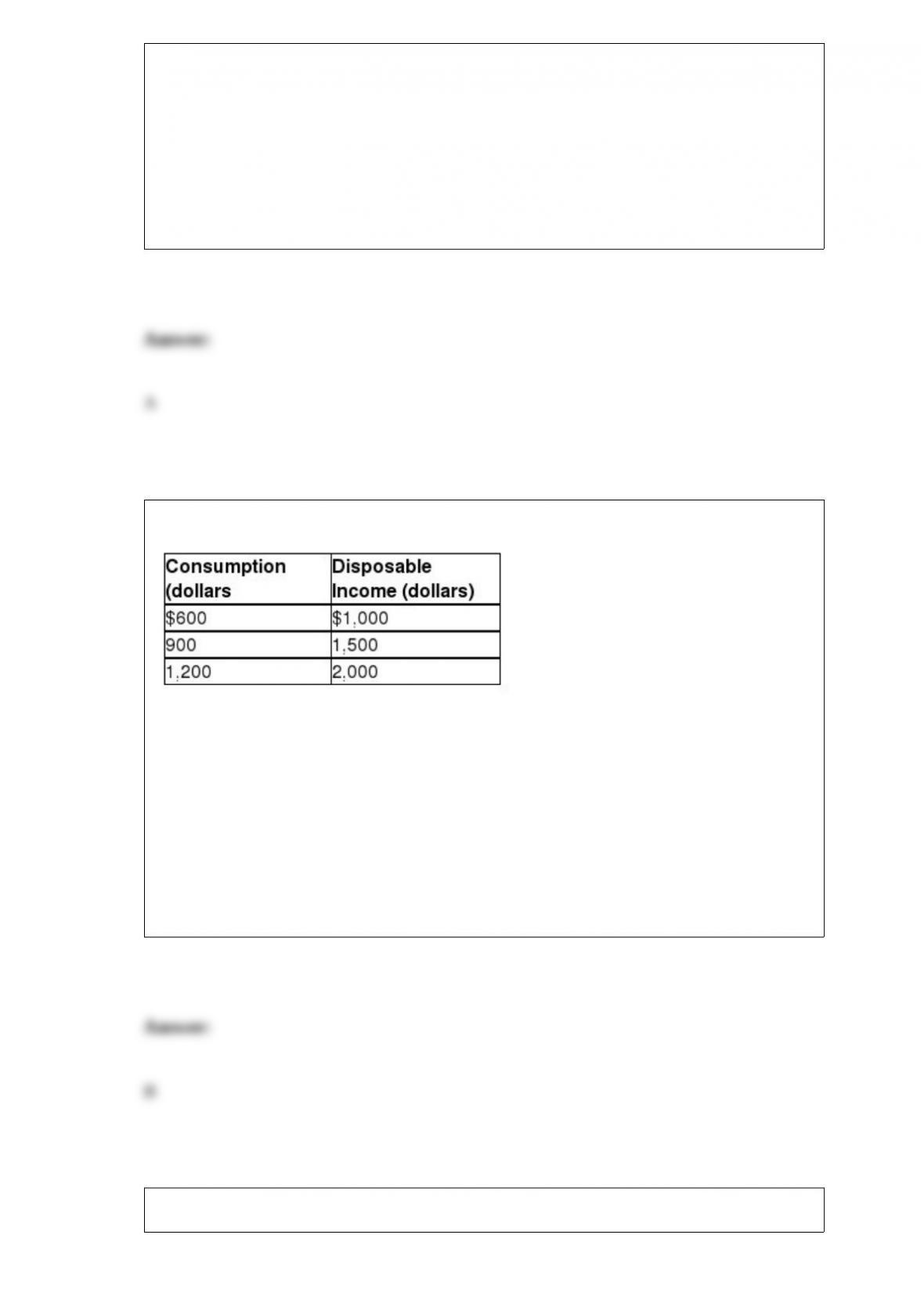
A) 18 million pounds of coffee.
B) 20 million pounds of coffee.
C) 26 million pounds of coffee.
D) 38 million pounds of coffee.
Table 12-4
Refer to Table 12-4. Given the consumption schedule in the table above, the marginal
propensity to save is
A) 0.3.
B) 0.4.
C) 0.5.
D) 0.6.
Figure 13-1
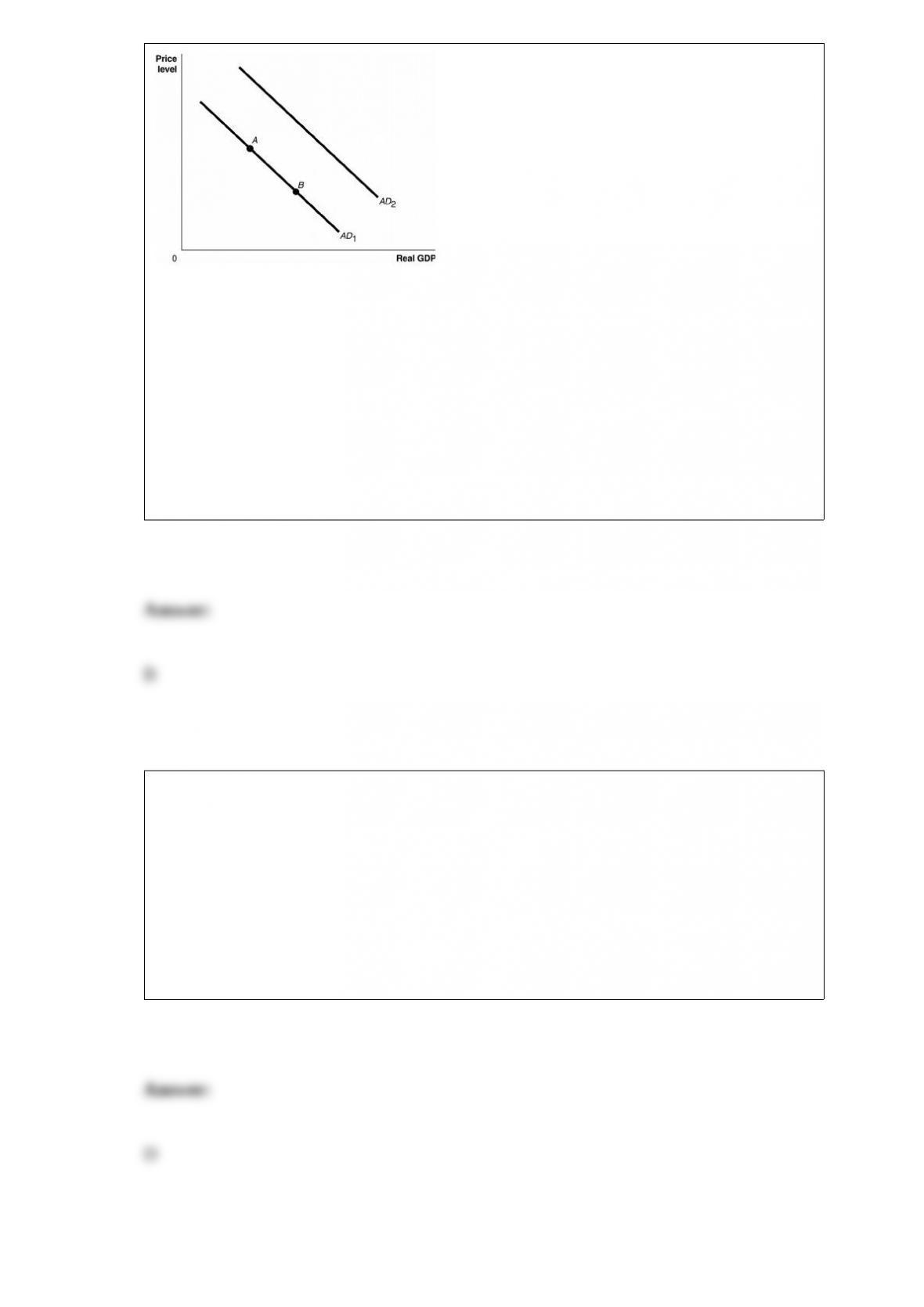
Refer to Figure 13-1. Ceteris paribus, an increase in the value of the domestic currency
relative to foreign currencies would be represented by a movement from
A) AD1 to AD2.
B) AD2 to AD1.
C) point A to point B.
D) point B to point A.
Bank panics have largely disappeared in the United States because
A) banks are now required to hold a larger fraction of deposits as reserves.
B) bank loans are more closely monitored by the Federal Reserve.
C) of low interest rates.
D) of deposit insurance.
What is a ‘structural” relationship?
A) a relationship that depends on the size of firm investments in capital such as
buildings and other structures
B) a relationship that depends on the basic behavior of consumers and firms and
remains unchanged over long periods
C) a relationship between any two variables that is temporary
D) any relationship that cannot be anticipated
Suppose 180,000 people are employed, 20,000 people are unemployed, the
working-age population is 250,000, and 50,000 people are out of the labor force.
Calculate the unemployment rate.
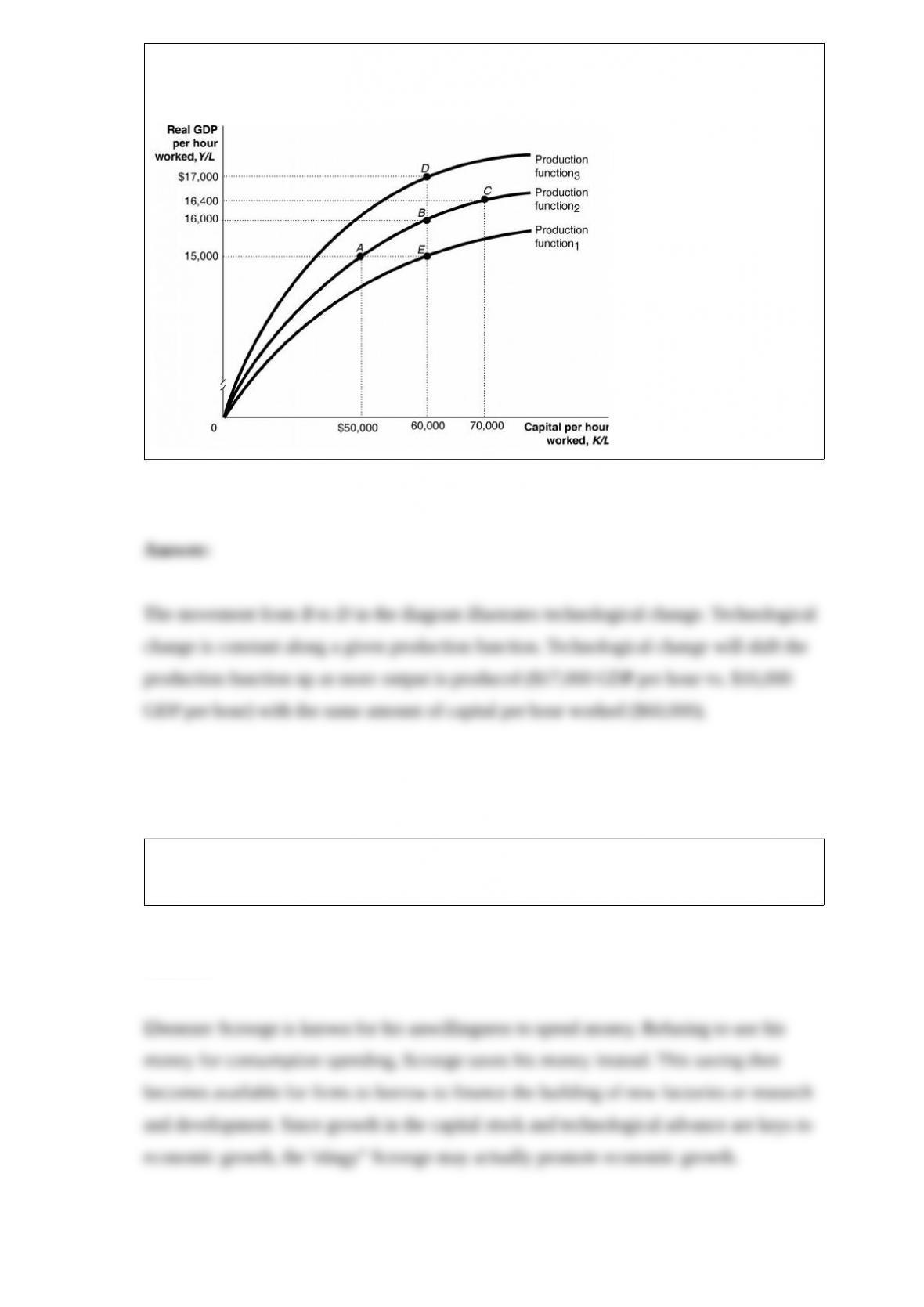
Starting at point B in the diagram below, identify which combinations of points
illustrate technological change. Give a brief explanation to support your answer.
Briefly explain how the miserliness of Ebenezer Scrooge might actually be beneficial
for economic growth.
Would the maximum loan that a bank can make be different when receiving a discount
loan from the Federal Reserve of $1 million versus receiving a checking account
deposit of $1 million? Explain why or why not.
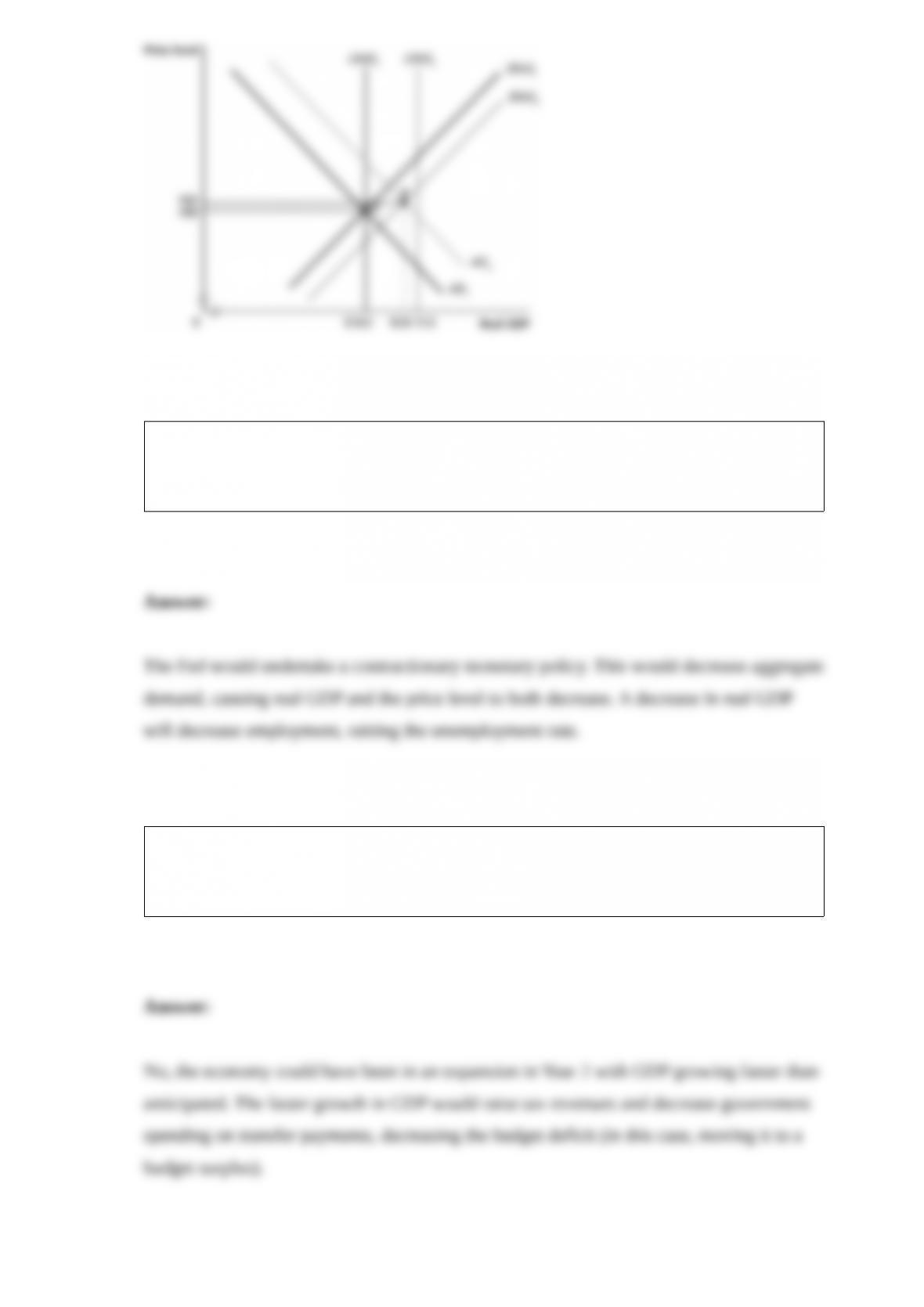
Use the dynamic aggregate demand and aggregate supply model and start with Year 1 in
long-run macroeconomic equilibrium. For Year 2, graph aggregate demand, long-run
aggregate supply, and short-run aggregate supply such that the condition of the
economy will induce the Federal Reserve to conduct an expansionary monetary policy.
Briefly explain the condition of the economy and what the Federal Reserve is
attempting to do.
What action should the Fed take if it wants to move from a point on the short-run
Phillips curve representing low unemployment and high inflation to a point representing
higher unemployment and lower inflation?
If the federal budget goes from a budget deficit in Year 1 to a budget surplus in Year 2,
does it follow that the federal government acted to raise taxes or cut government
spending in Year 2?
What is health insurance?
Why are the long-run effects of an increase in aggregate demand on price and output
different from the short-run effects?