One valuable lesson investors should learn from the stock market behavior during the
late 1990s and early 2000s is that the Fed:
A. can control the stock market.
B. can reduce the idiosyncratic risk of investing but not the systematic risk.
C. can eliminate the risk from investing.
D. cannot prevent a stock market decline.
Answer:
A cross-country analysis of money growth supports the conclusion that:
A. there is no correlation between the growth rate of the quantity of money and the
rate of inflation.
B. the correlation between the money growth rate and inflation in most countries was
positive but very small.
C. the correlation between inflation and money growth in most industrialized countries
was actually negative.
D. the correlation between inflation and the money growth rate was positive and
relatively strong.
Answer:

If Great Britain experiences higher rates of inflation than the United States over a long
period of time, we should expect the British £ (pound) per U.S. $ (dollar) exchange rate
to:
A. increase.
B. hold constant, there isn’t any link between inflation and exchange rates.
C. decrease.
D. fluctuate in a narrow range set by the Bank of England.
Answer:
A decrease in expected inflation for any given nominal interest rate will cause:
A. bond prices to increase and interest rates to decrease.
B. bond prices to decrease and interest rates to increase.
C. the bond demand curve to shift to the left.
D. the bond supply curve to shift to the left.
Answer:

The FOMC controls the real interest rate:
A. if inflation changes quickly.
B. if inflation doesn’t change quickly.
C. only if it adjusts the federal funds rate to match the changes in the rate of inflation.
D. only on an annual basis.
Answer:
How do financial institutions evaluate the creditworthiness of potential borrowers?
A. They offer high interest rates because only the best borrowers will be able to afford
them.
B. They gather information regarding the borrowers’ finances.
C. They do not evaluate creditworthiness because everyone is treated the same.
D. They do not evaluate the creditworthiness because they know the borrower will
honor his/her obligation to repay the loan.
Answer:

The interest rate at which banks lend each other Eurodollars is known as:
A. the international federal funds rate.
B. the London Interbank Offered Rate.
C. the discount rate.
D. the International Prime Rate.
Answer:
Which of the following statements is incorrect?
A. If you can buy the same goods this year as you bought last year with less money
there must have been deflation.
B. If you can buy the same goods this year as you purchased one year ago with the
same amount of money, prices are stable.
C. If purchasing the same goods today that were purchased one year ago requires more
money, there must have been inflation.
D. If you can buy the same goods this year as you bought last year with the same
money there must have been deflation.
Answer:

Tom deposits funds in his savings account at the bank which is paying 3.5% interest. If
he keeps his funds in the bank for one year he will have $155.25. What amount is Tom
depositing?
A. $151.75
B. $150.00
C. $148.75
D. $147.50
Answer:
Each of the following is an example of a restrictive covenant on a mortgage loan,
except:
A. net worth requirements.
B. requiring that the borrower reside in a home for which he or she receives a
mortgage.
C. insisting the borrower carry physical damage insurance on the property securing the
loan.
D. requiring the borrower to obtain comprehensive health insurance.
Answer:

A U.S. resident purchases a bond issued by the Canadian government. If the Canadian
dollar appreciates relative to the U.S. dollar over the term of the bond, the U.S. investor
will:
A. see a higher return on her investment as a result.
B. see a lower return on her investment as a result.
C. not see her return affected since exchange rates are flexible.
D. none of the answers provided is correct.
Answer:
Which of the following best expresses the proceeds a lender receives from a one-year
simple loan when the annual interest rate equals i?
A. PV + i
B. FV/i
C. PV(1 + i)
D. PV/i
Answer:

The fact that there is a market for federal funds enables banks to:
A. make fewer loans than they would otherwise.
B. borrow more from the Fed.
C. hold a lower level of excess reserves than they would otherwise hold.
D. hold less in required reserves.
Answer:
Empirical evidence points to the fact that financial crises:
A. are newsworthy but have no impact on economic growth.
B. have a negative impact on economic growth only for the year of the crisis.
C. have a negative impact on economic growth for years.
D. can have a positive impact on economic growth as weak borrowers are weeded out.
Answer:

If a bank has $200 million in deposits, the required reserve rate is 10 percent and the
bank has $23 million in reserves:
A. the bank is short of required reserves.
B. the bank has excess reserves of $21 million.
C. the bank has excess reserves of $13 million.
D. the bank has excess reserves of $3 million.
Answer:
The amount of information an individual would seek before making a decision:
A. is about the same across all individuals.
B. varies directly with the importance of the decision.
C. is the same across all decisions but varies across individuals.
D. depends on how much time it will take to get the information regardless of the
decision.
Answer:

Requiring a home buyer to have a large down payment reduces the risk to a mortgage
lender because:
A. it means that if the price of the house falls, the owner suffers the loss.
B. the buyer is less likely to sell the house.
C. it means the buyer likely underpaid when she bought the house.
D. it means there is more information available on the buyer.
Answer:
The fact that returns from the stock market are less volatile over long-periods of time
suggests that:
A. investors are more risk averse over the long run.
B. stock markets are efficient.
C. people get comfortable with the stocks they own.
D. stock market bubbles have become more common.
Answer:

A derivative instrument:
A. comes into existence after the underlying instrument is in default.
B. is a low-risk financial instrument used by highly risk-averse savers.
C. gets its value and payoff from the performance of the underlying instrument.
D. should be purchased prior to purchasing the underlying security.
Answer:
One problem for the Federal Reserve regarding setting policy stems from the fact that:
A. there are multiple goals that may be inconsistent with each other.
B. there are more policy instruments than goals.
C. Congress sets very tight goal ranges that the central bankers must hit.
D. the membership of its governing board changes so often.
Answer:

Stagflation occurs when:
A. the inflation rate decreases and current output decreases.
B. the inflation rate increases and current output decreases.
C. the inflation rate decreases and current output increases.
D. the inflation rate increases and current output increases.
Answer:
Assuming the free flow of capital across borders, if country A wants to fix its exchange
rate with country B, then:
A. country A’s inflation rate will have to match country B’s.
B. country A’s monetary policy must be conducted so the inflation rate in country A
matches the inflation rate in country B.
C. country A’s monetary policy will not be able to be used to address domestic issues.
D. all of the answers given are correct.
Answer:

A central bank’s balance sheet would categorize each of the following as liabilities,
except:
A. currency.
B. loans.
C. the government’s account.
D. accounts of the commercial banks.
Answer:
Which of the following would be categorized as an unconventional monetary policy
tool?
A. Discount window lending
B. Targeted asset purchases
C. Federal funds rate target
D. Deposit rate
Answer:

Sue has a checking account at the First National Bank; her checking account is a(n):
A. asset to the bank and a liability to Sue.
B. asset to Sue and a liability to the bank.
C. asset to Sue but actually a liability to the Federal Reserve.
D. liability to Sue until she spends the funds.
Answer:
There was a lot of pressure on U.S. policymakers in late 1999 and into the early 2000’s
to decrease the value of the dollar. This pressure was coming mainly from:
A. importers.
B. foreign manufacturers.
C. U.S. manufacturers.
D. foreign central banks.
Answer:

If bank with leverage of 8 to 1 increases its assets by adding $1 to capital for every $1
added to assets:
A. leverage increases.
B. leverage decreases.
C. leverage stays constant.
D. the answer cannot be determined from the information in the question.
Answer:
If a bond’s rating improves, we would expect:
A. the demand for this bond to increase, all other factors constant.
B. the demand for and the yield of this bond to increase, all other factors constant.
C. the demand for this bond to decrease, and its yield to increase, all other factors
constant.
D. both the demand for and the price of the bond to decrease, all other factors constant.
Answer:

One trait a central bank has over other businesses including banks is that it:
A. receives all of its funding from the government.
B. can control the size of its balance sheet.
C. doesn’t have stockholders.
D. doesn’t have a board of directors.
Answer:
If the inflation rate in country A is 3.5% and the inflation rate in country B is 3.0%, we
should expect the percentage change in the number of units of country A’s currency per
unit of country B’s currency to be:
A. +0.5%.
B. -0.5%.
C. +16.7%.
D. +6.5%.
Answer:

When arbitrage occurs across countries with a flexible exchange rate and when the
bonds in each country are identical and there are no barriers to capital flows then the:
A. interest rates on the bonds will be identical.
B. expected return on the bonds will be identical.
C. inflation rates in each country will be identical.
D. prices of the bonds will be identical.
Answer:
Most individuals borrow:
A. directly without the use of a financial intermediary.
B. using a financial intermediary because it lowers the cost of borrowing.
C. using a financial intermediary, but would save money if they financed directly.
D. without using financial intermediaries, preferring credit cards.
Answer:
The system of government in the U.S. has historically been one of checks and balances.
Provide examples of these checks and balances as they pertain to the Board of
Governors of the Federal Reserve and their relationship to the executive and legislative
branches of government.
Answer:
In 1873, British economist Walter Bagehot proposed that the central bank function as
the lender of last resort. Specifically, he suggested the central bank lend freely to banks
which have good collateral at high rates of interest. Why the requirements of good
collateral and a high rate of interest?
Answer:

Could the Fed enter the federal funds market to make sure the market and target rates
are always equal, and if they could, why don’t they?
Answer:
Suppose that the Federal Reserve is concerned about rising inflation, so they increase
short-term interest rates. How will this affect long-term rates and the yield curve? What
does the slope of the yield curve reveal about the effectiveness of the Fed’s policy?
Explain in the context of the Liquidity Premium Theory.
Answer:
A home buyer is presented with two options for financing the purchase of a home: a 20
year fixed rate mortgage or a 20 year adjustable-rate mortgage, where the rate adjusts
once a year. Which mortgage would you expect to start at the lowest interest rate and
why?
Answer:
You live in a small country that suffers constantly from high and variable rates of
inflation. You are quite sure it has something to do with the fact that the head of the
central bank is the President’s brother. A rival presidential candidate is advocating fixing
the exchange rate between your country’s currency and the dollar. What are the
advantages to this proposal and how do you think the current head of the central bank
will respond?
Answer:
Suppose that the interest rate on a conventional 30-year mortgage is currently 8%. You
receive a call from a mortgage broker who offers you a 30-year adjustable rate
mortgage at 2% that is adjusted once each year. Evaluate each mortgage in terms of the
following: risk that the monthly payment will change over the next 30 years and
interest-rate risk.
Answer:
Assume that currently one U.S. dollar will purchase £0.65. Investors believe that one
year from now a U.S. dollar will purchase £0.72. If we consider the U.S. dollar-pound
market, where the horizontal axis measure the quantity of pounds, explain what we are
likely to see in terms of demand and supply and the exchange rate.
Answer:
Use the example of a consol to show how bond prices and yields are inversely related.
Answer:
Why has the pace of structural change in financial markets accelerated in recent years?
Answer:
Is it possible for a country to run a trade deficit and yet have the value of its currency
not change? Use a supply and demand model of a foreign exchange market to explain
how this could occur.
Answer:
Could the Fed impact the amount of borrowing in the federal funds market without
changing their target for the federal funds rate? Explain.
Answer:
Explain why the willingness to purchase stocks is influenced heavily by shareholders’
legal rights with respect to control of the corporation.
Answer:

Owners and managers have cited three reasons for the creation of large financial firms
or universal banks. What are these reasons?
Answer:
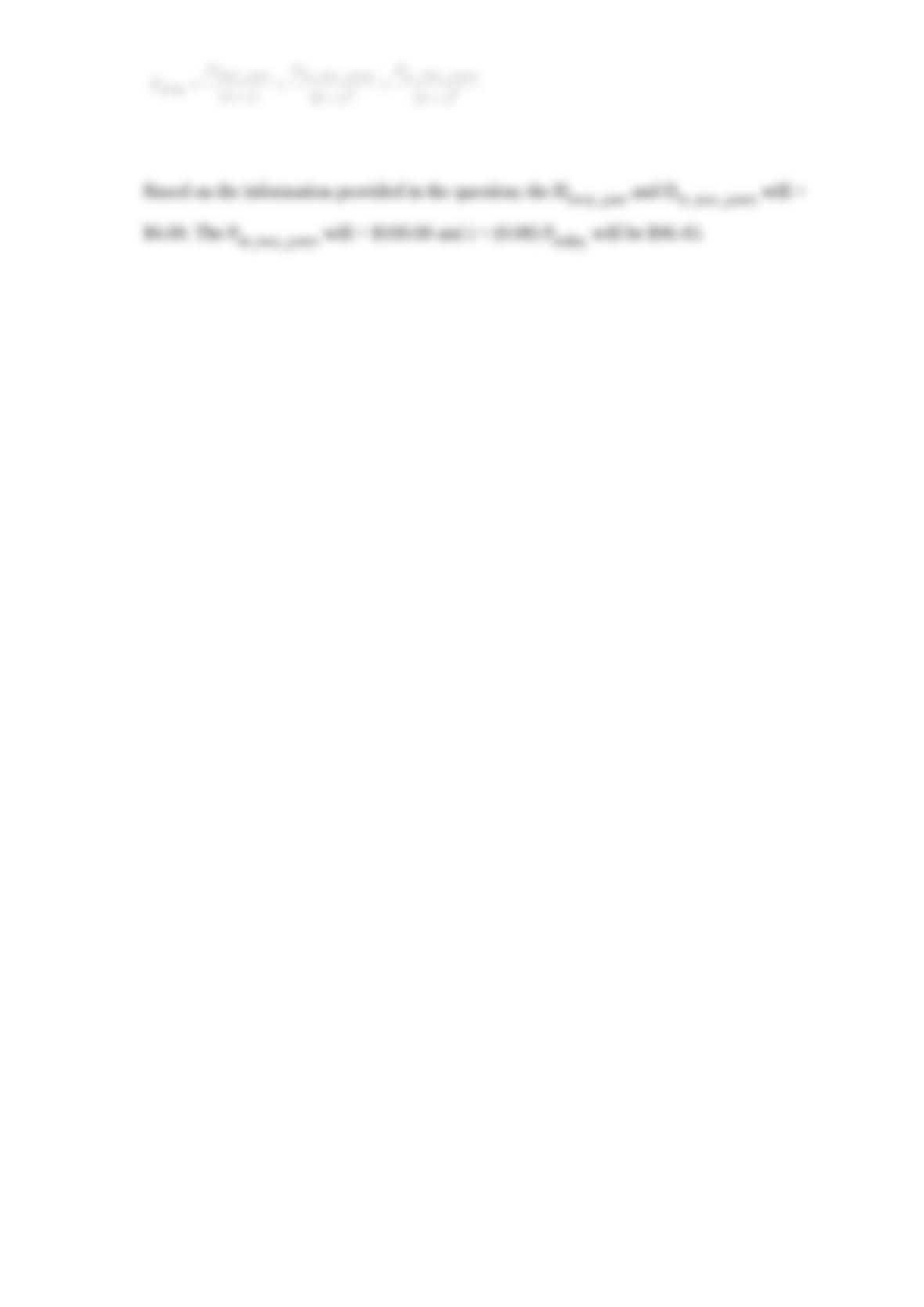
What price would an individual be willing to pay today for a stock that is expected to
sell for $100 two years from now and which pays an annual dividend that is $6.00?
Assume the individual has a discount rate of 8% (0.08).
Answer: