
Oligopolies are characterized by many firms.
In an oligopolistic market, the government may limit the number of firms in a market
by issuing patents.
Monopolistically competitive firms tend to operate on the positively sloped portion of
their average cost curves.
An increase or decrease in population will increase or decrease demand.
It is efficient to reduce pollution to zero.
Recall the Application. When a state makes car insurance compulsory, decreasing the
number of uninsured drivers, roads tend to become less hazardous.
Excess demand in an unregulated market will cause the price of a product to fall.
The result of adverse selection is that the presence of high-quality goods in the market
drive low-quality goods out of the market.

An import ban on sugar decreases the price of sugar, decreases the quantity of sugar,
and increases the output of the domestic sugar industry.
In a short-run equilibrium for a perfectly competitive market, the quantity supplies
equals the quantity demanded and firms maximize profit.
There are losers and winners from a taxi medallion policy. The losers are consumers
and the winners are the people who receive a medallion.

If a fast food restaurant gives senior citizens a 10% discount on food every day, that is
an example of price discrimination. If they only give the discount on Tuesdays it is not
price discrimination.
On the “demand side” of a market, consumers indicate to producers what they are
willing to buy, in what quantity, and at what price.
On the ‘supply side” of a market, producers indicate to consumers what they are willing
to sell, in what quantity, and at what price.

The equilibrium price under an import quota is above the price that occurs with an
import ban.
Deterrence quantity equals zero profit quantity less minimum entry quantity.
If a firm has reached the minimum efficient scale, any additional output produced by
the firm will result in a lower average cost in the long run.
An increase in demand will cause the equilibrium price and quantity to rise.

Predatory pricing occurs when a firm attempts to drive a competitor out of business by
selling its product above production cost.
A key assumption of most economic analysis is that people are altruistic, meaning that
they act in their own self-interest.
A perfectly elastic supply curve is a horizontal line.
Acquiring knowledge and skills by participating in the production process is called

“learning by doing.”
Demand for a particular brand of clothing is likely to be less elastic than demand for all
clothing.
The ability to produce a product at a lower resource cost than another nation can
produce the same product is called comparative advantage.
If the marginal costs of water pollution abatement is increased, then the optimal amount
of water pollution increases.

Opportunity cost is the difference between the nominal and real cost of some action.
The government may intervene when a specific business practice increases
concentration in an already concentrated market.
A discovered price is the lowest price found so far in a search process.
A perfectly elastic demand curve is a horizontal line.
In the long run, each firm in a perfectly competitive market earns zero economic profit.
Monopolistically competitive firms have no benefits to consumers relative to perfectly
competitive firms.
Automobiles create externalities because they are expensive and not everyone can
afford the car they want.

Trade theory suggests that increased trade leads to increased wage inequality.
People will buy more of an inferior good when their income decreases.
Market equilibrium maximizes the total surplus in a market and therefore it is efficient.
When there is imperfect competition, the role of government is to take control of
production.

If each firm in a perfectly competitive industry is earning zero economic profit, firms
will have an incentive to leave the industry.
To draw the consumption possibilities curve for a particular nation you need to know
the output of the good for which the nation has a comparative advantage and the terms
of trade.
You are hired by Jimbo’s Potato Farm to determine when Jimbo should shut down and
produce no potatoes in the short run. Jimbo sells his potatoes in a perfectly competitive
market. You tell Jimbo to shut down if:
A) total cost is less than total revenue when marginal revenue equals marginal cost.
B) price is less than average variable cost when marginal revenue equals marginal cost.
C) price is less than average total cost when marginal revenue equals marginal cost.
D) marginal revenue is less than marginal cost.
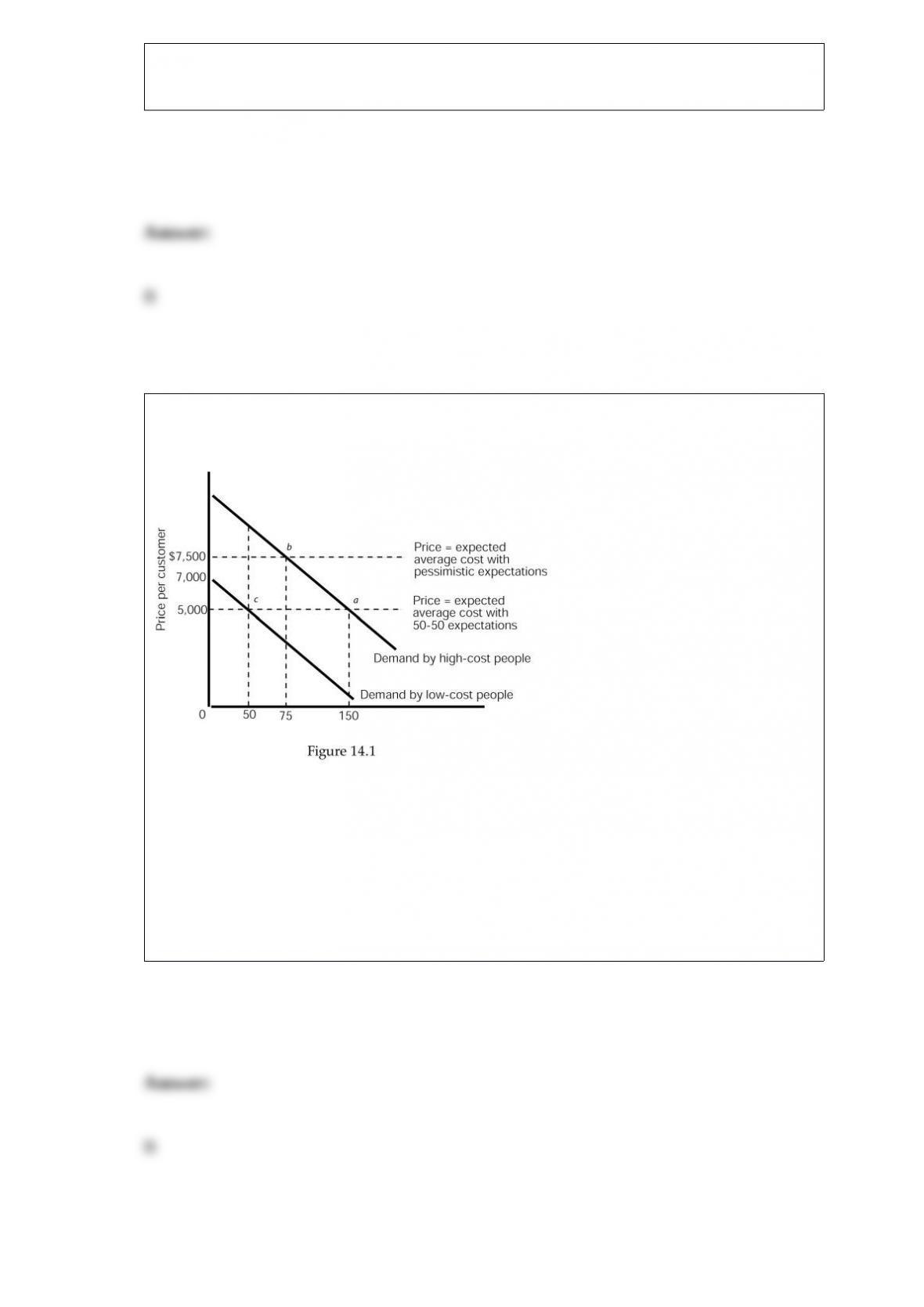
Refer to Figure 14.1. If the insurance company in this market becomes pessimistic and
assumes that all buyers will be high-cost consumers, the equilibrium will be at:
A) point a.
B) point b.
C) point c.
D) none of these.
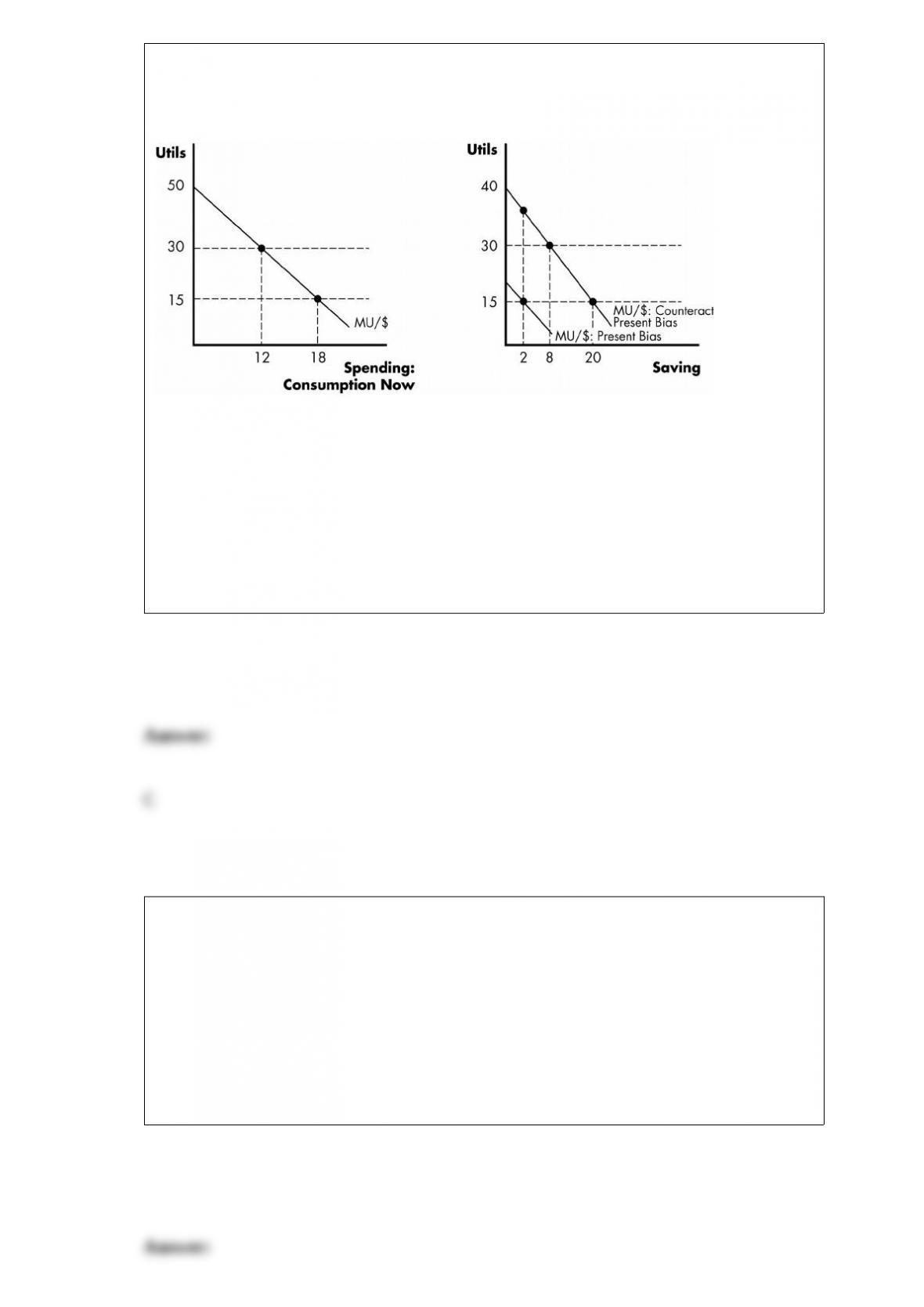
Refer to Figure 7.5. If the consumer uses cognition to offset present bias, he will
maximize utility by ________ consumption and ________ saving.
Figure 7.5
The consumer must decide how to split $20 between spending and saving.
A) increasing; increasing
B) increasing; decreasing
C) decreasing; increasing
D) decreasing; decreasing
In the case of perfectly elastic demand, the demand curve is:
A) upward sloping.
B) downward sloping.
C) vertical.
D) horizontal.

Autarky refers to:
A) a situation in which nations trade goods and services.
B) the location on a consumption possibilities curve.
C) a situation in which there is no trade.
D) the equilibrium a nation reaches after trade begins.
Floor Lamp Inc. is a perfectly competitive firm that currently employs 100 workers.
The marginal revenue product of the 90th worker is $7.00 per hour. The wage rate is
$8.00 per hour. To increase profits, this firm should:
A) increase employment until the MRP of labor equals $8.00.
B) continue hiring 100 workers because the firm earns a surplus of $1.00 on each
worker hired.
C) decrease employment until the MRP of labor equals $8.00.
D) increase the price of lamps so that the marginal revenue product increases to $8.00
per hour.
When there is a change in the quantity demanded it means that:
A) the hours the customer can buy products each day have increased.
B) the number of products in inventory have increased.
C) the quantity a consumer is willing to buy changes when the price changes.
D) the selling price of the products has not changed.
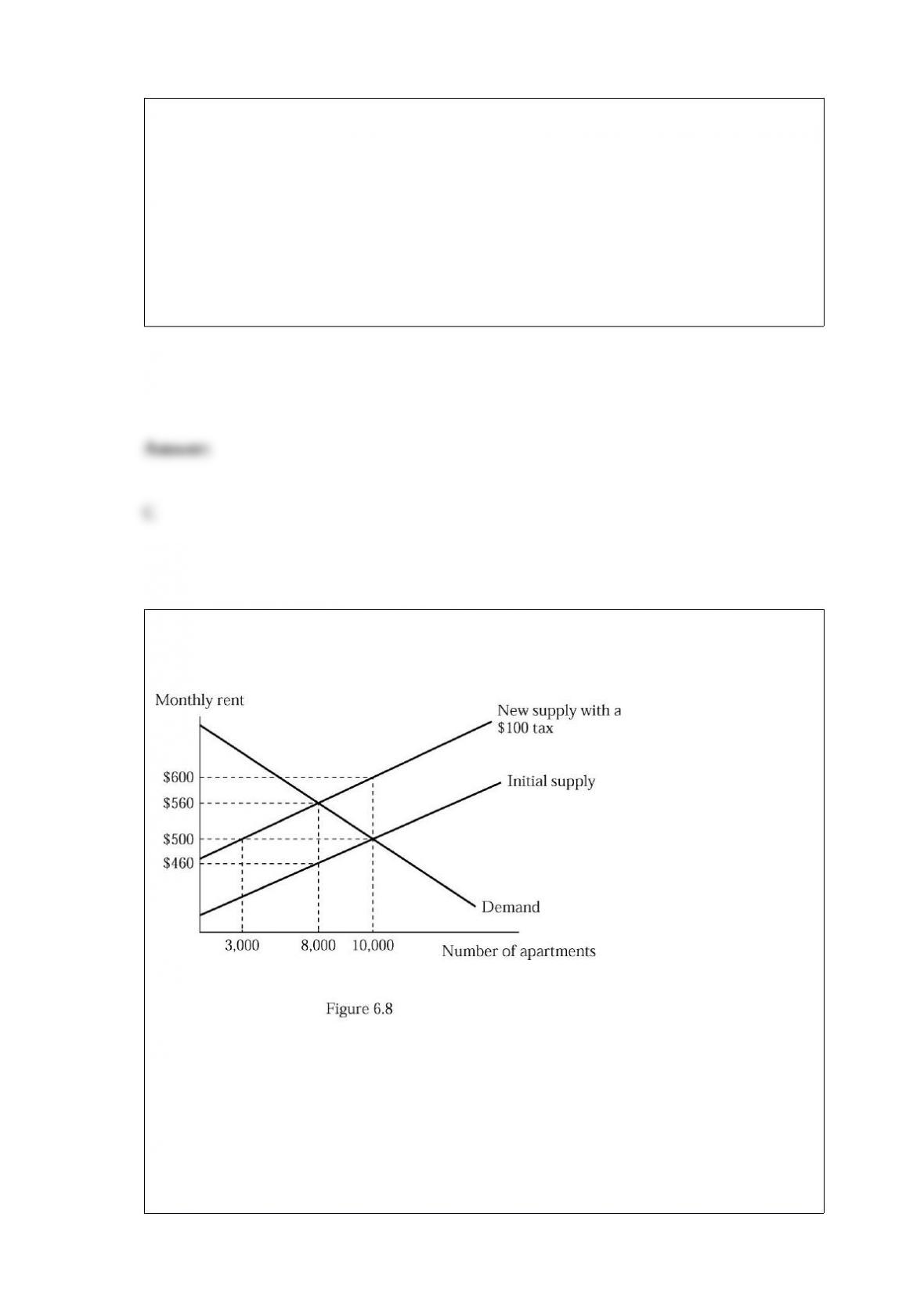
Refer to Figure 6.8. Suppose that your city imposes a tax of $100 per apartment and the
supply curve is a vertical line at Q=10,000. Then:
A) consumers pay the whole amount of the tax.
B) landlords pay the whole amount of the tax.
C) consumers and landlords split the tax.
D) There is not sufficient information.

What expenditure makes up approximately half of total expenditures on means-tested
programs?
A) education
B) housing aid
C) medical care
D) all of the above
Suppose that if poor households have a price elasticity of demand for medical care of
0.50 and rich households have a price elasticity of demand for medical care of 0.25,
then a price increase of 10% would lead to the poor households reducing their quantity
demanded for medical care by:
A) 2.5%.
B) 5%.
C) 25%.
D) 50%.
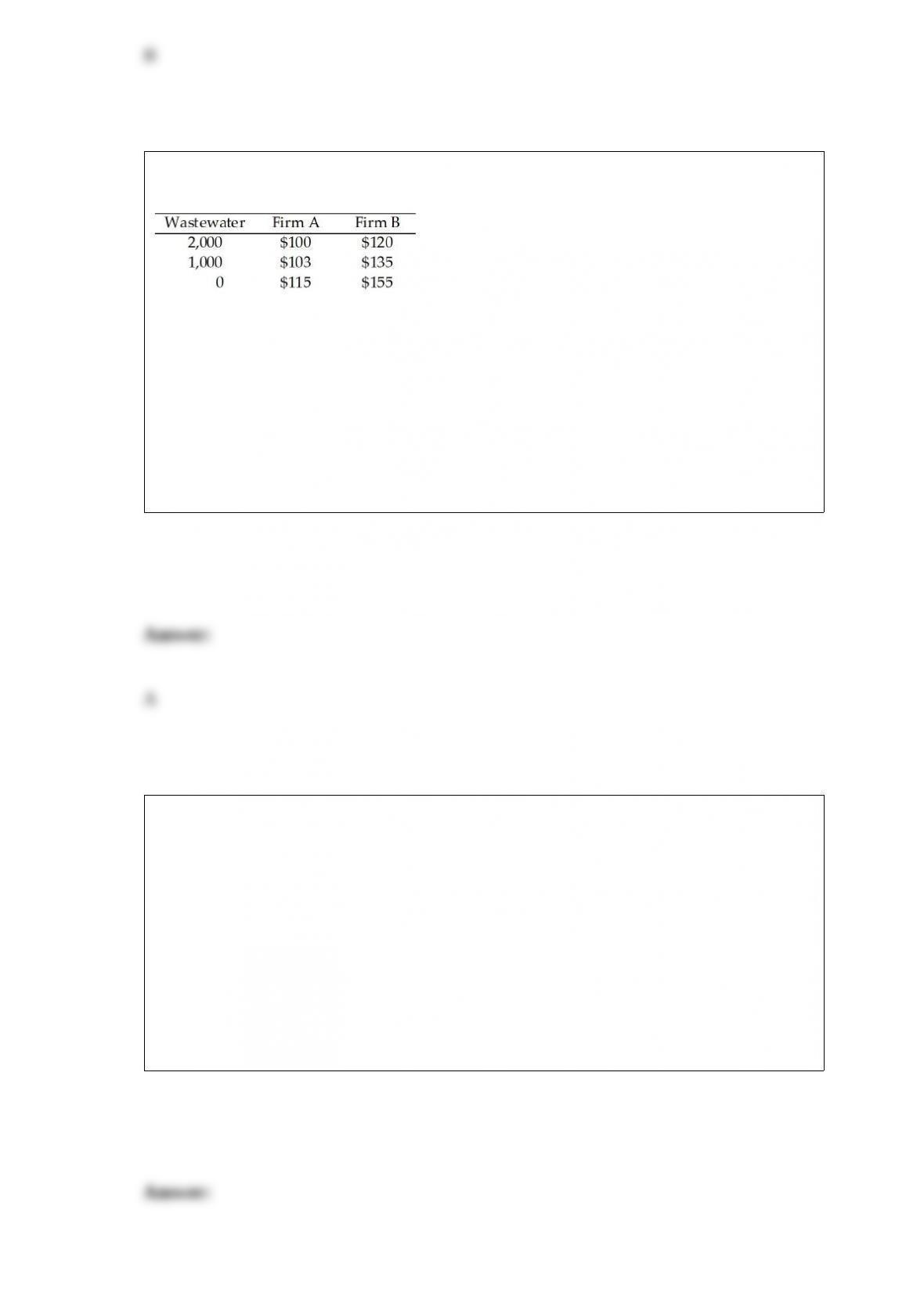
Given the data in Table 16.1, if Firm A were to reduce pollution from 1,000 gallons of
wastewater per day to 0 gallons per day, production costs:
Table 16.1
A) would increase by $12.
B) would decrease by $12.
C) would not change.
D) cannot be calculated from the information above.
On an automobile insurance policy, a deductible is the dollar amount that the driver will
pay toward damages before the insurance company will pay anything. Asymmetric
information suggests that:
A) high-risk drivers will buy a policy without any deductible.
B) high-risk drivers will buy a policy with a very high deductible.
C) insured drivers drive more safely than uninsured drivers.
D) insured drivers drive more recklessly than uninsured drivers.
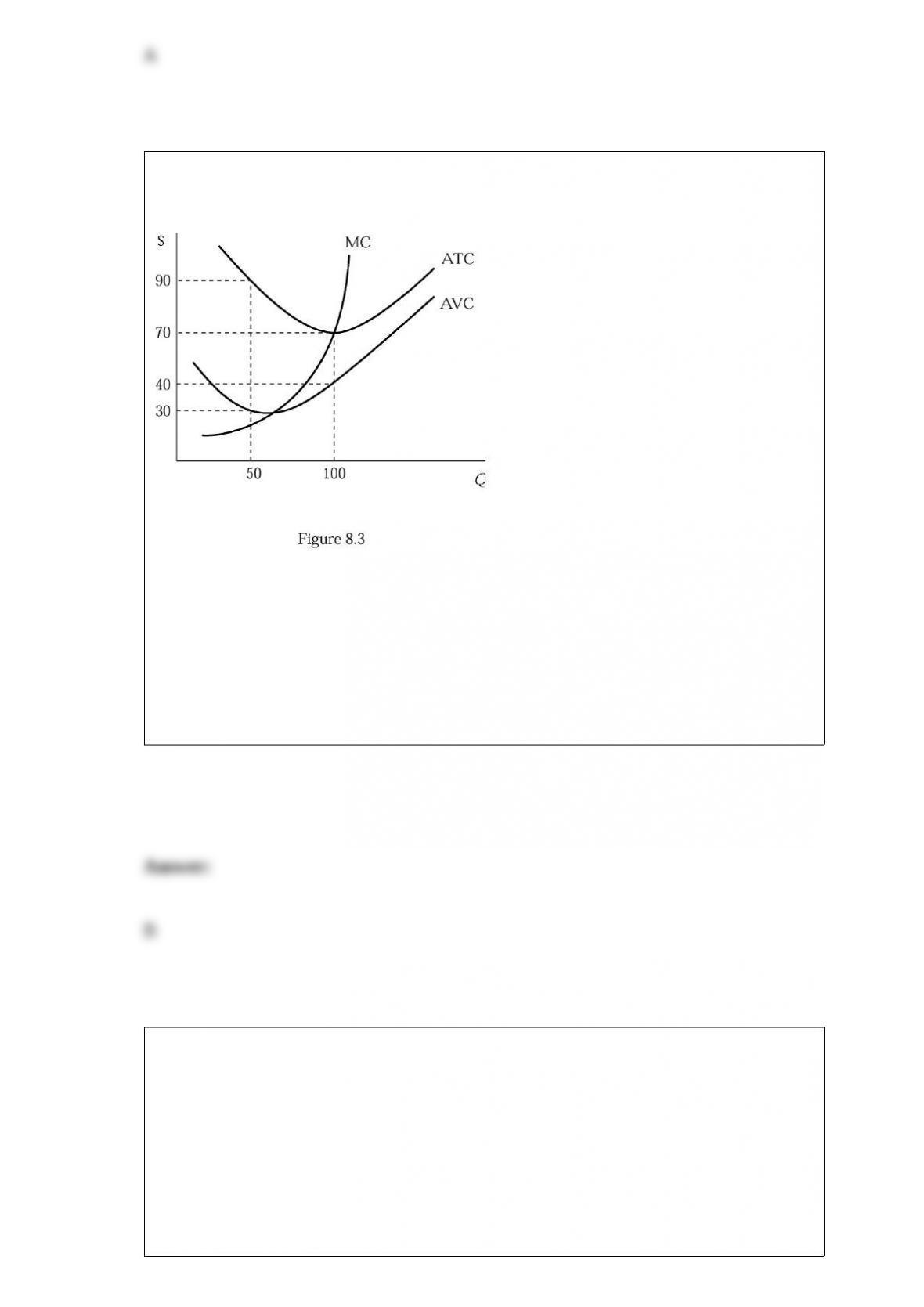
Figure 8.3 shows a firm’s marginal cost, average total cost, and average variable cost
curves. At Q=50, the total variable cost is:
A) $1,200.
B) $1,500.
C) $2,100.
D) $2,800.
A possible reason a nation might impose a protectionist policy such as a tariff is to:
A) increase the level of imports.
B) protect an infant industry from foreign competitors.
C) encourage specialization in the good in which the nation has a comparative
advantage.

D) slow domestic production.
The demand curve for labor will slope downward because of:
A) the input-substitution effect.
B) the output effect.
C) diminishing returns to scale.
D) both A and B
The pollution tax in Figure 16.4:
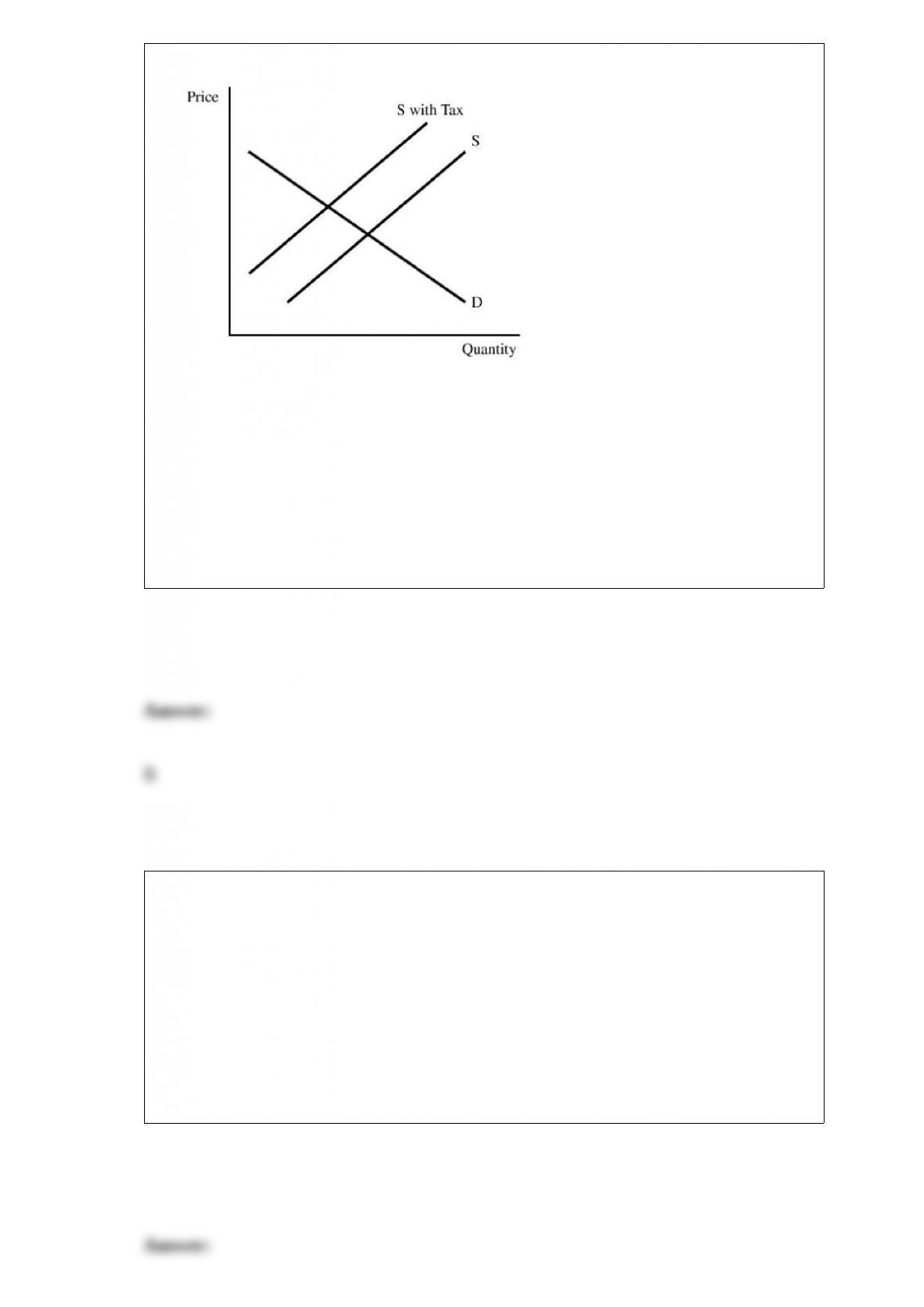
Figure 16.4
A) increases equilibrium output.
B) internalizes the pollution externality.
C) increases supply.
D) all of the above
When purchasing a product with a credit card, our gut-feeling aversion to spending
money is ________ and brain activity in the insula is ________.
A) strengthened; strengthened
B) strengthened; weakened
C) weakened; strengthened
D) weakened; weakened
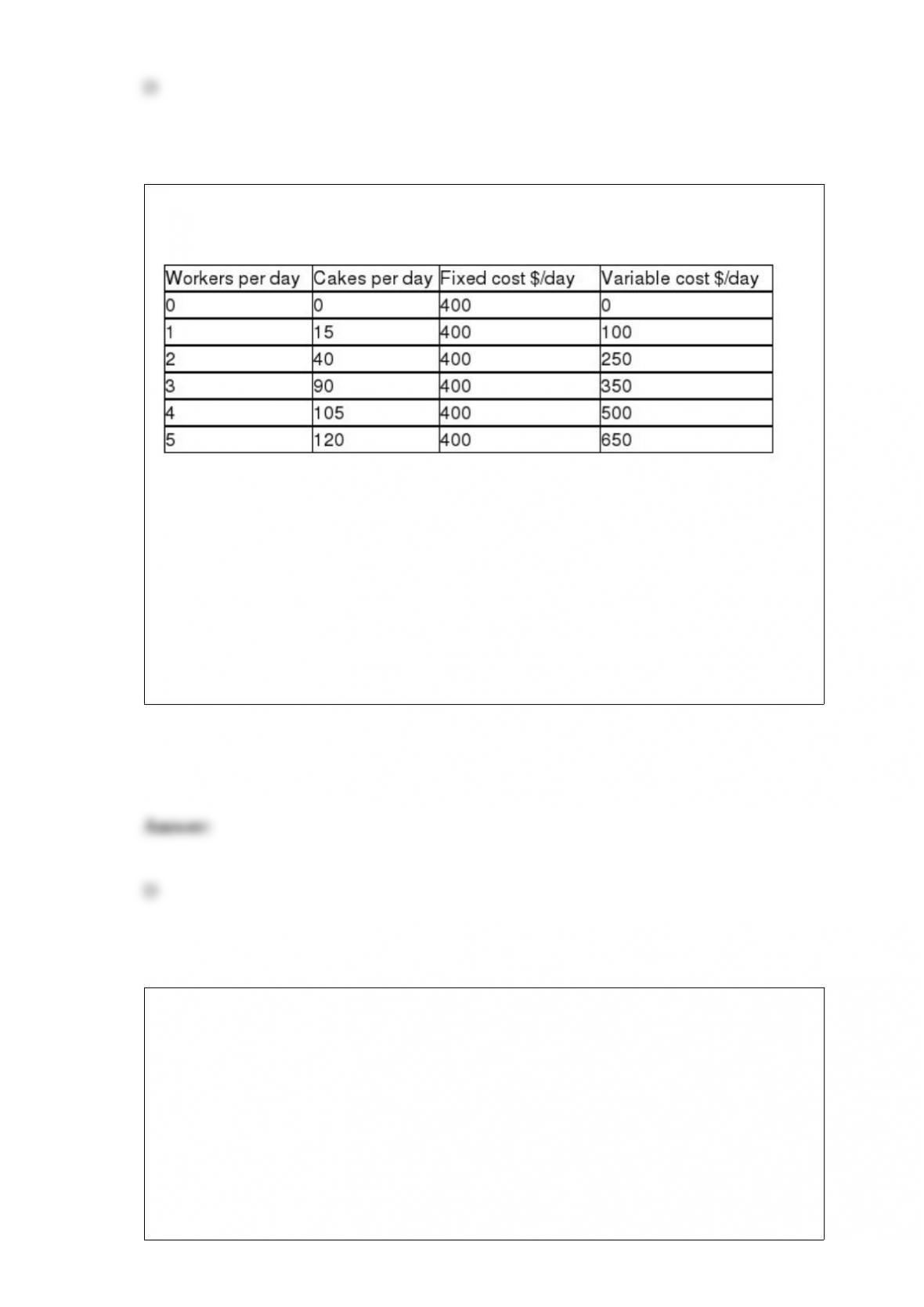
Refer to Table 8.4. Three workers can produce ________ cakes per day at a total cost of
________.
Table 8.4
A) 90; 350
B) 90; $50
C) 90; $550
D) 90; $750
When consumers are willing to buy more than producers are willing to sell:
A) there is excess supply of the product in the market.
B) there is excess demand for the product in the market.
C) the market is in equilibrium.
D) the demand curve will shift until the quantity supplied equals the quantity
demanded.

Landon demands more sushi as his income increases. From this we can conclude that,
for Landon:
A) sushi is a normal good.
B) sushi is an inferior good.
C) sushi is a complementary good.
D) sushi is a substitute good.
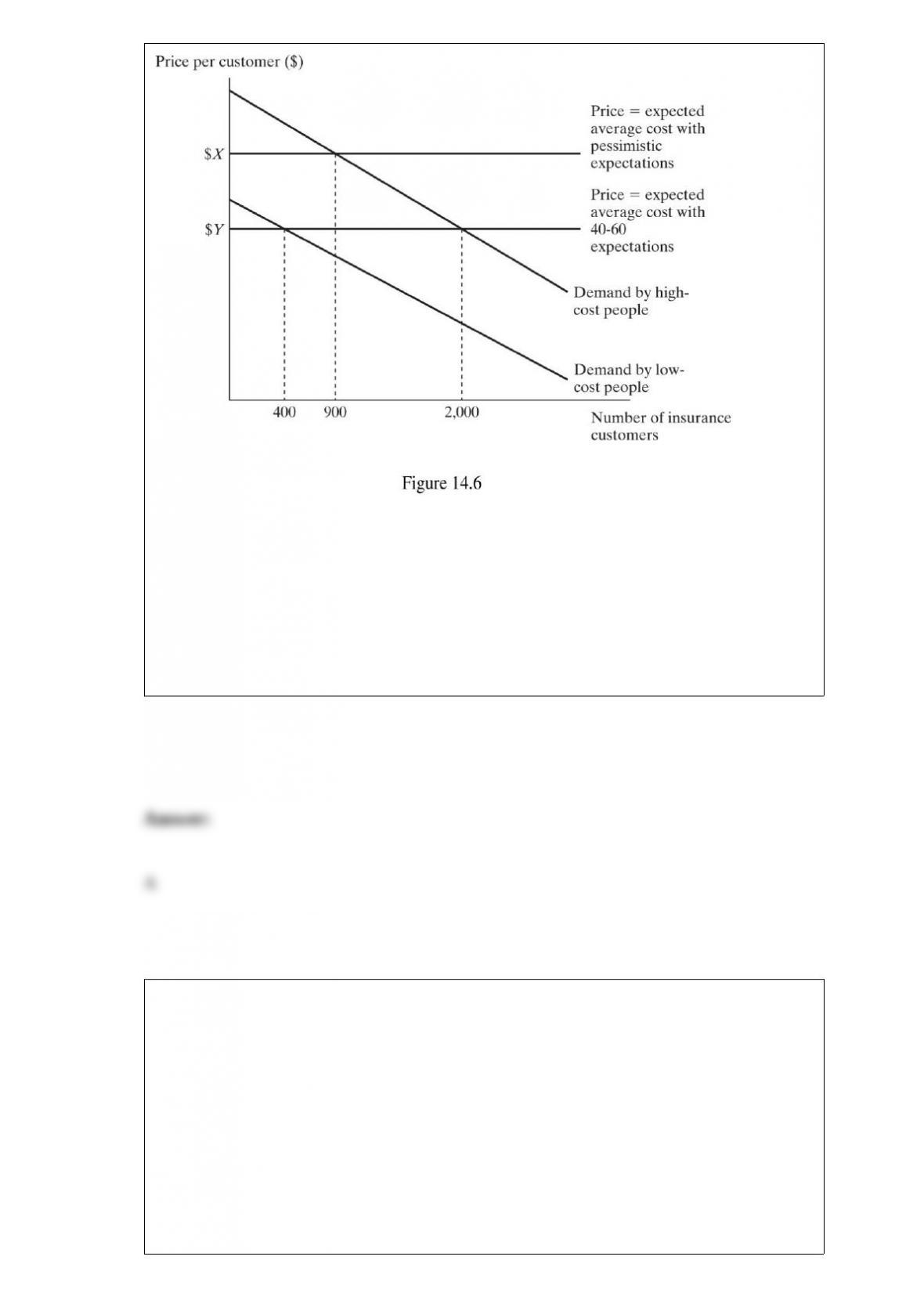
Figure 14.6 represents the market for health insurance. Suppose there are two types of
consumers, low-cost consumers with $2,000 average medical expenses per year, and
high-cost customers with $4,000 average medical expenses per year. If $Y is the price
the insurance company would charge if it expected 40% of its customers to be
high-cost, the price it would charge if it expected 50% of its customers to be high-cost
would be:
A) greater than $Y.
B) less than $Y.
C) equal to $Y.
D) 50% of $Y.
Recall the Application about federal quality standards in the market for kiwifruit
to answer the following question(s).
Recall the Application. California kiwifruit growers had a asymmetric information
problem because potential buyers:
A) do not know how much kiwifruit they will need.
B) could not tell what the price of the kiwifruit will be.

C) could not tell if a kiwifruit was sweet or sour before tasting it.
D) all of the above
Which of the following is an example of something that economists would consider a
cost but accountants would not?
A) the cost of materials and supplies purchased by a firm
B) the salary that the firm actually pays to the firm’s owner
C) the interest income foregone by the firm’s owner because the owner invested funds
into the firm
D) the cost of advertising
Which of the following is likely to overcome the free-rider problem?
A) offer people a private gift for contributing
B) arrange for matching contributions
C) appeal to peoples’ sense of civic or moral responsibility
D) all of the above

To think at the margin means to consider:
A) how nothing remains constant over time.
B) how a small change in one variable affects another variable.
C) how people behave in their own self-interest.
D) how people will decide what to purchase.
Recall the Application. The reason that the change in demand for margarine did not
change the equilibrium price in the long run is because the margarine industry is an
example of ________ industry.
A) a decreasing-cost
B) an increasing-cost
C) a constant-cost
D) a negative-cost

The real-nominal principle states that:
A) people respond more to explicit, or real, costs than to implicit costs.
B) people respond more to implicit costs than to explicit costs.
C) what matters to people is the face value of money or income.
D) what matters to people is the purchasing power of money or income.
Suppose that in 2012 MBI Corp. produced 100 million units of a good at an average
cost of $6, and in 2013 MBI Corp. expanded its plant capacity and produced 200
million units at an average cost of $6.20. In this range, one can conclude that MBI
Corp. is experiencing:
A) economies of scale.
B) diseconomies of scale.
C) neither economies of scale or diseconomies of scale.
D) increasing marginal product.
According to the Application, which good does Latvia have comparative advantage on?

A) timber
B) grain
C) milk
D) livestock
The Temporary Aid to Needy Families program:
A) requires that recipients participate in work activities.
B) is associated with a decrease in single mothers working.
C) has caused a rise in national welfare case loads.
D) was an important factor in the increase in poverty among children between 1993 and
2002.
The free-rider problem arises:
A) when people feel their contribution is so small relative to the total amount needed
that it won’t make a difference whether they contribute or not.
B) when people realize they will still receive the benefits of a good whether they pay
for it or not.

C) whenever the government produces a good or service.
D) whenever there is a surplus of the product in the market.
Which of the following characteristics is shared by both monopolistically competitive
markets and perfectly competitive markets?
A) no barriers to entry
B) identical products across sellers
C) small number of interdependent sellers
D) firms face downward sloping demand curves
A firm’s short-run total cost (TC) is equal to:
A) fixed costs plus variable costs.
B) variable cost minus total cost.
C) total cost divided by variable cost.
D) fixed cost minus variable cost.

Suppose that a market for a product is in equilibrium at a price of $5 per unit. At any
price above $5 per unit:
A) there will be an excess demand for the product.
B) there will be an excess supply of the product.
C) the quantity supplied of the product will be less than the quantity demanded of that
product.
D) there will be a shortage of that product.
To make new commercial ventures more attractive for entrepreneurs, ________ can be
used to reduce risk.
Evaluate the statement: All minimum wage workers will be better off if the minimum
wage rises.
What is the equimarginal rule?
Kylie spends her income of $150 per week on two goods: movies (which cost $5 each)
and books (which cost $10 each). At her current level of consumption, the marginal
utility from the last movie consumed is 20 and the marginal utility from the last book
consumed is 30. Is Kylie maximizing her utility? Why or why not? If not, what should
Kylie do to achieve a higher level of utility?
Suppose that the equilibrium price of a gallon of gas is $1.20 per gallon. The
government decides to place a maximum price on gasoline and will not allow sellers to
charge more than $1.40 per gallon. Draw this situation using a graph. Make sure that
you show the original equilibrium and the effect of the maximum price on the market.
What will happen in this market? What will happen to total surplus?
Will a profit maximizing monopolist who is not subject to government regulation
produce a quantity where the MR < 0?
Explain why the government broke up the Standard Oil Trust.
Comment on the following statement: “If a firm shuts down in the short run, it will earn
zero economic profit.”
Gasoline prices are rising because OPEC has cut the supply of oil they are willing to
sell in the world oil market. You hear someone in a restaurant say that the government
should put a ceiling on the price of gasoline to protect citizens from price gouging.
Discuss the pros and cons of a price ceiling on gasoline.
What does it mean for a person or nation to have a comparative advantage in producing
a product?
What is willingness to accept?
Dogger’s Snowboard Shop hires workers for the holidays. Dogger’s sells snowboards
for $150. The marginal product of the last worker hired is three. What is the marginal
revenue product of the last worker?
Explain the marginal principle.
What are the differences between economic cost and accounting costs?