
Total utility is constant along a given indifference curve.
Purchasing a firm’s stock in an IPO can be risky because financial information may not
be fully disclosed.
An increase in disposable income will shift the aggregate demand curve to the right.
If a per-unit tax on output sold is imposed on a monopoly’s product, the monopolist will
increase its market price by the full amount of the tax.

Monopolistic competition differs from oligopoly in that in monopolistic competition
firms act independently while in oligopoly firms act interdependently.
In 18th century Europe, governments gave guilds legal authority to limit production of
goods. This authority obstructed the market mechanism because the guilds’ actions
prevented the forces of ________ from coordinating the self-interested decisions of
producers and consumers.
A) absolute advantage
B) demand and supply
C) opportunity cost
D) nature
Should European nations which are not currently using the euro choose to adopt the
euro as their currency, these countries would risk giving up the ability to use ________
to stabilize their economies in the event of a recession.
A) expansionary fiscal policy
B) contractionary fiscal policy
C) expansionary monetary policy
D) contractionary monetary policy

Congressman Flack votes for a program that will benefit the constituents of
Congressman Walpole. The public choice model suggests that Flack’s vote is best
explained by which of the following?
A) rational ignorance
B) party loyalty
C) logrolling
D) the voting paradox
The financial statements of firms generally are audited by
A) employees of the firm being audited.
B) employees of private accounting firms.
C) employees of the federal government.
D) the board of directors of the corporation being audited.

Suppose that when the price of ice cream increases, Liza decreases her purchase of hot
fudge. To Liza,
A) ice cream and hot fudge are complements.
B) ice cream and hot fudge and substitutes.
C) ice cream and hot fudge are normal goods.
D) ice cream is a normal good and hot fudge is an inferior good.
Alan Krueger conducted a survey of fans at the 2001 Super Bowl who purchased tickets
to the game for $325 or $400. Krueger found that (a) 94 percent of those surveyed
would not have paid $3,000 for their tickets, and (b) 92 percent of those surveyed
would not have sold their tickets for $3,000. These results are evidence of
A) the high value fans place on watching the Super Bowl in person, rather than on
television.
B) the failure of consumers to take into account nonmonetary opportunity costs.
C) the failure of consumers to ignore sunk costs.
D) consumers being overly optimistic about their future behavior.
Employers withhold several taxes from employees ‘ paychecks, one of which is FICA.
Congress requires employers to pay half of the FICA tax and workers to pay the other
half. Does this mean that the burden of the FICA tax falls evenly on employers and
employees? Briefly explain.

If a store like hhgregg has higher costs than a comparable Best Buy store, the only way
it can have higher profits is if
A) it has more locations than Best Buy.
B) its marginal revenue is lower than Best Buy’s.
C) the demand for its goods is higher than Best Buy’s.
D) it sells the quantity associated with its minimum average total cost.
If a 6 percent increase in income leads to a 4 percent increase in quantity demanded for
audio books the income elasticity of demand is
A) -0.67.
B) 0.67.
C) 1.5.
D) 2.
Under the Bretton Woods exchange rate system, set up in 1944, which of the following
was true?
A) Americans could sell their dollars to the American government in exchange for gold.
B) Americans could sell their dollars to the American government in exchange for
silver.
C) Americans could sell their dollars to foreign central banks in exchange for gold.
D) Foreign central banks could sell their dollars to the American government in
exchange for gold.
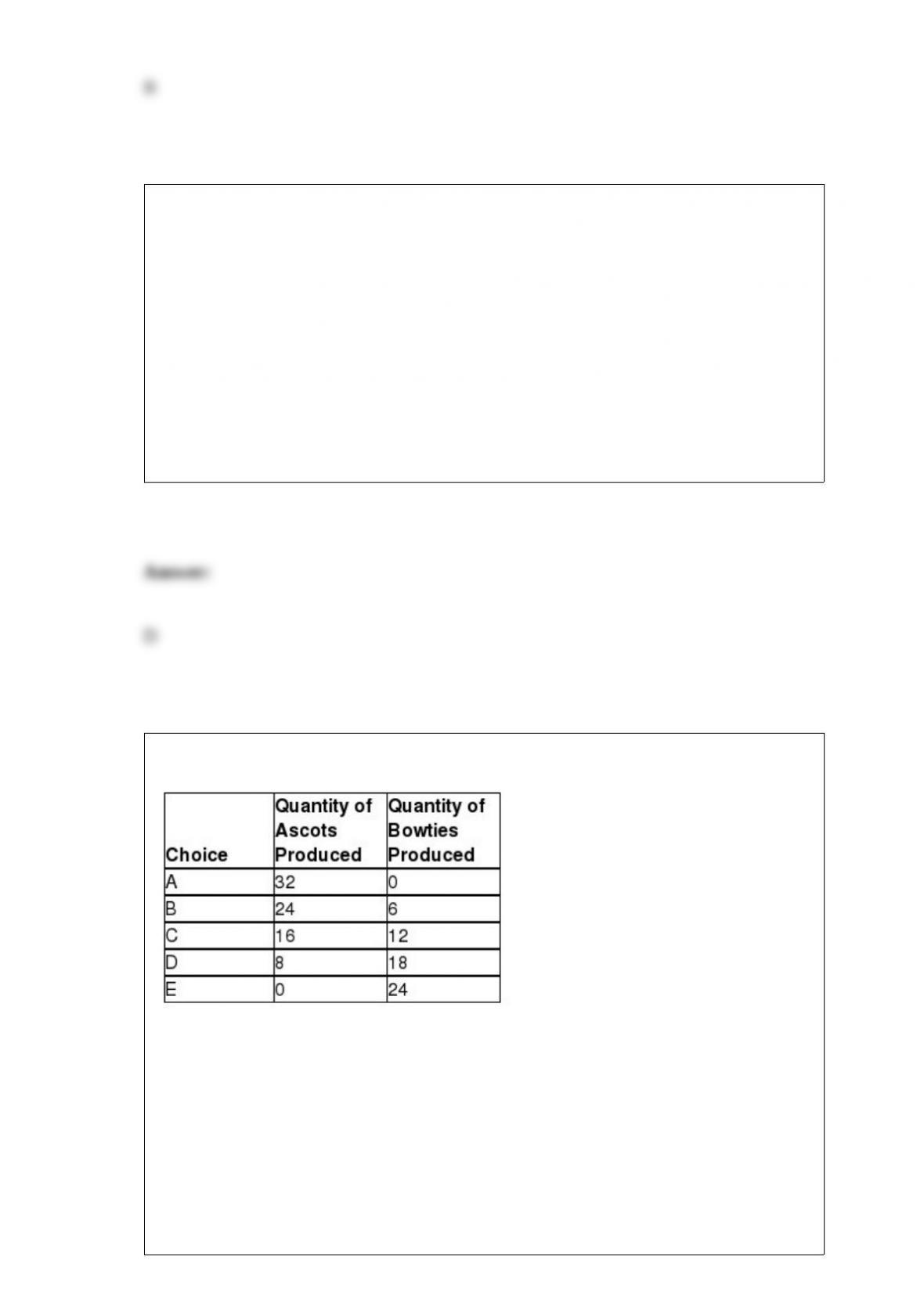
Table 2-5 Production choices for Nadia’s Neckware
Assume Nadia’s Neckware only produces ascots and bowties. A combination of 8 ascots
and 18 bowties would appear
A) along Nadia’s production possibilities frontier.
B) inside Nadia’s production possibilities frontier.
C) outside Nadia’s production possibilities frontier.

D) at the horizontal intercept of Nadia’s production possibilities frontier.
According to the theory of purchasing power parity, if the inflation rate in the United
States is greater than the inflation rate in Canada, explain what should happen to the
exchange rate between the U.S. dollar and the Canadian dollar.
Your friend owns a snow cone stand that he works by himself. He produces about 25
snow cones per hour. He wants to be able to produce twice as many snow cones per
hour so he buys a second machine. He notices that he can only produce 10 more snow
cones an hour. He jokes that he could have doubled his output with the second machine
if he only had four hands. Using your knowledge of the production process, explain to
your friend what you think has happened when he added more capital to his production
process.

Does the money demand curve have a positive slope or a negative slope? Why does it
have this slope? Explain why an increase in the variable on the vertical axis of the
money demand curve causes either an increase or a decrease in the variable on the
horizontal axis of the money demand curve.
Explain, in detail, how the adjustment to macroeconomic equilibrium occurs when
spending is less than production. Be sure to discuss how inventories play a crucial role
in the adjustment process. State what happens to GDP and employment during the
adjustment process.
Calculate the value of the government purchases multiplier if the marginal propensity to
consume equals 0.9, the tax rate equals 0.25, and the marginal propensity to import
equals 0.15.

Explain and show graphically how an increase in household saving affects the
equilibrium interest rate and the equilibrium quantity of loanable funds.
How does a firm raise external funds through direct finance?