
Political stability is not a prerequisite to economic growth.
Answer:
College education tends to result in a negative externality because the recipient does not
receive the full benefit of the education.
Answer:
If additional units of a good are produced at an increasing opportunity cost, the
production possibility frontier would be bowed outward (concave).
Answer:
Economic profit is the Difference between a firm’s revenue and its opportunity costs.
Answer:

“Cost disease” refers to the tendency for high productivity in the service sector to lead
to lower costs in those industries.
Answer:
The values of real GDP and real GNP are almost the same for the United States.
Answer:
Suppose the absolute value of the price elasticity of demand for basketball game tickets
on your campus is greater than 1. Increasing ticket prices will increase the total revenue
from ticket sales.
Answer:
If additional units of a good could be produced at a constant opportunity cost, the
production possibility frontier would be linear.
Answer:
When the Federal Reserve increases the money supply, people spend more because
interest rates fall.
Answer:
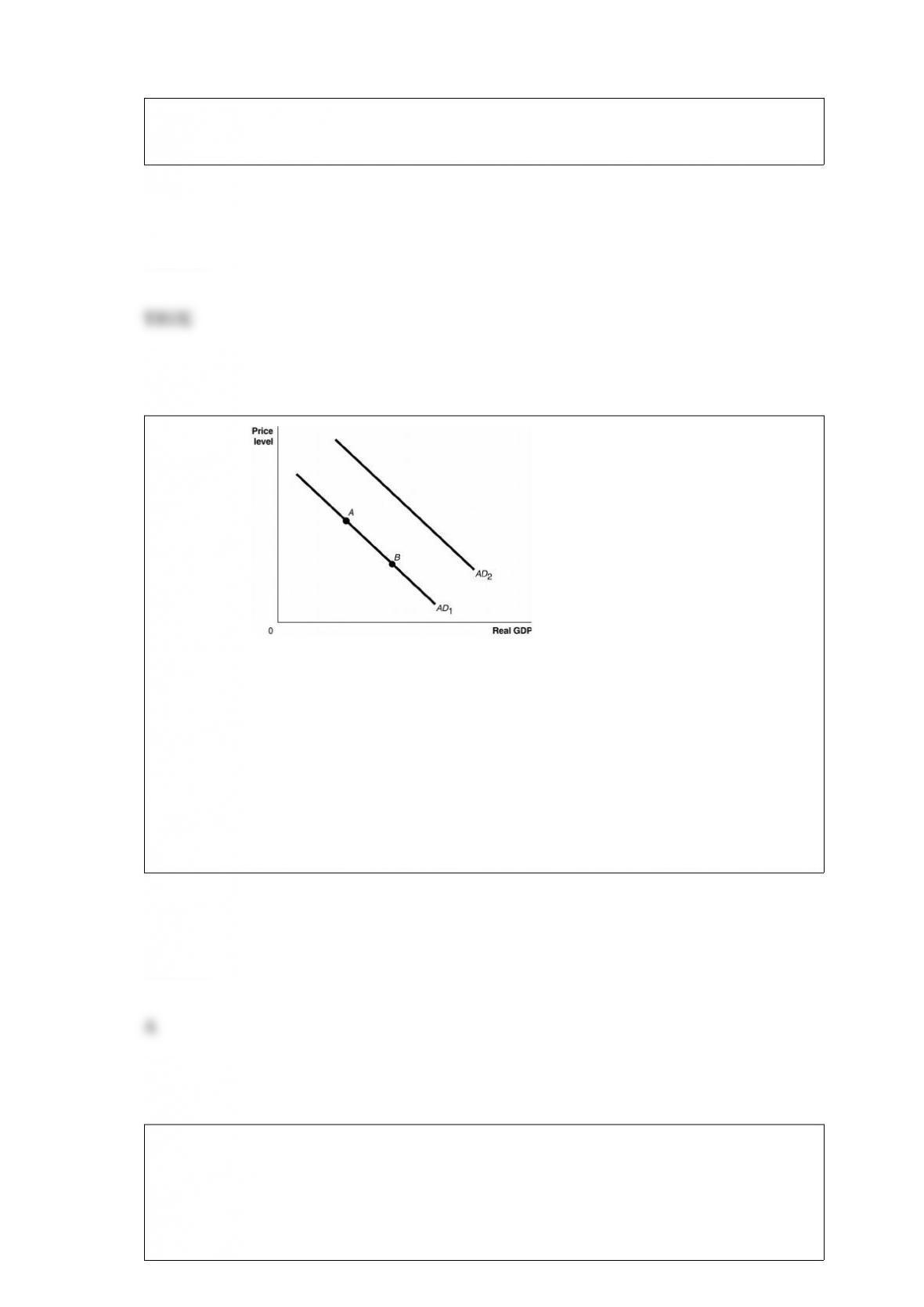
Figure 13-1
Ceteris paribus, a decrease in interest rates would be represented by a movement from
A) AD1 to AD2.
B) AD2 to AD1.
C) point A to point B.
D) point B to point A.
Answer:
If the balance on the current account is $842 billion and the balance on the financial
account is -$603 billion, what is the balance on the capital account, assuming no
statistical discrepancy?
A) $1,445 billion

B) $239 billion
C) $0
D) -$239 billion
Answer:
If interest rates in the United States rise,
A) the value of the dollar will fall as foreign investors sell their U.S. investments.
B) the value of the dollar will rise as the foreign investors increase their holdings of
U.S. investments.
C) the value of the dollar will fall as foreign investors increase their holdings of U.S.
investments.
D) the value of the dollar will rise as foreign investors sell their U.S. investments.
Answer:
Suppose that domestic investment in Japan is 20.2% of GDP, and Japanese national
savings is 24% of GDP. What is Japan’s foreign investment as a percentage of GDP?
A) 1.19%
B) 3.8%
C) 27.8%
D) 44.2%

Answer:
A marginal tax rate is calculated as
A) total taxable income · by taxes paid.
B) taxes paid · total taxable income.
C) change in taxes paid · the change in total taxable income.
D) change in taxable income · change in taxes paid.
Answer:
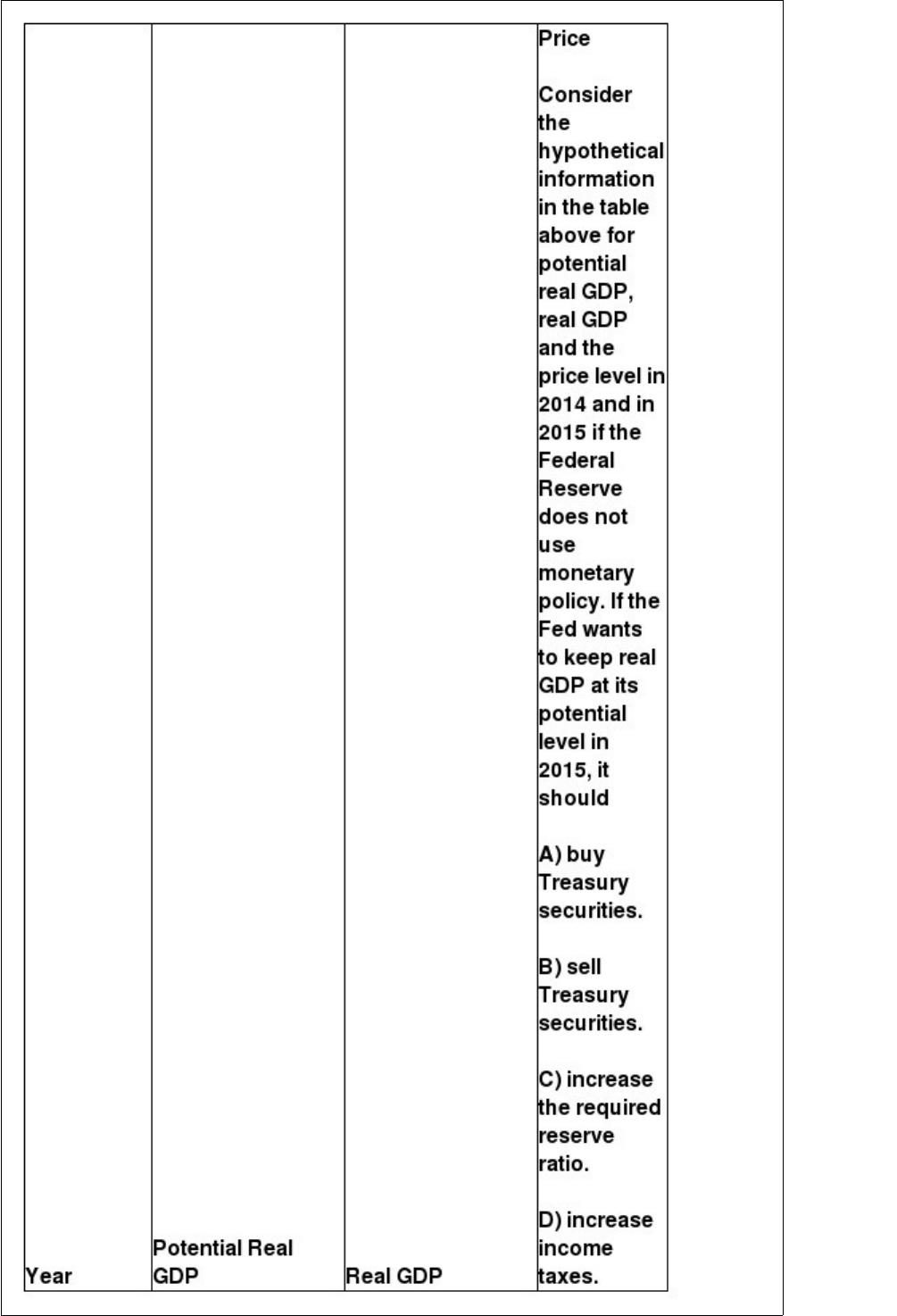
Table 26-2

Answer:
If an increase in autonomous consumption spending of $25 million results in a $100
million increase in equilibrium real GDP, then
A) the MPC is 0.25.
B) the MPC is 0.75.
C) the MPC is 0.8.
D) the MPC is 2.5.
Answer:
What is the government purchases multiplier if the tax rate is 0.2 and the marginal
propensity to consume is 0.8? Assume the economy is closed.
A) 2.78
B) 5
C) 6.25
D) 100
Answer:

An Inquiry into the Nature and Causes of the Wealth of Nations, published in 1776, was
written by
A) John Maynard Keynes.
B) Karl Marx.
C) Alfred Marshall.
D) Adam Smith.
Answer:
Macroeconomic equilibrium occurs when
A) aggregate expenditure = GDP.
B) aggregate expenditure = C+ I + G + net transfers.
C) aggregate income = planned inventories.
D) aggregate expenditure = planned inventories.
Answer:
Price discrimination
A) is the practice of charging different prices to different customers based on a seller’s
personal preferences and prejudices.
B) is the practice of charging different prices to different customers based on the
different costs of supplying the product to different customers.
C) is the practice of charging different prices to different customers when the price

differences cannot be attributed to variations in cost.
D) is the practice of giving preferential treatment to certain groups of customers based
on their long-standing relationship to the producer.
Answer:
A characteristic found only in oligopolies is
A) break-even level of profits.
B) interdependence of firms.
C) independence of firms.
D) products that are slightly different.
Answer:
A change in the slope of an isocost line is due to a change in
A) the output price.
B) the price of one or both inputs.
C) total cost.
D) quantity of output.
Answer:
A tax that imposes a small excess burden relative to the tax revenue that it raises is
A) a payroll tax.
B) a sin tax.
C) an efficient tax.
D) a FICA tax.
Answer:
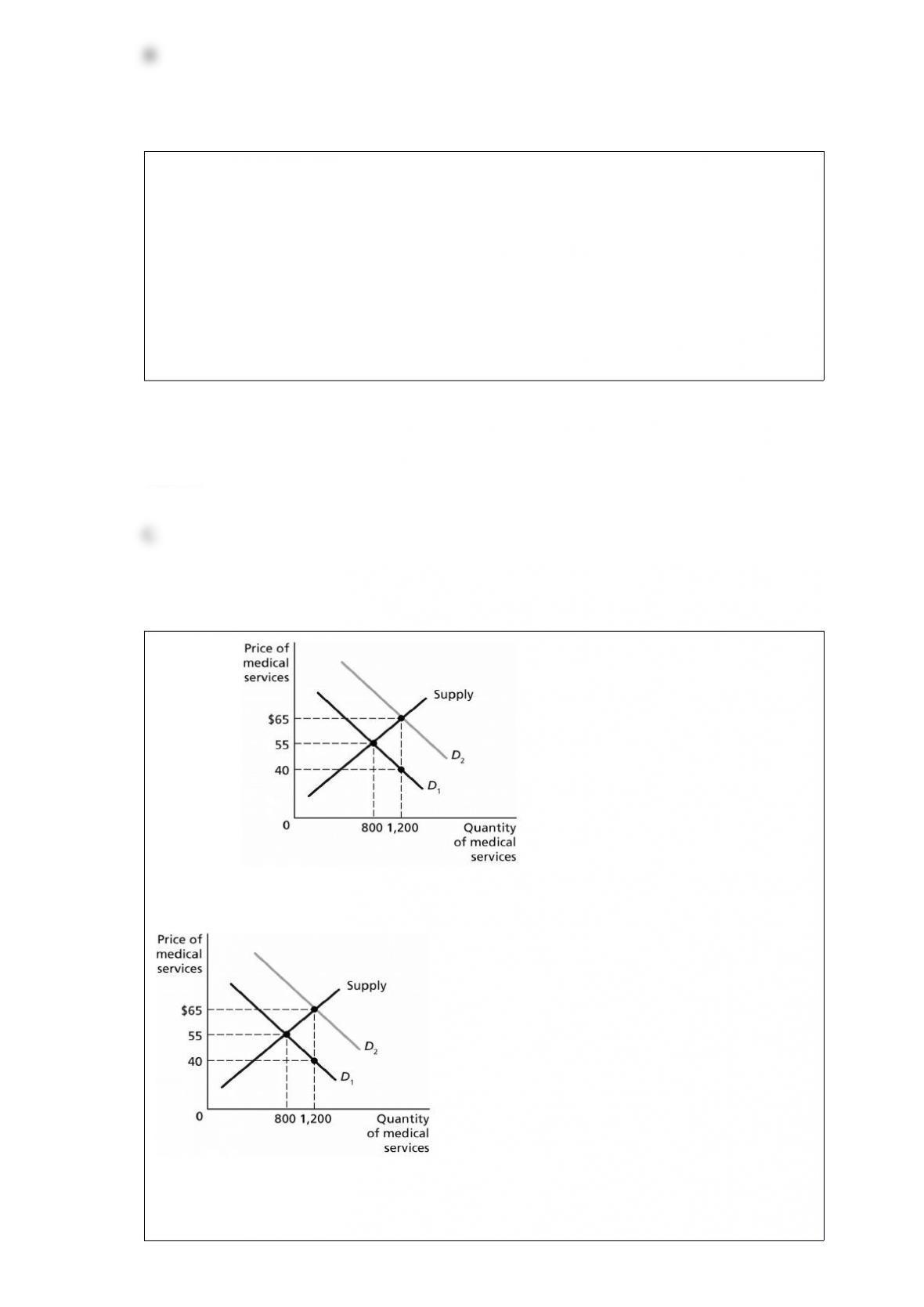
Figure 5-3 Figure 5-3 represents the market for
medical services with and without insurance, and the effect of a third-party payer
system on the demand for medical services. Figure 5-3
Figure 5-3 represents the market for medical
services with and without insurance, and the effect of a third-party payer system on the
demand for medical services. With insurance and a third-party payer system, what is the
amount of the deadweight loss?

A) $0
B) $2,500
C) $5,000
D) $24,000
Answer:
Firms in a small economy anticipated that inventories would grow over the past year by
$500,000. Over that year, inventories actually grew by only $400,000. This implies that
A) aggregate expenditure that year was greater than GDP that year.
B) there was an unplanned increase in inventories that year.
C) there was a planned increase in inventories that year.
D) aggregate expenditure that year was equal to GDP that year.
Answer:
What is voluntary exchange?
Answer:
How has economist Robert Fogel explained that economic growth is connected to life
expectancy? Based on this connection, in what country would you expect to have a
longer life expectancy, the United States or India? Explain.
Answer:
How is the quantity theory of money different from the quantity equation and why must
the quantity equation always be true?
Answer:
Under what conditions should a competitive firm shut down in the short run?
Answer:
Your friend does not understand the benefits of globalization. Outline for your friend
the positive economic aspects of globalization.
Answer:
What is scarcity, and why is it a fundamental concept in economics?
Answer: