The Federal Reserve responded to the 2008 financial crisis in several ways. Which of
the following is not one of the ways the Fed responded?
A) The Fed made investment banks eligible for discount loans.
B) The Fed lent investment banks Treasury securities in exchange for mortgage-backed
securities.
C) The Fed lowered the required reserve ratio on demand deposit accounts in order to
increase the amount of bank reserves.
D) The Fed helped JP Morgan to acquire Bear Stearns, a nearly bankrupt investment
bank.
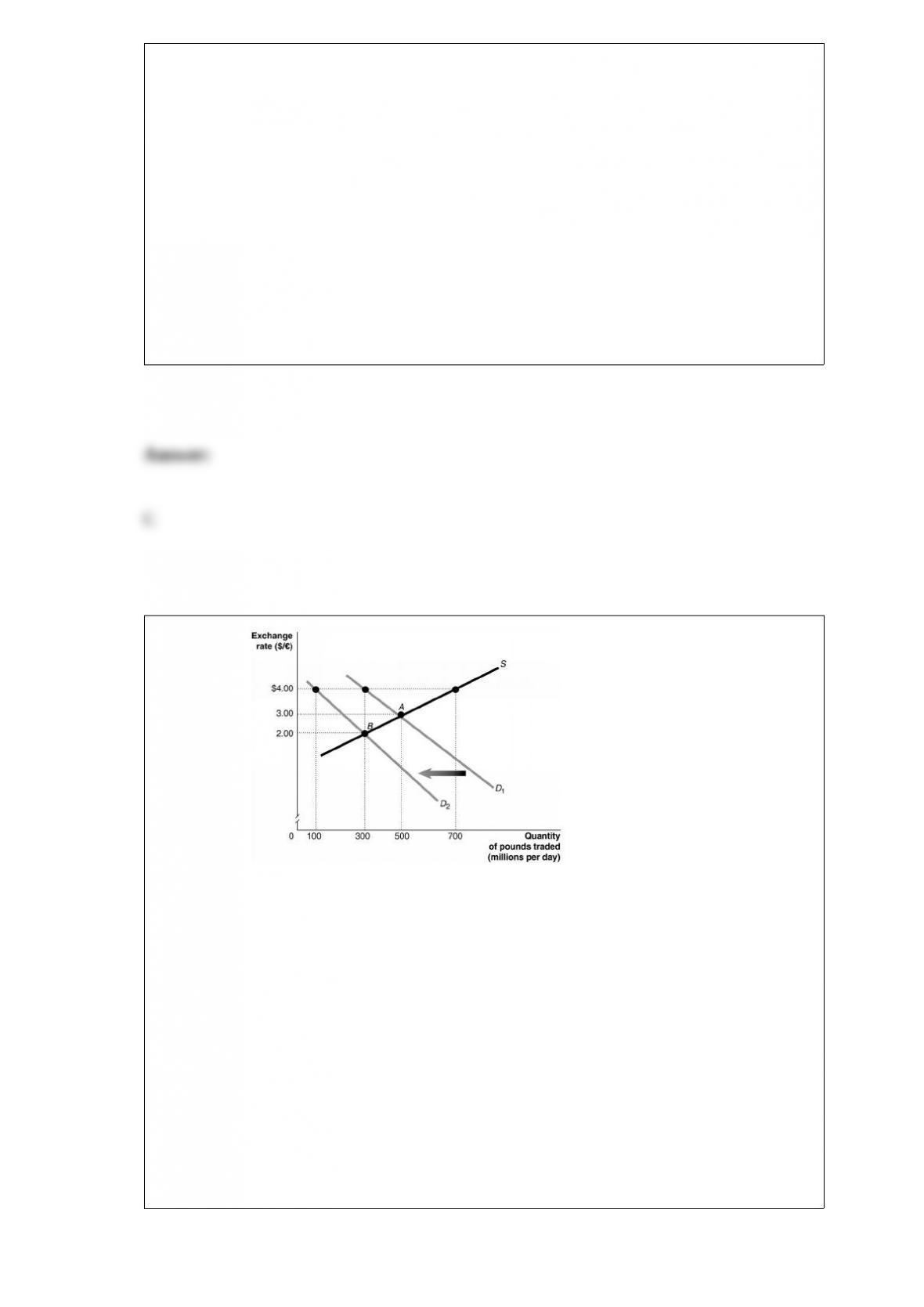
Figure 19-4
The equilibrium exchange rate is at A, $3/pound. Suppose the British government pegs
its currency at $4/pound. Speculators expect that the value of the pound will drop and
this shifts the demand curve for pounds to D2. After the shift,
A) there is a shortage of pounds equal to 600 million.
B) there is a surplus of pounds equal to 400 million.
C) there is a shortage of pounds equal to 400 million.
D) there is a surplus of pounds equal to 600 million.
E) there is a shortage of pounds equal to 200 million.

Most supermarkets charge the same price for the majority of goods sold. This suggest
that
A) the government regulates prices of most products sold in supermarkets.
B) supermarkets have colluded to fix prices on most of the goods sold.
C) mark-ups reflect the degree of competition in the supermarket industry.
D) the large supermarket chains are price leaders and smaller grocers take these prices
as given.
Parker Hannifin benefitted when the Federal Reserve ________ in 2008. This Fed
action would help increase demand for its machinery components, which allowed
Parker Hannifin to increase employment and increase prices.
A) drove down interest rates
B) increased the discount rate
C) lowered the required reserve rate
D) implemented a series of open market sales of Treasury bonds
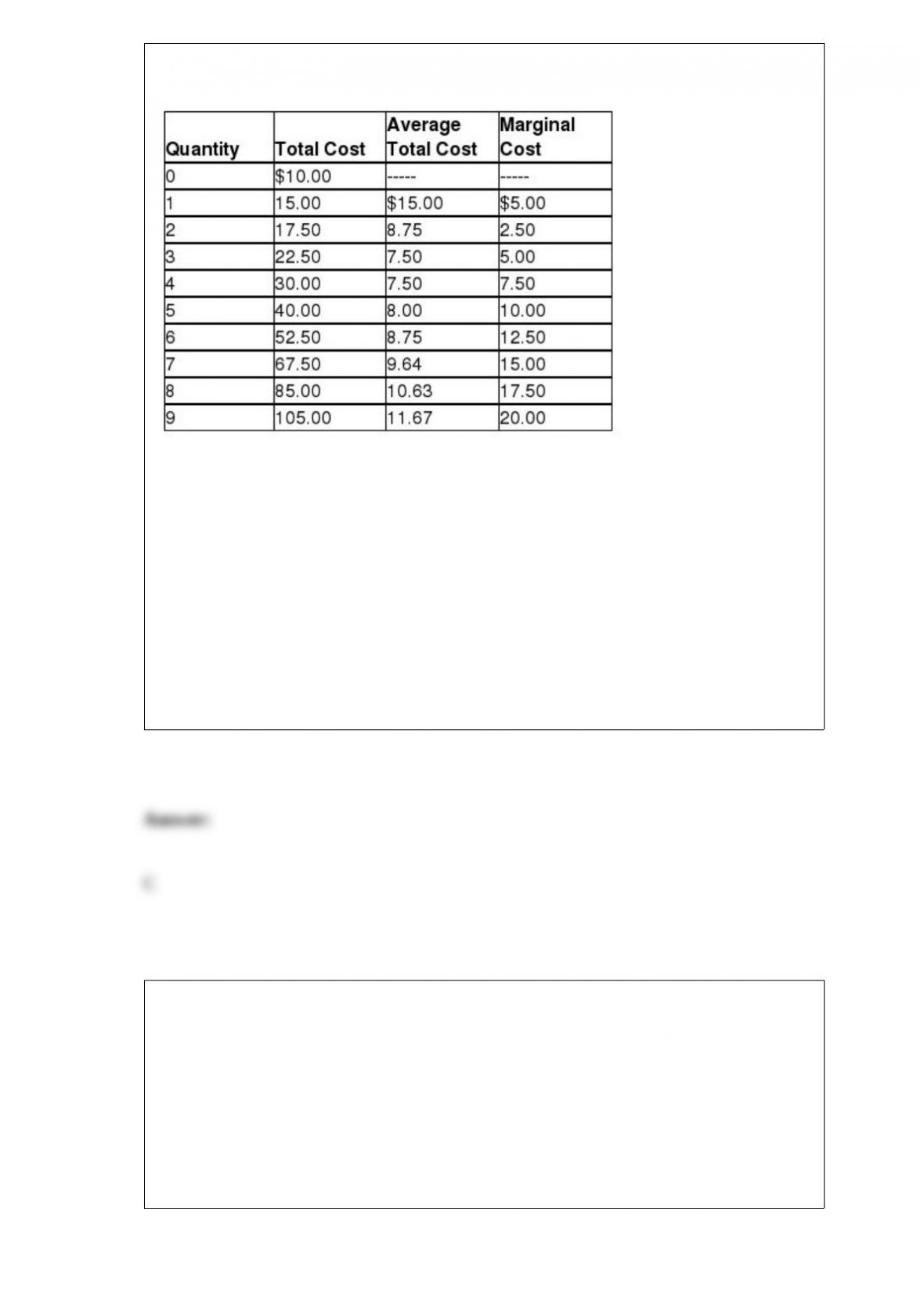
Table 12-3
Arnie sells basketballs in a perfectly competitive market. Table 12-3 summarizes
Arnie’s output per day (Q), total cost (TC), average total cost (ATC) and marginal cost
(MC). What price (P) will Arnie charge and how much profit will he earn if the market
price of basketballs is $12.50?
A) Price and profit cannot be determined from the information given.
B) P = $12.50; profit = $52.50
C) P = $12.50; profit = $22.50
D) P = $20; profit = $75.00.
Purchases of Huggies diapers should
A) remain fairly constant over the business cycle.
B) increase in recessions and decrease in expansions.
C) decrease in recessions and increase in expansions.
D) increase in recessions and remain constant in expansions.

If an increase in income leads to in an increase in the demand for peanut butter, then
peanut butter is
A) a neutral good.
B) a normal good.
C) a necessity.
D) a complement.
Trade between countries that is without restrictions is called
A) unobstructed commerce.
B) unabated trade.
C) free trade.
D) unencumbered trade.

During the German hyperinflation of the 1920s, the large increases in the money supply
were generated by the German government
A) significantly lowering the required reserve ratio to enable German businesses to
obtain loans.
B) significantly raising the required reserve ratio to reduce business loans.
C) printing large quantities of German marks.
D) selling large quantities of government bonds to the central bank, the Reichsbank.
Under the Bretton Woods system, U.S. dollars were redeemable for ________ only if
the dollars were presented by a foreign central bank.
A) silver
B) foreign currency
C) gold
D) U.S. Treasury bonds
The labor market is considered as one of the more important markets in an economy
because
A) most people typically earn the bulk of their income from wages and salaries.
B) most people are concerned that wages determined in the labor market are unfair.
C) the usual market forces do not hold in the labor market.
D) the labor market does not reach an equilibrium.
Customer discrimination occurs when
A) a firm pays workers different wages based on irrelevant factors.
B) customers refuse to buy products produced by a racially diverse workforce.
C) customers refuse to buy products they believe to be of poor quality.
D) workers refuse to serve customers of a different race.
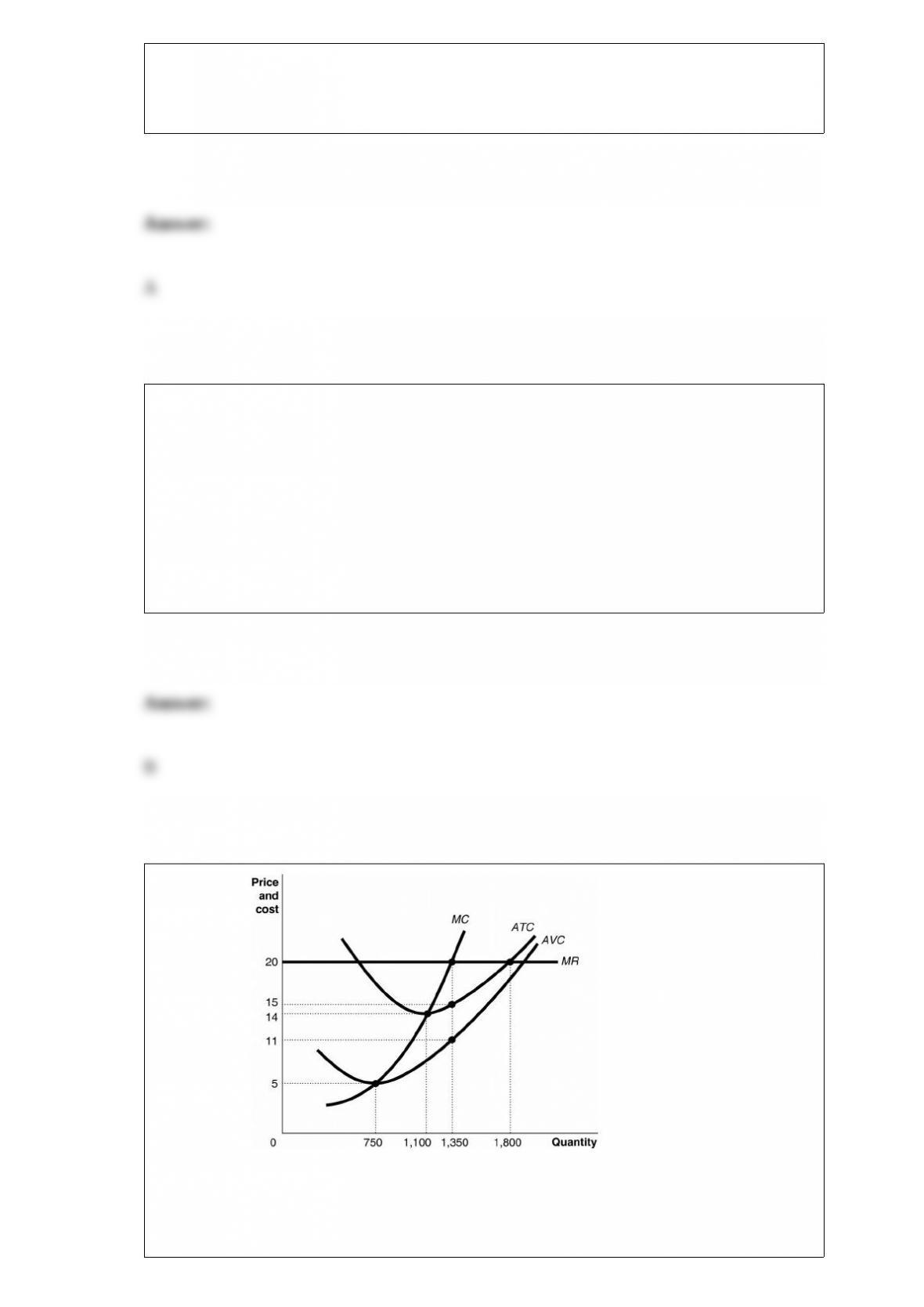
Figure 12-5 Figure 12-5 shows cost and
demand curves facing a typical firm in a constant-cost, perfectly competitive industry.
If the market price is $20, what is the amount of the firm’s profit?

A) $5,400
B) $6,750
C) $8,100
D) $16,200