1) suppose that a pure monopolist can sell 4 units of output at $2 per unit and 5 units at
$1.75 per unit. the monopolist will produce and sell the fifth unit if its marginal cost is:
a.$1 or less.
b.$.75 or less.
c.$1.75 or less.
d.$2 or less.
2)
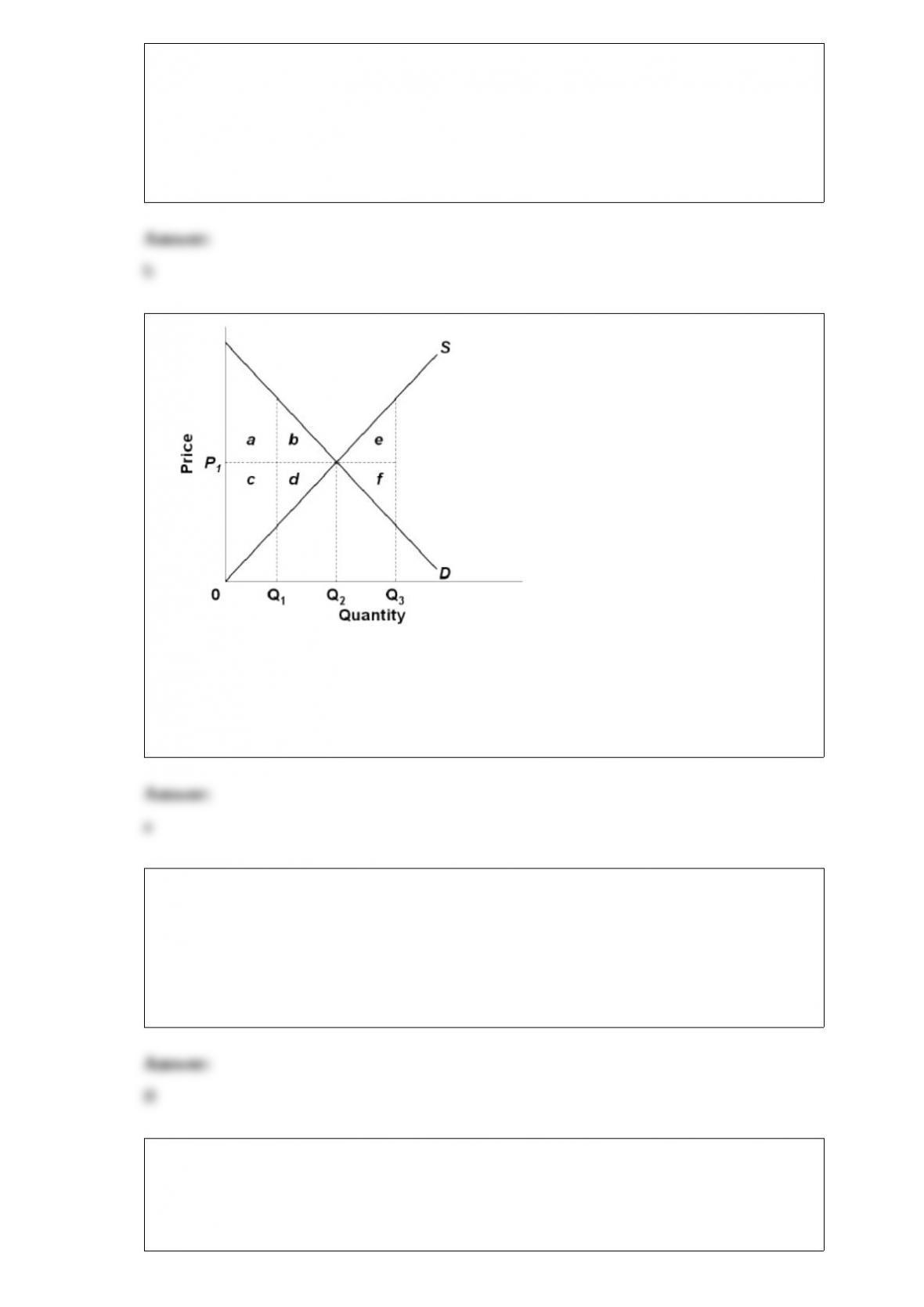
refer to the above diagram. if actual production and consumption occur at q2:
a.efficiency is achieved.
b.an efficiency loss (or deadweight loss) of a + b + c + d occurs.
c.an efficiency loss (or deadweight loss) of a + c occurs.
d.an efficiency loss (or deadweight loss) of e + f occurs.
3) Which of the following pairs help explain why self-correction from a decline in
aggregate demand in the economy may be slow rather than rapid?
A.theory of compensation wage differentials; theory of derived demand for labor.
B.efficiency wage theory; insider-outsider theory.
C.insider-outsider theory; principle-agent problem.
D.externalities; efficiency wage theory.
4) If discrimination based on gender and race was eliminated, we would expect the:
A.personal distribution of income to become less equal.
B.personal distribution of income to become more equal.
C.personal distribution of income to be unaffected.
D.functional distribution of income to change in favor of profits and interest.
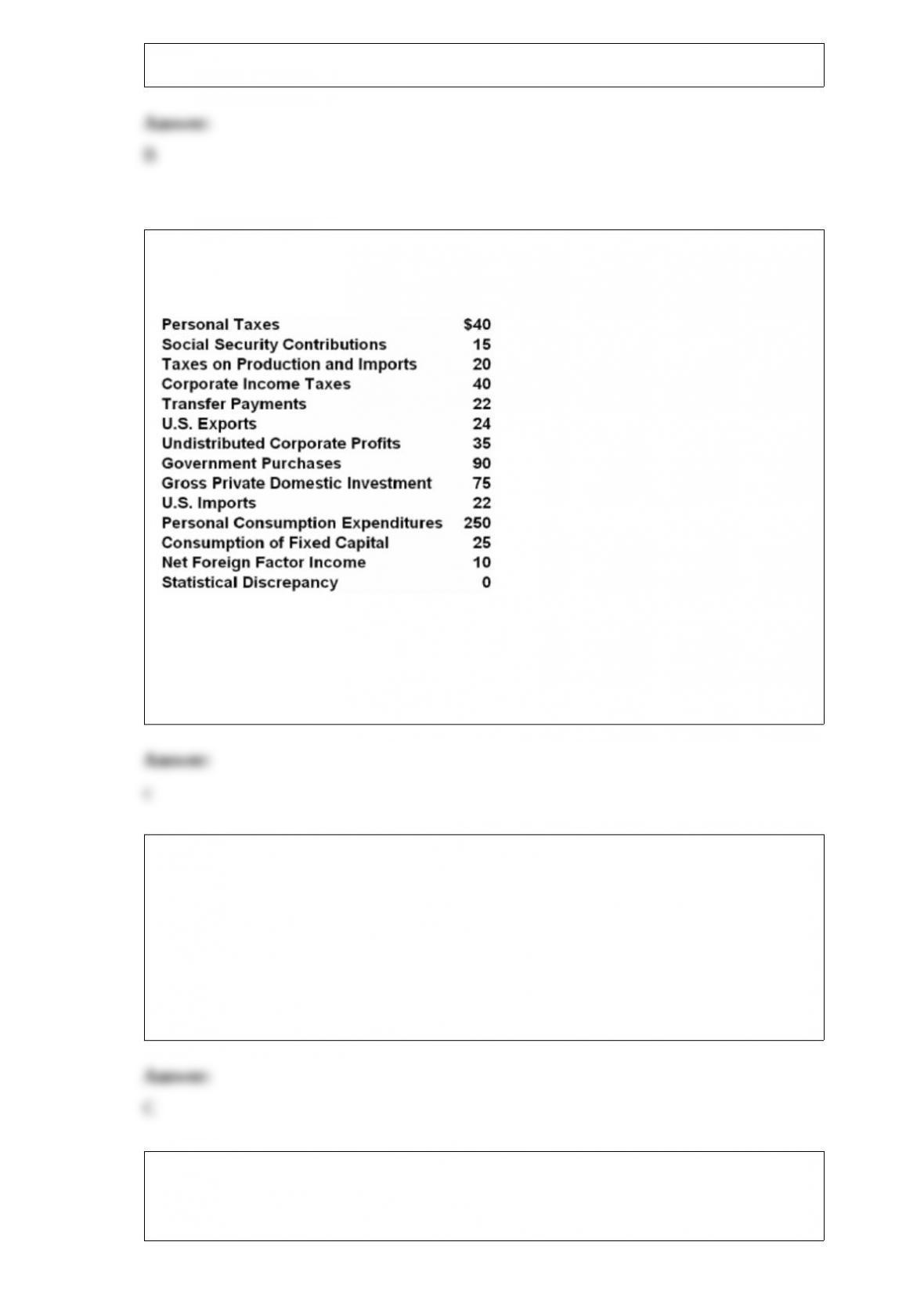
5) answer the next question(s) on the basis of the following data. all figures are in
billions of dollars.
refer to the above data. di is:
a.$284.
b.$329.
c.$274.
d.$402.
6) The aggregate expenditures model and the aggregate demand curve can be reconciled
because, other things equal, in the aggregate expenditures model:
A.changes in the price level have no effect on the equilibrium level of GDP.
B.an increase in the price level increases the real value of wealth.
C.the level of aggregate expenditures and therefore the level of real GDP vary inversely
with the price level.
D.the level of aggregate expenditures and therefore the level of real GDP vary directly
with the price level.
7) when a consumer is maximizing total utility,
a.the average utility from each dollar spent is the same.
b.total utility cannot be increased by reallocating expenditures among various products.

c.the total utility obtainable from each product is at a maximum.
d.the marginal utility of the last unit of each product purchased is zero.
8) economic historians date the start of the industrial revolution around the year 1776,
when james watt:
a.built the first factory for mass production.
b.invented the steam locomotive.
c.successfully lobbied british parliament for the enactment of patent legislation to
protect new inventions.
d.invented and built a more powerful and efficient steam engine.
9) since their introduction, prices of dvd players have fallen and the quantity purchased
has increased. this statement:
a.suggests that the supply of dvd players has increased.
b.suggests that the demand for dvd players has increased.
c.constitutes an exception to the law of demand in that they suggest an upward sloping
demand curve.
d.constitutes an exception to the law of supply in that they suggest a downward sloping
supply curve.
10) The asset demand for money is most closely related to money functioning as a:
A.unit of account.
B.medium of exchange.
C.store of value.
D.measure of value.