
Goods can be classified on the basis of whether their consumption is
A) internal and excludable.
B) rival and competitive.
C) includable and cooperative.
D) rival and excludable.
If 11 workers can produce 53 units of output while 12 workers can produce 56 units of
output, what is the marginal product of the 12th worker?
A) 0.16
B) 3
C) 4.67
D) 36
An efficiency wage
A) is higher than the market wage and tends to increase productivity.
B) is lower than the market wage and tends to increase productivity.
C) is higher than the market wage and tends to decrease productivity.
D) is lower than the market wage and tends to decrease productivity.
Households
A) have no influence on the circular flow in a market economy.
B) purchase resources in the factor market.
C) sell goods in the product market.
D) sell resources in the factor market.
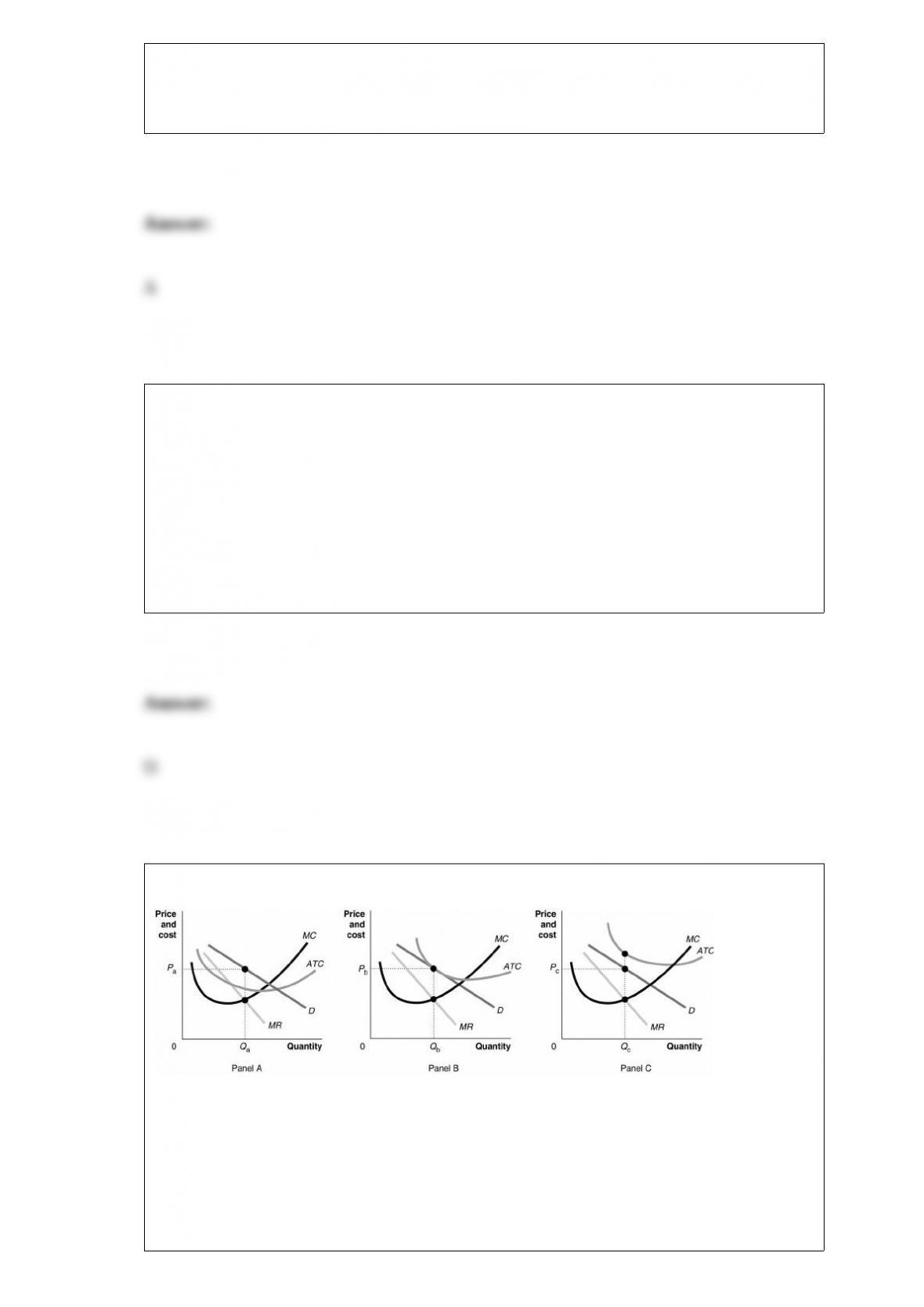
Figure 13-9
Which of the
graphs in the figure depicts a monopolistically competitive firm that is minimizing its
losses?
A) Panel A
B) Panel B
C) Panel C
D) Panel A and Panel C
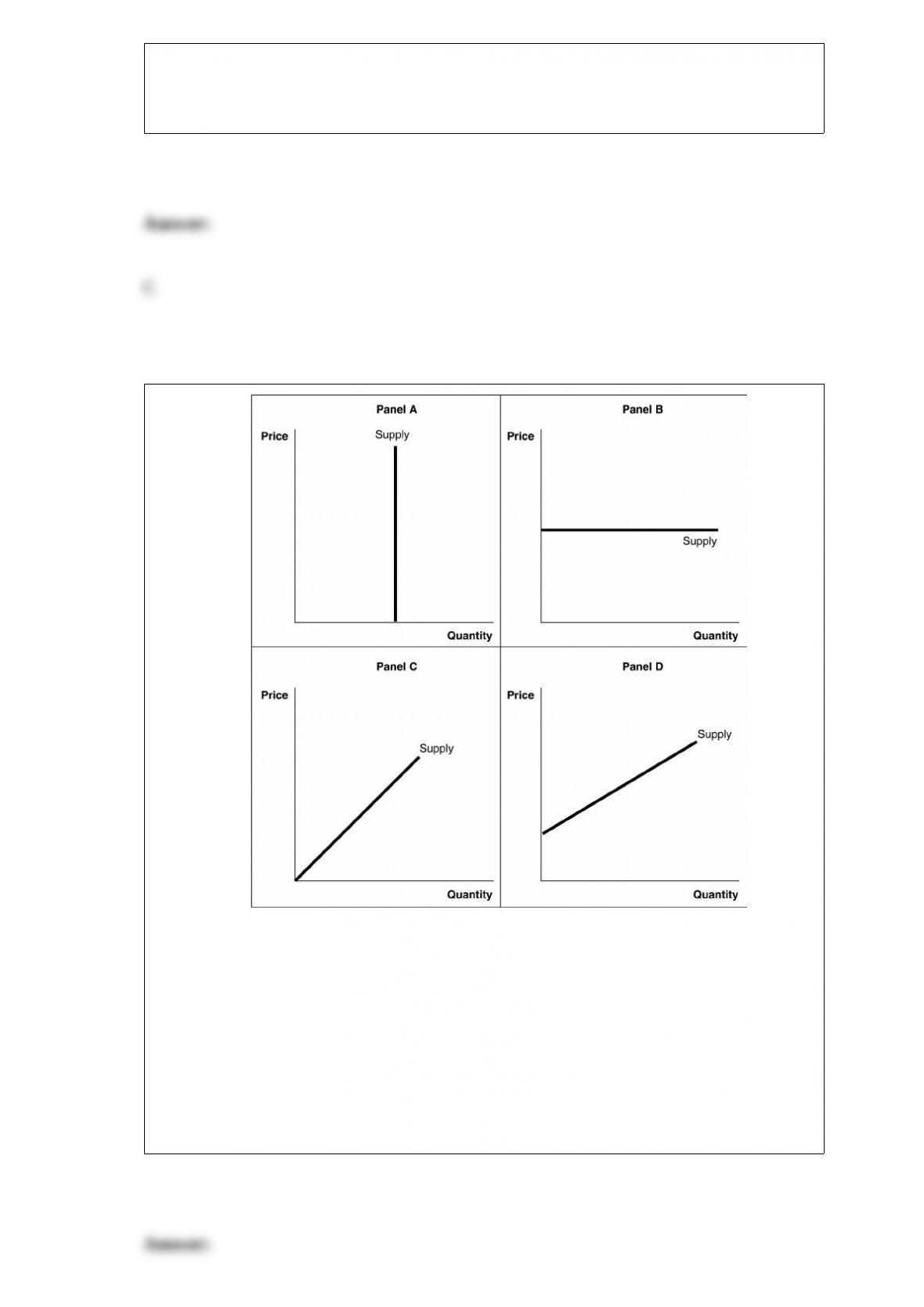
Figure 6-10
The supply curve on which price elasticity changes at every point is shown in
A) Panel A.
B) Panel B.
C) Panel C.
D) Panel D.

________ raised average tariff rates by over 50 percent in the United States in 1930.
A) The GATT
B) The WTO
C) NAFTA
D) The Smoot-Hawley Tariff
Suppose the marginal utilities for the first three cans of soda are 100, 80 and 60,
respectively. The total utility received from consuming 2 cans is
A) 20.
B) 80.
C) 90.
D) 180.
Which of the following would explain why accounting profit might be greater than
economic profit?
A) A firm has implicit costs as well as explicit costs.
B) A firm has only explicit costs.
C) A firm’s net income is greater than its accounting profit.
D) A firm’s net income is less than its accounting profit.
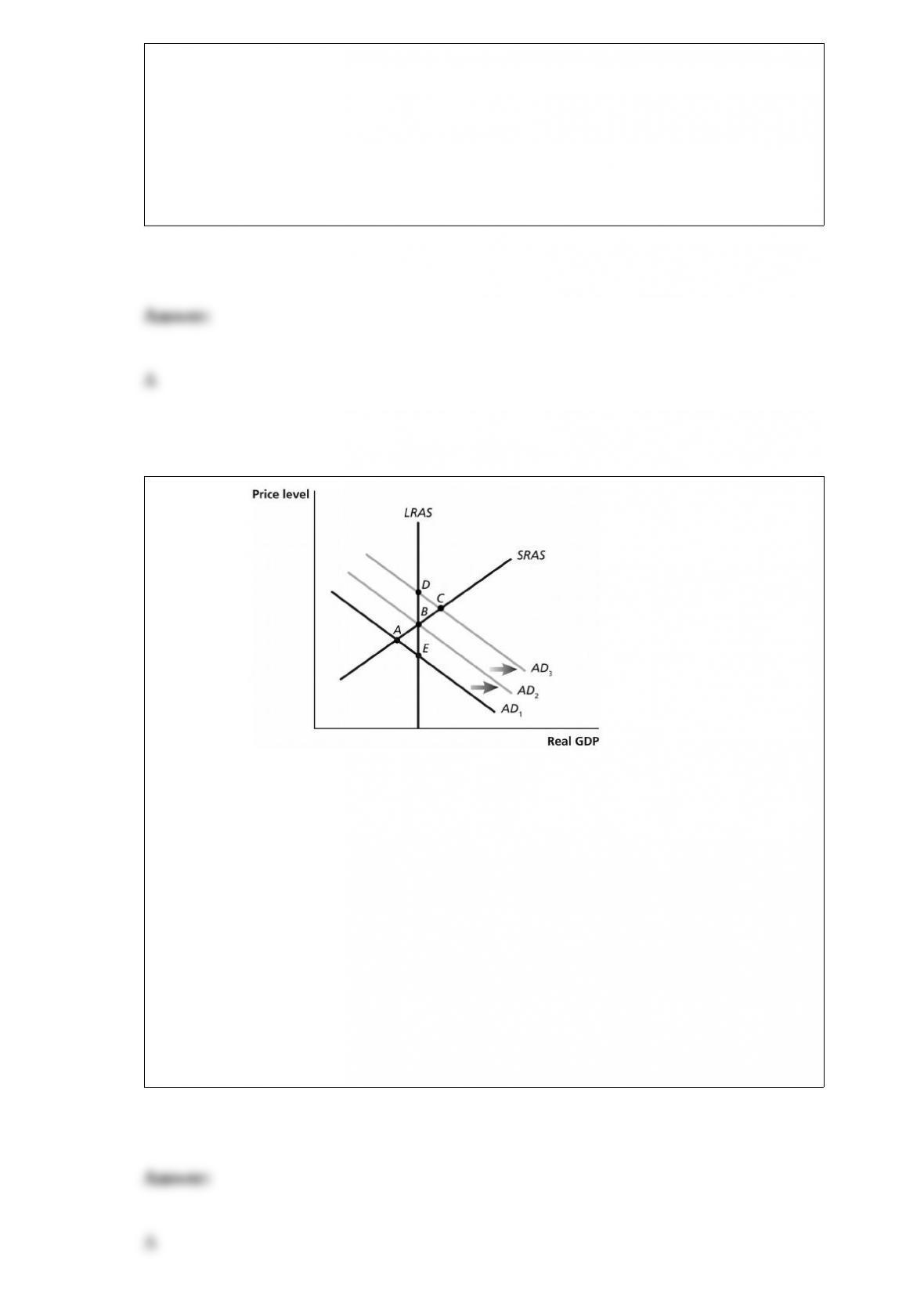
Figure 16-1
Suppose the economy is in short-run equilibrium below potential GDP and Congress
and the president lower taxes to move the economy back to long-run equilibrium. Using
the static AD–AS model in the figure above, this would be depicted as a movement from
A) A to B.
B) B to C.
C) C to B.
D) B to A.
E) A to E.

Which of the following is not part of the ‘state health exchanges” provision of the
Patient Protection and Affordable Care Act (ACA)?
A) Each state is required to establish an Affordable Insurance Exchange by 2014.
B) Small businesses with fewer than 50 employees will be exempt from being required
to participate in the program.
C) Low-income individuals will be eligible for tax credits to offset the costs of buying
health insurance.
D) Health insurance policies that meet certain specified requirements will be offered by
state-run agencies, by non-profit firms, or by the federal government.
Which of the following is considered expansionary fiscal policy?
A) Congress decreases the income tax rate.
B) Congress increases defense spending.
C) Legislation increases a college tuition deduction from federal income taxes.
D) The Arizona legislature cuts highway spending to balance its budget.
An economy can improve its standard of living by
A) organizing production so that the quantity of goods produced per hour will decrease.

B) reducing the amount of human capital workers have.
C) increasing the amount of capital available per hour worked.
D) all of the above
Of the following high-income countries, which has the lowest infant mortality rate?
A) Canada
B) Japan
C) the United Kingdom
D) the United States
In a typical year, ________ new firms open in the United States.
A) more than 600,000
B) more than 1 million
C) less than 200,000
D) approximately 125,000
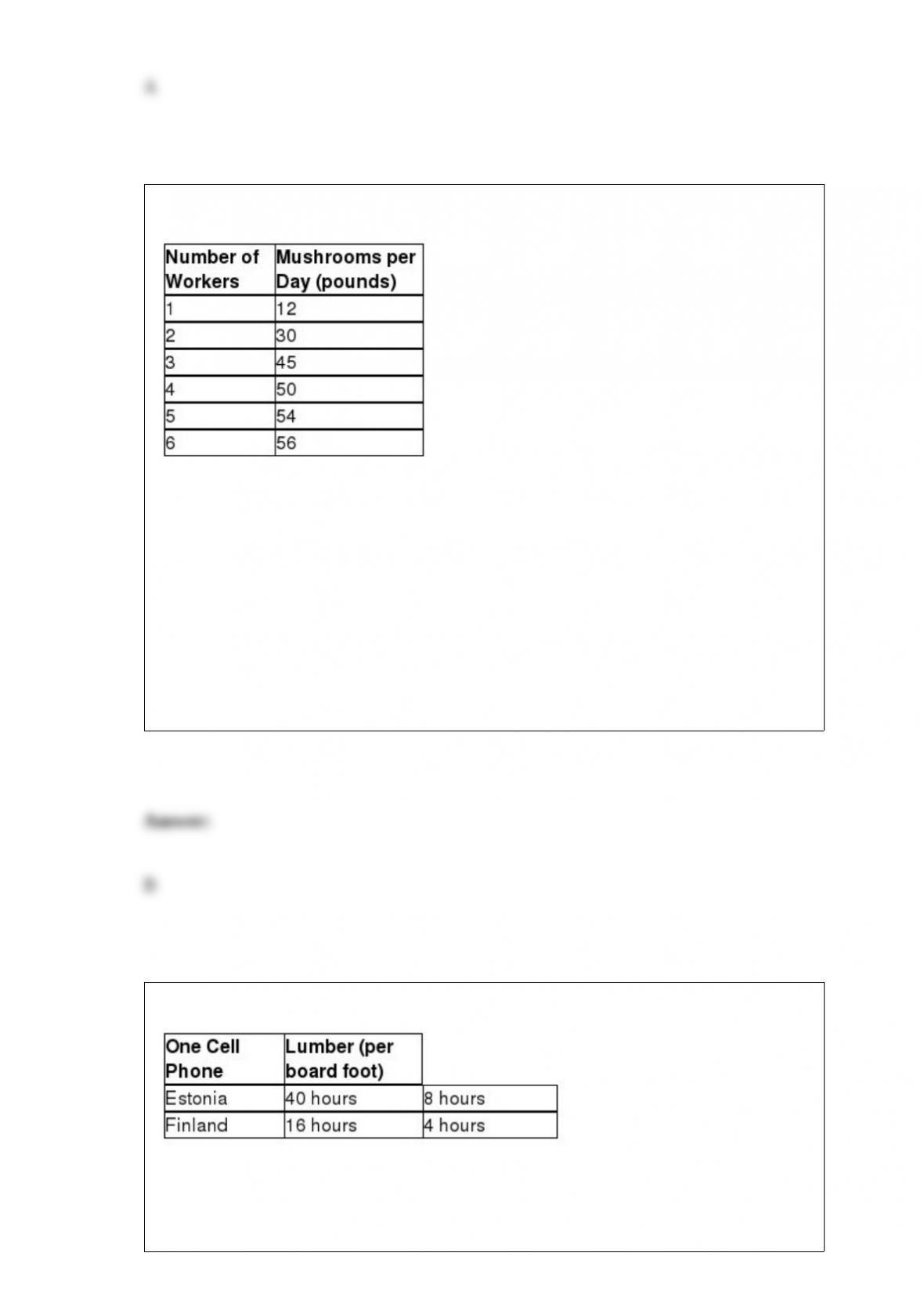
Table 11-1
Table 11-1 shows the technology of production at the Matsuko’s Mushroom Farm for
the month of May. Diminishing marginal returns sets in when the ________ worker is
hired.
A) 2nd
B) 3rd
C) 4th
D) None of the above; the production function displays increasing marginal returns.
Table 2-5
Table 2-5 shows the number of labor hours required to produce a cell phone and a board
foot of lumber in Estonia and Finland. Does either Estonia or Finland have an absolute
advantage and if so, in what product?
A) Finland has an absolute advantage in lumber.
B) Estonia has an absolute advantage in lumber.
C) Finland has an absolute advantage in both products.
D) Estonia has an absolute advantage in cell phones.
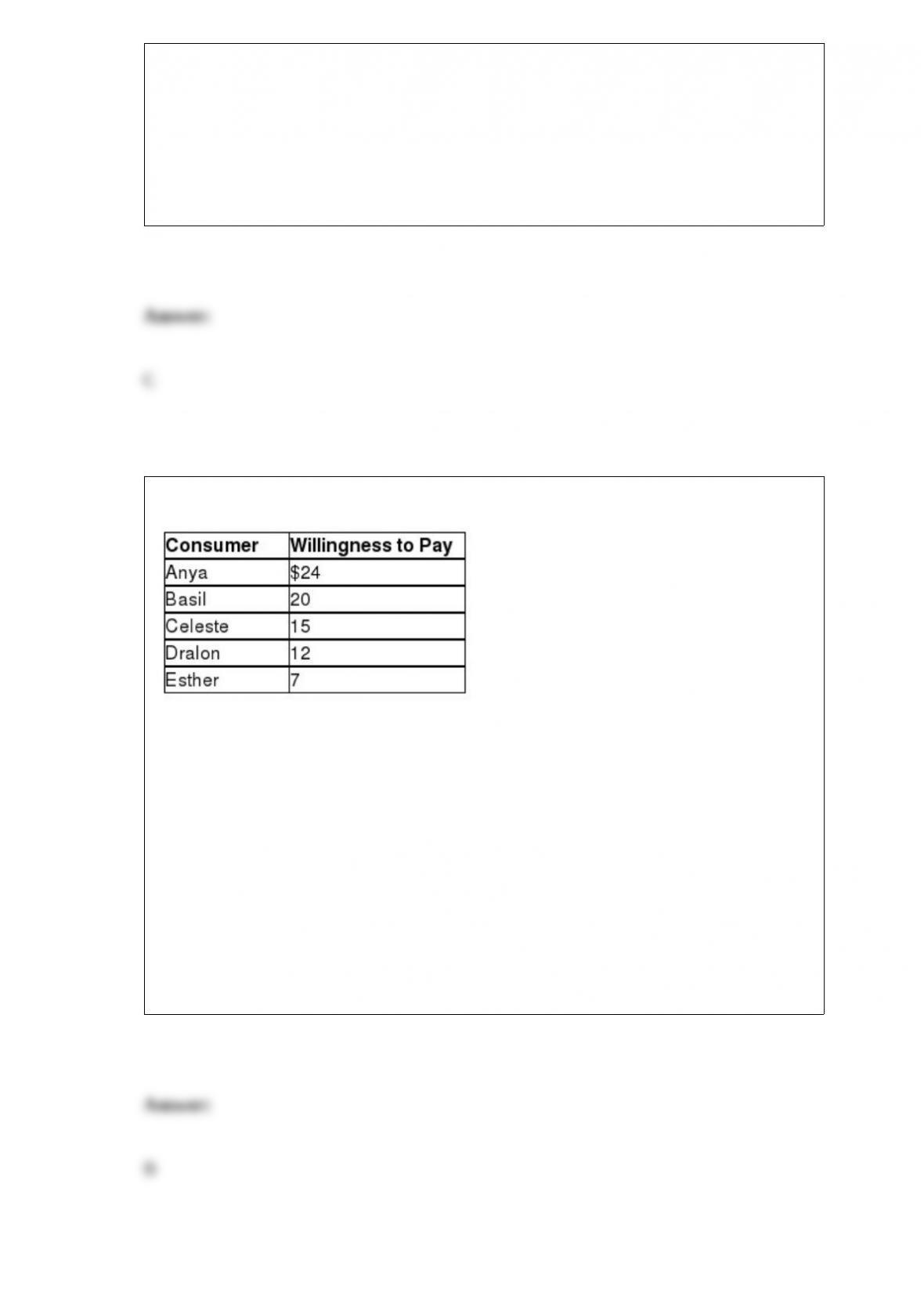
Table 4-2
The table above lists the highest prices five consumers are willing to pay for a theater
ticket. If the price of one of the tickets is $18,
A) Anya and Basil will each buy two tickets.
B) Basil will receive $2 of consumer surplus from buying one ticket.
C) Anya and Basil receive a total of $26 of consumer surplus from buying one ticket
each. No one else will buy a ticket.
D) Celeste, Dralon, and Esther will receive a total of $34 of consumer surplus since
they will buy no tickets.

Workers who dislike risk
A) prefer to be paid monthly rather than weekly or daily.
B) prefer a piece-rate compensation system to a salary system.
C) prefer a salary system to a commission compensation system.
D) prefer to be paid a salary rather than a wage.
Many economists ________ protectionism because it ________ consumers and
________ jobs in domestic industries that use protected products.
A) support; benefits; creates
B) criticize; causes losses to; eliminates
C) support; lowers prices for; raises wages for
D) criticize; unfairly rewards; relocates