
1) which of the following economic regions has experienced the most growth in real
gdp per capita since 1820?
a.japan
b.united states
c.latin america
d.western europe
2) Consider the following situations and determine whether they exhibit simultaneous
consumption, network effects, x-inefficiency or rent-seeking behavior. Assume the
businesses referenced function as monopolies.
(a)A pharmaceutical company discovers a vaccine for the common cold. The company
puts a significant effort into tests to get it FDA-approved and into hiring lawyers to
obtain a patent.
(b)An Internet service provider adds thousands of new customers.
(c)The head of a family-owned, major hotel chain decides to hire his wild, socialite
niece to work as an executive of the company after her reality TV career ends.
(d)An online profile company helps college and high school students from across the
country to connect with each other.
3) The U.S. economy achieved full employment in 2007:
A.despite negative net exports of $560 billion.
B.thanks to negative net exports of $560 billion.
C.but produced below its potential.
D.with the unemployment rate falling to 3 percent.
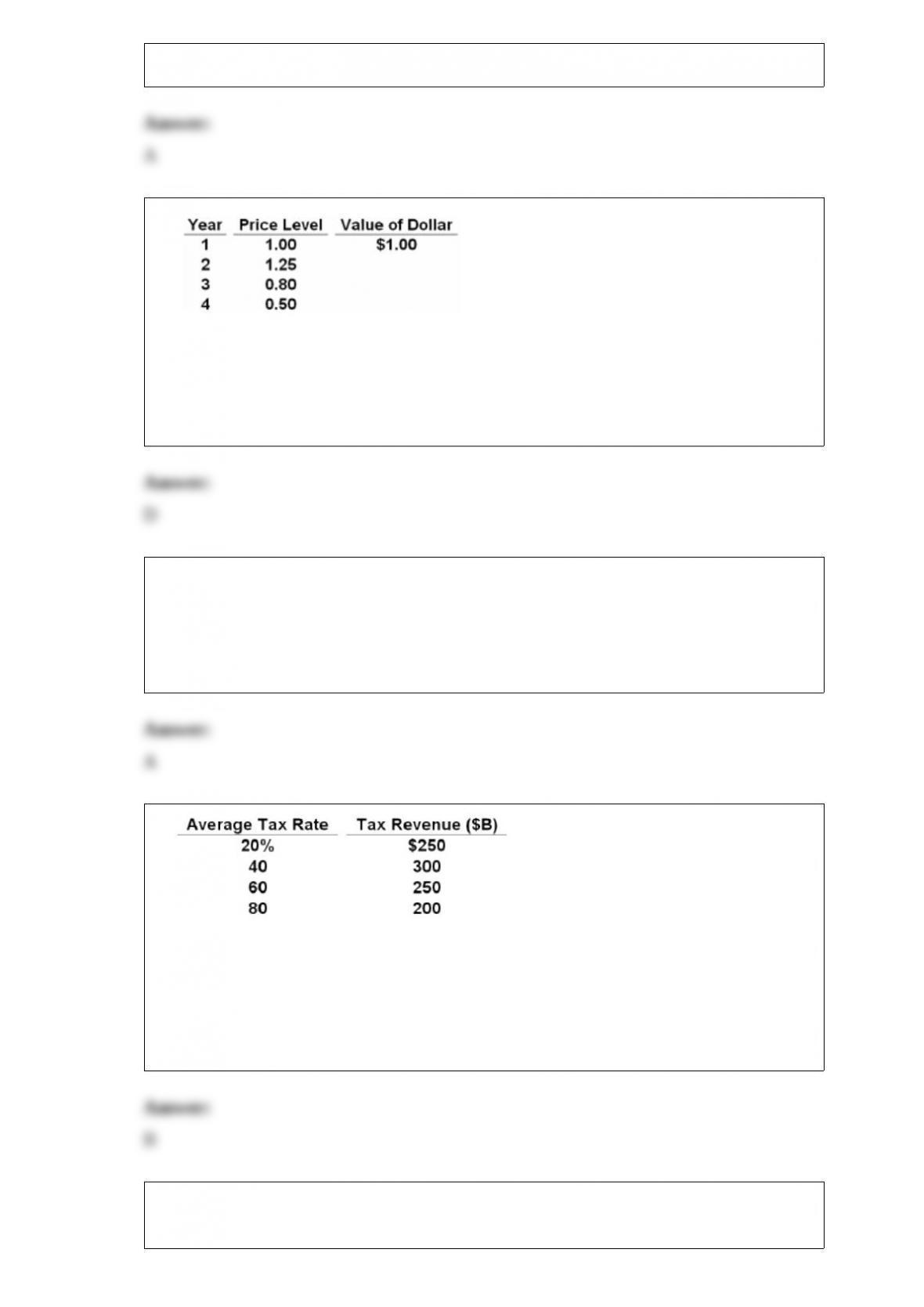
4)
Refer to the above table. The value of the dollar in year 4 is:
A.$1.25.
B.$.33.
C.$.50.
D.$2.00.
5) Interest is the:
A.price paid for the use of money.
B.opportunity cost of time.
C.expectation of a future return on investment.
D.reward for consuming rather than saving.
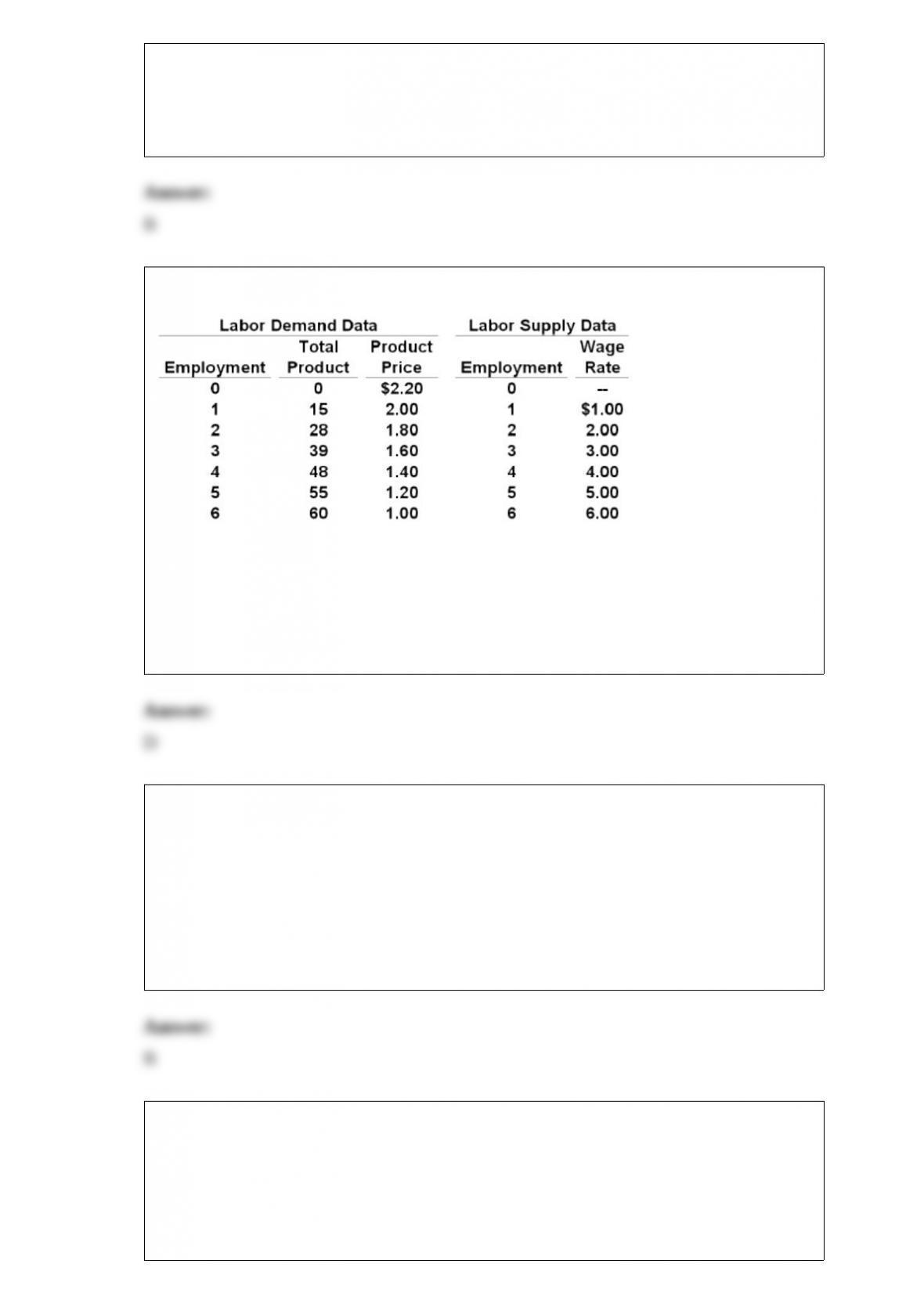
6)
Refer to the table above. If the current tax rate is 60 percent, supply-side economists
would advocate:
A.lowering tax rates to 20 percent, or lower if possible.
B.lowering tax rates to 40 percent.
C.keeping tax rates at 60 percent.
D.raising tax rates to 80 percent.
7) Since 1980 the difference between the earnings of college graduates and high school
graduates has:
A.fallen, thereby increasing income inequality.
B.increased, thereby increasing income inequality.
C.remained constant.
D.increased, thereby decreasing income inequality.
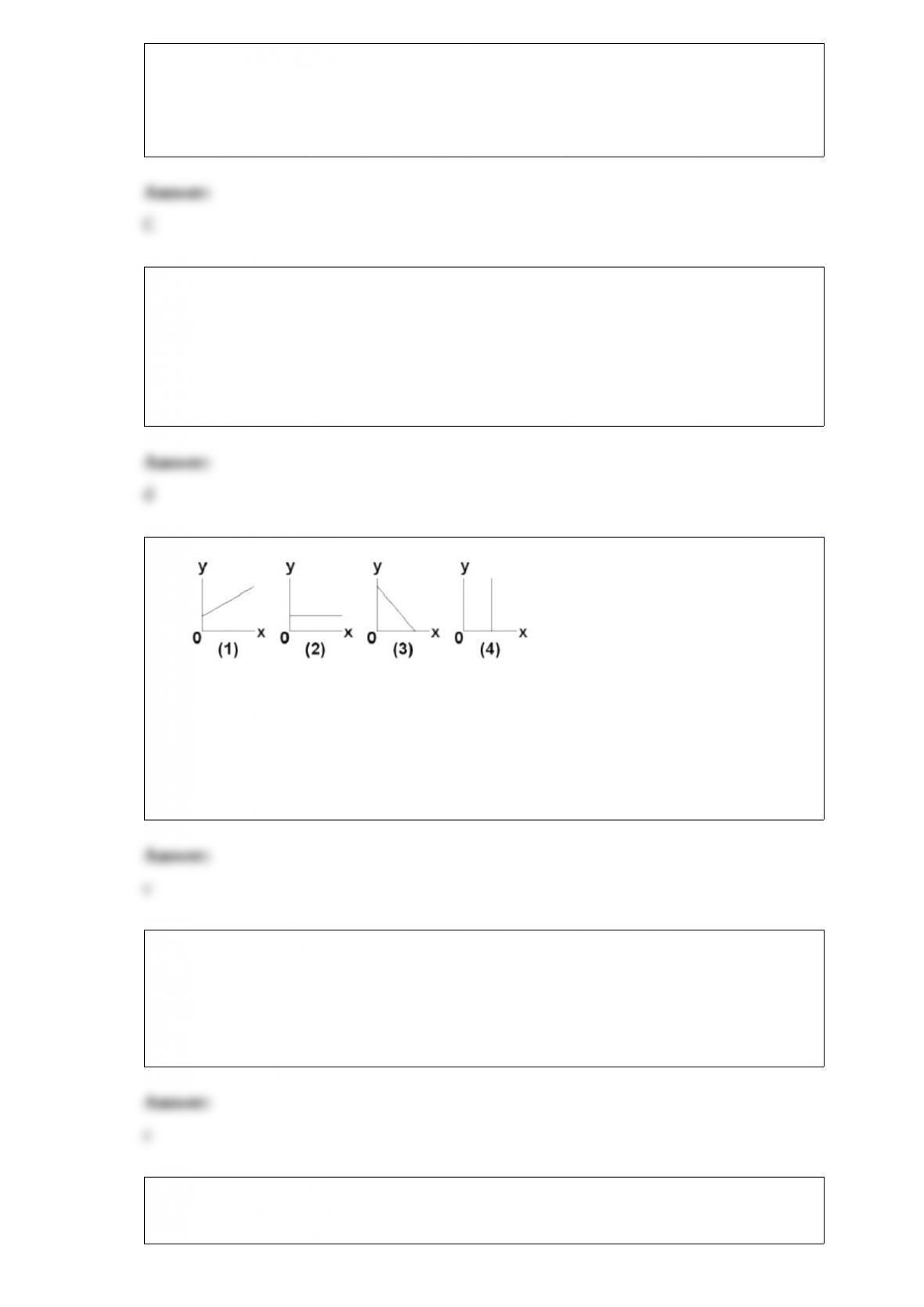
8)
Refer to the above data. How many workers will this profit-maximizing firm choose to
employ?
A.6
B.5
C.4
D.3
9) According to some supporters of the minimum wage, it has very small or even
nonexistent negative employment effects because:
A.the demand for minimum wage labor is highly elastic.
B.it reduces turnover among minimum wage workers, prompts employers to use them
more efficiently, and thus raises their average productivity.
C.it encourages teenagers to stay in school.
D.employers substitute lower fringe benefits for higher pay, keeping their compensation
costs the same.
10) The rationale for ability-to-pay taxation and the contention that those with large
incomes should pay more taxes both absolutely and relatively is that:
A.high-income receivers are generally in a better position to shift taxes than are
low-income receivers.
B.the transfer system is regressive and it is therefore essential to have an offsetting
progressive tax structure.
C.rational consumers spend their first dollars of income on the most urgently desired
goods and successive dollars on less essential goods.
D.taxes should be paid for financing public goods in direct proportion to the satisfaction
an individual derives from those goods.
11) compensating wage differentials:
a.refer to the wage premium given to domestic-born workers.
b.refer to the wage premium necessary to attract illegal immigrant workers.
c.discourage illegal immigrants from entering low wage labor markets.
d.will attract u.s. workers to undesirable jobs if the differential over less unpleasant
work is sufficiently high.
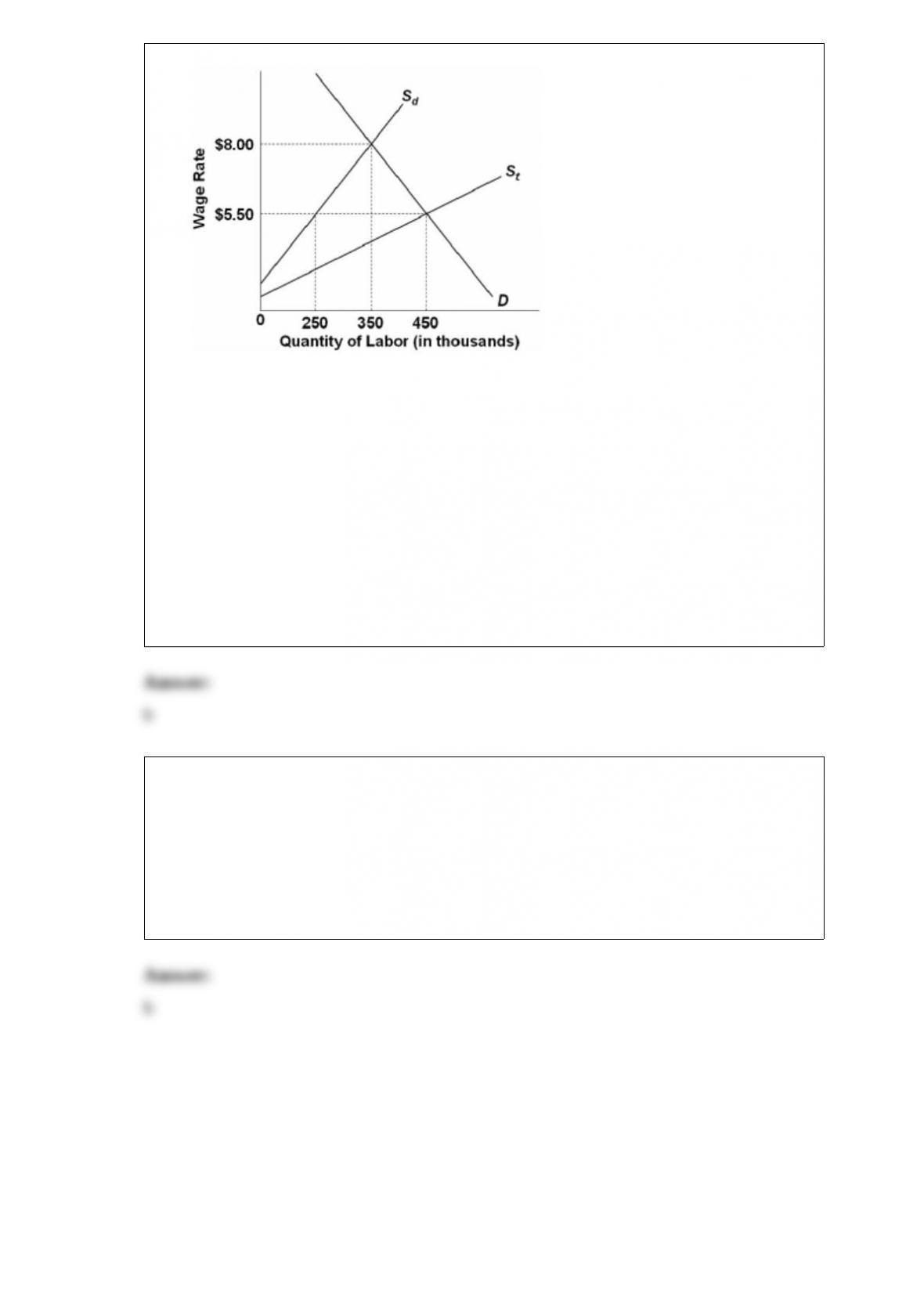
12)
answer on the basis of the relationships shown in the above four figures. the amount of
y is inversely related to the amount of x in:
a.2 only.
b.both 1 and 3.
c.3 only.
d.1 only.
13) the marginal tax rate is:
a.the difference between the total tax rate and the average tax rate.
b.the percentage of total income paid as taxes.
c.change in taxes / change in taxable income.
d.total taxes / total taxable income.
14) Census data indicate that currently the top fifth of all households receive about
________ times as much income as the bottom fifth.

A.fifteen
B.twelve
C.eight
D.three
15) As a percentage of GDP, U.S. exports are:
A.greater than U.S. imports.
B.about 20 percent.
C.considerably lower than in several other industrially advanced nations.
D.higher than in Canada but lower than Mexico.
16) In the United States, the rate of unionization is:
A.higher in mining than in government.
B.lower in transportation than agriculture.
C.higher in transportation than in retail trade.
D.lower in government than in finance, insurance, and real estate.
17) The very poorest low-income DVCs typically have relatively:
A.low rates of economic growth and relatively high rates of population growth.
B.high rates of economic growth and relatively low rates of population growth.
C.low rates of both population growth and economic growth.
D.high rates of both population growth and economic growth.
18) In the United States monetary policy is the responsibility of the:
A.U.S. Treasury.
B.Department of Commerce.
C.Board of Governors of the Federal Reserve System.
D.U.S. Congress.
19)
assumptions: 1) employers in this market are willing and able to ignore minimum wage
laws; 2) sd represents the supply of domestically-born (and legal immigrant) workers;
3) st represents the total supply of workers in this labor market (sd plus illegal
immigrants); and 4) unless otherwise stated, illegal immigration is not effectively
blocked by the government.
refer to the above figure. how many domestically-born (and legal immigrant) workers
will be hired at equilibrium?
a.200,000
b.250,000
c.350,000
d.450,000
20) suppose the price of local cable tv service increased from $16.20 to $19.80 and as a
result the number of cable subscribers decreased from 224,000 to 176,000. along this
portion of the demand curve, price elasticity of demand is:
a.0.8.
b.1.2.
c.1.6.
d.8.0