
Which of the following statements is false?
a. Average fixed cost continually declines as output increases.
b. Marginal cost is equal to the change in total cost divided by the change in quantity of
output.
c. The law of diminishing marginal returns states that, in the long run, as ever larger
amounts of a variable input are combined with fixed inputs, eventually the marginal
physical product of the variable input will decline.
d. The vertical distance between the AVC curve and the ATC curve declines as more
output is produced.
Country X has a high unemployment rate. It follows that country X is operating
a. beyond its production possibilities frontier (PPF).
b. on its PPF.
c. inside (below) its PPF.
d. at a productive efficient point.
e. b and d
Equilibrium price is $8 in a perfectly competitive market. For a perfectly competitive
firm, MR = MC at 150 units of output. At 150 units, ATC is $11, and AVC is $10. The

best policy for this firm is to __________ in the short run. Also, total fixed cost equals
__________ and total variable cost equals __________ for this firm.
a. continue to produce; $125; $1,375
b. shut down; $150; $1,500
c. shut down; $1,375; $1,250
d. continue to produce; $150; $1,500
e. There is not enough information to answer all parts of the question.
Economists assert that government regulation
a. has no costs if it has positive benefits.
b. has no benefits if it has positive costs.
c. always has benefits in excess of costs.
d. always has costs in excess of benefits.
e. has benefits that may be greater than, less than, or equal to the costs.
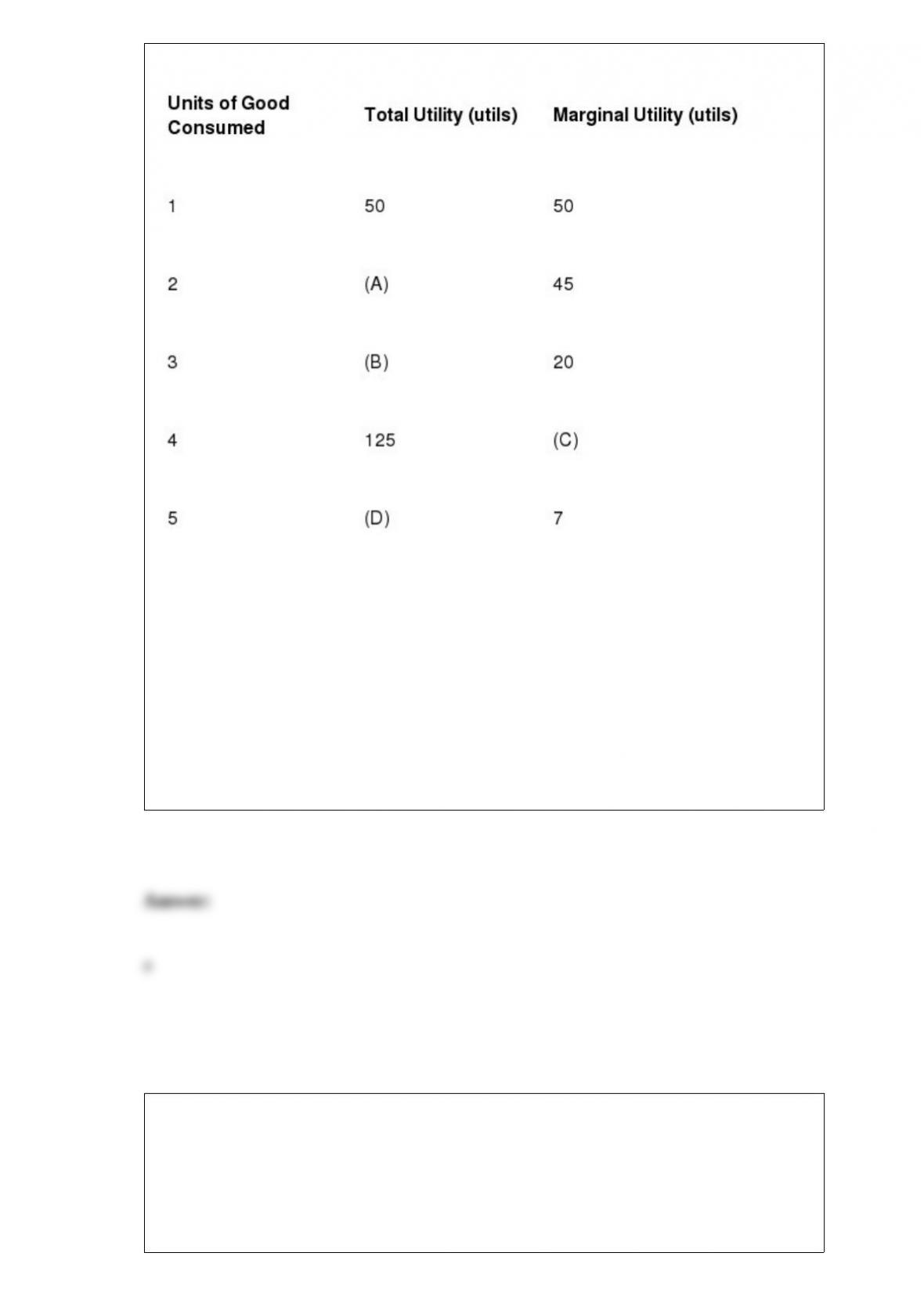
Refer to Exhibit 21-4.What value goes in blank (B)?
Exhibit 21-4
a. 115
b. 150
c. 45
d. 100
e. There is not enough information to answer this question.
Which of the following statements is false?
a. If there are only two goods, guns and butter, it is possible to produce more of both
goods through economic growth.
b. If there are only two goods, guns and butter, it is possible to produce more of both

goods if the economy is currently operating at a productive inefficient point.
c. If there are only two goods, guns and butter, it is possible to produce more of both
goods if the economy is currently operating at a productive efficient point.
d. If there are only two goods, guns and butter, producing more of one means producing
less of the other if the economy is currently operating at a productive efficient point.
Given two goods, X and Y, and their prices, PX and PY a consumer will maximize total
utility by allocating expenditures such that
a. MUX/PY = MUY/PX.
b. PY/MUX = PX/MUY.
c. MUX/PX = MUY /PY.
d. MUX = PX = MUY = PY = MU$.
e. MUX = MUY = PX = PY = MU$.
The Cellar-Kefauver Antimerger Act of 1950 was designed to
a. prevent one company from acquiring another company’s stock if the acquisition
reduces competition.
b. prevent one company from acquiring another company’s physical assets if the

acquisition reduces competition.
c. require that pending mergers be reported in advance to the Federal Trade
Commission and the Justice Department.
d. prevent price discrimination, exclusive dealing, and tying contracts.
e. prevent interlocking directorates.
Special interest group A receives a 1/10,000th slice of the economic pie (Real GDP).It is
seeking a transfer of $1,000.For group A to be indifferent between a transfer policy and
an economic growth policy, economic growth must be ________________ times larger
than the _________________.
a. 1,000; transfer
b. 10,000; transfer
c. 100; transfer
d. 10,000; transfer minus $1,000
e. 1,000; transfer; minus $10,000
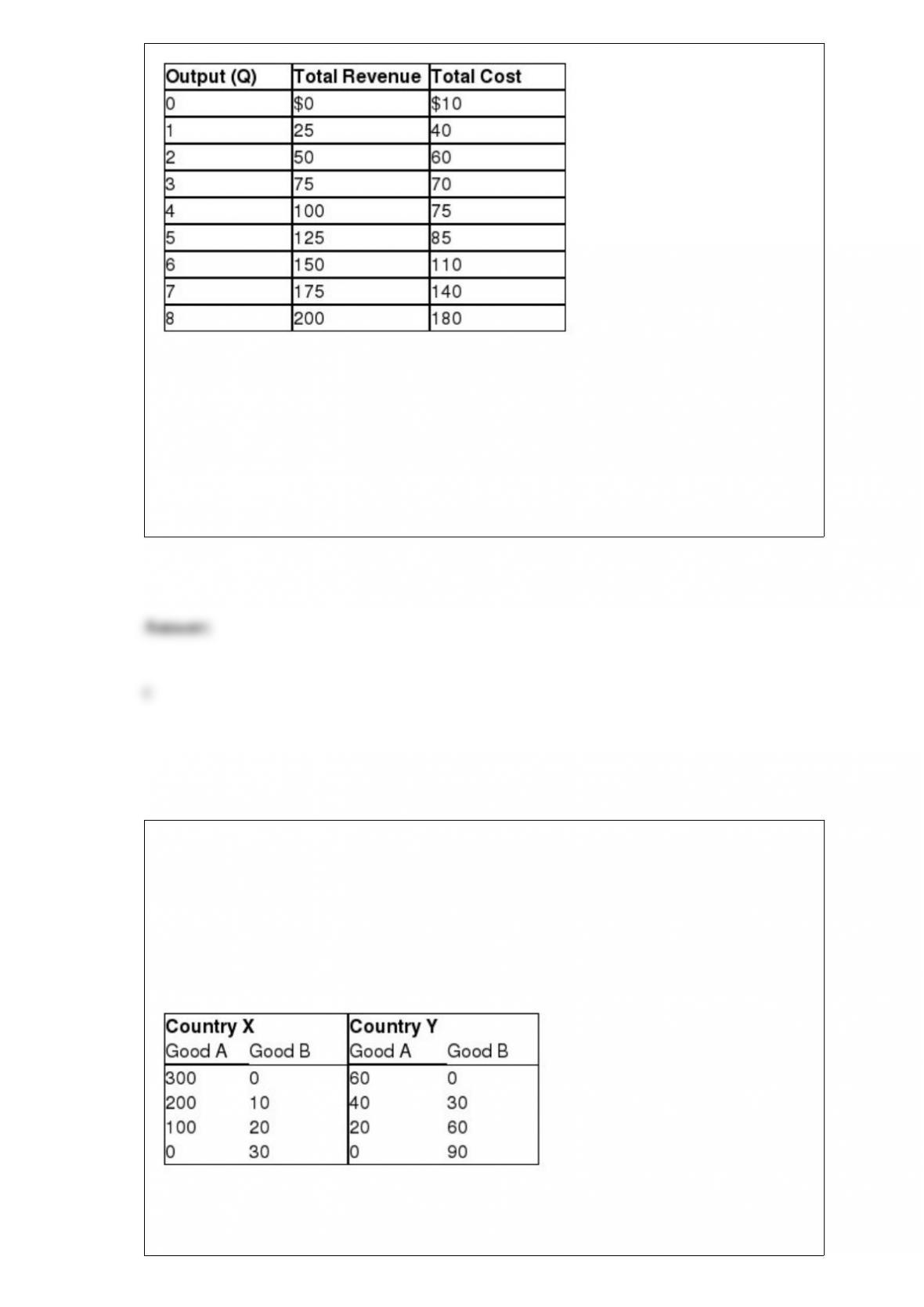
Refer to Exhibit 23-10.Is it possible for this firm to produce “too much” output?
Exhibit 23-10
a. Yes, any quantity above 2 units is too much output.
b. Yes, any quantity above 4 units is too much output.
c. Yes, any quantity above 6 units is too much output.
d. No, it is not possible for this firm to produce too much output.
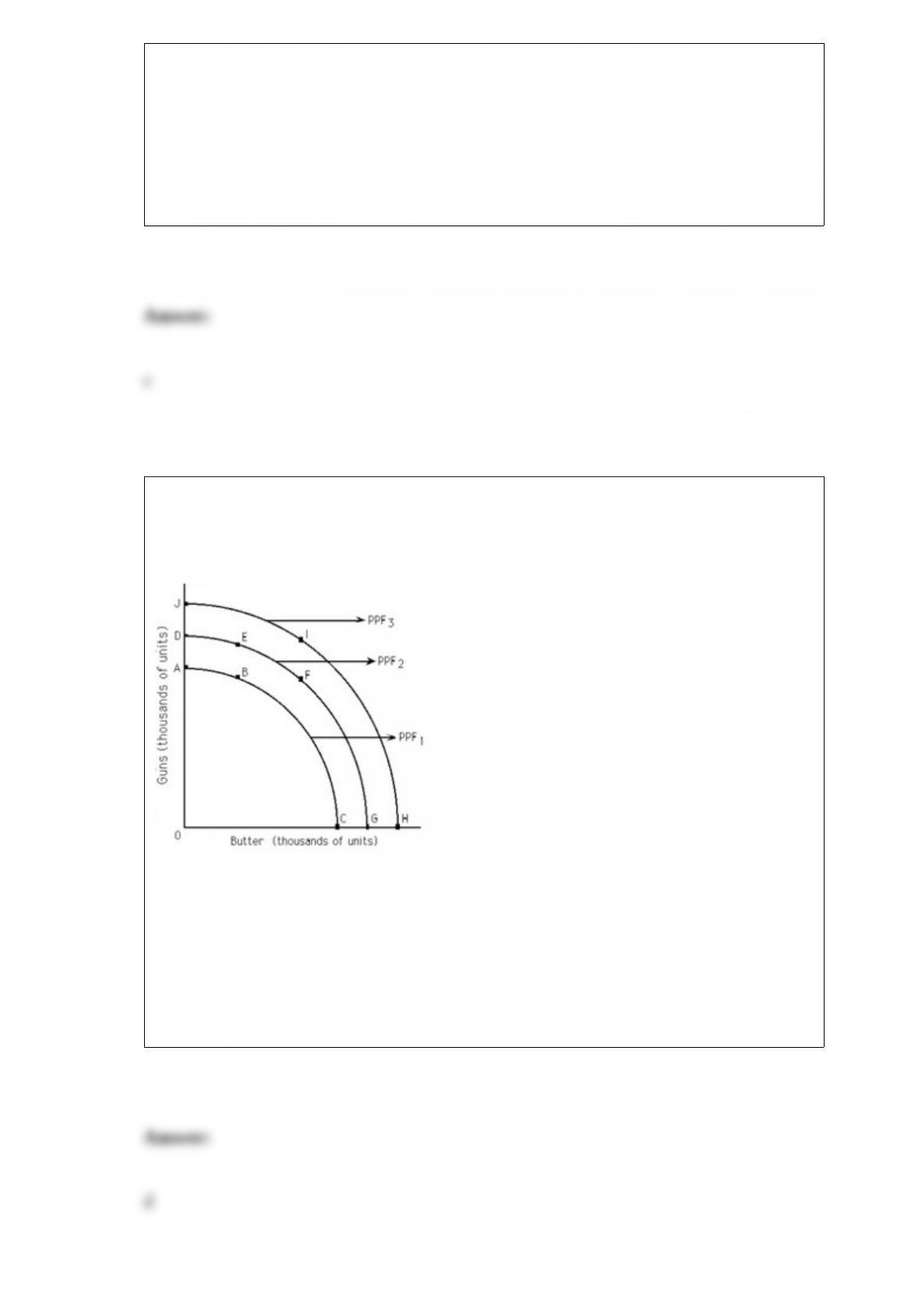
Refer to Exhibit 34-9. In the no specialization-no trade case, suppose country X
produces and consumes 100 units of good A and 20 units of good B. Country Y
produces and consumes 20 units of good A and 60 units of good B. If the two countries
specialize and trade, and the actual amounts traded are 125 units of good A for 25 units
of good B, how many more units of good B will country X consume by specializing and
trading?
Exhibit 34-9
a. 75
b. 25
c. 5
d. 105
e. 50
Refer to Exhibit 2-2. If PPF2 is the relevant production possibilities frontier, then point
__________ is unattainable.
Exhibit 2-2
a. A
b. G
c. D
d. J
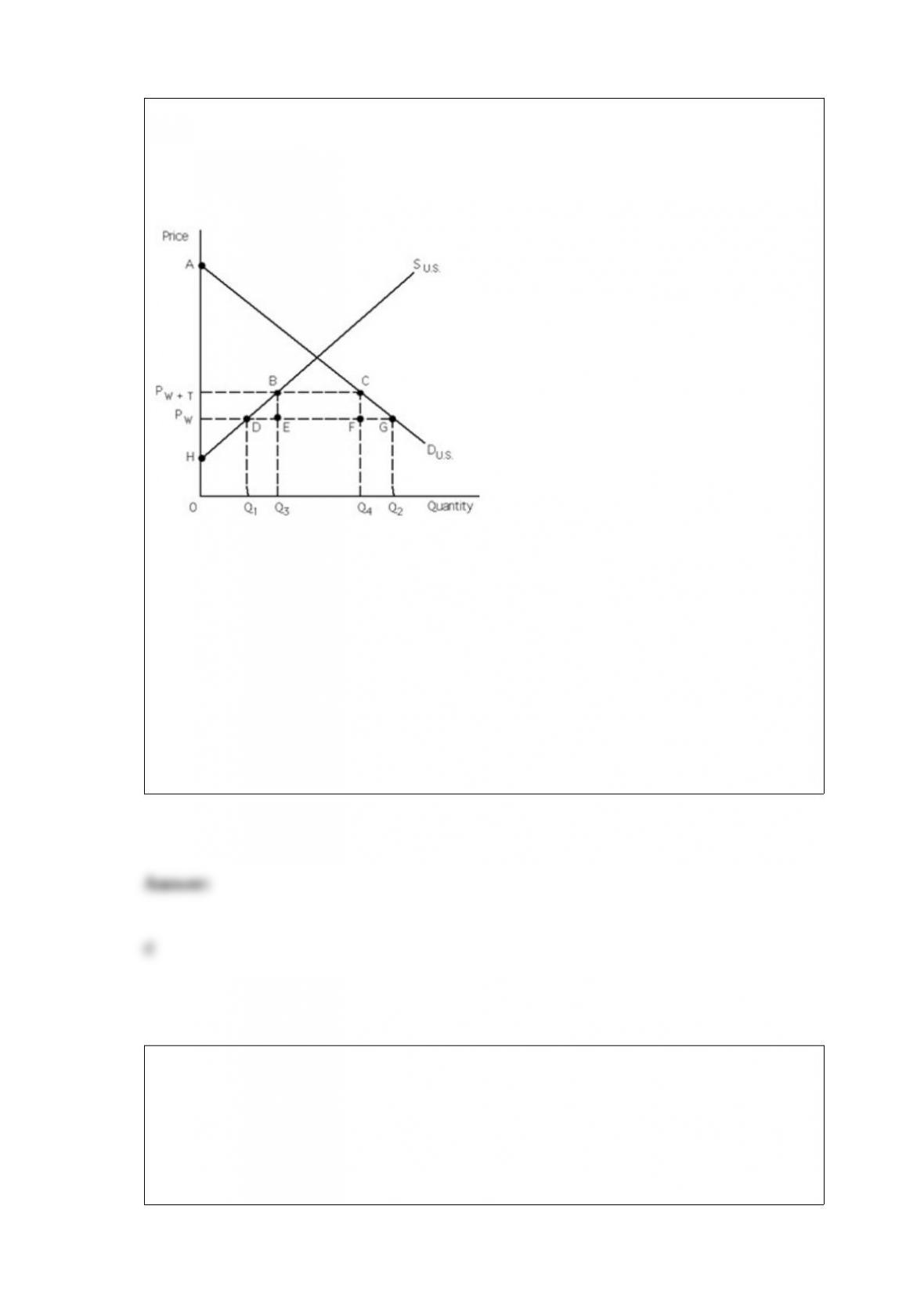
Refer to Exhibit 34-11. If the world price (PW) is operational in the market, then U.S.
imports equal
Exhibit 34-11
a. Q4 – Q2.
b. Q2 – Q3.
c. Q4 – Q3.
d. Q2 – Q1.
e. Q3 – Q1.
It is possible for the government to remove individuals from a prisoner’s dilemma
setting and make them better off.
a. True
b. False

At college X and at college Y, students pay $3,000 less than the equilibrium tuition. If
the supply of openings is the same at both colleges, it follows that a shortage of
openings will be greater at
a. college X than college Y.
b. college X than the surplus at college Y.
c. college Y than the surplus at college X.
d. college X than college Y if the demand is greater at college X.
e. college X than college Y if the demand is less at college X.
Refer to Exhibit 38-1. The coupon rate for bond D is

a. 11 percent.
b. 6.4 percent.
c. 3 percent.
d. 0.07 percent.
A consumer is in equilibrium if he or she derives the same
a. total utility from each good consumed.
b. total utility per dollar spent on each good consumed.
c. marginal utility from each good consumed.
d. marginal utility per dollar spent on each good consumed.
A seller has some information about a good that the buyer does not have. When would
the seller be most likely to provide the buyer with the currently “hidden” information?
a. When the seller thinks that providing the information will decrease the supply of the
good.
b. When the seller thinks that providing the information will increase the supply of the
good.

c. When the seller thinks that providing the information will decrease the demand for
the good.
d. When the seller thinks that providing the information will increase the demand for
the good.
e. There is not enough information to answer the question.
When the owners of a professional sports team pay an athlete a very high salary, it must
be true that
a. the nonpecuniary aspects of the job are very low.
b. the owners expect the MRP of that athlete to be greater than the amount the player is
paid.
c. the owners expect the MFC of that athlete to be greater than the amount the player is
paid.
d. b and c
e. all of the above
According to public choice theorists, people in the market sector and people in the
public sector have __________, and (but) sometimes act differently because of different
__________ arrangements in the two sectors.

a. different motives; institutional
b. the same motives; institutional
c. different views of politics; equilibrium
d. the same motives; equilibrium
e. none of the above
The nonmoney benefits a person may receive in a job are sometimes referred to by
economists as
a. nonpayment benefits.
b. pecuniary benefits.
c. nonpecuniary benefits.
d. internal payments.
Suppose that in the year 2050, one gallon of water is more expensive than a one-carat
diamond. What could explain this?
a. Water must be much more scarce in the world of 2050 than today.
b. Diamonds must be much less scarce in the world of 2050 than today.

c. The diamond-water paradox does not hold for any pair of goods in the future.
d. The law of diminishing marginal utility no longer holds.
e. a or b
If consumers prefer earlier availability of goods to later availability, they are said to
have a __________ rate of time preference.
a. positive
b. negative
c. rational
d. roundabout
e. none of the above