
Which of the following is a characteristic of capitalism?
a. Equality of income.
b. Government decision-making is preferred to decentralized decision-making.
c. Market determination of prices and quantity.
d. Government ownership of all capital.
The principle of diminishing marginal utility says that:
a. as more of a good or service is consumed, demand decreases.
b. as more of a good or service is consumed, the price will rise.
c. the marginal utility of additional units consumed increases.
d. an increase in income causes demand to increase.
e. the marginal utility of additional units consumed decreases.
Economists define a labor market with only one buyer to be:
a. a monopoly.
b. an oligopoly.
c. a monopsony.
d. perfectly competitive.
e. backward bending.

Which of the following would be an example of a public good?
a. A candy bar.
b. A painting by Monet.
c. A taxi cab.
d. A sunset.
e. The beach.
If Herbert, the hair stylist, raises the price of his cuts from $13 to $15 and finds the
number of cuts falls from 300 to 260, then the demand for Herbert’s cuts in this range
is:
a. price inelastic.
b. price elastic.
c. unit elastic.
d. cross elastic.
e. income inelastic.
Consider the market for bicycles. If a dealer cuts prices by 10 percent and sells 20

percent more bikes, then demand for bicycles is:
a. inelastic, and total revenue will increase.
b. elastic, and total revenue will increase.
c. inelastic, and total revenue will decrease.
d. elastic, and total revenue will decrease.
e. unit elastic, and total revenue will remain the same.
Which of the following is a macroeconomics topic?
a. Wages of textile workers in the Northeast.
b. The cost of producing 10,000 bookcases.
c. The economy’s annual growth rate.
d. National demand for fish.
e. Effects of farm subsidies on food prices.
The Clayton Act:
a. was passed in 1890.
b. created the Federal Trade Commission.
c. abolished antitrust policy in this country.
d. attempted to give explicit content to what formed an antitrust violation.
e. made mergers between corporations illegal.

Which of the following best defines the vicious circle of poverty?
a. Countries are poor because they cannot afford to save and invest.
b. Countries are poor because of high population growth.
c. Countries are poor because of lack of education and training for workers.
d. Countries are poor because of poor international credit.
A nation benefits from international trade if it:
a. exports more than it imports.
b. imports more than it exports.
c. imports goods for which it is a low opportunity cost producer.
d. exports goods for which it is a low opportunity cost producer.
Exhibit 6-3 Marginal utility data for goods X and Y
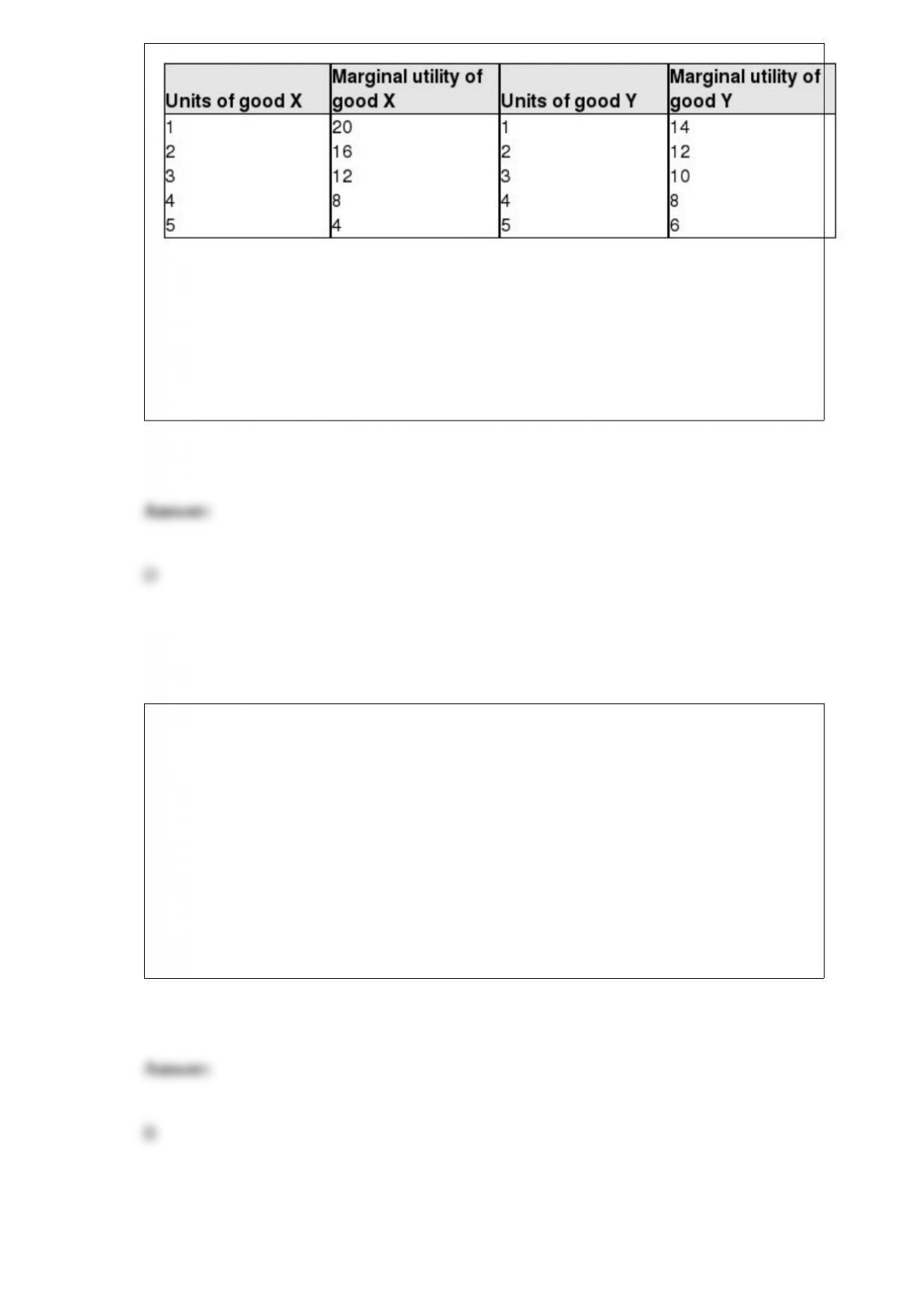
As shown in Exhibit 6-3, assume that the price of both goods is $1 per unit. To
maximize total utility without a budget, you should consume:
a. neither X nor Y.
b. more of X and less of Y.
c. less of X and more of Y.
d. more of both X and Y.
e. less of both X and Y.
Which of the following cause(s) economic growth?
a. c and d.
b. d and e.
c. The production of more scarce goods
d. A technological improvement
e. The production of more capital goods
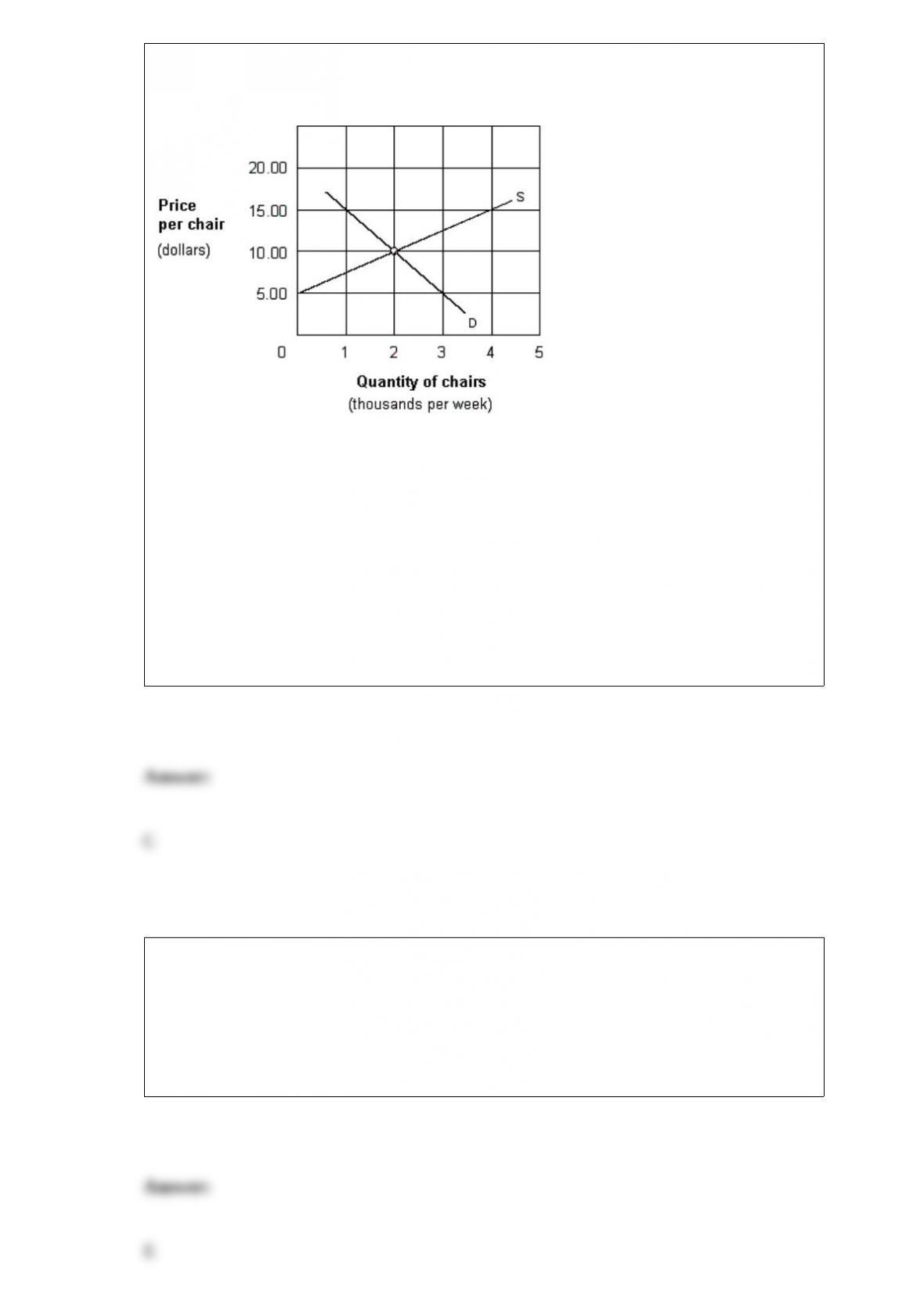
Exhibit 3-16 Supply and demand curves for chairs
In Exhibit 3-16, assume that the market price of chairs is $5 each. This price is:
a. an equilibrium price.
b. not an equilibrium price, since there is an excess supply at a price of $5.
c. not an equilibrium price, since there is an excess demand at a price of $5.
d. not an equilibrium price, since the rate at which chairs are being supplied is great
than the rate at which they are being demanded.
An economic forecast:
a. will always be true.
b. is more reliable than a weather forecast.
c. will never provide valuable information.
d. should not be relied upon to predict economic events.
e. is always based upon a Ceteris paribus condition.
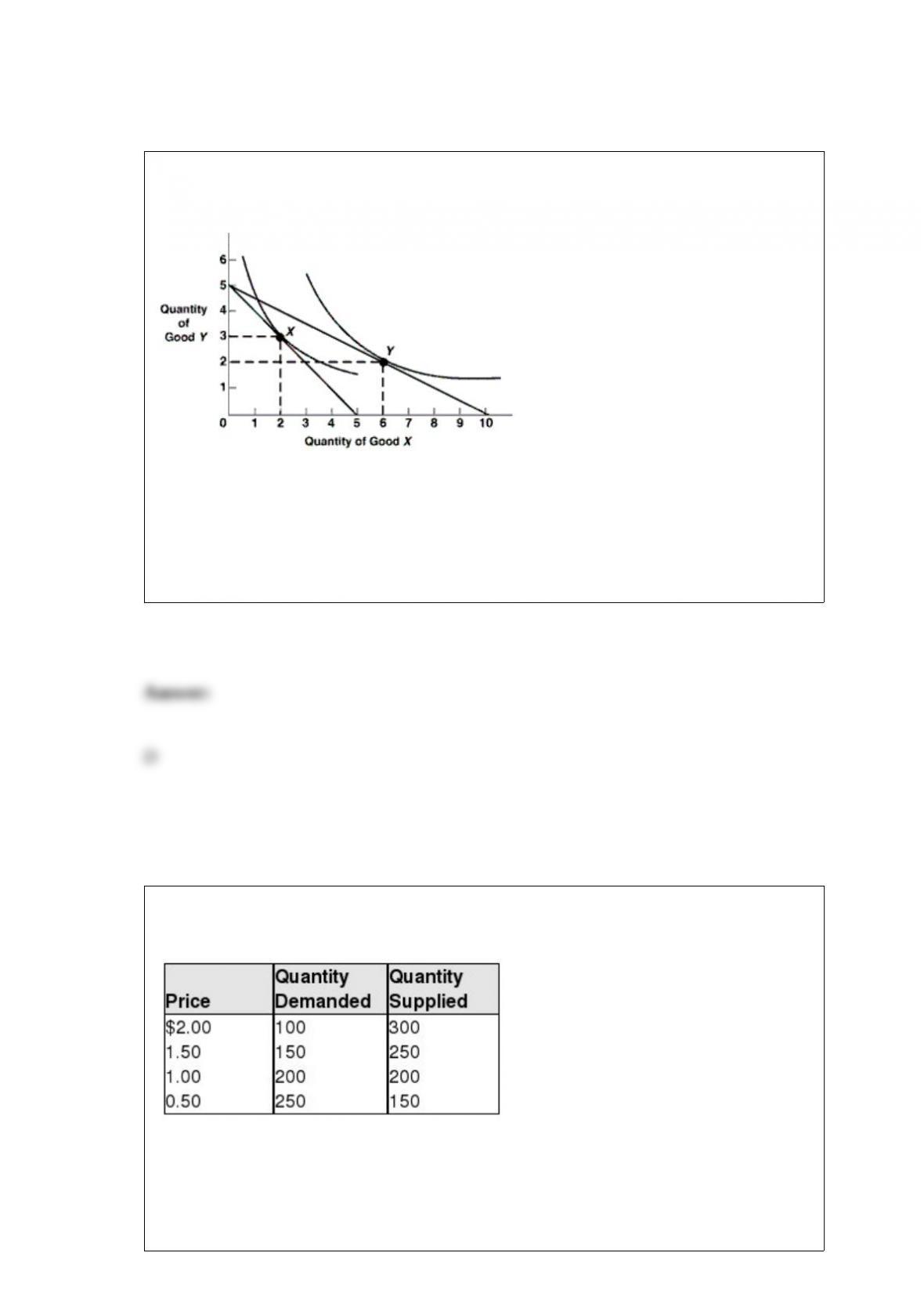
Exhibit 6A-6 Consumer equilibrium
Given the budget lines and indifference curves shown in Exhibit 6A-6, if the budget
line shifts, then the equilibrium points X and Y:
a. are equal in total utility.
b. result from a decrease in the consumer’s budget.
c. result from a decrease in the price of good Y.
d. are two points along a downward sloping demand curve for good X.
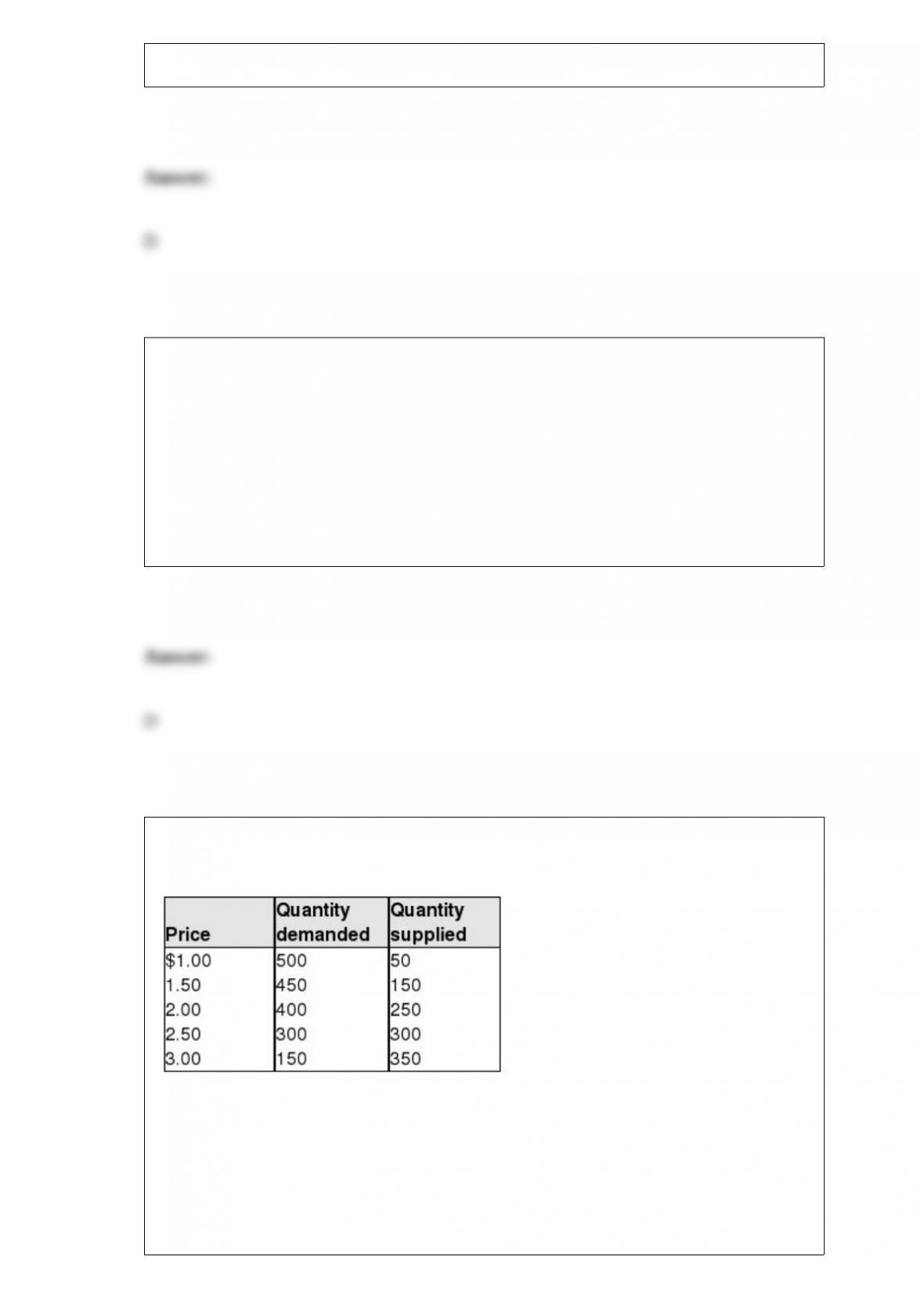
Exhibit 4-9 Data on supply and demand
In Exhibit 4-9 the equilibrium price and quantity in the market are:
a. $5.50, 200. c. $2.00, 100.
b. $1.50, 300. d. $1.00, 200.
The automobile, steel, and oil markets are all examples of:
a. perfectly competitive markets.
b. monopolies.
c. monopolistically competitive markets.
d. oligopolies.
Exhibit 4-1 Supply and demand data
In Exhibit 4-1, suppose that a reduction in the price of an important input used to
produce the good causes an increase in quantity supplied of 150 units at every price
level. Assuming that demand does not change, the new equilibrium price will be:
a. $1.00. c. $2.00.

b. $1.50. d. $2.50.
If a firm has substantial market power, it must be operating in an industry that would be
classified as:
a. a monopoly or oligopoly.
b. perfectly competitive.
c. monopolistically competitive.
d. perfectly competitive or monopolistically competitive.
e. perfectly competitive or a monopoly.
If demand for a good is price elastic, then the price elasticity will be:
a. equal to one.
b. equal to zero.
c. greater than one.
d. less than one.
e. less than zero.
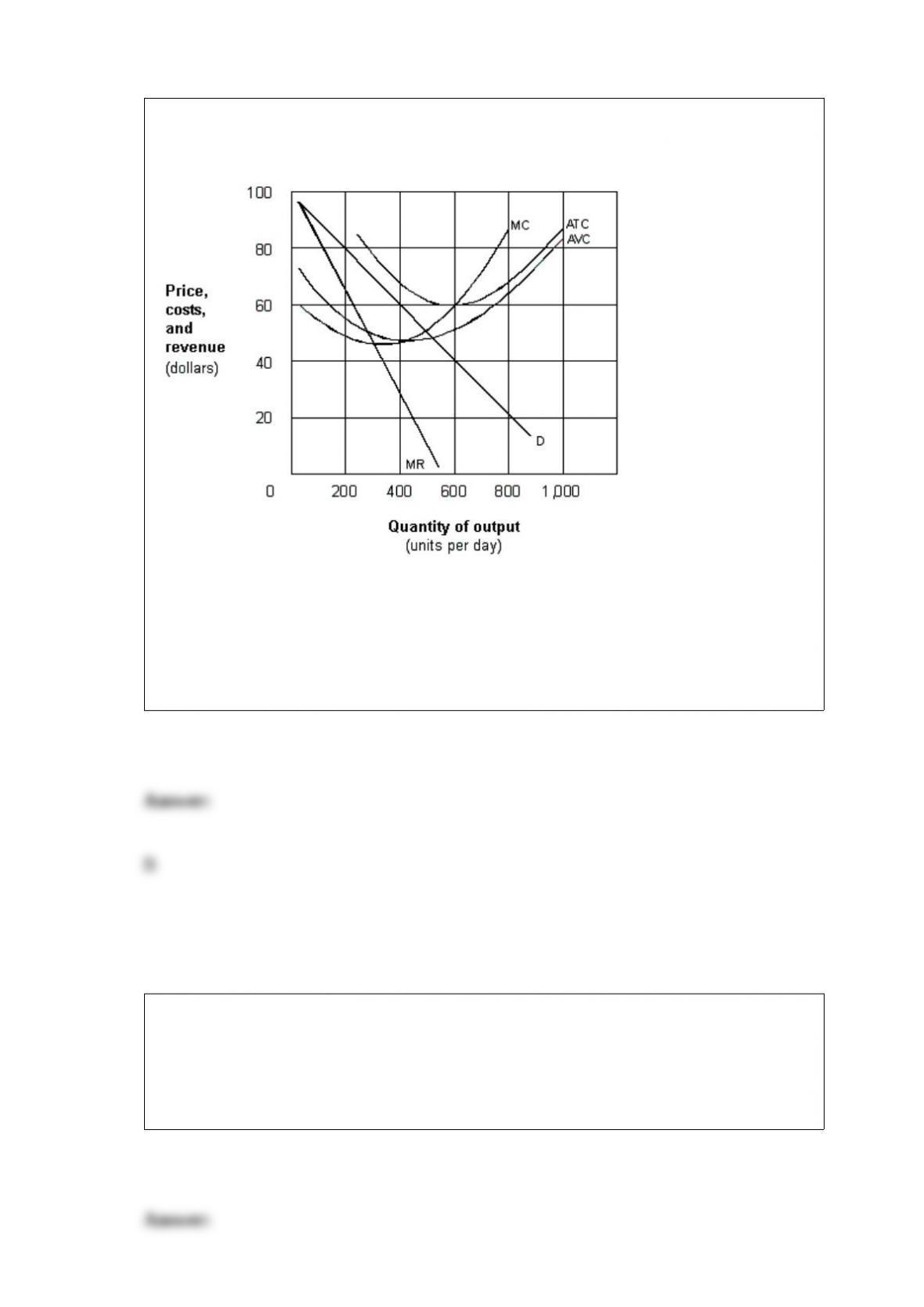
Exhibit 9-9 A monopolist
In Exhibit 9-9, the profit-maximizing or loss-minimizing output for the monopolist is:
a. 200 units per day.
b. 300 units per day.
c. 400 units per day.
d. 500 units per day.
e. 600 units per day.
The process of accumulating capital is called:
a. capitalization. c. investment.
b. loanable funds. d. debt management.