
The Organization of Petroleum Exporting Countries (OPEC) controls about 75 percent
of the world’s proven oil reserves. Economists refer to OPEC as a cartel because
A) OPEC is a monopoly, but it is located outside of the boundaries of any one country.
This is the definition of a cartel.
B) this is the term used for an oligopoly that is controlled by national governments
rather than private firms.
C) it is a group of firms that collude to restrict output to increase prices and profits.
D) this is the term economists use to describe an oligopoly that sells a standardized
product, such as oil, rather than a differentiated product, such as automobiles.
Household wealth is defined as the value of a household’s
A) assets minus the value of its liabilities.
B) assets plus the value of its liabilities.
C) assets.
D) liabilities.
In the United States in 2012, of the firms that employed more than 200 workers that
offer health insurance to workers, about ________ of employees did not accept the
coverage.
A) 2%.

B) 38%.
C) 62%.
D) 98%.
Suppose when the price of jean-jackets increased by 10 percent, the quantity supplied
increased by 16 percent. Based on this information the price elasticity of supply of
jean-jackets is
A) 0.625.
B) 6%.
C) 1.6.
D) 1.6%.
Figure 4-3
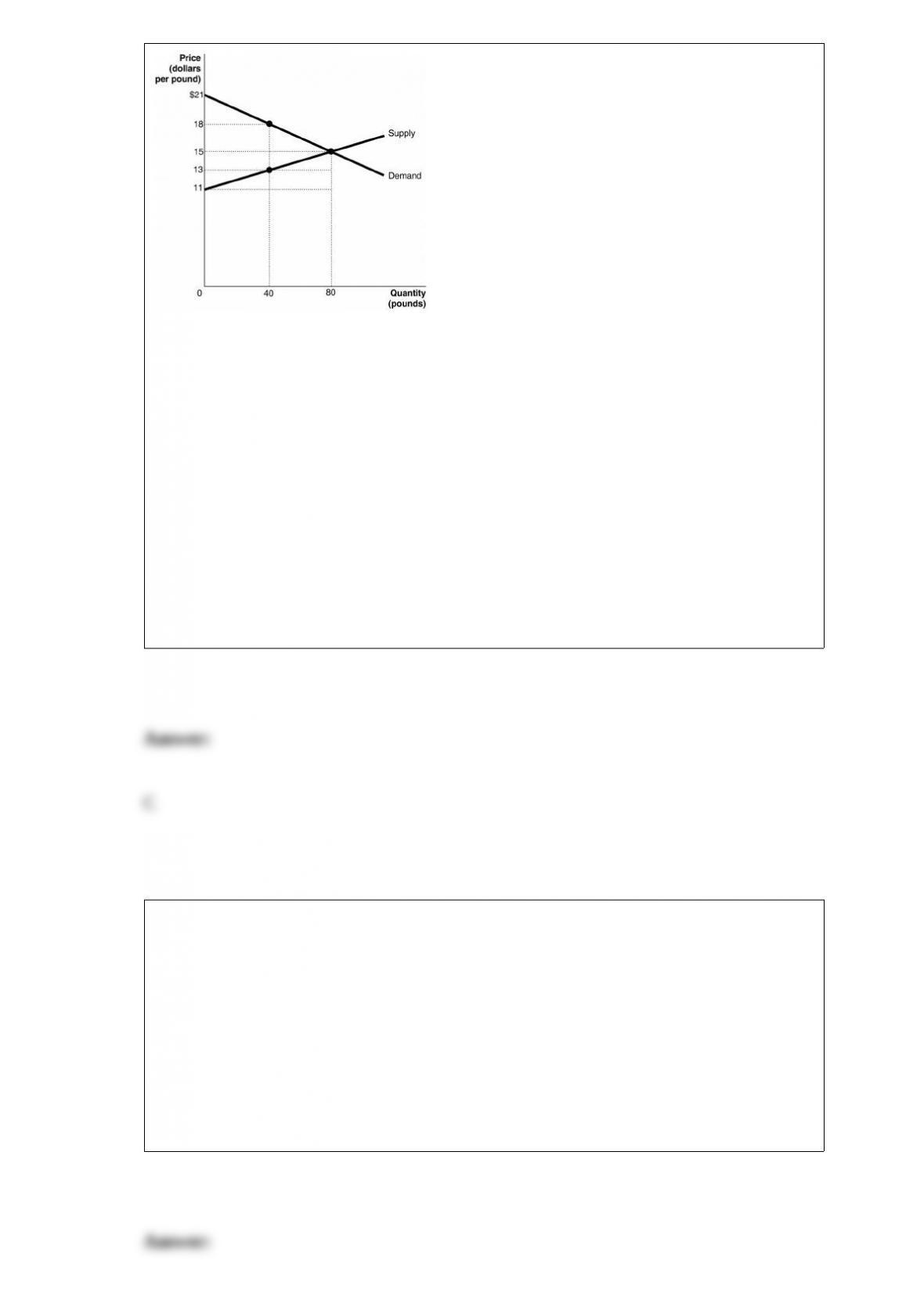
Figure 4-3 shows the market for tiger shrimp. The
market is initially in equilibrium at a price of $15 and a quantity of 80. Now suppose
producers decide to cut output to 40in order to raise the price to $18.
At the equilibrium price of $15 consumers are willing to buy 80pounds of tiger shrimp.
Is this an economically efficient quantity?
A) No, the marginal benefit of the 80th unit exceeds the marginal cost of the 80th unit.
B) Yes, because marginal cost is zero at the 80th unit.
C) Yes, because $15 is the price where the marginal benefit is equal to the marginal
cost.
D) No, the marginal cost of the 80th unit exceeds the marginal benefit of the 80th unit.
The median voter theorem will be an accurate predicator of the outcomes of elections
A) only when voter turnout is very high.
B) when a majority of voters have preferences very similar to those of the median voter.
C) when a majority of voters have preferences different from those of the median voter.
D) regardless of whether preferences among voters are similar or different from those
of the median voter.
If workers and firms expect that inflation will be 3 percent next year, and real wages are
not changing over time, by how much will nominal wages increase?
A) 3 percent
B) more than 3 percent
C) less than 3 percent
D) depends on actual inflation for next year
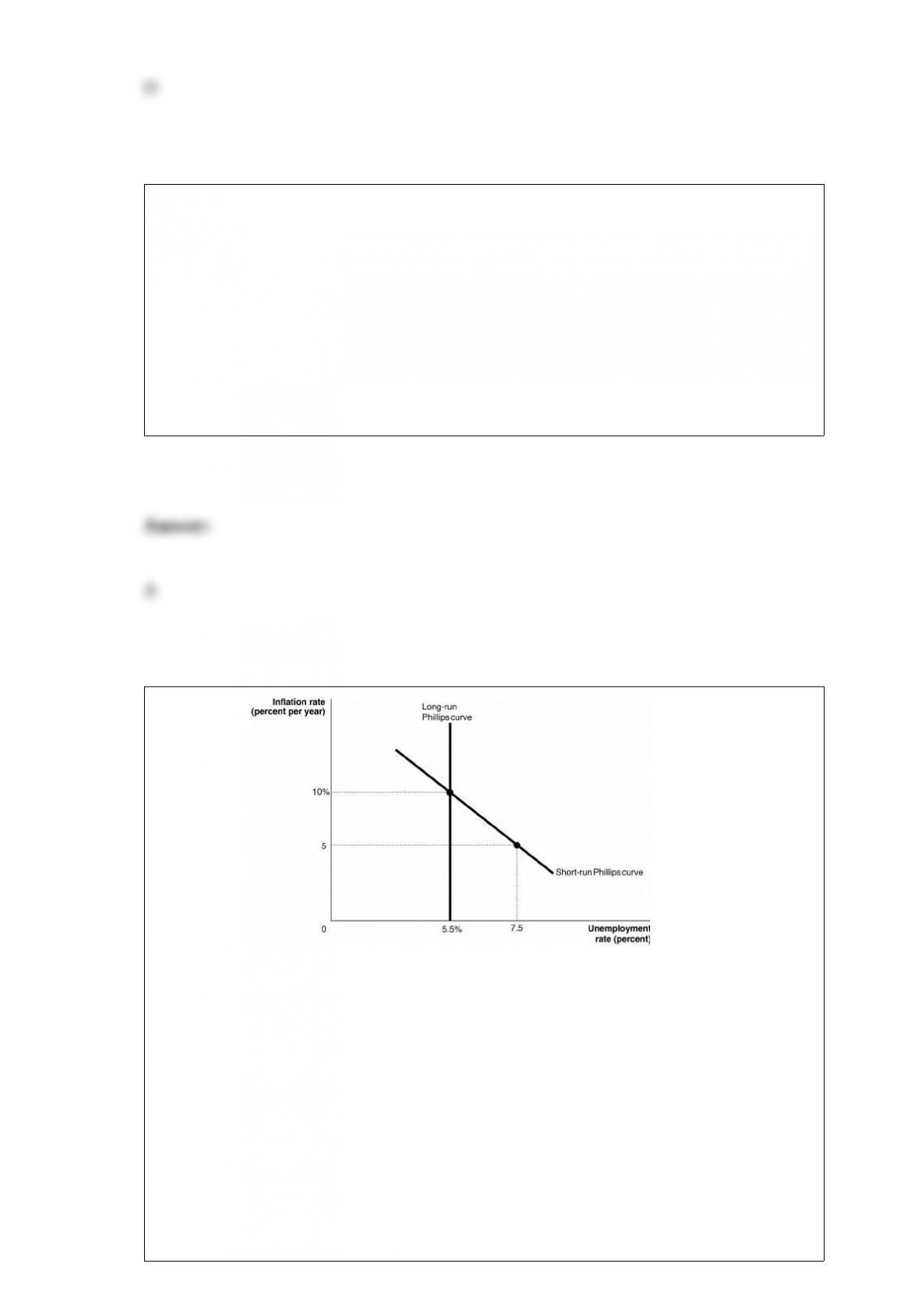
Figure 28-7
Consider the Phillips curves depicted in the graph above. The Fed announces its
intention to decrease inflation from 10 percent to 5 percent per year, and it succeeds. If
the assumptions of the rational expectations school hold true, and the Fed’s
announcement is credible, the rate of unemployment will be ________ in the short run.
A) less than 5.5 percent
B) 5.5 percent
C) between 5.5 and 7.5 percent
D) 7.5 percent
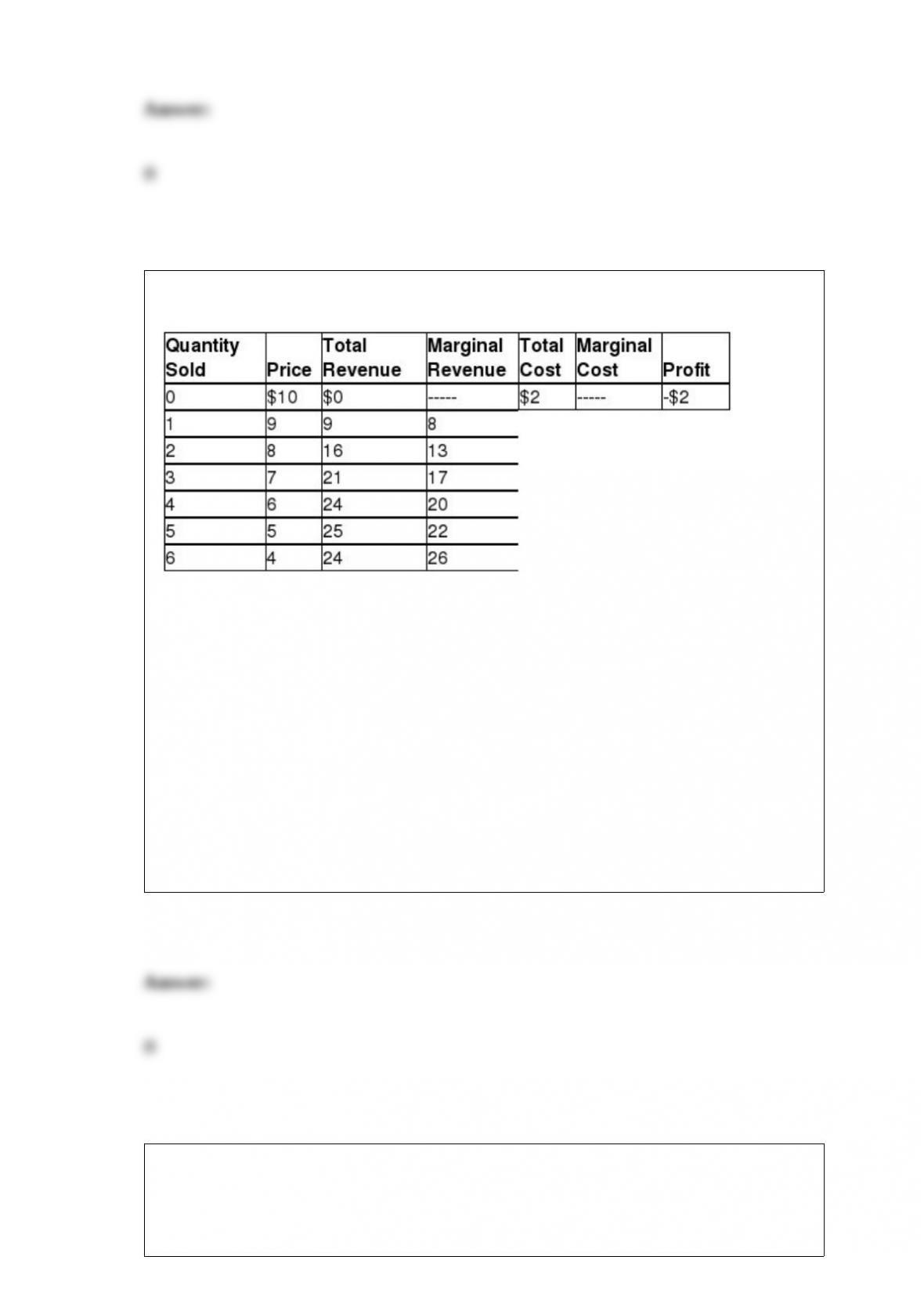
Table 13-4
Table 13-4 lists estimated revenues and costs (per week) for plastic vials (100 vials per
box) for the Victoria Biological Supplies Company. Victoria sells plastic vials to
university and private research laboratories.
Victoria’s profit-maximizing quantity sold (Q) and price (P) are
A) Q = 3; P = $7.
B) Q = 4; P = $6.
C) Q = 5; P = $5.
D) Q = 6; P = $4.
Alejandro expects the price level to rise from 105 this year to 108 next year. If the price
level rises to 110 next year instead of 108, which of the following will occur?
A) Alejandro’s real wage remains unchanged.
B) Alejandro’s real wage falls.
C) Alejandro’s real wage rises.
D) Alejandro’s real wage may rise or fall, depending on the unemployment rate.
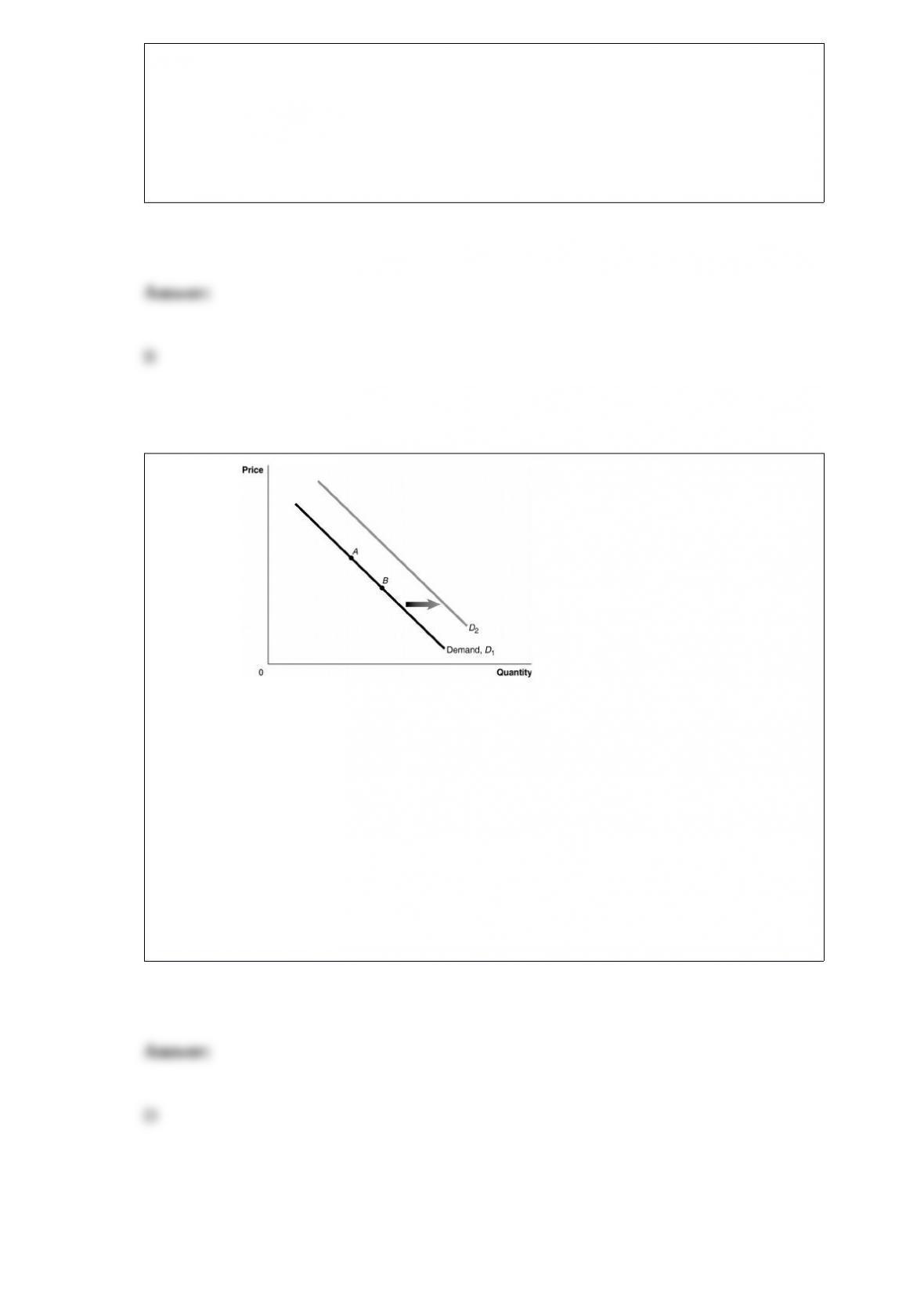
Figure 3-1
A decrease in the expected future price of the product would be represented by a
movement from
A) A to B.
B) B to A.
C) D1 to D2.
D) D2 to D1.
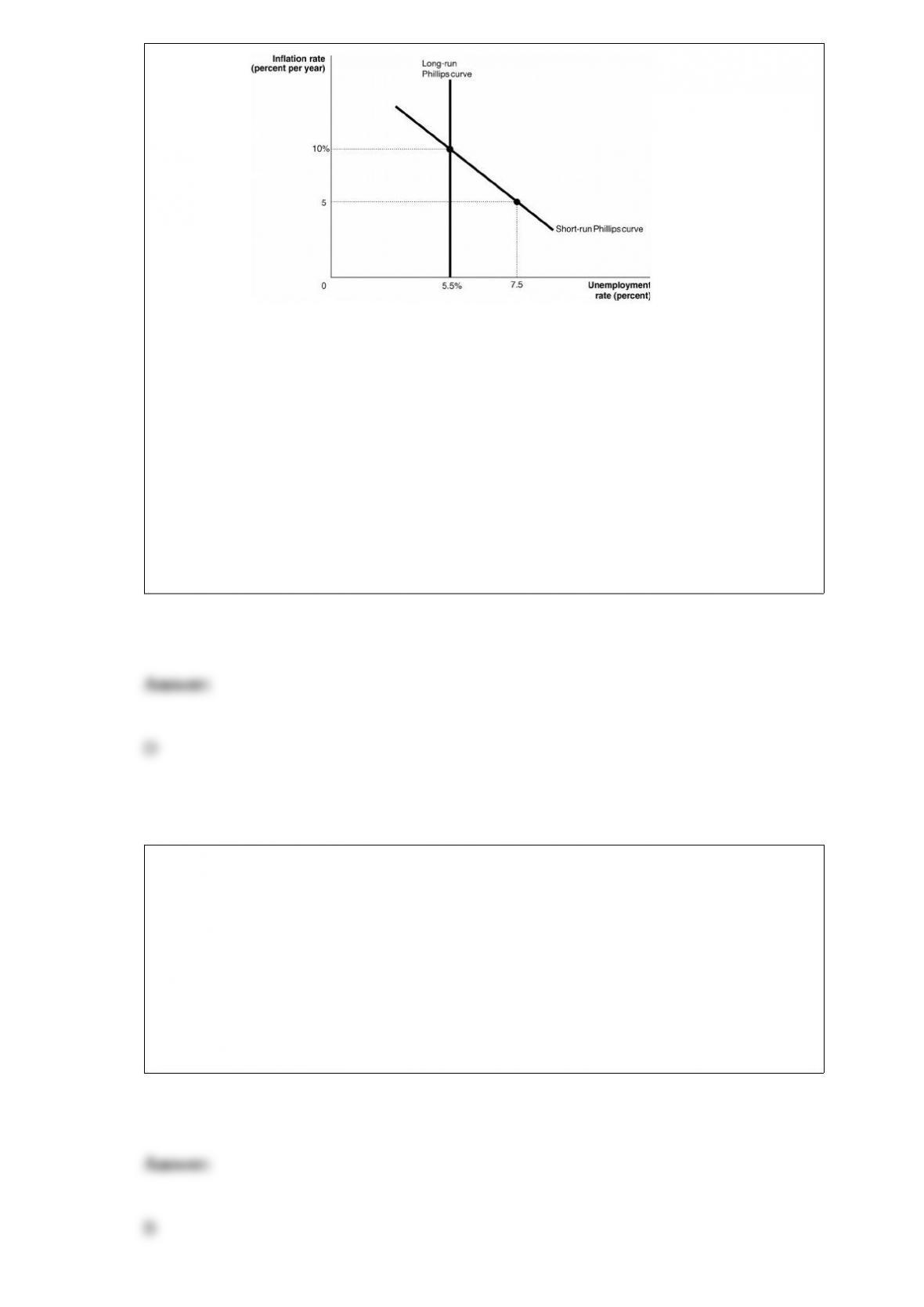
Figure 17-5
Consider the Phillips curves shown in the above graph. We can conclude from this
graph that
A) the natural rate of unemployment in this economy is 5.5 percent.
B) the expected rate of inflation in this economy is 10 percent.
C) ceteris paribus, a fall in the rate of inflation to 5 percent will increase unemployment
to 7.5 percent in the short run.
D) All of the above are correct.
Since 1950, the average length of a recession in the United States has been
A) such that recessions barely exist.
B) less than a year.
C) between 1 and 2 years.
D) greater than 2 years.