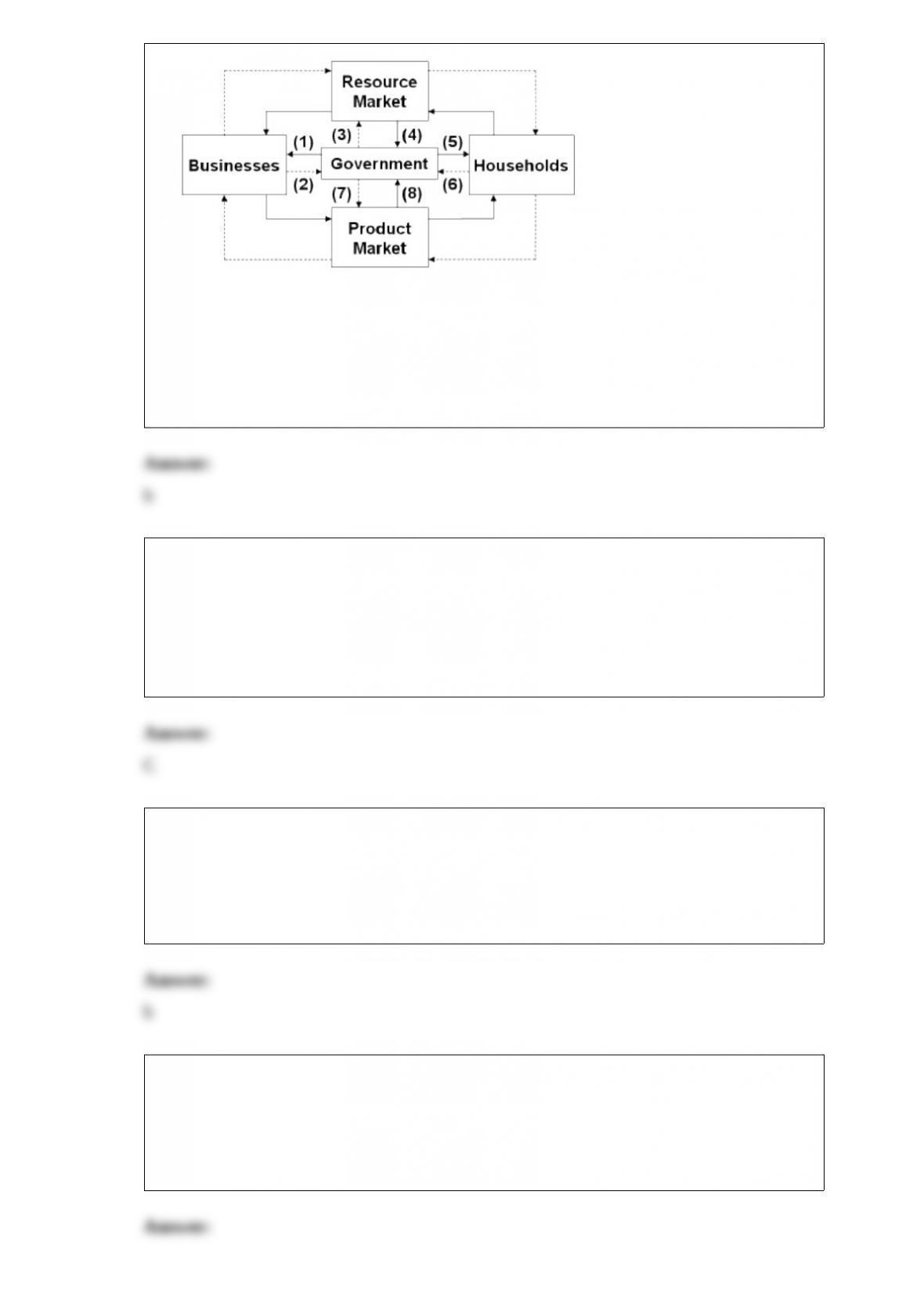
1)
refer to the above diagram, in which solid arrows reflect real flows; broken arrows are
monetary flows. flow (1) might represent:
a.corporate income tax payments.
b.government provision of highways for truck transportation.
c.business property tax payments.
d.transfer payments to low-income families.
2) Which of the following tools of monetary policy is flexible, and able to affect bank
reserves quickly and by relatively specific amounts?
A.the discount rate
B.the reserve ratio
C.open market operations
D.the Federal funds rate
3) assume there is an increase in the demand for hand calculators. the subsequent:
a.increase in price will be greater in the long run than in the short run.
b.increase in price will be greater the greater the inelasticity of supply.
c.increase in price will be greater the greater the elasticity of supply.
d.decline in price will be greater the greater the elasticity of supply.
4) Which of the following is typically not a problem for low-income DVCs?
A.capital flight
B.”brain drains”
C.high saving rates
D.poor infrastructure
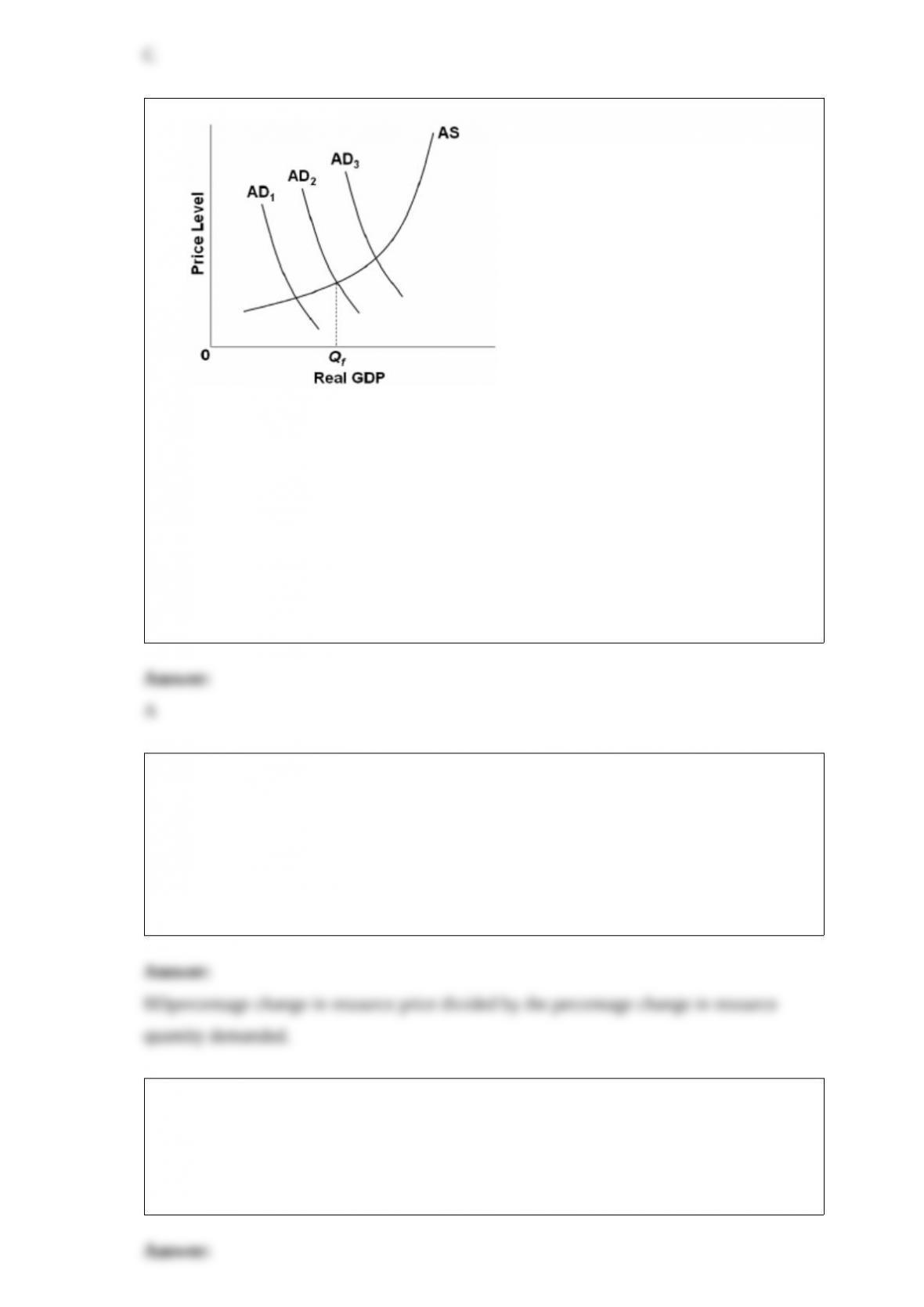
5)
Refer to the above diagram, in which Qf is the full-employment output. If aggregate
demand curve AD2 describes the current situation, appropriate fiscal policy would be
to:
A.do nothing since the economy appears to be achieving full-employment real output.
B.increase taxes and reduce government spending to shift the aggregate demand curve
rightward from AD2 to AD3.
C.increase taxes on businesses to shift the aggregate supply curve rightward to reduce
the price level.
D.reduce taxes and increase government spending to shift the aggregate demand curve
from AD2 to AD1.
6) Elasticity of resource demand is measured by the:
A.absolute change in resource quantity demanded divided by the absolute change in
resource price.
B.percentage change in resource quantity demanded divided by the percentage change
in resource price.
C.absolute change in resource price divided by the absolute change in resource quantity
demanded.
7) if a purely competitive firm shuts down in the short run:
a.its loss will be zero.
b.it will realize a loss equal to its total variable costs.
c.it will realize a loss equal to its total fixed costs.
d.it will realize a loss equal to its total costs.
8) the world trade organization (wto):
a.sets tariffs to balance international trade among nations.
b.is the successor to gatt.
c.is better known as the european union.
d.sets exchange rates to balance international trade among nations.
9) for most producing firms:
a.marginal cost rises as output is carried to a certain level, and then begins to decline.
b.total costs rise as output is carried to a certain level, and then begin to decline.
c.average total costs decline as output is carried to a certain level, and then begin to rise.
d.average total costs rise as output is carried to a certain level, and then begin to
decline.
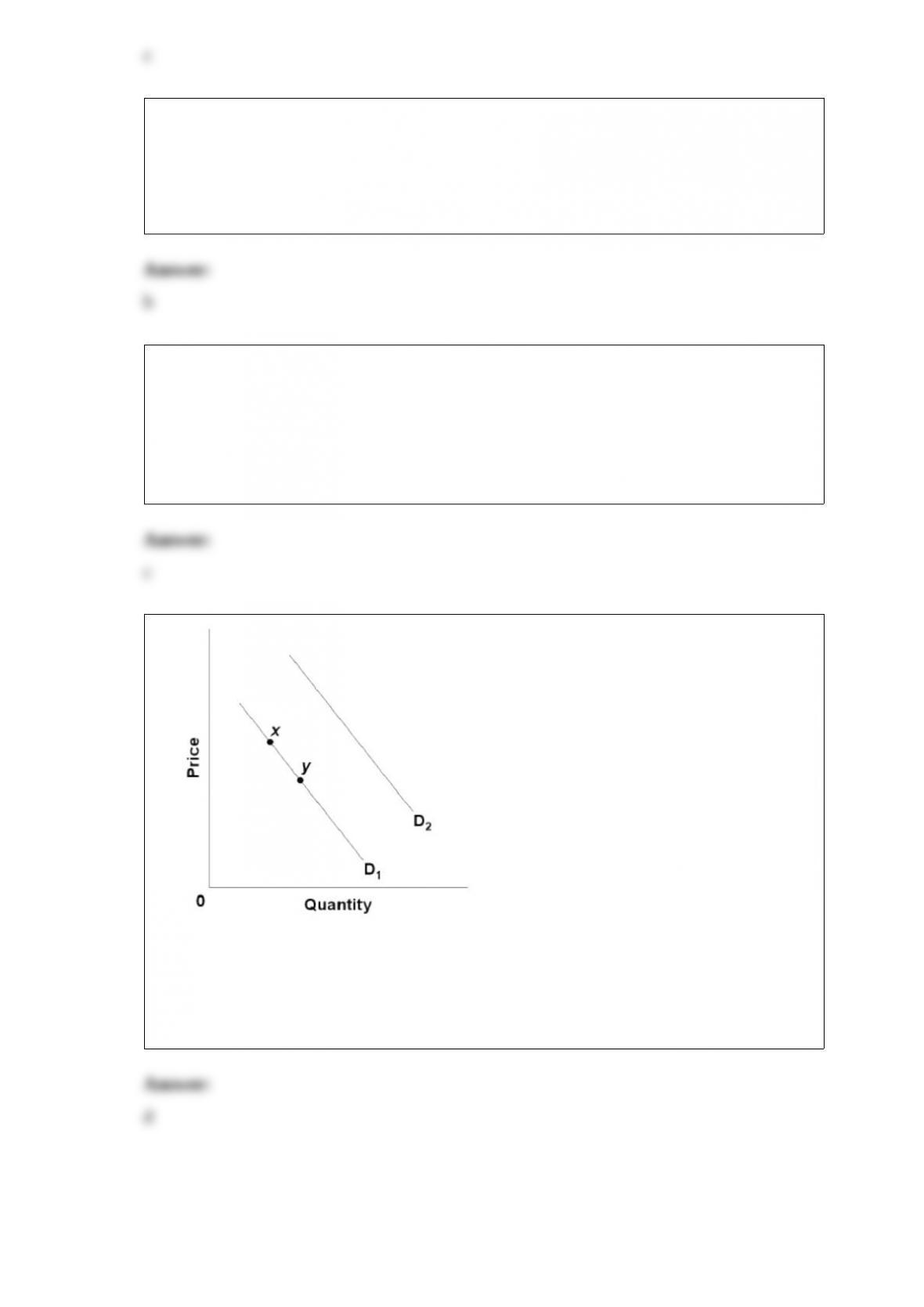
10)
refer to the above diagram. a decrease in quantity demanded is depicted by a:
a.move from point x to point y.
b.shift from d1 to d2.
c.shift from d2 to d1.
d.move from point y to point x.
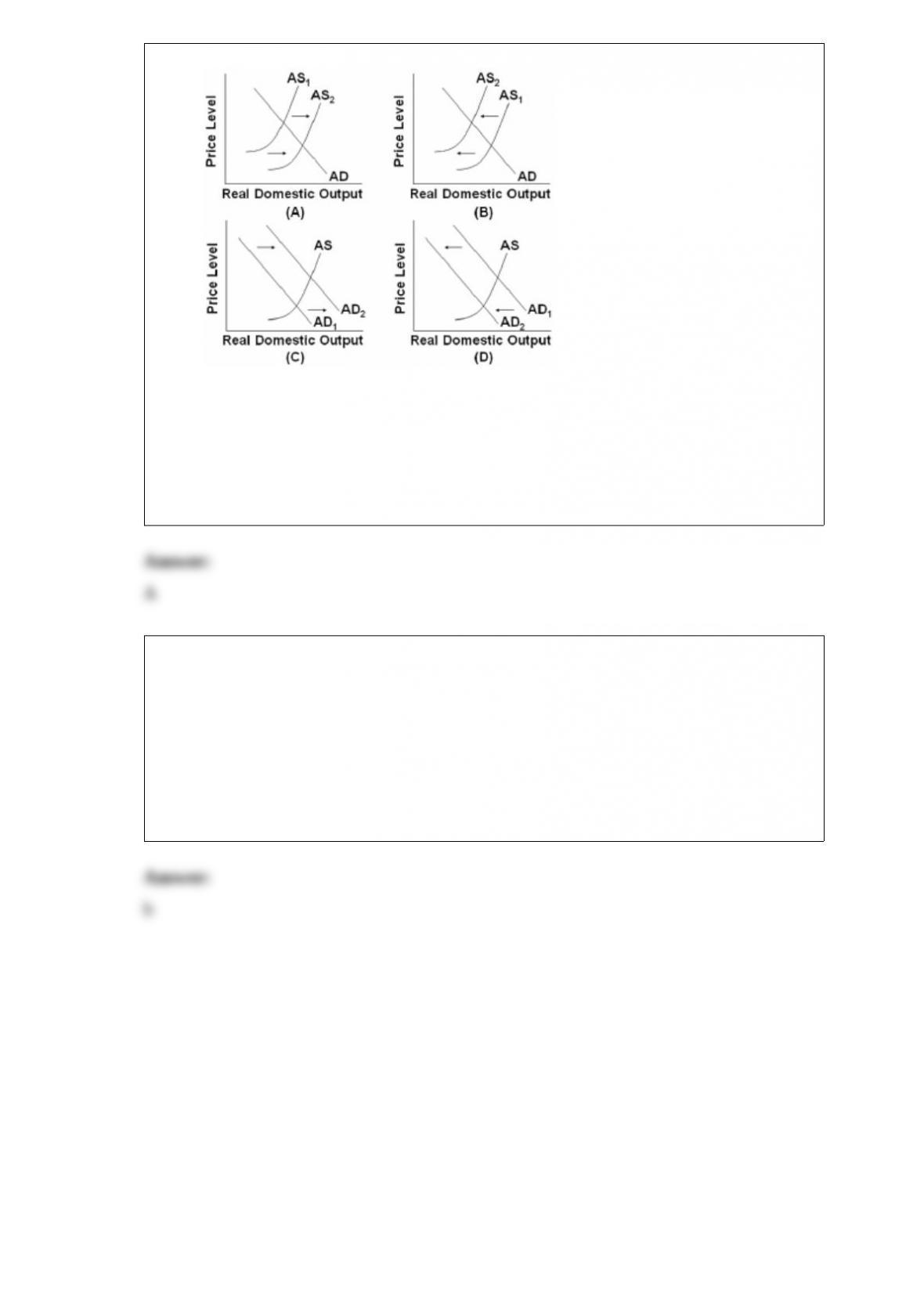
11)
Which of the above diagrams best portrays the effects of an increase in resource
productivity?
A.A
B.B
C.C
D.D
12) supply curves tend to be:
a.perfectly elastic in the long run because consumer demand will have sufficient time to
adjust fully to changes in supply.
b.more elastic in the long run because there is time for firms to enter or leave the
industry.
c.perfectly inelastic in the long run because the law of scarcity imposes absolute limits
on production.
d.less elastic in the long run because there is time for firms to enter or leave an industry.