
An increase in the supply of capital, which is a complement to labor, will lead to
A) a decrease in the quantity of labor demanded.
B) an increase in the demand for labor.
C) a decrease in the demand for labor.
D) an increase in the quantity of labor demanded.
The law of one price states
A) federal and state statutes that prohibit price discrimination.
B) that all customers should pay the same price.
C) that identical products should sell for the same price everywhere.
D) government regulation of prices for all firms.
What is the trade-off that consumers face when buying the product of a
monopolistically competitive firm?
A) Consumers pay higher prices but receive better quality goods compared to the output
of perfectly competitive firms.
B) Consumers pay a price greater than marginal cost, but have the luxury of choices
more suited to their tastes.
C) Consumers pay higher prices but the products are produced by highly efficient firms.
D) Consumers pay lower prices but have fewer choices.
Compared to a monopolistic competitor, a monopolist faces
A) a more elastic demand curve.
B) a more inelastic demand curve.
C) a more elastic demand curve at higher prices and a more inelastic demand curve at
lower prices.
D) a demand curve that has a price elasticity coefficient of zero.
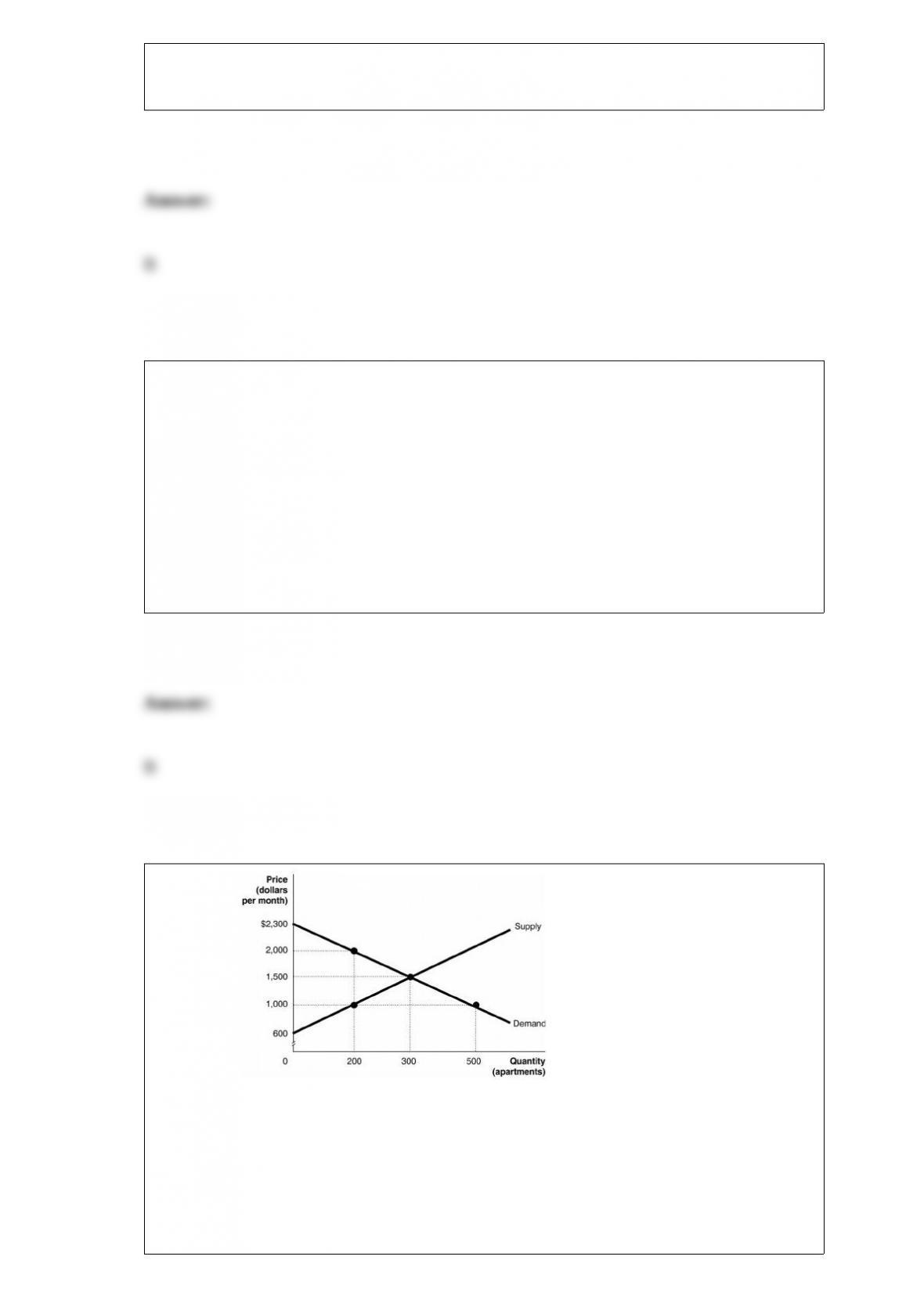
Figure 4-8 Figure 4-8 shows the market for
apartments in Springfield. Recently, the government imposed a rent ceiling of $1,000
per month. Suppose that instead of a rent ceiling, the government imposed a price floor
of $2,000 per month for apartments. What is the value of the portion of consumer
surplus transferred to producers as a result of the price floor?
A) $40,000

B) $100,000
C) $125,000
D) $140,000
The International Nickel Company of Canada is often cited as an example of monopoly,
but International Nickel eventually lost its monopoly. What event was responsible for
this?
A) New technology allowed other firms to achieve network externalities after World
War II.
B) The Canadian government, which had owned International Nickel, sold the company
after World War II. The government no longer blocked entry into the market for nickel.
C) Competition in the market for nickel increased after nickel fields were developed in
Russia after World War II.
D) Competition in the market for nickel increased after Canada signed the North
American Free Trade Agreement with the United States and Mexico in 1994.
By definition, economics is the study of
A) how to make money in the stock market.
B) how to make money in a market economy.
C) the choices people make to attain their goals, given their scarce resources.

D) supply and demand.
Which of the following is not a shortcoming of the concentration ratio as a measure of
the extent of competition in an industry?
A) Concentration ratios do not include sales in the United States by foreign firms.
B) Concentration ratios are calculated for the national market, even though the
competition in some industries is mainly local.
C) Concentration ratios assign weights to only the four largest firms in an industry.
D) Concentration ratios do not address the fact that competition sometimes exists
between firms in different industries.
When Roxanne, a U.S. citizen, purchases a designer dress from Barneys of New York
that was made in Milan, the purchase is
A) both a U.S. and an Italian import.
B) a U.S. import and an Italian export.
C) a U.S. export and an Italian import.
D) neither an export nor an import for either country.

Over the past several decades there has been a rapid growth in international trade. This
growth has been due to all except one of the following factors. Which factor has not
contributed to the growth of international trade?
A) the spread of reliable communications
B) a change in the tariffs charged on many goods
C) a reduction in shipping costs
D) favorable changes in government policies
Francis Crawford recently received a 20 percent wage increase and desires to work less.
We can conclude that at his current wage his supply of labor curve
A) has a positive slope.
B) has a negative slope.
C) is U-shaped.
D) is vertical.
Which of the following is not necessarily a consequence of occupational licensing

laws?
A) They restrict competition.
B) Consumers pay higher prices for the services of licensed professions.
C) They result in a higher quality of service.
D) They ensure that licensed professionals meet some minimum qualifications.
What happens to the equilibrium wage and quantity of labor if output price rises?
A) The equilibrium wage and the equilibrium quantity of labor rise.
B) The equilibrium wage and the equilibrium quantity of labor fall.
C) The equilibrium wage falls and the equilibrium quantity of labor rises.
D) The equilibrium wage rises and the equilibrium quantity of labor falls.
An increase in input costs in the production of electric automobiles caused the price of
electric automobiles to rise. Holding everything else constant, how would this affect the
market for gasoline-powered automobiles (a substitute for electric automobiles)?
A) The supply of gasoline-powered automobiles would increase and the equilibrium
price of gasoline-powered automobiles would decrease.
B) The demand for gasoline-powered automobiles would increase and the equilibrium
price of gasoline-powered automobiles would increase.

C) The demand for gasoline-powered automobiles would decrease because consumers
could afford to buy fewer gasoline-powered automobiles.
D) The demand for gasoline-powered automobiles would increase and the equilibrium
price of gasoline-powered automobiles would decrease.
If disposable income increases by $100 million, and consumption increases by $90
million, then the marginal propensity to consume is
A) 0.9.
B) 0.8.
C) 0.75.
D) 0.6.
In preparing their estimates of the stimulus package’s effect on GDP, Obama
administration economists estimated a government purchases multiplier of 1.57.
Economist Robert Barro argues that ________, the government purchases multiplier
would be lower than the administration’s estimate, and economists Lawrence
Christiano, Martin Eichenbaum, and Sergio Rebelo argued that ________, the
multiplier would be higher than the administration’s estimate.
A) during a recession; when the inflation rate is relatively low
B) when the unemployment rate is high; when the value of the dollar is depreciating
against foreign currencies
C) when the federal budget is in surplus; when government transfer payments are

declining
D) during wartime; when short-term interest rates are near zero