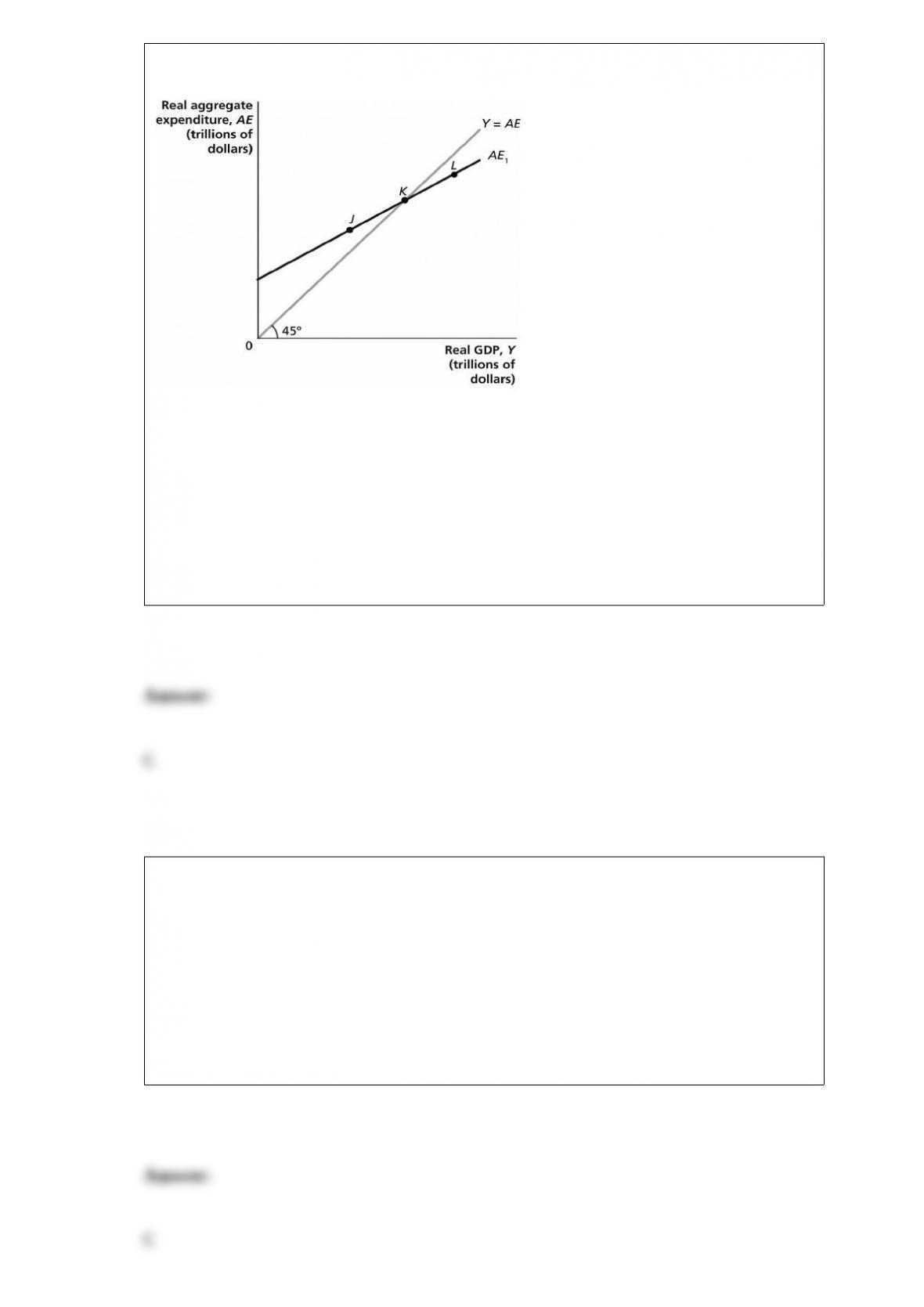
Figure 12-1
Refer to Figure 12-1. If the economy is at point L, what will happen?
A) Inventories have fallen below their desired level, and firms decrease production.
B) Inventories have fallen below their desired level, and firms increase production.
C) Inventories have risen above their desired level, and firms decrease production.
D) Inventories have risen above their desired level, and firms increase production.
Countries that are more globalized tend to have
A) lower levels of real GDP per capita.
B) a higher likelihood of war or revolution.
C) higher growth rates in real GDP per capita.
D) lower levels of foreign direct investment.

When President Obama took office in January 2009, he pledged to pursue an
expansionary fiscal policy to try to pull the economy out of the recession. The next
month, Congress passed the American Recovery and Reinvestment Act of 2009, a $840
billion package of ________ that was the largest fiscal policy action in U.S. history.
A) spending increases and tax cuts
B) interest rate reductions and increases in the money supply
C) treasury bond purchases and mortgage-backed securities purchases
D) commercial and investment bank bailouts
If the United States has a current account deficit and the capital account is zero, which
of the following must be true?
A) The balance on the financial account must equal the balance on the current account.
B) Net foreign investment must be negative as well.
C) Domestic private saving must be less than net foreign investment.
D) Domestic public saving must be less than net foreign investment.
Which of the following is a positive economic statement?
A) Everyone should live at the same standard of living.

B) If the price of gasoline rises, a smaller quantity of it will be bought.
C) The government should close income tax loopholes.
D) U.S. firms should not be allowed to outsource production of goods and services.
If net foreign investment is negative, which of the following must be true?
A) Capital outflows are greater than capital inflows.
B) Domestic investment must be greater than national saving.
C) Net exports are positive.
D) Private saving is greater than public saving.
Figure 2-4
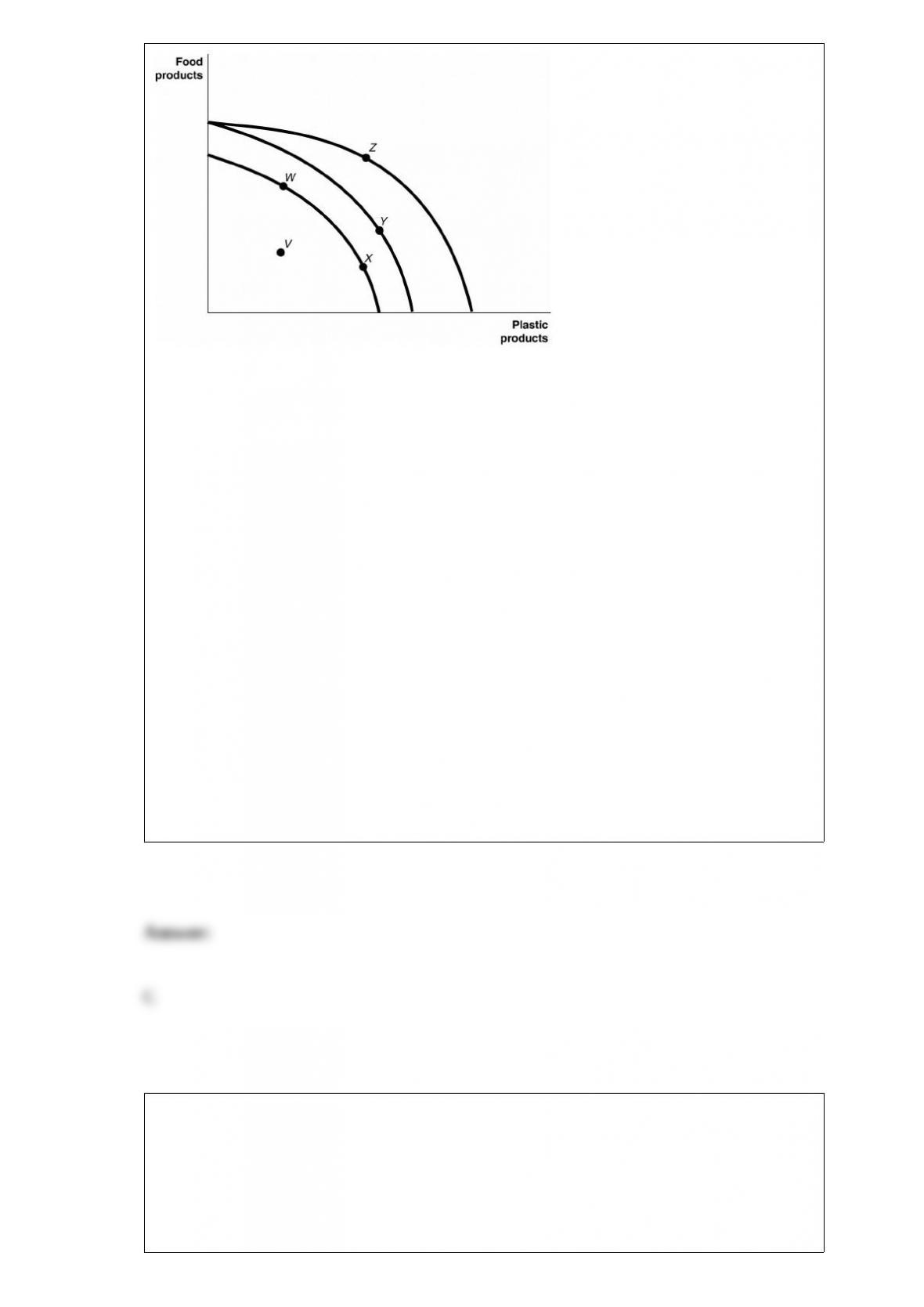
Figure 2-4 shows various points on three different production possibilities frontiers for
a nation.
Refer to Figure 2-4. Consider the following movements:
a. from point V to point W
b. from point W to point Y
c. from point Y to point Z
Which of the movements listed above represents advancements in technology with
respect to both plastic production and food production?
A) a, b, and c
B) b and c only
C) b only
D) c only
Borrowing to pay for long-lived capital expenditures makes sense as
A) the benefits are received in the current year so the burden of paying for them should
be spread over many years.
B) the benefits are received over many years so the burden of paying for them should

be spread over many years.
C) the benefits are received in the current year so the burden of paying for them should
be paid in the current year.
D) the benefits are received over many years so the burden of paying for them should
be paid in the current year.
Which of the following would be considered an implicit cost of operating a business?
A) advertising expenses
B) wages paid to workers
C) a normal rate of return for investors
D) any explicit cost
If the government implements a price ceiling on insulin, this will
A) increase the price consumers will pay for insulin.
B) decrease the quantity of insulin the manufacturers will be willing to supply.
C) have to be set above the market equilibrium price to be effective.
D) encourage manufacturers to produce and sell more of insulin to increase their
profits.
Suppose Bill Gates deposits $20 million into his checking account at Wells Fargo Bank.
If the required reserve ratio is 10 percent, what is the maximum change in money
supply?
A) -$200 million
B) -$180 million
C) $2 million
D) $180 million
E) $200 million
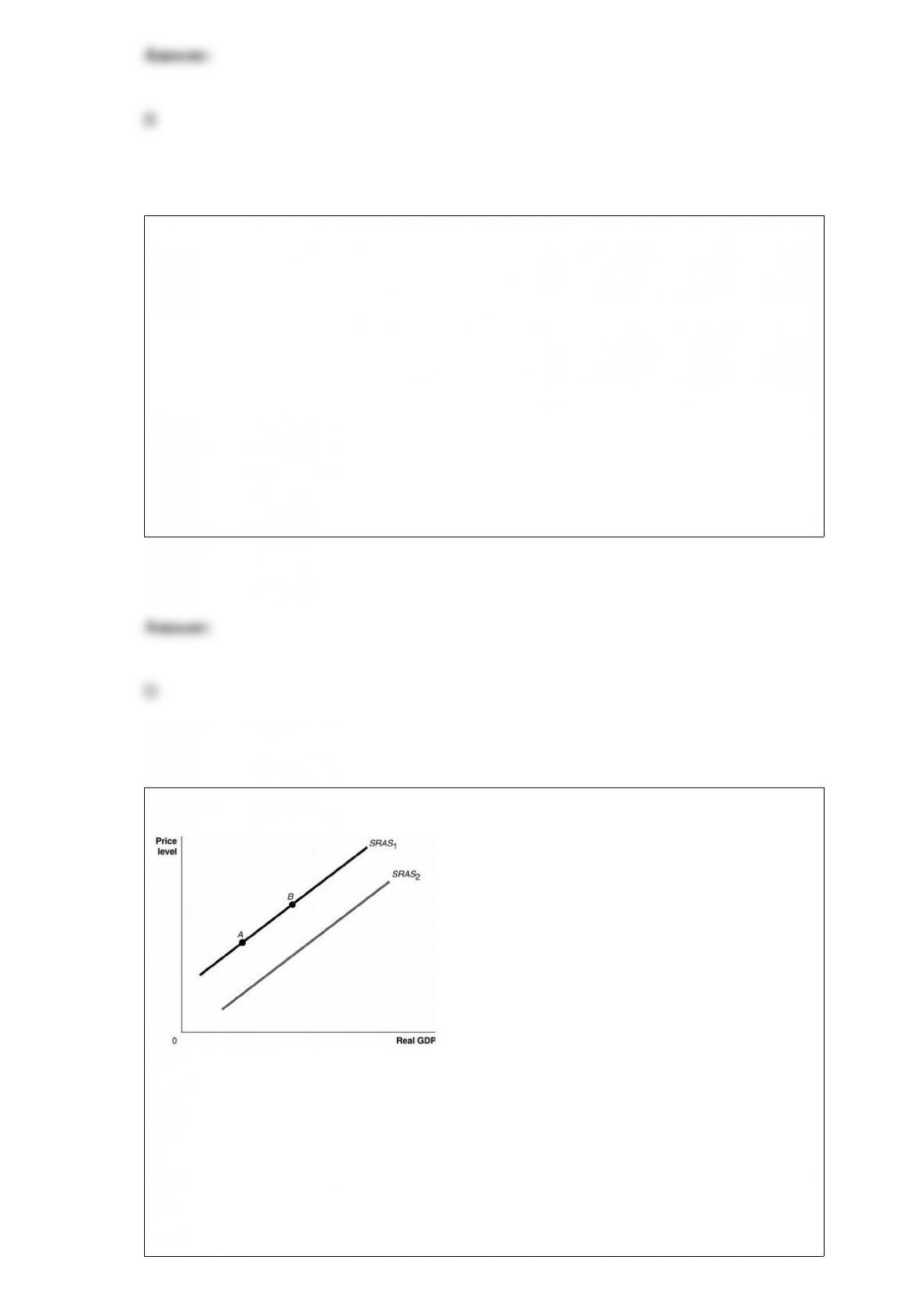
Figure 13-2
Refer to Figure 13-2. Ceteris paribus, an increase in the expected price of an important
natural resource would be represented by a movement from
A) SRAS1 to SRAS2.
B) SRAS2 to SRAS1.
C) point A to point B.
D) point B to point A.
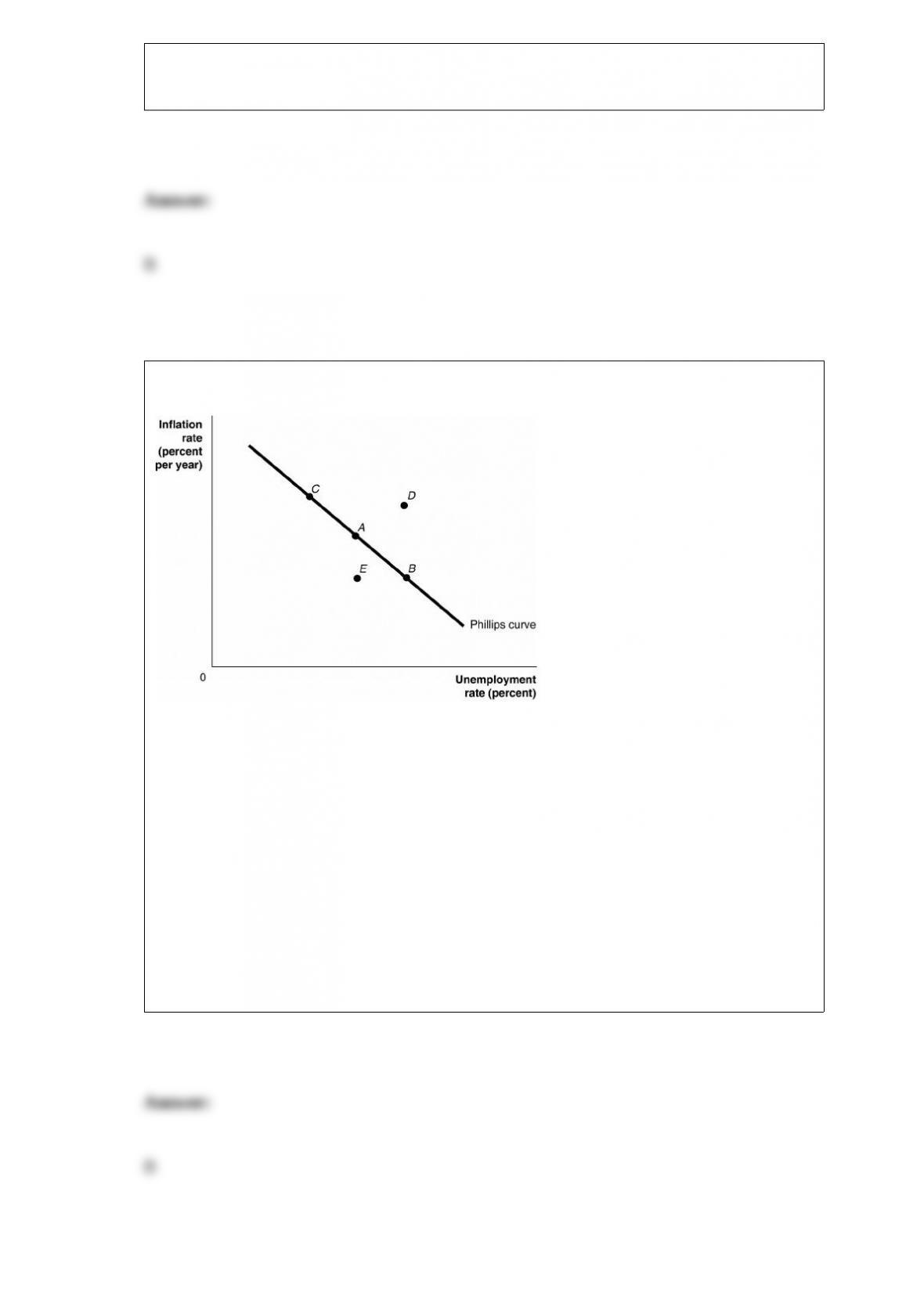
Figure 17-1
Refer to Figure 17-1. Suppose that the economy is currently at point A. If the Federal
Reserve engaged in contractionary monetary policy, where would the economy end up
in the short run?
A) It would remain at point A.
B) point B
C) point C
D) point D
E) point E
Which of the following policies would reduce frictional unemployment?
A) a decrease in the minimum wage
B) a job retraining program
C) implementing an unemployment insurance policy
D) building an online job database that helps workers find jobs
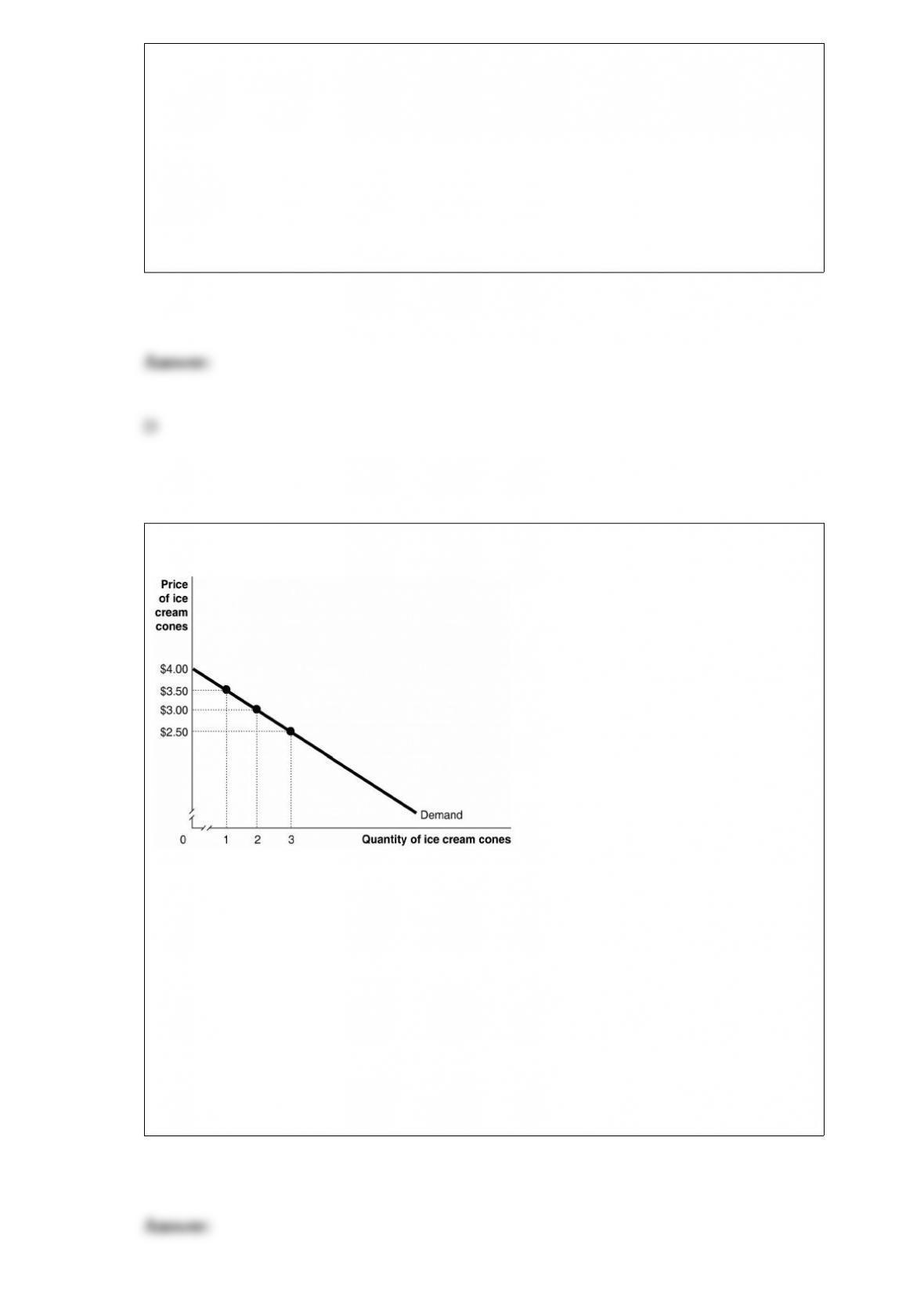
Figure 4-1
Figure 4-1 shows Kendra’s demand curve for ice-cream cones.
Refer to Figure 4-1. If the market price is $3.50, what is the consumer surplus on the
first ice cream cone?
A) $0
B) $0.50
C) $3.50
D) $9.00

The long-run aggregate supply curve shows the relationship between
A) short-run aggregate supply and short-run aggregate demand.
B) the price level and quantity of real GDP supplied.
C) the real interest rate and the nominal interest rate.
D) the quantity of real GDP supplied and the quantity of nominal GDP supplied.
Which of the following istrue about the consumer price index?
A) It accounts for people switching to goods whose prices have fallen.
B) It assumes that consumers purchase the same amount of each product in the market
basket each month.
C) It frequently updates the price changes of new products added to the market basket,
as these have a tendency to fall.
D) It filters out the part of price increases that occurs because of quality improvements
in products.
The price level in the economy between 2012 and 2013 rose from 100 to 110. Between
2013 and 2014, the price level rose from 110 to 121. How does the short-run Phillips
curve predict the unemployment rate will change as a result?
A) The unemployment rate will decrease since inflation decreased.
B) The unemployment rate will decrease since inflation increased.
C) The unemployment rate will increase since inflation increased.
D) The unemployment rate will not change since there is no change in the rate of
inflation.