Net exports
a. are the second largest component of total spending
b. are already included in measures on consumption, investment, and government
spending
c. are a source of total spending on U.S. output
d. are always positive; i.e., total exports always exceed total imports
e. are always positive; i.e., total imports always exceed total exports
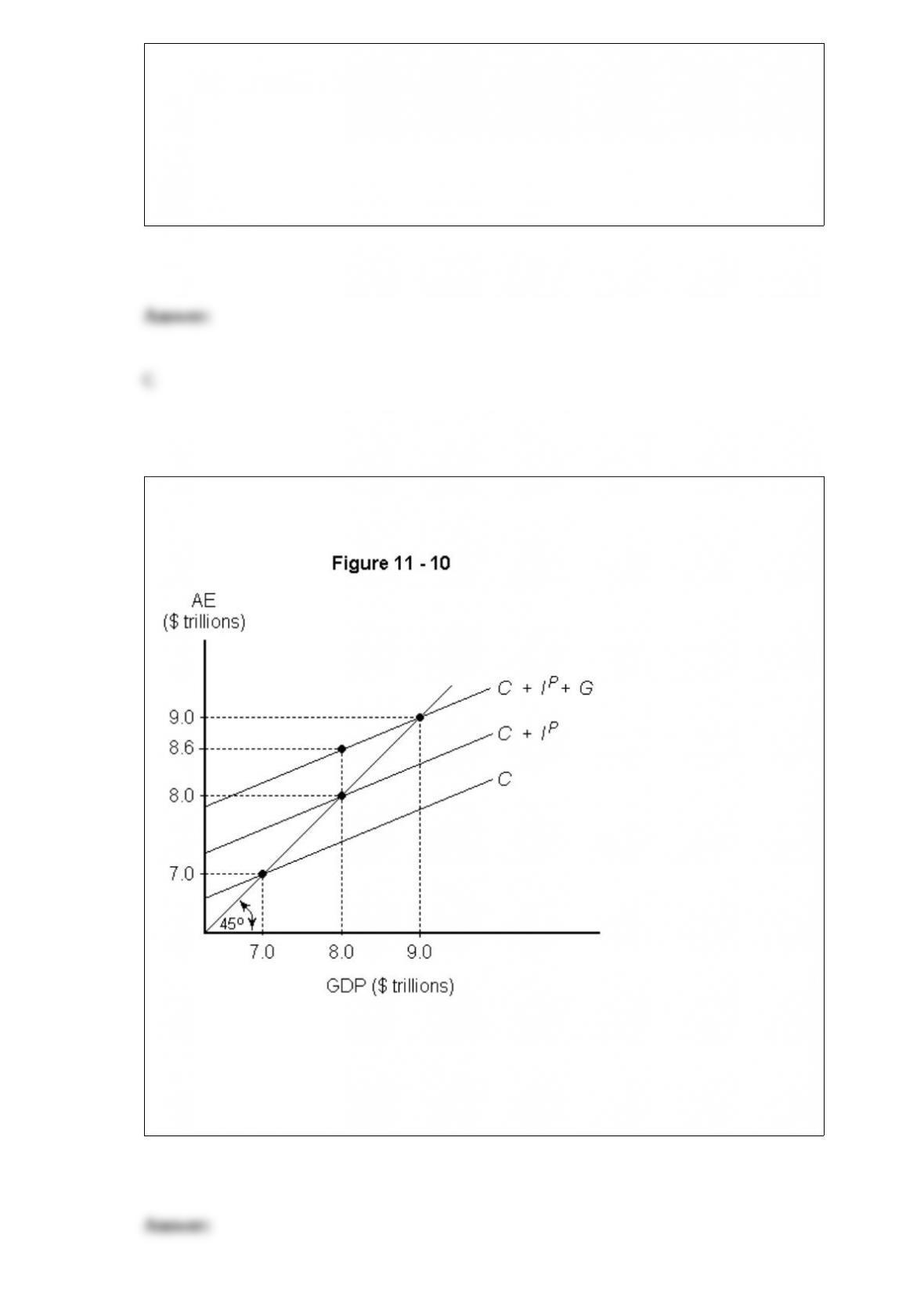
Consider Figure 11-10 above. Equilibrium GDP occurs at
a. $7 trillion
b. $8 trillion
c. $9 trillion
d. $8.6 trillion
e. there is insufficient information to accurately answer the question.
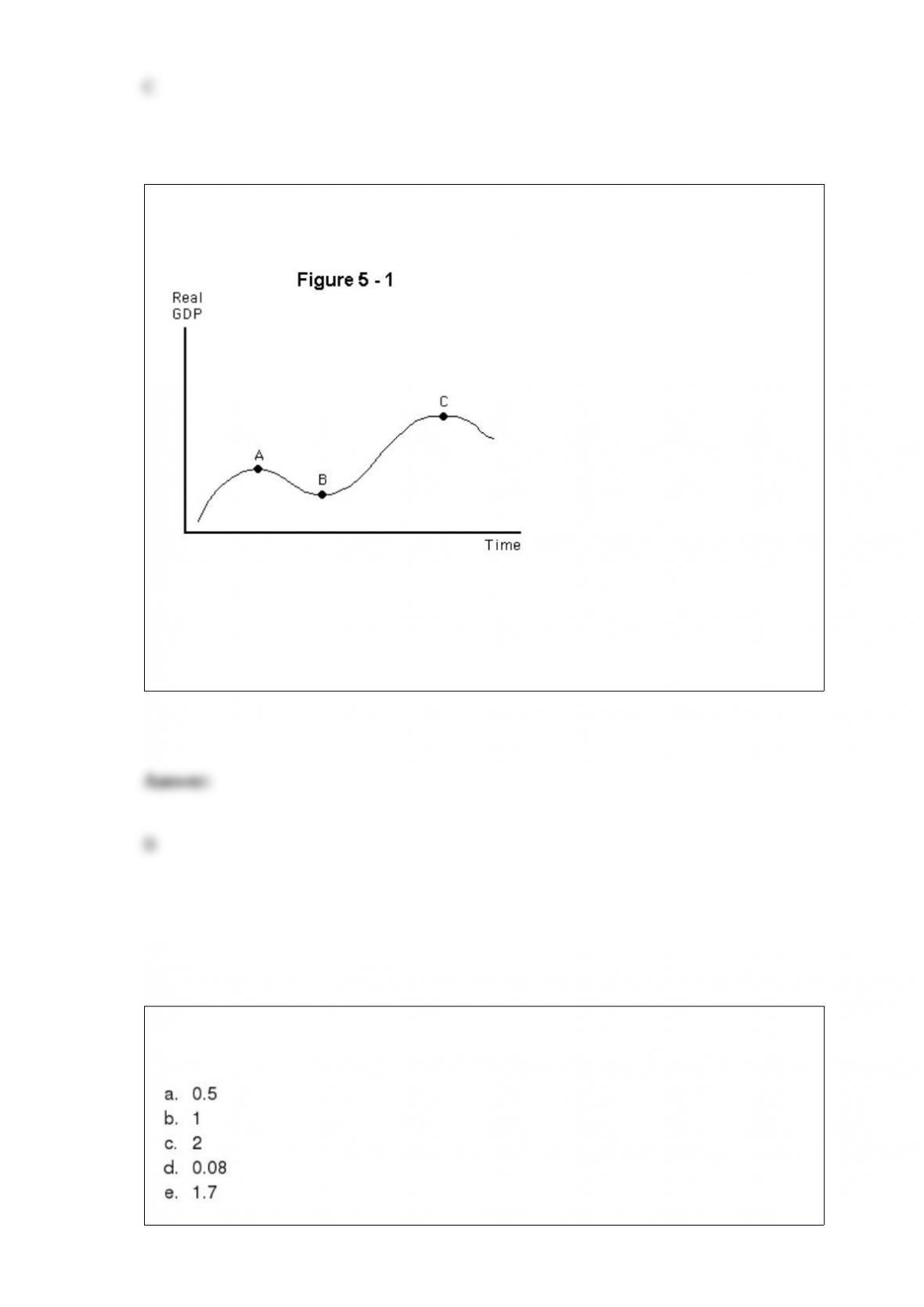
Refer to Figure 5-1 above. If the economy reaches point B on the graph, it is going
through a(n)
a. peak
b. trough
c. expansion
d. boom
e. recession
Daniel’s consumption of pizzas drops from 6 per week to 4 per week when the price
rises from $9 to $11. His price elasticity of demand for pizza equals

Which of the following correctly describes free international trade in accordance with
comparative advantage?
a. It is typically favored by producers in importing countries.
b. It is typically favored by producers in exporting countries, but hated by their workers.
c. It is typically favored by producers in exporting countries, including their workers.
d. It is typically hated by consumers in importing countries.
e. It is typically hated by farmers, but looked upon favorably by manufacturers.
Suppose the Bureau of Labor Statistics reports that the noninstitutional civilian
population is 250 million. Of those, 150 million are employed and 5 million are
unemployed. Of the 150 million employed, 5 million would like to be working twice as
many hours and of the 250 million, 5 million have given up the search for work. The
unemployment rate reported by the BLS would be __________, while if the BLS
counted the discouraged workers as unemployed the unemployment rate would be
__________.
a. 6.25%; 3.2%
b. 2%; 6.25%
c. 6.25%; 2%
d. 3.2%; 6.25%
e. 6%; 6.25%
In the classical model, an increasing demand for labor will
a. cause an expansion with higher employment and a higher real wage.
b. cause a shortage of labor because the labor market always clears.
c. cause a recession with lower employment and a lower real wage.
d. cause a recession because wages are fixed in the short run.
e. cause an expansion with lower employment and a higher real wage.
The standard definition of money is
a. currency + checking account balances + saving account balances
b. currency + checking account balances + travelers’ checks
c. currency + checking account balances + credit cards
d. currency + credit cards + certificates of deposit
e. currency only
The total producer surplus enjoyed by all sellers in a market

In mid-2009, the unemployment rate stood at
a. 25 percent
b. 5 percent
c. 6 percent
d. 9.5 percent
e. 20 percent
Which of the following is not among the factors that could shift the supply of pounds
curve? You may assume all other factors are held constant.
a. A change in U.S. real GDP.
b. A change in British real GDP.
c. An increase in the U.S. interest rate.
d. A change in British tastes for American goods.
e. An increase in the U.S. price level.
Which of the following could be a barrier to entry?
The historical record of the Fed’s success in controlling inflation has been
a. consistently strong
b. inconsistent
c. consistently disappointing
d. shaped primarily by supply shocks
e. incapable of measurement
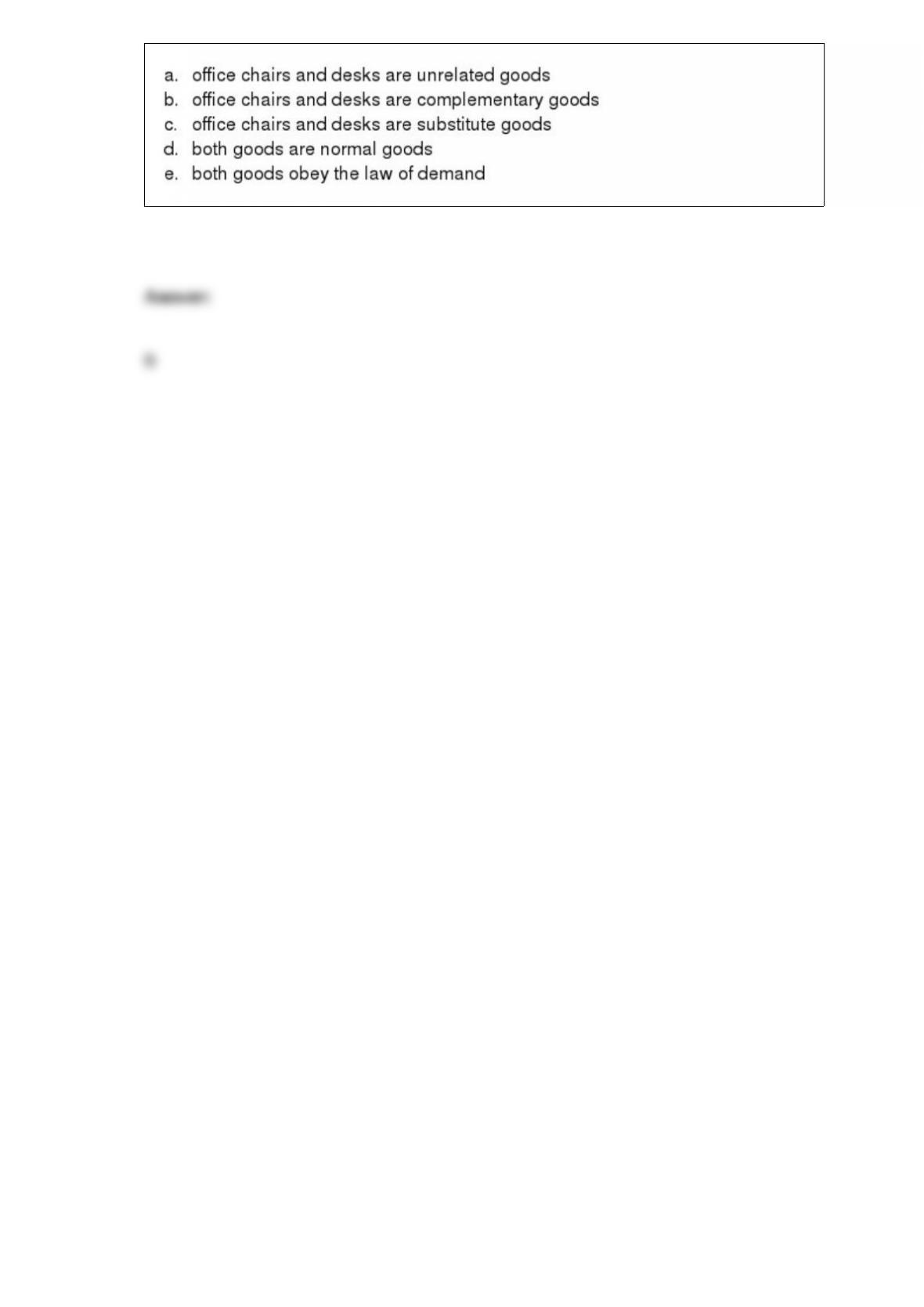
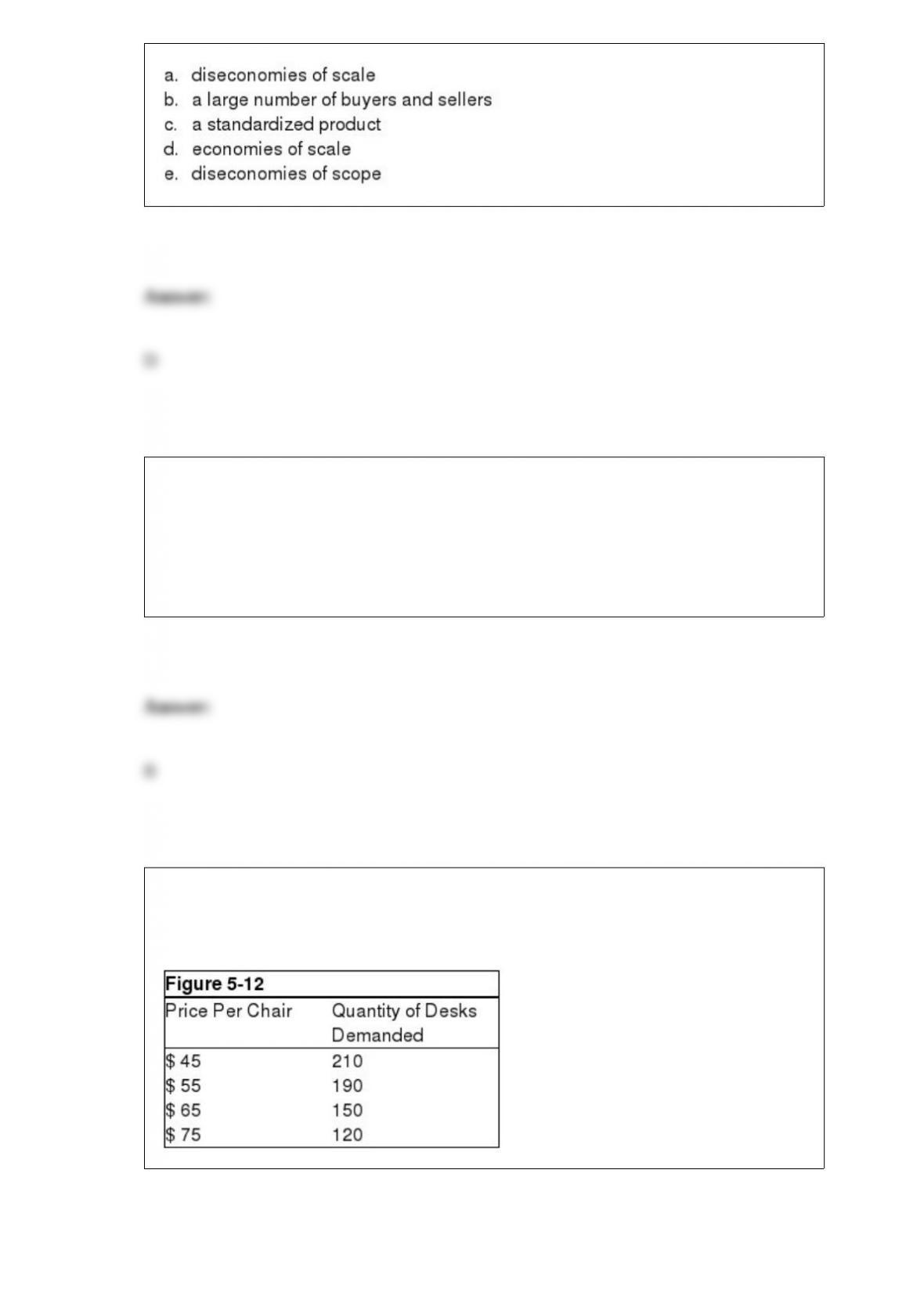
Bill’s Office Furniture sells office chairs and desks. Bill’s has changed the price per
chair by $10 in each of four successive weeks. Figure 5-12 shows the four prices along
with the corresponding sales of desks. From this information, it can be seen that