1) Suppose that a worker can produce 100 units of output in 7 hours. In the 8th hour, he
can produce 12 units of output. The worker can produce 112 units of output in 8 hours.
a.True
b.False
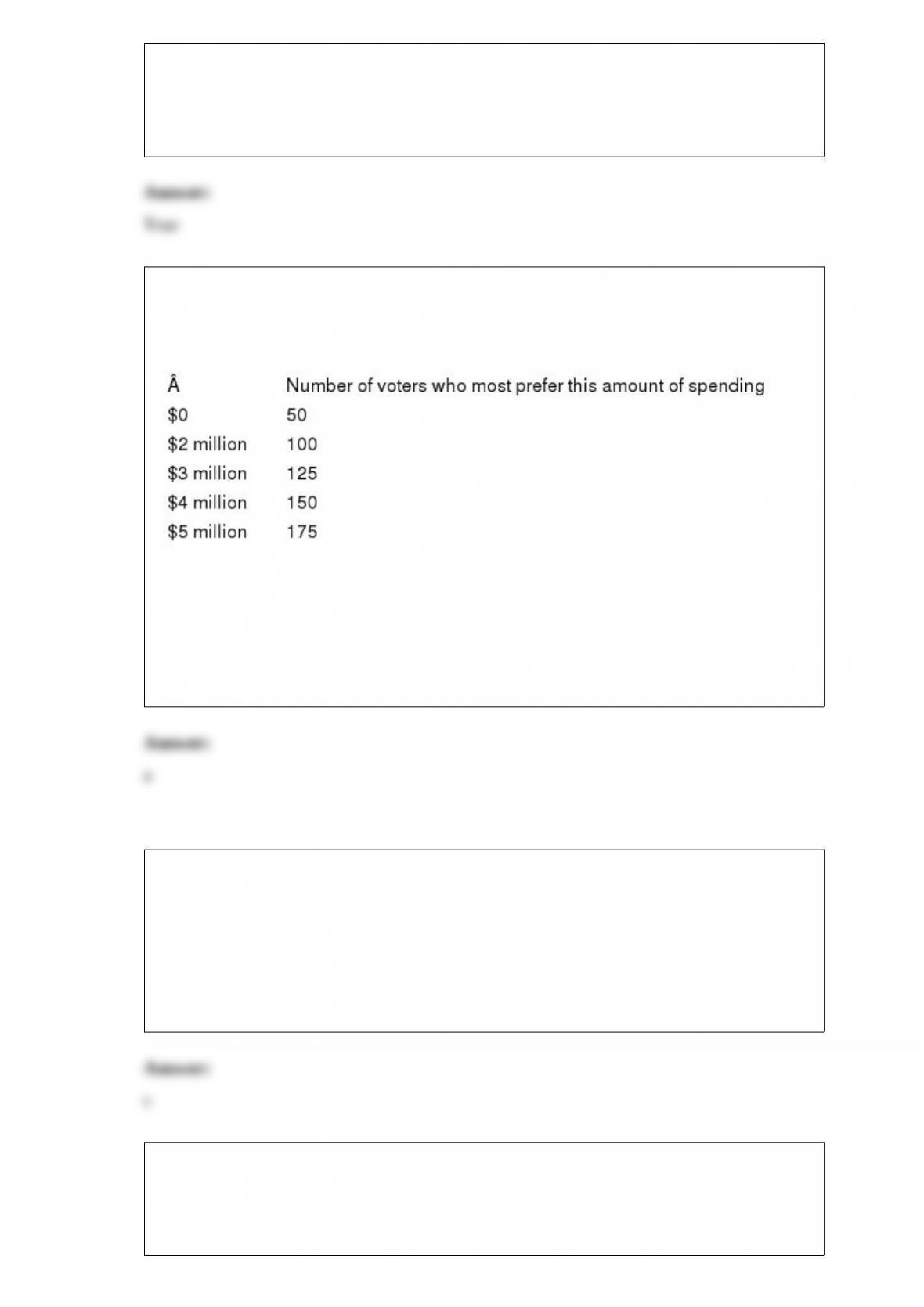
2) Table 22-19
The 600 voters of Appleton are deciding by majority rule how much to spend on a new
library.
Refer to Table 22-19. If an election were held between spending $2 million and $3
million, the median voter would vote for
a.$3 million and $3 million would win.
b.$3 million and $2 million would win.
c.$2 million and $3 million would win.
d.$2 million and $2 million would win.
3) Which of the following is a lesson from the Condorcet paradox?
a.If voters are choosing a point along a line, then majority rule will pick the most
preferred point of the median voter.
b.Under certain conditions, there is no scheme for aggregating individual preferences.
c.When there are more than two options, deciding the order in which to vote can have a
powerful influence over the outcome of an election.
d.Majority voting always indicates what outcome a society really wants.
4) In a market with positive externalities, the market equilibrium quantity maximizes
the welfare of society as a whole.
a.True
b.False
5) It costs a furniture company $8,750 to produce 25 tables. The company’s total cost
will be $9,125 if it produces a 26thtable. If the company produces 26 tables, then
a.its average cost is greater than its marginal cost.
b.its average cost and its marginal cost are equal.
c.its average cost is less than its marginal cost.
d.This cannot be determined from the information given.
6) A competitive market is in long-run equilibrium. If demand decreases, we can be
certain that price will
a.fall in the short run. All firms will shut down, and some of them will exit the industry.
Price will then rise to reach the new long-run equilibrium.
b.fall in the short run. No firms will shut down, but some of them will exit the industry.
Price will then rise to reach the new long-run equilibrium.
c.fall in the short run. All, some, or no firms will shut down, and some of them will exit
the industry. Price will then rise to reach the new long-run equilibrium.
d.not fall in the short run because firms will exit to maintain the price.
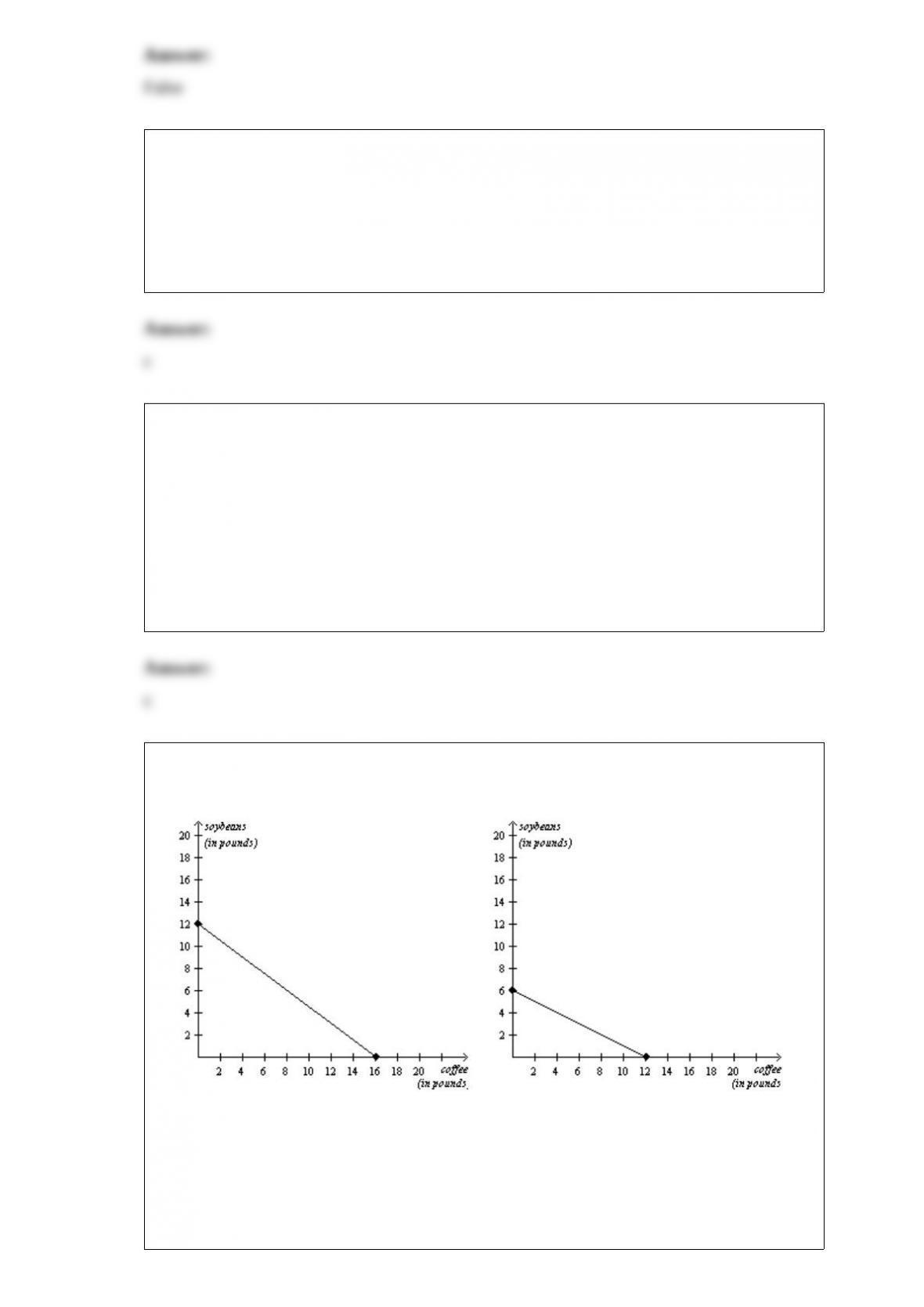
7) Chile’s Production Possibilities Frontier Colombia’s Production Possibilities
Frontier
Chile has a comparative advantage in the production of
a.coffee and Colombia has a comparative advantage in the production of soybeans.
b.soybeans and Colombia has a comparative advantage in the production of coffee.
c.both goods and Colombia has a comparative advantage in the production of neither
good.
d.neither good and Colombia has a comparative advantage in the production of both
goods.
8) Lisa’s Production Possibilities FrontierBryce’s Production Possibilities Frontier
a.True
b.False
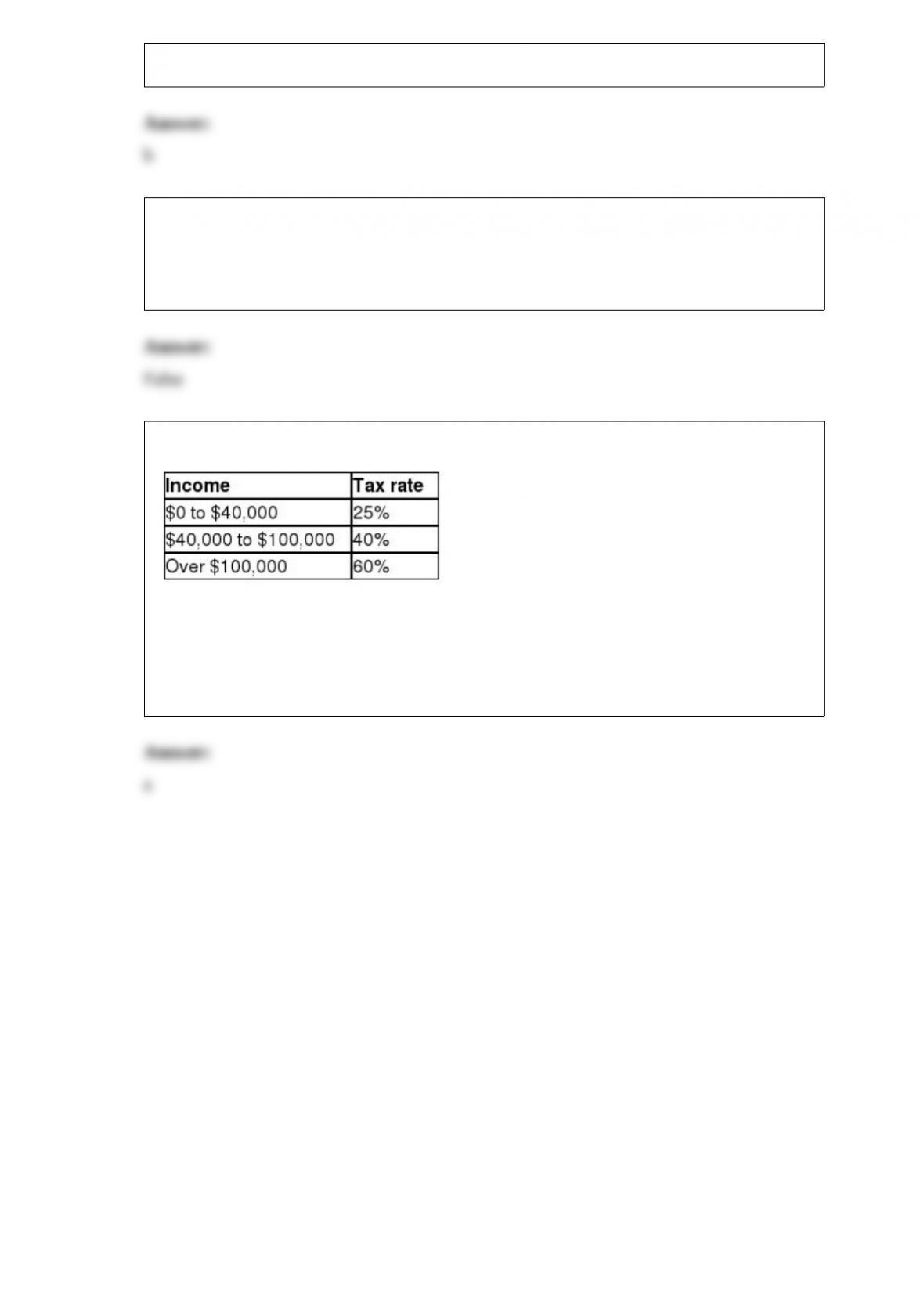
12) Table 12-4
What is the marginal tax rate for a person who makes $35,000?
a. 25%
b.30%
c.40%
d.60%