
Which of the following describes a situation in which a good or service is produced at
the lowest possible cost?
A) productive efficiency
B) allocative efficiency
C) marginal efficiency
D) profit maximization
Increasing the growth rate of GDP per capita and sustaining this growth rate in an
economy can
A) increase infant mortality.
B) increase standards of living.
C) increase the level of poverty.
D) lower life expectancy.
When people who buy insurance change their behavior after the purchase because they
are protected from loss by the insurance, the insurance market is said to face the
problem of
A) moral hazard.
B) adverse selection.

C) asymmetric information.
D) economic irrationality.
The balance of payments includes which three accounts?
A) the current account, the financial account, and the capital account
B) the capital flows account, the financial account, and the trade account
C) the net investment account, the net exports account, and the net transfers account
D) the balance of trade account, the net foreign investment account, and statistical
discrepancy
Many biologic drug manufacturers are pushing for patent protection to be extended to
12 years before generics are allowed to be introduced to the market. This reflects which
of the following barriers to entry?
A) control of a key resource
B) network externalities
C) entry blocked by government action
D) economies of scale creating a natural monopoly

According to an article in the Wall Street Journal, unlike airlines, even elite hotels don’t
have sophisticated systems that can react quickly to changes in demand. Even if they
could, many hoteliers say people don’t respond that much to lower rates. “We’ve tested
this, cutting our rates by $50 [per night], and we didn’t see an appreciable response in
occupancy,” says Jim Schultenover, a vice president for Ritz-Carlton.
Source: Jesse Drucker, “In Times of Belt-Tightening, We Seek Reasonable Rates,” Wall
Street Journal, April 6, 2001. Based on the information above, the demand for hotel
rooms is
A) elastic.
B) unit-elastic.
C) inelastic.
D) perfectly elastic.
Compared to monopoly pricing, an optimal two-part tariff
A) reduces economic efficiency.
B) eliminates the deadweight loss.
C) equates marginal revenue and average revenue.
D) increases consumer surplus.
Suppose you deposit $4,000 in currency into your checking account at Bank of
America. Assume that Bank of America has no excess reserves at the time you make
your deposit and that the required reserve ratio is 10 percent.
a. Use a T-account to show the initial effect of this transaction on Bank of America’s
balance sheet.
b. Suppose that Bank of America makes the maximum loan they can from the funds you
deposited. Use a T-account to show the initial effect on Bank of America’s balance sheet
from granting the loan. Also include in this T-account the transaction from question (a.).
c. Now suppose that whoever took out the loan in question (b) writes a check for this
amount and that the person receiving the check deposits it in Bank of Boston. Show the
effect of these transactions on the balance sheet of Bank of America and Bank of
Boston, after the check has been cleared. On the T-account for Bank of America,
include the transactions from questions (a) and (b).
d. What is the maximum increase in checking account deposits that can result from your
$4,000 deposit? What is the maximum increase in the money supply? Explain.
If the economy is producing ________, unemployment is at its natural rate.
A) at potential GDP
B) above potential GDP
C) at an inflation rate of zero
D) at an unemployment rate of zero
If the demand for a life-saving drug was perfectly inelastic and the price doubled, the
quantity demanded would
A) also double.
B) decrease by 50%.
C) be cut in half.
D) remain constant.
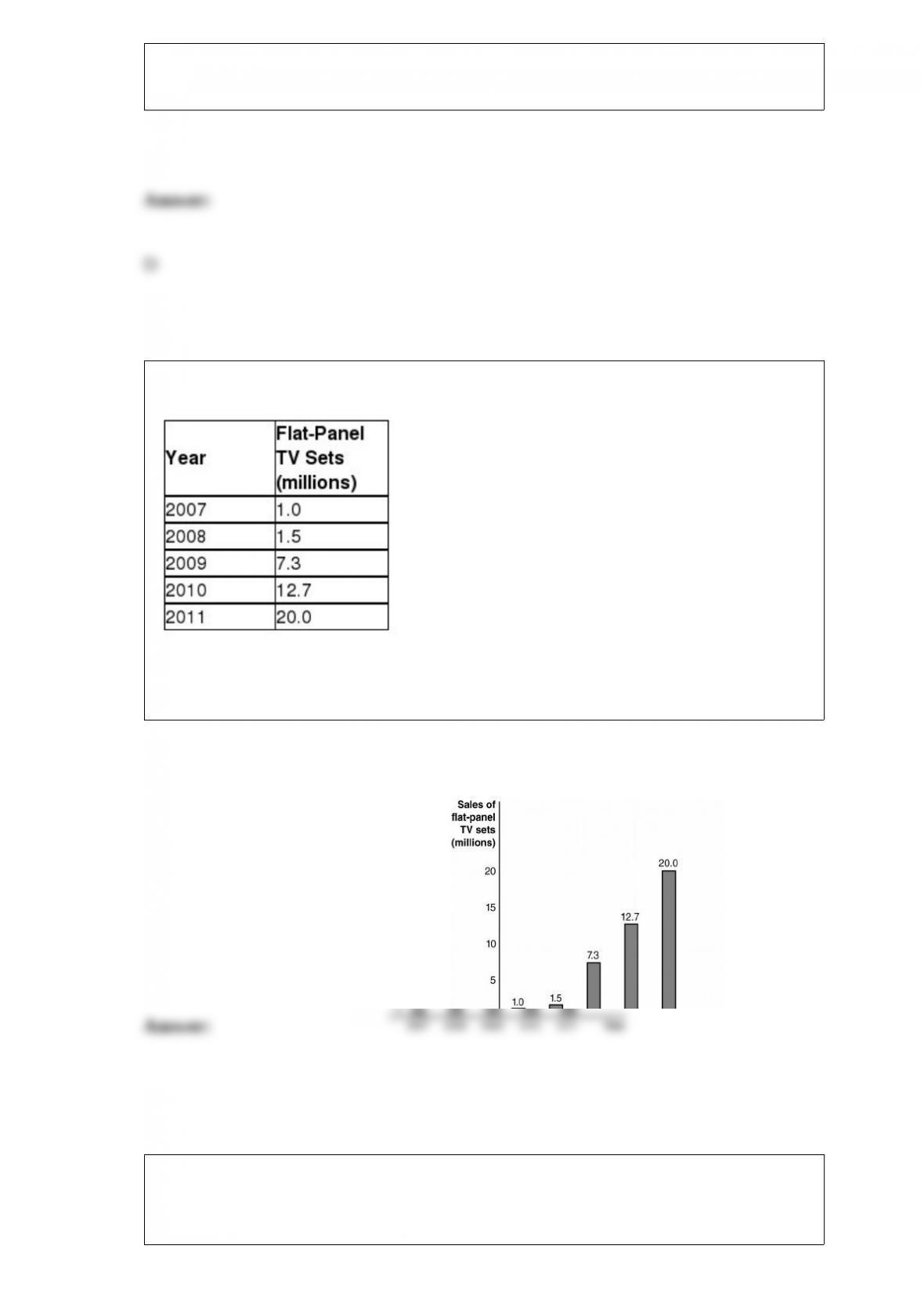
Table 1-4
The table above shows the sales of flat-panel television sets in Central America. Present
the information using a bar graph.
About ________ of research on new medicines is carried out in the United States. U.S.
A) 10 percent

B) one-half
C) two-thirds
D) 90 percent
Which of the following is a macroeconomics question?
A) What determines the unemployment rate?
B) How is the production quantity of digital cameras determined?
C) What factors determine the price of iPhones?
D) What determines the wages and benefits of flight attendants?