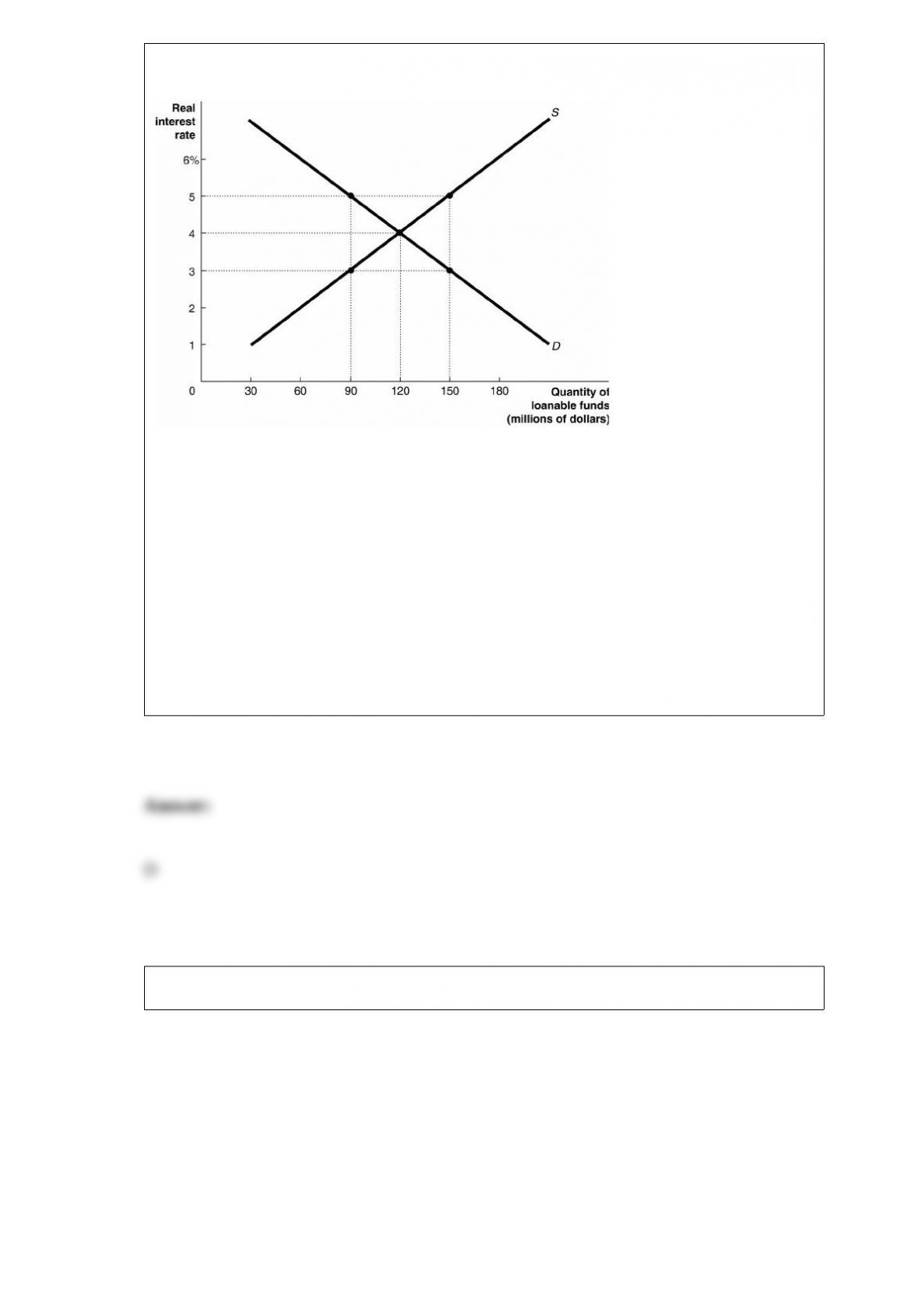
Figure 10-6
Refer to Figure 10-6. The loanable funds market is in equilibrium, as shown in the
figure above. As a result of an increase in the government budget deficit, the ________
for loanable funds will ________, thereby ________ the equilibrium real interest rate
and ________ the equilibrium quantity of loanable funds.
A) demand; rise; increasing; decreasing
B) supply; rise; decreasing; increasing
C) demand; fall; decreasing; decreasing
D) supply; fall; increasing; decreasing
Figure 7-1
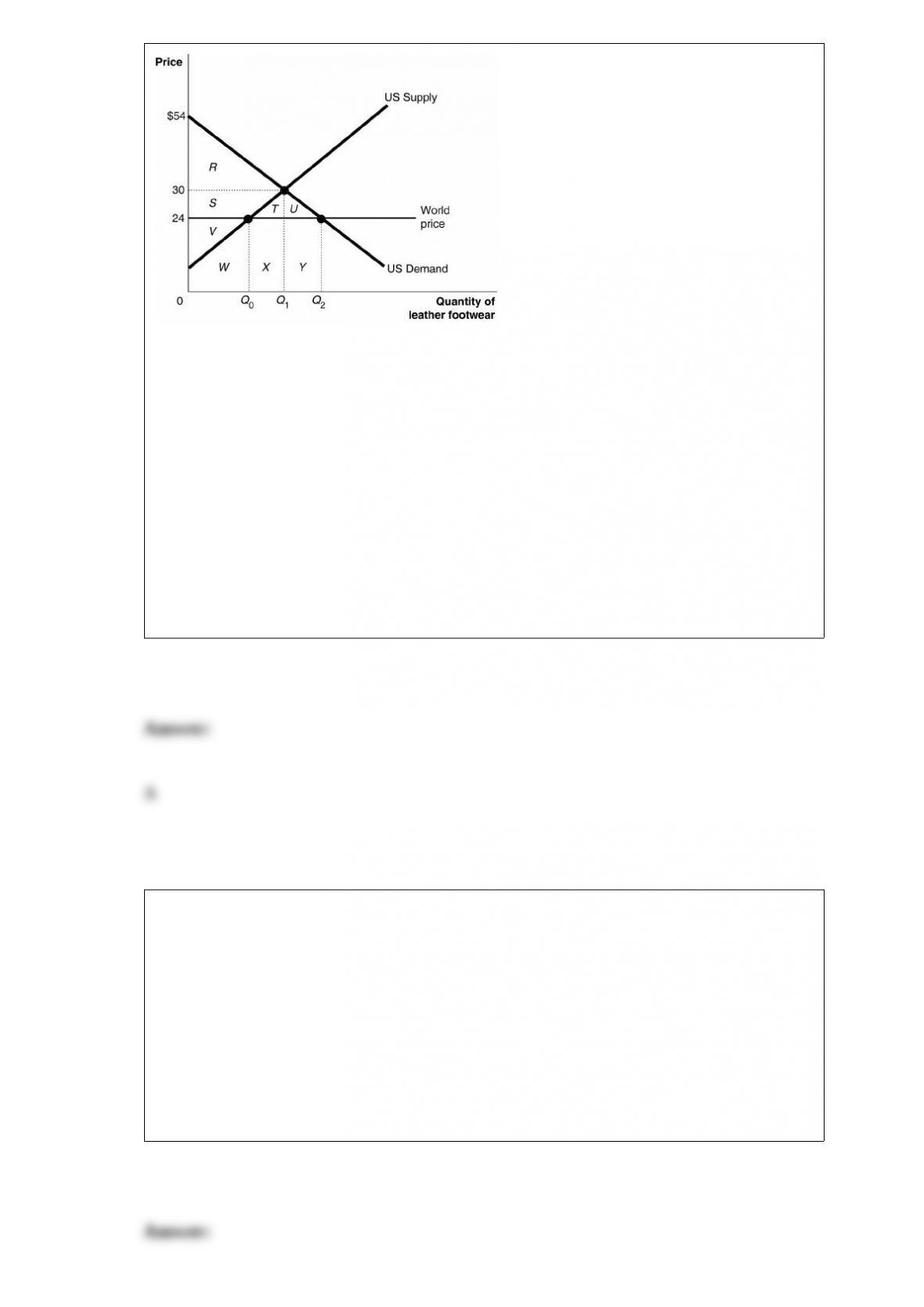
Figure 7-1 shows the U.S. demand and supply for leather footwear.
Refer to Figure 7-1. Suppose the government allows imports of leather footwear into
the United States. What will be the domestic quantity supplied?
A) Q0
B) Q1
C) Q2
D) Q2 – Q0
Increases in real GDP since 1900 can actually underestimate growth in the standard of
living for Americans since 1900 because
A) the level of pollution in 1900 was much higher than it is today.
B) the crime rate was higher in 1900 than it is today.
C) goods and services are more expensive today as compared to 1900.
D) the quality of health care that exists today was not available in 1900.

A decrease in United States net foreign direct investment would occur if
A) U.S. citizens have decreased the value of foreign stocks and bonds they own.
B) U.S. citizens have decreased their building or purchasing of facilities in foreign
countries.
C) net foreign investment decreases.
D) net capital flows increase.
The “new product bias” in the consumer price index refers to the idea that
A) consumers switch to new goods when the prices of old goods increase, and the CPI
overestimates the cost to consumers.
B) consumers switch to old goods when the prices of new goods increase, and the CPI
underestimates the cost to consumers.
C) consumers prefer new goods, even if they are worse in quality than old goods, and
this causes the CPI to underestimate the cost to consumers.
D) new products’ prices often decrease after their initial introduction, and the CPI is
adjusted infrequently and overestimates the cost to consumers.
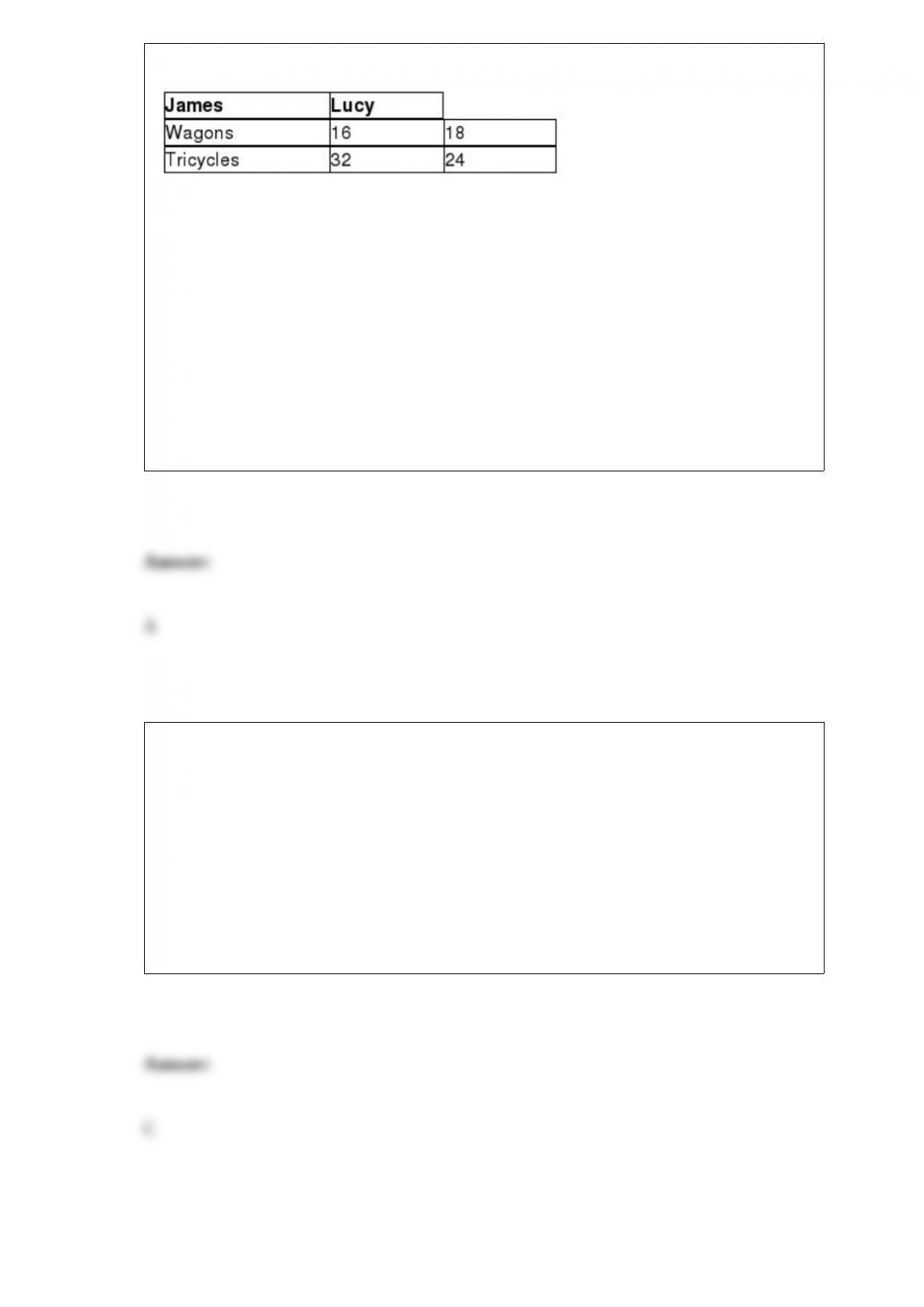
Table 2-6
Table 2-6 shows the output per week of two people, James and Lucy. They can either
devote their time to making bracelets or making necklaces.
Refer to Table 2-6. What is Lucy’s opportunity cost of making a tricycle?
A) 3/4 of a wagon
B) 3 wagons
C) 1 1/3 tricycles
D) 2 tricycles
In 2002, the Enron corporation was accused of falsifying information regarding
liabilities on Enron’s balance sheets, thereby
A) increasing Enron’s assets on the balance sheet.
B) reducing Enron’s profit on the balance sheet.
C) increasing Enron’s net worth on the balance sheet.
D) reducing Enron’s net income on the income statement.

Stagflation occurs when
A) inflation rises and GDP rises.
B) inflation falls and GDP rises.
C) inflation rises and GDP falls.
D) inflation falls and GDP falls.
The additional cost to a firm of producing one more unit of a good or service is the
A) minimum cost.
B) total cost.
C) opportunity cost.
D) marginal cost.
What is a primary market?
A) a market where primary inputs like steel are sold
B) a market where you can sell any bonds you own as a private investor
C) a market where a newly issued claims are sold to initial buyers by the borrowing
firm
D) a market where you can sell any stocks you own as a private investor

Which of the following Nobel laureates became known for the study of asymmetric
information?
A) Gary Becker
B) Michael Spence
C) George Ackerlof
D) Ronald Coase
Which of the following is not a consequence of hyperinflation?
A) Money’s function as a medium of exchange is enhanced.
B) Money loses value so rapidly that firms and individuals stop holding it.
C) It causes an economy to suffer slow growth.
D) The price level grows in excess of hundreds of percentage points per year.

The formula for calculating the CPI is
A) (Expenditures in the current year/Expenditures in the base year) x 100.
B) (Expenditures in the current year x Expenditures in the base year)/100.
C) (Expenditures in the base year/Expenditures in the current year).
D) (Expenditures in the base year x 100)/(Expenditures in the current year).
During a deflationary period,
A) the nominal interest rate is less than the real interest rate.
B) the real interest rate is less than the nominal interest rate.
C) the price level rises.
D) the nominal interest rate does not change.