1) assuming no change in product demand, a pure monopolist:
a.can increase price and increase sales simultaneously because it dominates the market.
b.adds an amount to total revenue which is equal to the price of incremental sales.
c.should produce in the range where marginal revenue is negative.
d.must lower price to increase sales.
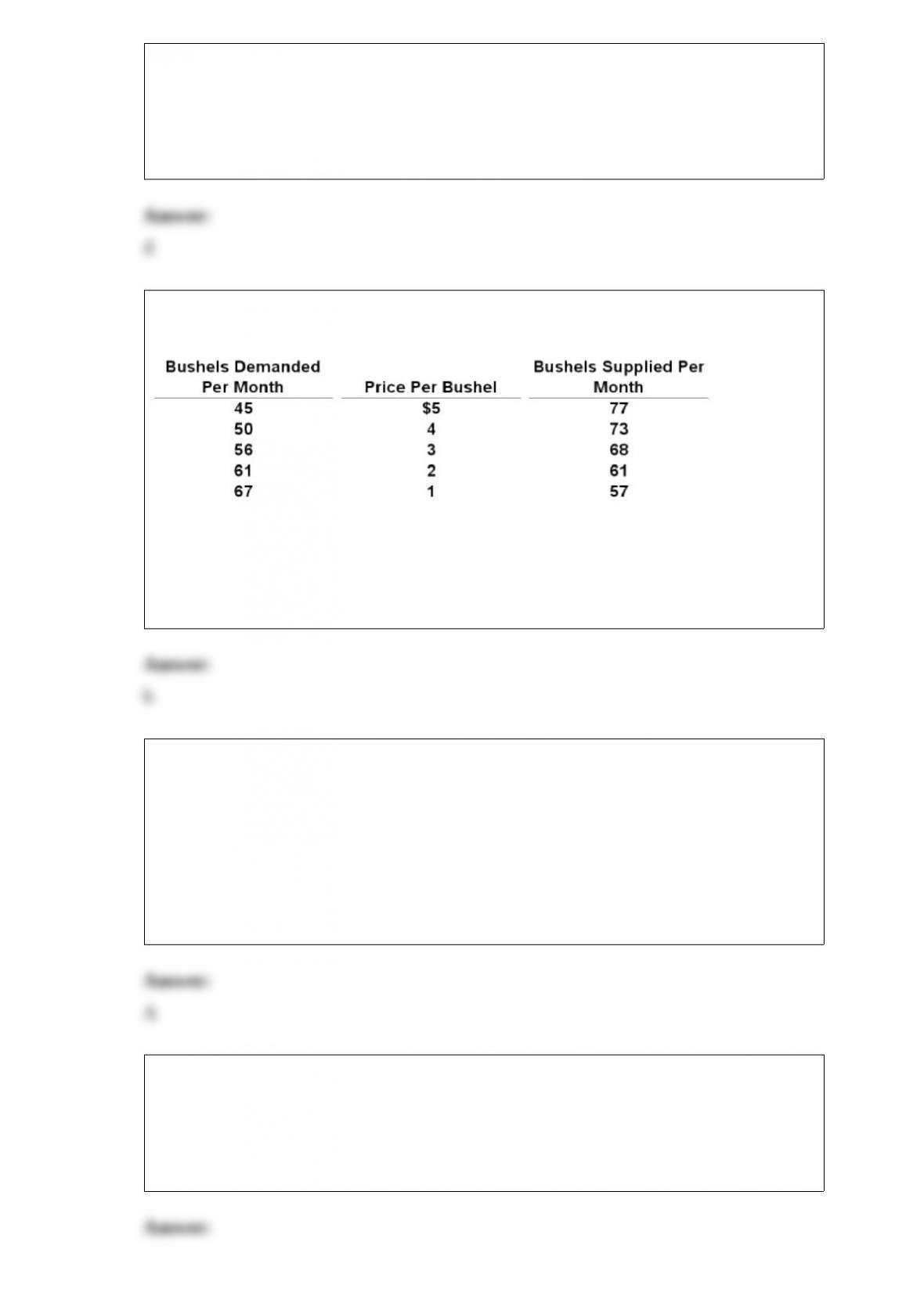
2) the given supply and demand data for wheat:
refer to the above data. if price was initially $4 and free to fluctuate, we would expect:
a.quantity supplied to continue to exceed quantity demanded.
b.the quantity of wheat supplied to decline as a result of the subsequent price change.
c.the quantity of wheat demanded to fall as a result of the subsequent price change.
d.the price of wheat to rise.
3) Which one of the following best exemplifies the principal-agent problem in the
employer-employee relationship?
A.A worker takes 20 minute coffee-breaks although the employer allots only 15
minutes for this purpose.
B.A worker is on the job 50 hours per week although only 40 hours are required for
promotion.
C.A worker opts for early retirement in response to the firm’s incentive plan.
D.A worker’s productivity is independent of the wage paid.
4) As it relates to international trade, dumping:
A.is a form of price discrimination illegal under U.S. antitrust laws.
B.is the practice of selling goods in a foreign market at less than cost.
C.constitutes a general case for permanent tariffs.
D.is defined as selling more goods than allowed by an import quota.

5) which of the following has not been a facilitating factor in world trade?
a.dramatic improvements in communications technology
b.general declines in tariffs
c.import quotas
d.improvements in transportation technology
6) juan wants to migrate from mexico to the united states, but knows he cannot do so
legally at this time. if he decides to attempt to enter the u.s. illegally, which of the
following costs will he most likely not face?
a.payment to an expediter (“coyote”) to facilitate his entry into the u.s.
b.a green card application fee.
c.the loss of income from his current factory job.
d.all of these are costs he must incur to migrate.
7) An important problem in evaluating public projects through the use of cost-benefit
analysis is that:
A.real costs cannot be stated in monetary terms.
B.one must decide whether to compare total costs and total benefits or marginal costs
and marginal benefits.
C.positive and negative externalities associated with such projects may be difficult to
measure.
D.the funding of such projects is inherently inflationary.
8)
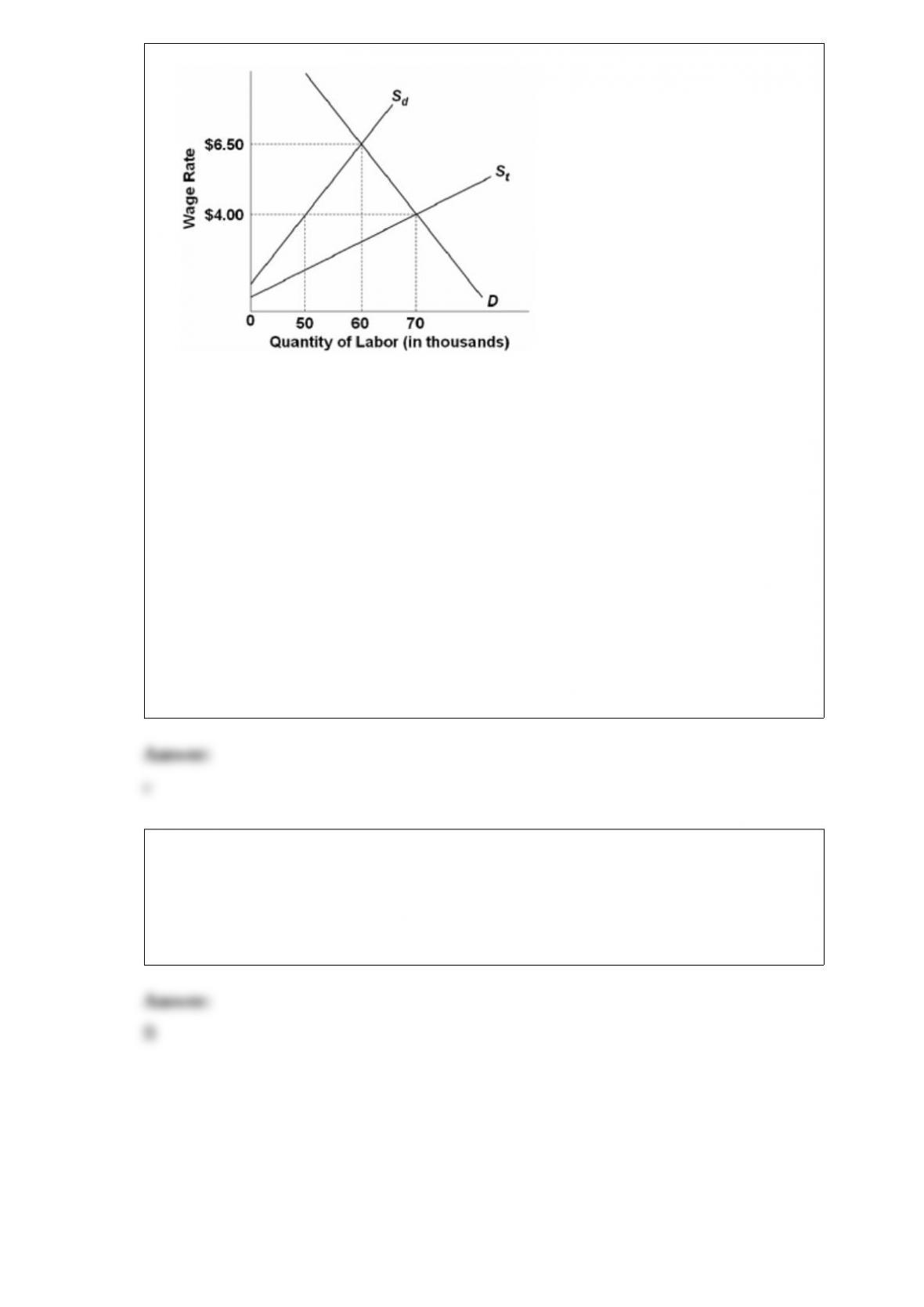
assumptions: 1) employers in this market are willing and able to ignore minimum wage
laws; 2) sd represents the supply of domestically-born (and legal immigrant) workers;
3) st represents the total supply of workers in this labor market (sd plus illegal
immigrants); and 4) unless otherwise stated, illegal immigration is not effectively
blocked by the government.
refer to the above figure. it suggests that:
a.illegal immigrant workers are in this market because these are jobs that domestic-born
workers are unwilling to do.
b.employment of domestic-born workers could be increased by 20,000 if illegal
immigration were blocked.
c.the presence of illegal immigrants in this labor market reduces wages, making these
jobs less attractive to domestic-born workers.
d.firms hiring from this labor market would be forced to shut down if illegal
immigration were blocked.
9) If aggregate expenditures exceed GDP in a private closed economy:
A.leakages will exceed injections.
B.planned investment will exceed saving.
C.unplanned investment in inventories will occur.
D.saving will exceed planned investment.
10)
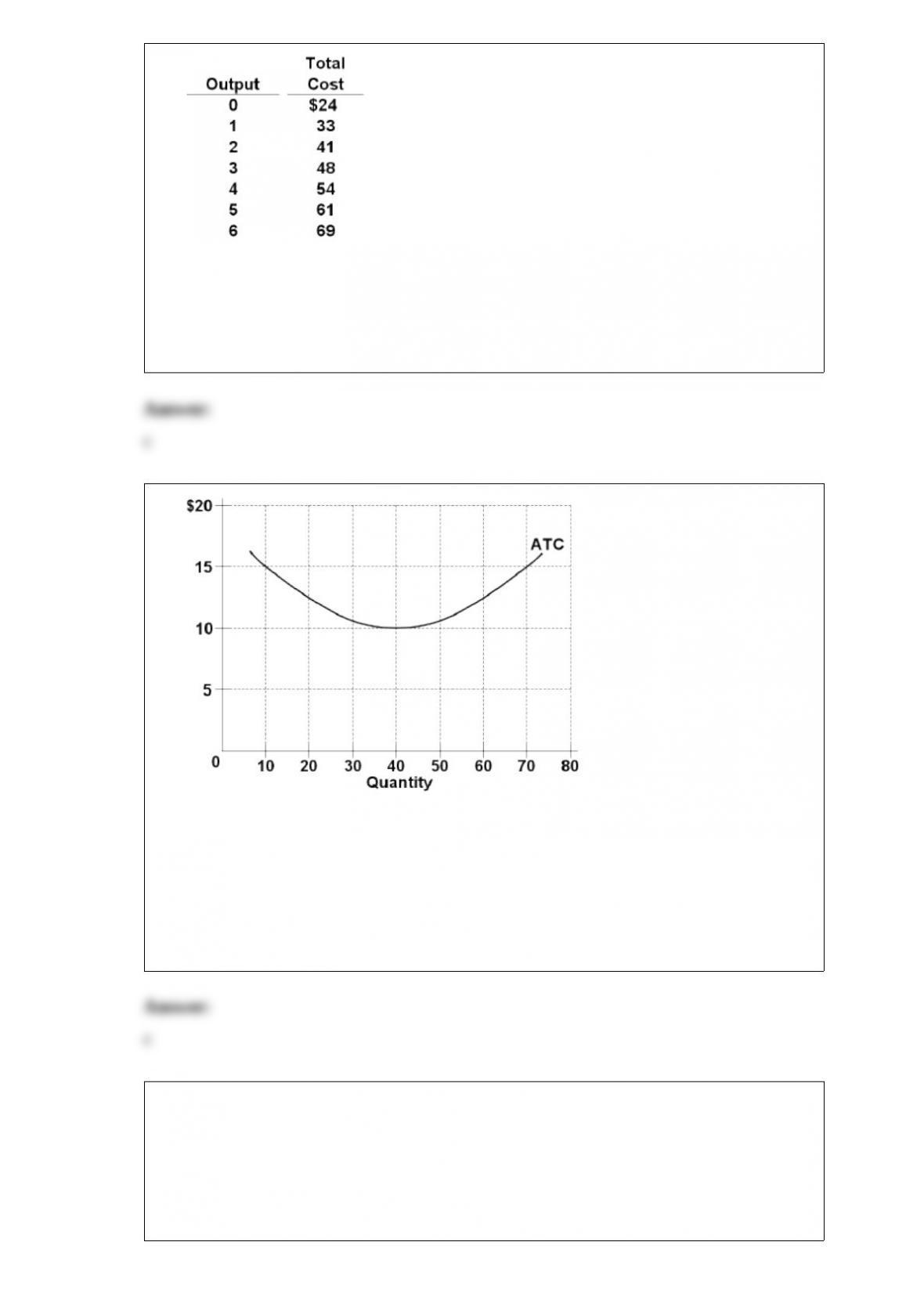
refer to the above data. the total variable cost of producing 5 units is:
a.$61.
b.$48.
c.$37.
d.$24.
11)
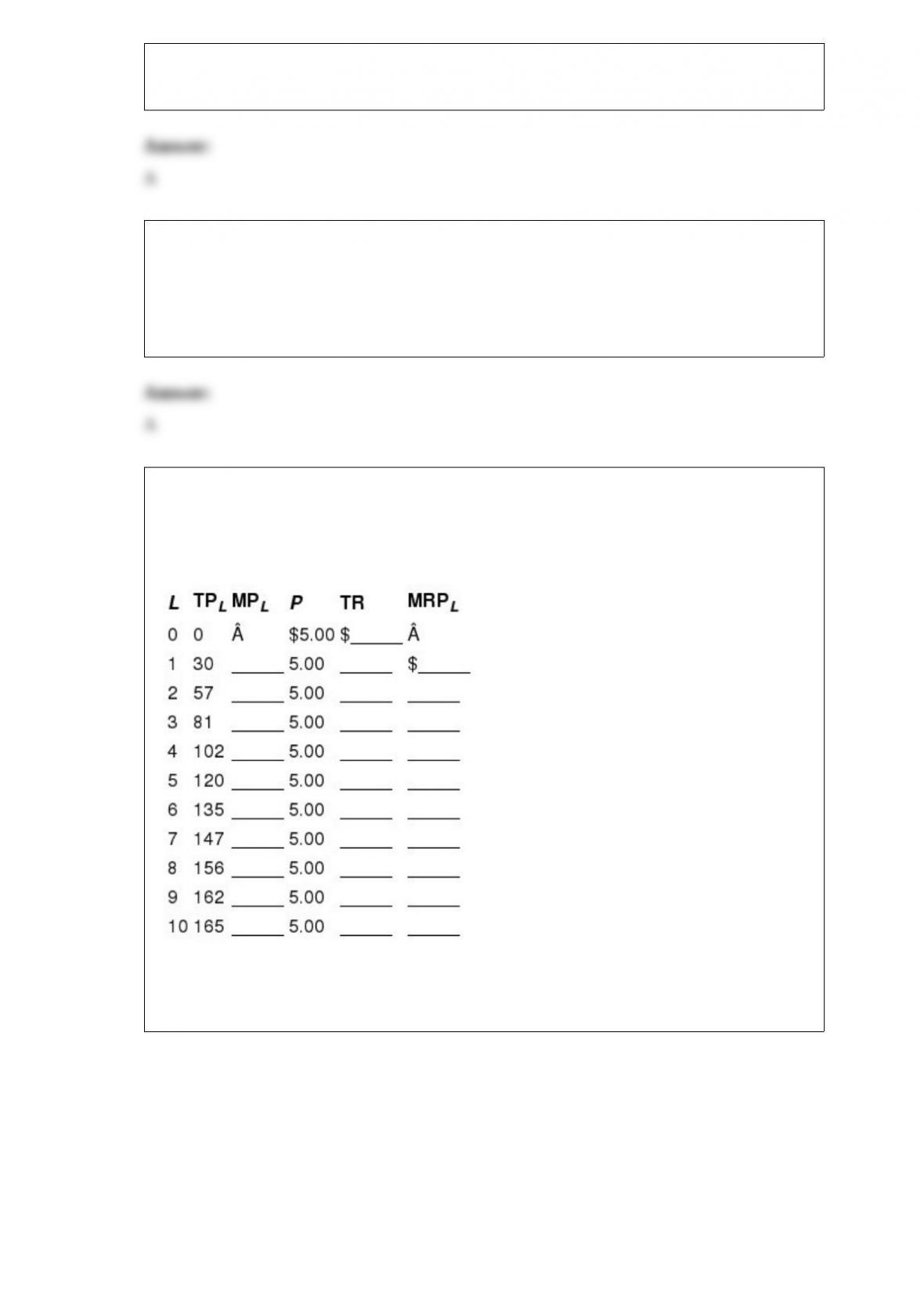
refer to the above diagram showing the average total cost curve for a purely competitive
firm. suppose this firm is maximizing its total profit and the market price is $15. the
firm’s per unit profit is:
a.$5.
b.$200.
c.a positive amount less than $5.
d.a positive amount more than $200.
12) Which of the following statements is false?
A.Studies show that developing nations that have relied on import restrictions to protect
domestic industries have had higher growth rates than similar nations pursuing more
open economic policies.
B.The United States Constitution forbids individual states from levying tariffs.
C.The high tariffs of the Smoot-Hawley Act of 1930 and the retaliation they caused
worsened the Great Depression.
D.The European Union has enhanced prosperity in Western Europe.
13) Banks and thrifts have responded to their relative declines by:
A.expanding their services and merging with one another.
B.merging with computer and software manufacturers.
C.selling their ATMs to new startup firms.
D.asking for trade protection against imported of financial services.
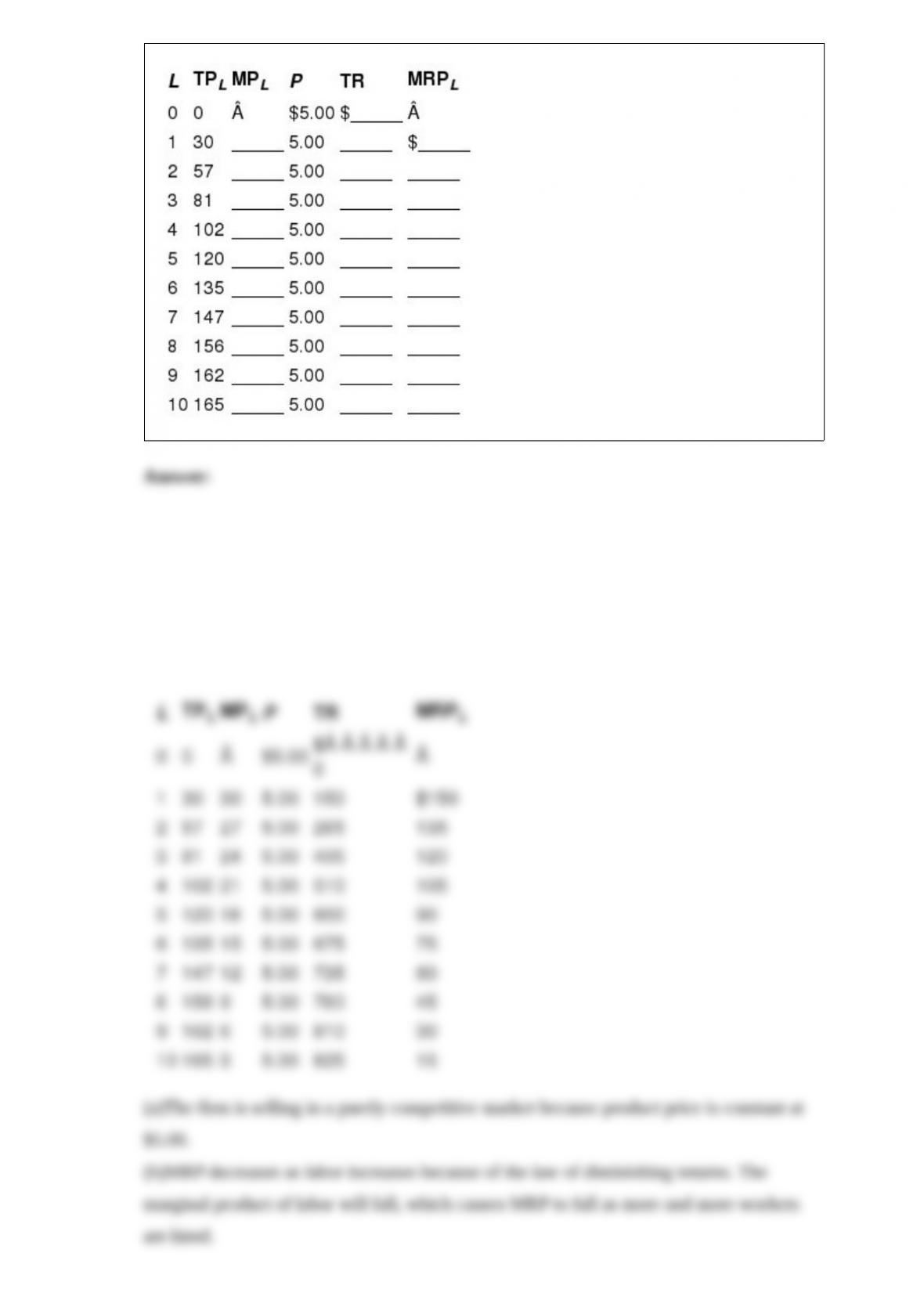
14) Complete the following table, where L is the units of labor, TPL is the total product
of labor, MPL is the marginal product of labor, P is product price, TR is total revenue,
and MRPL is the marginal revenue product of labor.
(a)In what type of market is the firm selling its product? How do you know?
(b)Why does the MRP schedule decrease as labor increases?
(c)Complete the following table.
15) if a good’s production creates substantial positive externalities and no negative
externalities, then too:
a.much of the good will be produced unless firms are subsidized.
b.much of the good will be produced unless firms are taxed.
c.little of the good will be produced unless firms are subsidized.
d.little of the good will be produced unless firms are taxed.
16)
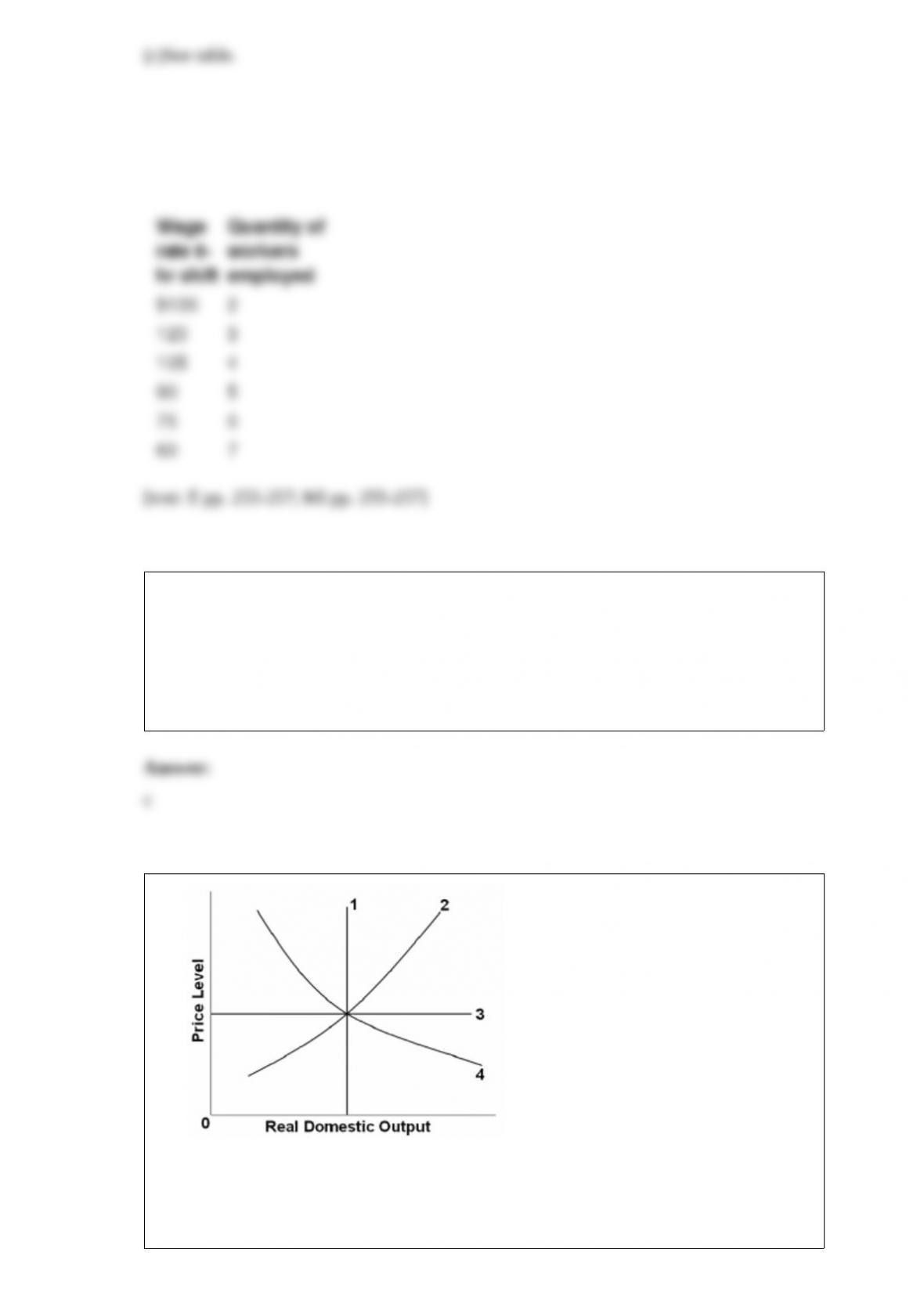
In the above diagram, the economy’s immediate-short-run AS curve is line ___, its
short-run AS curve is _____, and its long-run AS curve is line ___.
A.1; 2; 4
B.1; 2; 3
C.2; 3; 4
D.3; 2; 1
17) Behavioralists believe that:
A.if four or fewer firms control more than half of the market for a product, then the
Sherman Act is being violated.
B.industries should be judged on the basis of their price-output behavior and their
technological progressiveness.
C.there is no evidence that any monopolistic industries has abused its market power.
D.all concentrations of economic power are socially undesirable.
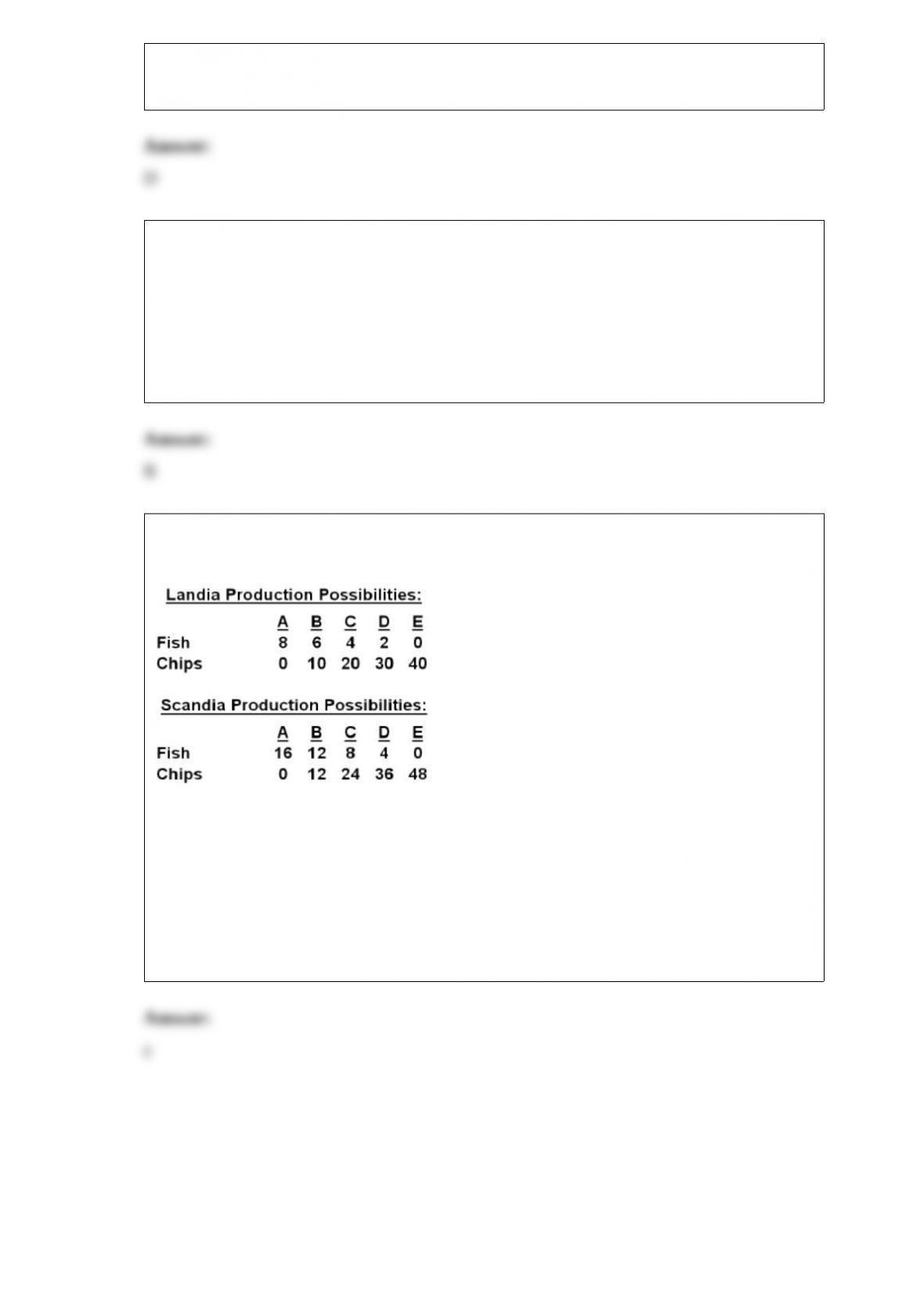
18) the following production possibilities data for landia and scandia:
refer to the above data. assume that before specialization and trade landia was
producing combination c and scandia was producing combination b. if these two
nations now specialize completely based on with comparative advantage, the total gains
from specialization and trade would be:
a.8 fish and 2 chips.
b.10 fish and 4 chips.
c.0 fish and 8 chips.
d.4 fish and 6 chips.