
Consumer equilibrium occurs at:
a. any point of intersection between the budget line and an indifference curve.
b. a point of tangency between the budget line and an indifference curve.
c. the point where the slope of the indifference curve equals the ratio of the quantities.
d. a point where the budget line cuts the curve from below.
Suppose the law of diminishing marginal utility holds for coffee. As a person drinks
more coffee during the day, the total utility he or she receives will:
a. increase faster and faster.
b. fall steadily.
c. remain constant.
d. rise, but at slower and slower rates.
Exhibit 7-9 Cost schedule for firm X
As shown in Exhibit 7-9, the total cost of producing 4 units is:
a. zero.
b. $227.
c. $250.
d. $100.
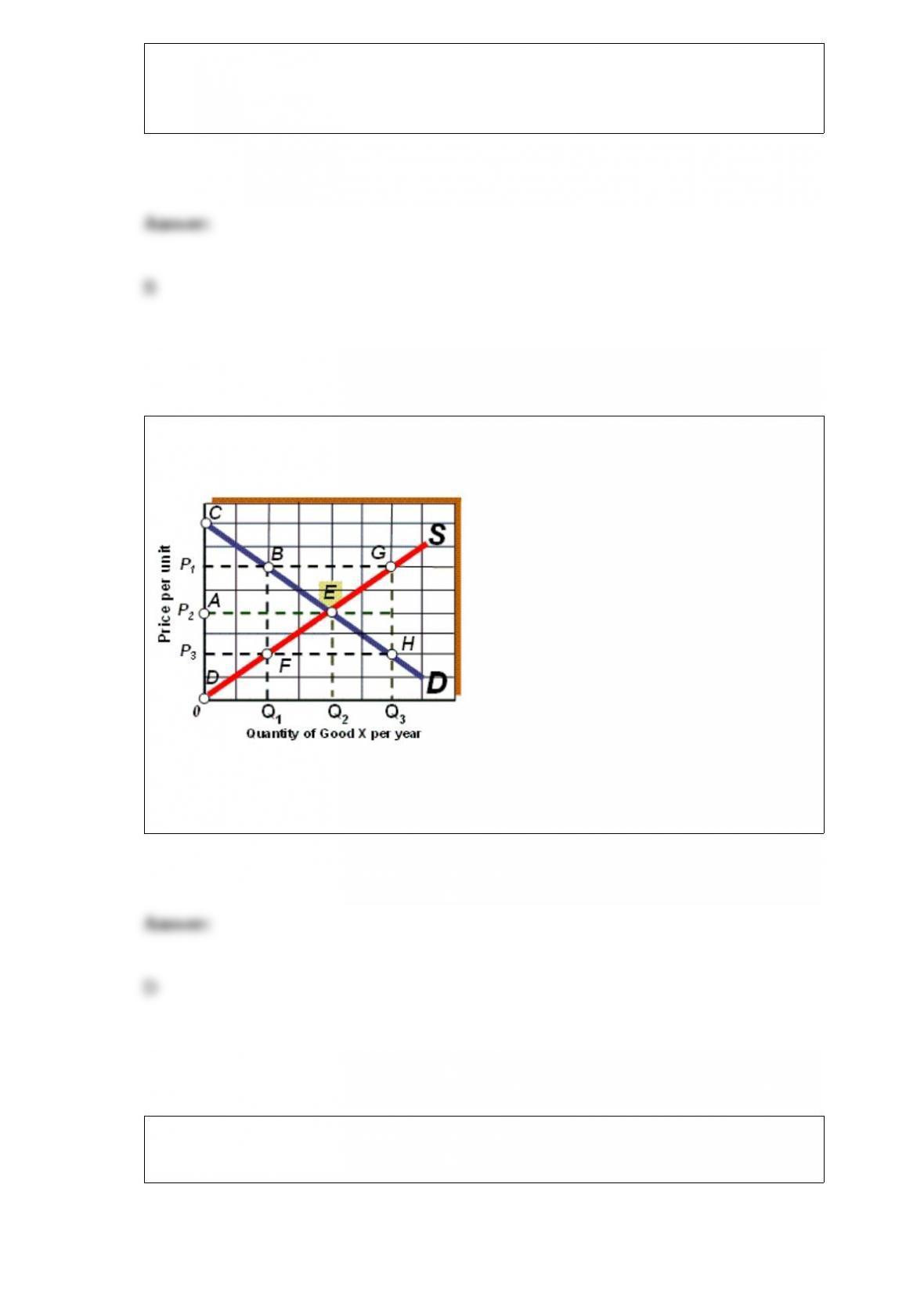
Exhibit 3A-2 Comparison of Market Efficiency and Deadweight Loss
As shown in Exhibit 3A-2, if the market price falls from P1 to P2, then:
a. consumer surplus increases. c. deadweight loss is eliminated.
b. producer surplus increases. d. all of these are true.
Exhibit 4-4 Supply and demand curves for good X

Which of the graphs in Exhibit 4-4 represents a decrease in the price of a factor of
production?
a. Graph A. c. Graph C.
b. Graph B. d. None of these.
Which of the following statements are false?
a. b and d.
b. Marginal cost is always rising.
c. Marginal and average total costs are equal at the most efficient production level.
d. The AFC and AVC curves do not cross.
e. The AFC and ATC curves do not cross.
Exhibit 6A-1 Budget line
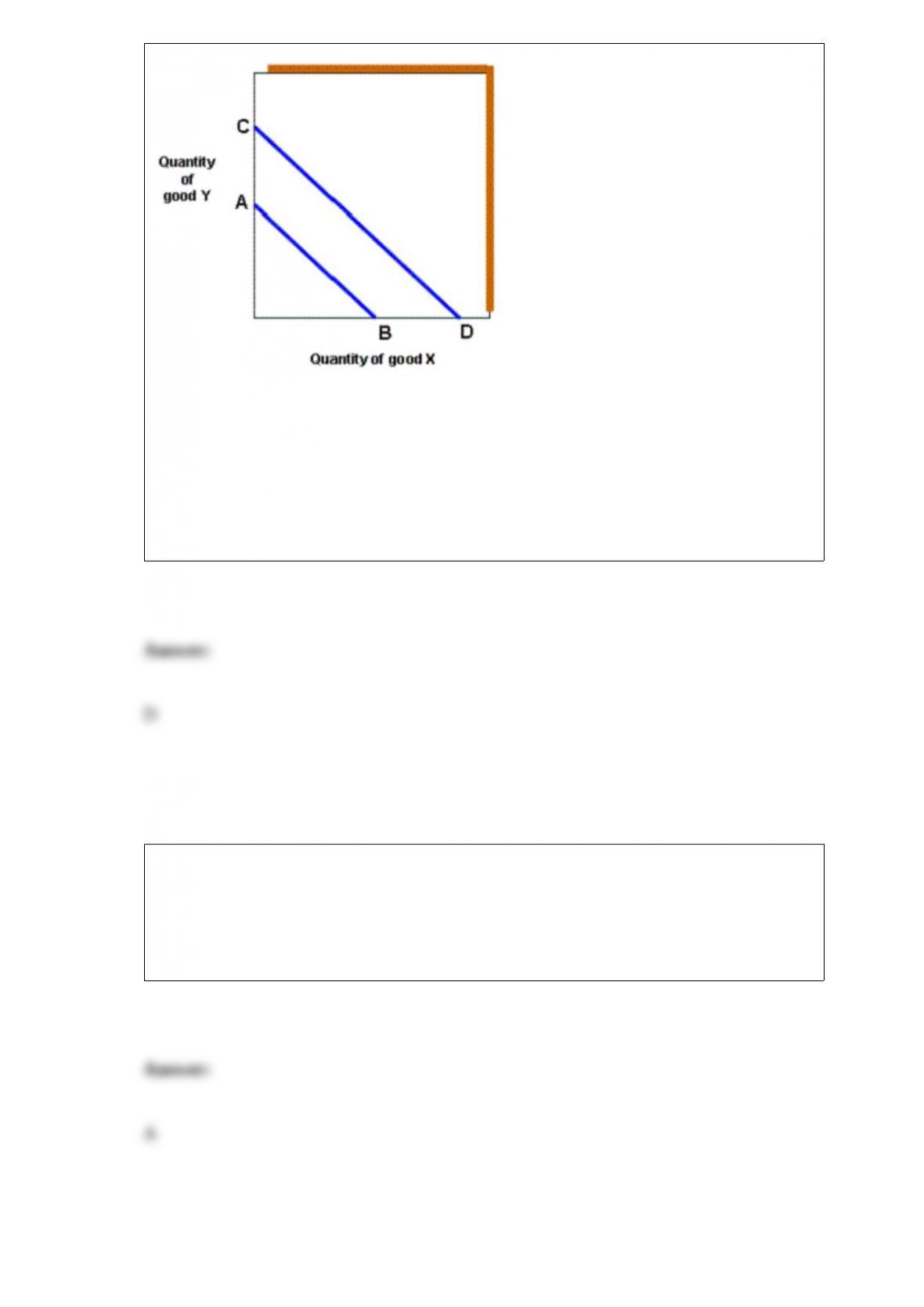
Assume Px is the price of good X on the horizontal axis and Py is the price of good Y on
the vertical axis. The slope of the budget line equals:
a. Py / PxY.
b. PyQy / Px Qx.
c. (1 Py/ Px).
d. Px / Py.
The market demand is the:
a. sum of all individual demand curves in a market.
b. sum of all individual prices in a market.
c. sum of all individual demand curves and supplies in a market.
d. vertical sum of all individual demand curves.

Assuming that travel from New York to Los Angeles is a normal good, a decrease in
consumer income, other things being equal, will:
a. decrease the quantity demanded of travel to Los Angeles.
b. increase the demand for travel to Los Angeles.
c. decrease the demand for travel to Los Angeles.
d. increase the quantity of travel to Los Angeles demanded.
A merger between firms that compete in the same market is called a:
a. horizontal merger. c. conglomerate merger.
b. vertical merger. d. monopoly.
The assumption(s) made to construct a kinked-demand oligopoly model is (are) that:
a. all firms in the industry will ignore the price changes made by any one firm.
b. any price decrease will be ignored, but price increases will be followed.
c. all firms will follow a price decrease but will ignore any price increase.
d. all price changes made by any firm will be followed by all of the other firms.
e. price can go up, but it cannot go down.
Assuming that chicken and beef are substitutes, a decrease in the price of beef, other
things being equal, will:
a. decrease the demand for beef. c. decrease the demand for chicken.
b. increase the demand for chicken. d. increase the demand for beef.
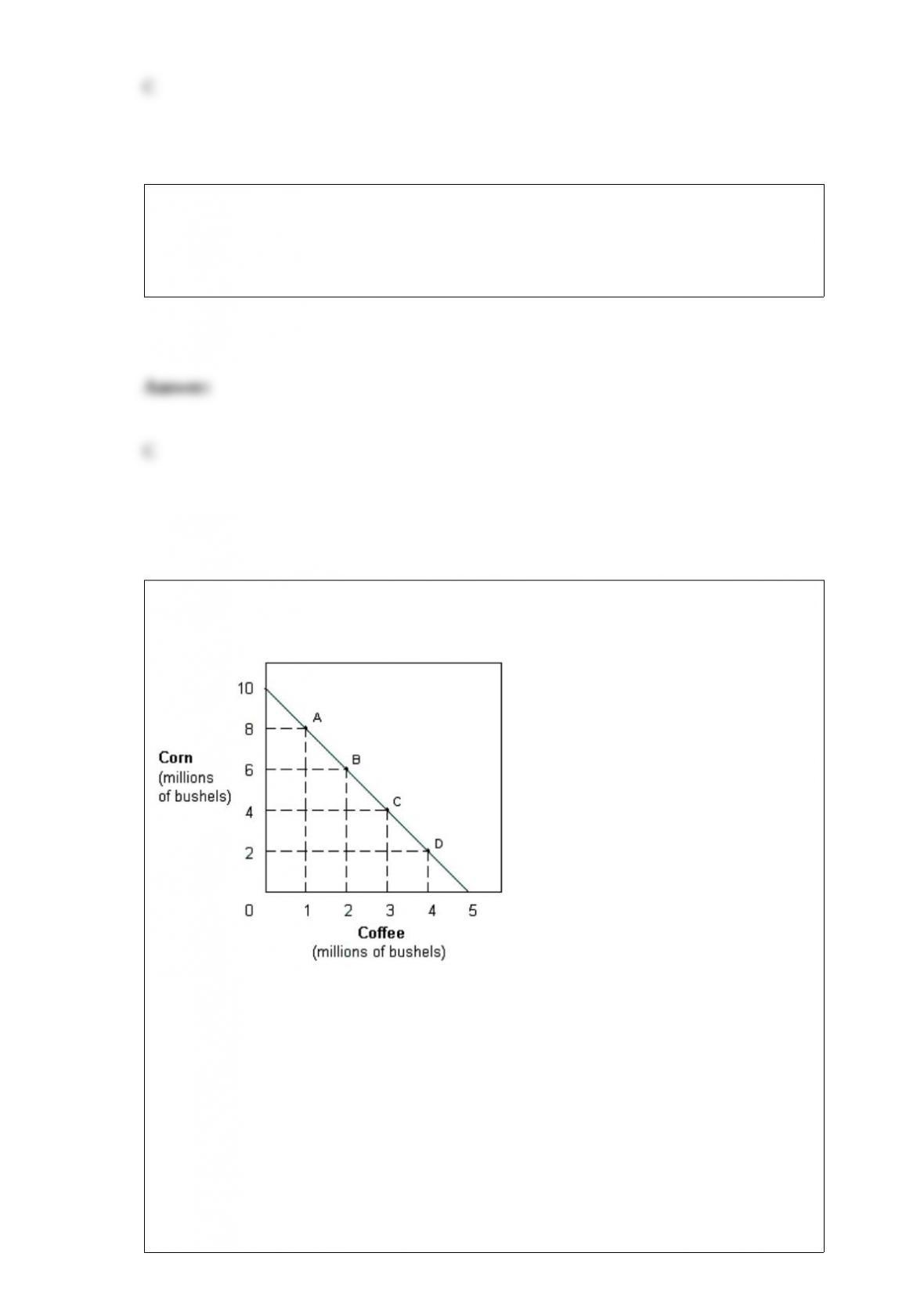
Exhibit 2-2 Production possibilities curve
In Exhibit 2-2, the slope of the production possibilities curve indicates that the
opportunity cost of:
a. coffee is constant.
b. coffee is increasing.
c. coffee is decreasing.
d. corn is increasing.

e. corn is decreasing,
Which of the following is always a characteristic of the oligopoly market structure?
a. Many sellers, each small in size relative to the overall market.
b. Few sellers.
c. All sellers produce identical products.
d. Easy, low-cost entry and exit.
The purpose of antitrust laws is to:
a. reduce anticompetitive activities. c. guarantee worker safety.
b. regulate electric companies. d. promote quality products.
If the price of labor falls, we can expect:

a. demand for labor will increase.
b. quantity demanded of labor will increase.
c. demand for labor will decrease.
d. quantity demanded of labor will decrease.
e. marginal factor cost to rise in a competitive market.
If a shortage exists in a market then:
a. the price is below equilibrium.
b. the quantity demanded exceeds the quantity supplied.
c. the price will rise in the near future.
d. all of these.
If the market supply increases and, simultaneously, market demand decreases, the new
equilibrium will show:
a. market price will decrease, and market quantity exchanged could increase, decrease,
or remain unchanged.
b. market price will increase, and market quantity exchanged will decrease.
c. market price will increase, and the quantity exchanged could increase, decrease, or
remain the same.
d. market price could increase, decrease, or remain the same, and quantity exchanged

will increase.
e. market price will increase, decrease, or remain the same, and quantity exchanged will
decrease.
If a competitive firm is losing money then it should:
a. always shut down.
b. shut down if its losses are greater than total fixed costs.
c. shut down if its total fixed costs are greater than losses.
d. raise its price.
Exhibit 11-13 A monopsonist’s supply and marginal revenue product data
Use Exhibit 11-13. What wage rate will the monopsonist pay the workers?
a. $11.
b. $13.
c. $12.
d. $16.
e. 0.
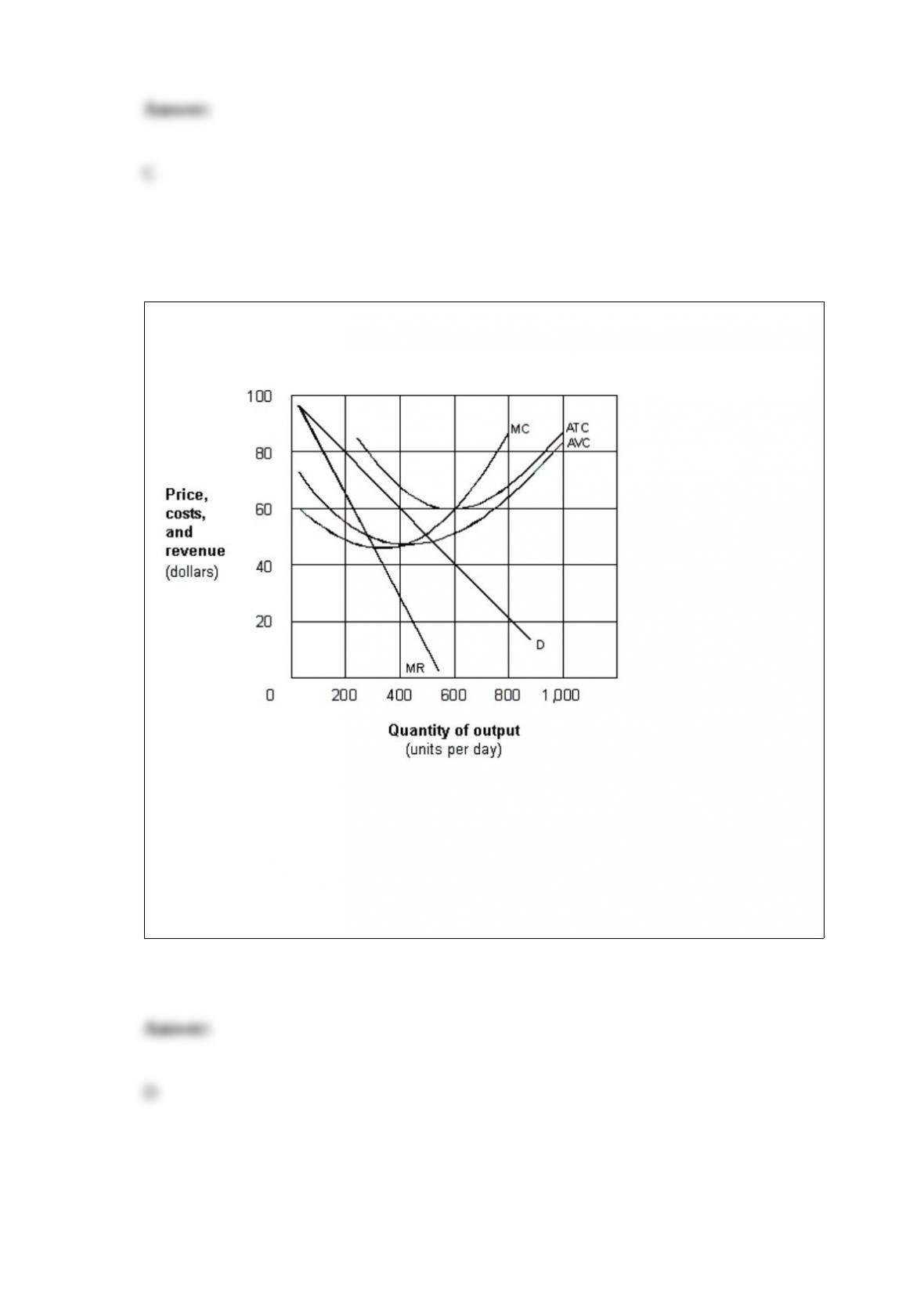
Exhibit 9-9 A monopolist
In Exhibit 9-9, the monopolist would charge which of the following prices to maximize
profit or minimize its loss?
a. $20.
b. $40.
c. $60.
d. $70.
e. $100.

Economists use models to:
a. abstract from the complexities of the world.
b. understand economic behavior.
c. explain and help predict human behavior.
d. do all of these.
Distinguish a direct and an inverse or negative relationship. Provide an example of each
type of relationship.
The Celler-Kefauver Act of 1950 plugged a technical loophole in the Clayton Act which
permitted many large horizontal mergers.

In response to a price change for good Y, if the cross-elasticity of demand for good Y is
positive, good X and good Y are complements.
What are the characteristics of the perfectly competitive market?
When faced with an economic loss, a competitive firm will exit the industry in the long
run.
Explain how the presence of a superstar basketball player can increase the marginal
revenue product of the other players on the team.

Show, using utility theory, why a consumer who is initially maximizing her utility will
alter her consumption pattern in response to a change in the price of a good.
If the demand curve increases while the supply curve remains unchanged, the
equilibrium price would increase.