
If a security is a first-time placement for a firm, it is called a(n):
a. initial public offering.
b. first time equity offering.
c. primary offering.
d. secondary offering.
e. seasoned offering.
Answer:
A savings and loan that sold off their junk bond holdings and issued consumer auto
loans with the proceed would most likely be:
a. decreasing their market risk.
b. increasing their capital risk.
c. decreasing their legal risk.
d. increasing their operating risk.
e. reducing their credit risk.
Answer:

With “relationship pricing”:
a. banks unbundle services and charge separate prices for each.
b. service charges decline with larger customer deposit balances.
c. interest rates paid on deposit accounts decreases with customer deposit balances.
d. large depositors pay the highest fees.
e. small depositors receive the highest interest rates.
Answer:
Which of the following is not one of the Fed’s monetary policy tools?
a. Open market operations
b. Changes in the fed funds rate
c. Changes in the discount rate
d. Changes in the required reserve ratio
e. All of the above are monetary policy tools of the Fed
Answer:

Which of the following is not true regarding the basis?
a. If the basis is positive, it declines as expiration approaches.
b. If the basis is negative, it increases as expiration approaches.
c. The basis may not equal zero before expiration.
d. The basis must equal zero at expiration.
e. All of the above statement regarding basis are true.
Answer:
Prepaid cards:
a. have a high risk of loss
b. are a hybrid of the debit card
c. have high processing costs
d. all of the above
e. none of the above
Answer:

All other things constant, securities that are extremely liquid:
a. earn higher rates of return than securities that are less liquid.
b. have a longer maturity than less liquid securities.
c. have lower risk than less liquid securities.
d. a. and b.
e. b. and c.
Answer:
When the net profit on both the futures and cash position equals zero, this is known as
a(n):
a. cross hedge.
b. perfect hedge.
c. imperfect hedge.
d. basis hedge.
e. return hedge.
Answer:

The earnings change ratio:
a. is defined as yield on rate-sensitive liabilities divided by the yield on rate-sensitive
assets.
b. measures how the yield on an asset is assumed to change given a 1% change in some
base rate.
c. measures the change in net interest income for a given change in some base rate.
d. All of the above.
e. a. and c.
Answer:
Profitable bank customers:
a. make up a small fraction of all bank customers.
b. generally shop for the bank with the lowest price.
c. have small loan balances.
d. always avoid service charges.
e. are the most sensitive to changes in price.
Answer:

Which of the following is a non-discretionary factor that will increase a bank’s daily
reserves held at the Federal Reserve?
a. Federal funds sold
b. Receiving a discount window loan
c. Remittances charged
d. Security sales
e. Deposits from the U.S. Treasury
Answer:
When an investment bank stands willing to buy securities from participants who want
to sell and to sell securities to participants who want to buy, it is:
a. underwriting.
b. market making.
c. principal investing.
d. proprietary trading.
e. organizing a market.
Answer:

Net income is calculated as:
a. total revenue – total operating expenses.
b. total revenue – total operating expenses – taxes.
c. asset utilization – expense ratio.
d. asset utilization – expense ratio – tax ratio.
e. interest expense ratio – non-interest expense ratio – provision for loan loss ratio.
Answer:
______________ refers to the process of pooling a group of assts with similar features
and issuing securities that are collateralized by the assets.
a. Originate-to-Resell
b. Securitization
c. Mortgage Collateralization
d. Deposit Origination
e. Loan-to-Distribute
Answer:

Banks can increase their operating efficiencies by:
a. reducing costs and maintaining the existing level of products and services.
b. reducing costs and reducing the existing level of products and services.
c. decreasing the level of output while maintaining the current level of expenses.
d. increasing the level of output while increasing the level of expenses.
e. decreasing workflow.
Answer:
If a bank has a positive GAP, an increase in interest rates will cause interest income to
__________, interest expense to__________, and net interest income to __________.
a. increase, increase, increase
b. increase, decrease, increase
c. increase, increase, decrease
d. decrease, decrease, decrease
e. decrease, increase, increase
Answer:

How can a bank hedge when it makes 1-year fixed-rate loans and finances them with
3-month floating-rate deposits?
a. Buy Eurodollar futures contracts.
b. Sell put options on Eurodollar futures contracts.
c. Sell Eurodollar futures contracts.
d. Buy call options on Eurodollar futures contacts.
e. b. and c.
Answer:
If the holder of a bond can demand redemption of the bond at a predetermined price at a
set time in the future, the bond has a(n) ______________ option.
a. call
b. put
c. conversion
d. extension
e. exchange
Answer:
Which of the following is an overnight collateralized loan facility that provides loans
for up to 120 days to primary dealers in exchange for a broad range of collateral?
a. Term Auction Facility
b. Term Securities Lending Facility
c. Primary Dealer Credit Facility
d. Troubled Asset Relief Program
e. Housing and Economic Recovery Facility
Answer:
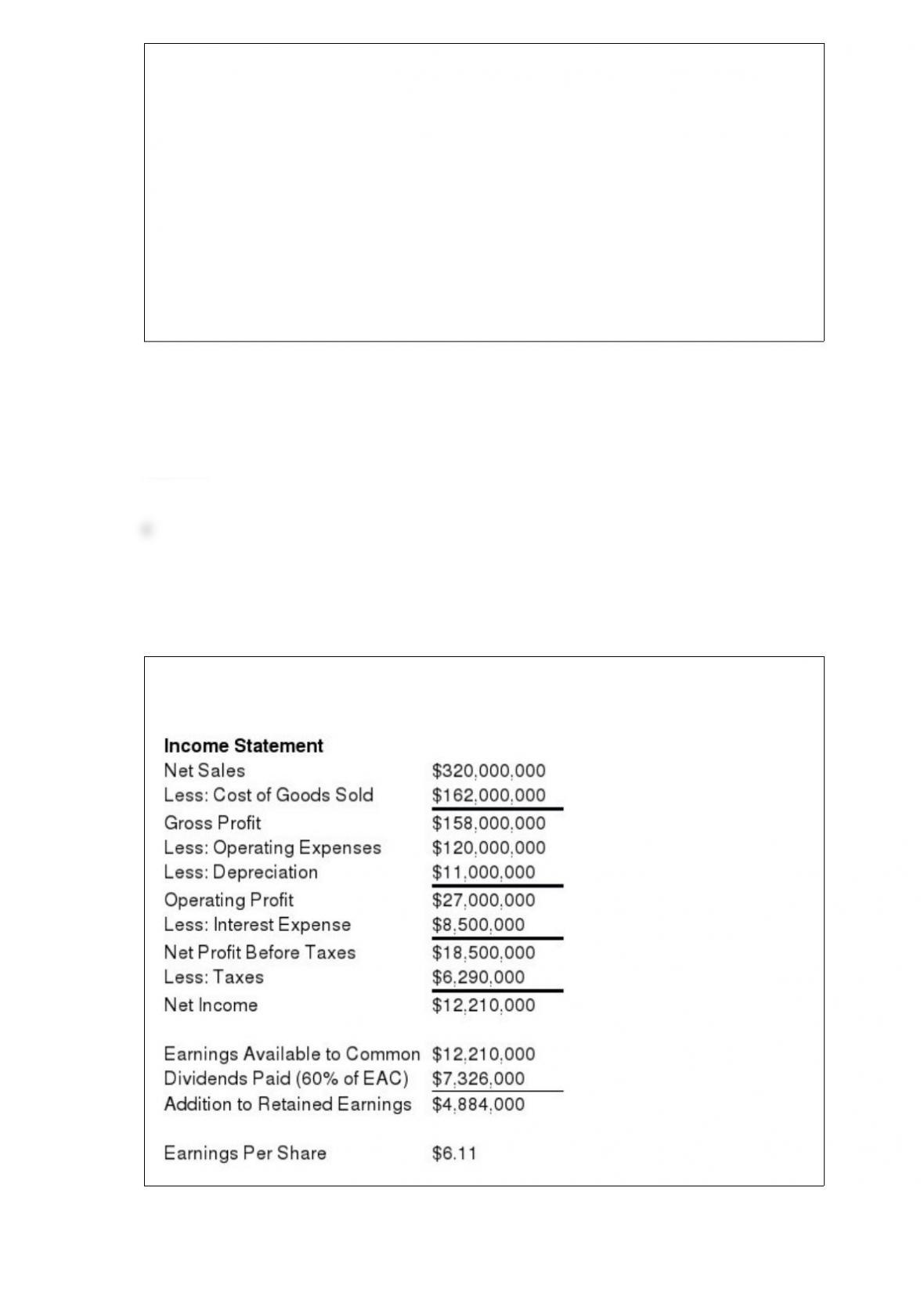
Use the following information on Dylan Enterprises.
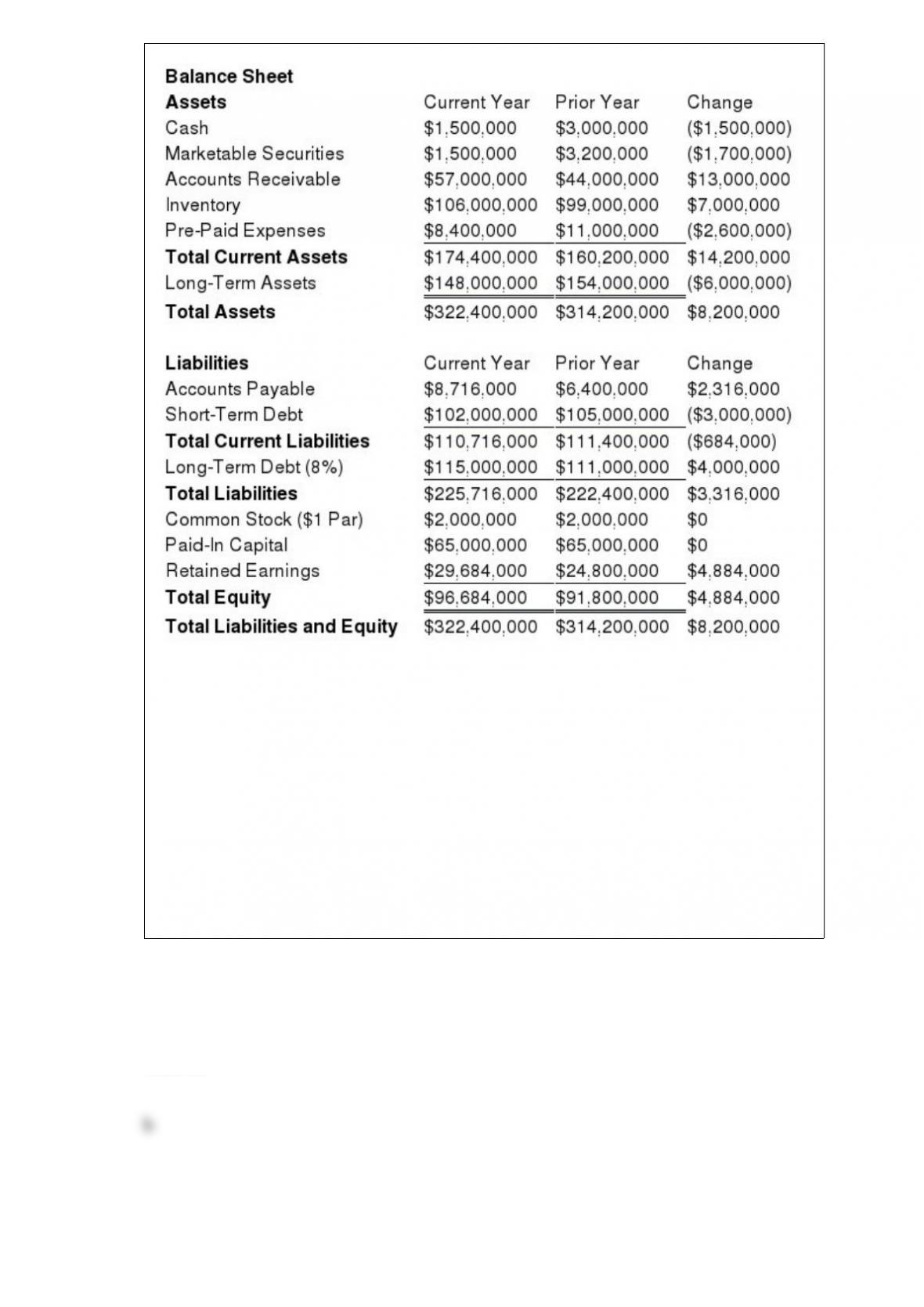
What is Dylan’s cash flow from operations?
a. -$2,874,000
b. $8,126,000
c. $12,210,000
d. $19,126,000
e. $23,210,000
Answer:

Use the following information.
A bank customer is granted credit for a $2,000 loan at 10% to be repaid in 12 equal
installments.
If the loan is a discount loan, what are the net proceeds of the loan?
a. $2,200
b. $2,100
c. $2,000
d. $1,800
e. Cannot be determined
Answer:

Which of the following is a discretionary factor that will decrease a bank’s daily
reserves held at the Federal Reserve?
a. Remittances charged
b. Federal funds purchased
c. Yesterday’s immediate cash letter
d. Currency received from Federal Reserve
e. Deficit in local clearinghouse
Answer:
To the nearest dollar, what is the value today of an investment that pays $1,000,000 in
15 years, assuming an annual opportunity cost of 8%?
a. $555,265
b. $315,242
c. $463,193
d. $3,238,387
e. None of the above
Answer:

Term loans are generally repaid with funds from:
a. investing cash flows.
b. issuing new debt.
c. reductions in inventory and receivables.
d. cash flows from operations.
e. redeeming marketable securities.
Answer:
Which of the following would be considered an extraordinary item on an income
statement of a bank?
a. Revenue from the sale of the bank’s office building.
b. Interest income when the spread is greater than 10%.
c. Realized security gains.
d. Collection on loans already charged off.
e. All of the above would be considered extraordinary items.
Answer:

Which of the following bank assets is the most liquid?
a. Long-term investments
b. Short-term investments
c. Loans
d. Demand deposits
e. Unearned income
Answer:
The _______________ repealed the restriction on banks affiliating with securities firms
under the Glass-Steagall Act.
a. Sarbanes-Oxley Act
b. Bank Holding Company Act
c. Competitive Equality Banking Act
d. Gramm-Leach-Bliley Act
e. Financial Institutions Reform, Recovery and Enforcement Act
Answer:

Collateral is required against each of the following liabilities except ________.
a. securities sold under agreement to repurchase
b. borrowings from the Federal Reserve discount window
c. U.S. Treasury securities
d. public deposits owned by the U.S. Treasury
e. Federal Home Loan Bank advances
Answer:
Which of the following trader’s strategies is to reduce risk?
a. Scalper
b. Speculator
c. Arbitrageur
d. Hedger
e. Day trader
Answer:

Checking accounts with unlimited check-writing and pay interest are known as:
a. demand deposit accounts.
b. money market deposit accounts.
c. NOW accounts.
d. certificates of deposit.
e. time deposits.
Answer:
If the holder of a bond can demand that the issuer convert the bond into common stock
of a different company at a predetermined price at a set time in the future, the bond has
a(n) ______________ option.
a. call
b. put
c. conversion
d. extension
e. exchange
Answer: