
The purpose of having the members of the Board of Governors of the Federal Reserve
serve fourteen-year terms is to
A) ensure that the governors become well-experienced at policymaking.
B) insulate the governors’ policy decisions from the influence of presidential elections
and politics.
C) promote unity of opinion from shared time together.
D) establish long-standing ties with high-level officials of other nations’ central banks.
Suppose that in 2006, 8 million cars were purchased at $15,000 each, while in 2007, 10
million cars were purchased at $12,000 each. What might have caused this change?
A) The price of airplane tickets (a substitute for cars) fell.
B) The price of airplane tickets (a substitute for cars) rose.
C) There was an advance in automobile manufacturing technology.
D) There were fewer workers in automobile manufacturing.
Financing government expenditure through deficits rather than through taxes will lead
to higher spending if
A) people are more aware of taxes than they are of deficits.
B) people are more aware of deficits than they are of taxes.
C) it results in crowding out.
D) it results in crowding in.
The fraction of additional income spent on imports is called the
A) import function.
B) marginal propensity to import.
C) marginal propensity to export.
D) trade balance.
When the Fed conducts open market sales, the:
A) Fed sells bonds to the private sector.
B) commercial banks sell bonds to the private sector.
C) Fed buys bonds from the private sector.
D) commercial banks sell bonds to the Fed.

When demand decreases and the demand curve shifts to the left, equilibrium price
________ and equilibrium quantity ________.
A) increases; increases
B) increases; decreases
C) decreases; increases
D) decreases; decreases
Suppose it costs a firm $200 million to produce and promote a sequel. If the firm
follows the marginal principle and decides not to produce the movie, which of the
following must be true?
A) The firm believes that the marginal benefit is less than $200 billion.
B) The firm believes that the marginal cost is larger than $200 billion.
C) The firm believes that the marginal benefit is larger than $200 billion.
D) The firm believes that the marginal cost is less than $200 billion.
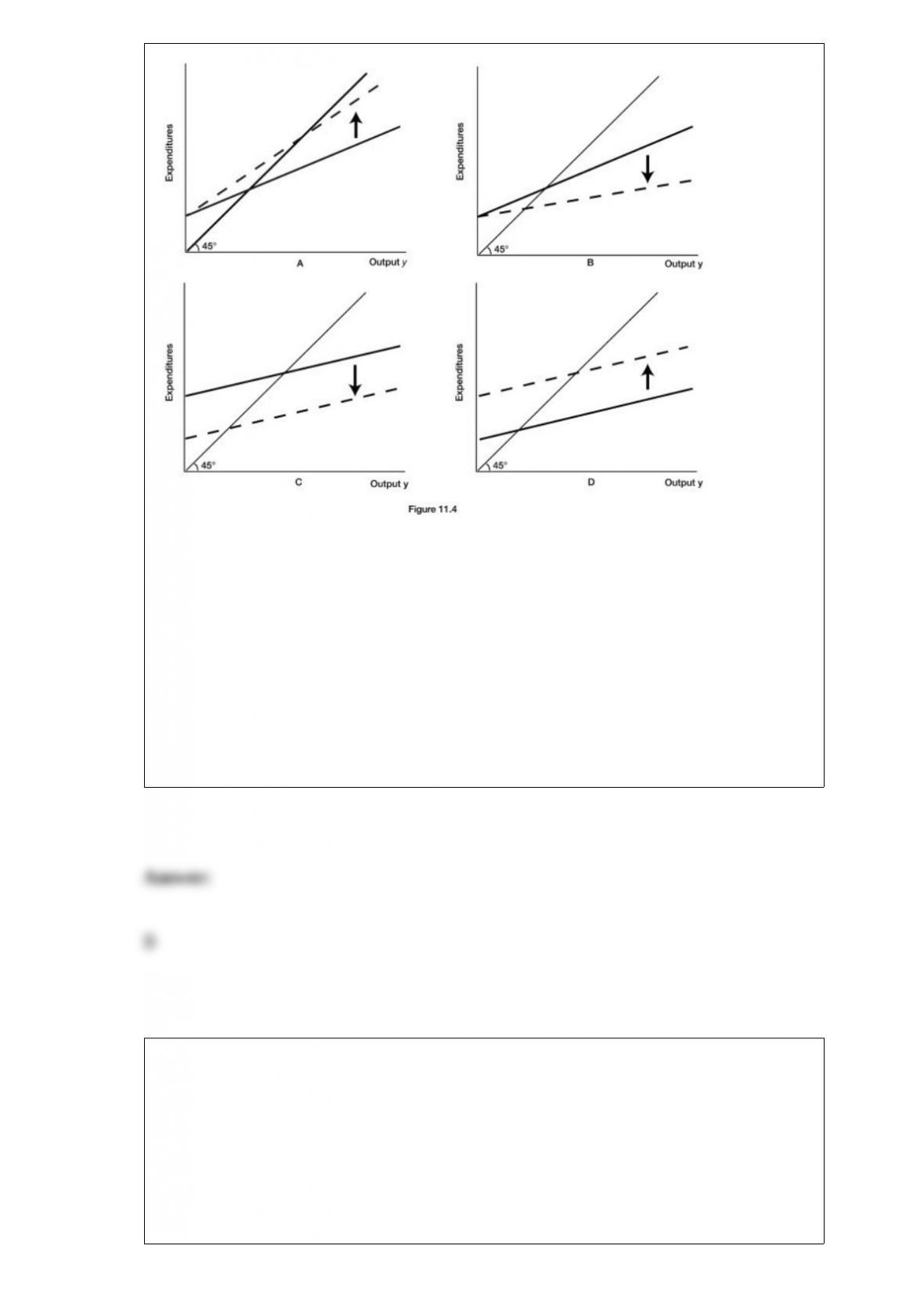
Refer to Figure 11.4. Which diagram illustrates the effect of an increase in the income
tax rate?
A) A
B) B
C) C
D) D
Recall Application 2, “The Growth in Excess Reserves,” to answer the following
questions:
According to the application, prior to 2007, banks earned:
A) no interest on required or excess reserves.
B) the fed funds rate on both the excess and required reserves.

C) interest on excess reserves, but none on required reserves.
D) two percent on excess reserves and the fed funds rate on the required reserves.
Sailing an ocean cargo ship slower to save on the expense of fuel as opposed to sailing
it faster to save time and therefore allow it to make more deliveries makes sense if the
________ of sailing slower is less than the ________ of sailing slower.
A) marginal benefit; marginal cost
B) marginal cost; marginal benefit
C) marginal benefit; opportunity cost
D) marginal cost; opportunity cost
Suppose Canada produces only two goods, corn and automobiles. If Canada has a
comparative advantage in automobiles, a move toward free trade will:
A) harm automobile workers, benefit corn workers, but benefit the nation as a whole.
B) harm automobile workers, harm corn workers, but benefit the nation as a whole.
C) benefit automobile workers, harm corn workers, but harm the nation as a whole.
D) benefit automobile workers, harm corn workers, but benefit the nation as a whole.

The unemployment rate
A) rises during booms and falls during recessions.
B) rises during recessions and falls during booms.
C) rises during times of rapid economic growth and falls during times of slow economic
growth.
D) tends to remain the same in booms and recessions.
The gap between government spending and its revenues is called
A) the trade imbalance.
B) the deficit.
C) the lag time.
D) seignorage.
Using expansionary policies to combat a recession would
A) increase a budget deficit.
B) increase a budget surplus.
C) decrease discretionary spending.
D) increase federal revenue.
In an open economy, the marginal propensity to import plus the marginal propensity to
consume is in the denominator of the multiplier formula.
Figure 9.4 Refer to Figure 9.4. The flooding in the Midwest during the summer of 1993
destroyed a large portion of the agricultural crop in the United States. This caused:
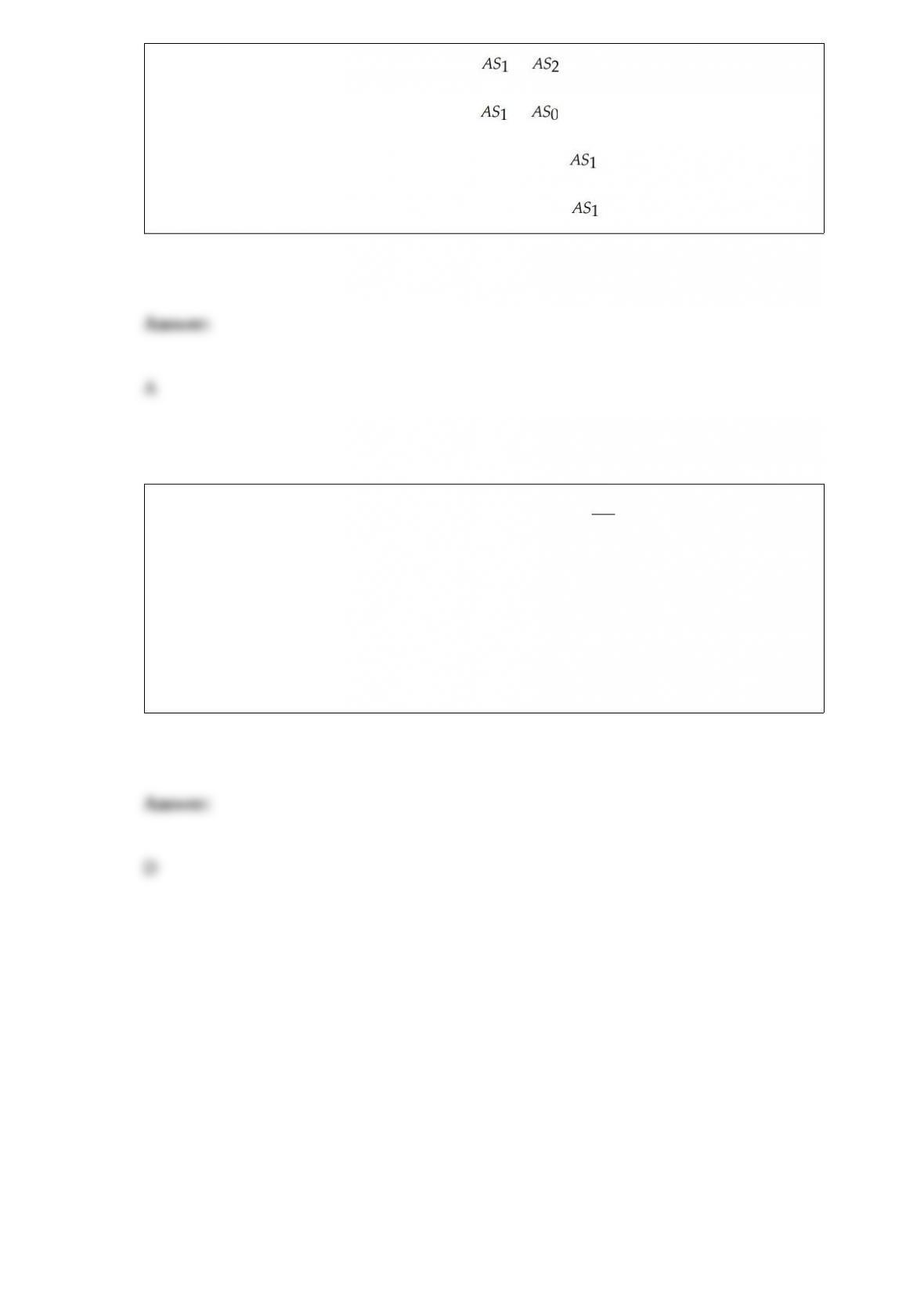
A) the aggregate supply curve to shift from to .
B) the aggregate supply curve to shift from to .
C) the economy to move from Point B to Point A along .
D) the economy to move from Point C to Point B along .
When a demand curve is drawn, which of the following is not held constant?
A) people’s income
B) people’s preferences
C) prices of related goods
D) the price of the good