1) according to u.s. trade law, the escape clause provides relief to u.s. firms due to
unfair foreign competition.
a.true
b.false
2) suppose the united states levies an interest equalization tax, which taxes americans
on dividend and interest income from foreign securities. such a tax would be intended
to:
a.encourage financial movements from the united states to overseas
b.discourage financial movements from the united states to overseas
c.discourage financial movements from overseas to the united states
d.none of the above
3) if uganda revalues its shilling by 20 percent and burundi devalues its franc by 5
percent, the shillings exchange value will appreciate by 25 percent against the franc.
a.true
b.false
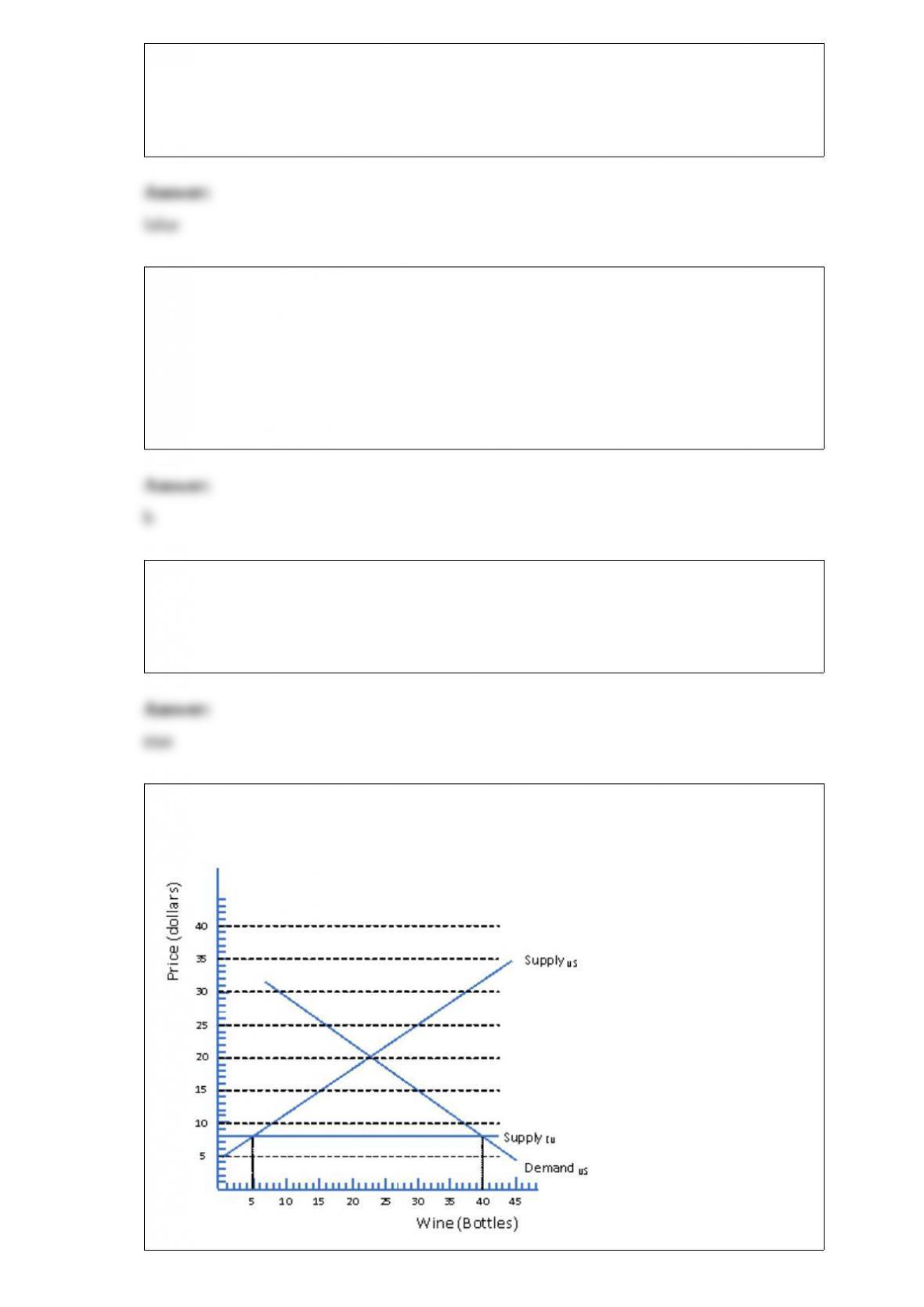
4) figure 5.6 domestice supply and demand for wine – us

consider figure 5.6.in the global market for wine, the eu is willing to supply as much
wine as the us demands at $8 per bottle.if the us imposes a quota of 15 bottles of wine
what will happen to consumer surplus?
a.decreases by $210
b.decreases by $245
c.stays the same
d.increases by $70
5) which trade strategy have developing countries used to restrict imports of
manufactured goods so that the domestic market is preserved for home producers, who
thus can take over markets already established in the country?
a.international commodity agreement
b.export promotion
c.multilateral contract
d.import substitution
6) figure 5.3 illustrates the apple market for sweden, assumed to be a ‘small” country
that is unable to affect the world price. ssweden is the domestic supply and dsweden is
the domestic demand. ssweden+quota is sweden’s supply schedule with an import
quota.
figure 5.3. sweden’s apple market
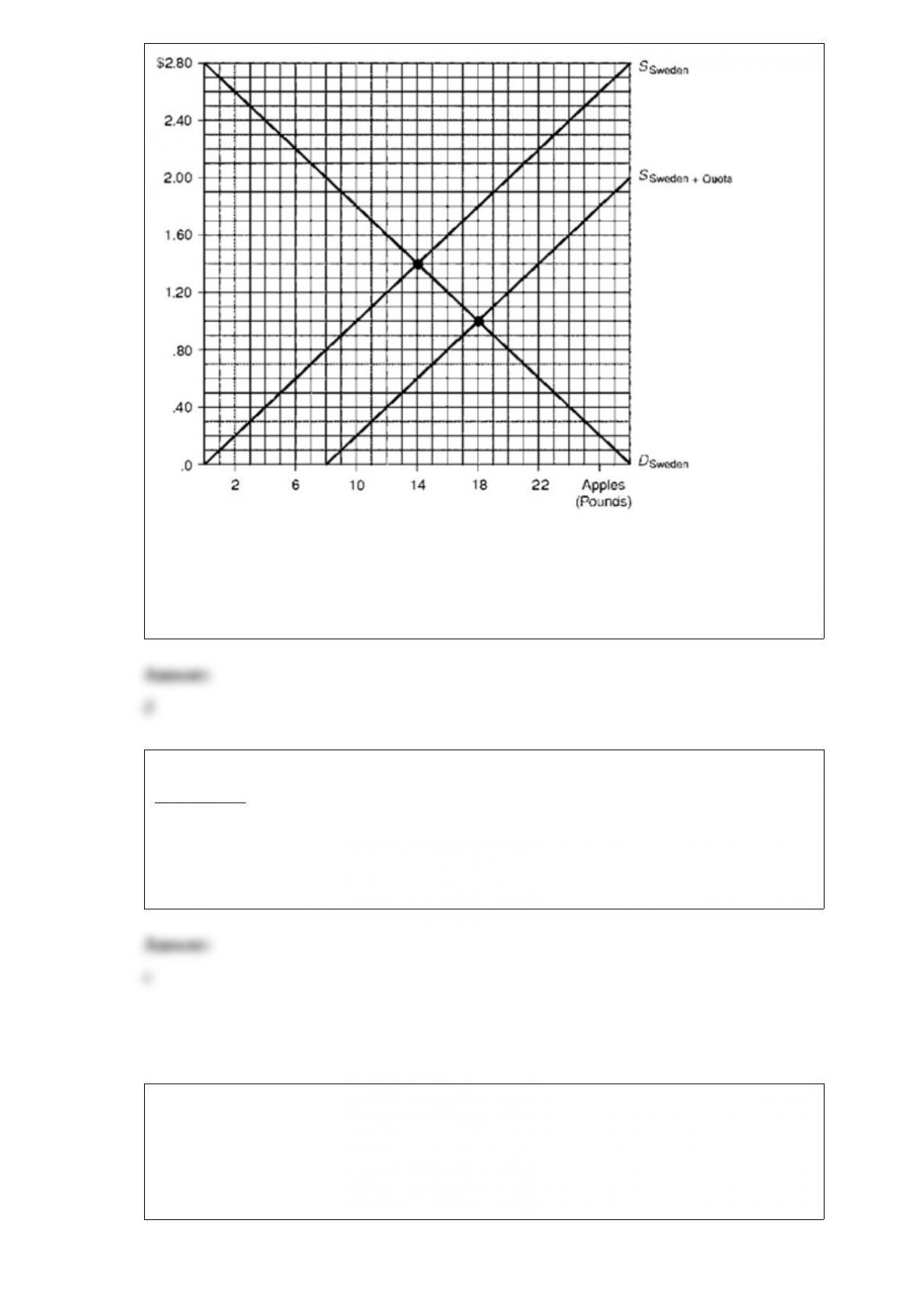
consider figure 5.3. as a result of the quota, sweden’s consumer surplus:
a.increases by $6
b.increases by $8
c.decreases by $6
d.decreases by $8
7) the theory of overlapping demands predicts that trade in manufactured goods is
unimportant for countries with very different:
a.tastes and preferences
b.expectations of future interest rate levels
c.per-capita income levels
d.labor productivities
8) canada views immigrants as:
a.friends
b.foes
c.necessary to the canadian economy
d.both a and c

9) the international exchange value of the u.s. dollar is determined by:
a.the rate of inflation in the united states
b.the number of dollars printed by the u.s. government
c.the international demand and supply for dollars
d.the monetary value of gold held at fort knox, kentucky
10) for the united states, the buy american act has tended to increase consumer surplus
for u.s. buyers of protected merchandise.
a.true
b.false
11) for a nation to maximize its productivity in a global economy:
a.only imports are necessary
b.only exports are necessary
c.both imports and exports are necessary
d.neither imports nor exports are necessary
12) the u.s. trade-remedy laws attempt to redress hardships for u.s. firms resulting from
actions and policies of foreign firms and governments.
a.true
b.false
13) which of the following assets makes use of the basket valuation technique?
a.swap agreements
b.oil facility

c.buffer stock facility
d.special drawing rights
14) for purchasing-power parity to exist:
a.flows of currency in the trade account must be offset by flows of currency in the
capital account
b.the nominal interest rate must be equal to the real interest rate in all countries
c.converting a sum of funds from one currency to another does not alter its purchasing
power
d.a country’s trade account must always be in balance