
Collusion would be common in an oligopoly and a monopolistically competitive
industry.
Answer:
Technological advancements that increase labor’s productivity shift the labor supply
curve to the right.
Answer:
The natural rate of unemployment consists of frictional unemployment plus structural
unemployment.
Answer:
If the GDP deflator is equal to 100, then for that year nominal GDP is equal to real
GDP.
Answer:

If unemployment persists for a long period of time, the natural rate of unemployment
rises.
Answer:
The real-world money multiplier is greater than the simple money multiplier (1/RR).
Answer:
On average, people in the United States spend a greater percentage of their income on
health care than do people in most other countries.
Answer:
Indirect finance includes the sale by a corporation of stocks or bonds, but does not
include borrowing money from a bank.
Answer:

If the market price is at equilibrium, the deadweight loss is maximized.
Answer:
Because of the flaws of the concentration ratio as a measure of the extent of
competition in an industry, some economists prefer another measure of competition, the
Herfindahl-Hirschman Index.
Answer:
In economics, the term “free market” refers to a market where products are traded but
not sold.
Answer:
Consider a manufacturing operation that uses specialized machinery and labor to
produce its output. In this case, the input that is not fixed in the short run is labor.
Answer:
The larger the marginal propensity to import, the larger the government purchases
multiplier.
Answer:
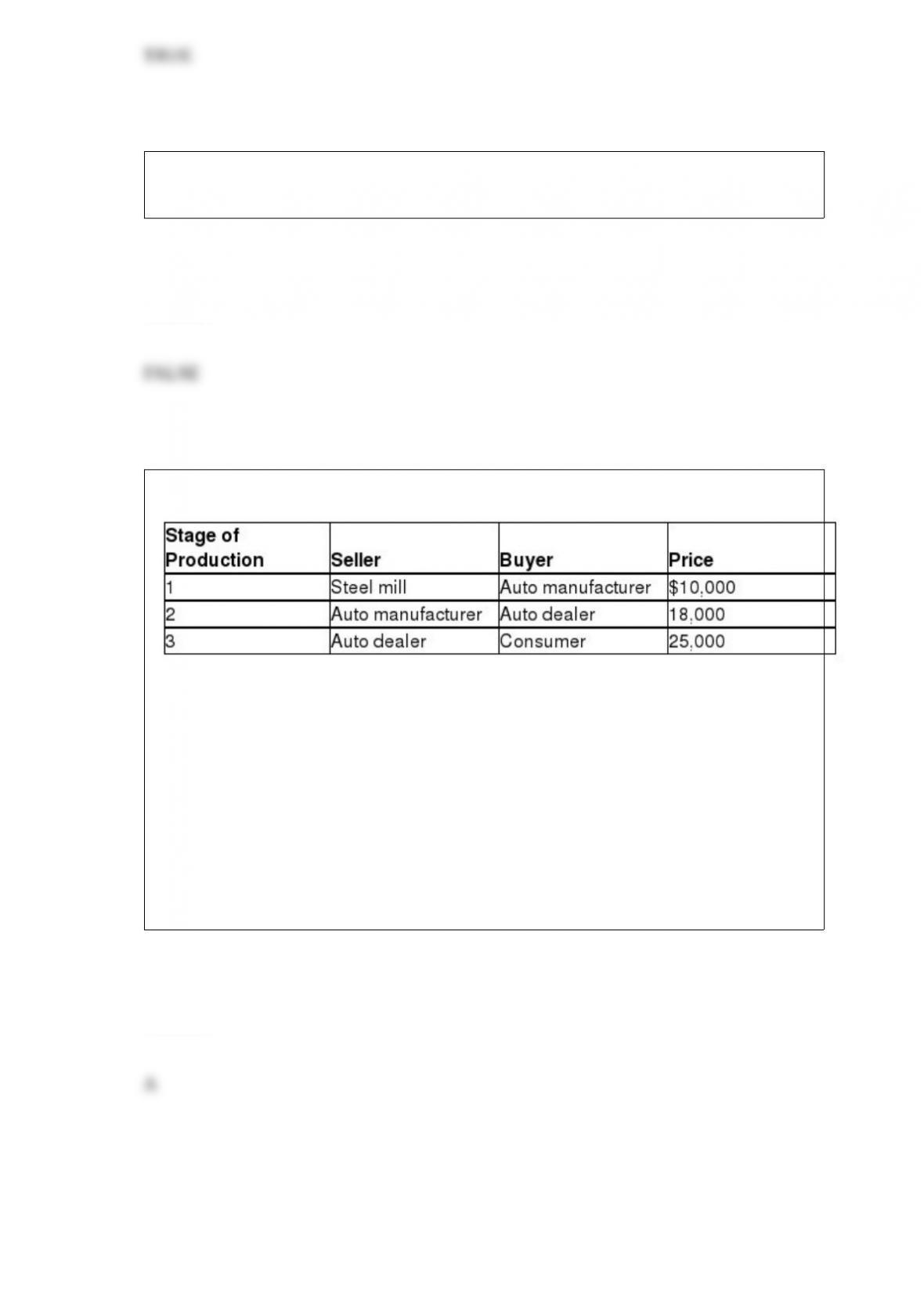
Table 19-5
Consider the table above showing three stages of production of an automobile.
The value added by the automobile dealer equals
A) $7,000.
B) $15,000.
C) $18,000.
D) $25,000.
Answer:
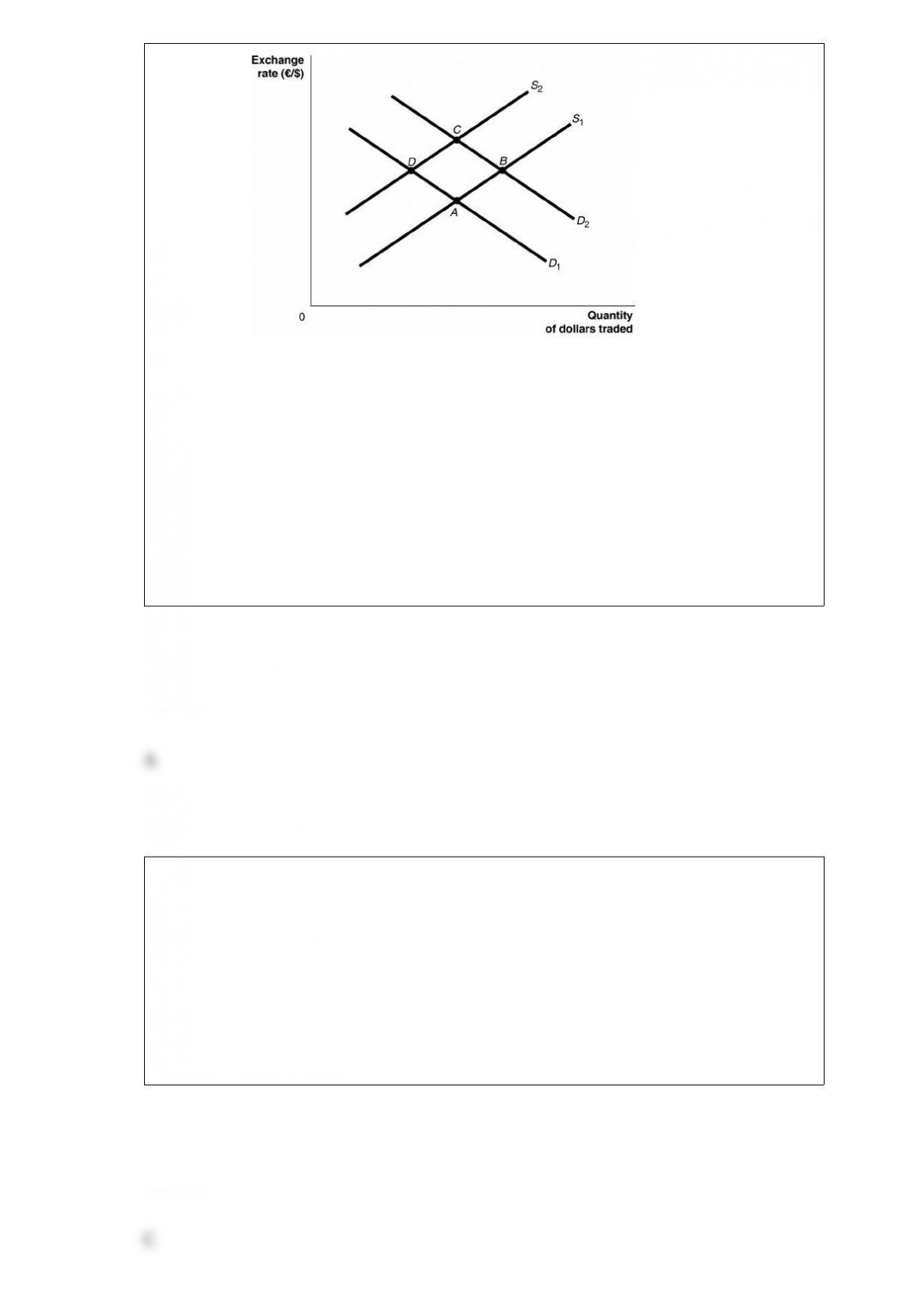
Figure 29-1
Italians cut back on smoking and cut their demand for American cigarettes in half.
Assuming all else remains constant, this would be represented as a movement from
A) B to A.
B) D to C.
C) B to C.
D) A to D.
Answer:
Countries that are more globalized tend to have
A) lower levels of real GDP per capita.
B) a higher likelihood of war or revolution.
C) higher growth rates in real GDP per capita.
D) lower levels of foreign direct investment.
Answer:
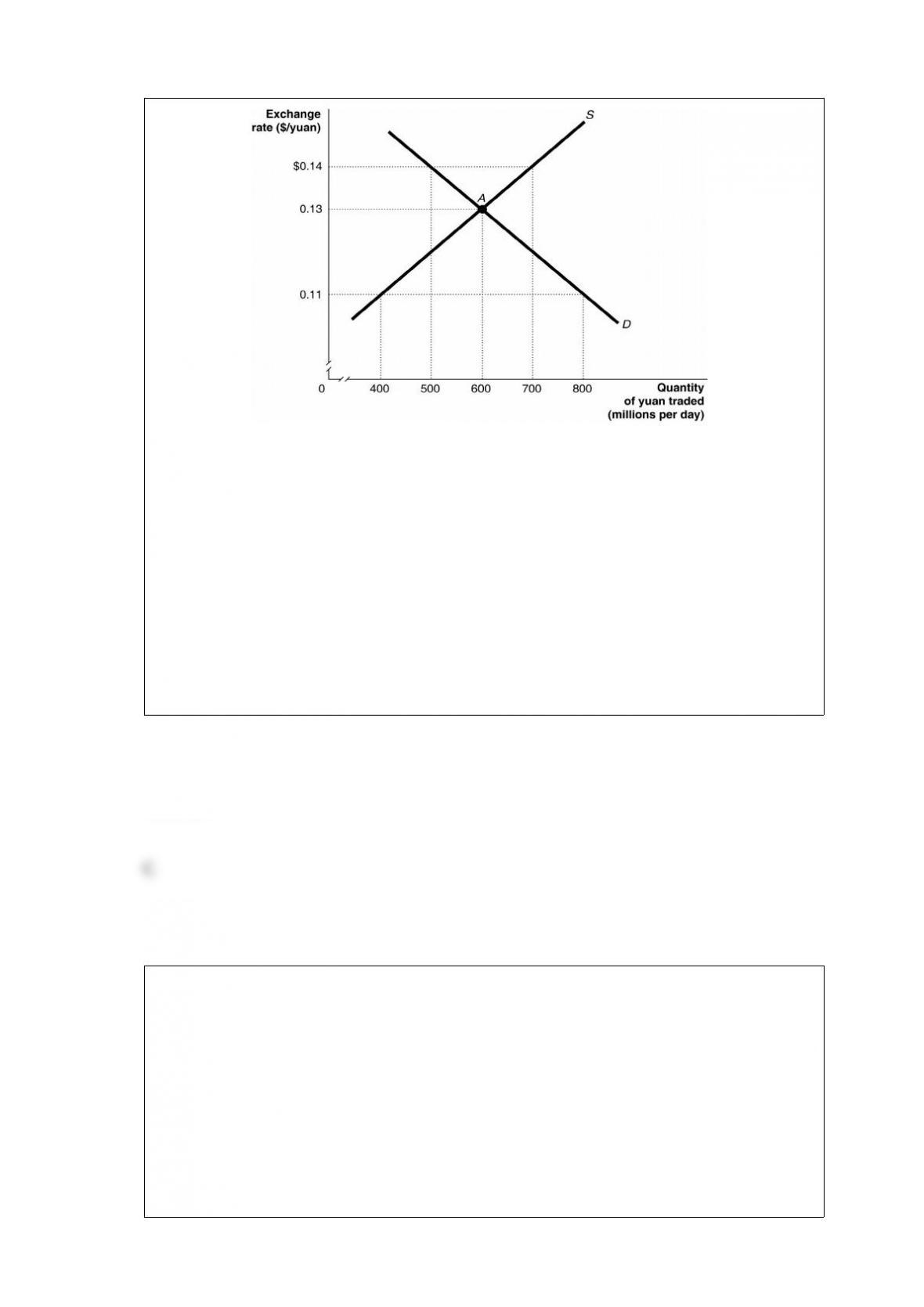
Figure 30-5
Suppose the pegged exchange rate is $0.11/yuan. Because of safety concerns and
numerous product recalls, U.S. consumers lower their demand for Chinese products.
Using the figure above, this would
A) increase the surplus of Chinese yuan.
B) decrease the surplus of Chinese yuan.
C) decrease the shortage of Chinese yuan.
D) increase the shortage of Chinese yuan.
Answer:
If the Phillips curve represents a “________ relationship,” then the trade-off between
unemployment and inflation is permanent.
A) structural
B) frictional
C) cyclical
D) dynamic

Answer:
Which is the least common type of business?
A) corporation
B) partnership
C) sole proprietorship
D) impossible to determine without further information
Answer:
Fast food restaurants produce a range of menu items such as hamburgers, chicken
sandwiches, salads, and french fries. What fundamental economic question are they
addressing by offering this range of items?
A) How to produce goods that consumers want?
B) Why produce a variety of menu items?
C) What to produce?
D) Who to produce the menu items for?
Answer:

Productivity gains in the United States since 1990 have been ________ productivity
gains in other leading industrial nations.
A) the same as
B) lower than
C) higher than
D) more variable than
Answer:
Human capital refers to
A) the money people have.
B) the machines workers have to work with.
C) the accumulated skills and training workers have.
D) the wealth people have.
Answer:
If the federal government implements programs so that the unemployed are more
quickly matched with jobs, then
A) the natural rate of unemployment will increase.
B) the natural rate of unemployment will decrease.
C) the natural rate of unemployment will not change.

D) the natural rate of unemployment could either increase or decrease.
Answer:
Overuse of a common resource may be avoided by all of the following methods except
A) charging for the use of a common resource.
B) issuing tradable permits for the use of a common resource.
C) government taking over ownership of all private common resources.
D) setting quotas or legal limits on the quantity consumed of the common resource.
Answer:
What is a ‘social cost” of production?
A) the cost of the natural resources used up in production
B) the total costs of producing a product, both implicit and explicit costs
C) the sum of all costs to individuals in society, regardless of whether the costs are
borne by those who produce the products or consume the product
D) the cost of the environmental damage created by production
Answer:
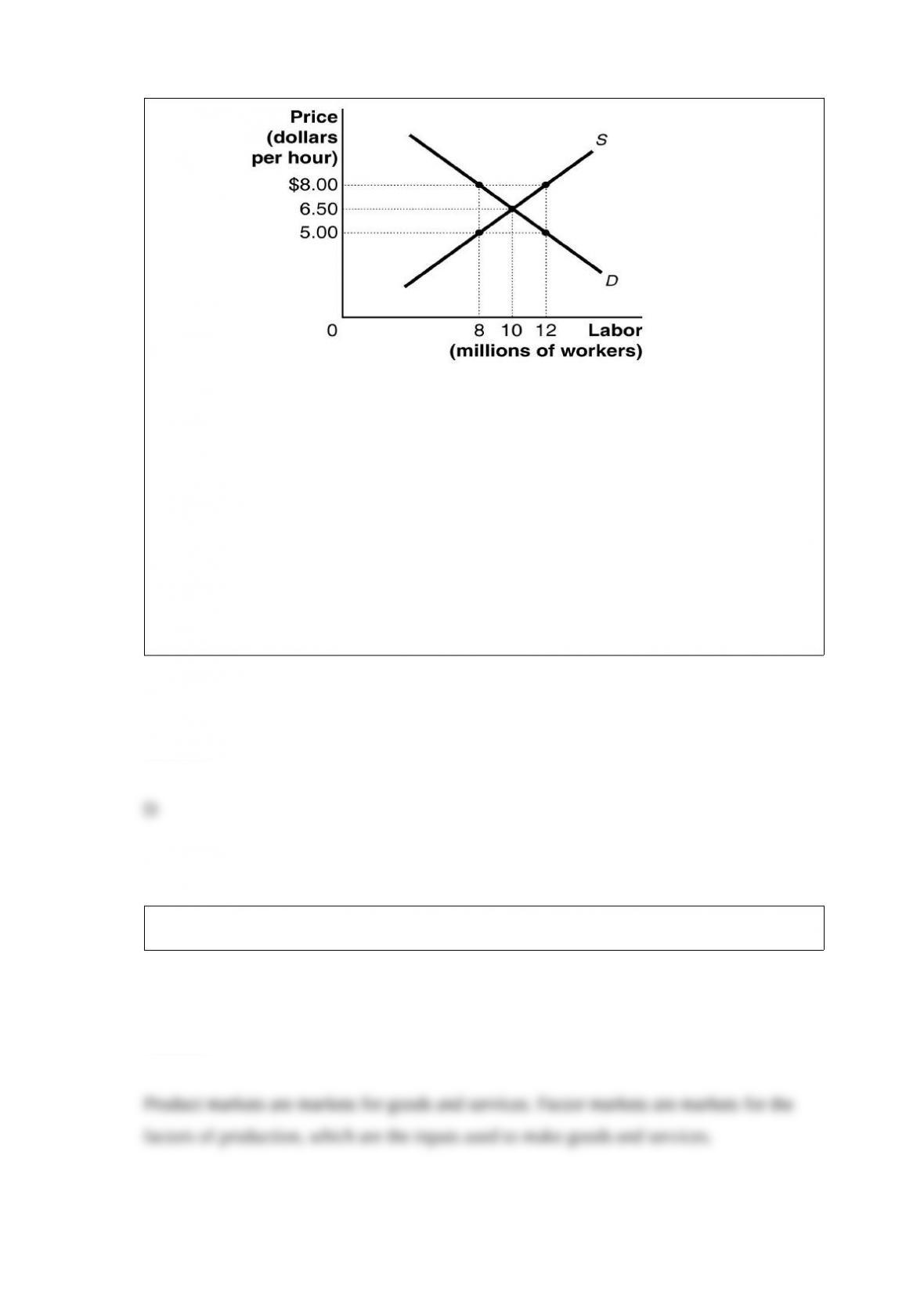
Figure 20-1
Based on the graph of the labor market above, if a minimum wage is set at $5 per hour,
which of the following will occur?
A) The unemployment rate will rise.
B) The unemployment rate will fall.
C) The level of unemployment will rise, but the percentage of the labor force
unemployed will not change.
D) None of the above will occur.
Answer:
What is the Difference between product markets and factor markets?
Answer:
What is the relationship between market failure and government failure?
Answer:
What is the difference between total cost and variable cost in the long run?
Answer:
Health care is generally considered a normal good. Briefly explain what you would
expect to see happen to spending on health care over time, with health care being
considered as a normal good.
Answer:
Briefly explain 4 of the difficulties in making cross-country comparisons in health care
outcomes.
Answer:
What is the relationship between the balance of trade and the current account balance?
Answer:
Firms engage in odd pricing when they charge prices that appear to be less than they
really are; for example, charging a price of $4.95 instead of $5.00 and $.99 instead of
$1.00. How have researchers tried to determine whether odd pricing is successful in
convincing consumers that odd prices are less than they really are?
Answer:
Explain and show graphically how government deficits can “crowd out” private
investment.
Answer: