
1) the imposition of pollution-control regulations on domestic steel manufacturers leads
to decreases in production costs and an improvement in the steel manufacturers’
competitiveness.
a.true
b.false
2) according to the general agreement on tariffs and trade and its successor, the world
trade organization, only bilateral trade negotiations can take place between a country
and its trading partners.
a.true
b.false
3) a main advantage of specialization results from:
a.economies of large-scale production
b.the specializing country behaving as a monopoly
c.smaller production runs resulting in lower unit costs
d.high wages paid to foreign workers
4) which of the following is classified as a credit in the u.s. balance of payments?
a.u.s. exports
b.u.s. gifts to other countries
c.a flow of gold out of the u.s.
d.foreign loans made by u.s. companies
5) when all of the debit or credit items in the balance of payments are combined:
a.merchandise imports equal merchandise exports
b.capital imports equal capital exports
c.services exports equal services imports
d.the total surplus or deficit equals zero

6) if chile and mexico abolish all tariffs on each other’s products while maintaining their
own tariffs against other countries, these two countries have formed a customs union.
a.true
b.false
7) suppose the united states faces domestic recession and a current account deficit.
should the united states devalue the dollar, one would expect the:
a.recession to become less severe–deficit to become less severe
b.recession to become more severe–deficit to become less severe
c.recession to become less severe–deficit to become more severe
d.recession to become more severe–deficit to become more severe
8) which economic integration scheme is solely intended to abolish trade restrictions
among member countries, while setting up common tariffs against nonmembers?
a.economic union
b.common market
c.free trade area
d.customs union
9) in the long run, exchange rates are primarily determined by:
a.agreements among governments of the world’s industrial countries
b.relative interest rates in developing countries and industrial countries
c.economic fundamentals such as relative productivity levels
d.the rate at which country’s currencies exchange for gold
10) figure 7.3. world oil market
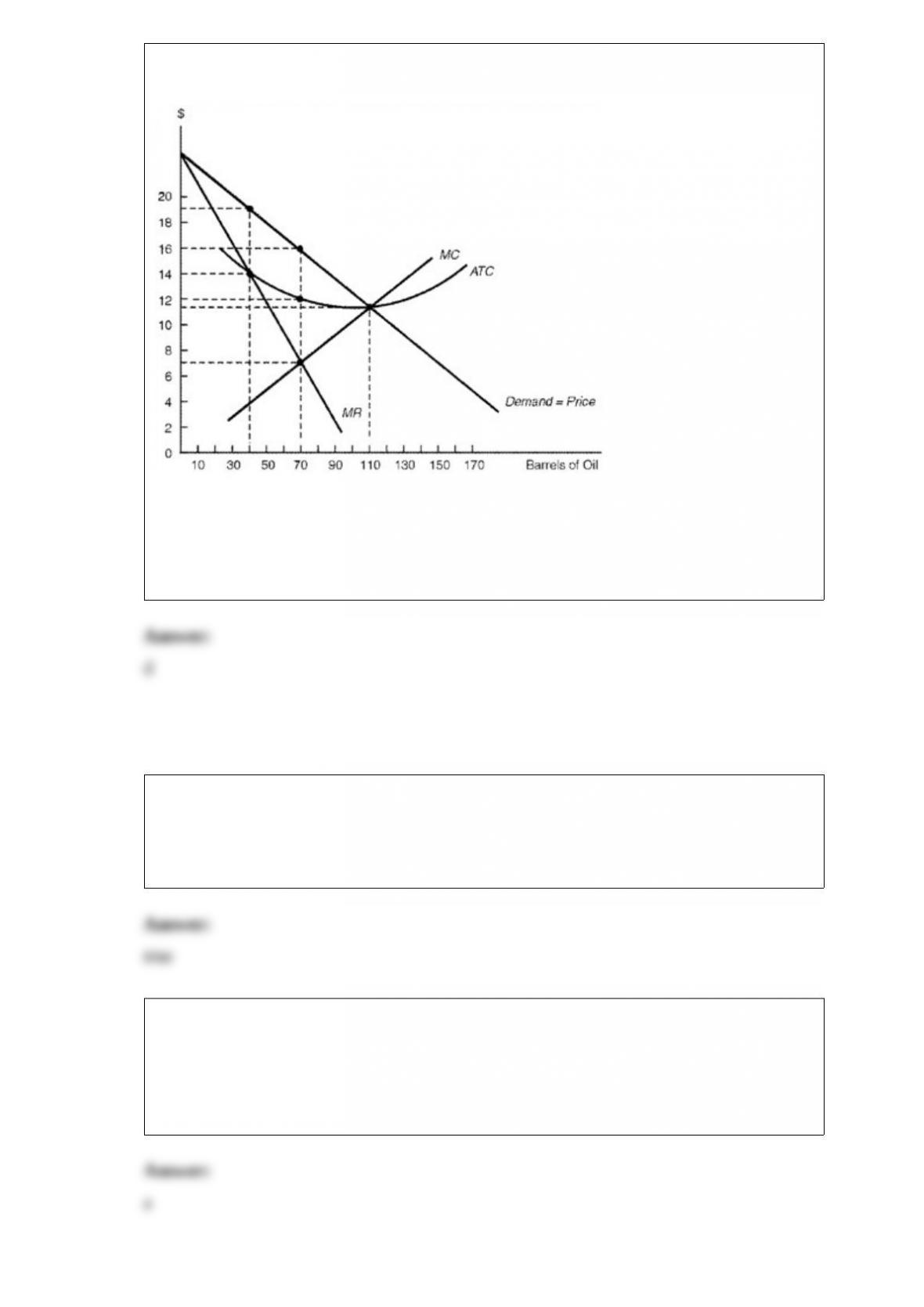
consider figure 7.3. under competitive conditions, the quantity of oil produced equals:
a.40 barrels
b.70 barrels
c.90 barrels
d.110 barrels
11) according to j. s. mill, if we know the domestic demand expressed by both trading
partners for both products, the equilibrium terms of trade can be defined.
a.true
b.false
12) which of the following is a fallacy of international trade?
a.trade is a zero-sum activity
b.exports increase employment in exporting industries
c.import restrictions increase employment in import-competing industries
d.tariffs and quotas reduce trade volume
13) a primary reason why nations conduct international trade is because:
a.some nations prefer to produce one thing while others produce other things
b.resources are not equally distributed among all trading nations
c.trade enhances opportunities to accumulate profits
d.interest rates are not identical in all trading nations
14) legislation requiring domestic manufacturers to install pollution abatement
equipment tends to promote:
a.higher production costs and an increase in output
b.higher production costs and a decrease in output
c.lower production costs and an increase in output
d.lower production costs and a decrease in output
15) the demand for foreign exchange is derived from credit transactions on the balance
of payments.
a.true
b.false
16) refer to table 2.2. according to the principle of absolute advantage, japan should:
a.export steel
b.export vcrs
c.export steel and vcrs
d.none of the above; there is no basis for gainful trade

17) which term best describes the iran oil investment co.?
a.multinational enterprise
b.international joint venture
c.multilateral contract
d.international commodity agreement
18) for the united states, which organization makes loans to foreign buyers of u.s.
manufactured goods?
a.export-import bank
b.domestic international sales corporation
c.organization for economic cooperation and development
d.commodity credit corporation
19) the united states was less open to international trade between:
a.1890 and 1910
b.1930 and 1950
c.1890 and 1950
d.1950 and 2013