
If the cross-price elasticity of demand for computers and software is negative, this
means the two goods are
A) substitutes.
B) complements.
C) inferior.
D) normal.
One way investment banks differ from commercial banks is that investment banks
A) lend exclusively to households.
B) do not take in deposits.
C) only buy and sell mortgages.
D) trade only in foreign exchange markets.
Figure 6-4
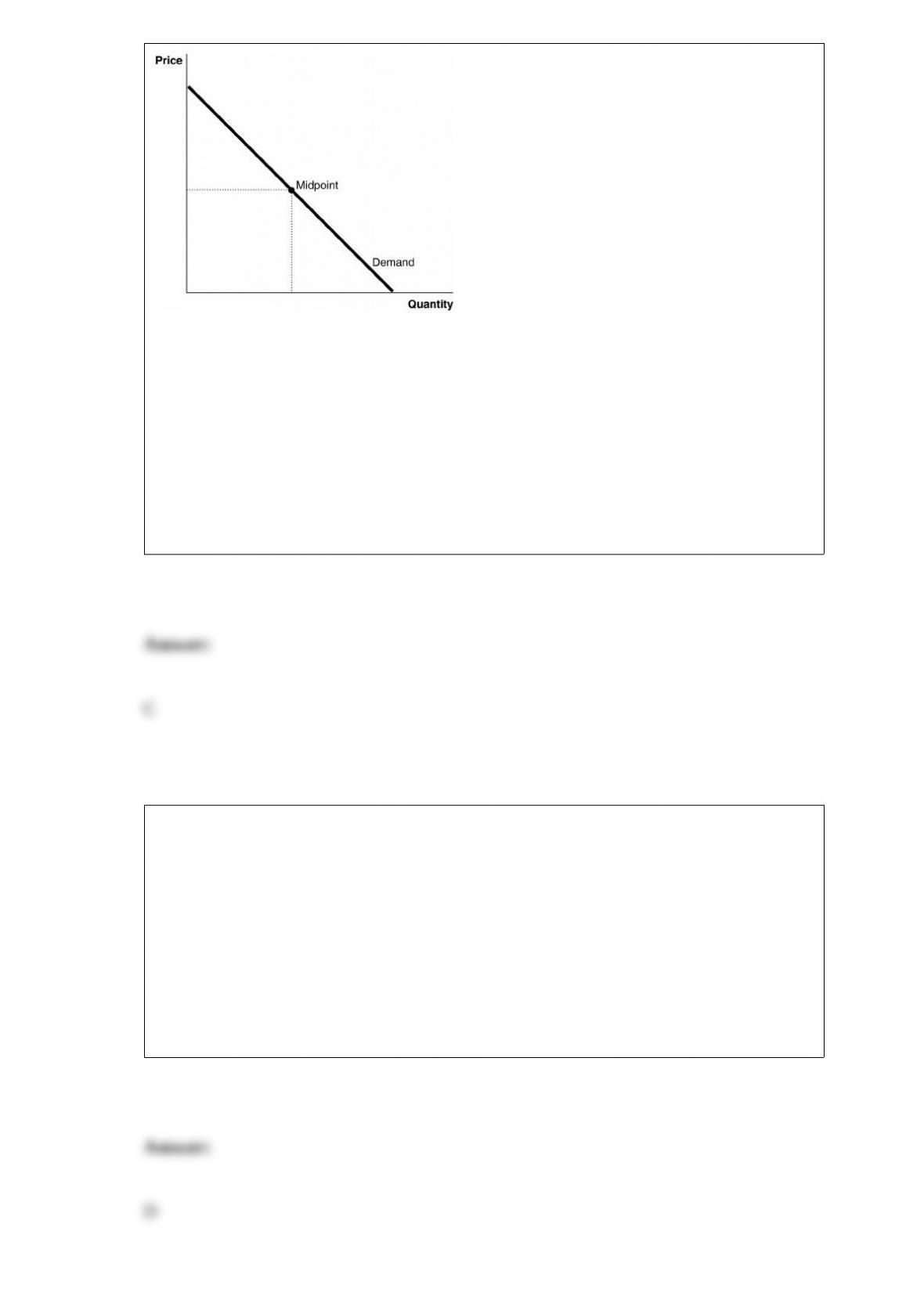
The inelastic segment of the demand curve
A) is coincident with the horizontal axis.
B) is coincident with the vertical axis.
C) lies below the midpoint of the curve.
D) lies above the midpoint of the curve.
A copyright grants the creator of a book, film, or piece of software exclusive legal
rights to use the creation for how long?
A) 10 years
B) 20 years
C) 50 years
D) the creator’s lifetime plus 70 years for the creator’s heirs
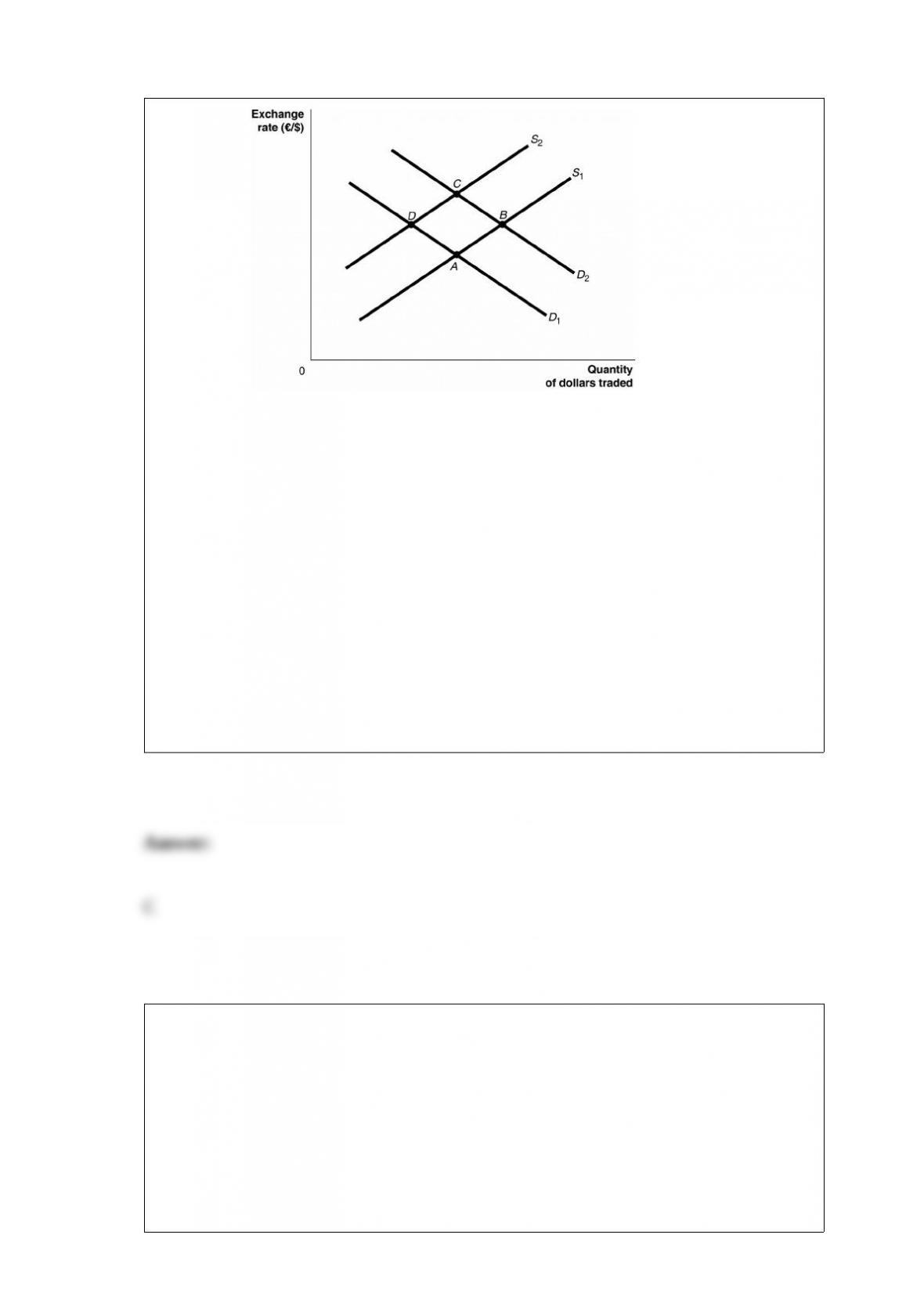
Figure 18-1
Currency speculators believe that the value of the euro will decrease relative to the
dollar. Assuming all else remains constant, how would this be represented?
A) Supply would decrease, demand would decrease and the economy moves from B to
C to D.
B) Supply would increase, demand would decrease and the economy moves from C to
B to A.
C) Supply would decrease, demand would increase and the economy moves from A to
D to C.
D) Supply would increase, demand would increase and the economy moves from D to
A to B.
Increases in the price level
A) increase the opportunity cost of holding money.
B) decrease the opportunity cost of holding money.
C) increase the quantity of money needed for buying and selling.
D) decrease the quantity of money needed for buying and selling.
On the long-run aggregate supply curve,
A) an increase in the price level increases the aggregate quantity of GDP supplied.
B) an increase in the price level reduces the aggregate quantity of GDP supplied.
C) an increase in the price level has no effect on the aggregate quantity of GDP
supplied.
D) an increase in the price level increases the level of potential GDP.
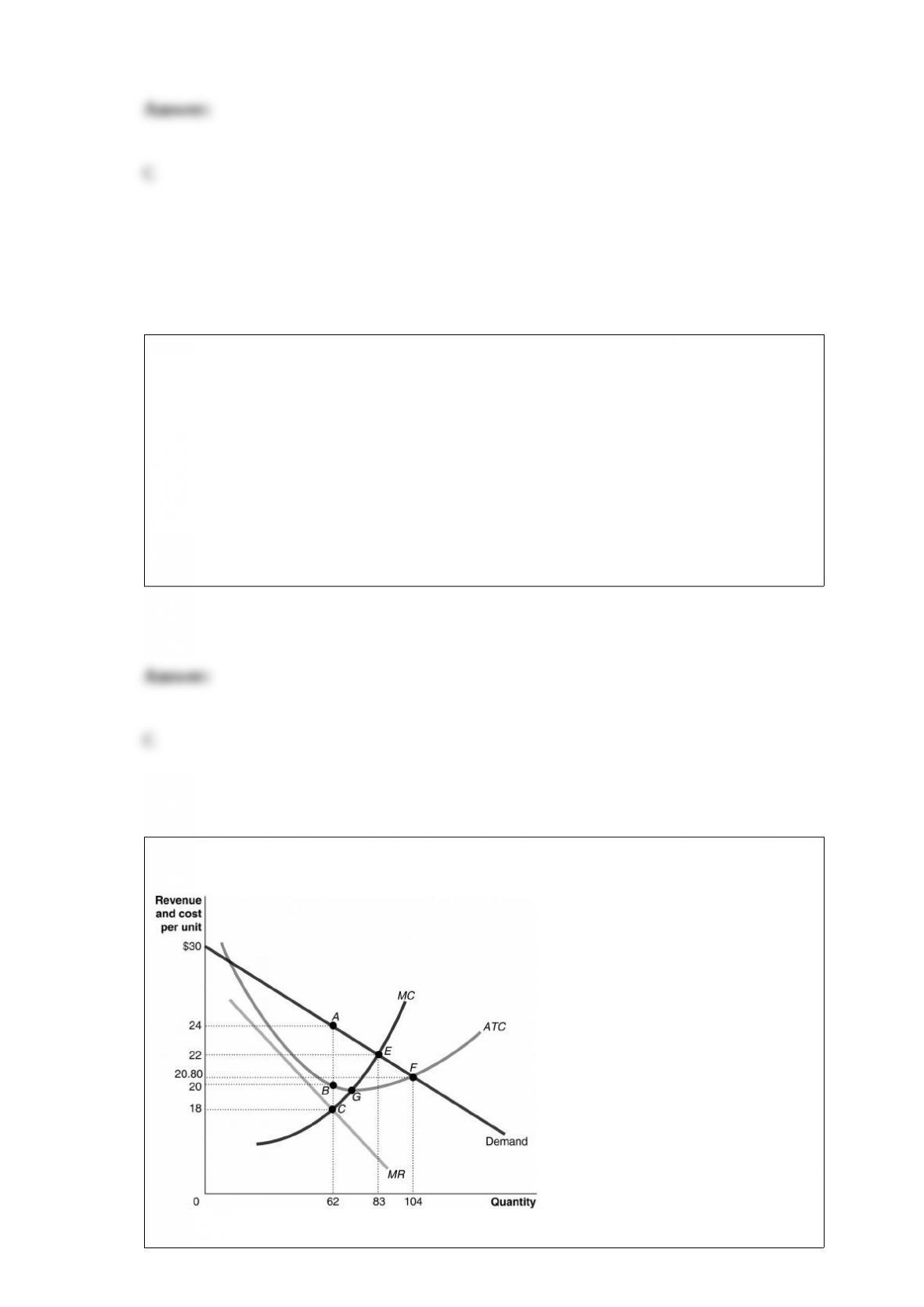
Figure 15-12
Figure 15-12 shows the cost and
demand curves for a monopolist. Assume the firm maximizes its profits. What is the
amount of consumer surplus?
A) $21
B) $124
C) $186
D) $332
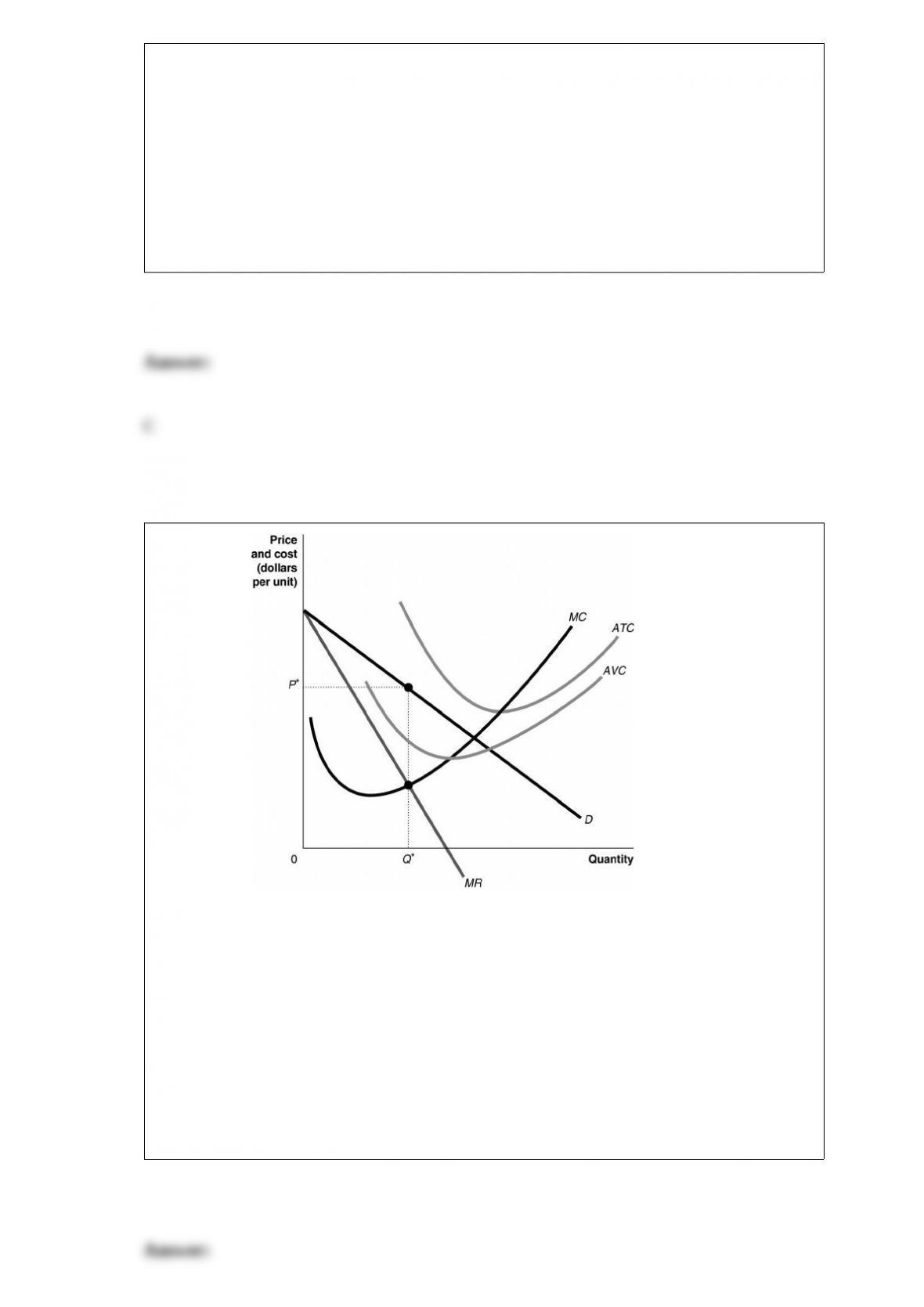
Figure 15-5
If the monopolist charges price P* for output Q*, in order to maximize profit or
minimize loss in the short run, it should
A) continue to produce because price is greater than average variable cost.
B) shut down because price is greater than marginal cost.
C) shut down because price is less than average total cost.
D) continue to produce because a monopolist always earns a profit.
In their surveys of consumers, Daniel Kaheman, Jack Knetsch and Richard Thaler
found that
A) most people considered it unfair for firms to raise their prices because of an increase
in their costs, but fair to raise their prices after an increase in demand.
B) most people considered any increase in price to be unfair as it led to an increase in
profits.
C) most people believed that low income people were hurt most by increases in prices.
D) most people considered an increase in price by firms following an increase in their
costs to be fair but believed it was unfair for firms to raise their prices because of an
increase in demand.
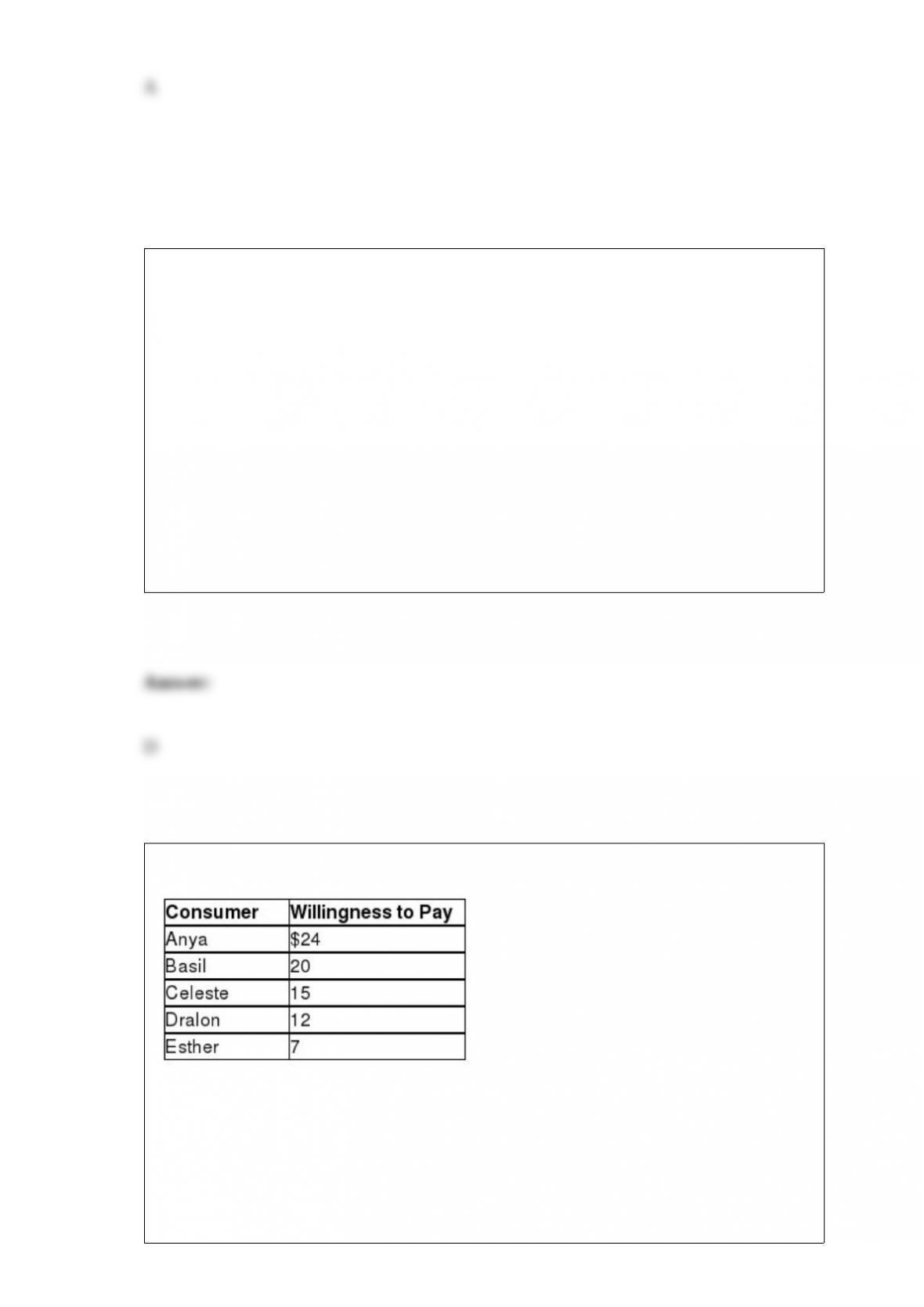
Table 4-2
The table above lists the highest prices five consumers are willing to pay for a theater
ticket. If the price of one ticket falls from $25 to $10,
A) only three tickets will be sold.
B) consumer surplus decreases from $24 to $12.

C) consumer surplus increases from $0 to $31.
D) everyone will buy a ticket.