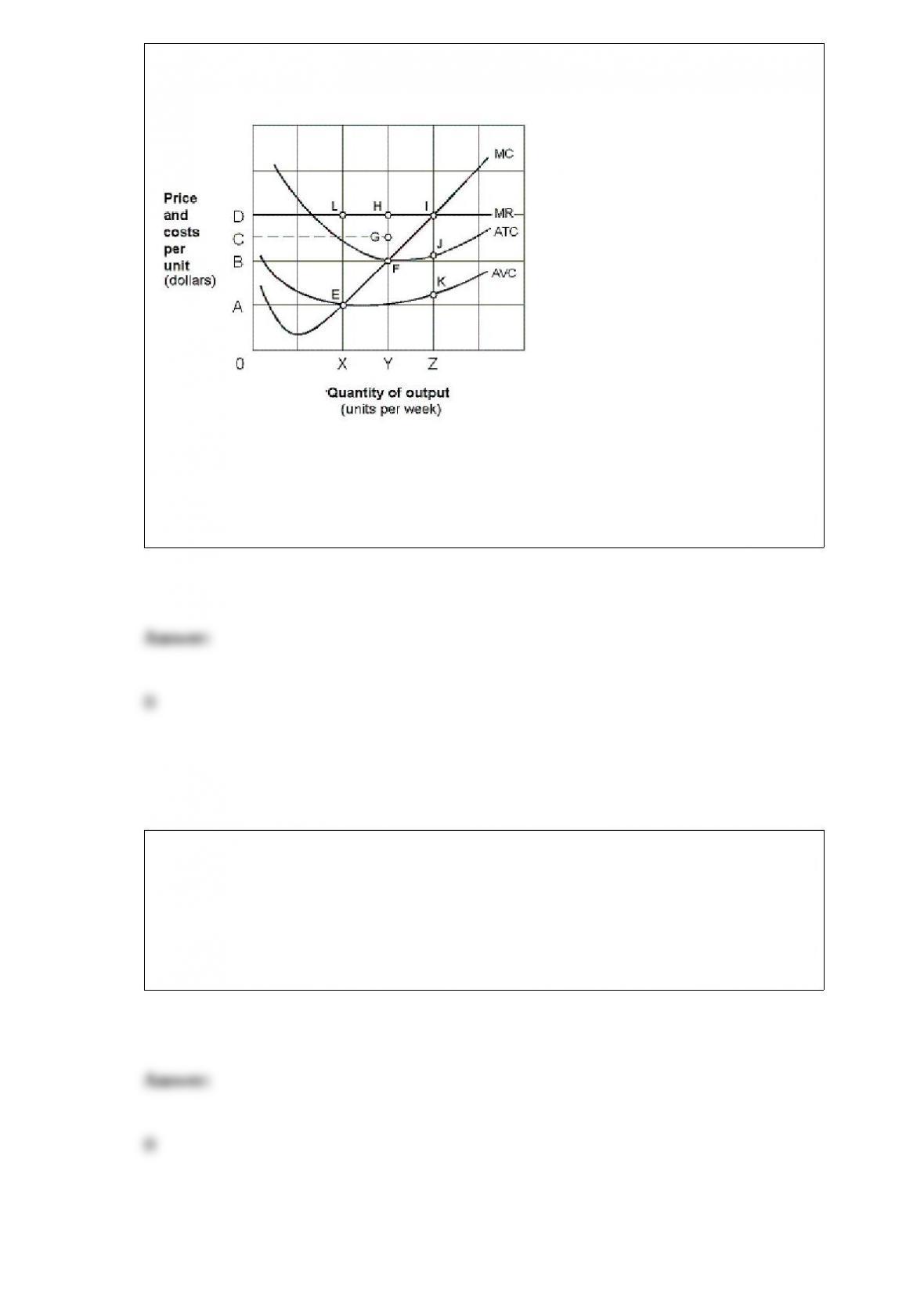
Exhibit 8-12 Marginal revenue and cost per unit curves
As shown in Exhibit 8-12, the price that will yield zero economic profit is:
a. OA.
b. OB.
c. OC.
d. OD.
A movement along a demand curve is called a change in:
a. income.
b. quantity demanded.
c. demand.
d. tastes.
e. population.
Over the elastic portion of a demand curve, a decrease in price causes:
a. an increase in total revenue.
b. a decrease in total revenue.
c. no change in total revenue.
d. an increase in quantity demanded, but anything can happen to revenue.
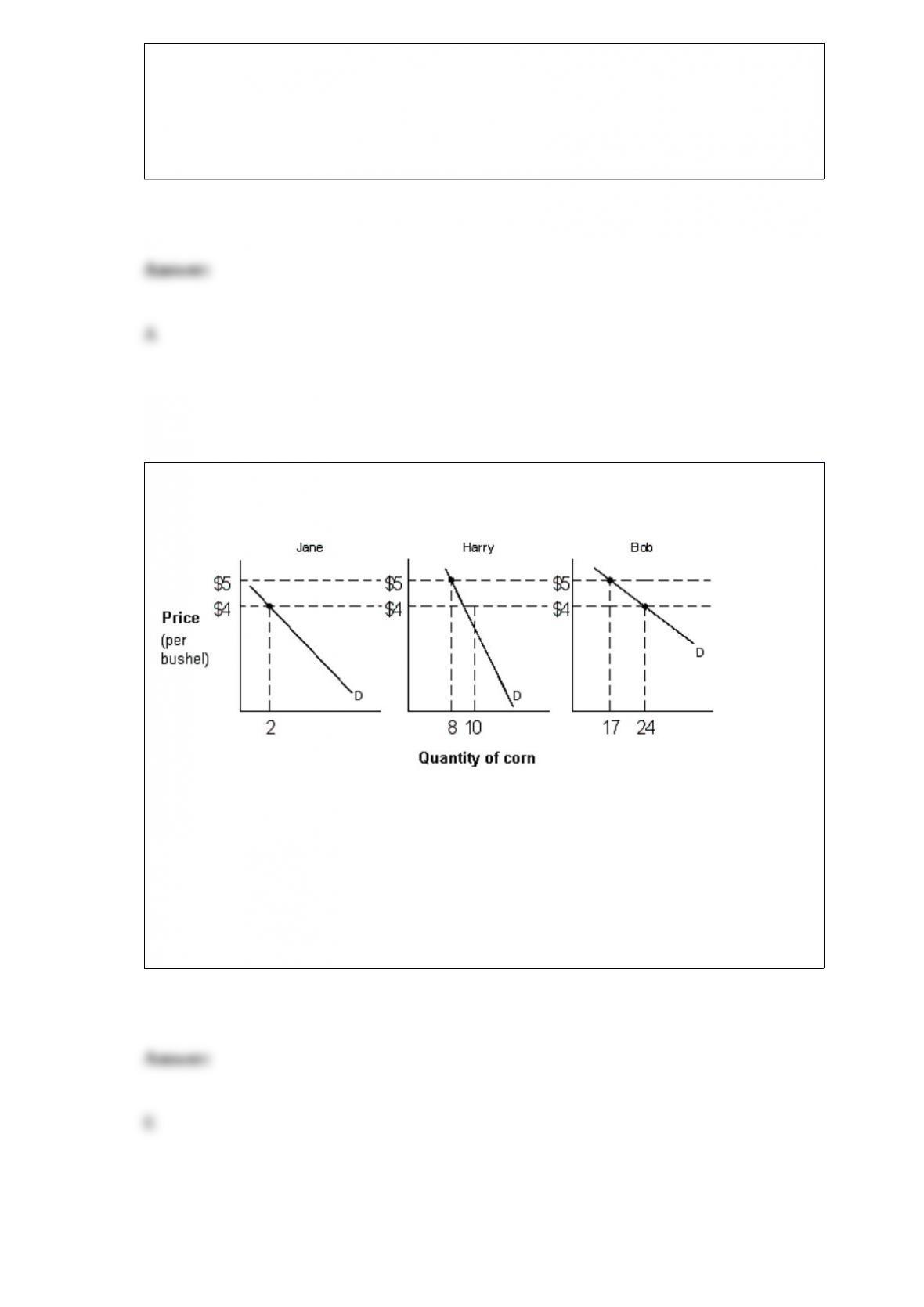
Exhibit 3-1 Market Demand
Suppose there are only three people in the economy: Jane, Harry, and Bob. The
individual demand for corn for each of these consumers is given in Exhibit 3-1. The
total quantity demanded of corn if the market price is $4 is ____.
a. 3
b. 25
c. 17
d. 8
e. 36
In a market economy, the three economic questions are answered by which of the
following?
a. Prices determined by the interaction of the forces of supply and demand.
b. A cartel of major transnational corporations, government agencies, and consumer
advocates.
c. A trilateral commission of major corporations, the military, and elite university
professors.
d. A central authority such as people’s committee, a government agency, or a dictator.
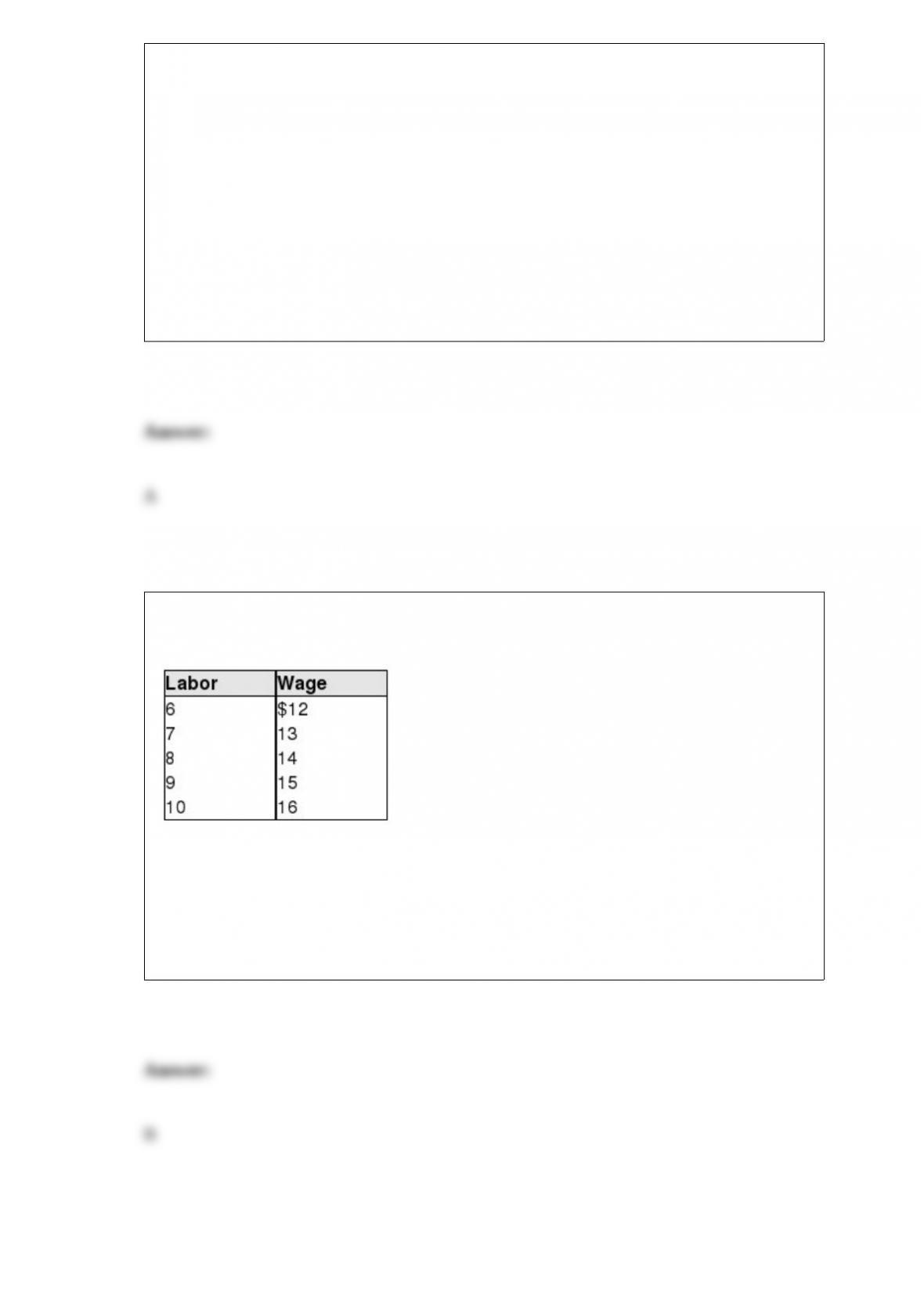
Exhibit 11-10 Labor and wage rate data
In Exhibit 11-10, the total wage cost of hiring 7 employees is:
a. $15.
b. $91.
c. $13.
d. $19.
e. $112.

Assume Congress passes a new tax of $2.00 per pack on cigarettes. The effect on the
supply curve is a(n):
a. decrease in supply. c. decrease in quantity supplied.
b. increase in supply. d. increase in quantity supplied.
If a shortage of a product currently exists in the market,
a. the market price is too high.
b. the quantity demanded is less than the quantity supplied.
c. the quantity demanded exceeds the quantity supplied at the market price.
d. there is an excess supply of the product.
e. there will be a tendency for the price to fall.
Suppose that R. J. Reynolds raises the price of cigarettes by 10 percent. Although they
have no requirement or agreement to do so, the other cigarette firms decide to raise
their prices accordingly. This situation is best described as:
a. price leadership. c. monopolistic competition.
b. a cartel. d. a market with kinked demand.

Perfectly competitive markets are characterized by:
a. a small number of very large producers.
b. very strong barriers to entry and exit.
c. firms selling a homogeneous product.
d. all of these.
Producer surplus is the:
a. number of producers who are excluded from a market because of scarcity.
b. amount of a good that a producers will sell at a price below the equilibrium price.
c. amount consumers actually pay for a good minus the amount the sellers are willing to
sell the good.
d. amount consumers are willing to pay for a good minus the cost of producing the
good.
Exhibit 8-12 Marginal revenue and cost per unit curves
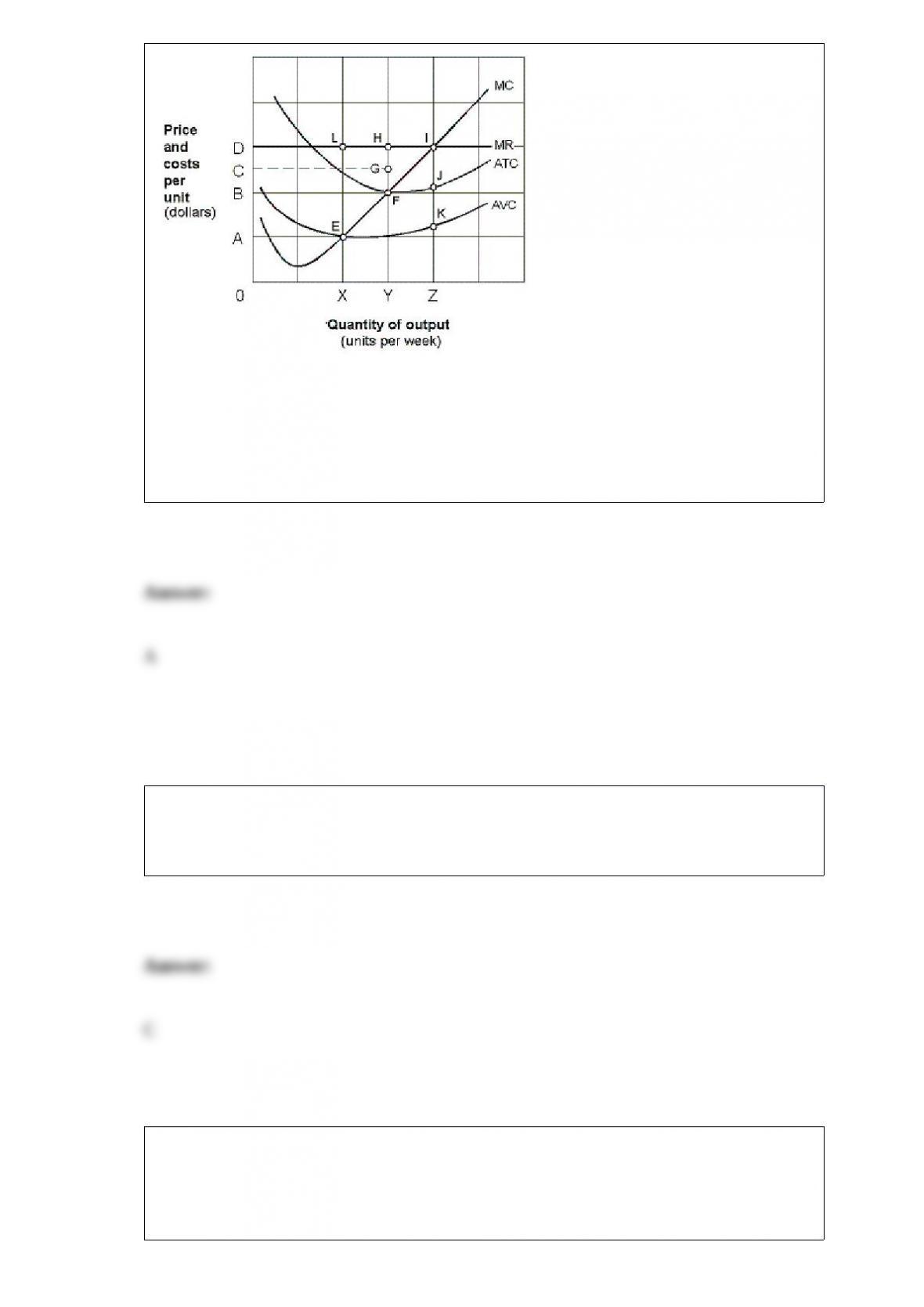
As shown in Exhibit 8-12, the firm will not produce in the short-run if the price is
below:
a. OA.
b. OB.
c. OC.
d. OD.
Which of the following is excluded in the current account?
a. Goods exports. c. Capital inflow and outflow.
b. Goods imports. d. Net unilateral transfers.
The fact that a gallon of gasoline commands a higher market price than a gallon of
water indicates that:
a. gasoline is an economic good but water is not.
b. the marginal utility of gasoline is greater than the marginal utility of a gallon of

water.
c. the average utility of a gallon of gasoline is greater than the average utility of a gallon
of water.
d. the total utility of gasoline exceeds the total utility of water.
Which of the following is true concerning the indifference map?
a. Each consumer has a map of indifference curves.
b. Consumers always prefer curves farther from the origin.
c. Each indifference curve in the map represents a different level of total utility.
d. All of the above are true.
e. None of the above is true.