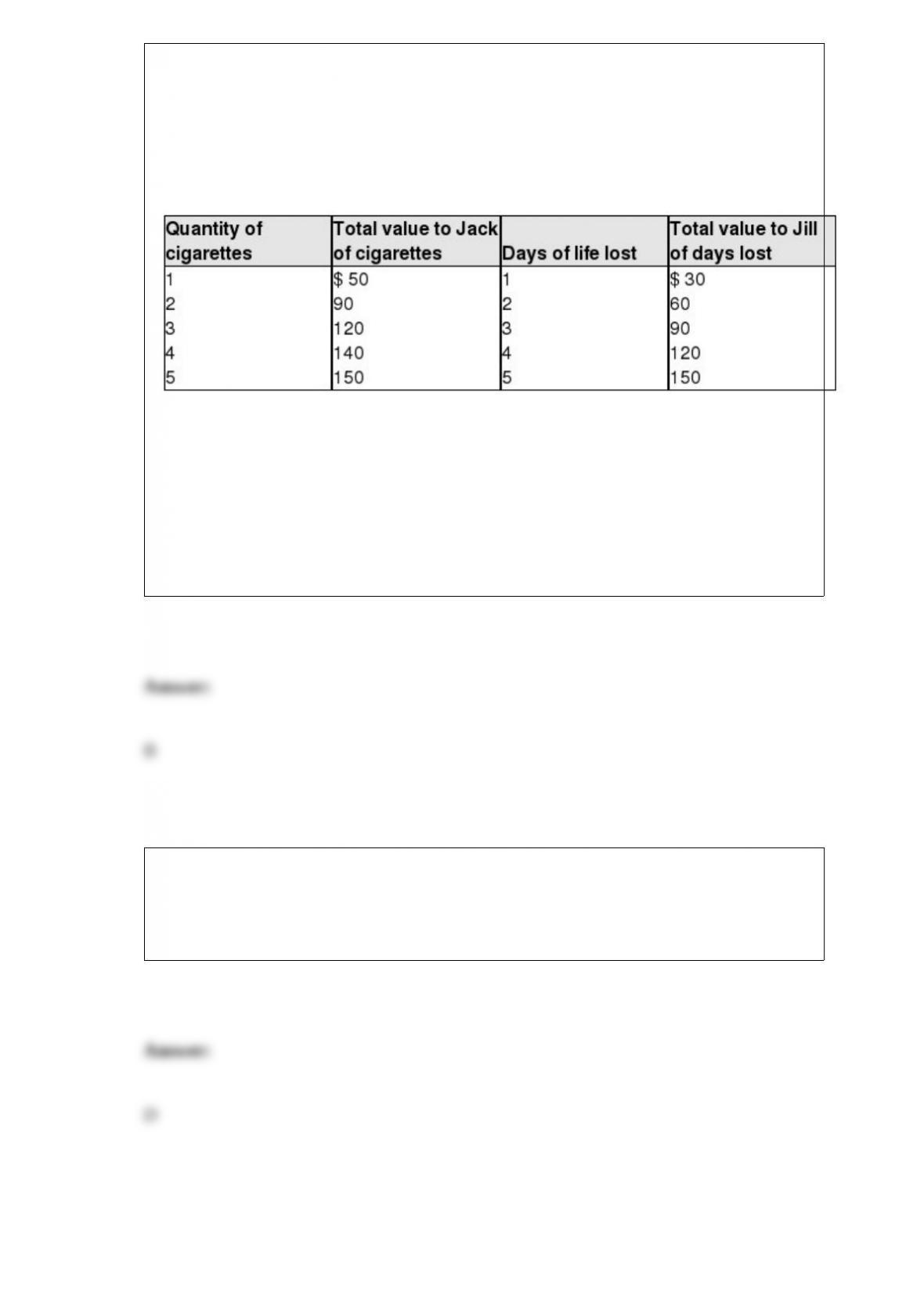
Exhibit 14-2 Cigarette smoking data
Jack enjoys smoking, while Jill fears that second-hand smoke will shorten her life. The
following table shows the value Jack places on each cigarette he smokes, and the value
Jill places on her shortened life. Use the table to answer the following question(s):
As shown in Exhibit 14-2, if smokers have the right to smoke as many cigarettes as they
wish, and non-smokers have the right to negotiate, how many cigarettes will Jack
smoke?
a. 1. c. 5.
b. 3. d. more than 5.
Select the positive statement that completes the sentence: If wages rise more rapidly
than productivity:
a. profits will fall. c. the rate of inflation increases.
b. workers will earn 3/4 of GDP. d. all of these.

Campbell Soup agrees to sell its brand to a grocery chain only if the chain also agrees to
buy a minimum number of cases of its V-8 juice. This is an example of:
a. a resale price maintenance agreement. c. exclusive dealing.
b. a tying agreement. d. price discrimination.
At the point where the marginal revenue equals zero for a monopolist facing a
straight-line demand curve, total revenue is:
a. greater than 1.
b. maximum.
c. less than 1.
d. equal to zero.
Exhibit 5-7 Demand curve for concert tickets
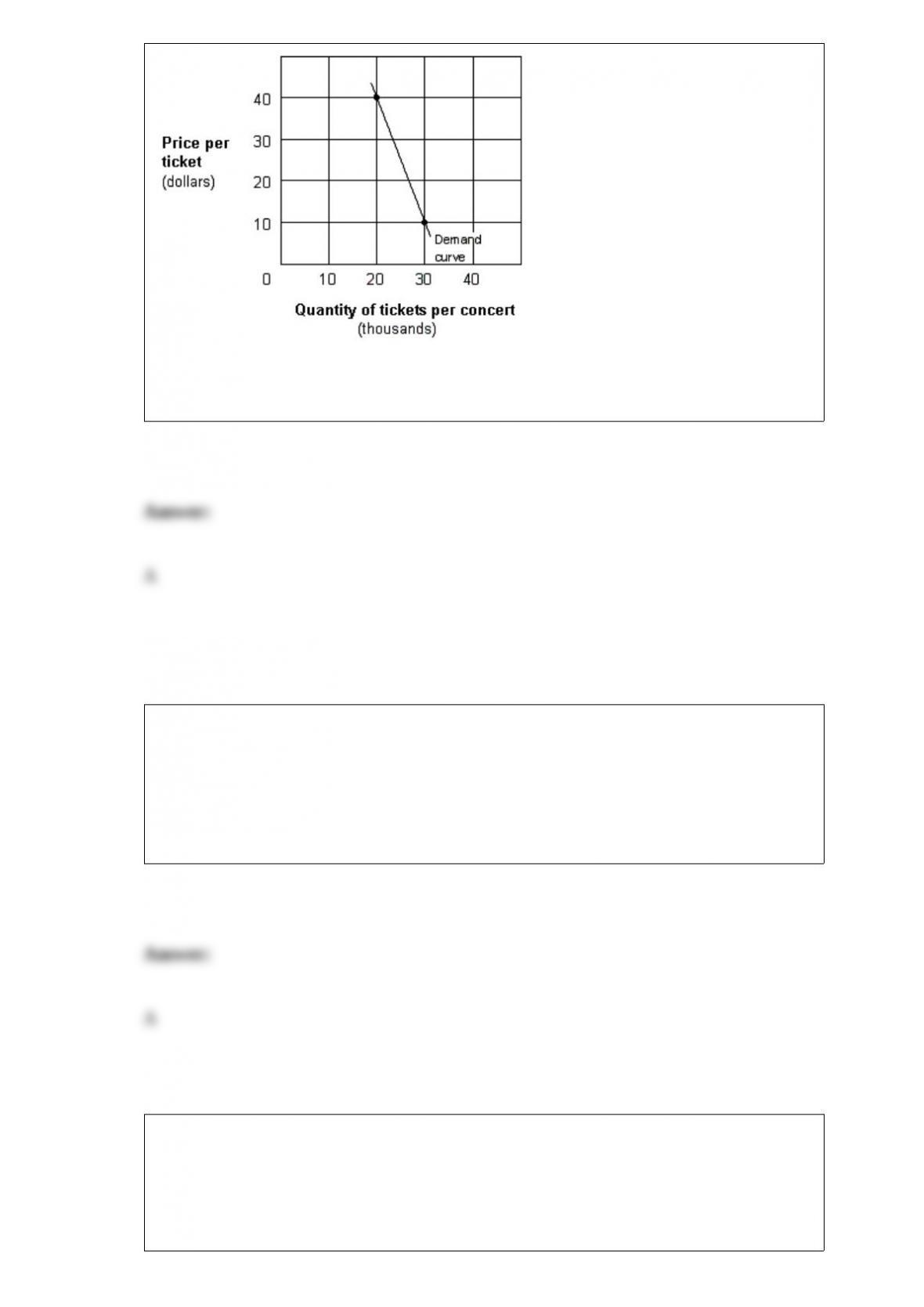
According to Exhibit 5-7, the demand for concert tickets is:
a. inelastic. c. unitary elastic
b. elastic. d. perfectly elastic.
The balance of payments ____.
a. b and e
b. is always zero
c. is positive when the nation runs a trade surplus
d. is negative when the nation runs a trade deficit
e. is an itemized account of a nation’s foreign economic transactions
Suppose a company increases production from a point where marginal cost equals
average total cost to a point where marginal revenue and marginal cost are equal. Is it a
good idea for the company to do this? Why?
a. No, average total costs have increased which means the company is not minimizing
losses.

b. Yes, because average variable costs are always less than average total costs.
c. No, because the marginal cost of producing the last unit is the same as the marginal
revenue.
d. Yes, even though the previous level of output had minimized the average total cost,
there was still profit to be earned by producing additional units.
e. No, the previous level of output was the most efficient because it had the lowest
average total cost.
Which of the following is not true about a monopsonist?
a. It can set the wage rate and hire any desired number of workers at that wage.
b. It is the only buyer of labor in a market.
c. It usually extracts rents from its monopsony power.
d. It determines the optimal employment-wage rate combination by equating the
marginal revenue product of labor to the marginal cost of labor.
e. It usually has to bargain with unionized workers.
In the case of negative externalities in production, the firm’s internal costs:
a. exceed the external costs.
b. are less than the external costs.
c. equal the external costs.
d. understate the true cost of producing the product.
e. overstate the true cost of producing the product.
Determining the price of compact discs is a concern of:
a. macroeconomics.
b. microeconomics.
c. both macroeconomics and microeconomics.
d. neither macroeconomics nor microeconomics.
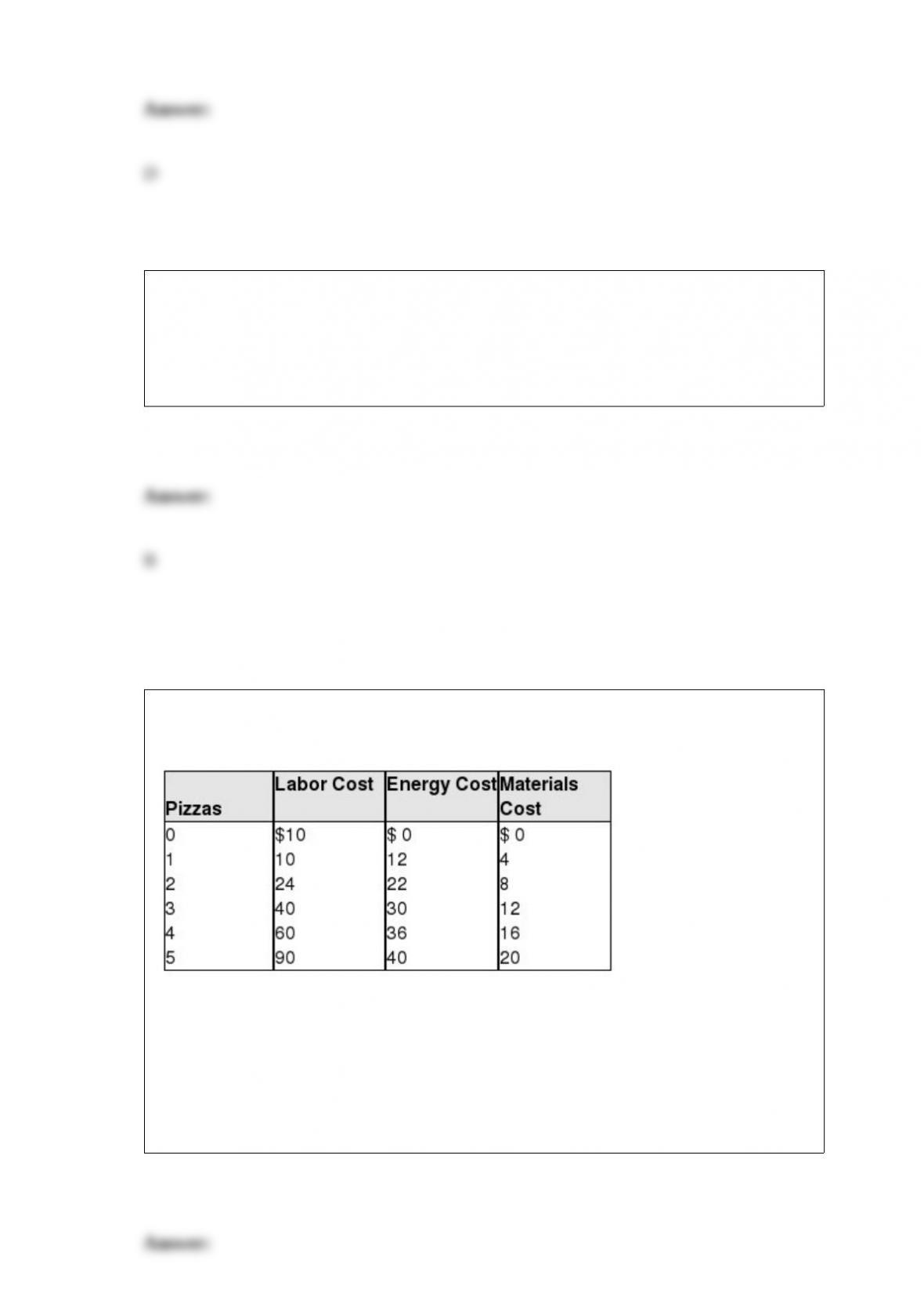
Exhibit 7-2 Cost schedule for pizza production
Exhibit 7-2 shows the labor, energy, and materials cost of making various quantities of
pizzas. The table shows that the labor cost of making pizzas will:
a. increase at a decreasing rate.
b. decrease at a decreasing rate.
c. decrease at an increasing rate.
d. increase at an increasing rate.
e. increase at a constant rate.

We can find the market demand for pears by:
a. adding up all the prices people are willing to pay for pears.
b. multiplying the number of people times the price of pears.
c. adding up the number of pears that producers are willing to sell.
d. multiplying the number of pears by the price of pears.
e. adding up all the individual demand curves for pears.
If a government-imposed price floor legally sets the price of milk above market
equilibrium, which of the following will most likely happen?
a. The quantity of milk demanded will increase.
b. The quantity of milk supplied will decrease.
c. There will be a surplus of milk.
d. There will be a shortage of milk.
Exhibit 3A-1 Comparison of Market Efficiency and Deadweight Loss
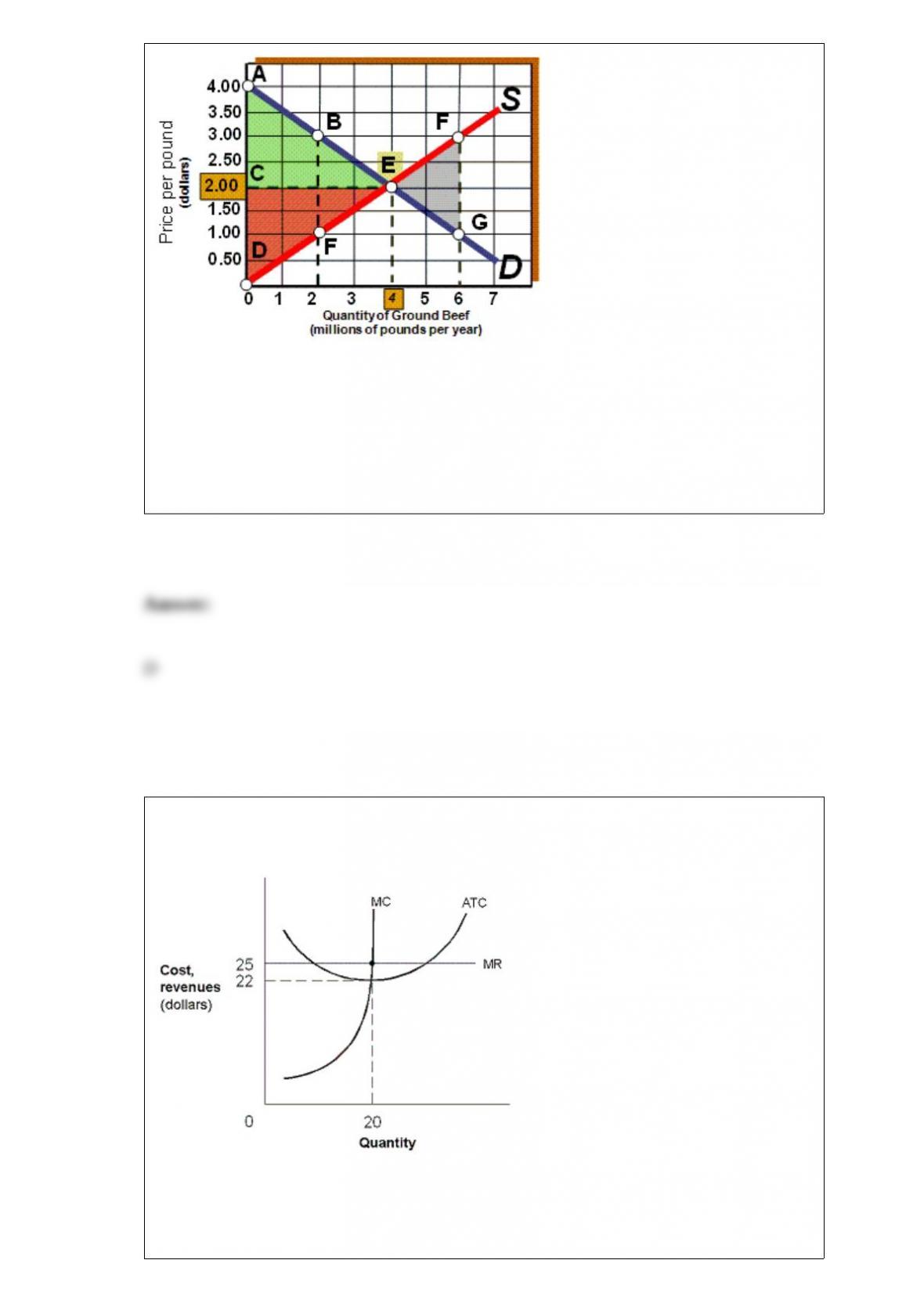
As shown in Exhibit 3A-1, if the quantity supplied is 2 million pounds of ground beef
per year, the result is:
a. deadweight loss.
b. inefficiency.
c. underproduction.
d. all of the above are true.
e. none of the above are true.
Exhibit 8-7 A firm’s cost and MR curves
In Exhibit 8-7, if this firm is currently producing 20 units of output, this firm:
a. is at its profit-maximizing point.
b. could increase profits by increasing output.
c. could increase profits by decreasing output.

d. should shut down.
e. should decrease price.
We would expect the cross elasticity between tennis racquets and tennis balls to be:
a. negative.
b. positive.
c. zero.
d. one.
e. infinite.
Which of the following would shift the demand curve for autos to the right?
a. A fall in the price of autos. c. A fall in consumers’ incomes.
b. A fall in the price of auto insurance. d. A fall in the price of steel.
Which of the following would increase the supply of laptop computers?
a. Higher wage rates for the workers that produce laptop computers.
b. A technological improvement that lowers the cost of producing laptop computers.
c. An increase in the price of computer chips used to produce laptop computers.
d. All of these.
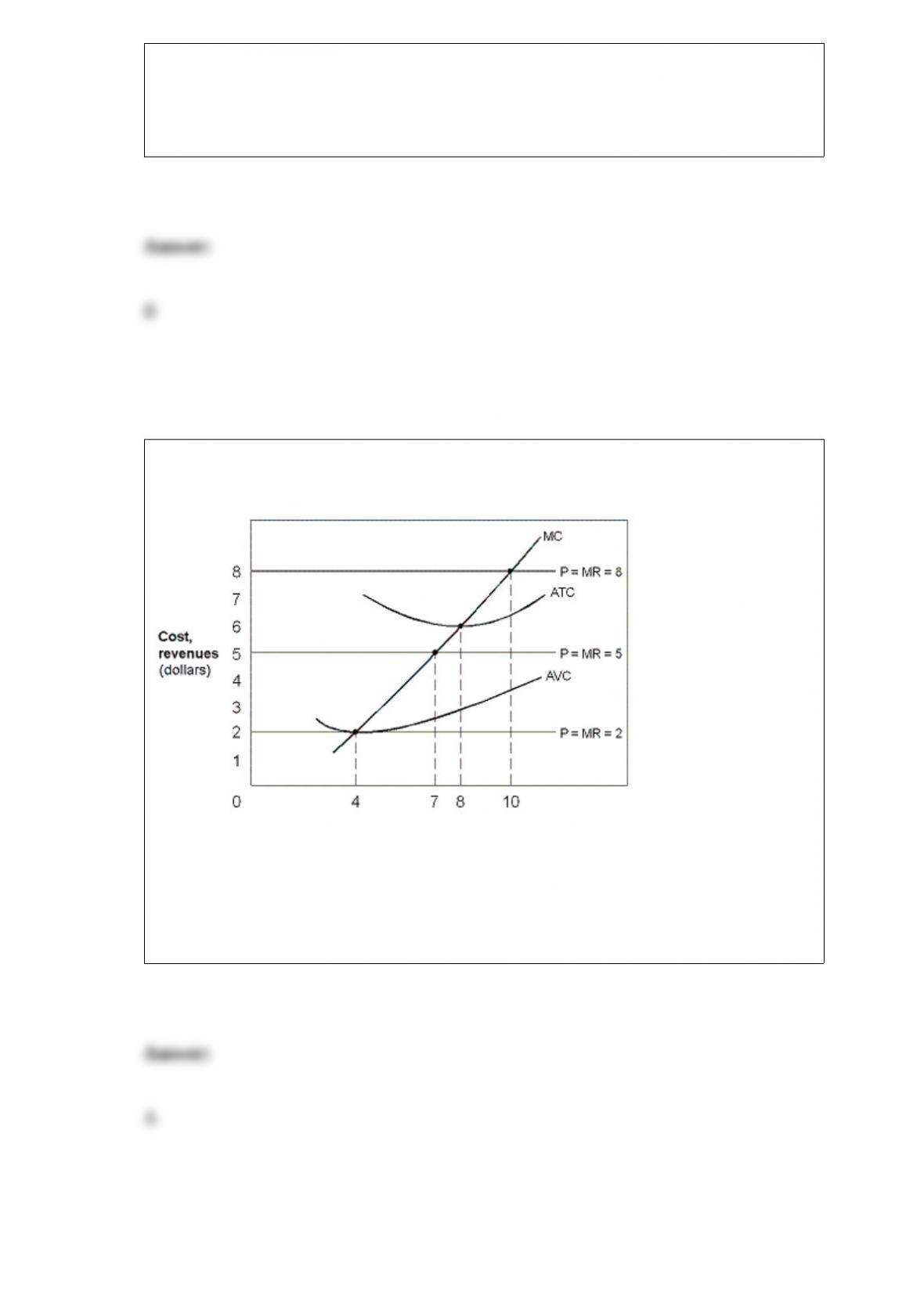
Exhibit 8-11 A firm’s cost and marginal revenue curves
In Exhibit 8-11, when the price is $2, the profit-maximizing (or loss-minimizing) firm:
a. should shut down and produce zero.
b. should produce output equal to 4.
c. is making an economic profit of $8.
d. should try to produce more output.
e. has total revenue equal to $20.

A manufacturer will sell its product only to retailers who agree to buy its brand. This is
an example of:
a. price discrimination. c. a tying contract.
b. exclusive dealing. d. interlocking directorates.
Which of the following is not a problem for less-developed countries?
a. Poor health and nutrition.
b. Shortages of labor.
c. High unemployment rates.
d. Low labor productivity.
e. low life expectancy