
Suppose the price of a liter of soda is $2. If Sara is willing to pay $3 for that liter of
soda, her consumer surplus is:
A) $0.
B) $1.
C) $2.
D) $3.
Firms in a cartel usually charge:
A) the same price.
B) different prices to reflect their different costs.
C) lower prices than a monopoly would.
D) higher prices than a monopoly would.
Suppose that the steelworkers’ association introduces a new steel worker licensing
requirement. What do you expect will happen?
A) More steelworkers will be employed, at a lower wage.
B) More steelworkers will be employed, at a higher wage.

C) Fewer steelworkers will be employed, at a lower wage.
D) Fewer steelworkers will be employed, at a higher wage.
Which of the following statements are TRUE about an individual demand curve?
A) An individual demand curve is negatively sloped and shows the price of a good and
the quantity that a single consumer is willing to sell during a particular time period.
B) An individual demand curve is positively sloped and shows the price of a good and
the quantity that all consumers are willing to buy during a particular time period.
C) An individual demand curve is negatively sloped and shows the quantity of a good
that a single consumer is willing to buy, and the amount of time to consume the good.
D) An individual demand curve is negatively sloped and shows the price of a good and
the quantity that a single consumer is willing to buy during a particular time period.
If the supply curve is relatively steep, then the price elasticity of supply will be:
A) elastic.
B) inelastic.
C) unit elastic.

D) greater than one.
In the short run, the marginal cost of the first unit of output is $20, the marginal cost of
producing the second unit of output is $16, and the marginal cost of producing the third
unit of output is $12. The firm’s total variable cost of producing three units of output is:
A) $12.
B) $16.
C) $20.
D) $48.
Recall the Application about the economics professor who caught three students
cheating on their final exam to answer the following question(s).
Recall the Application. After being caught cheating, the economics professor called
each student into his office individually. One student remarked “This feels like you put
me in a prisoners’ dilemma game.” If this cheating episode resulted in the same way as
the prisoners’ dilemma, then:
A) none of the students would confess to cheating.
B) only one student would confess to cheating.

C) two of the students would confess to cheating.
D) all three students would confess to cheating.
Which of the following is the reason why pharmaceutical firms are NOT
monopolistically competitive?
A) Pharmaceutical firms sell differentiated products.
B) There are many buyers in the market.
C) There are many sellers in the market.
D) There are barriers to entry in the market, like patents.
In the case of Interstate Bakeries and Continental Bakery, the Justice Department
concluded that:
A) the merger of two firms selling close substitutes may lead to higher prices.
B) Interstate Bakeries attempted to drive out Continental by using predatory pricing.
C) a merger between the two companies would save money in production costs, and so
would be good for consumers.
D) Continental attempted to drive out Interstate Bakeries by using predatory pricing.

Assume the data backup industry, a perfectly competitive industry, is in long-run
equilibrium with a market price of $3 per 10GB. If demand for data backup decreases
and this industry is a decreasing-cost industry, long-run equilibrium will be
reestablished at a price:
A) greater than $3.
B) less than $3.
C) equal to $3.
D) either greater than or less than $3, depending on the number of firms that enter the
industry.
Suppose that the price for fully electric vehicle made by Toyota increases. The quantity
of fully electric cars sold in the market will:
A) increase, because Toyota would be willing to sell more fully electric vehicles.
B) decrease, because Toyota believes that to maintain the higher prices, it must sell a
smaller quantity.
C) increase, because other auto manufacturers would want to enter the market and also
sell fully electric vehicles.
D) Both A and C are correct.
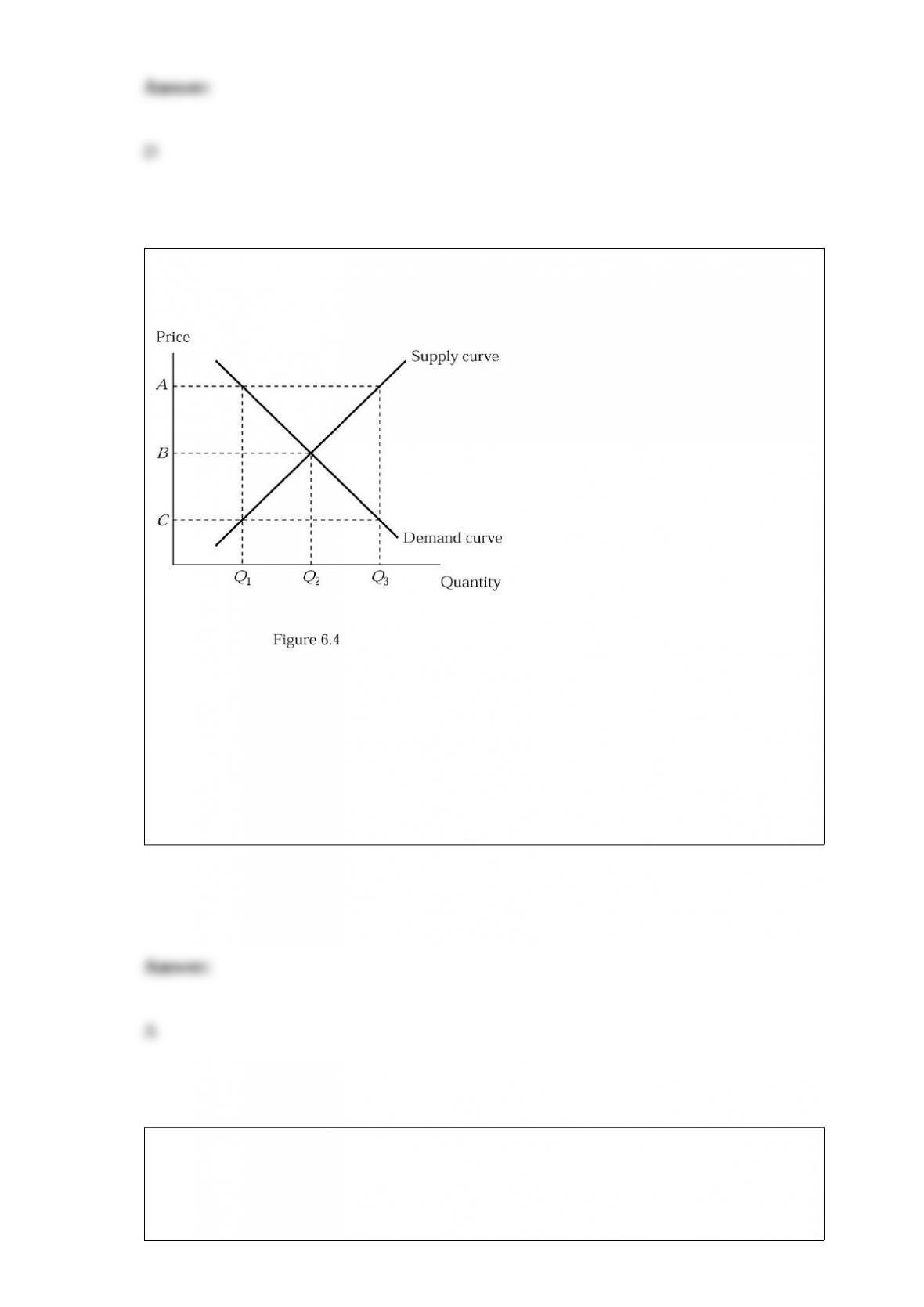
Refer to Figure 6.4. If producers currently gain at the expense of consumers, a
minimum price must have been set at:
A) A.
B) B.
C) C.
D) There is not sufficient information.
Recall the Application. A precise VMT tax will reduce the externalities associated with
automobile accidents by:
A) reducing miles driven and thus accidents.

B) encouraging good drivers to drive more.
C) discouraging bad drivers from driving.
D) all of the above.
A carbon tax placed on coal:
A) would decrease the price of coal.
B) would cause some producers to switch to other forms of energy.
C) is unlikely to affect the demand for alternative forms of energy.
D) would increase the quantity of coal demanded at every price.
Figure 4.4 illustrates the supply of tacos. A decrease in the supply of tacos is
represented by a movement from:
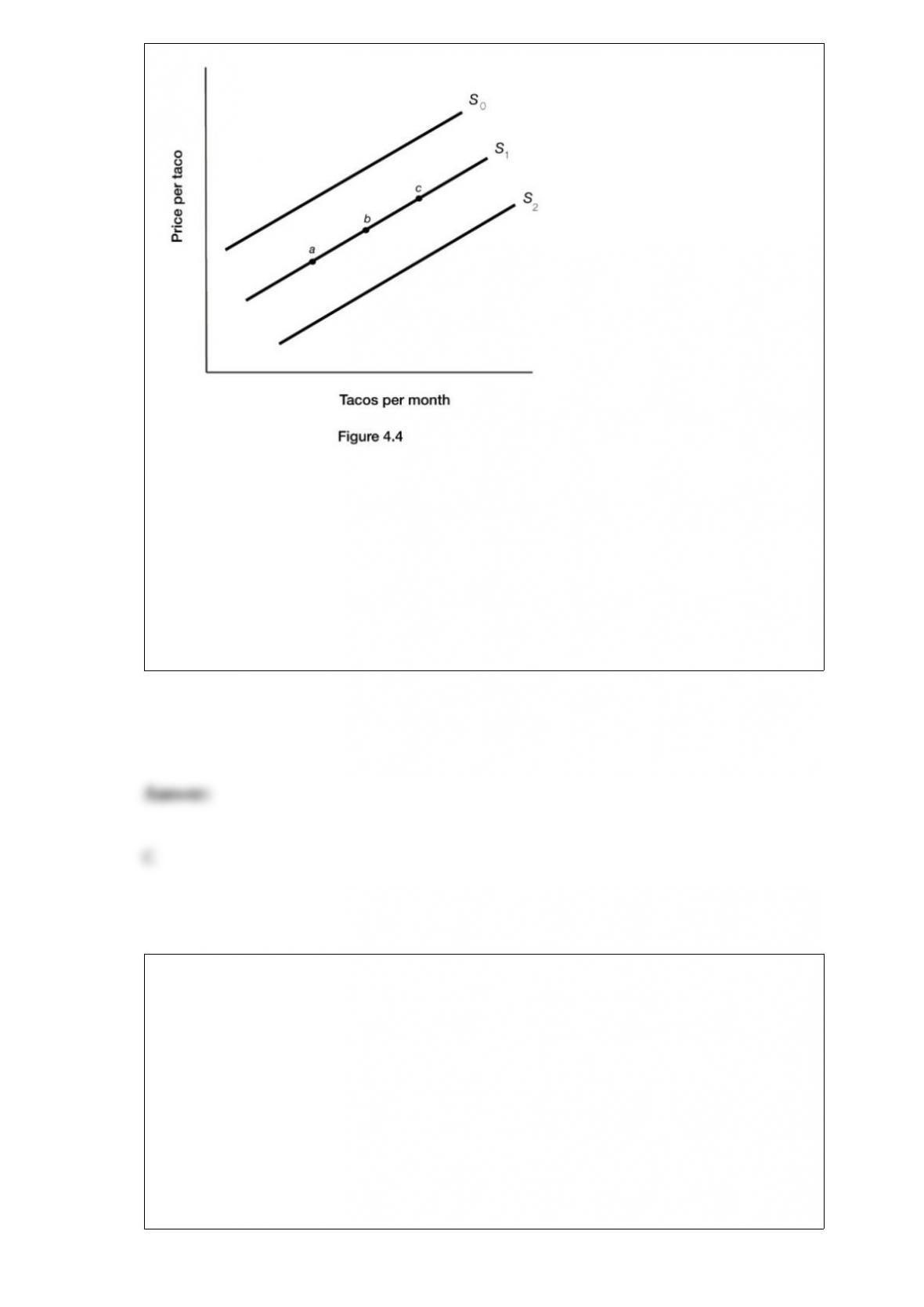
A) point a to point b.
B) point c to point b.
C) S2 to S1.
D) S0 to S1.
According to the application, how does the Department of Commerce determine the
price of the good in the foreign market?
A) They use a “constructed value” method where it makes its own estimates of what
prices in countries’ own markets would be based on available data.
B) They use dated and very crude estimates.
C) They rely on the information supplied by the firms that bring about the charges.
D) All of the above are correct.

If the number of automobile manufacturers decreases:
A) the demand for automobiles increases.
B) the demand for automobiles decreases.
C) the supply of automobiles increases.
D) the supply of automobiles decreases.
Figure 14.1 represents the market for used bikes. Suppose buyers are willing to pay
$200 for a plum (high-quality) used bike and $50 for a lemon (low-quality) used bike.
Initially buyers believe that 50% of used bikes in the market are lemons (low quality).
Compared to the outcome with neutral expectations, how many fewer bikes are sold in
equilibrium?
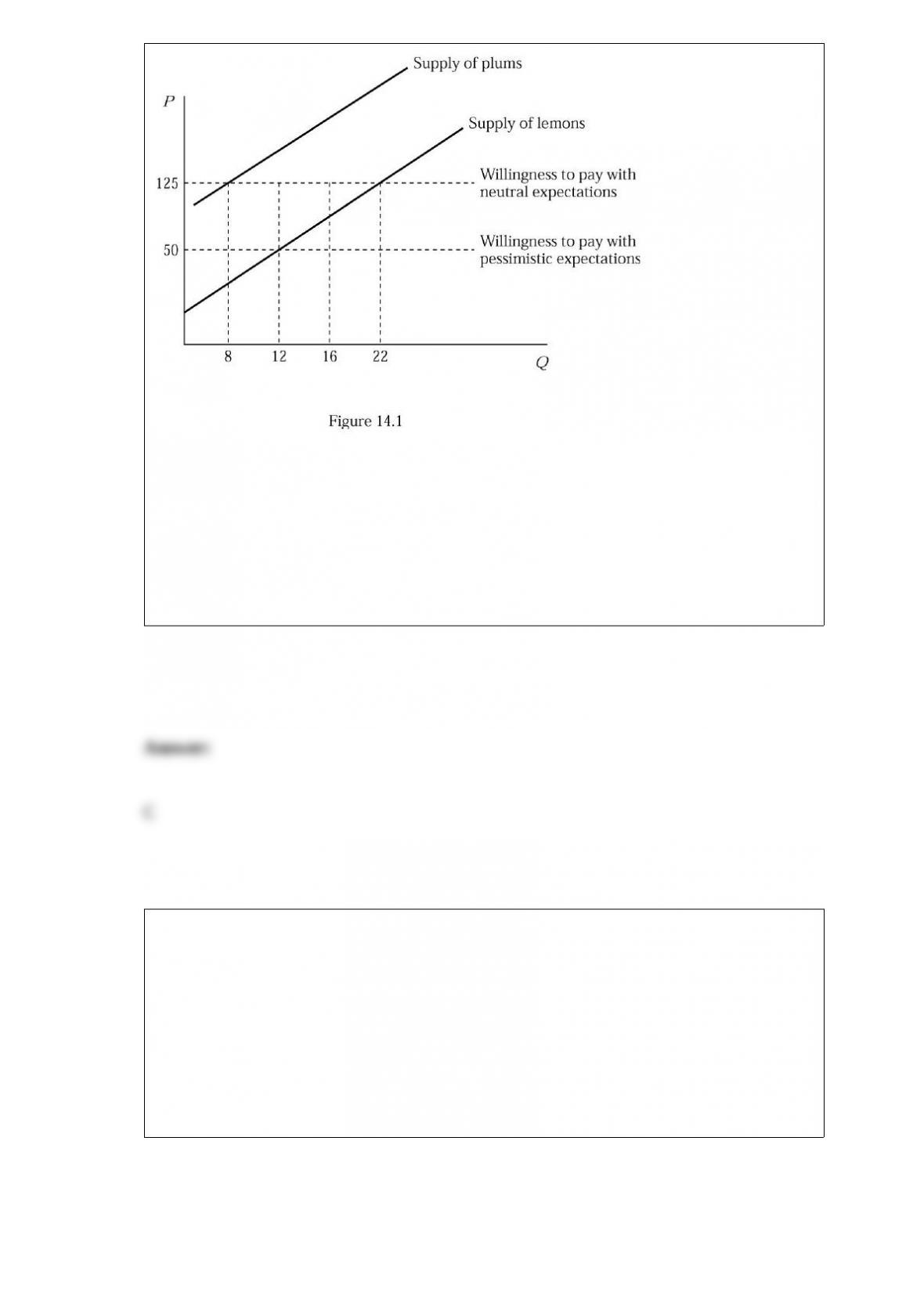
A) 8
B) 12
C) 18
D) 22
As price falls along a particular supply curve, producer surplus:
A) decreases.
B) remains constant.
C) increases rapidly.
D) increases a very small bit.

A small change in a variable is:
A) an average change.
B) a ceteris paribus change.
C) an efficient change.
D) a marginal change.
With respect to price, in a perfectly competitive market, firms can:
A) affect the market price.
B) set the market price.
C) take the market price.
D) negotiate the market price to certain extent.
A trust is:
A) an agreement among firms to charge the perfectly competitive price.
B) a compact between industry and government.
C) a creation of the Sherman Act.
D) an arrangement between firms whereby decision making is controlled by a board of
trustees.
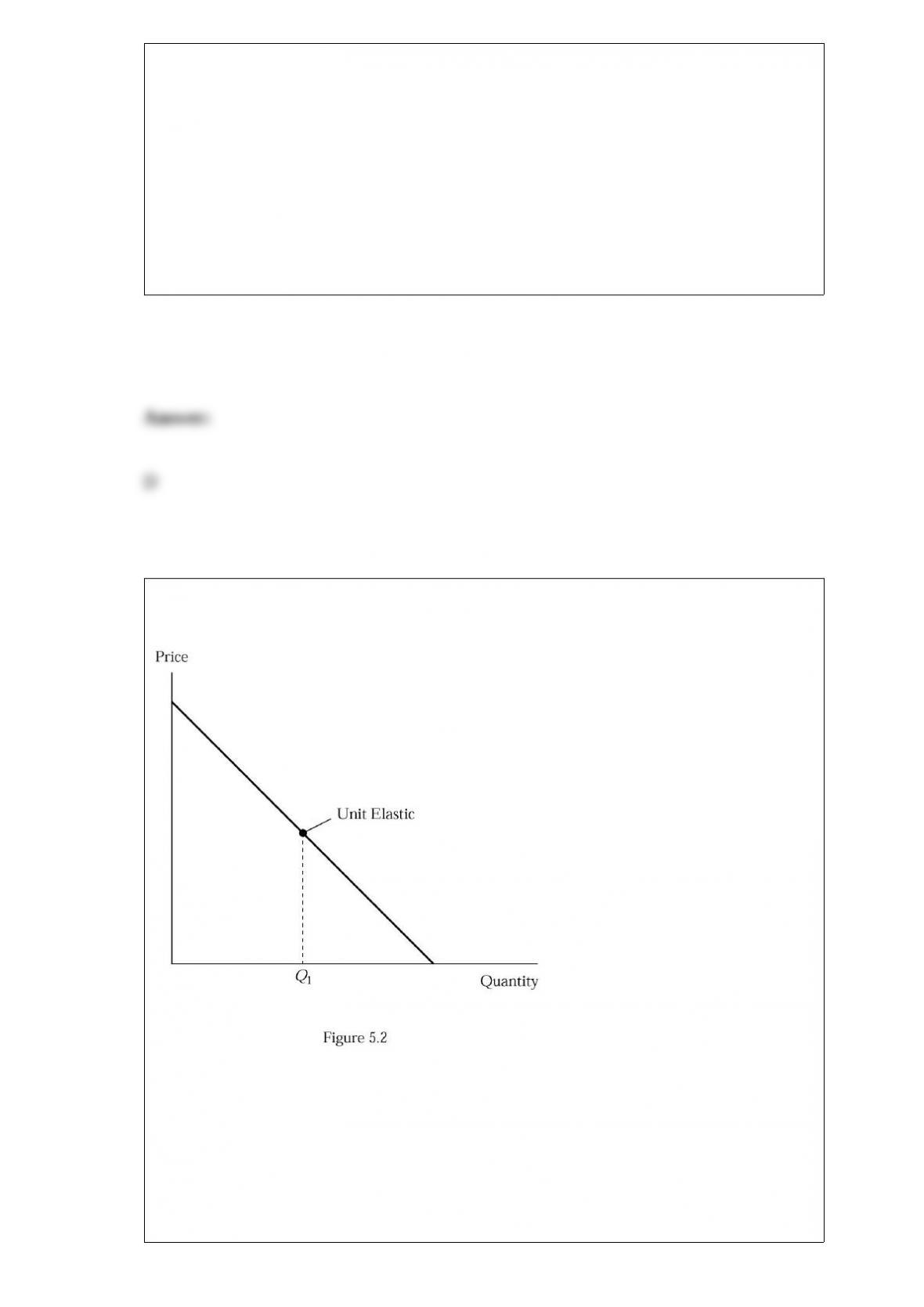
In Figure 5.2 at quantities larger than Q1 demand is:
A) inferior.
B) elastic.
C) inelastic.
D) unit elastic.
The Act which prohibited selling products at unreasonably low prices was the:
A) Sherman Act.
B) Clayton Act.
C) Robinson-Patman Act.
D) Celler-Kefauver Act.
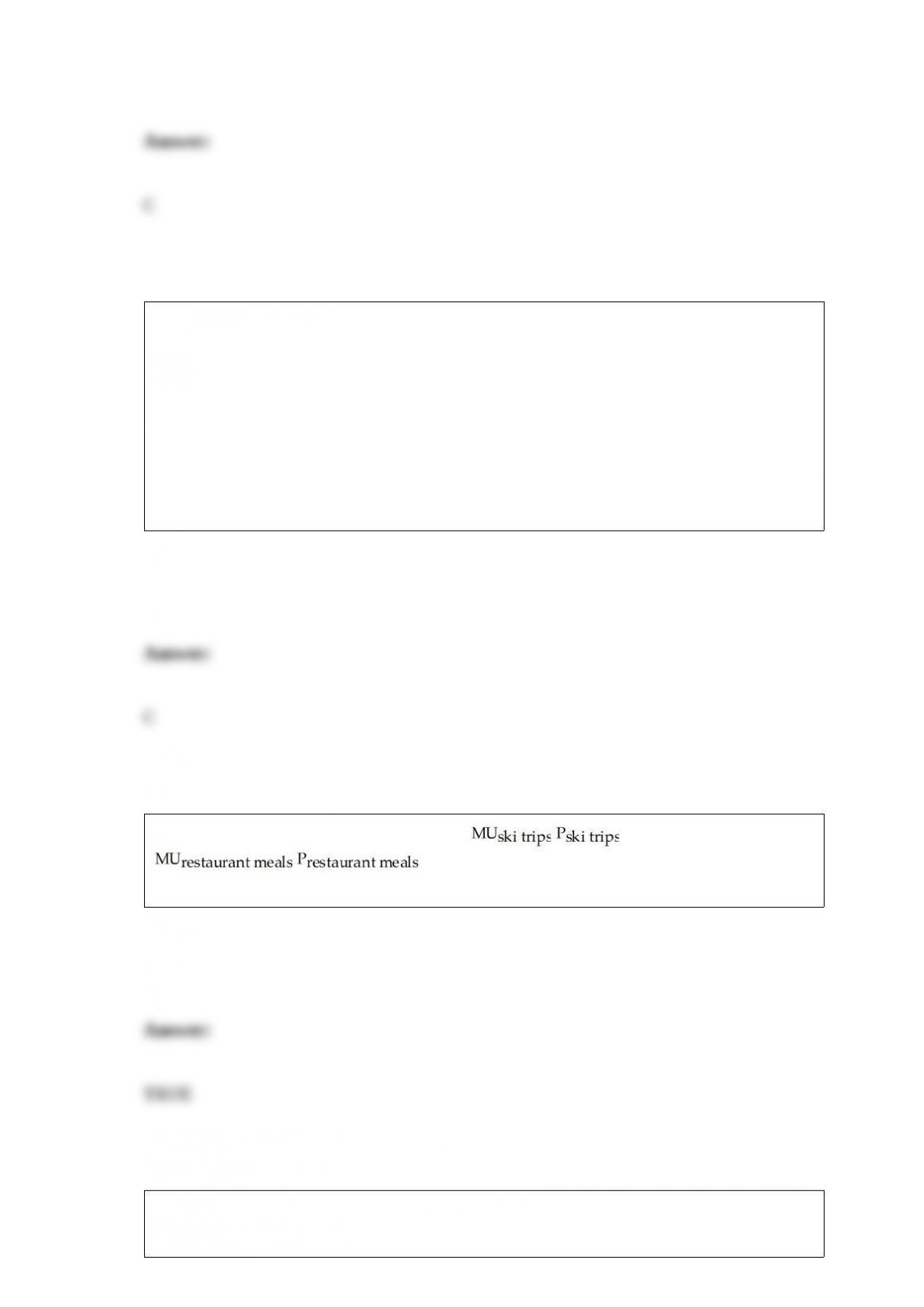
At George’s current level of consumption, / = 7 and
/ = 9. George can increase his utility by decreasing
his consumption of ski trips and increasing his consumption of restaurant meals.
Refer to Table 8.1. Suppose Mr. B withdrew $50,000 from his account that earned 10%
to invest into this business. He quit his full-time job that paid $40,000 to manage this
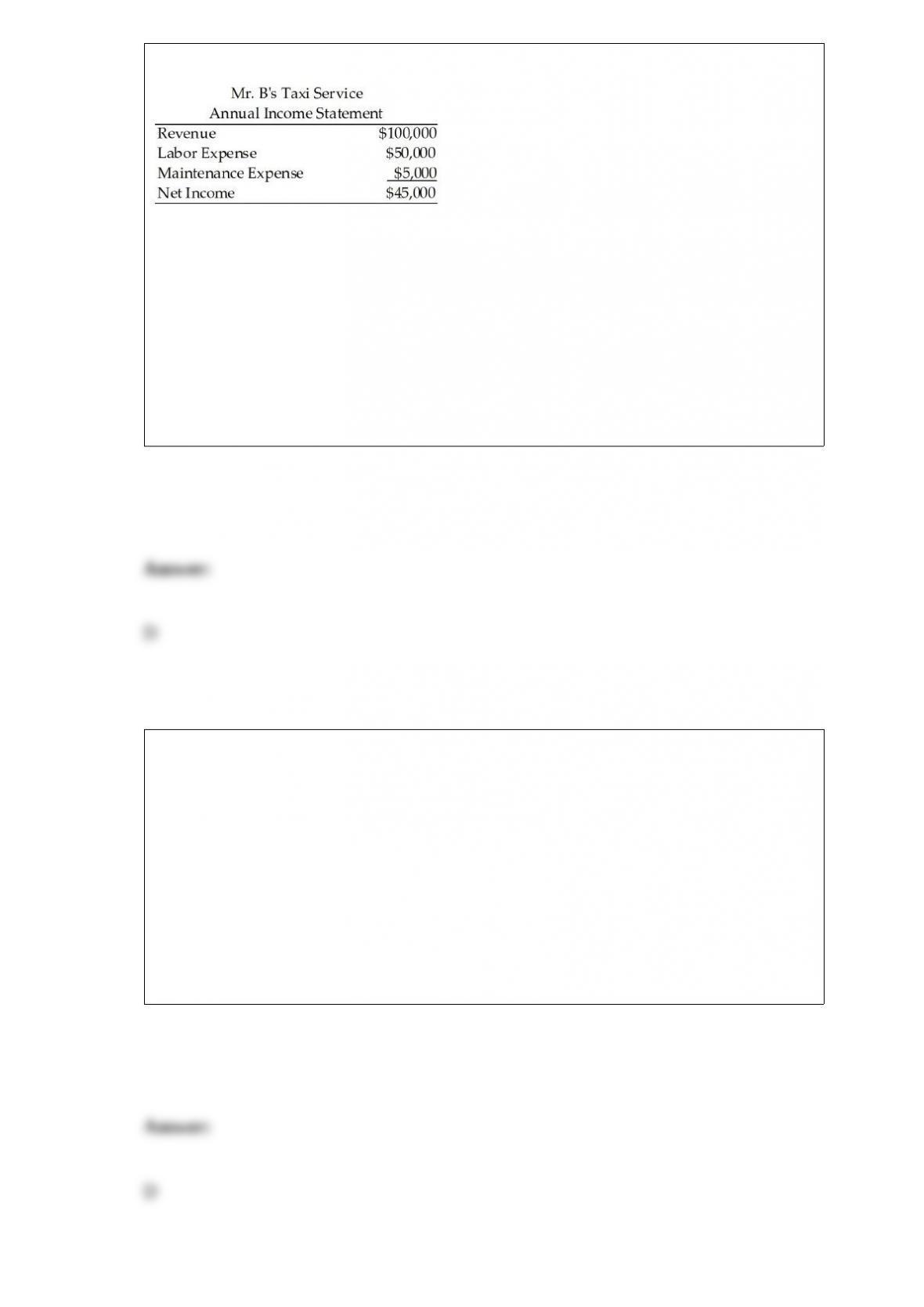
business. Mr. B’s implicit cost equals:
Table 8.1
A) $100,000.
B) $90,000.
C) $50,000.
D) 45,000.
When the price of a pair of shoes is $80, 10 pairs are demanded. When the price of the
pair of shoes is $60, 20 pairs are demanded. Using the initial value, the elasticity of
demand is ________ starting at a price of $80 and ________ starting at a price of $60.
A) 2; 3
B) 3/2; 4
C) 3; 2
D) 4; 3/2
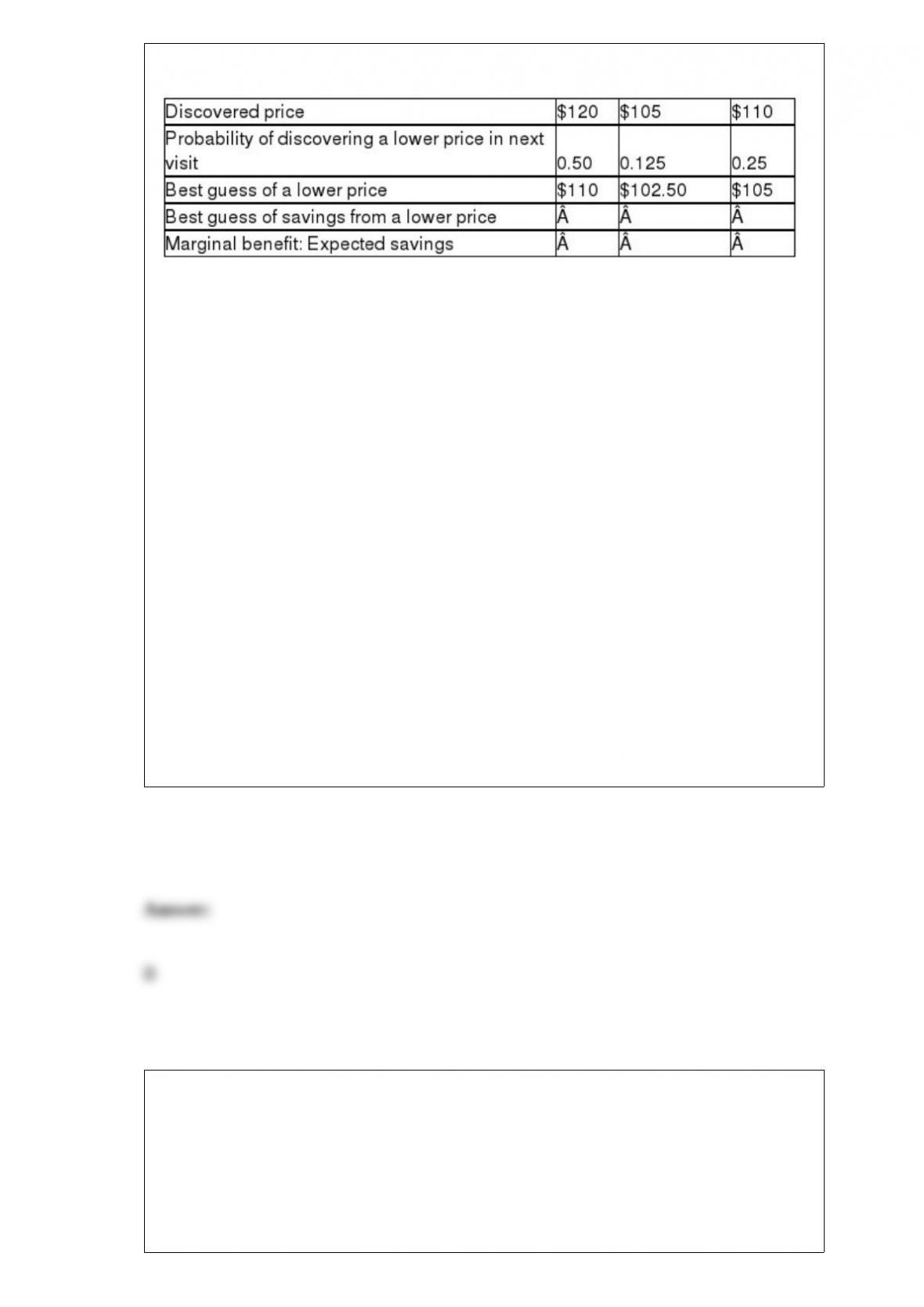
Table 14.5
Table 14.5 contains data on the marginal benefit of searching for a lower price for a
digital camera.
The price of the camera ranges from $100 at the lowest price store to $140 at the
highest price store.
For any randomly selected store, any price from the low price to the high price is
equally likely.
The marginal cost of visiting each store is constant at $1.50 per visit.
Refer to Table 14.5. At the discovered price of $110, the expected savings from visiting
another store is:
A) $0.3125.
B) $1.25.
C) $2.50.
D) $5.00.
You notice that the price of butter falls and then rises. The best explanation for this is
that:
A) demand for butter increased causing price to fall, which attracted other firms to enter
the market causing supply to increase, which caused the price to go back up.
B) demand for butter decreased causing price to fall, which attracted other firms to

enter the market causing supply to increase, which caused the price to go back up.
C) demand for butter decreased causing price to fall, which induced other firms to exit
the market causing supply to decrease, which caused the price to go back up.
D) demand for butter decreased causing price to fall, which attracted other firms to
enter the market causing supply to decrease, which caused the price to go back up.
The market equilibrium price and quantity can be affected if:
A) supply and demand both increase.
B) supply and demand both decrease.
C) supply increases and demand decreases.
D) all of the above