
At what point should Jasper Johns consider painting his own house?
A) if the house painter charges $500 per day and takes 20 days to paint the house
B) if the house painter charged $2,500 per day, since that is excessive for painting a
house
C) if his earnings dropped to $1,000 per day
D) if the house painter charged more for 10 days worth of work than Johns could earn
each day
Government means tested programs ________ the overall poverty rate.
A) substantially decrease
B) have not changed
C) lead to an increase in
D) drop to zero
Nancy and Melissa both have broken light fixtures in their living rooms. Nancy opts to
hire an electrician, while Melissa spends two hours replacing the fixture herself. Which
of the following is a possible explanation of this behavior?
A) Nancy dislikes electrical work more than Melissa.
B) Melissa is better at doing electrical work than Nancy.
C) The opportunity cost of Nancy’s time is higher than her cost to hire an electrician.
D) All of the above are possible explanations of this behavior.
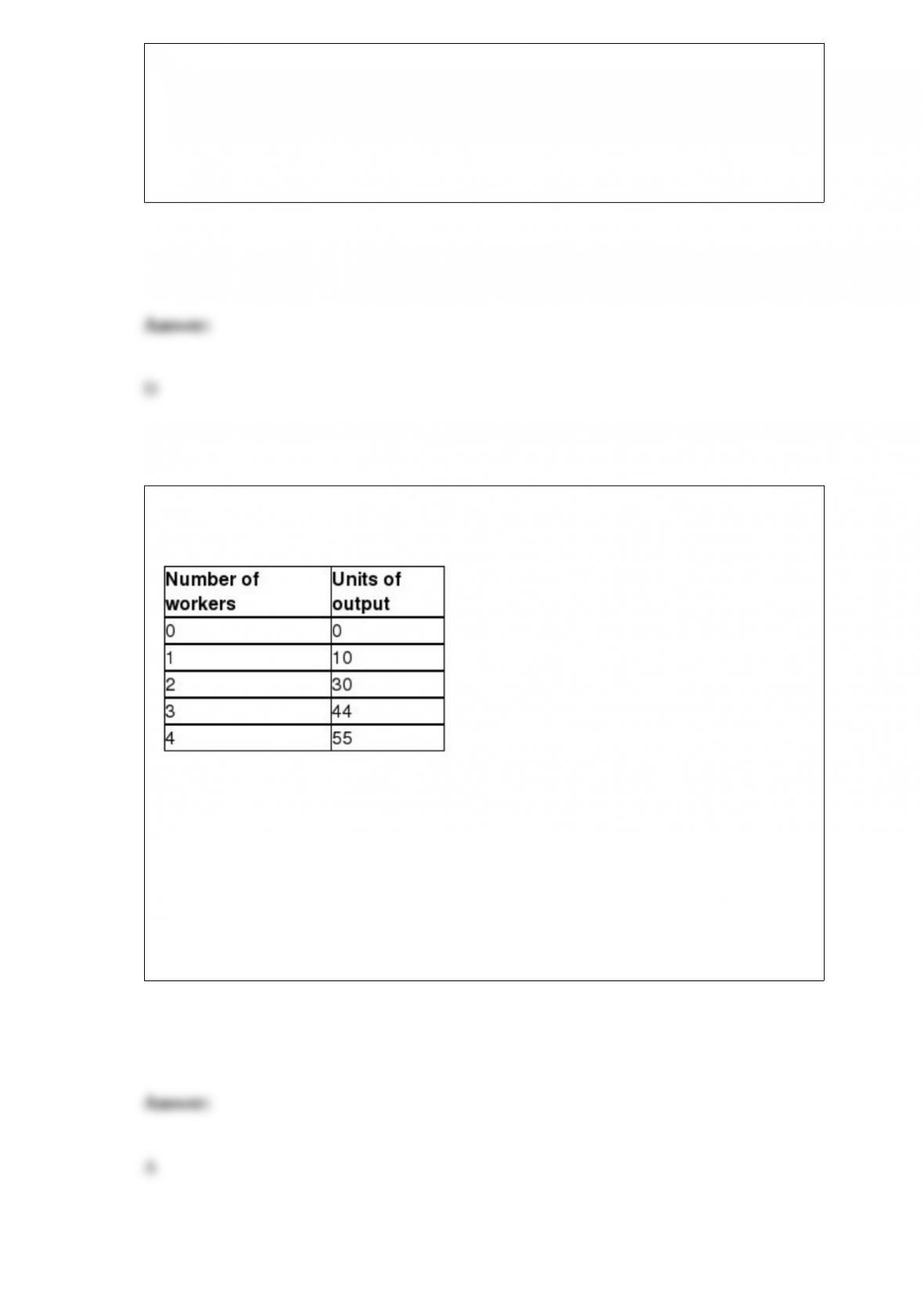
Refer to Table 8.1, which gives a firm’s production function. Assume that all non-labor
inputs are fixed. Marginal product is maximized when the firm hires:
Table 8.1
A) 2 workers.
B) 3 workers.
C) 4 workers.
D) 5 workers.
If the percentage change in price is 20 and the percentage change in quantity supplied is
10, supply is:
A) unaffected by price changes.
B) inelastic.
C) unitary elastic.
D) elastic.
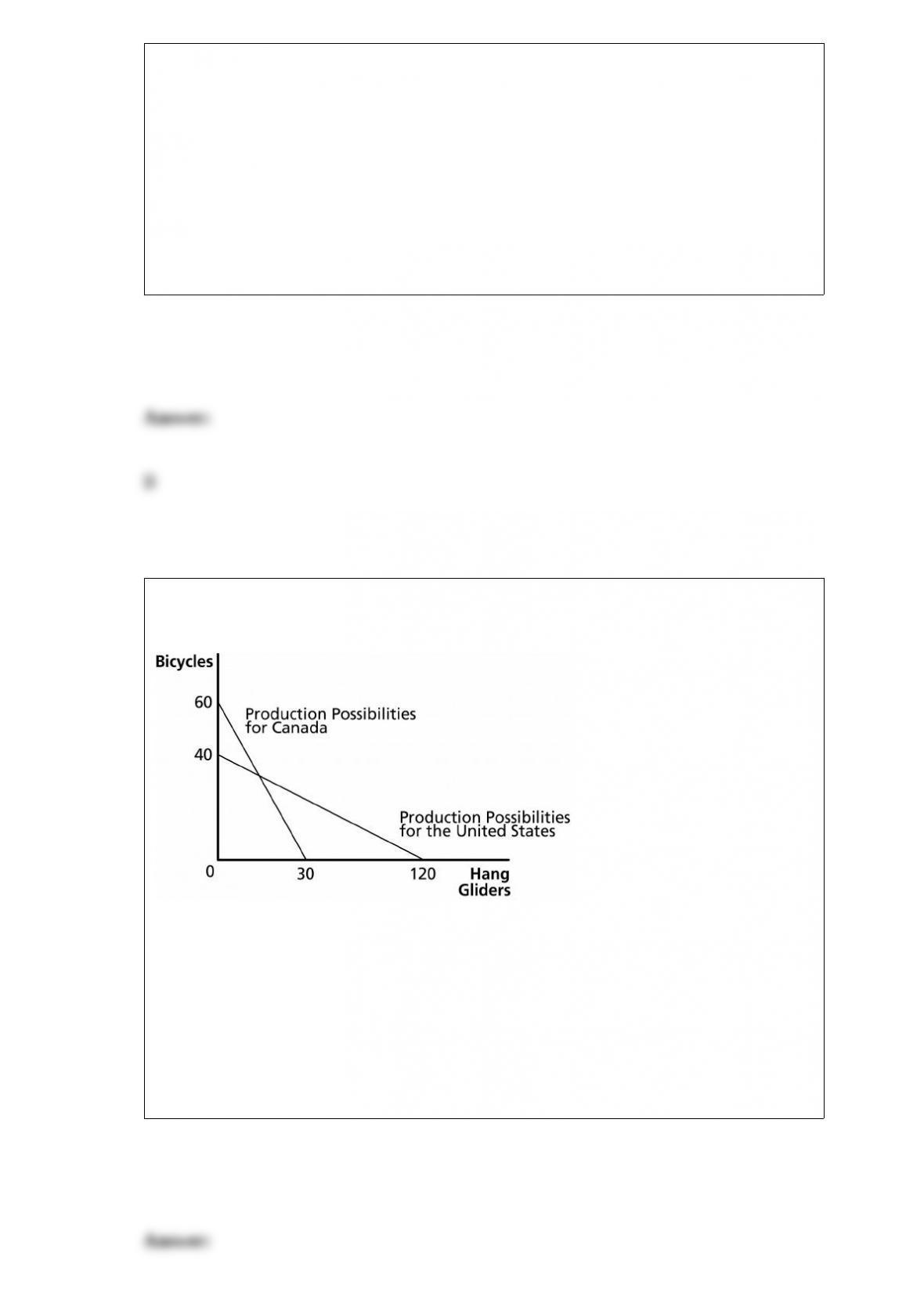
Refer to Figure 18.1. The United States has a comparative advantage in the production
of:
Figure 18.1
A) bicycles.
B) hang gliders.
C) both bicycles and hang gliders.
D) neither bicycles nor hang gliders.
A uniform-abatement policy is:
A) inefficient because it does not exploit the differences in abatement costs among
firms.
B) efficient because an equal amount of pollution is assigned to each firm.
C) inefficient because it incurs relatively low compliance costs.
D) efficient because it helps firms lower their production costs.
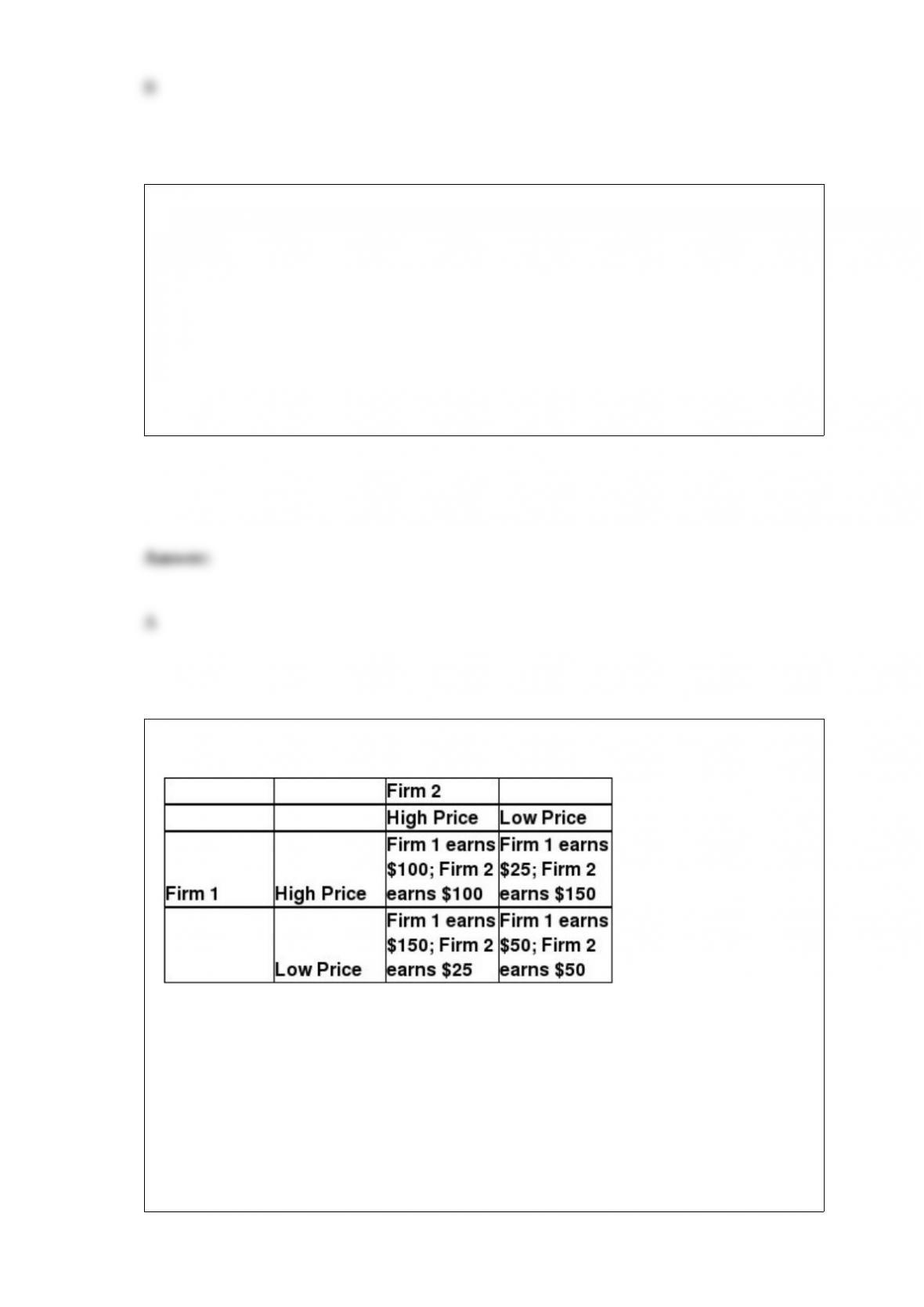
The diagram shown in Table 12.2 is:
Table 12.2
A) a payoff matrix.
B) a profit table.
C) a price leadership model.
D) a game tree.

The market demand curve for labor is the relationship between the wage and the
quantity of labor that:
A) all workers are willing to provide.
B) any given worker is willing to provide.
C) all firms are willing to employ.
D) any given firm is willing to employ.
If principles of economics sections is three credit hours and an instructor teaches two
sections with 100 students in each and tuition and fees at your school are $100 per
credit hour, then the marginal revenue product for your school from hiring that
instructor that semester is:
A) $100.
B) $300.
C) $30,000.
D) $60,000.
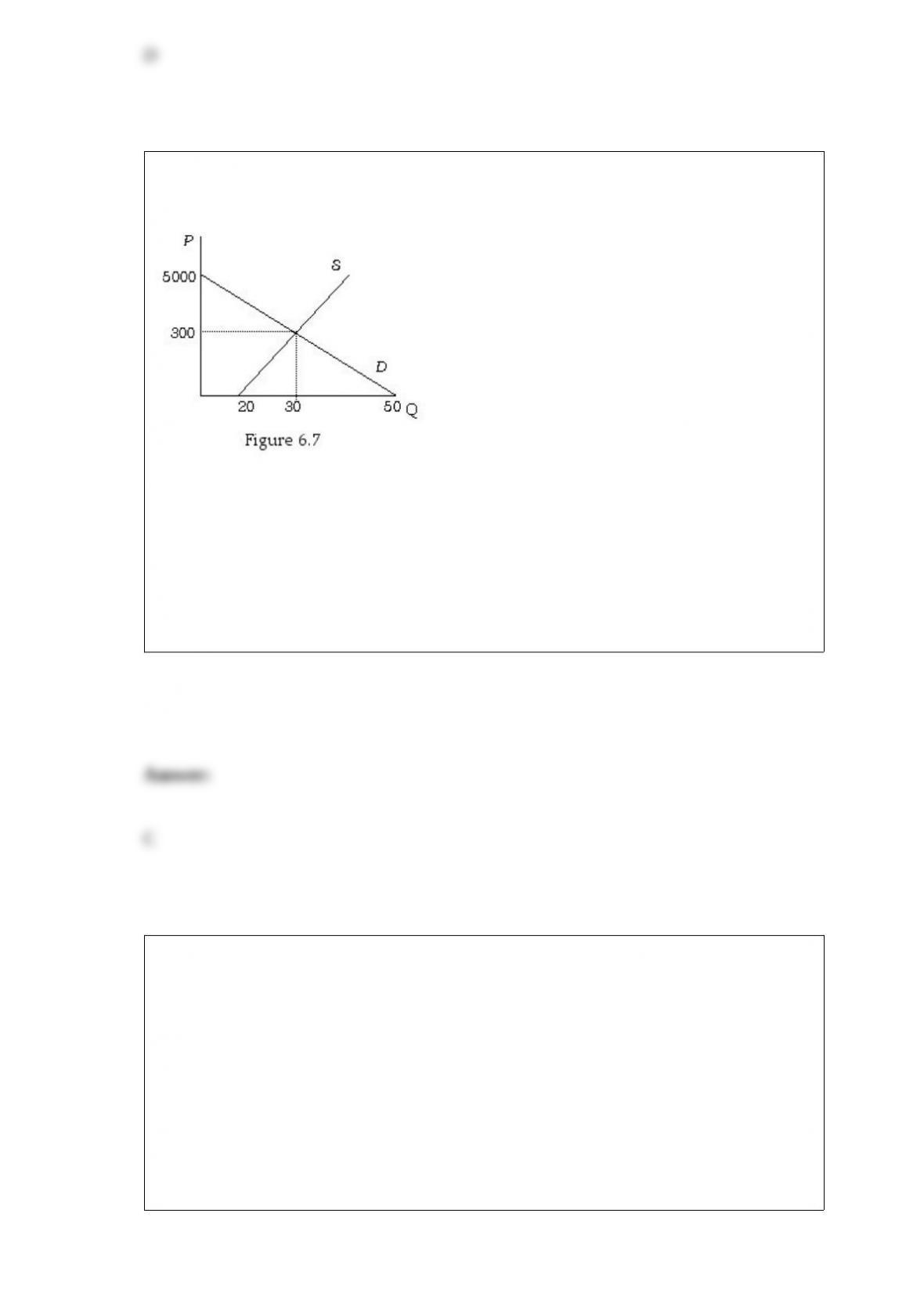
Figure 6.7 shows the supply and demand curves for human kidneys. Because the
government does not allow a person to sell a kidney:
A) 50 kidneys are donated.
B) 30 kidneys are donated.
C) 20 kidneys are donated.
D) 0 kidneys are donated.
Sheila sells corn in a perfectly competitive market. This month Sheila receives a higher
price for a bushel of corn than she did last month. Which of the following might explain
this?
A) The market demand increased for corn.
B) The market demand decreased for corn.
C) Firms entered the market.
D) Sheila’s costs have decreased.

Which of the following is NOT a characteristic of a monopoly?
A) There is only one seller.
B) A monopolist is a price-taker.
C) There exist barriers to entry.
D) A monopolist’s sales revenue is constrained by the market demand.
A college education generates:
A) no benefits.
B) only private benefits.
C) only external benefits.
D) both private and external benefits.

Suppose Toor’s beer is sold in a monopolistically competitive market. If the price of
Toor’s is currently $2 and the average cost of producing Toor’s is $1, in the long run we
can expect:
A) the demand for Toor’s beer to increase.
B) the price of Toor’s beer to decrease, and the average cost of producing Toor’s to
increase.
C) the demand curve for Toor’s beer to become horizontal.
D) no change in the price or average cost of producing Toor’s beer.
Diminishing marginal utility implies:
A) as the consumption of a good increases marginal utility decreases.
B) as the consumption of a good increases marginal utility increases.
C) as the consumption of a good increases total utility decreases.
D) as the consumption of a good increases total utility increases.
In considering the costs involved for student loans that must be repaid in ten years, this
Application about the impact inflation has on your potential future salary and the
repayment of student loans is addressing the economic concept of:

A) the marginal principle.
B) the principle of voluntary exchange.
C) the principle of diminishing returns.
D) the real-nominal principle.
Wages are higher in occupations that are considered dangerous. Which of the following
job features would lead to a higher pay?
A) night shift
B) mental stress
C) noisy environment
D) all of these
Low-price guarantees worsen the duopolists’ dilemma.
Which of the following would NOT be considered to be a public good?
A) national defense
B) radio broadcasts
C) police protection
D) a newspaper
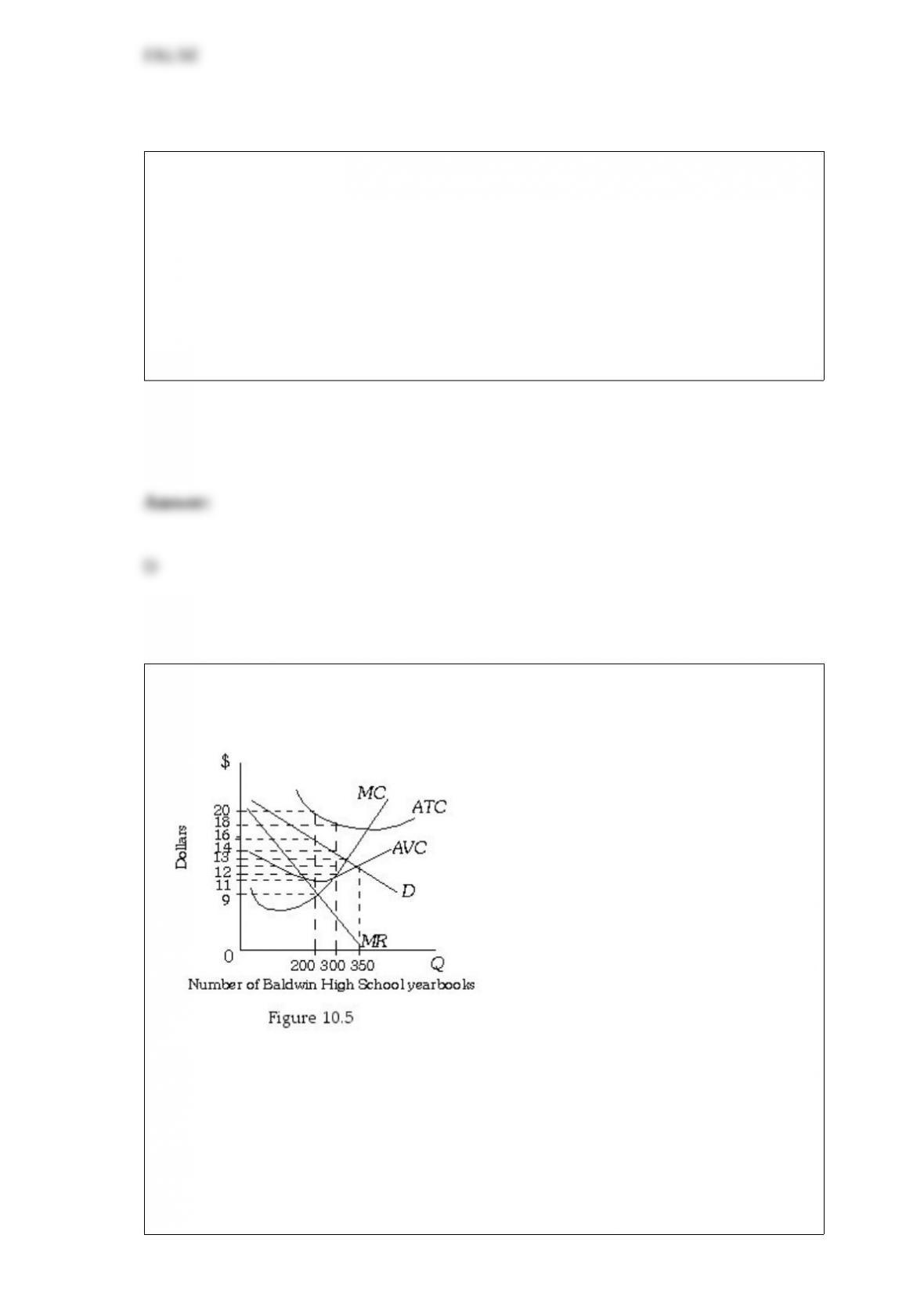
Refer to Figure 10.5. The profit-maximizing level of output for the Memory Company
is ________ high school yearbooks.
A) 0
B) 200
C) 300
D) 350
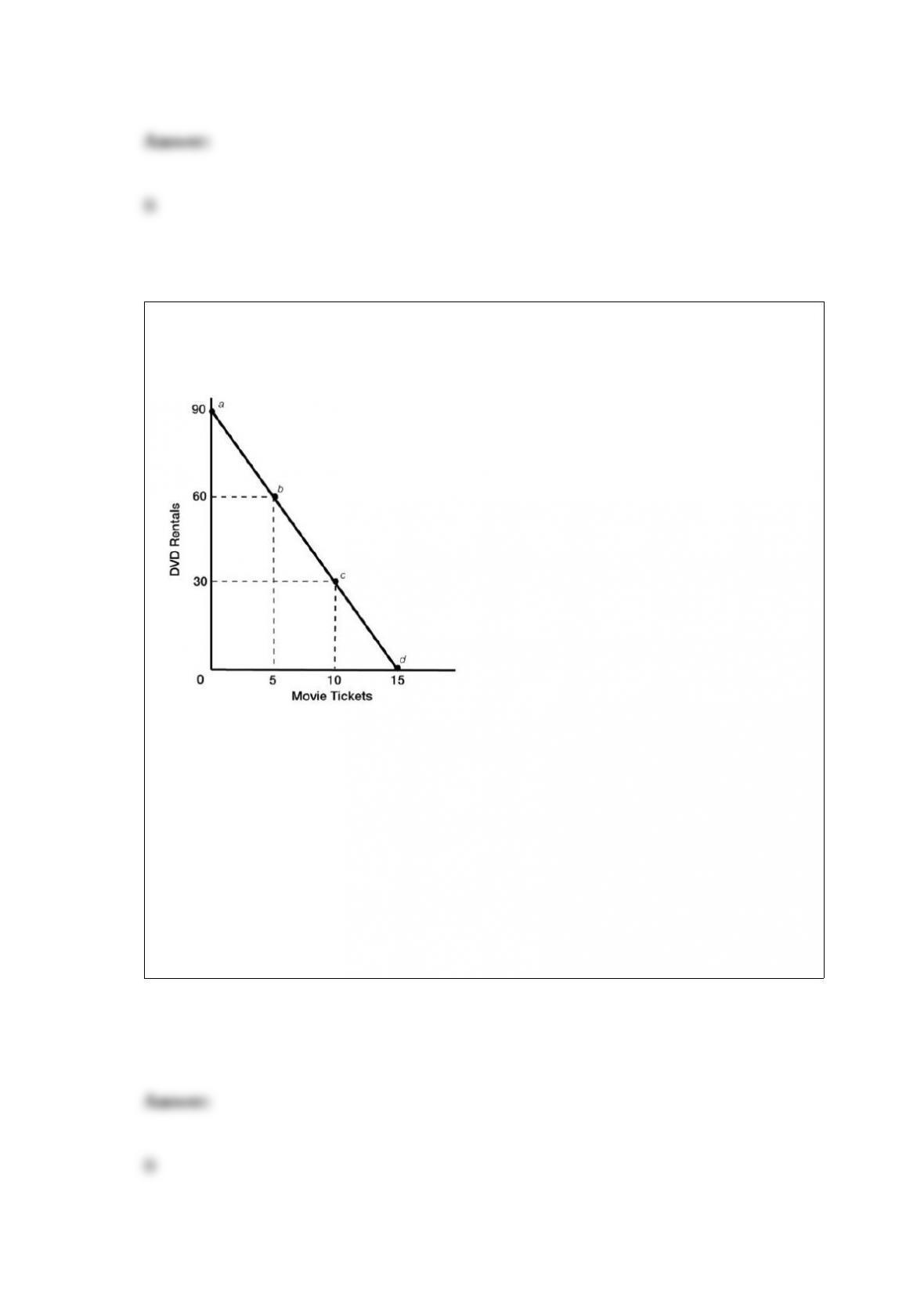
Figure 1A.2
If this consumer rents 60 DVDs, how many movie tickets will she purchase?
A) 0
B) 5
C) 10
D) 15

If principles of economics sections is three credit hours and an instructor teaches two
sections with 100 students in each and tuition and fees at your school are $500 per
credit hour, then the marginal revenue product for your school from hiring that
instructor that semester is:
A) $500.
B) $1500.
C) $150,000.
D) $300,000.
Pat claims to save a great deal of money on groceries by traveling to various
supermarkets to make her purchases at their advertised sale prices. She might visit as
many as five different stores in one day in order to complete her weekly shopping. Her
savings are not as great as she may think they are if she does not consider the:
A) cost of the gasoline in driving from one store to another.
B) mileage she is putting on her car driving from one store to another.
C) value of the time she is spending doing the shopping as opposed to other things.
D) all of the above
Refer to Figure 12.9. If both firms follow their dominant strategies, Firm Y will earn
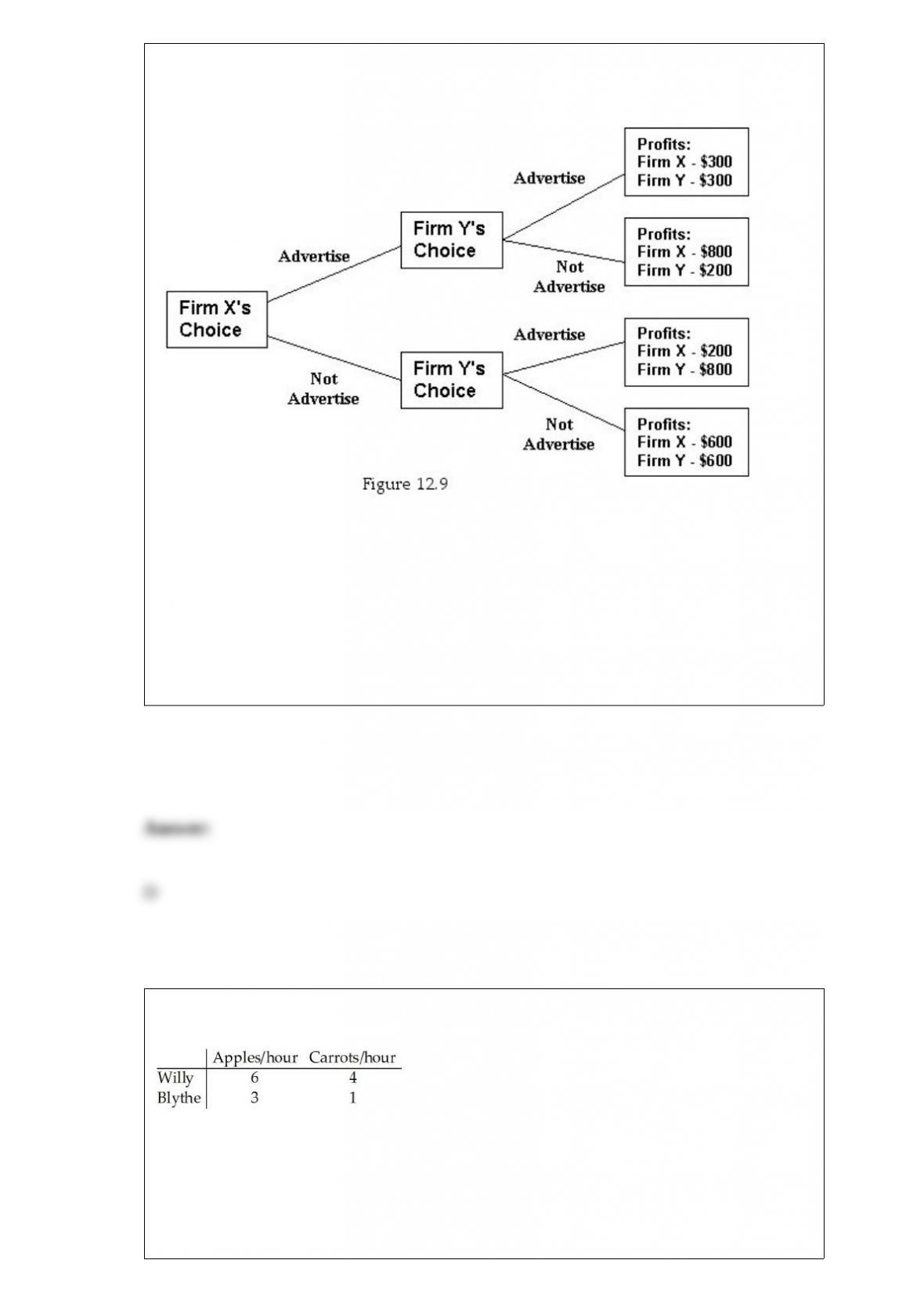
profits equal to:
A) $400.
B) $600.
C) $200.
D) $300.
Table 3.1 illustrates Willy and Blythe’s hourly production for apples and carrots. Based
on the table, Willy’s opportunity cost of 1 carrot is:
Table 3.1
A) 3 apples.
B) 4 apples.

C) 6 apples.
D) 1.5 apples.
Import bans, import quotas, voluntary export restraints, and tariffs on goods all:
A) increase equilibrium quantity and prices.
B) decrease equilibrium quantity and prices.
C) increase equilibrium quantities, but decrease prices.
D) decrease equilibrium quantities, but increase prices.
The quantity of a product that consumers are willing and able to buy at a given price is
called the:
A) quantity demanded.
B) quantity supplied.
C) demand for a good.
D) demand schedule.
The owner of Tie-Dyed T-shirts, a perfectly competitive firm, has hired you to give him
some economic advice. He has told you that the market price for his shirts is $20 and
that he is currently producing 200 shirts. At this output his MC is $20, his SAVC is $15
and his SATC is $25. What would you recommend to him?
A) to continue producing in the short run, as his loss from production is less than his
fixed costs, but to exit the industry in the long run if there are no changes in economic
conditions
B) to shut down in the short run, as he is incurring a loss and to leave the industry in the
long run, if there are no changes in economic conditions
C) to continue to produce in the short run, even though he is earning a loss, and to
expand in the future with the hope of increasing market share and total revenue
D) You tell him you cannot make any recommendations until you know what his fixed
costs are.
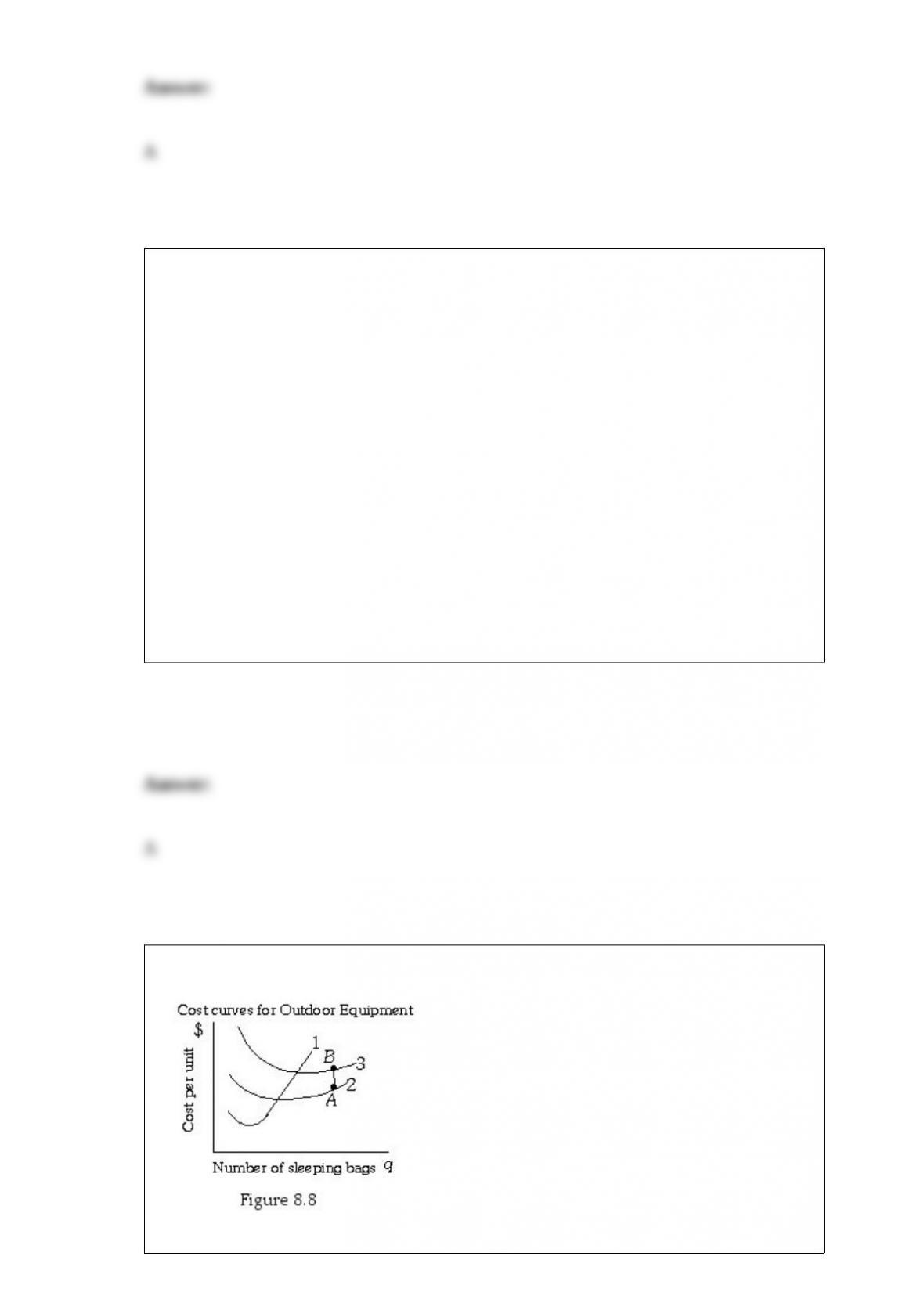
Refer to Figure 8.8. The vertical distance AB is Outdoor Equipment’s:

A) marginal cost.
B) average fixed cost.
C) total fixed cost.
D) total cost.
Two goods are complements if:
A) the supply of one good decreases when the price of the other increases.
B) the supply of one good decreases when the price of the other decreases.
C) the demand for one good decreases when the price of the other increases.
D) the demand for one good decreases when the price of the other decreases.
Suppose your firm is operating in a perfectly competitive market, and that the minimum
average variable cost of producing your good is $13. If the price of the good is $15,
your firm should:
A) supply the amount of the good where the marginal cost of production is equal to
$15.
B) not produce anything since the price is above the minimum of average variable cost.

C) not consider price when determining the amount to sell.
D) not do any of the above.