If the short-run Phillips curve has a very steep slope, the
a. structural deficit will grow during inflation.
b. structural deficit will fall during recession.
c. inflation costs of reducing unemployment are relatively low.
d. inflation costs of reducing unemployment are relatively high.
President George W. Bush, who favored a smaller government sector,
a. believed we should increase G to eliminate a recessionary gap.
b. believed we should raise taxes to eliminate an inflationary gap.
c. favored an active fiscal policy just as well as those who favor a larger government
sector.
d. argued against the use of an active fiscal policy.
Taxes add to and transfers subtract from the flow of income and spending.
a. True
b. False
Which of the following is correct?
a. The Fed has very good control over the money supply and bank reserves.
b. The Fed has very poor control over the money supply and bank reserves.
c. The Fed has very good control over bank reserves but not over the money supply.
d. The Fed has very good control over the money supply but not over bank reserves.
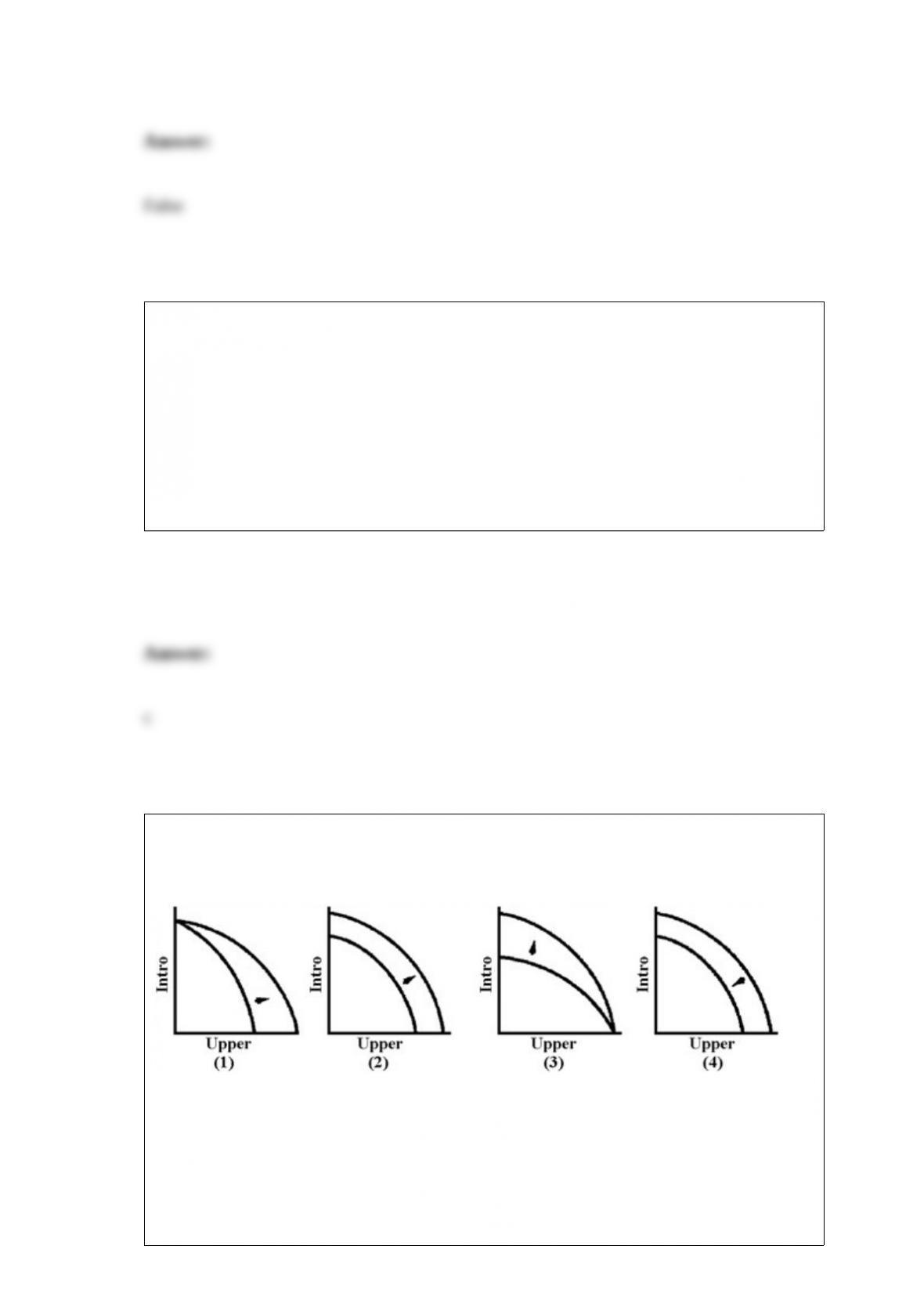
Figure 3-5
At present, faculty in the Economics Department teach introductory and upper-level
courses. Which graph in Figure 3-5 represents the change in the production possibilities
of the Economics Department after a policy of using graduate students in addition to
faculty to teach introductory sections was implemented?
a. 1
b. 2
c. 3
d. 4
Economic aggregates are not observable in the “real world.”
a. True
b. False
The market level (magnitude) of economic rent is determined by the
a. supply side of the market.
b. demand side of the market.
c. intersection of supply and demand.
d. elasticity of demand for land.
When pollution emissions can be measured taxation will tend to be more effective than
any other method of controlling pollution.
a. True
b. False
Which of the following observations is not true?
a. Money is divisible.
b. The value of money never remains the same.
c. Money has an intrinsic value.
d. Money is the most liquid form of asset.
A bilateral monopoly is a market situation in which there is only one buyer and only
one seller.
a. True
b. False
The international trade response to a contractionary monetary policy will cause
aggregate demand to shift ____ and aggregate supply to shift ____.
a. outward, outward
b. inward, outward
c. outward, inward
d. inward, inward
In an idealized laissez-faire world, the distribution of products is
a. the most efficient.
b. the most fair.
c. purely random.
d. unpredictable.
The main shortcoming of the market, in the view of many,
a. lies in the arena of justice and injustice.
b. lies in the area of consumer goods production.
c. is its inability to stimulate the creation of new products.
d. is its drag on growth in productivity.
Figure 7-16
In Figure 7-16, as we move from A to B,
a. the relative price of machines falls.
b. total cost falls.
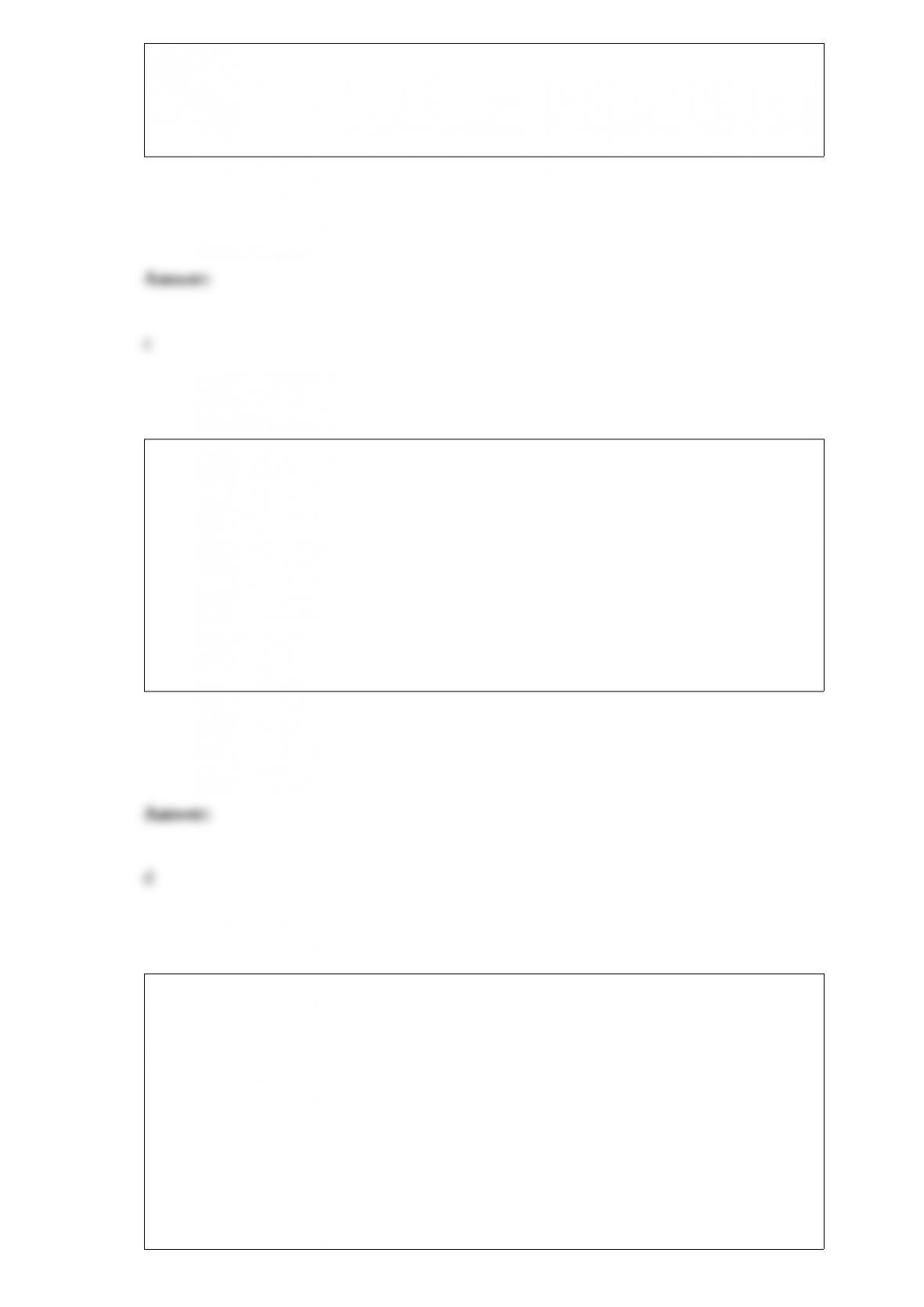
c. output increases.
d. labor becomes less productive relative to capital.
The name given to government programs implemented to prevent or shorten recessions
and counteract inflation is
a. supply-side economics.
b. contractionary policy.
c. monetary policy.
d. stabilization policy.
Suppose that the United States can make 15 cars or 20 bottles of wine with one year’s
worth of labor. France can make 10 cars or 18 bottles of wine with one year’s worth of
labor. From these numbers, we can conclude that
a. the United States has a comparative advantage in the production of cars.
b. France has a comparative advantage in the production of wine.
c. the United States has an absolute advantage in the production of cars.
d. All of the above are correct.
The federal government has the power to investigate and to try to block
a. only voluntary mergers between firms.
b. only hostile takeovers.
c. only friendly takeovers.
d. any combining of the ownership of previously independent firms that increases
concentration.
A market system tends to create inequality.
a. True
b. False
GDP in 2015 would not include the resale of a house built in 2000.
a. True
b. False
Total utility can be thought of as the
a. total satisfaction derived from a bundle of goods.
b. minimum amount of money a consumer is willing to spend on a bundle of goods.
c. additional satisfaction a consumer receives from the marginal unit of a good.
d. willingness to pay for the marginal unit of a good.
Which of the following is a reason that the Fed does not traditionally attempt to limit
asset price bubbles?
a. The Fed’s actions could do more harm than good.
b. It is nearly impossible to determine if a bubble exists before it bursts.
c. The Fed’s policies cannot be targeted at only one sector of the economy.
d. all of the above
The purchasing power parity theory of exchange rate determination maintains that
a. the exchange rate between two nations’ currencies is determined by the percent of
gold that backs each nation’s currency.
b. the exchange rate between two nations’ currencies adjusts to reflect differences in the
price levels in the two nations.
c. in the short run, exchange rates are determined by central bank intervention in the
currency markets.
d. the exchange rate between two currencies is determined by the debt that each nation
owes to the World Bank.
The major drawback of a price ceiling is
a. it causes a surplus.
b. government regulations of this kind are difficult to enforce.
c. it causes a shortage.
d. There is no drawback.
The pollution emitted by a power plant is an example of a detrimental externality.
a. True
b. False
An oligopoly is a market in which at least some firms are large enough to influence
market price.
a. True
b. False
To be effective, a price floor must be
a. above the equilibrium price.
b. at the equilibrium price.
c. below the equilibrium price.
d. anywhere on the graph.
If interest rates increase, what is most likely to happen to the total expenditure
schedule?
a. It will increase because G increases.
b. It will decrease because I decreases.
c. It will decrease because (X – IM) decreases.
d. It will increase because I increases.
Investment is a flow of resources into the production of new capital.
a. True
b. False
The demand curve for a typical good has
a. a negative slope because some consumers switch to other goods as the price of the
good rises.
b. a negative slope because the supply of the good rises as demand rises.
c. a negative slope because the good has less “snob appeal” as its price falls.
d. an inverse slope because as the price goes up, the good has more profitability.
e. a positive slope because price is a clear indicator of need.
In early 2013, two economists debated the question of whether:
a. the trade deficit should be reduced rapidly or steadily
b. the United States was past its prime
c. the percentage of health care to GDP was a warning sign for the economy
d. none of these
If a macroeconomist aggregates many markets into one, then
a. individual market differences are eliminated.
b. one must not confuse ravioli and hot dogs.
c. she is performing a meaningless exercise.
d. differences between products must still be noted.
According to the cost disease of the personal services, service activities that require
direct personal contact
a. tend to fall in price relative to other goods and services.
b. tend to rise in price relative to other goods and services.
c. follow price patterns similar to other goods and services.
d. tend to move up and down in price ignoring the rest of the market.
College tuition costs have risen faster than prices in general from 1979 to 2009.
a. True
b. False