
If the car manufacturer enjoys economies of scale, then an increase in the number of
cars manufactured will lead to a(n):
A) decrease in average cost.
B) increase in average cost.
C) constant average cost.
D) decrease in total cost.
If the equilibrium price of a good increases and the equilibrium quantity of the good
decreases, we can conclude that:
A) demand increased.
B) demand decreased.
C) supply increased.
D) supply decreased.
Which one of the following is NOT true of a thin market?
A) It is caused by asymmetric information.
B) There are relatively few high-quality goods sold.
C) There may be some sellers of high-quality goods because people are in a hurry to
sell.
D) The price of the good sold will be higher than if the market were thicker.
Recall the application about price controls and the candy bars. During World War II, the
U.S. government imposed price controls to set maximum prices on all different
products, including candy bars. How did the candy bar producers respond it to
maximum prices?
A) Producers increase the supply of candy bars.
B) Producers shrank the weight of the candy bars.
C) A lot of the producers dropped out of candy bar market.
D) none of the above
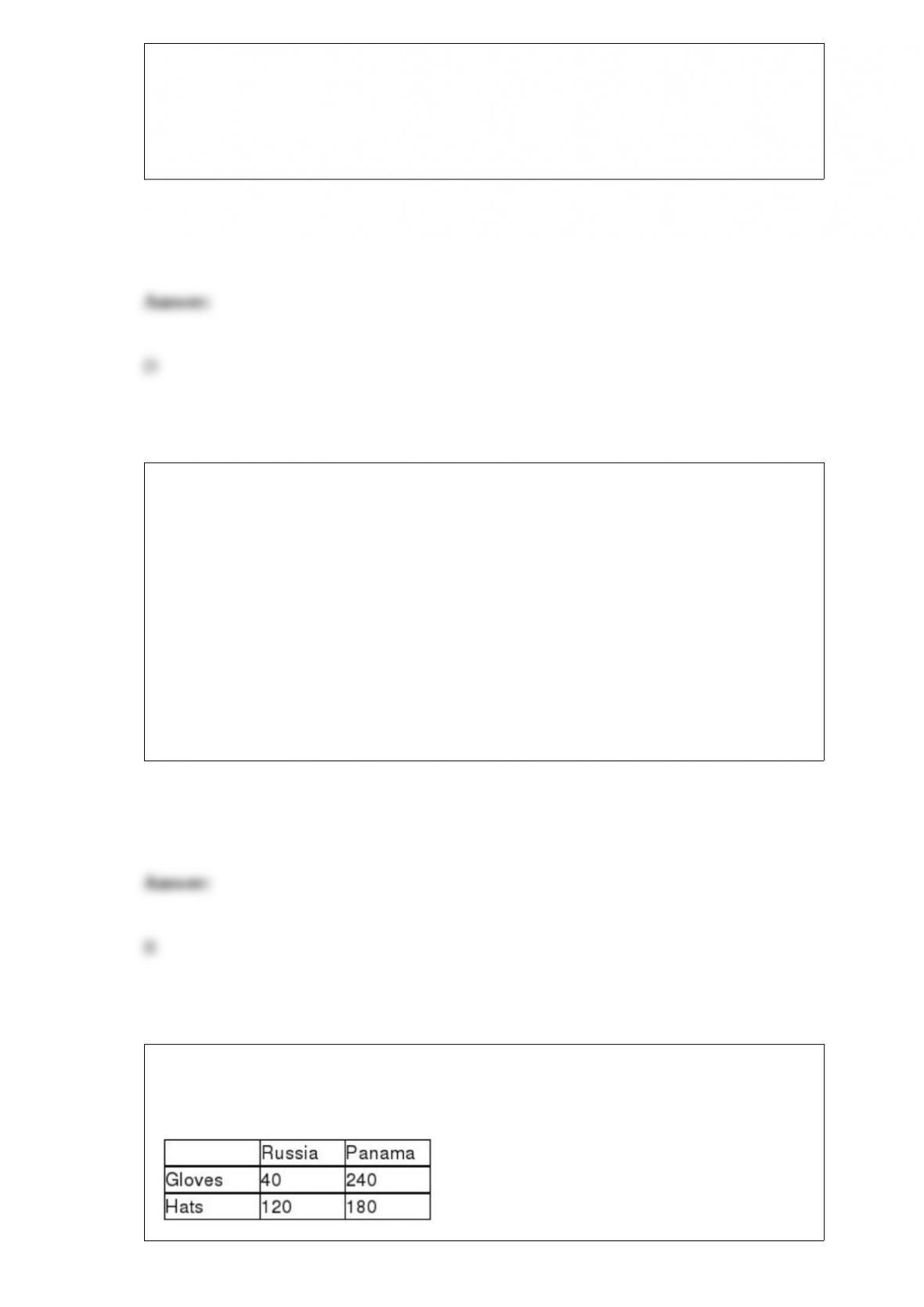
Refer to Table 18.1. Panama has a comparative advantage in:
Daily Output of Russia and Panama

Table 18.1
A) hats.
B) gloves.
C) both hats and gloves.
D) neither hats nor gloves.
Suppose we know that a monopolist is maximizing its profits. Which of the following
must be true? The monopolist has:
A) maximized its total revenue.
B) set price equal to its average cost.
C) maximized the difference between marginal revenue and marginal cost.
D) equated marginal revenue and marginal cost.
According to the principle “as one input increases while the other inputs are held fixed,
output increases at a decreasing rate”, if the number of workers is increased beyond the
point of diminishing returns, then the additional worker:
A) increases total output by the same amount as previous workers.

B) increases total output by more than the amount of previous workers.
C) increases total output by less than the amount of previous workers.
D) decreases total output.
Assume that linen pants are a normal good and consumer income rises. If the supply of
linen pants remains constant, producer surplus:
A) will decrease.
B) will increase.
C) will remain constant.
D) may increase or decrease depending on the amount of the price increase.
Suppose that Jeremy has a fixed income of $150 per month, which he spends entirely
on movies and books. The price of movies is $5 and the price of books is $15. Which of
the following combinations does NOT exhaust his budget?
A) 3 books and 21 movies
B) 6 books and 12 movies
C) 5 books and 17 movies

D) 4 books and 18 movies
Recall the Application. A study of the taxi market in New York City showed that when
cab fares increase, thereby increasing the wages of cab drivers:
A) the income effect for leisure demand outweighs the substitution effect for leisure
demand.
B) the substitution effect for leisure demand outweighs the income effect for leisure
demand.
C) the income effect for leisure demand and the substitution effect for leisure demand
work in the same direction, causing the labor supply to increase.
D) the income effect for leisure demand and the substitution effect for leisure demand
work in the same direction, causing the labor supply to decrease.
When President Jefferson declared a self-imposed embargo on international shipping
between 1807-1809, it may be said that the U.S. came very close to:
A) autarky.
B) free trade.
C) comparative advantage.
D) specialization.

Assume that there is only one firm producing electric toothbrushes and its firm specific
demand curve is the same as the market demand curve. If a second firm that also
produces electric toothbrushes enters the market, profit of the first firm decreases
because:
A) the competition between the two firms causes the price to go down.
B) it produces less electric toothbrushes.
C) its average cost of production raises due to higher demand.
D) A and B are correct.
When purchasing a product with a credit card, the benefit of the product will be
experienced in the ________, and the cost will be experienced in the ________.
A) present; present
B) present; future
C) future; present
D) future; future

Problems associated with thin markets provide incentives for:
A) buyers to seek information about identifying high-quality items.
B) sellers to prove that the items they are selling are of high quality.
C) buyers and sellers to agree upon a higher price than would hold in equilibrium.
D) both A and B.
Can we infer that pecans are normal and inferior goods, just purely from reading the
Application?
A) No. The Application made no mention of changes in income.
B) No. The Application did not mention the quality of the pecans.
C) Yes, pecans are inferior goods.
D) Yes, pecans are normal goods.

According to the Application the role of government in promoting civil liberties,
moving from a country with relatively weak civil liberties to one with relatively strong
civil liberties, the economic rate of return on World Bank development projects
A) increases by about 15 percentage points.
B) more than triples.
C) decreases by more than 20 percent.
D) is not noticeably changed.
When a second firm enters a monopolist’s market:
A) the former monopolist’s average cost increases as its output level decreases.
B) the demand curve facing the former monopolist shifts to the right.
C) the market price rises as the average cost increases.
D) none of the above
A good is said to be “normal” if:
A) it is of high quality.
B) consumers buy more of it at a high price.
C) it has few substitutes.
D) it has a positive income elasticity of demand.
If the banking industry is unable to review a borrower’s credit history, then the market
will experience a bank failure caused by:
A) imperfect information.
B) public goods.
C) perfect information.
D) imperfect competition.
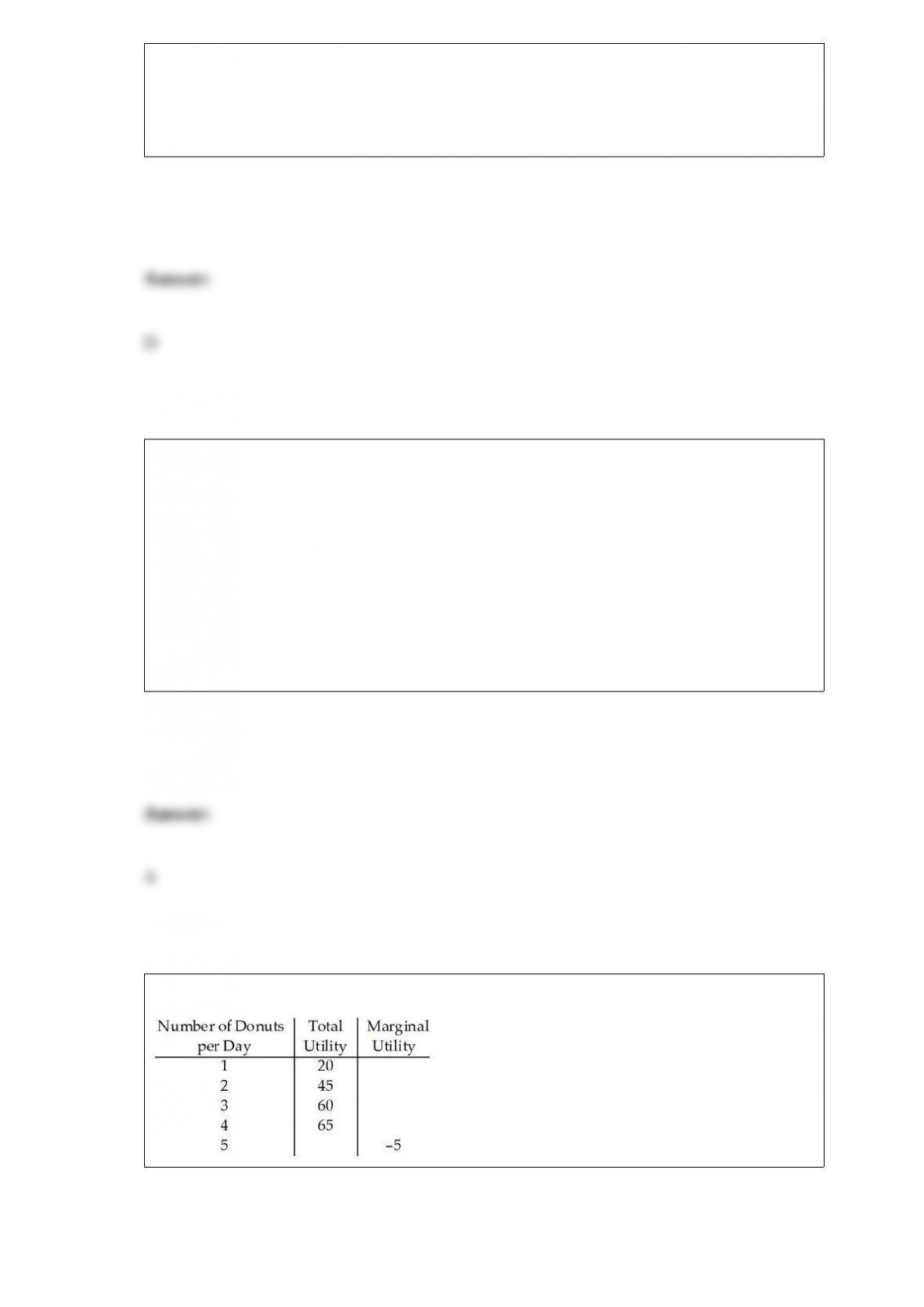
Refer to Table 7.2. The total utility of the five slices of pie per day is:
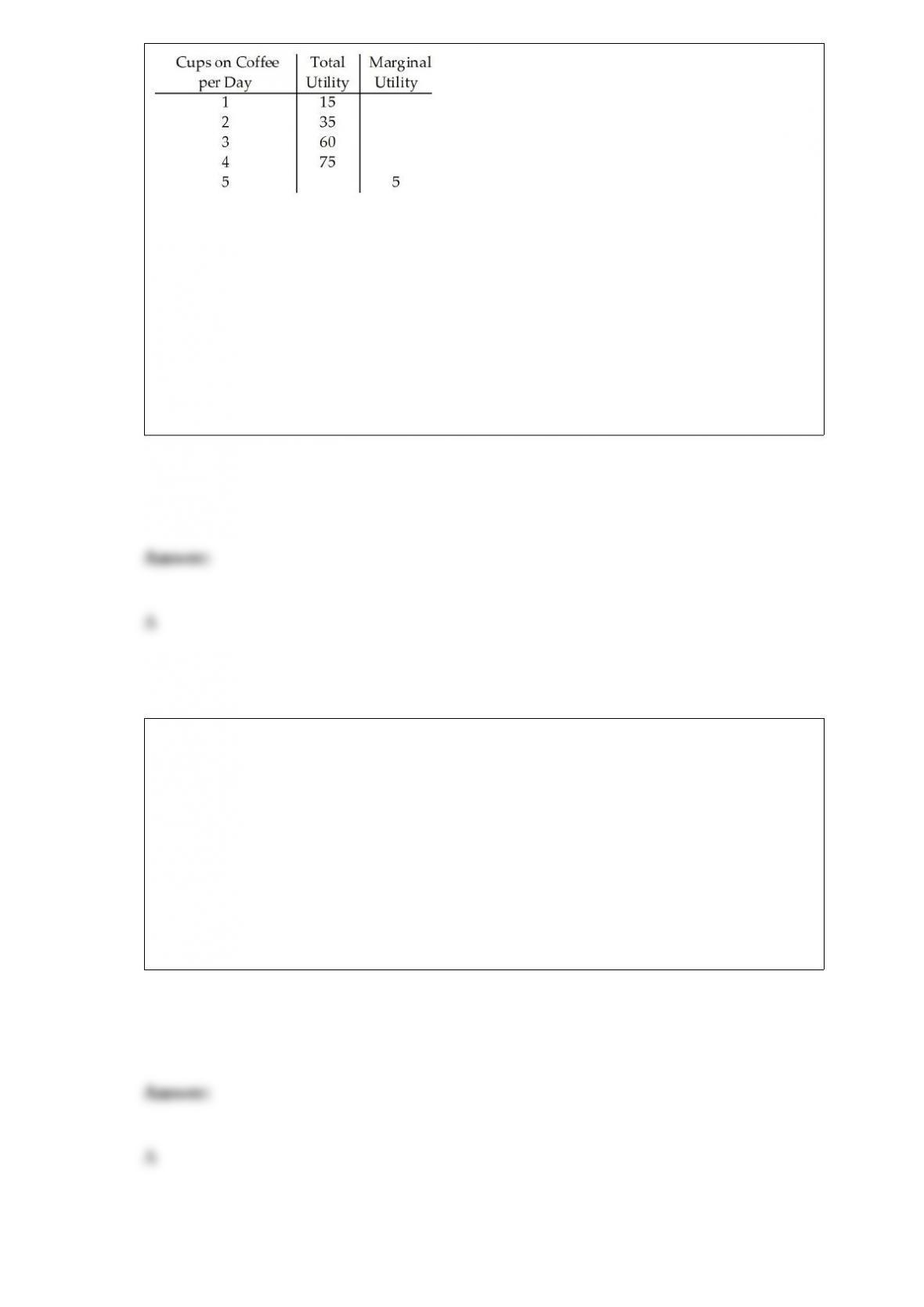
Table 7.1
A) 95.
B) 105.
C) 85.
D) 75.
Which of the following trade agreements took effect in 1994 and, over a 15-year period,
will eliminate all tariffs and other trade barriers between its members?
A) North American Free Trade Agreement
B) World Trade Organization
C) Asian Pacific Economic Cooperation
D) GATT

Market failure is a situation in which:
A) production generates costs that are not paid for by the producer.
B) a market is not in equilibrium.
C) purchasers cannot afford the goods that they need.
D) the government intervenes in the market.
If the price elasticity of supply is inelastic, which of the following could be a possible
value of the elasticity?
A) 3
B) 1
C) 0.3
D) -0.3
Suppose France produces only two goods, airplanes and grapes. If France has a
comparative advantage in grapes, a move toward free trade will:
A) harm grape workers, benefit airplane workers, but benefit the nation as a whole.
B) harm grape workers, harm airplane workers, but benefit the nation as a whole.

C) benefit grape workers, harm airplane workers, but harm the nation as a whole.
D) benefit grape workers, harm airplane workers, but benefit the nation as a whole.
If the market price of salmon is $8.99 per pound but the government will not allow
salmon farmers to charge more than $4.99 per pound of salmon, which of the following
will happen?
A) The supply curve for salmon will shift to the left.
B) There will be an excess demand for salmon.
C) There will be an excess supply of salmon.
D) The market will be in equilibrium at a price of $4.99.
According to this Application, in recent years the European Union has reformed its
agriculture policies by reducing or eliminating minimum prices. Ceteris paribus, these
policy reforms would ________ excess supply by ________ prices.
A) reduce; raising
B) reduce; lowering
C) increase; raising

D) increase; lowering
A quantity restriction leads to a price ________ the equilibrium price.
A) at
B) above
C) below
D) Either A or B is correct.
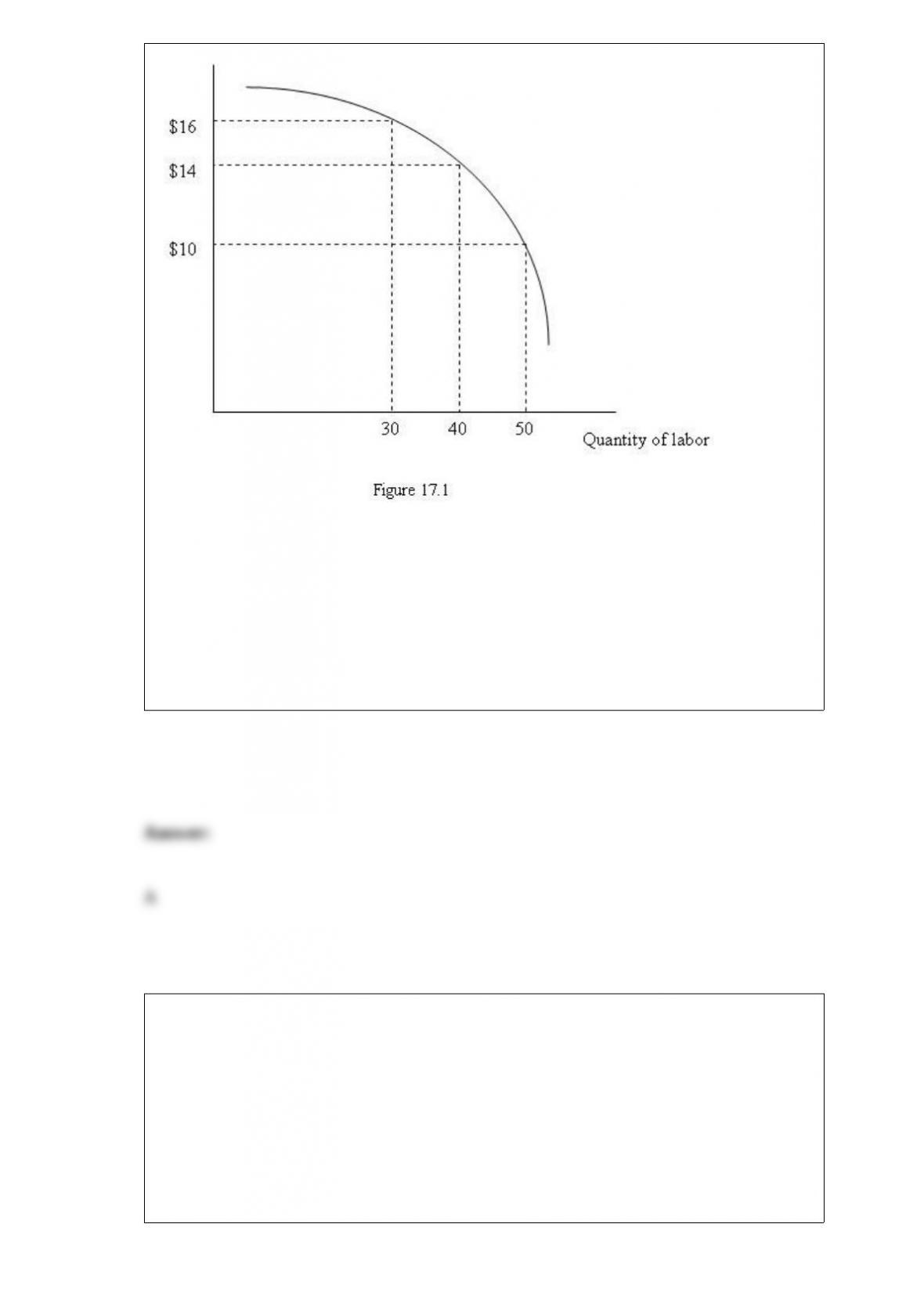
Figure 17.1 depicts a firm’s marginal revenue product curve. If the product price
decreases, the marginal revenue product curve:
A) shifts downward.
B) shifts upward.
C) remains the same.
D) none of the above
To internalize the external costs from traffic congestion, policymakers could:
A) reduce the number of drivers’ licenses.
B) require smaller cars to be sold.
C) establish a congestion tax.
D) build fewer highways.
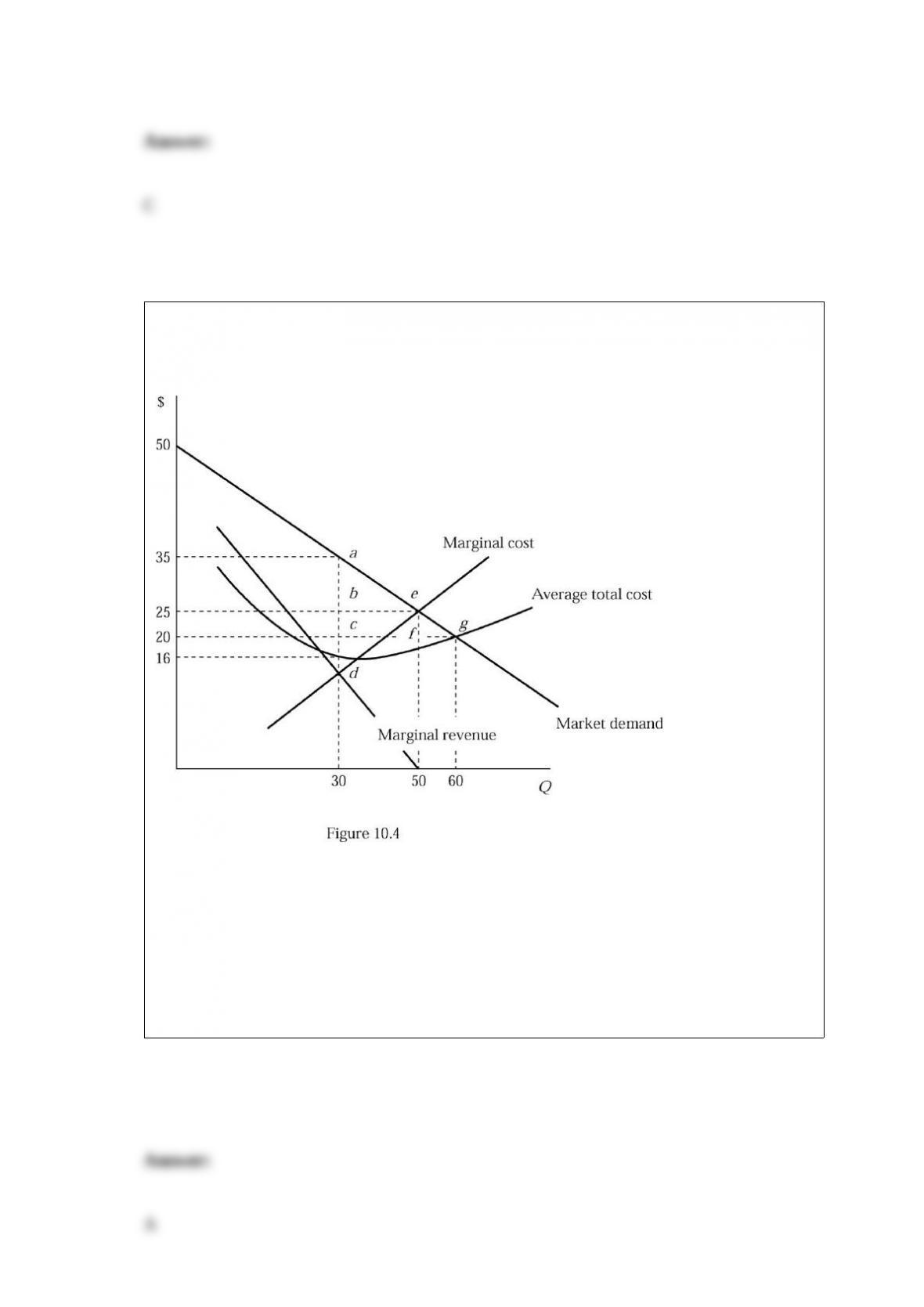
Suppose that Figure 10.4 shows a monopolist’s demand curve, marginal revenue, and its
costs. The monopolist would maximize its profit by producing a quantity of:
A) 30 units.
B) 50 units.
C) 60 units.
D) There is not sufficient information.