Monopoly reduces market efficiency compared to perfect competition.
Due to crime externalities, a more educated society tends to have a lower level of crime.
In the short run a manufacturing firm’s production equipment is a sunk cost.
The advertising dilemma is that advertising competition leads to more and more
outrageous claims on behalf of products.
People acting in their own self interest try to gain at the expense of others in exchange
leads to someone necessarily losing in a voluntary exchange.
The maximum price reduces total surplus of the market because it prevents some
mutually beneficial transactions.
If the elasticity of demand for cheddar cheese is 1.5, then a 20% change in price will
lead to a 10% change in quantity demanded.
The government does have the legal authority to break up monopolies into smaller
companies.
An example of a monopolistically competitive industry is cable television service.
From 1974 to 2011, as the nominal minimum wage rose from $2 to $5.85, the real
minimum wage fell.
Working longer hours at a more demanding job will not lead to higher income.

A dominant strategy is one that is best no matter what the other player(s) do.
Advertising can lead to more competition and lower prices for consumers.
Import restrictions create an incentive to smuggle.
Protection shields domestic workers from foreign competition.

If Eddie can produce 40 milk shakes or 20 banana splits in an hour, and Tina can
produce 30 milk shakes or 16 banana splits in an hour, then Eddie has a comparative
advantage in producing banana splits.
We cannot easily predict whether an increase in the wage will cause a worker to
demand more leisure time or less leisure.
Recall the Application about the manufacture of fake killer whales used to scare
sea lions off the Washington coast to answer the following question(s).
Recall the Application. The mold used to produce the fake killer whales is an indivisible
input.
In a market characterized by external benefits, the market equilibrium is not socially
optimal.
Only about 6 million people in the U.S. were living below the poverty line in 2004.
The price elasticity of supply is determined by how rapidly production costs increases
as the total output of the industry increases.
The calibration of the regions of the brain involved in benefit valuation comes from the

brain’s NAcc system.
If there is free entry in a market, then in the long run economic profit will be above
average.
Adverse selection and moral hazard are two different terms that mean essentially the
same thing.
When supply increases and the supply curve shifts to the right, equilibrium price and
equilibrium quantity will both increase.
Price leadership is when one firm sets price for the industry and the others follow.
Monopolistic industries are characterized by a homogeneous product.
Dumping is sometimes legal under international trade agreements.

From 1979-2007, the share of market income for the bottom 99 percent of U.S.
households has decreased.
When there are external costs, the government can encourage people to take action that
benefit other people.
The Nash Equilibrium outcome assures the maximum profit for firms.
If the supply curve is a vertical line, then supply is perfectly elastic.
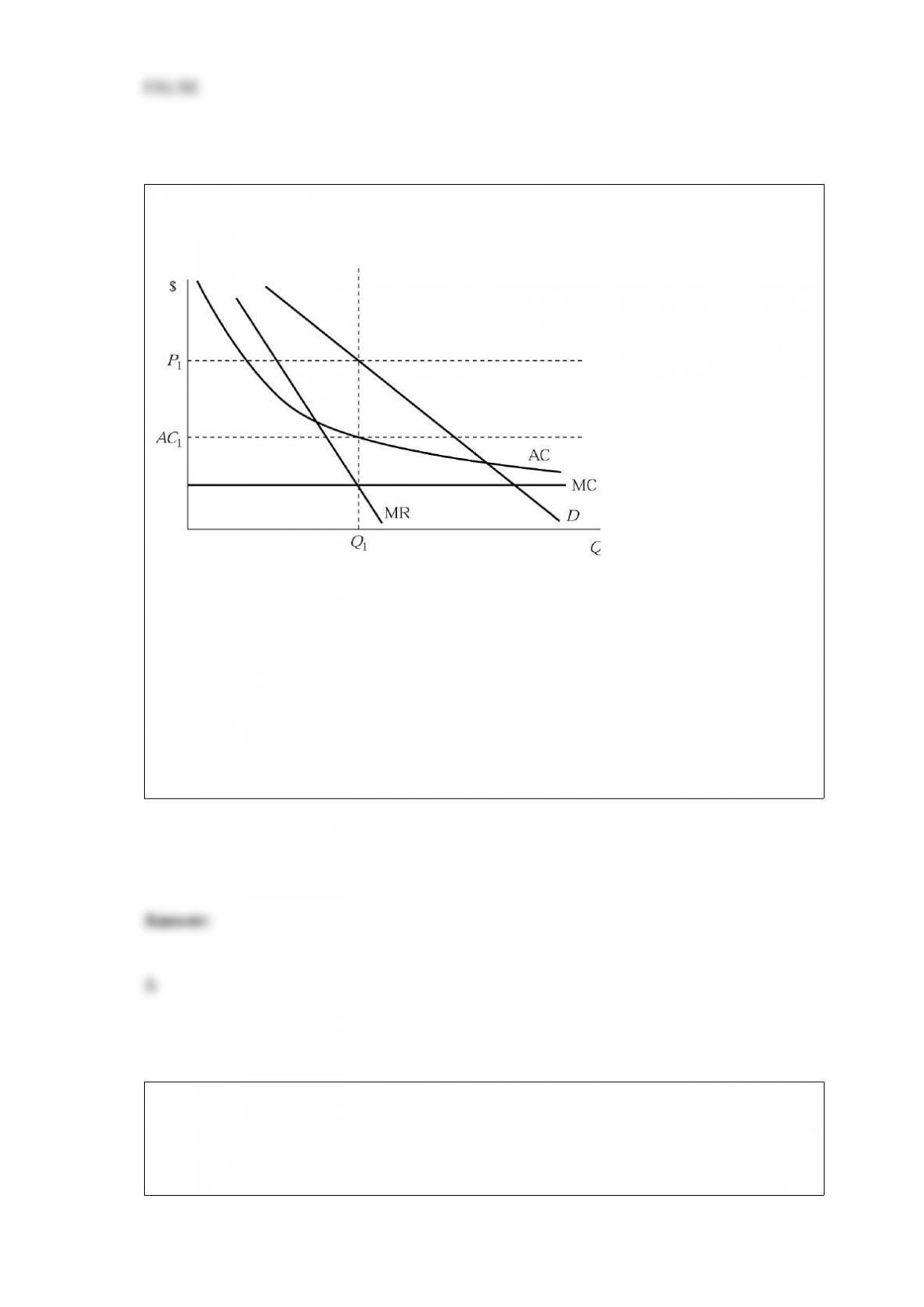
If Figure 11.1 depicts the current situation for a monopolistically competitive firm, then
in the long run we expect:
Figure 11.1
A) the firm’s demand curve to shift to the left.
B) the firm’s demand curve to shift to the right.
C) the price of the good to increase.
D) the quantity of the good sold by the firm to increase.
Julianne runs a business and needs to decide how many hours to stay open. Table 2.2
illustrates her marginal costs of staying open for each additional hour. Suppose that
Julianne’s marginal benefit of staying open per hour is $12. If she is following the
marginal principle, how many hours should Julianne stay open?
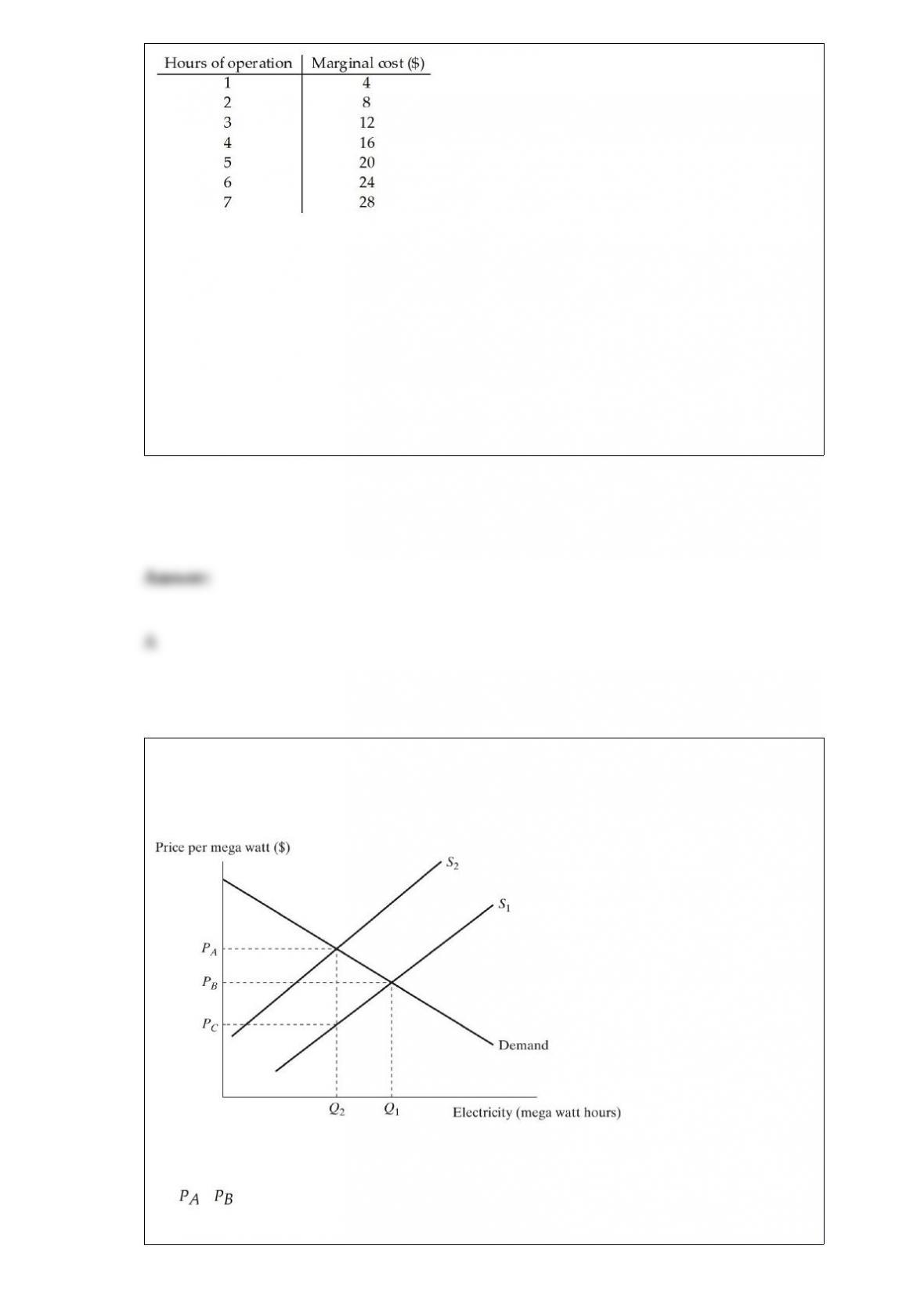
Table 2.2
A) 3 hours
B) 4 hours
C) 6 hours
D) 7 hours
Figure 16.3 depicts a market for electricity. Assume electricity production incurs
external costs. If the government imposes a pollution tax in the amount illustrated, the
amount of the pollution tax borne by the electricity producers is:
Figure 16.3
A) – .
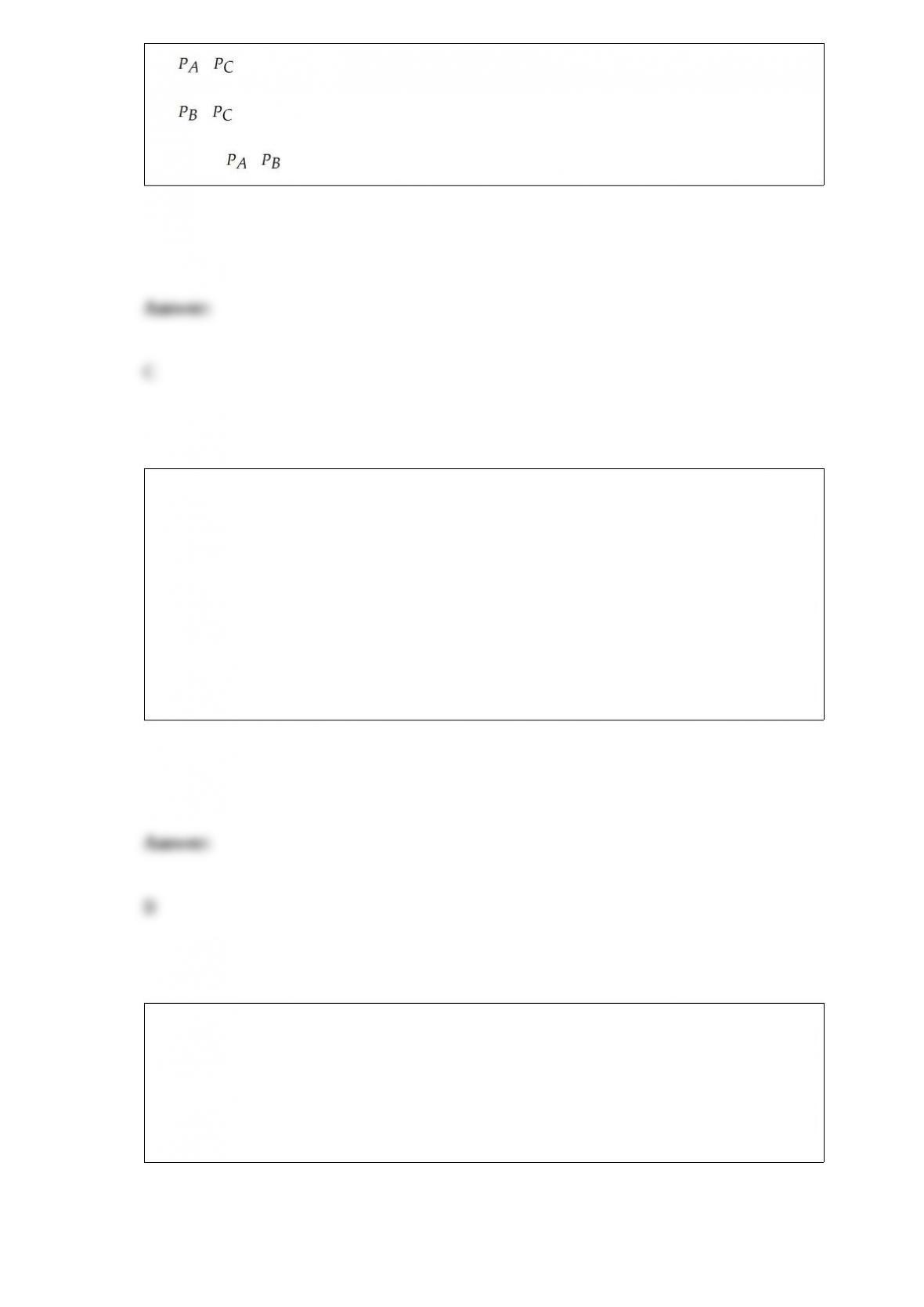
B) – .
C) – .
D) (1/2)∙( – ).
If a firm charges a foreign market a lower price than it charges the domestic market that
firm is said to be ________ its product.
A) disposing of
B) dumping
C) transferring
D) stumping
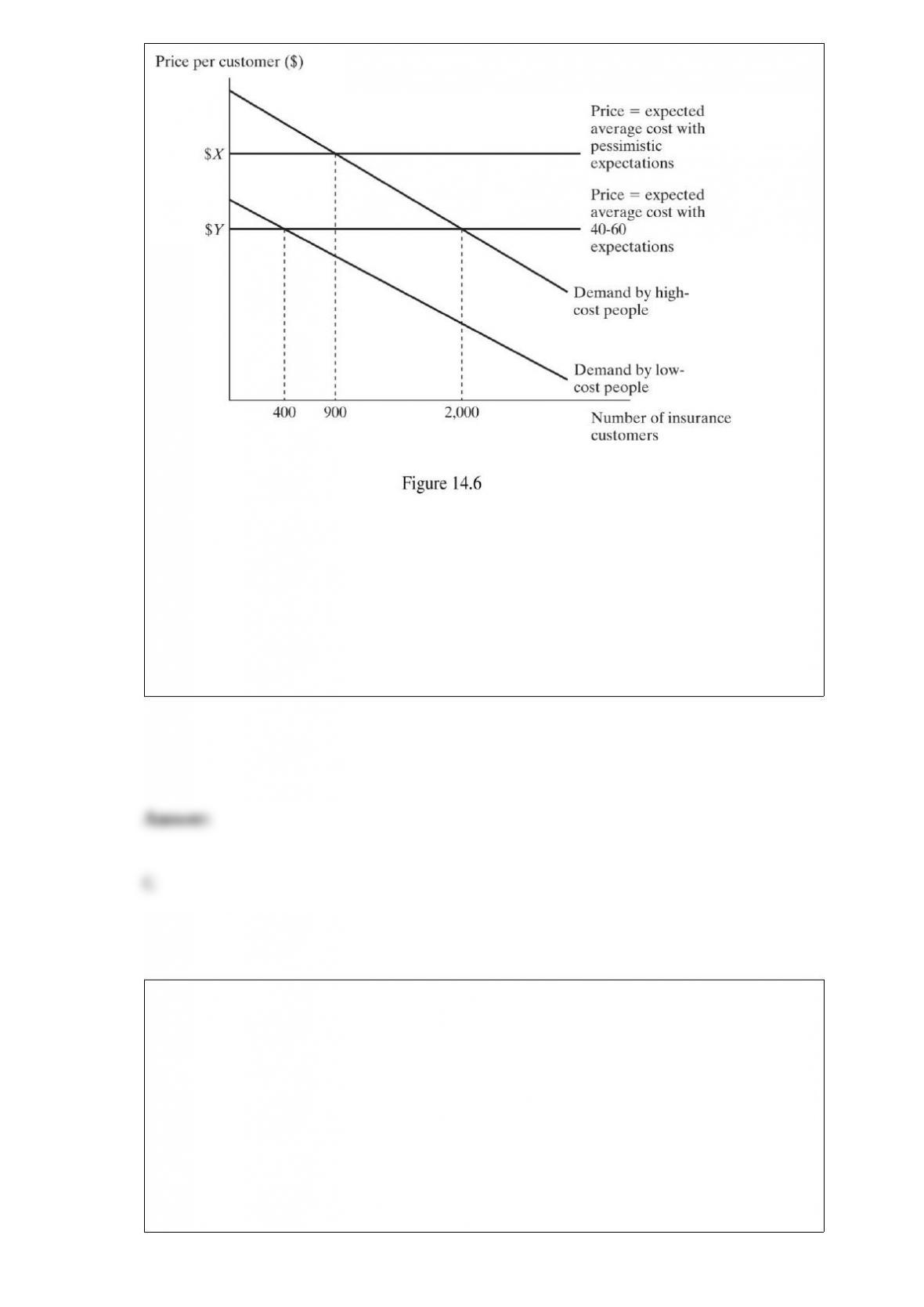
Figure 14.6 represents the market for health insurance. Suppose there are two types of
consumers, low-cost consumers with $2,000 average medical expenses per year, and
high-cost customers with $4,000 average medical expenses per year. Initially the
insurance companies estimate that 40% of its customers are high-cost type. Compared
to the outcome with pessimistic expectations, how many more customers buy health
insurance?
A) 500
B) 1,300
C) 1,500
D) 1,600
You sell your good in a perfectly competitive market where the market price is $33.00.
When you sell 100 units your total revenue is $3,300. When you sell 101 units:
A) total revenue increases by less than $33.
B) total revenue increases by exactly $33.
C) total revenue increases by more than $33.
D) total revenue may increase or decrease.

Which of the following industries has experienced a breakup of a large monopoly into
smaller competing firms?
A) tobacco
B) oil
C) telephone
D) all of the above
Recall the application about income and consumer search. What can you conclude from
a recent study that explores the relationship between consumer search and income?
A) The higher the income, the higher the opportunity cost of search is.
B) The higher the income, the lower the opportunity cost of search is.
C) The income and opportunity cost are not related when searching for a particular
product.
D) The recent study was inconclusive.

If the U.S. were to place a carbon tax on fossil fuels, we can expect:
A) the price of fuel oil to decrease.
B) the price of fuel oil to increase.
C) no change in the price of fuel oil.
D) an increase in demand for fuel oil.
Which one of the following is an example of asymmetric information?
A) A supermarket repackages packages of stale meat and sells them.
B) A homeowner knowingly sells a house that has hidden electrical problems.
C) A company hires an employee who has an addiction to sleeping pills.
D) all of the above
Julianne runs a business and needs to decide how many hours to stay open. Table 2.2
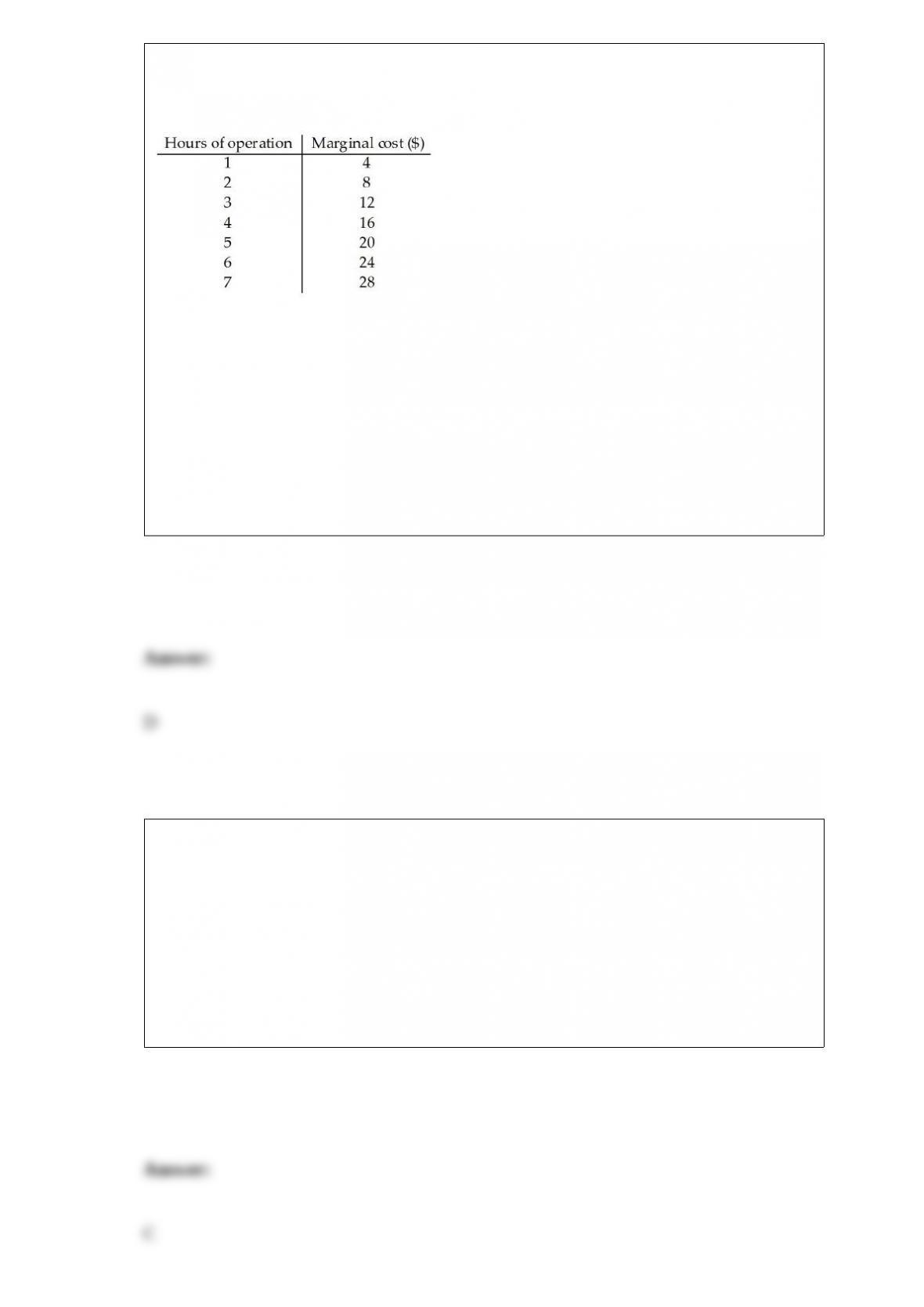
illustrates her marginal costs of staying open for each additional hour. Suppose that
Julianne’s marginal benefit of staying open per hour is $28. If she is following the
marginal principle, how many hours should Julianne stay open?
Table 2.2
A) 1 hour
B) 3 hours
C) 6 hours
D) 7 hours
Accounting profit is equal to:
A) total revenue minus economic cost.
B) total revenue minus accounting cost.
C) total revenue minus explicit costs.
D) total revenue minus implicit costs.
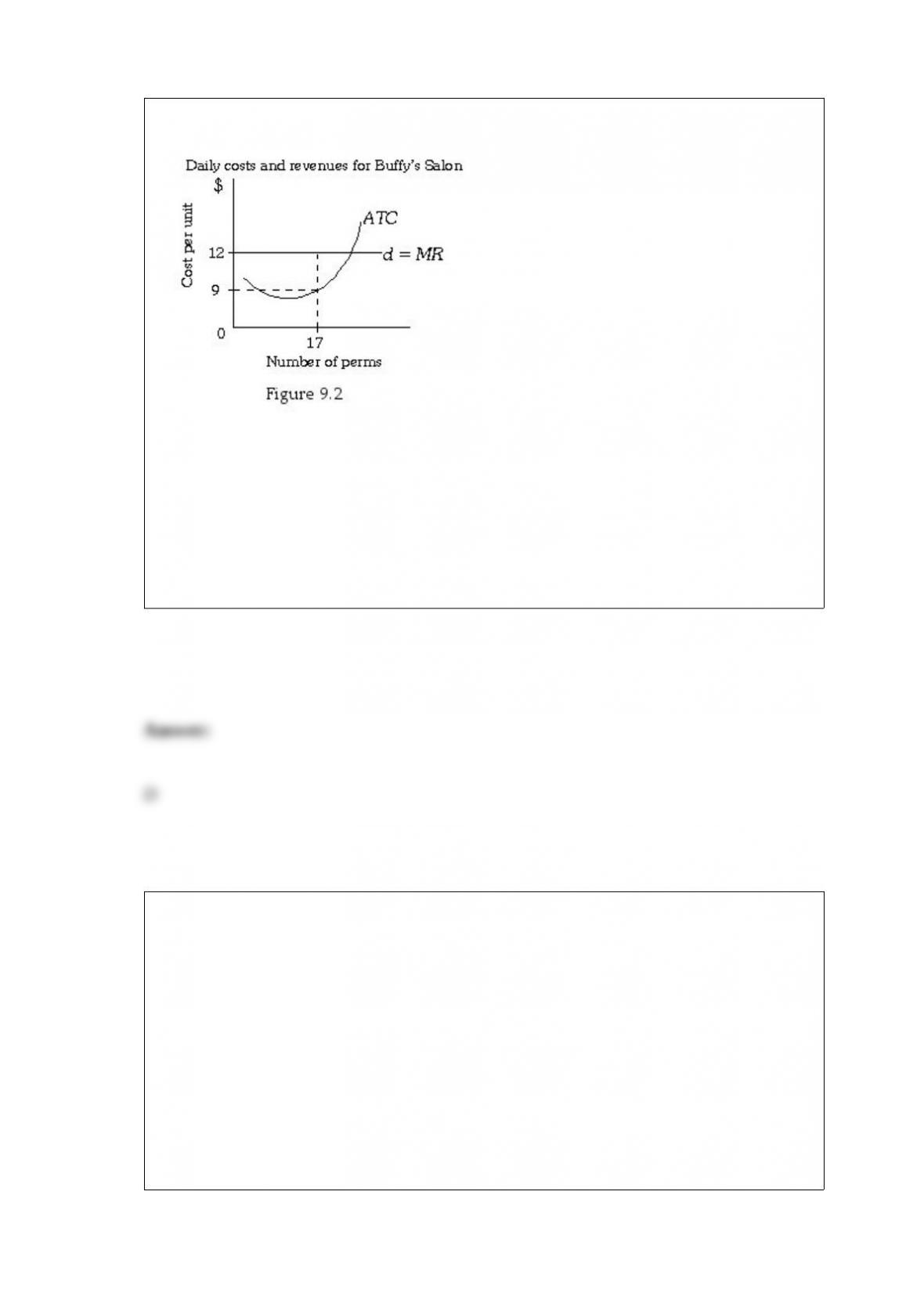
Refer to Figure 9.2. If Buffy gives 17 perms per day, her daily profit is:
A) $3.
B) $10.
C) $45.
D) $51.
Which of the following concerning predatory pricing is true?
A) Predatory pricing involves charging different prices to different customers based on
their willingness-to-pay.
B) Predatory pricing involves raising prices very high so that most consumers are
unable to purchase the product, though a few continue to do so, and the firm makes
huge profits by having lower production costs.
C) Predatory pricing is used to drive competitors out of the market.
D) Predatory pricing permanently lowers the price in the market.
Compared to its long-run demand for labor, a firm’s short-run demand for labor:
A) is steeper.
B) will be relatively more inelastic.
C) will be relatively more elastic.
D) none of the above
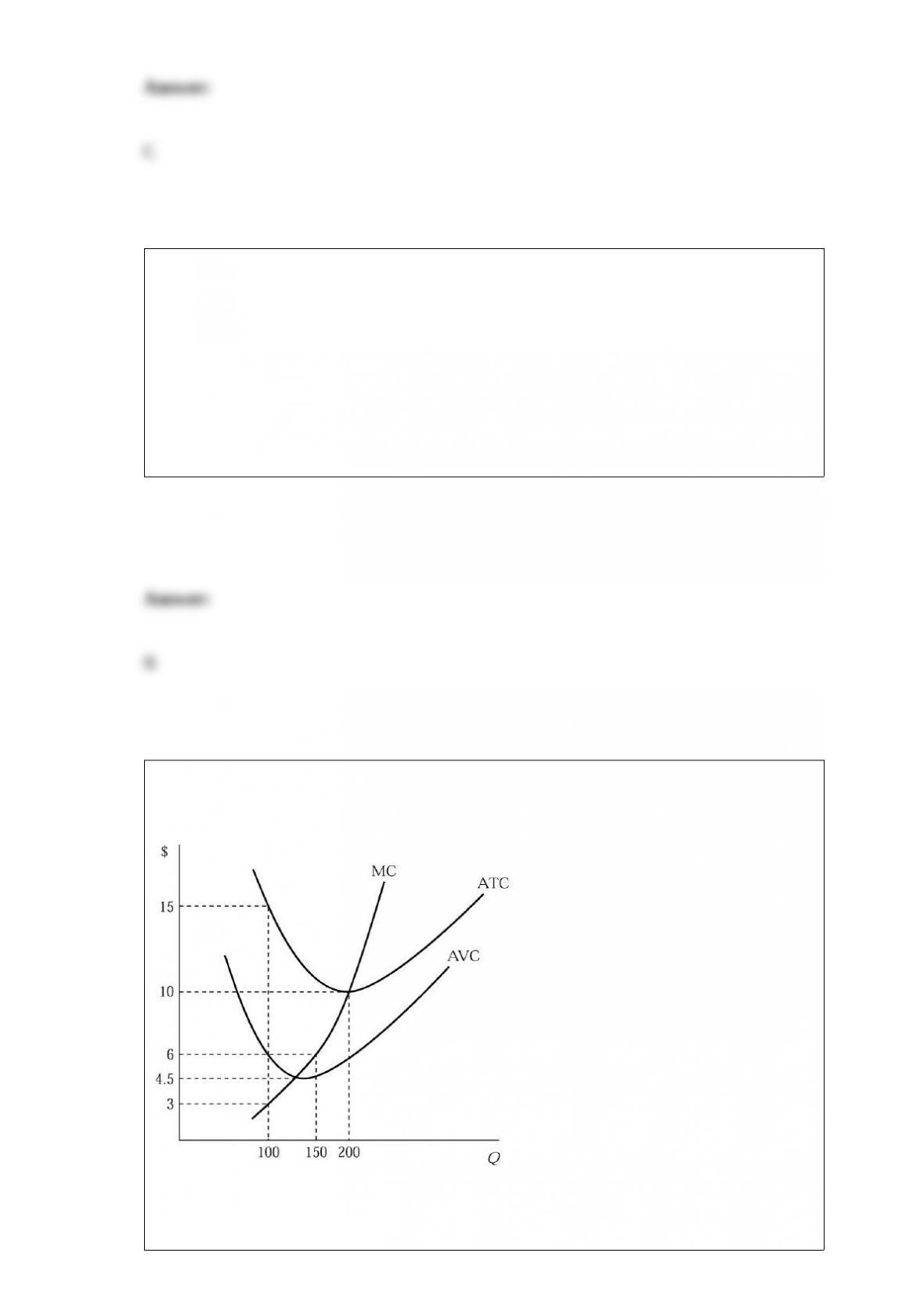
Figure 9.3 shows the cost structure of a firm in a perfectly competitive market. If the
market price is $3 and the firm produces the output where MR = MC, its profit is:
Figure 9.3

A) -$300.
B) -$600.
C) -$900.
D) -$1,200.
Voluntary export restraints:
A) have the same effect as an import ban.
B) are illegal under the WTO rules.
C) violate the spirit of international trade agreements.
D) all of the above
What makes a grim trigger strategy “grim” is:
A) if one player overprices, then the other overprices to the point of zero quantity
demanded.
B) if one player underprices, then the other player notifies the Federal Trade
Commission.
C) if one player underprices, then the other player is driven out of the market.

D) if one player underprices, then the other player drops the price so far that profits for
both firms are zero.
If the demand curve is a vertical line, it means that:
A) regardless of price, the quantity demanded is a constant amount.
B) regardless of quantity, the price is a constant amount.
C) the good is inferior.
D) the good has many substitutes.
If a government grants monopoly power through a patent, it may beneficial from a
social perspective because:
A) it may insure less consumer products.
B) it may encourage the development of new products.
C) it may encourage higher standards of professional ethics.
D) it may keep down monopoly profits.
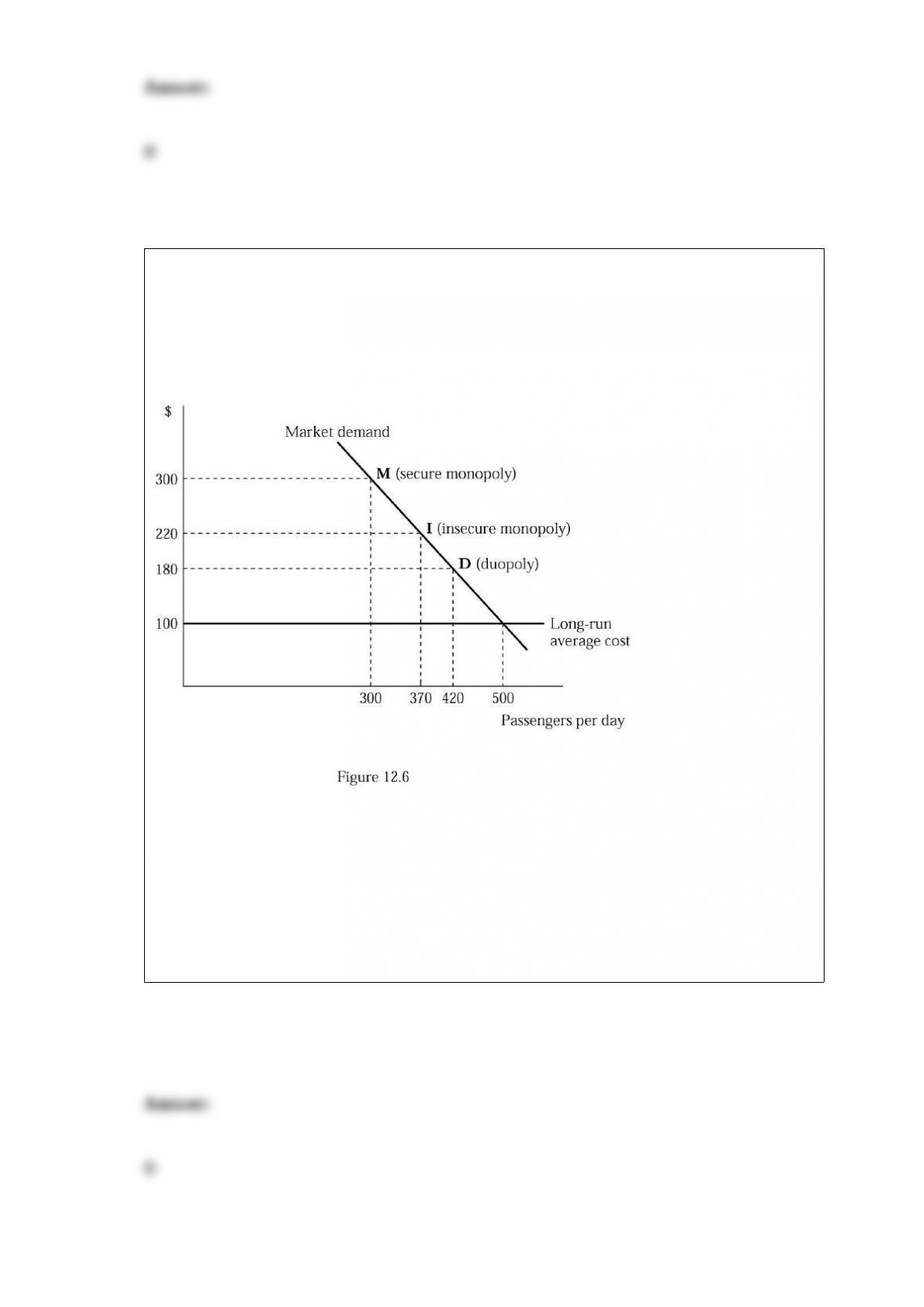
In Figure 12.6, airline Fly Smart is initially a secure monopoly between two cities X
and Y at point M, serving 300 passengers per day at the profit maximizing price of $300
per ticket. Suppose that Fly Smart discovers that a second airline is contemplating
entering the market. If the minimum market entry quantity is 130 passengers per day,
what is Fly Smart’s profit when it commits to the entry-deterring quantity?
A) $60,000
B) $44,400
C) $33,600
D) $29,600

Average variable cost and average total costs get closer together as output increases
because:
A) diminishing returns set in.
B) average fixed costs decrease as output increases.
C) marginal costs decrease as output increases.
D) economies of scale become apparent.
In order to achieve an efficient result a pollution tax must
A) be equal to the external cost generated.
B) not be passed through to the consumers of the produced good.
C) be equal to the social cost of production.
D) be shared equally by the producer and the consumer of the produced good.
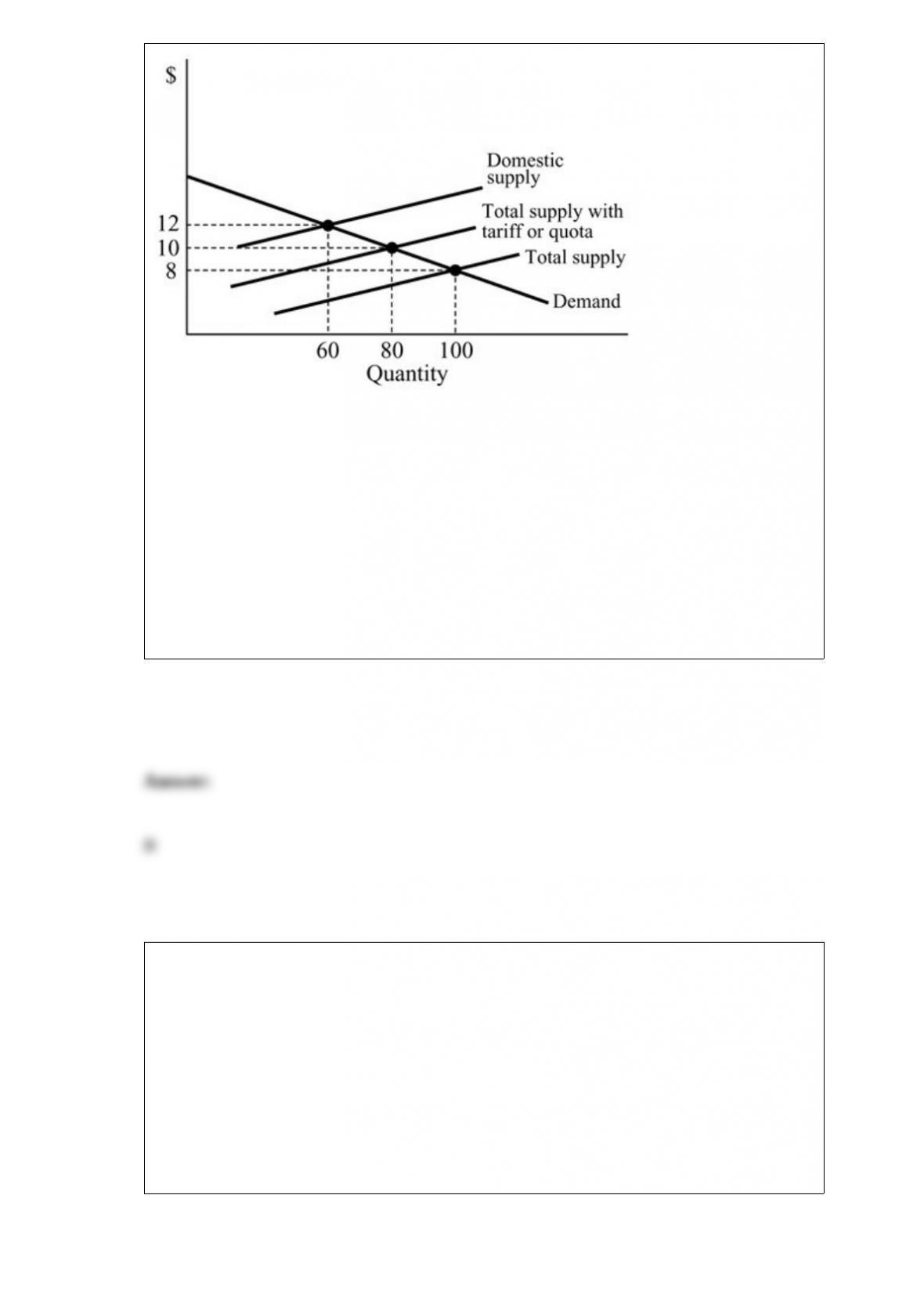
Figure 18.3
Refer to Figure 18.3. With a tariff, the per unit government revenue is:
A) $0.
B) $2.
C) $8.
D) $10.
Suppose Bob can produce more jeans than Joe in a day. Bob has ________ advantage
over Joe in sewing jeans.
A) an absolute
B) an absolute and a comparative
C) a comparative
D) neither an absolute nor a comparative
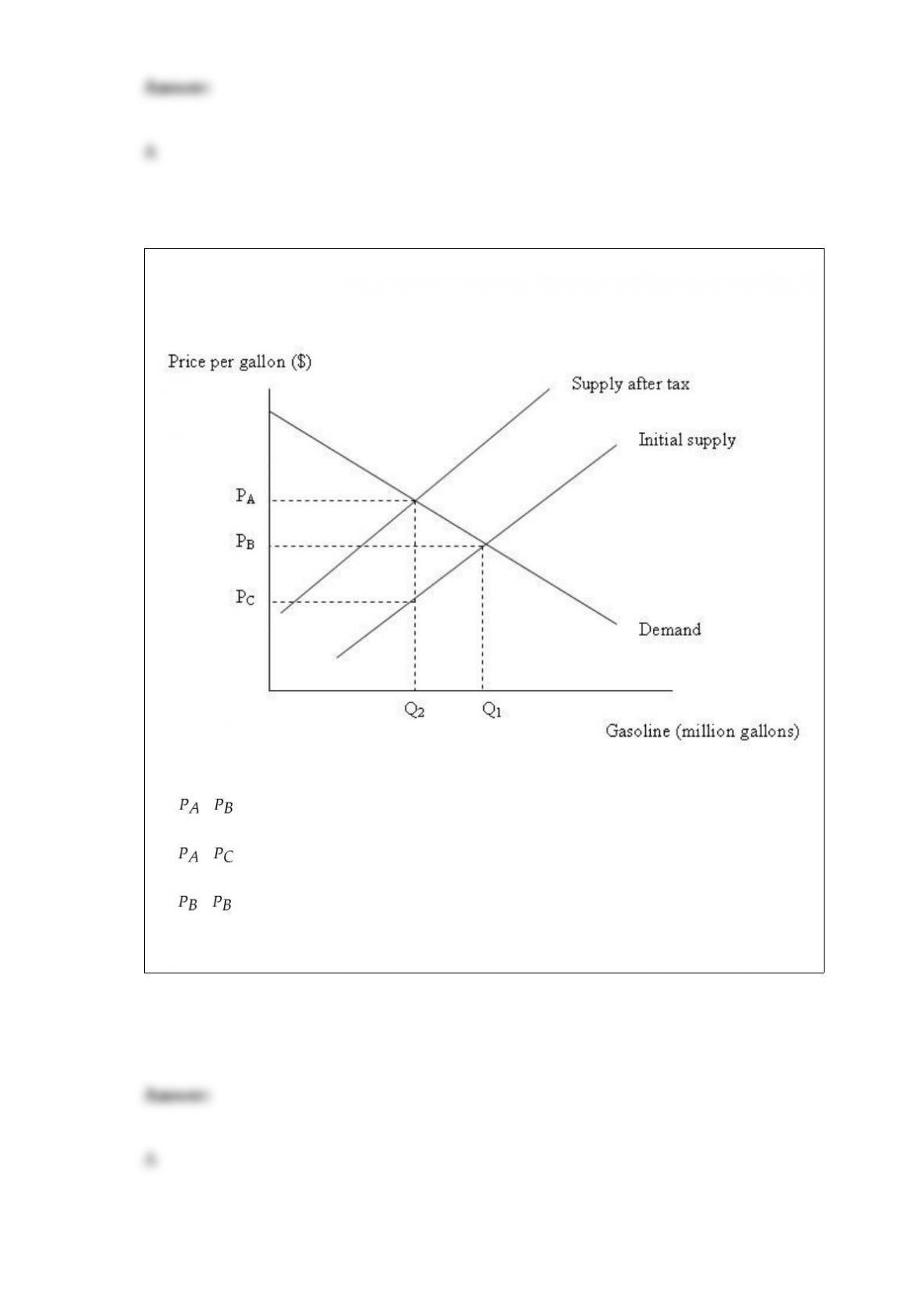
Figure 16.5 depicts the market effects of a gasoline tax. How much of the gasoline tax
per gallon is shifted forward on to consumers?
Figure 16.5
A) –
B) –
C) –
D) There is not sufficient information.

Public choice economics studies:
A) what individuals choose for themselves.
B) how individuals are affected by advertising.
C) public sector decision making.
D) none of the above.
The Hart-Scott-Rodino Act of 1980:
A) extended antitrust legislation to proprietorships and partnerships.
B) made it legal to monopolize a market.
C) outlawed asset-purchase mergers that would substantially reduce competition.
D) outlawed price discrimination for the purpose of reducing competition.
Suppose that a 5% increase in the price of gasoline leads to a 15% decrease in the
quantity demanded of SUVs. The cross-price elasticity of demand for SUVs is:
A) 3.0.
B) 3.3.

C) .33.
D) 33.
Assume that compact discs and compact disc players are complements. When the price
of compact disc players decreases:
A) the demand for compact discs increases.
B) the demand for compact discs decreases.
C) the supply of compact discs increases.
D) the supply of compact discs decreases.
If the government converted the highway from 4 lanes into 6 lanes, then using the
regular method of calculating percentages, the percentage increase would have been
________ percent. If the government converted the highway from 6 lanes into 4 lanes,
then using the regular method, the percentage increase would have been ________
percent.
A) 40; 40
B) 50; 33
C) 100; 50
D) 33; 33
If Germany can produce cars at a lower opportunity cost than any other nation,
Germany is said to have a(n) ________ in the production of cars.
A) comparative advantage
B) autarky
C) absolute advantage
D) comparative disadvantage
In the case of rent control, a maximum price will cause ________ and ________ the
total surplus of the market.
A) excess demand; reduce
B) excess demand; increase
C) excess supply; reduce
D) excess supply; increase
Claudia spends her income on two goods, DVD rentals and chewing gum. She
considers both goods to be normal goods. If Claudia’s income increases and the prices
of the two goods remain constant, she will:
A) rent more DVDs and purchase less chewing gum.
B) rent more DVDs and purchase more chewing gum.
C) rent fewer DVDs and purchase more chewing gum.
D) rent fewer DVDs and purchase less chewing gum.
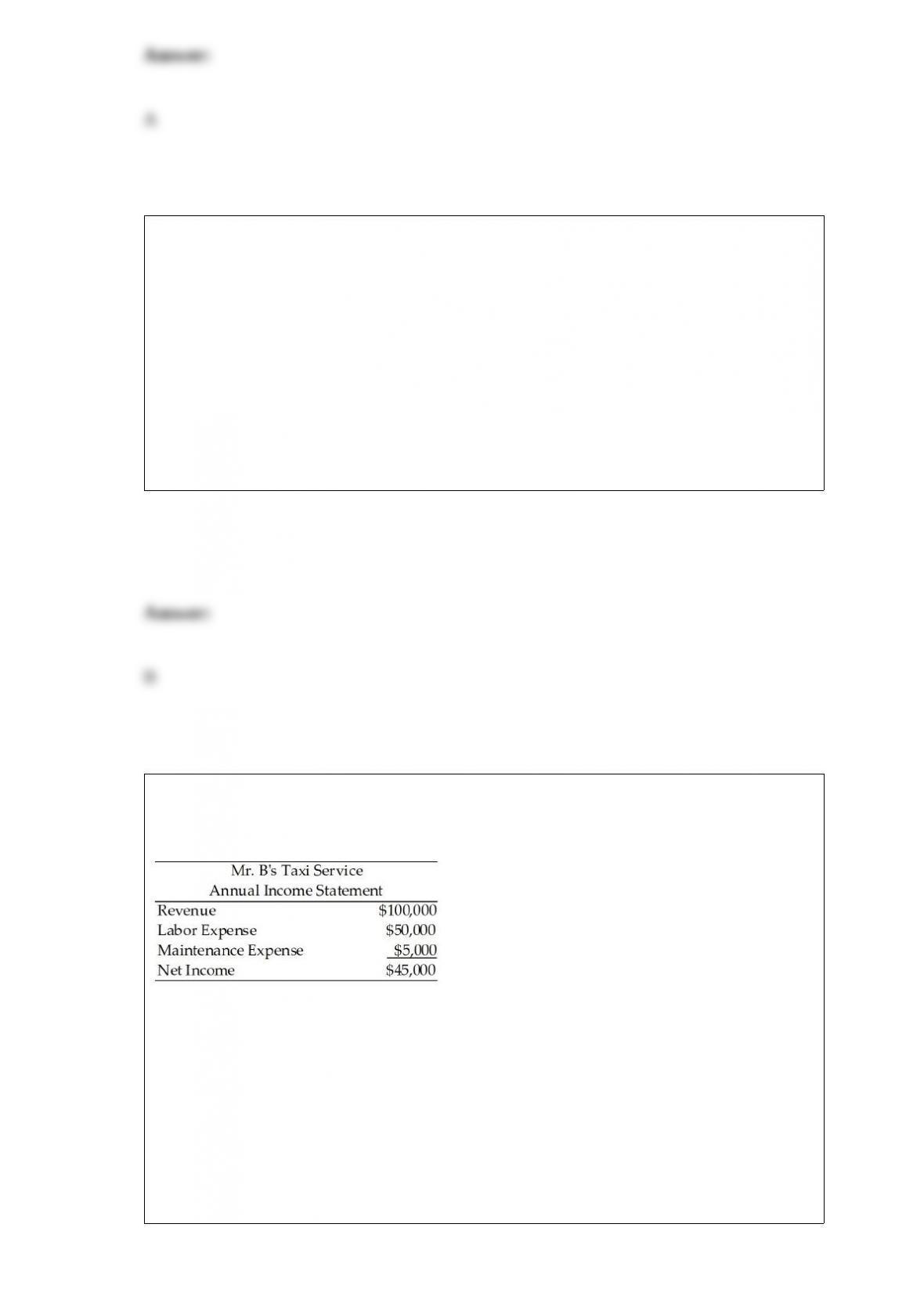
Refer to Table 8.1. Suppose Mr. B withdrew $50,000 from his account that earned 10%
to invest into this business. He quit his full-time job that paid $40,000 to manage this
business. Mr. B’s economic profit equals:
Table 8.1
A) $100,000.
B) $45,000.
C) $0.
D) -$45,000.
What is consumer surplus?
Explain the difference between forward and backward shifting of a tax.
What are the main features of the Celler-Kefauver Act?
Marginal cost is the additional cost resulting from a large or small increase in some
activity.
What is a reservation price?
In economics, a change in preferences for the product causes a ________.
Explain why people might work less if the wage increases.
How does a monopolist’s marginal revenue change as output increases? Why?
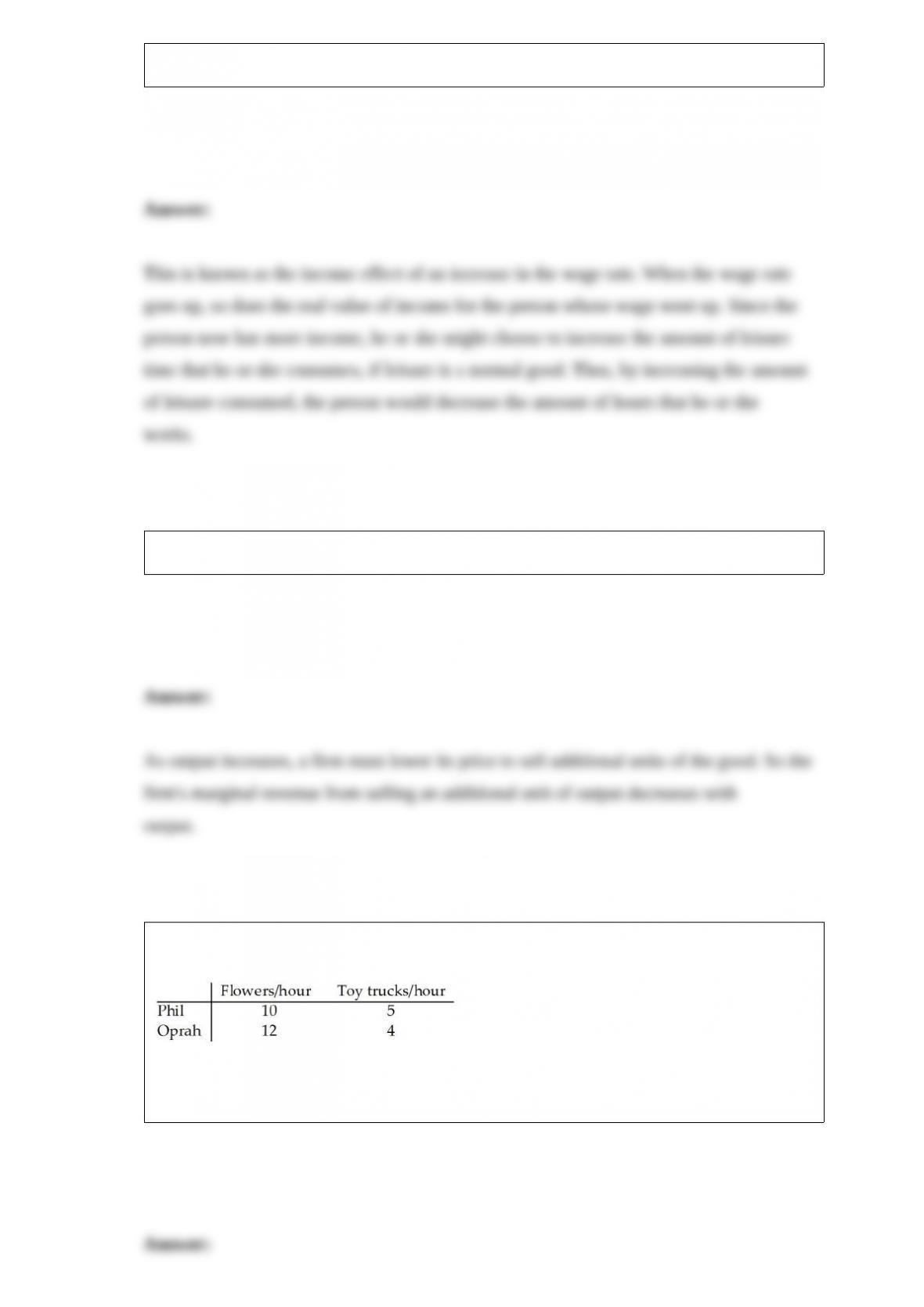
Consider two individuals, Phil and Oprah, who produce toy trucks and flowers. Phil and
Oprah’s hourly productivity are as follows:
Who has the absolute advantage or comparative advantage in the production of flowers
or trucks?
Explain why the demand for a particular brand of fast food tends to be more elastic than
demand for all fast food.
What does it mean for a nation to have an absolute advantage in producing a product?
What is the difference between “an increase in supply” and “an increase in quantity
supplied” of a good?
When a government pays a company for producing a product or good with the result
that selling the product is more profitable regardless of the price so that the company
will produce more of it, it is called a ________.
What is the output effect?
Explain what would happen to the equilibrium price and quantity of gasoline if the
supply of gasoline decreased while the demand for gasoline also decreased.
Explain why the demand for high-skilled workers has increased in the U.S. during the
past three decades.