
How extensively does the United States use quotas?
a. Very little; there are few quotas on imports.
b. Selectively; there are more quotas than most people realize.
c. Widely; quotas are extensive and cover a wide range of goods.
d. Widely; although the United States prefers to use tariffs, which cover a wide range of
goods.
If the marginal cost of producing vanity license plates is virtually zero (by prison
inmates with little else to do), then states would maximize their profits on plate sales at
the point on a linear demand curve where
a. demand is inelastic.
b. demand is elastic.
c. demand is unit elastic.
d. the demand curve crosses the horizontal axis.
Unequal distribution of resources is one of the main reasons for international trade.
a. True

b. False
One of the social benefits of frictional unemployment is that
a. workers get time off from work.
b. economic growth is limited.
c. workers move from less to more valuable firms.
d. wage rates decrease.
Did the large U.S. budget deficits in the 1980s “crowd out” investment as some
economists had predicted?
a. Yes, investment dropped as predicted.
b. Yes, although investment did not fall nearly as much as some had feared.
c. No, investment was not crowded out, but net exports dropped.
d. No, no crowding out at all occurred.

Any change that shifts the supply curve outward to the right, and does not affect the
demand durve will lower the equilibrium price and raise the equilibrium.
a. True
b. False
Supply-side tax cuts also tend to reduce aggregate demand and promote recession.
a. True
b. False
As we move down a straight-line demand curve, the price elasticity becomes
a. larger.
b. smaller.
c. larger, then smaller.

d. smaller, then larger.
The natural rate of unemployment corresponds to what is sometimes called the full
employment unemployment rate.
a. True
b. False
If Japan imposes a quota on imports of rice, the effect will be
a. less rice and higher price in Japan, lower rice prices in exporting countries.
b. more rice and higher price in Japan, higher rice prices in exporting countries.
c. less rice and lower price in Japan, higher rice prices in exporting countries.
d. more rice and lower price in Japan, lower rice prices in exporting countries.
e. less rice and higher price in Japan, higher rice prices in exporting countries.

Over the long run, stock prices have
a. generally fallen.
b. generally stayed roughly constant.
c. generally risen.
d. shown no identifiable pattern of change.
GDP can be calculated as the final demand for goods and services by consumers,
businesses,
a. and governments.
b. and foreigners.
c. governments, and foreigners.
d. governments, and financial institutions.
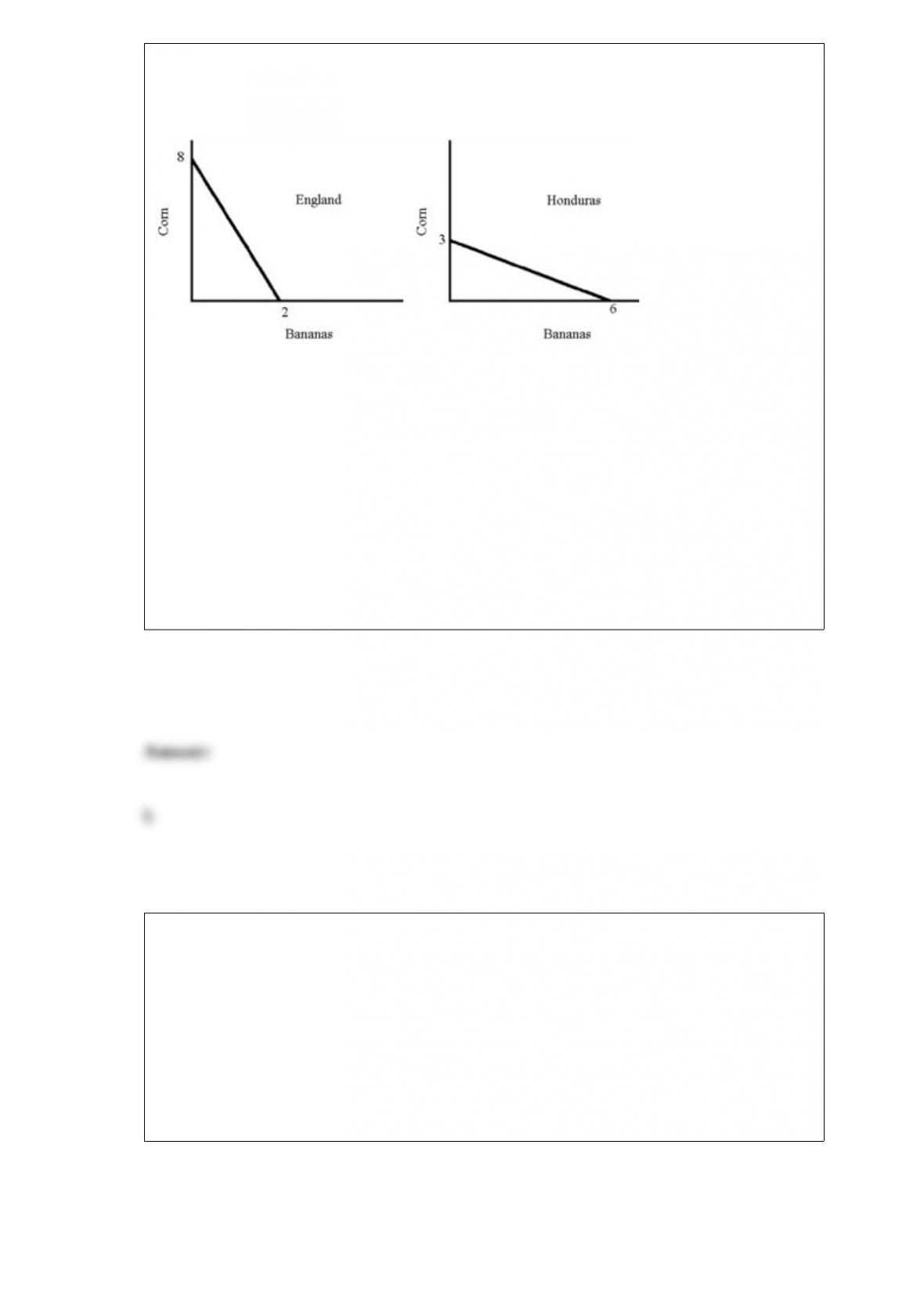
Figure 22-6
From Figure 22-6, one can infer that
a. Honduras will be willing to trade bananas for corn at a unit ratio of no less than 2
corn:1 banana.
b. Honduras will be willing to trade bananas as long as the unit exchange ratio is greater
than 1/2 corn:1 banana.
c. Honduras has no potential to gain from trade.
d. Honduras will be unwilling to trade at an exchange ratio.
What is the basic task that economists expect the market to carry out?
a. deal with the fundamental problem of scarcity
b. balance the government’s budget
c. lessen wants to the level of income available
d. meet all human wants

Economic efficiency and income equality are often conflicting goals in an economy.
a. True
b. False
In the analysis of potential GDP, labor and capital are considered
a. inputs.
b. final goods and services.
c. byproducts of economic growth.
d. outputs.
If countries where wages are far lower than those in the U.S. manufacture similar but
vastly cheaper products, then:
a. U.S. consumers will buy those cheaper products

b. U.S. producers will lose customers
c. There will be a downward pressure on U.S. wages, and reduced employment
d. All of the above statements are true.
Keynesian economists generally agree that unemployment is more costly than inflation.
a. True
b. False
In 1975, New York City increased regulated taxi fares by 17.5 percent and expected taxi
revenue to increase a like amount. The taxi commission believed taxi demand was
a. unit elastic.
b. inelastic.
c. elastic.
d. perfectly inelastic.

In 2013, plowback accounted for approximately ____ of corporate financing while new
stock sales accounted for approximately ____.
a. $2 trillion; $384 billion
b. $65 billion; $1 trillion
c. $1 trillion; negative $65 billion
d. negative $65 billion; $1 trillion
The quantity demanded of an input normally rises as its price rises.
a. True
b. False
Figure 10-9
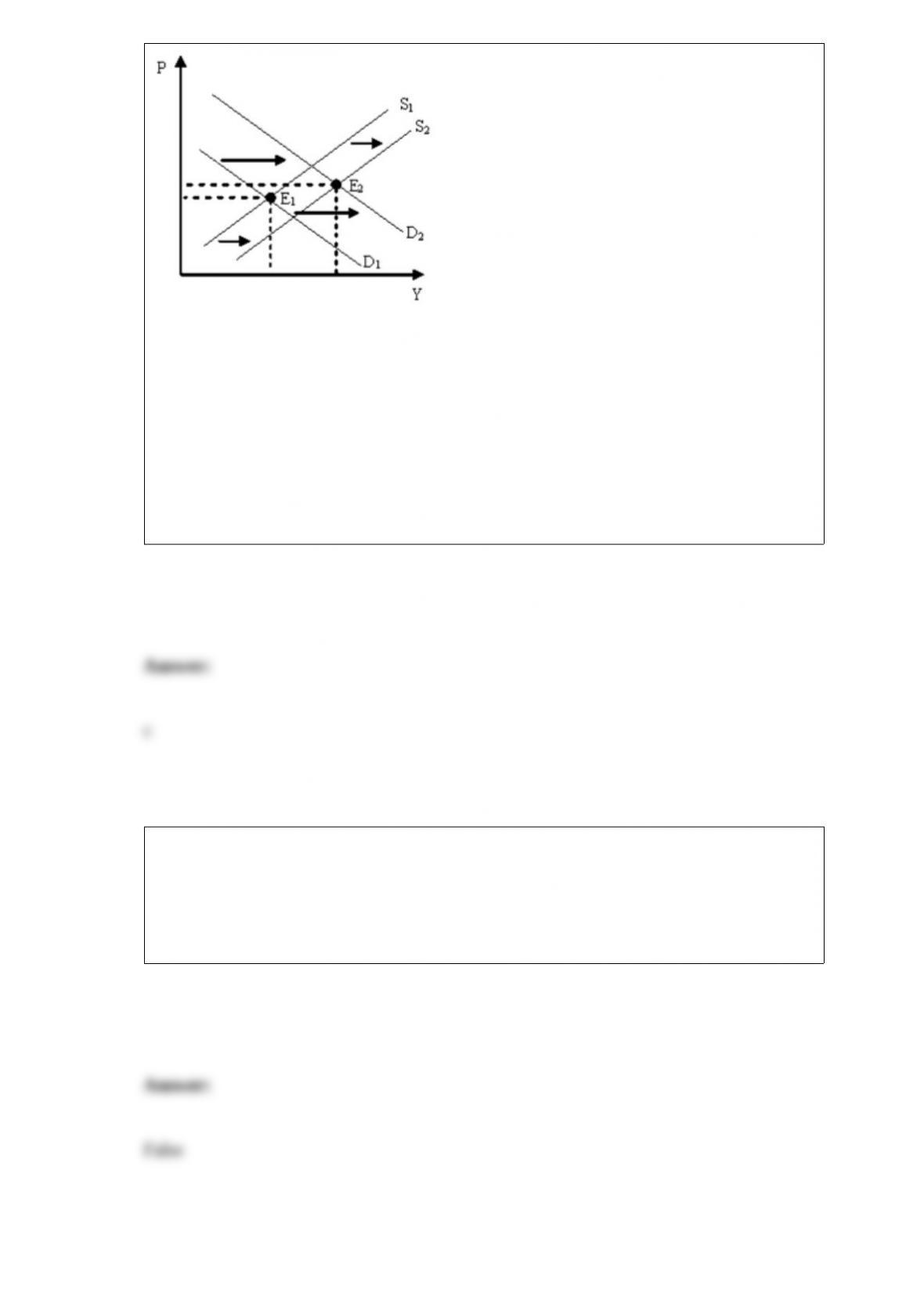
Figure 10-9 describes which of the following periods in the U.S.?
a. 1930s
b. 1973-1975
c. late 1990s
d. 2007-2009
The demand for reserves will increase at lower levels of GDP.
a. True
b. False

The market demand curve shows how the quantity demanded of a product, during a
specified time period, changes as the price of that product changes.
a. True
b. False
If the Federal Reserve takes no countervailing actions, an expansionary fiscal policy
will increase the deficit, increase GDP, increase prices, and drive up interest rates.
a. True
b. False
In the long run, zero economic profit exists in monopolistic competition and perfect
competition.
a. True
b. False

One of the results of the strong economic growth in the United States relative to the rest
of the world is a
a. U.S. trade surplus.
b. U.S. trade deficit.
c. growing U.S. net exports.
d. trade deficit for U.S. trading partners.
Suppose that the economy is currently at full employment. All other things being equal,
if central bank implements contractionary policy, then the appropriate fiscal policy is to
a. increase taxes.
b. reduce government spending.
c. balance the budget.
d. increase a budget deficit.
Everything else equal, the AC curve will shift downward if
a. input prices rise.
b. input MPPs rise.
c. output rises.
d. output falls.
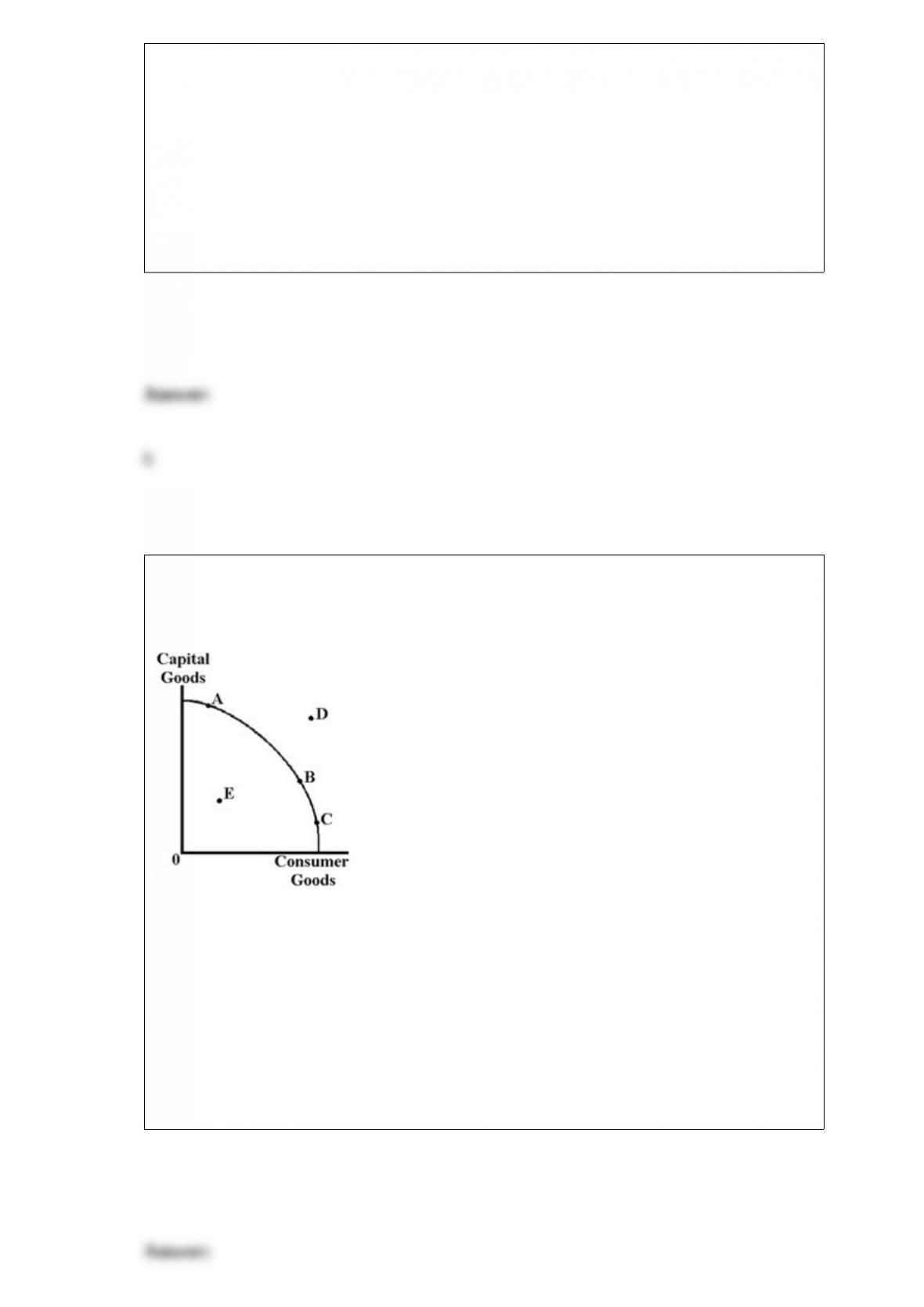
Figure 3-2
In Figure 3-2, a point such as A
a. is preferable over B.
b. is an efficient use of resources.
c. represents a misallocation of resources.
d. is not obtainable.

The new growth theory helps attract foreign students to study in
a. the former Soviet Union.
b. France.
c. the United States.
d. the Peoples Republic of China.
According to rational expectations theory, a long period of unemployment is necessary
to reduce inflation.
a. True
b. False
The total amount of income in a society is independent of how income is distributed.
a. True

b. False
During the 2008 presidential campaign, candidate Barack Obama argued in favor of
repealing the majority of the Bush tax cuts in order to increase government revenue.
a. True
b. False
Private investment from a foreign country is known as
a. development assistance.
b. foreign direct investment.
c. technical progress.
d. the cost disease of personal services.